Disclosure: Some links in this post are affiliate links. As an Amazon Associate I earn from qualifying purchases, at no extra cost to you. Learn more
Specs are compiled from manufacturer listings and verified buyer reviews and can change over time — please confirm the key details on the product page before buying.
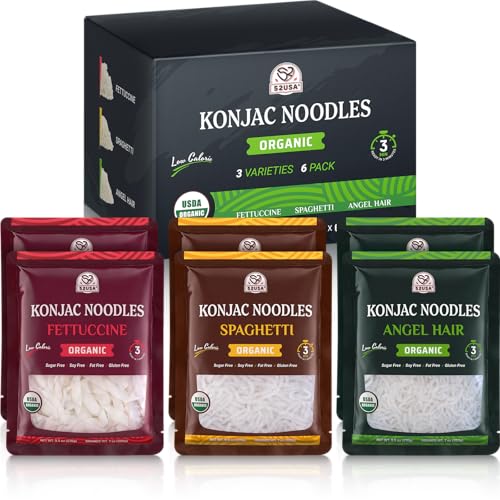
If you want to keep eating noodles while trimming calories, the trick is picking the right base — because a bowl that tastes like rubber bands gets abandoned by week two. Konjac (a Japanese yam root also called shirataki) and edamame noodles both let you eat a full plate of pasta for a fraction of the carbs of regular wheat spaghetti. The 52USA Organic Konjac Shirataki Noodle 6 Pack is the best starting case for most people. It packs six pouches in three shapes, takes on any sauce, and holds a 4.3-star rating across hundreds of owners. Below are the honest trade-offs on five options, so you can pick the one that fits how you actually cook.
This guide is built by comparing the manufacturers’ published specifications and the patterns across verified customer reviews, so you get each pick’s real strengths and trade-offs instead of marketing spin.
These noodles are not magic, and texture is where most people quit. The reviews below separate the brands that get the chew and the smell right from the ones that do not, so you can find the best noodles for weight loss without wasting money on a case you will never finish.
Top Picks
How To Choose The Best Noodles for Weight Loss
A slimming noodle only works if a normal-sized plate leaves you full — not if you eat three strands and call it dinner. So the noodles have to do two jobs at once. They have to keep the calorie count low, and they have to feel like a real meal in your mouth. Miss the fullness part and the diet never survives.
Konjac or edamame — the two families that actually work
Konjac noodles come from the konjac yam, a starchy root that turns into a nearly transparent, jelly-like noodle. On its own it has no flavor, which is exactly why it works: it soaks up whatever broth or sauce you cook it in. Edamame noodles are made from ground green soybeans instead. They behave much more like real wheat pasta, and they carry far more protein per serving. If you want pasta that feels like pasta, edamame is the closer match. If you want the absolute lowest calorie count, konjac wins.
Wet-pack or dried — this changes your whole routine
Wet-packed shirataki noodles sit in liquid inside the pouch and need little more than a rinse and a quick heat. Dried shirataki noodles look like a block of pale, brittle strands and need a boiling-water soak before they soften. Wet-pack wins on speed and works straight from the cupboard on a hungry night. Dried wins on the finished texture, because rehydrating gives a firmer, more al dente bite that sits closer to regular spaghetti.
Read the fiber line before you read the calorie line
Konjac is built on glucomannan, a water-soluble fiber that absorbs water and swells in your stomach. That swelling is the reason a small portion feels filling. It is also the reason you should start with a modest serving and build up, because jumping straight into a giant bowl can leave you uncomfortable. Chew each strand well. The fiber is the feature; treat it with a little respect.
Side-by-Side Comparison
| Model | Best For | Base Ingredient | Calories | Pack Size | Amazon |
|---|---|---|---|---|---|
| 52USA USDA Organic Konjac Shirataki Noodle★ Best Overall | Best overall starter case | Konjac (organic) | Low calorie | 6 pack, 3 varieties | Amazon |
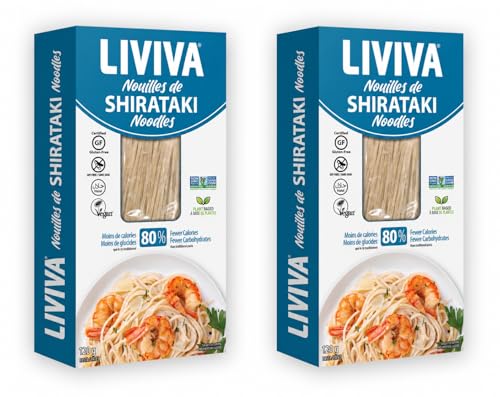
| LIVIVA Dried Shirataki Konjac NoodlesClosest To Pasta | Closest to real spaghetti texture | Konjac (dried) | 25 calories per serving | 2 pack | Amazon |
| LIVIVA Shirataki Konjac Spaghetti Noodle 6 Pk | Odor-free ready-to-serve bowls | Konjac (ready to serve) | 4 calories | 6 pack, 110 oz total | Amazon |
| The Only Bean Edamame Spaghetti | High-protein main dish | Organic edamame | 9 g net carbs per serving | 2 pack, 8 oz each | Amazon |
| Soeos Organic Konjac Noodles | Three-shape variety cooking | Konjac (organic) | Low calorie | 6 pack, 9.5 oz each | Amazon |
Detailed Reviews
1. 52USA USDA Organic Konjac Shirataki Noodle
Our pick — over 4★ from 650+ verified ratings; the strongest balance of quality and price.
The case that gets people through their first month of noodle-swapping without giving up.
Start here if you have never cooked konjac before and you want a low-risk way to find out whether these noodles fit your kitchen. You get six pouches split across three different shapes, so one box tells you whether you prefer the spaghetti-style strands or the wider cuts before you commit to a bulk order. They are USDA certified organic, sugar free, soy free, and fat free. Kosher, vegan, keto and paleo friendly all appear on the label too, which matters if you are juggling more than one diet rule at the dinner table.
The flavor performance is the real story. Konjac has no taste of its own, so it drinks up broth, sauce, and seasoning rather than fighting them. That is what the overwhelming majority of buyers talk about — how well these carry the taste of whatever pot they land in. The texture splits opinion. Some find the strands stay firm and refuse to go mushy; others find the chew springy and farther from wheat pasta than they wanted.
One honest note from the review pages: this brand leaves out calcium hydroxide, the mineral water many other konjac makers pack their noodles in. That choice shows up in a milder bag smell, but the trade-off is a softer set. The fix is simple and worth doing every time — rinse the strands well, then dry them in a hot pan for a minute before the sauce goes in. That step firms them up and removes any lingering pouch aroma.
What earns it the top spot
- Six pouches across three noodle shapes lets you test your favorite cut in one box.
- USDA Organic with sugar free, soy free, and fat free labels — clean for keto, paleo, and kosher eaters.
- No cooking required, so it works on nights when you have nothing left in the tank.
Where it asks patience
- Springy texture is farther from wheat pasta than the edamame pick — better for ramen and soups than Italian sauces.
- High fiber content means you should start with a small portion, not a full bowl.
Start here if: you want one case that covers your bases and teaches you which konjac shape you actually like.
Rethink it if: you mostly cook Italian red sauce and need a spaghetti stand-in — the dried LIVIVA below is the better fit.
2. LIVIVA Dried Shirataki Konjac Noodles
Dried, not wet — and that single choice changes the chew entirely.
The number that decides this one is 25. Each serving carries 25 calories, along with 5 to 6 grams of net carbs and 0 grams of fat. That is the figure that makes a plate of pasta possible on a tight day. Because these strands arrive dried rather than sitting in liquid, they rehydrate into something with a genuine al dente bite instead of the jellied snap you get from a wet pouch. Buyers describe the finished bowl as the closest thing to regular pasta they have found in the low-carb aisle.
The catch is time. You have to drop them into a rolling boil and leave them for 15 minutes, and the timing directly controls how they turn out. Pull them early or leave them too long and the texture drifts. This is a noodle you cook deliberately, not one you rip open and dump in a pan.
Texture is genuinely liked here — that is the standout. Some eaters still find the strands on the soft side, and the chewiness divides opinion, so this is not the pick for someone who wants a firm, bouncy bite. On the practical side, this is the harder one to buy: it is a two-pack, it turns up less often in everyday grocery stores than the wet brands, and it typically sells as a specialty item rather than a pantry staple. Worth knowing before you build a week of meals around it.
Why it stands out: 25 calories per serving with 5 to 6g of net carbs and 0g of fat, in a dried format that rehydrates into a genuinely pasta-like chew. At 13.05 ounces per two-pack, it stores in a cupboard without the pouch liquid that other konjac noodles come packed in.
The honest trade-off: It takes a deliberate 15-minute rolling boil, and you have to watch the timing because texture depends on it. Those 15 minutes are the price of the better bite.
The fit: someone who misses real spaghetti on a low-carb plan and does not mind standing at the stove for 15 minutes to get there.
Step past it if: you need dinner in five minutes or you want the firmest, springiest strand — the ready-to-serve LIVIVA packs below are faster.
3. LIVIVA Shirataki Konjac Spaghetti Noodle
Four calories, zero carbs, and no smell straight from the bag.
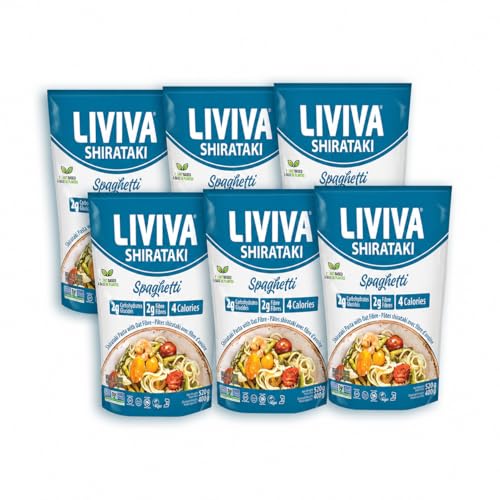
Four calories and zero carbs is as close to a free meal as a noodle gets. This one arrives ready to serve, so the whole prep is a rinse, a warm-through, and a sauce. Each bag holds two pouches sized for portion control, with a net weight of 18.34 ounces per bag, and the six-pack total lands at 110 ounces. This is the pick when your problem is not motivation but time — you get home late, you want something hot and noodle-shaped, and you do not want to boil anything.
The no-odor claim holds up in practice. Buyers repeatedly bring up the smell point, describing a clean bag with none of the funk that turns people off shirataki. The flavor itself is neutral, closer to tofu than to pasta, which is exactly why it slides into pho, cold salads, or a stir-fry without derailing the dish. Long, thin strands hold their shape when you heat them. Certification runs deep here too — Non-GMO, Gluten Free, Keto, Vegan, Halal, Kosher, Plant-Based, Paleo, and Soy Free.
Note the calorie gap against the dried LIVIVA above: this one is 4 calories per serving versus that one’s 25. If the absolute lowest count is what you are chasing, this wins that head-to-head. The offset is texture — wet-pack strands come out softer and more slippery than dried ones, so you lose some of that pasta-like bite in exchange for the convenience.
What the reviews keep repeating: the lack of odor is the headline. “Excellent in every respect” sums up how the clean-bag crowd feels, and the neutral flavor means it disappears into whatever broth or sauce you build around it.
A fair caveat: softer and more slippery than dried shirataki, and the strand can feel slick rather than sturdy.
Reach for this if: speed and a low count both matter and you want a noodle that pours out of the pouch clean and cooks in minutes.
Look elsewhere if: you want a firm, chewy strand you can bite into — go with the dried LIVIVA above.
4. The Only Bean High Protein Pasta Edamame Spaghetti Noodles
The one that feeds you like a main course instead of a watery side.
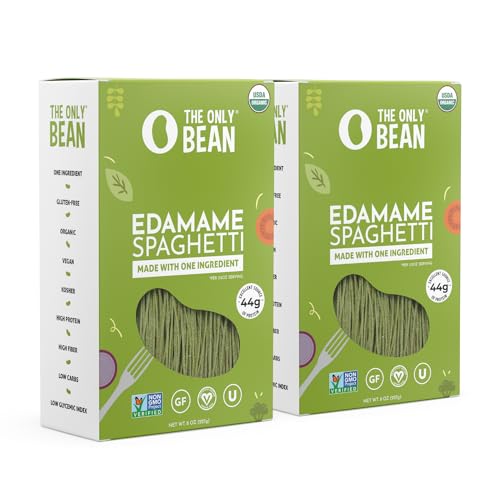
Over 40 grams of plant-based protein in a 3.5-ounce serving is the whole reason this belongs on the list. That is a full meal’s worth of protein from noodles. Made from a single ingredient — 100 percent organic edamame beans — it skips the blended flours and fillers you find in most “high protein” pasta. It is certified USDA Organic, and it keeps net carbs to just 9 grams per serving.
Because it is real ground edamame pressed into strands rather than a jelly fiber, it cooks like wheat pasta. You get a pot of boiling water, 3 to 5 minutes, and out. The texture and the taste both land close to traditional spaghetti, and that is what owners gravitate toward — the sense that they are eating pasta, not a substitute for it. Pair it with marinara or pesto and nobody at the table has to know it is the diet version.
What this pick changes is the shape of your plate. With konjac noodles you are essentially eating sauce with a fiber vehicle. With edamame noodles you are eating a protein-forward dish that happens to be low carb. That is the difference between a snack you tolerate and a dinner you look forward to. Note the difference in persona to the konjac picks above: this one is not trying to be calorie-free. It is trying to be satisfying, and it trades a higher calorie count and 9 grams of net carbs per serving for that.
The case for it
- Over 40g of plant-based protein per 3.5oz serving — real meal territory, not a filler.
- 100% organic edamame as the single ingredient, certified USDA Organic.
- Cooks in 3 to 5 minutes and eats like genuine spaghetti.
The fine print
- 9 grams of net carbs per serving means it costs more of your daily budget than konjac’s zero carbs.
- A two-pack box of 8oz bags empties faster than a six-pouch konjac case if you cook for more than one.
Built for: anyone who wants dinner to feel like dinner — high protein, real pasta mouthfeel, low net carb.
Not your pick if: you count every calorie and want the near-zero figure only konjac can deliver.
5. Soeos Organic Konjac Noodles

Spaghetti, fettuccine, and angel hair in one case — because shape changes dinner.
Three shapes in one box is the draw here. Spaghetti, fettuccine, and angel hair each behave differently once sauce hits them — thin strands grab a light broth, wide ribbons hold a heavy cream or peanut sauce. For someone who plans to cook shirataki as a regular weeknight habit rather than a novelty, that variety is worth having in the drawer.
Buyers describe these as a strong keto helper. The noodles stay low calorie, they work across a spread of dishes, and the clean-bag note comes up again — no funky smell that puts you off before dinner even starts. The texture gets praised too, and the strands accept whatever flavor you introduce.
The one thing to plan for is expectation. Konjac noodles are larger, opaque, and white, and they expand when they absorb water, so the Soeos guidance is blunt — chew thoroughly and do not eat too much at once. Start with a smaller portion, especially if this is your first konjac noodle, then scale up as your gut gets used to the fiber. Treat the case as a pantry staple rather than a race, and the value holds.
Where it wins: a full 57 ounces across spaghetti, fettuccine, and angel hair — you can match the strand to the dish instead of forcing one shape into everything.
Where it asks a little patience: portions go a long way because the fiber swells, so the first bowl should be a modest one until you know how your body reacts.
A good match if: you want one case that covers Asian stir-fries, cold salads, and a peanut-sauce side without buying three separate products.
skip it if: you only ever want spaghetti strands — the 52USA case above gives you a single-shape learning curve.
Know the Specs
Net Carbs And The Calorie Count
Net carbs are what is left of a carb count after you subtract the fiber, because your body does not break fiber down the way it does starch. That is why a konjac noodle can print a near-zero carb line — it is nearly all fiber and water. Compare it to the edamame noodle here at 9 grams of net carbs per serving, and you can see how the two families pull in different directions. Serving size drives the number too, so weigh the portion if you are tracking seriously.
Fiber, Fullness, And Serving Discipline
Konjac noodles are made from glucomannan, a water-soluble fiber that pulls in water and swells, which is why a smaller portion feels heavier than you expect. That same swelling is why you start small. A modest first bowl, chewed slowly, is the safer way in. Both konjac and edamame noodles tend to leave you fuller than a similar plate of white pasta, just by different routes.
Common Questions
Do konjac noodles actually help with weight loss?
Why do shirataki noodles smell?
Are konjac noodles or edamame noodles better for a low-carb diet?
How do I cook dried shirataki noodles without them turning mushy?
Can I eat konjac noodles every day?
Do these noodles taste like regular pasta?
What is the difference between wet-pack and dried shirataki noodles?
Can I eat these noodles if I am gluten free?
The Bottom Line
For most people shopping the noodles for weight loss shelf, the 52USA Organic Konjac Shirataki 6 Pack is the place to start — it hands you three noodle shapes in one case, holds a 4.3-star rating with the highest flavor marks of any konjac pick here, and asks nothing of you but a rinse and a sauce. If texture is your sticking point and you want something that eats like real pasta, the dried LIVIVA Shirataki is the one to chase. And when you want a dinner that actually feels like dinner, with over 40g of plant protein per serving, the Only Bean Edamame Spaghetti earns that spot. Pick the shape of your plate first — the rest falls into place.
How we choose
We do not accept paid placement. Every pick is matched to a real buyer and a real use-case; we do not hands-on test units.
Sources
Specifications: manufacturer listings and product documentation. Review insights: verified customer reviews, as of October 2026. Pricing: not shown on this page (it changes often); check the current price via the retailer link.
As an Amazon Associate, Aappliancez earns from qualifying purchases. This does not affect which products we feature.