Disclosure: Some links in this post are affiliate links. As an Amazon Associate I earn from qualifying purchases, at no extra cost to you. Learn more
Specs are compiled from manufacturer listings and verified buyer reviews and can change over time — please confirm the key details on the product page before buying.
If your soup noodles turn to mush before the broth even cools, the fix is simpler than you think: buy the right style of noodle for the bowl you are making, then watch the clock. This guide covers five noodles that hold their bite in hot liquid — from instant kimchi ramen to thick fresh udon — so you can spoon up a bowl that still has texture on the last swallow.
This guide is built by comparing the manufacturers’ published specifications and the patterns across verified customer reviews, so you get each pick’s real strengths and trade-offs instead of marketing spin.
A noodle that stays springy in hot broth is what separates a good bowl from a forgettable one, and this rundown of the noodles for soup covers exactly which shapes survive the soak and which ones soften too fast.
Top Picks
How To Choose The Best Noodles for Soup
Most people buy soup noodles by the picture on the packet and end up with a bowl that goes gluey in three minutes. The smarter approach is to match the noodle’s style to the broth you are actually making, then check how long it takes to cook.
Fresh or dried: which survives a hot broth
Fresh noodles are already soft and springy, so they need only a short dip in boiling water before they go into your bowl. Dried noodles need longer to rehydrate, and they drink up far more liquid. That difference matters: a dried udon can soak up your broth as it sits, so you want a broth with a little extra volume if you are using dried.
Thickness and width decide how the broth clings
A thick, wide noodle gives sauce and soup something to grip, which is why udon holds up in curry and rich broths. A thin ramen strand delivers bite andslurp but surrenders its chew quickly once it sits. For a rich, clinging broth, choose a thick, wide udon strand. If you want a fast, light bowl, thin ramen is the right call.
Match the pack to your soup habit
A multi-pack of instant ramen suits someone who eats a bowl several times a week. A large fresh udon 3-pack is better for family dinners or a few noodle nights in a row. And a box of soup base sachets is a different purchase entirely — that is your broth, not your noodle, and it decides how the whole bowl tastes.
Side-by-Side Comparison
| Model | Best For | Style | Pack Size | Net Weight | Amazon |
|---|---|---|---|---|---|
| Nongshim Kimchi Ramen★ Best Overall | Spicy weeknight bowls | Instant ramen | 16 packs | 4.2 oz each | Amazon |
| Unha’s Sanuki Fresh UdonTop Performer | Thick, chewy udon bowls | Fresh udon | 3 packs | 63.45 oz | Amazon |
| Nissin Top Ramen Chicken | Everyday pantry staple | Instant ramen | 12 packs | 36 oz | Amazon |
| Hime Dried Udon | Dried udon for stir-fry and soup | Dried udon | 2 packs | 28.21 oz | Amazon |
| Higashimaru Udon Soup Base | Building authentic udon broth | Soup base | 50 bags | 8 g per bag | Amazon |
Detailed Reviews
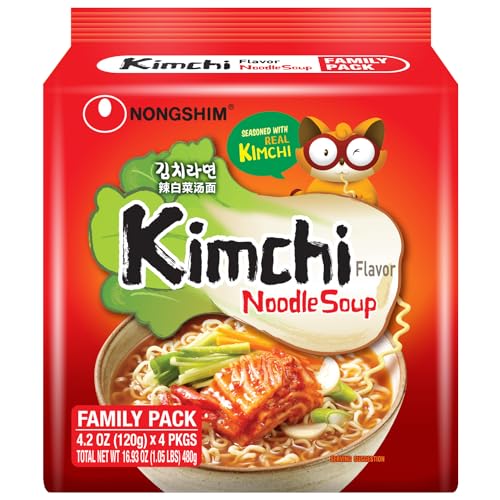
1. Nongshim Kimchi Ramen 4.2 Ounce Pack of 16
Our pick — 4.5+★ from 450+ verified ratings; the strongest balance of quality and price.
Sixteen 4.2-ounce packs of kimchi ramen that microwave in minutes
This is the pick for anyone who wants a hot, punchy soup bowl on a weeknight without standing over a pot. Each pack holds 4.2 ounces, and the 16-pack format keeps the cupboard stocked for weeks. The prep is genuinely hands-off: you microwave it, or you pour on boiling water and let it sit. The pack includes a sauce packet with dried kimchi flakes, so the broth carries a tangy, savory base rather than a bare salt hit.
The reason people keep reordering is the flavor. Real kimchi tang and a proper spice kick land in a dried product, and the noodles stay springy instead of collapsing — that chew is the whole point of a good instant bowl. Buyers report the heat works best when you control the water ratio; a little less liquid concentrates the spice, a little more tames it. Adding a fried egg, leftover meat, or fried garlic is a popular way to turn one pack into a fuller meal.
The honest catch is sodium. This is a full-flavored instant soup, and the broth runs salty, which is normal for the style but worth knowing if you watch your salt. The spice is also a real spice — mild palates may want to use half the sauce packet on the first go. Neither of those makes it a bad buy; it just tells you whether this is your kind of bowl.
What wins the bowl
- Restaurant-style kimchi tang with a genuine spice kick in a shelf-stable pack
- Bouncy noodle texture that survives a few minutes of soaking
- Included sauce packet and dried kimchi flakes build a real broth
- 16 servings means a stocked pantry with no weekly reorder
Where it asks you to adjust
- Broth leans salty, as most instant ramen does
- Full heat may overwhelm anyone who prefers a mild soup
- Water ratio changes the spice level, so first bowls take a little tuning
Reach for this if: you want spicy, chewy ramen in a microwave and you keep a stocked shelf.
Think twice if: you are salt-sensitive or want a mild-flavored broth.
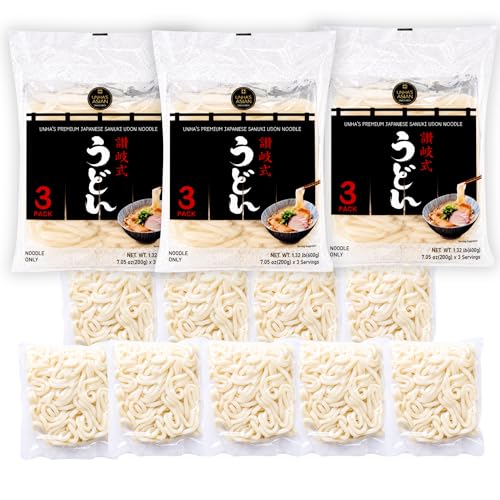
2. Unha’s Sanuki Fresh Udon Noodles 63.45 oz 3 Pack
Thick Sanuki-style udon strands that hold their chew in hot broth
If your idea of soup noodles is a fat, slippery udon strand that you can actually feel in your mouth, this is the one. The noodles are Sanuki-style — the thick, chewy udon style from Japan’s noodle heartland — and they are consistently described as having a proper bite. Because the strand is thick and wide, it holds broth, curry, and stir-fry sauce instead of letting it run off. That width is why it works in everything from dashi and soy-based soups to spicy sauce and hot pot.
What wins people over is the texture: no chalkiness, just clean chew. And the fresh format cooks fast — owners mention they “Cooks in a few minutes in boiling water,” with a review noting that is far quicker than dried udon. Set it against the Hime dried udon below, which takes longer, and you see the trade-off clearly: fresh costs speed, dried costs convenience on the shelf. For a quick dinner where the broth is already on, fresh is the faster lane.
This is the heavyweight of the group — the 3-pack weighs in at 3.97 pounds against the Twin Pack Hime Dried Udon’s 1.76 pounds. That is a lot of noodle and a lot of fridge space, which is fine for family dinners or consecutive noodle nights but overkill for one person. The one recurring gripe is value: a few find it on the pricey side for fresh udon. Note the 3-pack is designed so you open one and keep the rest sealed.
Where it earns the spot: the thick Sanuki chew is the standout, and the fresh format means a few minutes in boiling water gets you a proper bowl. Pair it with miso broth, soy soup, or sesame oil and vegetables and the simple noodle flavor lets the broth do the talking.
The part to size up first: 3.97 pounds across three packs demands fridge room and near-term eating, so it fits multi-person households better than solo cooks.
Built for: families or udon regulars who want thick, chewy strands and fast cook times.
Skip the big pack if: you cook for one and would rather not store pounds of fresh udon.
3. Nissin Top Ramen Chicken Soup 36 oz pack of 12

A 12-pack of mild chicken ramen that turns boiling water and pantry add-ins into a bowl
Nobody buys chicken Top Ramen expecting a revelation. You buy it because it is there when the fridge is empty and you need something hot in three minutes. That is exactly the lane this 12-pack of 36-ounce multipacks fills, and it fills it well. The prep is the classic method: contents into a lidded bowl, two cups of boiling water, cover for three minutes, break the noodles apart halfway through.
The great strength here is flexibility. The mild chicken base takes on whatever you add — leftover vegetables, a handful of frozen corn, a bit of rotisserie chicken — and the noodles come out soft and slurpable. Note how much stock you get: this is a 12-pack of 36-ounce units, whereas the Twin Pack Hime Dried Udon is a single 2-pack. That is a six-times-larger pack count, which is why this one edges toward the bulk-buy column.
What it is not is a deeply flavored bowl. Fans of the big, spicy kimchi ramen above will find this gentler and less complex — it is comfort, not punch. That mildness is also the appeal if you are feeding kids or want a neutral base to build on. The other honest note is packaging: Nissin packs these in a simple box, and a light dusty corner on arrival is common with any bulk instant noodle order, not a sign the food is off.
The daily-driver read: a mild chicken broth and soft noodles that welcome any topping you throw in, in a bulk format that keeps the shelf filled.
The trade-off to know: flavor is gentle and simple — this is a base, not a destination bowl.
Pick it for: cheap, reliable, mild soup bowls you can dress up with pantry add-ins.
Look elsewhere if: you want a bold, spicy standalone broth.
4. Twin Pack Hime Dried Udon Noodles, 28.21-Ounce (Pack of 2)
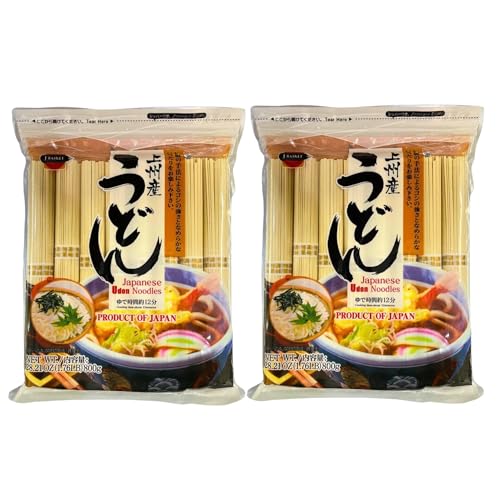
Dried udon that keeps on the shelf and rehydrates in three to four minutes longer than ramen
Dried udon is the cupboard-friendly answer to a fresh-udon craving, and this Hime twin pack is a reliable version of it. The strands are soft and chewy — a little slimmer than the jumbo fresh style, so if you want the fat, doughy chew this is not that. What it does deliver is convenience: it sits on the shelf until you need it, then rehydrates in hot liquid without going gluey.
Texture and cook time are the headline here. Buyers describe the noodles as “soft and chewy,” and note they take only three to four minutes longer to cook than ramen — a fair cut of time for a noodle this solid. In a chicken broth with egg, sprouts, and scallions they take on flavor nicely and keep a good bite. The wide strand shape suits both soup and stir-fry, which is why it lands in a lot of regular recipe rotations.
Where it asks patience is the clock. Dried udon needs longer in the water than instant, and one review clocked a 12-minute cook where the noodles still soaked up flavor and kept a good bite. The two-pack total of 56.42 ounces also runs a bit larger than many households need at once, so storage space matters. And the width check: a few buyers wanted the thicker, jumbo style and were mildly surprised at the slimmer cut.
The shelf-life story: this is the noodle you buy for the pantry shelf, then pull out for soup or a quick stir-fry and forget the “fresh only” hassle.
The one caveat: it takes longer to soften than instant, so factor that into a fast dinner.
Good fit for: cooks who want udon on hand without fridge space or a deadline.
Not the one for: anyone chasing the extra-thick jumbo udon chew.
5. Higashimaru Udon soup 50 bags

Fifty 8-gram sachets that dissolve into savory Kansai-style udon broth
This is not a noodle at all — it is the soup that goes around them, and it deserves a place on any serious soup-noodle list. Each of the 50 bags blends into a rich, savory Japanese udon broth, the kind that usually means simmering bonito and vegetables for a while. A bag plus frozen udon, some broccoli, and tofu gets you a bowl in a few minutes. That pairing is what makes it the natural partner to the Hime dried udon or Unha’s fresh udon above, rather than a rival to either.
The flavor is what wins people over. This is authentic Japanese udon base, versatile enough for hot pot and simmered dishes, and the taste is full and savory. It is also a serious time-saver — owners describe it as removing the whole tedious broth-building step while keeping the flavor intact. There are 8 grams per bag, and the 50-count box will last a long time if you make udon soup regularly.
The real consideration is volume and cost. A 50-bag box is committed to udon soup night over and over, which is great if that is your habit and excessive if it is an occasional craving. Fans in Japan note it costs more in the U.S., so if you want to test the flavor first, consider it an experiment before committing to the big box. Also note who it is for — this is Kansai-style base, so check that matches the flavor profile you like.
Why it earns a shelf spot
- Authentic Japanese udon broth from a single 8 g sachet
- Cuts out the simmering of bonito and vegetables entirely
- 50 bags means a long run of udon soup nights
- Versatile for hot pot and simmered dishes, not just udon
The considerations
- 50 bags is a big commitment if you do not make udon often
- Costs more in the U.S. than in Japan, per fan notes
- It is Kansai-style, so check that matches your taste
The right call for: udon lovers who want restaurant-style broth without the simmering.
Hold off if: you only make udon soup a few times a year and would rather not stock 50 sachets.
Know the Specs
Fresh vs Dried Noodles
Fresh udon is already soft and springy, so it needs only a quick dip in boiling water before it goes into your soup. Dried udon has to rehydrate, which takes longer, typically several extra minutes over ramen. Dried also soaks up more of your broth as it sits, so plan a little more liquid. Choose fresh for speed and a tender bite; choose dried for shelf life and pantry convenience.
Noodle Thickness and Chew
A thick, wide udon strand holds broth, curry, and stir-fry sauce against the surface, so the flavor comes up with every slurp. A thinner ramen strand is more about a fast, light bite. Neither is better — they suit different soups. If your bowl has a rich, clinging broth, a wide noodle earns its place. If you want a fast bowl you can microwave, thin ramen is the format.
Common Questions
How do I keep noodles from going soggy in soup?
Are udon noodles better than ramen for soup?
How long do fresh udon noodles last in the fridge?
Can I use dried udon in a soup instead of fresh?
What is a soup base sachet and do I need one?
How much water should I use for instant ramen soup?
Are these noodles spicy?
Can I add vegetables and protein to these soup noodles?
Should I store dried and fresh noodles differently?
The Bottom Line
The best place to start with the noodles for soup is the Nongshim Kimchi Ramen 16-pack, because its bouncy noodles and tangy kimchi broth make a proper bowl in minutes. If you want the thick, jumbo udon chew, the Unha’s Sanuki Fresh Udon is the one. And for building restaurant-style broth without the simmering, the Higashimaru Udon Soup is the pick — 50 bags means soup night is always within reach.
How we choose
We do not accept paid placement. Every pick is matched to a real buyer and a real use-case; we do not hands-on test units.
Sources
Specifications: manufacturer listings and product documentation. Review insights: verified customer reviews, as of October 2026. Pricing: not shown on this page (it changes often); check the current price via the retailer link.
As an Amazon Associate, Aappliancez earns from qualifying purchases. This does not affect which products we feature.