Disclosure: Some links in this post are affiliate links. As an Amazon Associate I earn from qualifying purchases, at no extra cost to you. Learn more
Specs are compiled from manufacturer listings and verified buyer reviews and can change over time — please confirm the key details on the product page before buying.
If you want the short answer: the Zud Cream Cleanser two-pack is the pick that handles rust rings, soap scum and hard-water crust without a drop of bleach, and the Bathstone block is the one for a toilet bowl that has defeated every spray you own. The rest of this list covers a hydrogen peroxide spray, a micro-particle cream and a commercial-strength soap scum remover, so you can match the cleaner to the stain instead of buying five bottles and hoping.
This guide is built by comparing the manufacturers’ published specifications and the patterns across verified customer reviews, so you get each pick’s real strengths and trade-offs instead of marketing spin.
Bathroom grime splits into two problems — mineral buildup that needs something with grit, and soap film that needs something that dissolves. Below you get both types, ranked and explained in everyday terms, so you stop guessing which bottle goes on the tub. Every pick here earns its place as a genuinely non-toxic bathtub cleaner.
Top Picks

How To Choose The Best Non-Toxic Bathtub Cleaner
The first decision is not the brand but the type of stain. It is whether the mess on your tub is mineral or organic. Rust rings, white hard-water haze and lime lines come from minerals in the water, and they need a product with some abrasive grit or an acid-free mineral dissolver to break them loose. Grey soap film, body oil and that slippery ring around the drain are organic, and a spray that emulsifies grease handles those faster with less rubbing.
Match the form to the surface you are cleaning
Liquids run downhill. On a sloped tub wall or the inside of a toilet bowl, a spray beads up and slides to the drain before it has time to work. A cream or a paste sits exactly where you put it. That is why cream cleansers like Zud and Cif keep showing up in bathrooms with stubborn stains — the cream stays in contact with the stain instead of escaping.
The trade-off with a cream is residue. Grit that stays put also needs a real rinse afterward, and if you over-apply on a dark surface you can leave a fine film that takes a second pass to clear.
What “non-toxic” and “bleach-free” should actually mean to you
Bleach-free matters most in a small bathroom with no window, and in a house with colored grout or a septic system. Look for a label that says no bleach, no acid, or no harsh chemicals, and read what scent it uses — a naturally derived citrus scent and an added fragrance are different things. A bleach-free cleaner you can spray in a windowless bathroom without fumes is one you will actually reach for on a Tuesday night.
An abrasive block is the other end of the scale. It is mechanical rather than chemical, which is why it can shift a rust stain that survived baking soda, vinegar and bleach. It is also the one product here that demands gloves and a light touch, so treat it as a targeted tool, not a weekly default.
Side-by-Side Comparison
| Model | Best For | Form | Size / Pack | Bleach | Amazon |
|---|---|---|---|---|---|
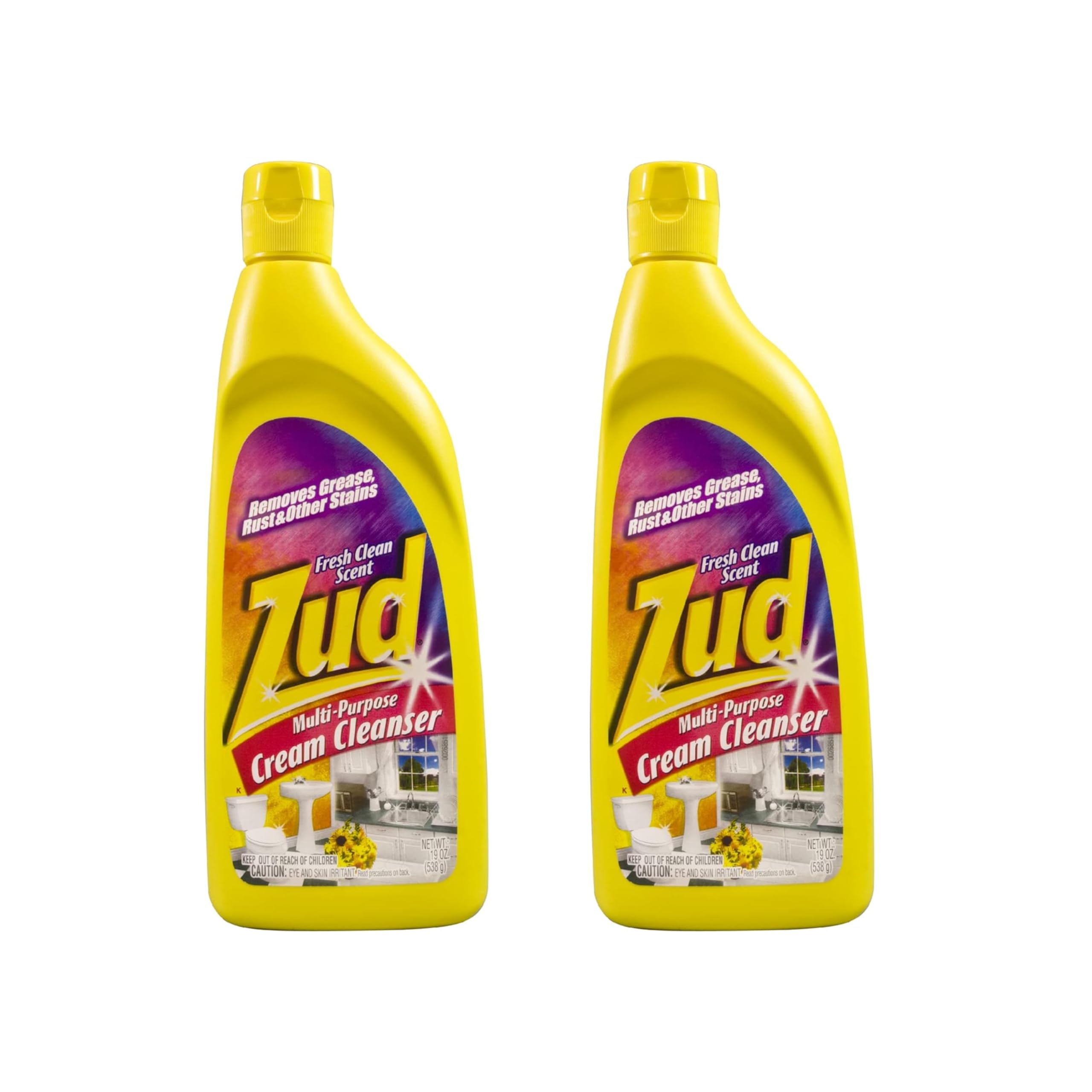
| Zud Cream Cleanser 2-Pack★ Best Overall | Rust rings and soap scum | Cream cleanser | Two 19 oz bottles | Bleach-free | Amazon |
| EarthStone Bathstone Block (Twin)Stain Eraser | Toilet bowls and hard water | Solid pumice-style block | Twin pack, 1.6 oz | — | Amazon |
| MOMREMEDY Hydrogen Peroxide Spray | All-surface and fabric stains | Liquid spray | Single bottle | — | Amazon |
| Cif Original Multipurpose Cream | Everyday tub and tile shine | Cream cleanser | 2 x 500 ml | — | Amazon |
| Soap Scum Remover & Grime Cleaner | Glass doors and old soap film | Liquid refill (no sprayer) | 32 oz | No bleach | Amazon |
Detailed Reviews
1. Zud Cream Cleanser 2-Pack
Our pick — 4.5+★ from 600+ verified ratings; the strongest balance of quality and price.
The cream that hangs onto a rust ring instead of running off the tub wall in the first second.
You get two 19 oz bottles in one pack, so one lives under the kitchen sink and one lives in the bathroom. It is made in the USA and it does all of this without bleach, which is the part that matters in a small windowless bathroom with colored grout or a septic system.
What wins people over is how completely it dissolves mineral stains. The formulation goes at rust rings, grease, soap scum and the hard-water deposits that laugh at ordinary spray cleaners, and it keeps going in older homes where the stains have been sitting for years.
The catch is packaging, not chemistry. A few jars arrive with the cap taped loosely, and one buyer lost product in transit because of it. Check the seal when the box lands and you are set. If you are the kind of person who wants one bottle to do sinks, toilets, tubs and kitchen counters in a non-toxic routine, this is the one to build it around — the crowd favorite at 4.5+ stars across 600+ ratings makes that clear.
Where it earns its keep
- Bleach-free formula keeps fumes out of a small bathroom
- Two 19 oz bottles means one per room and fewer restocks
- Cream clings to vertical tub walls where sprays slide off
- Handles rust, grease, soap scum and hard-water deposits in one jar
Watch for these
- Caps can arrive without tape and leak in the box
- Some surfaces react poorly to the grit — spot-test first on delicate finishes
Reach for this if: you want one bleach-free cream that covers the tub, the toilet and the kitchen counters.
Look elsewhere if: you need a spray-and-walk-away product with zero rinsing.
2. Bathstone Cleaning Block Twin 111
A solid block that scrubs off what four different chemicals already failed to touch.
This is a mechanical cleaner, not a chemical one. It is a small, brick-like stone — 1.6 oz, roughly 3.75 x 2 x 2.75 inches — that you wet and rub against porcelain. No bleach, no acid, no fumes, nothing to ventilate. It has been on sale since 2007 and the twin pack gives you a spare for when the first one wears down.
The results on toilets and old tubs are the reason it holds a place here. Buyers report that it “removed heavy toilet stains (turned bowl beaming white) and 95% of a large cast-iron rust stain from a porcelain tub.” That is the whole case for a mechanical block over a chemical spray. Lime lines, pumice stains and well-water deposits that survived baking soda, vinegar and bleach come off with the stone. At 1.6 oz it is far lighter than the 2.31-pound Cif cream on this list, which makes it the one you can tuck in a cleaning caddy and forget about.
Be honest about the effort. It is a block, and blocks are awkward on curved surfaces — the rim of a toilet, the slope of a tub. Scrubbing takes elbow grease, the stone wears down fairly quickly, and it sheds a residue you will want to wipe up with a paper towel. Wear gloves too, because it dries out your hands. A sharpened point would help in rim crevices, and it does not exist yet.
The honest exchange: you trade a little scrubbing time for a cleaner that uses no chemicals at all and reaches stains sprays cannot. For a porcelain bowl with a stubborn ring, that is a fair trade. For a quick weekly wipe-down, it is the wrong tool.
Pick it for: one ugly, set-in stain you have already tried everything else on.
Not for: enamel tubs you are unsure about — the makers themselves hedge on that surface.
3. MOMREMEDY Hydrogen Peroxide All Purpose Cleaning Spray
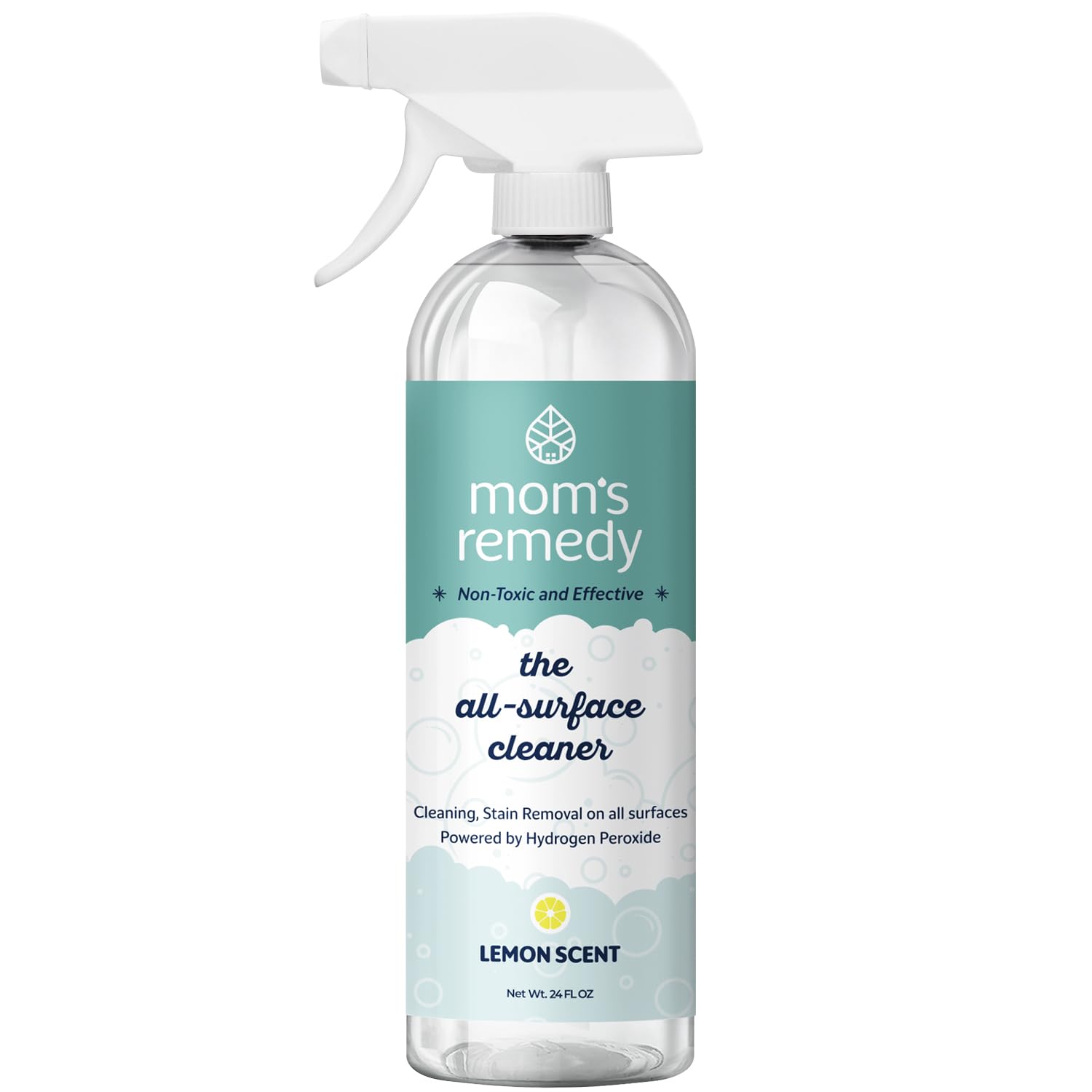
The spray you will still be using on the couch, the rug and the shower glass a month from now.
Hydrogen peroxide blended with plant-based ingredients is the backbone here, and it shows up in places you would not expect a bathroom cleaner to go. Granite counters, marble, stainless steel, upholstery, carpets and clothing are all on the label. There is no added fragrance, dye, sulfate or phthalate, and the lemon scent comes from citrus peels rather than a perfume. That combination is why it works in a house with pets and a bathroom with no fan.
What it does best in the tub and shower is cut through accumulated gunk on glass. Spray it on, let it sit, rinse it off — the film lifts and the glass reads clearer than it did before. Owners mention it is “great for stains and bathroom is where I use it the most great cleaner degreaser spot remover.” It also handles fabric accidents, including blood, coffee and stains nobody could name. Unlike the Cif cream below, which is built for scrubbing hard surfaces, this one crosses over into soft furnishings — at 3 x 3 x 11 inches and 1.7 pounds, it is sized to sit on a shelf without hogging space.
The sprayer is the weak link. The trigger can stick and the top sometimes will not reattach, so plan on decanting into a sturdier bottle once the original gives out. That is a hardware complaint, not a formula complaint, and it does not change how well the liquid works.
One bottle, many rooms: the real value is replacing three or four specialty cleaners with one non-toxic spray that does not leave a lingering scent or set off a sneezing fit.
Know before you buy: the trigger mechanism is where this product disappoints — keep a spare spray bottle on hand.
Suits you if: you want a single non-toxic spray for the shower, the counters and the laundry stains.
Skip if: you need a heavy scrub for a rust ring — this dissolves, it does not abrade.
4. Cif Original Multipurpose Surface Cleaner 2x500ml

Millions of tiny particles do the scrubbing so your wrist does less of it.
Where the Bathstone above is a blunt block, this is a fine cream packed with micro cleaning particles that dig into stubborn dirt and rinse away clean. You get two 500 ml bottles, and the same cream does hobs, sinks and kitchen tiles as readily as it does bathtubs, sinks and bathroom tiles. The ocean breeze scent is the detail most people notice first — it reads fresh rather than chemical, and it lingers just enough to make the room feel done.
At 2.31 pounds for the pair, it is noticeably heavier than the 1.19-pound Zud pack, which is the difference between a bottle you keep on the shelf and one you carry between floors. What it delivers is a gentle clean that does not scratch. It works on granite, on Neolith countertops and on a glass-top stove that just needs a soak before wiping. The comparison worth naming: the Cif is finer and less gritty than a bar-keepers-style liquid, so it is the safer choice on a surface you care about. That said, the Zud goes harder at rust, so pick based on the stain rather than the brand.
Overuse is the one trap. If you lay it on thick and skip the rinse, it can leave a gritty film behind. Use a modest amount, wipe, then rinse, and the shine comes through. Buyers who do that tend to stay with it — it has the same core appeal as the top pick, just tuned softer and scented.
What it nails: gentle abrasion with a pleasant finish — a genuinely nice daily driver for a tub you keep clean rather than rescue.
Where it asks something of you: a rinse is mandatory. Skip it and you trade a clean tub for a cloudy one.
Choose it for: routine cleaning on tile, tub and counter where scratch-free matters.
Pass on it for: the cake-on rust ring that needs the strongest grit in the lineup.
5. Soap Scum Remover and Grime Cleaner 32 oz refill

Built for the shower door nobody has properly cleaned in twenty years.
Commercial strength is the pitch, and the job it takes on is the soap film that has hardened onto glass, textured acrylic and chrome. Spray and wipe handles most of it. The heavier deposits need a sit and some scrubbing, but the product does the dissolving work. It is non-toxic, septic system safe, with no bleach, no acid and no harsh chemicals, and the lemonwater scent stays light instead of filling the room.
The dramatic saves are what sell it. Customers note clearing decades of soap scum from a 22-year-old shower stall after two rounds of 15-minute sprays and wipes, no power tools involved. Others describe a fiberglass tub still looking like new after years of use, and soap scum gone in minutes with no odor. That is the performance profile: it needs a 15-minute sit and a second pass, but it does not scratch the acrylic or fiberglass underneath.
Two things to plan around. This is a refill bottle with no sprayer, so you supply the trigger from your own empty spray bottle — worth knowing before the box arrives. And severe hard-water spots can take more than one application. A minority of buyers got a second bottle that did nothing, which suggests a batch issue rather than a formula one. On the whole, it is the pick for glass and old acrylic, while the Zud cream above is the better fit for rust.
The trade: you supply the sprayer, and you may need two or three passes on the worst glass. In return you get a commercial-strength formula that does not smell like a locked-down janitor’s closet.
Made for: glass shower doors, textured acrylic tubs and chrome that need the soap film gone.
Probably not for: you if a bottle without a sprayer is a deal you would rather not make.
Know the Specs
Form: cream, spray or block
The form decides how long the cleaner stays on the stain: a spray runs off a vertical wall in seconds, a cream clings for minutes, and a block scrapes on contact. A spray is the fastest to apply and the worst at holding position on a vertical wall, which is why it favors flat surfaces and loose film. A cream is thick enough to cling, so it works on sloped tub walls and stubborn patches where contact time matters. A block is mechanical — it scrapes rather than dissolves, which is why it handles rust that chemistry gave up on but requires genuine effort and gloves.
Bleach content and what it means in a small room
Bleach-free matters when the bathroom has no window, when grout is colored, or when the house runs on a septic system. A non-toxic label is a starting point, not a promise — read what scent and what additives are listed. A naturally derived citrus scent and an added fragrance are not the same thing, and if you are sensitive to perfumes, the difference is noticeable within a minute of spraying.
Container size and how far a bottle really goes
A two-pack of 19 oz bottles, a 2 x 500 ml pair, a single 32 oz refill and a twin block all look similar on a shelf, but they last very differently. Creams go a long way because you use a small amount each time. Refills cost less per ounce but require a working sprayer. Blocks wear down as you scrub, so a twin pack is really one working tool plus a spare.
Surface compatibility before you scrub
Porcelain, ceramic, fiberglass, acrylic, glass, chrome and stone all respond differently. Abrasive blocks can mark a softer surface; a fine cream is the safer bet on anything you care about. When a product is new to you, test a small area first — a patch near the drain or an edge under the tap — and confirm the finish is unchanged before you commit to the whole tub.
Common Questions
Is a bleach-free bathroom cleaner strong enough for mold and mildew?
Will a cream cleanser scratch an acrylic or fiberglass tub?
Do I have to rinse after using a cream cleanser?
Is hydrogen peroxide safe to use around pets in the bathroom?
Can one non-toxic cleaner really handle both the tub and the kitchen counters?
How do I get rid of a rust ring in a tub without bleach?
What is the difference between a commercial-strength soap scum remover and a regular tub cleaner?
Why does my cleaner bottle leak in the box before I even open it?
Can a solid cleaning block be used on a toilet seat as well as the bowl?
The Bottom Line
For most homes, the non-toxic bathtub cleaner to start with is the Zud Cream Cleanser two-pack — bleach-free, two bottles, and it punches through rust, soap scum and hard-water deposits where sprays slide off. If the stain that has been beating you is inside a toilet bowl, grab the EarthStone Bathstone block and let the grit do it. For glass shower doors and old soap film, the Soap Scum Remover refill is the right tool, provided you already own a sprayer. And if you want one gentle spray that also handles the couch and the rug, the MOMREMEDY Hydrogen Peroxide spray covers the most ground per bottle — keep a backup bottle for the trigger.
How we choose
We do not accept paid placement. Every pick is matched to a real buyer and a real use-case; we do not hands-on test units.
Sources
Specifications: manufacturer listings and product documentation. Review insights: verified customer reviews, as of October 2026. Pricing: not shown on this page (it changes often); check the current price via the retailer link.
As an Amazon Associate, Aappliancez earns from qualifying purchases. This does not affect which products we feature.