Disclosure: Some links in this post are affiliate links. As an Amazon Associate I earn from qualifying purchases, at no extra cost to you. Learn more
Specs are compiled from manufacturer listings and verified buyer reviews and can change over time — please confirm the key details on the product page before buying.
If your dog has been diagnosed with kidney disease, the first thing you want to know is simple: which food can you actually buy without a prescription that still keeps phosphorus and protein in a safe range? The short answer is that a handful of renal-support formulas sit on the open market, and the best of them control phosphorus while still being something a picky dog will eat. Below you will find five options sorted by what they are actually good at, from urinary-stone diets to herbal kidney support to a hydrolyzed protein kibble that owners of sensitive dogs keep reordering.
This guide is built by comparing the manufacturers’ published specifications and the patterns across verified customer reviews, so you get each pick’s real strengths and trade-offs instead of marketing spin.
Kidney diets live or die on two numbers — protein and phosphorus — plus one wildcard, whether your dog will actually finish the bowl. That is exactly the order I judged these in, giving you a clear path through the non-prescription dog food for kidney disease shelf without a single wasted bag.
Top Picks

How To Choose The Best Non-Prescription Dog Food for Kidney Disease
Kidney disease changes what “good food” means. A dog with reduced kidney function cannot clear waste products as efficiently, so the diet has to do some of that work. You are looking for three things at once: controlled phosphorus, a protein level your vet is comfortable with, and a kibble your dog will actually eat when appetite is already fragile.
Phosphorus comes before everything else
Phosphorus is a mineral that healthy kidneys filter out easily and damaged kidneys do not. That is why every renal formula you see here makes a point of controlled phosphorus — Blue Buffalo’s KS formula states it plainly with controlled levels of Phosphorus and Sodium alongside optimal protein. When you compare bags, read the guaranteed analysis for the phosphorus percentage rather than the front of the bag.
Protein is not the enemy — the amount is
A lot of owners assume kidney food means almost no protein. That is the wrong assumption. Purina’s UR formula is built with high-quality protein, and Forza10’s renal kibble uses hydrolyzed protein — protein pre-broken into small pieces so a sensitive digestive system is less likely to react to it. The goal is enough high-quality protein to hold muscle on a senior dog, without overloading the kidneys.
Appetite is a real medical issue, not a fussy-dog problem
A kidney dog that stops eating declines fast. Smell, kibble size, and texture matter as much as the numbers on the label. Small breeds struggle with oversized pieces, and a dog in renal failure may reject a food it used to love. Look for a brand with a flavor your dog has accepted before, and be ready to soften or break up the kibble.
Side-by-Side Comparison
| Model | Best For | Form | Primary Focus | Bag Size | Amazon |
|---|---|---|---|---|---|
| Purina Pro Plan Veterinary UR Urinary Ox/St★ Best Overall | Stone-prone dogs | Dry kibble | Urinary & stone risk | 6 lb bag | Amazon |
| Blue Buffalo Natural Veterinary Diet KSMost Direct Kidney Play | Kidney support on real chicken | Dry kibble | Controlled phosphorus & sodium | 6 lb bag | Amazon |
| Dr. Harvey’s Kidney Health Support | Adding herbal support to a diet | Powder | Herbal & mushroom blend | 4 oz jar | Amazon |
| Forza10 Renal Dry Dog Food | Sensitive dogs needing hydrolyzed protein | Dry kibble | Renal, cardiac & skin support | 8.8 lb bag | Amazon |
| Hill’s Prescription Diet i/d | Digestive upset alongside kidney care | Wet food | Digestive & gut support | 9.4 lb case | Amazon |
Detailed Reviews
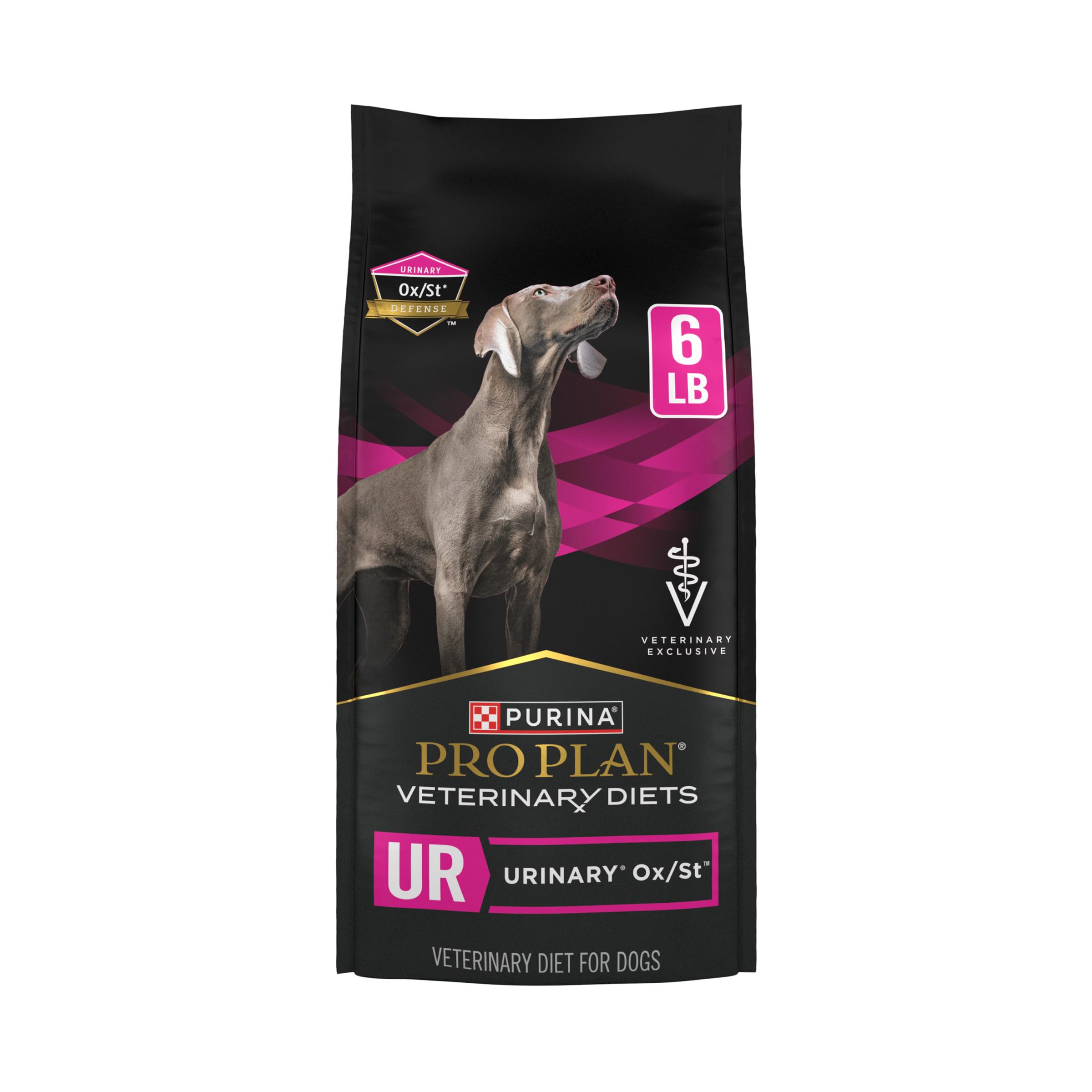
1. Purina Pro Plan Veterinary UR Urinary Ox/St Dry Dog Food, 6 lb
Our pick — 4.5+★ from 450+ verified ratings; the strongest balance of quality and price.
A urinary-stone kibble for dogs whose kidney diagnosis came with a stone history.
If your dog’s kidney diagnosis came with a stone problem attached, this is the formula to look at first. Purina builds UR around a urinary environment that discourages both sterile struvite and calcium oxalate crystals — the two stone types that send dogs into surgery. That places it slightly differently from the other picks here, which chase kidney values directly. UR is chasing the stones that damage kidneys in the first place. It also lists low phosphorus as a nutrient claim, so it does double duty for a dog with both concerns.
What wins people over is how readily dogs accept it. The chicken-flavored kibble is described by owners as something picky dogs finish rather than push around the bowl, which matters enormously when a sick dog’s appetite is the thing you are fighting. As the review pages put it: “My dogs go to dog food after he had bladder surgery and stones removed. He’s picky but loves it.” One detail to plan around — you will need your vet’s approval to complete the purchase, so build a day or two into your timeline rather than ordering the night before the old bag runs out.
Here is the honest trade-off. UR is a urinary-stone diet first, not a dedicated renal formula, so the phosphorus control is a supporting feature rather than the whole point. If your vet has flagged rising kidney values and no stone history, the Blue Buffalo KS below is the more direct kidney play. For a dog with both problems, UR leads on stone prevention. The 6 lb bag suits a small or medium dog on a rotation, and it is the smallest bag on this list — the Forza10 renal bag carries 8.8 lb, a 47% larger fill, so UR means more frequent reorders if you have a bigger dog.
Where it earns its keep
- Built to discourage both sterile struvite and calcium oxalate crystals.
- Low phosphorus nutrient claim, so it helps on two fronts at once.
- Chicken kibble that dogs with poor appetites still finish.
- High-quality protein and antioxidants in an adult formula for all breed sizes.
What to plan around
- Vet approval is required to complete the order, so allow extra lead time.
- At 6 lb it is the smallest bag here, which means more frequent reorders for large dogs.
- Stone-focused rather than a dedicated renal diet.
Reach for this if: your dog has a stone history plus kidney concerns, or has had bladder surgery and needs to stay stone-free.
Look elsewhere if: your vet wants a formula whose primary job is kidney support — the Blue Buffalo KS fits that better.
2. Blue Buffalo Natural Veterinary Diet Kidney Support Chicken Dog Food, 6 lb
Real chicken first, phosphorus and sodium held in check.
This is the pick that does the kidney job most directly. Blue Buffalo’s KS formula carries optimal levels of protein with controlled levels of Phosphorus and Sodium — the two minerals that matter most once kidney function drops. The first ingredient is real chicken, and the recipe skips chicken and poultry by-product meals, plus corn, wheat, and soy. That combination of a real-meat-first recipe and controlled minerals is unusual in the renal space, where many formulas lean on heavily processed protein.
The appetite story is where this bag earns attention. Dogs that turn their nose up at other kidney diets often settle here — the review pages describe a 14-year-old in renal failure with a poor appetite who slowly rejected Hills Rx Diet KD but ate this one well, with steady behavior and energy and no loose stools. Other owners describe using it as one of the few kidney foods their dog will eat at all. Small breeds need a note: the kibble size runs large, and owners of little dogs break the pieces up before serving.
Speed is the watch-out. Multiple buyers describe a slow delivery, with one review bluntly titled “Order product early” for exactly that reason — so this is not the bag to order when you are down to the last scoop. Vet approval is needed before shipping, though the process itself is described as quick and easy. If your dog is currently stable and you want a direct kidney formula, this is the one to put at the top of the shortlist.
The case for it: controlled phosphorus and sodium with real chicken as the first ingredient, no corn, wheat, or soy — the clearest kidney-first recipe in this group.
The catch: delivery runs slow enough that you want a backup bag on the shelf, and the kibble is large for toy breeds.
Best fit: a small or medium dog with diagnosed kidney issues whose appetite has been unreliable on other renal diets.
Think twice if: you are nearly out of food — order early or keep a spare.
3. Dr. Harvey’s Kidney Health Support Supplement for Dogs
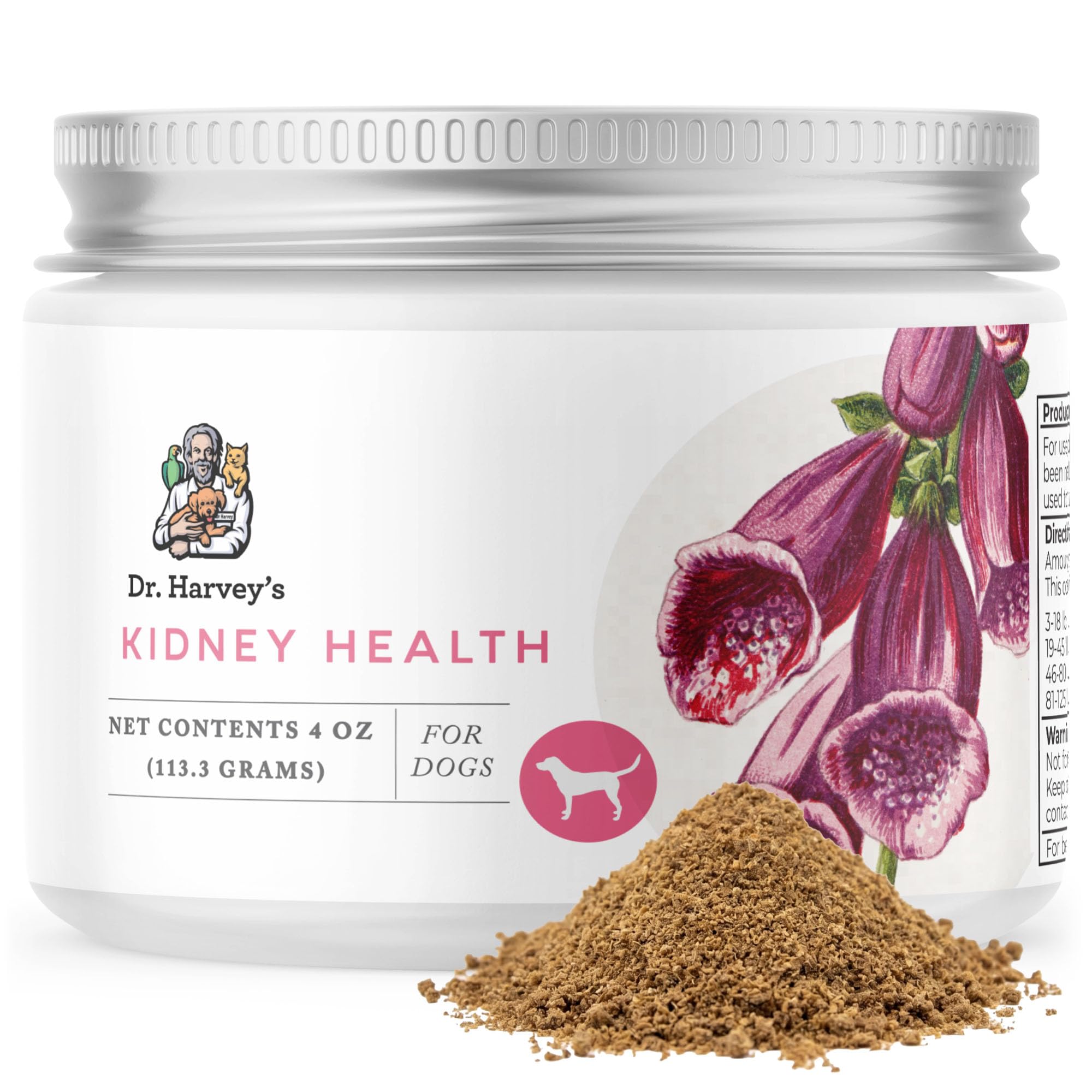
A powder you sprinkle on food — not a complete diet on its own.
Understand what this jar is before you buy it: it is a supplement, not a meal. There is no phosphorus or protein balance calculation here because it is not a food. It is a blend of herbs and edible mushrooms — Rehmannia Root, Codonopsis, Organic Astragalus Root, and organic Reishi, Shiitake, Poria, and Cordyceps — in a 4 oz jar of micro-powder you add to whatever your dog already eats. That means it rides on top of a renal diet rather than replacing one.
What it does best is get a dog eating again. The review pages sum it up: a 17-year-old silky terrier given one to two weeks to live began eating again after weeks of refusal once the powder’s smell hit the bowl, and the cinnamon scent is something owners notice in a good way. Other buyers report their dogs drinking noticeably less water after several jars, and some say follow-up bloodwork came back normal. Directions are simple — a scoop once or twice daily, though the scoop can end up buried in the powder, so dig for it before you start.
The real limitation is cost and rejection. On a twice-daily routine a single 4 oz jar lasts roughly two weeks, making it a recurring cost rather than a one-time buy. Digestibility is genuinely mixed — some dogs take it readily, others refuse it outright, and the powder’s smell is the deciding factor. Buy one jar first and see which camp your dog lands in before committing to a monthly habit.
Why owners stick with it: a fine powder that stirs straight into food, with a scent strong enough to pull a reluctant dog back to the bowl — no pill, no fight.
The honest limit: it is a supplement, so it cannot fix a diet built on the wrong protein and phosphorus levels, and it costs enough that you want to know it works for your dog before you restock.
Worth trying: if your dog is already on a kidney diet and you want to add herbal support without switching foods.
Skip the bulk buy: until your dog has proven it will eat the powder — the smell decides it.
4. Forza10 Renal Dry Dog Food, 8.8 lb
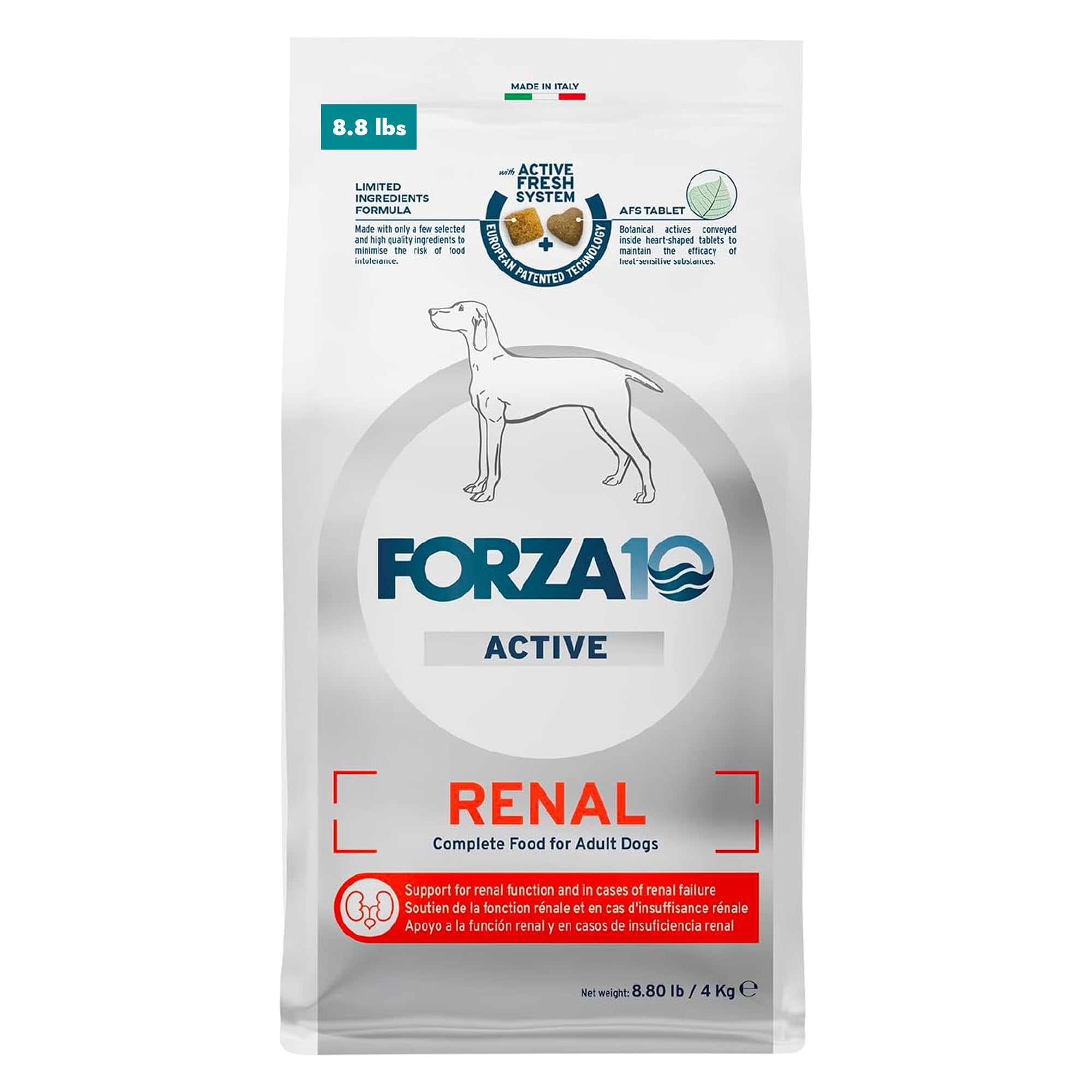
Hydrolyzed protein and cranberry in an Italian renal kibble with no prescription needed.
The distinguishing feature here is the protein itself. Forza10 builds this renal kibble with hydrolyzed protein — protein chopped into small enough fragments that a sensitive digestive system is less likely to flag it. That is a real difference from a standard chicken kibble like the Blue Buffalo KS above. It is also the only pick here that is a limited ingredient formula, non-GMO, and free from by-products, wheat, soy, and artificial preservatives, colors, and flavors, with cranberries and dried dandelion added for kidney support and Omega-3 in the recipe for renal and cardiac health.
Senior dogs on this food have a long-run track record that stands out. One 15.5-year-old dog stayed stable on it for two to three years, with the owner calling it comparable to prescription kibble but better sourced. A Shih Tzu with kidney disease does well on it, though the pieces are large enough that they get chopped up first. A picky eater that had been turning down wet food — which caused diarrhea — gained weight and came back to its old self on this kibble.
What buyers flag is the price, and the reason is the import — this is Italian-made food. If your dog has food sensitivities on top of kidney issues, that premium buys a limited-ingredient, hydrolyzed formula most renal bags cannot match. The 8.8 lb fill also means fewer reorders than the smaller bags here. This is the one to choose when digestion is part of the problem.
Why it stands alone
- Hydrolyzed protein built for dogs with food sensitivities.
- Omega-3 plus cranberry and dried dandelion support renal and cardiac health.
- Limited ingredient, non-GMO, no wheat, soy, by-products, or artificial additives.
- 8.8 lb bag, the largest fill among the renal kibbles here.
The trade-off
- Imported from Italy, so it sits at the higher end of the range.
- Kibble pieces are too large for small breeds without breaking them up.
The right call for: a sensitive or allergy-prone dog that needs kidney support and cannot handle a standard protein source.
Consider the alternative: if cost is the deciding factor and your dog has no food sensitivities, a simpler renal kibble will do the job.
5. Hill’s Prescription Diet i/d Digestive Care Wet Dog Food
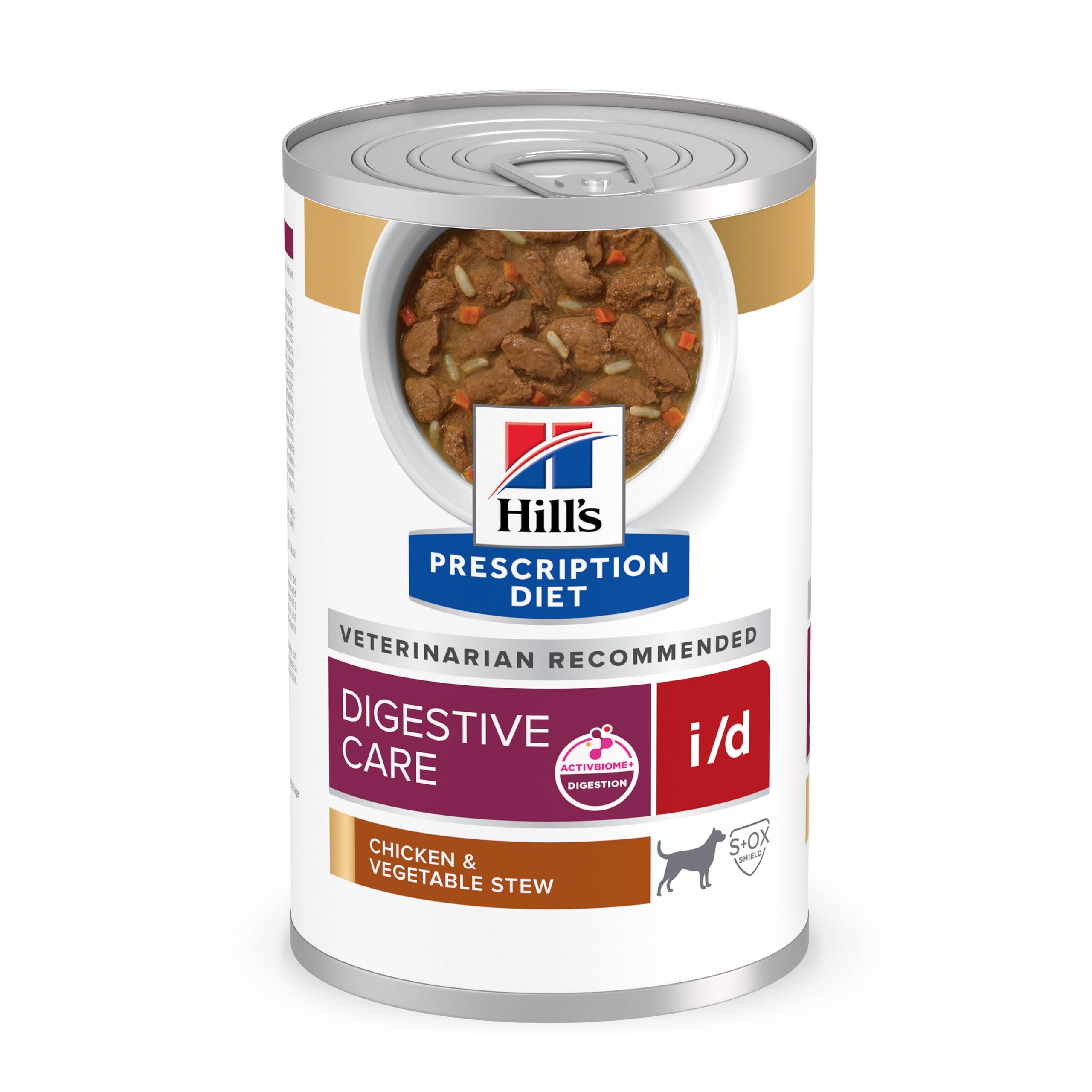
Wet food that goes down easy when nothing else will.
Appetite and digestion are the two things kidney dogs struggle with most, and this is the pick for both. Hill’s i/d is a wet chicken and vegetable stew built around ActivBiome+, a proprietary blend of prebiotic fibers that supports the gut microbiome, with high levels of B vitamins and added electrolytes to replace what a dog loses during digestive upset. It also carries S+OXSHIELD, formulated to promote a urinary environment that reduces the risk of struvite and calcium oxalate crystals — the same crystal types the Purina UR formula targets, but delivered in a soft food.
For a dog that has stopped eating dry kibble, wet food is often the bridge. Owners describe a dog with significant digestive issues tolerating the stew from the very first serving and returning to normal. Another owner of a 14-year-old Shih Tzu and Poodle mix reports the dog loves it, has more energy, and acts years younger. The stew texture and chicken flavor make it something most dogs accept, which is exactly what you need when a sick dog’s weight is dropping.
The costs to know are two. First, Hill’s i/d is a digestive formula, not a kidney diet — the crystal support is real, but if your vet has flagged phosphorus control specifically, this is a support food rather than a renal replacement. Second, buying the larger cans when the small ones are out of stock is a common frustration. Treat this as the wet-food companion to a dry renal diet rather than a stand-alone answer.
Pick it when: your kidney dog has stopped eating dry food or is fighting digestive upset on top of everything else.
Keep shopping if: you need a phosphorus-controlled renal diet — this is a digestive formula with urinary support, not a replacement.
Know the Specs
Phosphorus and sodium levels
These two minerals are the ones damaged kidneys filter least effectively. A renal dog food holds phosphorus low enough that the kidneys are not overwhelmed, and keeps sodium controlled so blood pressure and fluid balance stay steady. Read the guaranteed analysis rather than the front label — a bag that says “kidney support” should show both restricted.
Protein quality and amount
Too little protein costs a senior dog muscle; too much taxes the kidneys. The middle path is high-quality protein in a moderate amount, or hydrolyzed protein broken into small fragments for dogs with sensitivities. Hydrolyzed does not mean less protein — it means protein your dog’s body is less likely to react to, which matters when digestion is already fragile.
Kibble size and texture
A kidney dog’s appetite is a medical symptom, not a personality trait. Kibble that is too large for a small breed gets left in the bowl, and a food that smells unappealing gets refused outright. Softening kibble with warm water or broth, or choosing a wet food, often makes the difference between a dog that eats and a dog that does not.
Prescription vs. non-prescription
Some of the foods on this list, like Purina UR and Blue Buffalo KS, still require your vet’s approval to ship even though they are not sold as a classic prescription diet. Plan for that step. A non-prescription renal food can be a real option, but the decision still belongs with your vet who knows your dog’s bloodwork.
Common Questions
Can I feed my dog a non-prescription kidney food without asking my vet?
Is hydrolyzed protein better for kidney disease than regular chicken?
How long does a jar of Dr. Harvey’s Kidney Health last?
Why does the kibble size matter so much for a kidney dog?
My dog has kidney disease and bladder stones. Which food targets both?
Can I mix a kidney support powder into prescription dog food?
Is wet food better than dry food for a dog with kidney problems?
Why do the Italian-made Forza10 bags cost more than other renal kibbles?
My dog refuses the kidney food. What should I try first?
Do these foods require a prescription to order?
The Bottom Line
For most dogs facing kidney disease with a stone history attached, the Purina Pro Plan Veterinary UR earns the top spot — it is built around the crystal types that damage kidneys, carries a low phosphorus claim, and dogs with poor appetites still finish it. If your vet has flagged kidney values directly and stones are not the issue, reach for the Blue Buffalo KS with its controlled phosphorus and sodium and real chicken first. And when a sensitive stomach or food allergy is part of the picture, the hydrolyzed protein in the Forza10 renal kibble is the formula that does the most work at once.
Whatever you choose, plan for the vet-approval step and keep a spare bag on the shelf — the one thing a kidney diet cannot survive is a gap at the bottom of the bowl.
How we choose
We do not accept paid placement. Every pick is matched to a real buyer and a real use-case; we do not hands-on test units.
Sources
Specifications: manufacturer listings and product documentation. Review insights: verified customer reviews, as of October 2026. Pricing: not shown on this page (it changes often); check the current price via the retailer link.
As an Amazon Associate, Aappliancez earns from qualifying purchases. This does not affect which products we feature.