Disclosure: Some links in this post are affiliate links. As an Amazon Associate I earn from qualifying purchases, at no extra cost to you. Learn more
Specs are compiled from manufacturer listings and verified buyer reviews and can change over time — please confirm the key details on the product page before buying.
You wake at 3 a.m. with eyes that feel like sandpaper, and the drops on your nightstand sting or wear off by dawn. The fix is not more drops — it is an ointment or preservative-free vial built for overnight use. A thick ointment coats the eye surface and stays put for hours, while a preservative-free vial gives sensitive eyes moisture without the sting. This guide separates the two jobs and matches each pick to the buyer who actually needs it.
This guide is built by comparing the manufacturers’ published specifications and the patterns across verified customer reviews, so you get each pick’s real strengths and trade-offs instead of marketing spin.
Overnight dryness, contact lens wear, and post-surgery sensitivity all call for different formulas — and the wrong one costs you sleep. Here is how the leading nighttime eye drops actually differ once the lights go out.
Top Picks

How To Choose The Best Nighttime Eye Drops
Two products sit on the same shelf and do opposite jobs. A lubricant tear adds moisture; a redness reliever shrinks the blood vessels that make your eyes look pink. For overnight use, moisture is the whole point, so start there.
Ointment or liquid for overnight
An ointment is thicker than a drop — GenTeal PM lists mineral oil at 3% and white petrolatum at 94% as its active ingredients, which is why it coats the eye and lingers. A liquid tear is thinner and blurs less, but it clears faster. If you wake with your lids stuck and your eyes gritty, the ointment format matches that problem. If you only need a top-up before sleep and want clear vision when you blink awake, a liquid vial is easier.
Preservative-free matters more at night
Preservatives are what let a bottle stay open for weeks. They are also what stings sensitive eyes on the fourth or fifth dose of the evening. Single-dose vials and preservative-free multidose bottles solve that. Optase Allegro is preservative-free and its maker states the bottle maintains sterility for up to 3 months — a useful window to track on the cap.
Will it work with your contact lenses
Not every lubricant is lens-compatible. Both Optase products state they suit most contact lens types without residue or clouding. Read that line before you buy if you sleep in lenses or put them in the moment you wake.
Side-by-Side Comparison
| Model | Best For | Format | Preservative-Free | Contact Lens Safe | Amazon |
|---|---|---|---|---|---|
| Optase Dry Eye Intense Drops★ Best Overall | Deep overnight hydration in sensitive eyes | 30 single-dose vials | Yes | Yes | Amazon |
| Bausch and Lomb Advanced Redness ReliefBest Value | Red, irritated eyes that also feel dry | 3 bottles, 0.5 fl oz (15 mL) each | — | — | Amazon |
| Refresh Classic Lubricant Eye Drops | All-day screen dryness and post-surgery sensitivity | 30 single-use containers | Yes | — | Amazon |
| Optase Allegro Lubricant Eye Drops | Daily bottle users who want no preservatives | Multidose bottle, 0.33 fl oz | Yes | Yes | Amazon |
| GenTeal PM Night-Time Ointment | Severe dryness that returns by morning | 4 tubes, 0.12 fl oz each | — | — | Amazon |
Detailed Reviews
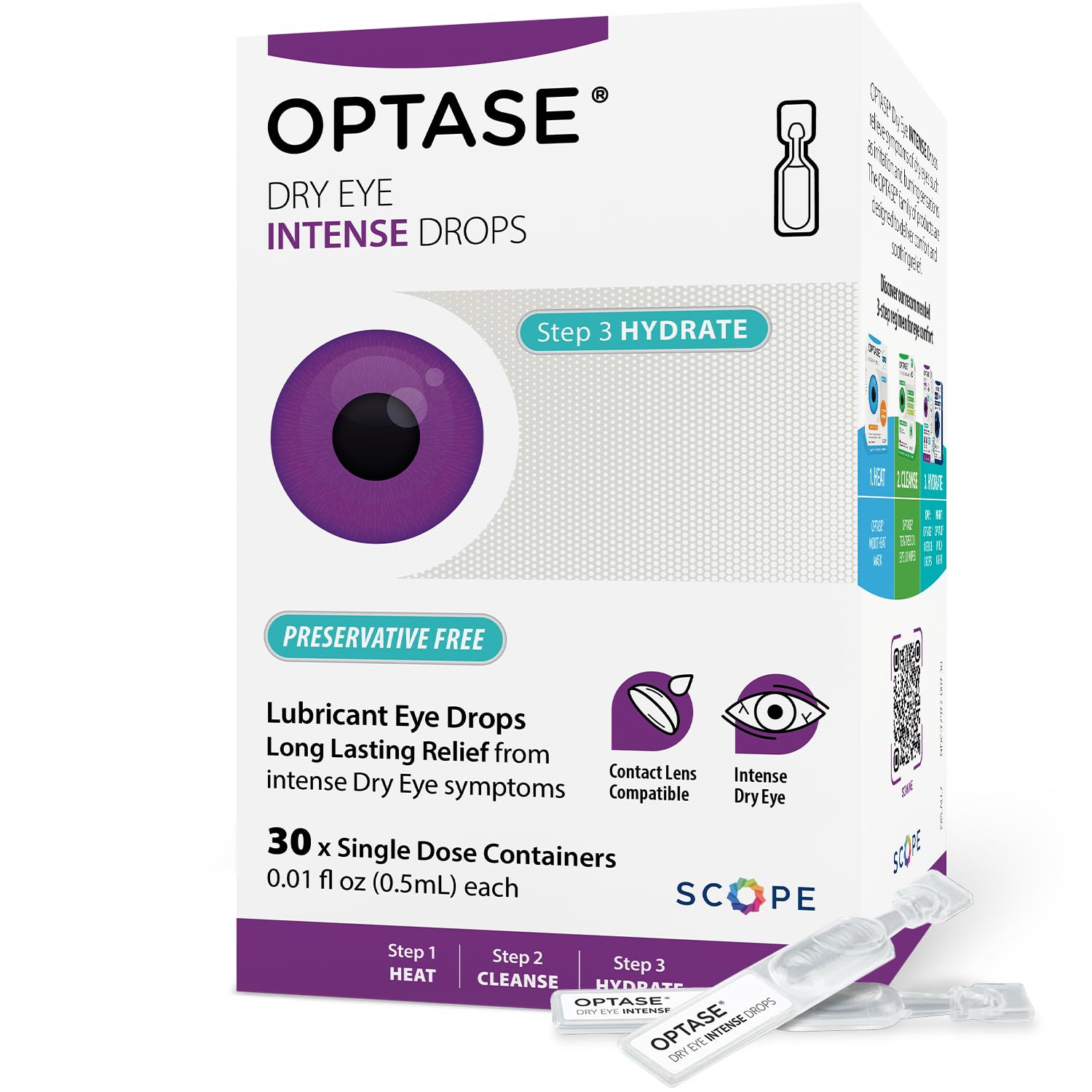
1. Optase® Dry Eye Intense Drops, 30 Single Dose Vials
Our pick — 4.5+★ from 1,000+ verified ratings; the strongest balance of quality and price.
One tiny vial per night, and your eyes stop waking up gritty.
The whole reason this takes the top spot is the vial. Each of the 30 single-dose vials holds.01 fl oz of preservative-free liquid, so nothing sits open collecting bacteria between uses and nothing carries a preservative into your eye at 11 p.m. That sealed vial format suits eyes that turn red or sting on ordinary preserved bottle drops.
Owners praise the moisturizing most, with effectiveness close behind. The label points at moderate to severe dry eye symptoms, and buyers describe the drops as thin and water-like in the vial, easy to dispense, and easy to tuck in a bag. As owners put it: “These are the best drops for my dry eyes. I like the individuals best as they’re preservative free and I don’t use them but once a day.” Contact lens wearers report wearing them without trouble — the only note there is a few minutes of blur right after the drop goes in.
The honest catch is the size. At.01 fl oz per vial, this is not the budget route per drop. Compare it with the Optase Allegro bottle at 0.33 fl oz and you are paying for sterility, not volume. One refill comment: a vial top can be resealed to carry a dose into the next use, though that is not the same as a fresh sterile vial. Buy those who want one dose, no waste, and nothing to keep track of. If you want a bottle you squeeze every night for months, the next Optase pick fits better.
What earns the crown
- Preservative-free in a sealed single dose — no contamination worry between nights
- Contact lens compatible per the label, so you can drop and go
- Seller states it is designed for moderate to severe dry eye symptoms
- 30 vials per box gives you a full month of nightly doses
Where it costs you
- Small per-dose volume — the vial format buys sterility, not bulk
- Brief blur right after instilling, common with thicker drop formulas
- Value divides opinion; some owners see the vials as the expensive way to buy
Reach for this if: your eyes flare on bottled drops or you want a sealed, precise dose every night.
Look elsewhere if: you want maximum drops per container and fuss-free squeezing.
2. Bausch and Lomb Advanced Redness Relief Drops 0.5 Ounce
Three bottles of the drop that clears red eyes fast and moisturizes while it does.
Each bottle in the three-pack holds 0.5 fl oz (15 mL), and the set weighs 3.2 ounces in total. That is a real volume advantage over the small single-dose vials — the Bausch and Lomb set holds far more drops per purchase than the Refresh Classic vials, which come in tiny single-use units. If your routine is a couple of drops a night, one bottle runs a long stretch.
The formula combines a maximum-strength redness reliever with moisturizers, and the label claims temporary relief of redness and discomfort from wind, sun, or plain dryness. Owners keep coming back to it for that reason, sometimes for decades. Buyers report: “Best eye drops, I’ve used these for 30 years.” That kind of longevity says the drops are dependable rather than spectacular.
Here is the part to be clear-eyed about: redness relief divides opinion. Some owners see pink eyes clear right away; others find the whitening effect flat. A brief burn on instilling comes up too, usually when eyes are already red. As overnight hydration, this is a support act rather than a leading one. It works well alongside a proper nighttime lubricant, not as a replacement.
What the label promises: a sterile 15 mL bottle per unit, maximum-strength redness relief, and moisturizing comfort for eyes irritated by wind, sun, or dryness.
The fair caveat: use it for red-eye days and general comfort, and keep a dedicated overnight lubricant for the job of sleeping through the night.
Worth grabbing for: red, irritated eyes that also need a little moisture during the day.
Not the one for: severe overnight dryness that needs an ointment or a preservative-free drop.
3. REFRESH CLASSIC Lubricant Eye Drops

The preservative-free tear that screen-tired eyes reach for all day, every day.
Thirty single-use containers of 0.01 fl oz each, formulated without preservatives and meant to behave like your own tears. That is the selling point for anyone whose eyes sting on the second or third dose from a bottle. The label also lists it as safe to use as often as needed — which is what makes it a genuine all-day companion rather than a once-a-night product.
Owners talk about soothing relief and effectiveness most. Owners mention: “I have ordered several boxes of these refresh tears at this point after my Lasik surgery and they helped my eyes so much!” Screen-heavy days and allergy season drive the same pattern — a drop, a blink, and a few hours of comfort. The vials are small, portable, and resealable enough to finish later.
Now the fumble: the vials themselves. The twist-off tubules are small and can be fiddly for hands with arthritis — the recurring gripe, and a fair one. If dexterity is a concern, look at a multidose bottle instead. The other note is value: a few owners find the per-drop cost harder to justify than a large bottle. Both are worth knowing before you commit to a box of thirty.
Why it earns the shelf space
- Preservative-free formula, safe to use as often as needed per the label
- Thirty single-use containers keep every dose clean and portable
- Acts like natural tears, so it suits frequent topping-up during the day
- FSA and HSA eligible depending on your plan
Where it gives you trouble
- Small twist-off tubules are trickier for arthritic or shaky hands
- Per-dose cost adds up if you are dropping many times a day
- A few find the vial size means frequent restocking
This one suits you if: your eyes need drops throughout the day and sting on preserved bottles.
Think twice if: fine finger work is difficult — the vials demand a steady pinch.
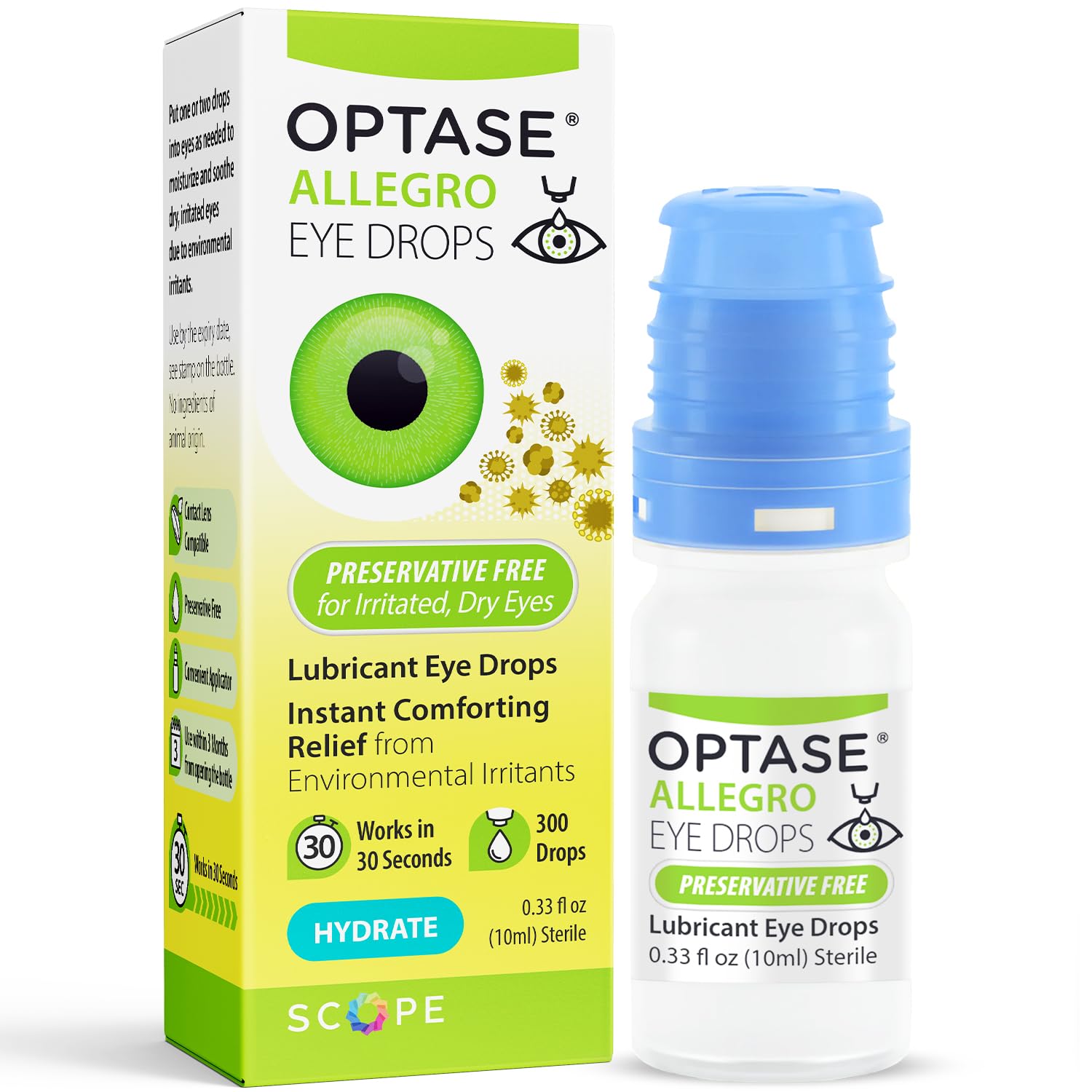
4. Optase® Allegro Lubricant Eye Drops, 0.33 fl oz
A preservative-free bottle with a good formula and a genuinely awkward nose.
Here is the number that matters for daily users: 0.33 fl oz in a multidose bottle the maker claims delivers up to 300 precise drops and holds sterility for up to 3 months after opening. That is a big jump on the Optase Intense vials at.01 fl oz each — this is the buy-volume option from the same brand. If you are dropping several times a day, the difference in how often you reorder is stark.
The formula itself is preservative-free and lens-compatible, working with your natural tears to leave a protective barrier against environmental irritants. Owners rave about the soothing relief, with effectiveness close behind. As owners describe it, two doses a day keep dry, scratchy eyes from flaring — one bottle lasting about eight weeks at that pace is the typical report.
The bottle is the sticking point here. The dropper mechanism draws the most criticism, split between people who get a clean drop and people who find it frustrating to aim. One blunt owner wrote that the formula is excellent but the bottle is “nearly unusable,” with drops missing the eye and much of the bottle wasted. A different owner found the first bottle hard to squeeze while a fresh one dispensed on the first press. Expect a learning curve, hold it steady, and give it a couple of tries.
The formula side: preservative-free, lens-compatible, and formulated to work with your own tears — the part owners almost universally praise.
The bottle side: the dropper design is contentious; waste and missed aim come up repeatedly, and the squeeze needs a firm, patient hand.
Best matched to: frequent daily droppers who want preservative-free lubrication without a vial per dose.
Pass on this if: you have weak grip or arthritis — the bottle fight is not worth it.
5. Genteal Pm Dry Eye Relief Ointment 4 Pack

The thick coat you put on last thing at night and sleep clean through.
This is the one in the group that is not a drop at all. GenTeal PM is an ointment, with mineral oil at 3% and white petrolatum at 94% as its active ingredients — the thick, glossy layer sits on the eye surface and lingers while a liquid tear would already have cleared. You get four tubes of.12 fl oz each, so there is a spare in the drawer and one in your bag.
Owners use it exactly as intended: last thing before bed, for severe dryness that ordinary drops cannot hold overnight. One customer put it plain as day — “I use this every night for dry eyes.” Buyers talk about overnight effectiveness most, with comfort running second. It also earns the label’s wording about lasting relief for nighttime comfort.
Two caveats worth planning around. First, the ointment format is thick — expect a blurry, greasy layer right after you apply it, which is the cost of a barrier that does not evaporate. Use it at bedtime, not before you need clear vision. Second, a recurring remark is that tubes can arrive squeezed or dented, and a few find the cost per tube harder to swallow than a large bottle. Neither is a deal-stopper; both are worth knowing.
What the thick coat buys you
- Ointment format — mineral oil 3% and white petrolatum 94% — coats and stays
- Formulated specifically for severe nighttime dryness
- Four tubes per pack, keeping a spare handy
- Comfort is a repeated positive, with no burning reported in owner writings
What to expect going in
- Thick, blurry film on application — a bedtime-only product
- Tube arrivals sometimes look dented in transit
- A few find the per-tube cost harder to justify than a big bottle
Made for you if: ordinary drops run dry by morning and you wake with gritty, stuck lids.
Not what you want if: you need clear vision straight after applying or dislike a greasy eye feel.
Know the Specs
Ointment versus liquid tear
An ointment is a waxy or oily base — GenTeal PM lists mineral oil at 3% and white petrolatum at 94% as actives — that melts onto the eye surface and coats it for hours. A liquid tear is water-based, works like your own tears, and clears faster. Ointments suit severe overnight dryness; liquids suit all-day topping up.
Preservative-free and why it matters at night
Preservatives keep a bottle from growing bacteria over weeks of open use. Sensitive eyes can react to them, which is why single-dose vials and preservative-free bottles exist. Optase Allegro states its bottle maintains sterility for up to 3 months; single-dose vials are sterile until opened and used once.
Vial volume and multidose drop counts
Single vials typically hold a fraction of an ounce, so you get one clean dose per vial. A multidose bottle covers far more drops per purchase — Optase Allegro claims up to 300 drops from 0.33 fl oz. Pick the format by how often you drop: nightly use tolerates vials, frequent daytime use usually favors a bottle.
Contact lens compatibility
A lubricant is lens-safe only if the label says so. Both Optase products state compatibility with most contact lens types, with no residue or clouding. If you wear lenses overnight or drop the instant you wake, check that line before you buy.
Common Questions
Can I use nighttime eye drops while wearing contact lenses overnight?
How many drops does one Optase Allegro bottle give?
Do nighttime eye drops sting when they go in?
Can I use redness relief drops every night?
Why does my vision blur after nighttime eye ointment?
Are single-dose vials more hygienic than a bottle?
Can I reseal an Optase single-dose vial and use the rest later?
Is ointment better than drops for severe dry eye at night?
Do these nighttime drops expire after opening?
Can I use nighttime eye drops after eye surgery?
The Bottom Line
For most eyes that wake up gritty, the nighttime eye drops winner is the Optase Dry Eye Intense Drops because each of its 30 single-dose vials delivers a preservative-free dose with nothing to contaminate and nothing to measure. If you want a preservative-free multidose bottle for daily topping up, grab the Optase Allegro — up to 300 drops from a 0.33 fl oz bottle and a 3-month sterility window, provided you can tussle with the dropper. And for the severe cases where drops run dry by morning, the GenTeal PM ointment is the one to reach for, with 3% mineral oil and 94% white petrolatum doing the overnight work. Match the format to your severity: vials for sensitive eyes, a bottle for daily topping up, ointment for severe dryness.
How we choose
We do not accept paid placement. Every pick is matched to a real buyer and a real use-case; we do not hands-on test units.
Sources
Specifications: manufacturer listings and product documentation. Review insights: verified customer reviews, as of October 2026. Pricing: not shown on this page (it changes often); check the current price via the retailer link.
As an Amazon Associate, Aappliancez earns from qualifying purchases. This does not affect which products we feature.