Disclosure: Some links in this post are affiliate links. As an Amazon Associate I earn from qualifying purchases, at no extra cost to you. Learn more
Specs are compiled from manufacturer listings and verified buyer reviews and can change over time — please confirm the key details on the product page before buying.
If your rooms still look yellow at night, the bulb is the problem — not the lamp. Natural light bulbs swap that dingy amber glow for a clean daylight white, and the difference shows up instantly on walls, food, and skin tones. The catch is that “daylight” gets printed on a lot of boxes, so the real work is telling a genuinely crisp bulb apart from one that is merely bright. The five picks below cover the two jobs people actually buy these for: lighting a whole house affordably, and lighting a room accurately.
This guide is built by comparing the manufacturers’ published specifications and the patterns across verified customer reviews, so you get each pick’s real strengths and trade-offs instead of marketing spin.
Kelvin, lumens and CRI decide almost everything about how a bulb feels in a room, and once you know what each number does, the shopping gets simple. Below you will find plain-English breakdowns of every term plus a quick table, so you can choose the right natural light bulbs for your home or your camera in a single pass.
Top Picks
How To Choose The Best Natural Light Bulbs
Three numbers do almost all the work here: the Kelvin rating, the lumen count, and the base type. Get those right and the bulb screws in and works. Get one wrong and you are either staring at a blue-tinted room or holding a bulb that will not screw in.
Start With the Kelvin Rating, Not the Word “Daylight”
Kelvin measures color temperature — how warm or cool the light looks, not how bright it is. A 5000 Kelvin bulb reads as a clean white that is close to noon sun, which is why it suits kitchens, bathrooms, and offices. A 6500 Kelvin bulb pushes cooler still, closer to a bright morning sky, and that is the range people reach for when they want a wake-up effect. Anything printed as “warm white” sits far lower and will look yellow next to these.
Match Lumens to the Room, and Check the CRI
Lumens are the total amount of light coming out, and that is the number that tells you whether a room actually gets bright. CRI (color rendering index) rates how faithfully a bulb shows real colors — an 80 CRI bulb is fine for a hallway, while an 85+ CRI bulb keeps skin tones and food looking natural. If you shoot photos or match makeup under these lights, CRI matters as much as brightness.
Check the Base and the Dimmer Before You Buy
Almost every household fixture in North America uses an E26 base, the standard screw-in size, so an A19 bulb with an E26 base drops straight in with no tools. The trap is dimming: a non-dimmable bulb on a dimmer switch can buzz or flicker. If your switch slides, buy accordingly or plan to leave that circuit at full power.
Side-by-Side Comparison
| Model | Best For | Color Temp | Light Output | Lifespan | Amazon |
|---|---|---|---|---|---|
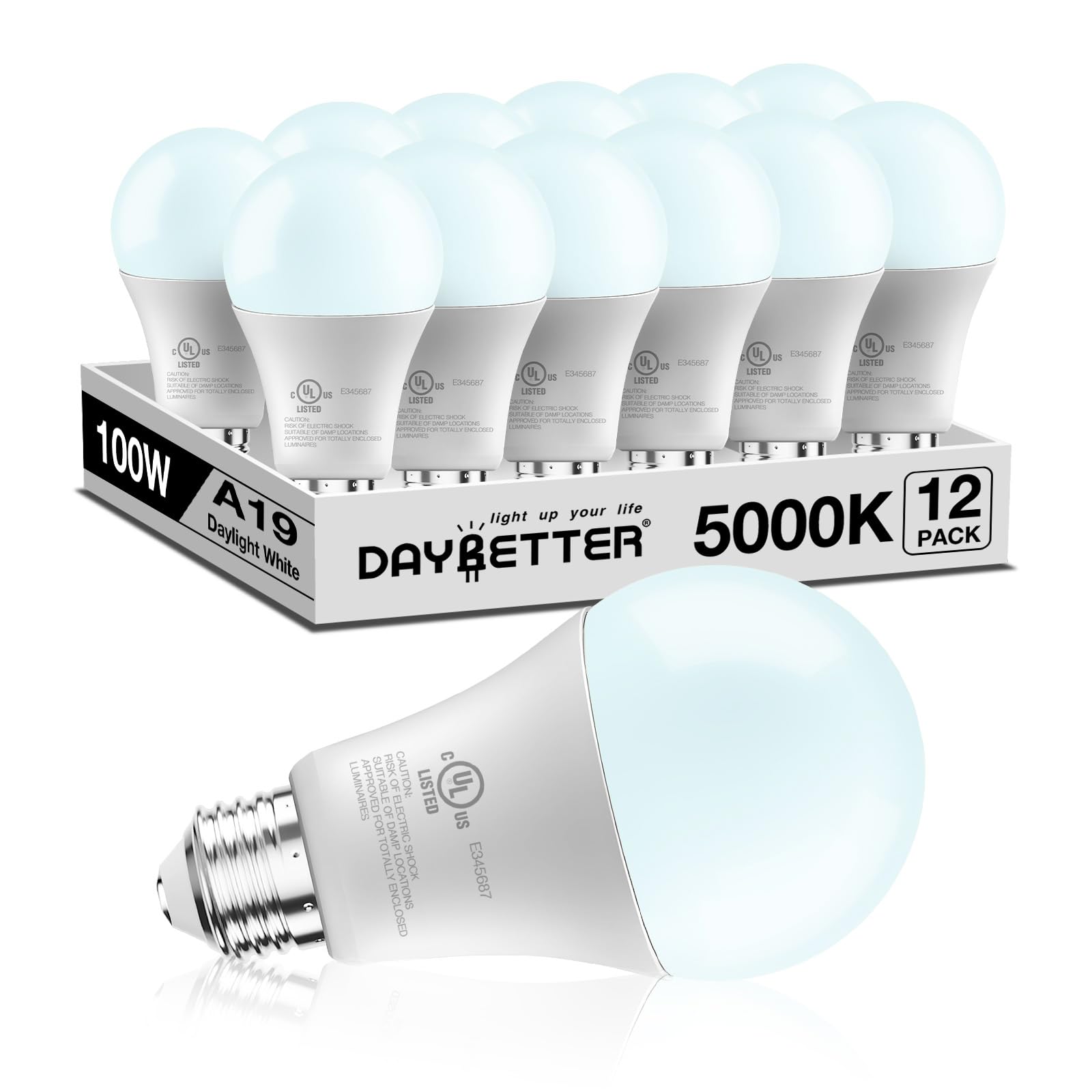
| DAYBETTER A19 5000K Daylight, 12 Pack★ Best Overall | Whole-home daylight swap | 5000 Kelvin | 1500 lumens | 15,000 hours | Amazon |
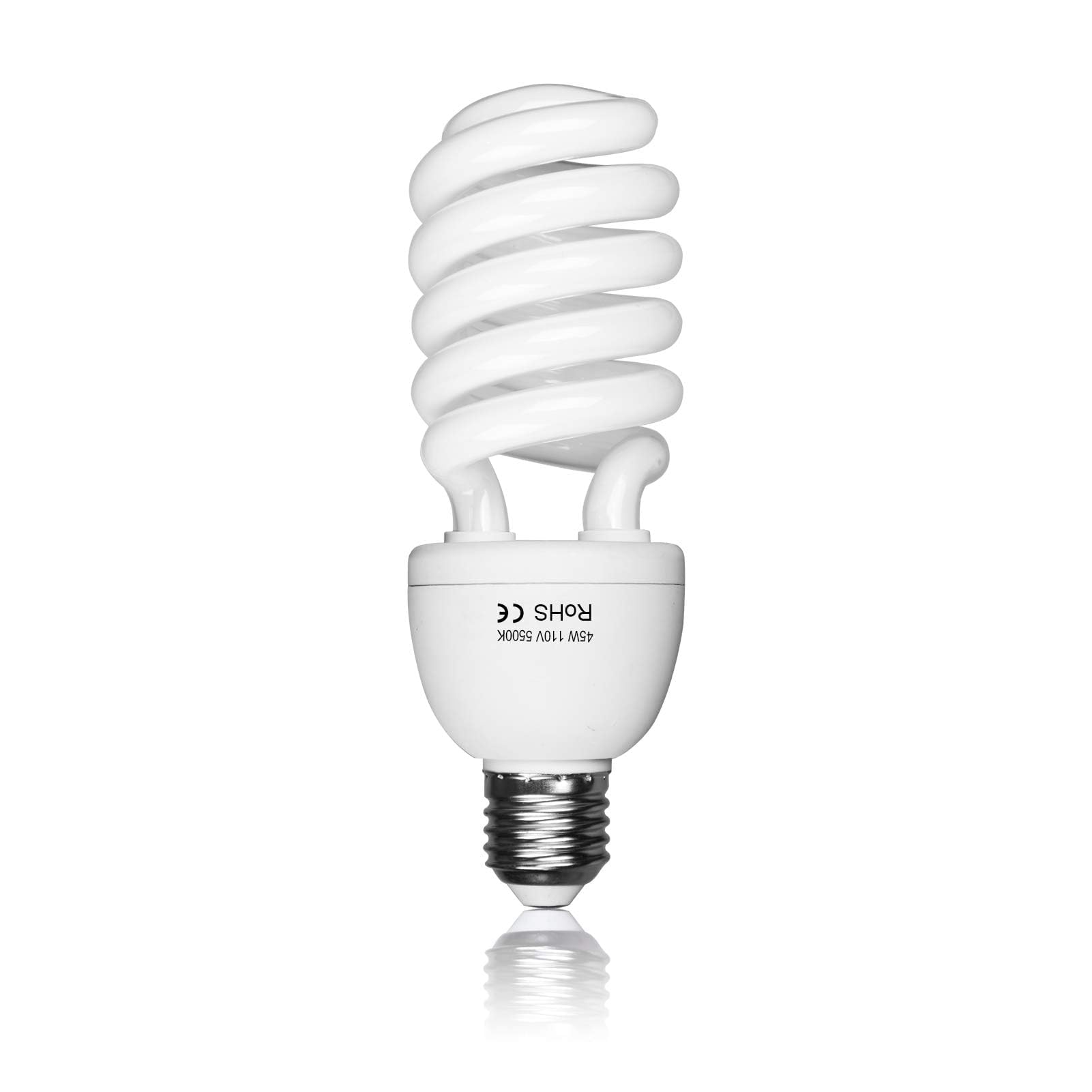
| EMART 45W 5500K Full Spectrum Bulb, 1 PackBest for Photos | Photo and video studios | 5500 Kelvin | 2500 lumens | 8,000 hours | Amazon |
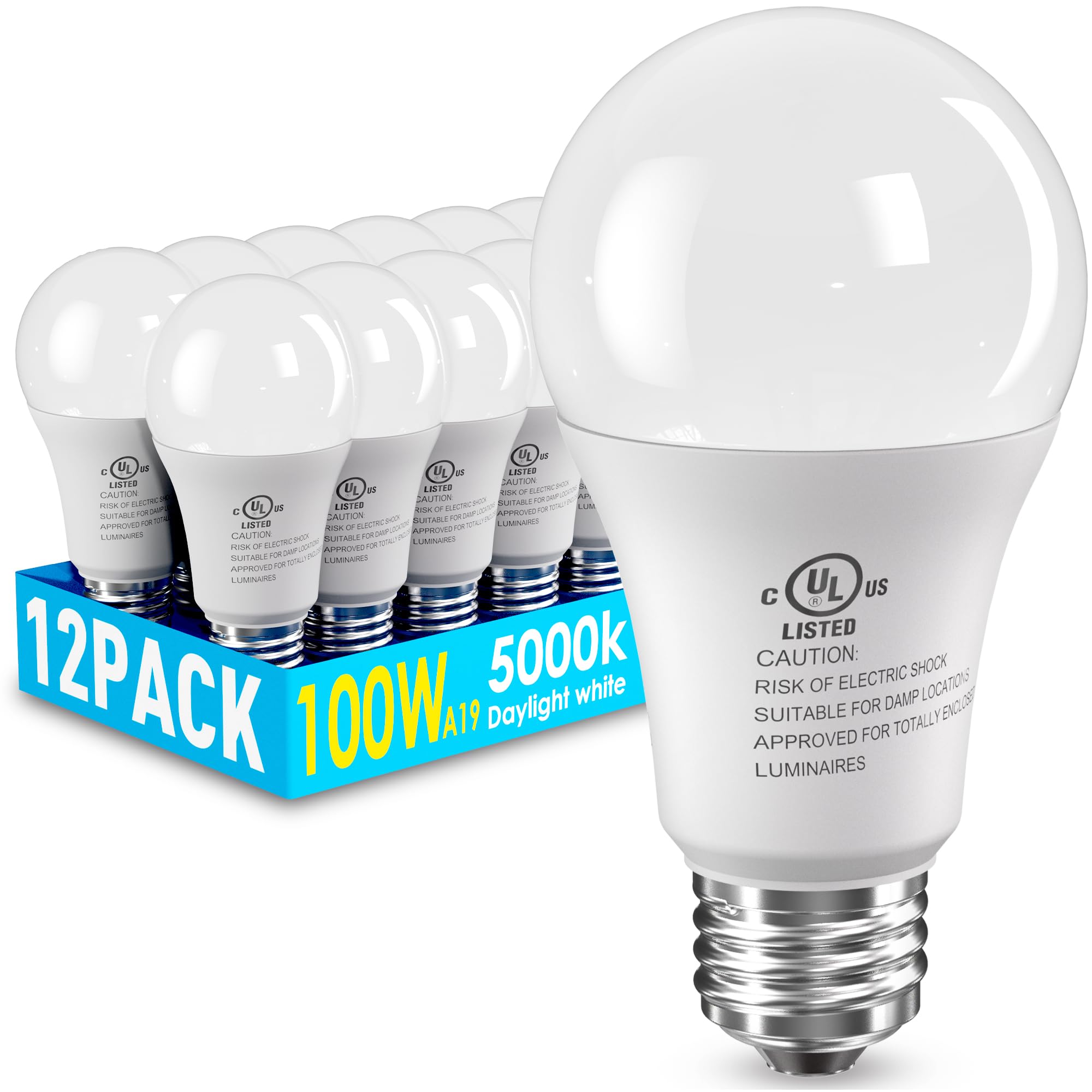
| CHARKEE 12 Pack A19 5000K Daylight White | High-CRI room lighting | 5000 Kelvin | 1500 lumens | 15,000 hours | Amazon |
| Miracle LED Boost Morning Wake Up Light, 2-Pack | Morning wake-up lighting | 6500 Kelvin | — | — | Amazon |
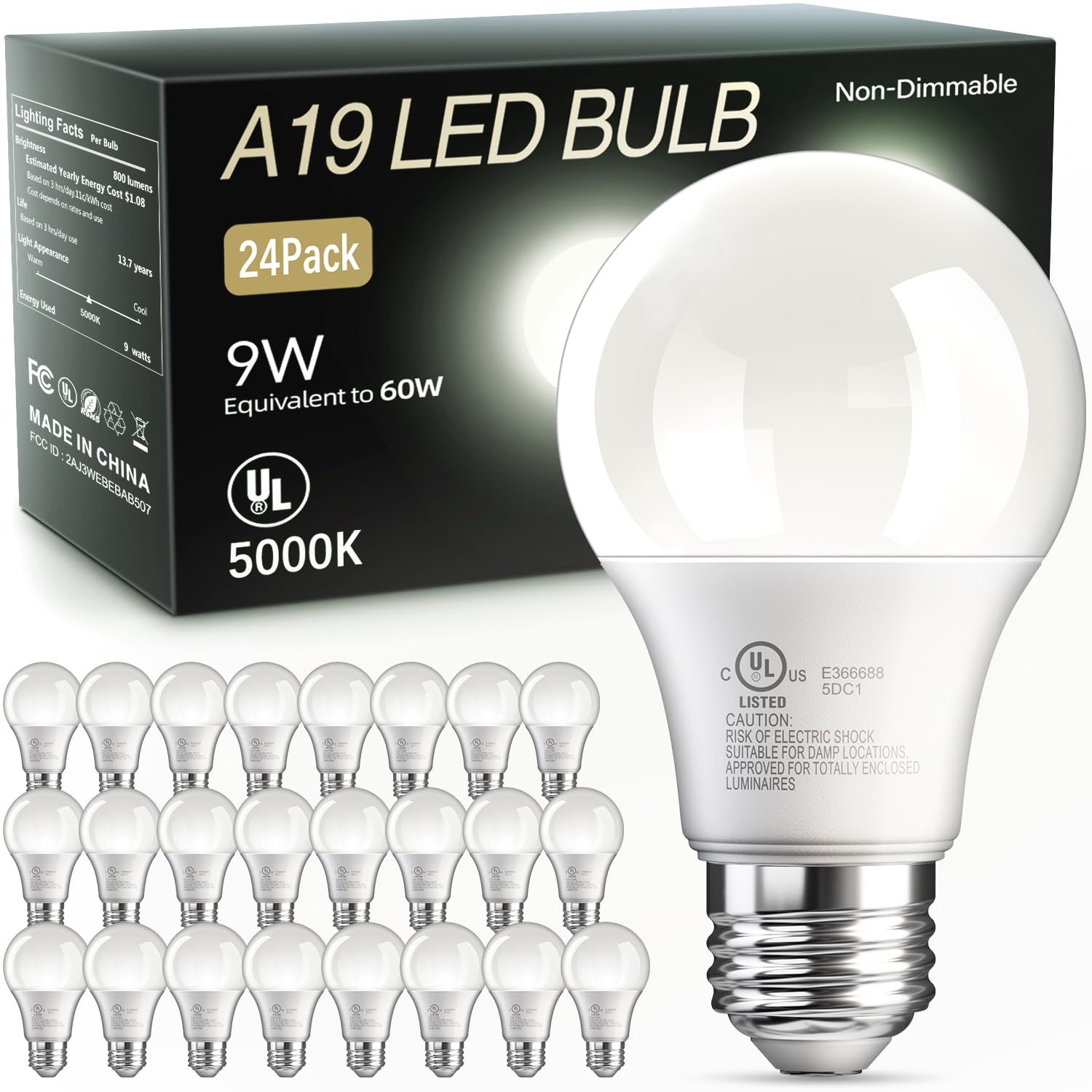
| TJOY 24 Pack A19 60W Equivalent, 5000K | Bulk home restocking | 5000 Kelvin | 800 lumens | 15,000 hours | Amazon |
Detailed Reviews
1. DAYBETTER LED Light Bulbs, A19 5000K Daylight, 12 Pack
Our pick — 4.5+★ from 950+ verified ratings; the strongest balance of quality and price.
Twelve 1500-lumen daylight bulbs that turn a dim kitchen into a room you actually want to cook in.
If you want one order to fix the whole house, this 12-pack is the box to buy. Each bulb puts out 1500 lumens — the raw light quantity that decides whether a room feels bright — and it does that while drawing the equivalent of 100 watts from a fixture. The color sits at 5000 Kelvin, the noontime daylight range, so walls stop reading yellow and start reading white. A 280-degree beam angle spreads that light wide instead of throwing one hot pool on the floor.
Owners praise the jump in brightness first and the build quality of the batch second. Twelve bulbs at this level also means you can redo the bedrooms, the bathroom, and the hallway in one go without running short.
Against the EMART studio bulb further down, the gap is endurance: this bulb is rated for 15,000 hours versus the EMART’s 8,000. Over a normal evening-lighting schedule that is years of not thinking about the ceiling. It is also non-dimmable, so if any fixture in your home is on a slide switch, either leave that one at full or plan on a different circuit.
What earns the top slot
- 1500 lumens of genuine daylight at 5000 Kelvin — a full room, not a corner
- 85+ CRI keeps skin tones and food colors honest
- 280° beam angle covers a room without hotspots
- Twelve E26 bulbs in one order, screw-in with no tools
Where it asks something of you
- Non-dimmable — a dimmer switch is not an option on these
- 5000 Kelvin is cooler than anyone expecting a soft glow will want
Buy this when: you are re-lamping a whole home and want every room to land on the same clean daylight white.
Think twice when: a fixture in your house is wired to a dimmer — these will not play along.
2. EMART 45W 5500K Fluorescent Full Spectrum Light Bulb, 1 Pack
The single brightest bulb here at 2500 lumens, built for a softbox rather than a ceiling fixture.
This one is a specialist, and the number to notice is 2500 lumens. That is the light output of a bulb meant to flood an umbrella or a backdrop, and it blows past the 1500 lumens you get from the DAYBETTER and the CHARKEE. It runs at 45 watts and replaces a 225-watt incandescent — roughly double what a standard 100-watt-equivalent household bulb claims — which is why it throws so much light in one go. The 5500 Kelvin color sits right in the neutral range photographers want for color-accurate shots.
Functionality is what owners rely on: it threads into any E26 or E27 socket, works under a photography umbrella, and holds a steady color temperature with no flicker. A portrait shoot is the clearest use case. As buyers report, “Can’t speak to lifespan yet but the brightness and temperature is perfect for my indoor photo needs.” The CRI lands at 80, which is respectable for video and product shots but a step below the 85+ the household bulbs carry. It also is not a small bulb: at 6.7 inches long and 2.3 inches wide it is noticeably chunkier than an A19, so check that your umbrella, softbox, or studio reflector has room for it.
Here is the honest trade-off. Lifespan lands at 8,000 hours, well under the 15,000 the DAYBETTER, and the pattern in owner feedback backs that up — several long-term users report bulbs giving out inside a year of heavy studio use. Add the fact that this is a fluorescent bulb, which means it contains mercury and needs special disposal at the end of its life. Buy it as a working light for your camera, not as a replacement for the bulb over your dining table.
The case for it: Nothing else in this lineup touches 2500 lumens, and the 5500K plus CRI 80 combo is a genuinely neutral, professional-looking light source for umbrellas, softboxes, and product tables.
The fair warning: Shorter rated life and mercury-based construction mean this is a tool for a studio shelf, not a general home fixture.
Reach for this if: you shoot photos, sell products online, or run a studio and need one bulb that can flood a scene with clean neutral light.
Look elsewhere if: you are shopping for everyday household lighting — the 15,000-hour LED options are the smarter home pick.
3. Miracle LED Boost Morning Wake Up Light, 2-Pack

The coolest bulb in the group at 6500 Kelvin — engineered for mornings, not mood lighting.
Color temperature is the whole story with this bulb, and it is the highest in the lineup at 6500 Kelvin. Compare that to the 5000 Kelvin the DAYBETTER and CHARKEE run, and you can feel the difference the moment you flip the switch: this is a bright, sky-at-noon white, cooler than anything else on this page. It drops into a standard E26 fixture just like the others, and it replaces a 100-watt incandescent bulb.
Brightness is the trait that sells it, and reliability is close behind — owners tend to come back and say the same thing a year or more later. It brightens a dreary space fast and holds up over months of daily use.
The trade-off shows up in color. Some buyers find the 6500 Kelvin white less warm than they expected for a bedroom or living space, and a handful report a bulb giving out short of a year. Neither is a dealbreaker for the intended morning-wake use — but if you want a cozy evening glow, this bulb will feel clinical. The CRI sits at 80, so it is fine for general rooms but a touch behind the 85+ household bulbs for makeup or color-critical work.
What it does best: A 6500 Kelvin, E26-fit bulb that puts out a bright cool white and earns repeat loyalty from owners who use it as their morning light. It is the coolest Kelvin rating on this list, and that is the point.
The honest limit: It is not a mood bulb — the cool tone reads clinical to anyone expecting warmth, and a rare unit has failed inside a year.
It loses to the DAYBETTER on lifespan but wins on tone: pick the Miracle LED if you want the most “wake up” color a standard bulb can give.
Not the one for you if: you want a single bulb to warm a living room at night — go 5000K instead.
4. TJOY 24 Pack A19 LED Light Bulbs, 60 Watt Equivalent, 5000K
Twenty-four bulbs on your doorstep, which is the most you can buy in a single order here.
This is the order for a landlord, a big house, or anyone tired of buying bulbs two at a time. You get 24 A19 bulbs with an E26 medium base, all running at 5000 Kelvin daylight white. Each one puts out 800 lumens, which is the softest light output of the household picks on this page — softer than the 1500 lumens the DAYBETTER and CHARKEE deliver — so keep these for lamps and smaller rooms rather than a wide-open kitchen. They replace 60-watt incandescent bulbs while drawing just 9 watts.
Brightness and quality are what owners talk about, and the theme running through the feedback is that these read as clean, natural light without eye strain. Buying in a 24-pack also does not lock you into one use: the same box stocks bedside lamps, hallways, and a garage shelf. The non-flicker build and the “no lead or mercury” construction are the two specs note here — mercury-free matters if you ever have to dispose of a dead bulb and do not want the special-handling hassle a fluorescent carries.
Here is the honest read on the value. The TJOY runs at 800 lumens, so it is the dimmer of the two big-pack options; if you want a bright kitchen or a room you photograph, step up to the 1500-lumen DAYBETTER. But for warm-fitting lamps, bedrooms, hallways, and bulk replacement, the TJOY at 24 per box is the most economical way to go LED across a whole property.
Why to load up
- 24 bulbs in one order — the largest pack on this list for a single purchase
- Mercury-free construction, so no special disposal at end of life
- 9-watt draw replacing a 60-watt incandescent, at 5000 Kelvin daylight white
- Non-flickering and instant-on for lamps and small rooms
The compromise to know
- 800 lumens is the dimmest household output here — not a wide-open-room bulb
- Non-dimmable, same as the rest of the daylight picks
Best for restocking a whole property: the TJOY 24-pack is the volume play — the one order that puts daylight-white LEDs in every lamp and hallway at once.
Wrong pick if: you need a single bright bulb flooding a kitchen — grab a 1500-lumen A19 instead.
5. CHARKEE 12 Pack LED Light Bulbs, A19 5000K Daylight White
The accurate-color pick: same brightness as the top bulb, dialed in for truer tones.
Same headline numbers as the DAYBETTER — 1500 lumens, 5000 Kelvin, E26 A19 shape — but the difference you will actually see is the color rendering. The CRI here is 85, and CRI is the score for how faithfully a light shows real colors. That makes this the pick for a bathroom mirror, a home studio corner, or a retail display where you need makeup, fabric, or product colors to match what you see under daylight.
The bulbs are rigorously tested against buzzing and flickering, which is the sour note that ruins cheap LED batches, and the 280-degree beam angle spreads light across a room rather than pooling it in one spot. Quality is the trait owners key on most, with brightness a close second — the crisp daylight tone reads clean and not overly blue. Replace a 100- to 125-watt incandescent with these and you cut real heat out of the room, which is a small mercy in a small bathroom or a closet full of clothes.
Where it gives ground is lifespan consistency. The rated 15,000 hours matches the DAYBETTER, but the pattern across longer-term feedback is that a small number of bulbs arrive dead or fail early — so test a few in the box on day one and you will know whether your batch is clean. Not a reason to skip it; just a reason to check before you stash the spares in a drawer. For color accuracy at a household price, this is the one to reach for.
The winning detail: An 85 CRI at 1500 lumens and 5000 Kelvin — a combination that keeps food, fabric, and skin tones looking like themselves, not like a cartoon. The 280-degree beam fills a room even and wide.
The one thing to watch: A minority of bulbs can arrive faulty or quit early — open the box early and test them, and the value is unbeatable.
Pick the CHARKEE if: color accuracy is your priority — a dressing table, a product shelf, or any room where things need to look real.
Go to the DAYBETTER instead if: you want the higher-confidence build and the larger review base for a straight whole-home swap.
Know the Specs
Color Temperature in Kelvin
Kelvin measures how warm or cool the light looks, not how bright it is. Lower numbers read yellow and cozy; higher numbers read white and crisp. The daylight picks here run at 5000 Kelvin, which mimics noon sun and suits kitchens, bathrooms, and workspaces. The 6500 Kelvin Miracle LED pushes cooler still, closer to a bright morning sky, which is why it suits wake-up use. When a box calls itself “natural light,” the Kelvin number is the truth — check it before you buy.
Lumens and CRI Explained
Lumens are the total amount of light coming out of the bulb, so they tell you whether a room actually gets bright. A 1500-lumen A19 floods a room; an 800-lumen bulb is better for a lamp. CRI, or color rendering index, is a score for how faithfully a light shows colors — 80 is standard, 85+ keeps skin tones and food looking natural. If you shoot photos or match makeup under these lights, a higher CRI matters as much as a higher lumen count. Non-dimmable bulbs on a dimmer switch can buzz or flicker, so match the bulb to the fixture.
Common Questions
What Kelvin rating counts as a natural light bulb?
Will these bulbs fit my existing lamps and ceiling fixtures?
What does CRI mean and does it matter for my home?
How long will a 15,000-hour LED bulb actually last?
Can I put these bulbs on a dimmer switch?
Is a 6500K bulb too cool to feel natural in a room?
Which is brighter, the 1500-lumen bulbs or the EMART studio bulb?
Do natural light bulbs save energy over the old incandescent bulbs?
Where should I use a 5000K daylight bulb versus a 6500K one?
Do I need to be careful disposing of these bulbs?
The Bottom Line
For most homes, the natural light bulbs winner is the DAYBETTER A19 5000K 12 Pack because it delivers the full 1500-lumen daylight white at the highest CRI of any 5000K bulb here, backed by 15,000 hours of rated life and the strongest owner confidence of the group. If color accuracy is your priority — a dressing table, a product shelf, a room you photograph — grab the CHARKEE 12 Pack for its 85 CRI and 280-degree beam. And for a studio, an umbrella, or a softbox where you need raw light, the EMART 45W 5500K is the one to reach for. Whichever you choose, buy the 5000K range for home lighting and leave the 6500K for the morning wake-up.
How we choose
We do not accept paid placement. Every pick is matched to a real buyer and a real use-case; we do not hands-on test units.
Sources
Specifications: manufacturer listings and product documentation. Review insights: verified customer reviews, as of October 2026. Pricing: not shown on this page (it changes often); check the current price via the retailer link.
As an Amazon Associate, Aappliancez earns from qualifying purchases. This does not affect which products we feature.