Disclosure: Some links in this post are affiliate links. As an Amazon Associate I earn from qualifying purchases, at no extra cost to you. Learn more
Specs are compiled from manufacturer listings and verified buyer reviews and can change over time — please confirm the key details on the product page before buying.
A furnace is the one purchase in your house you never see working — you only notice it when the house stays cold or the gas bill jumps. The real question is not which unit looks best on a listing page. It is which heat output, efficiency rating and venting setup actually match your house, your ductwork and who is allowed to install it. That is what this guide sorts out, pick by pick.
This guide is built by comparing the manufacturers’ published specifications and the patterns across verified customer reviews, so you get each pick’s real strengths and trade-offs instead of marketing spin.
Below you will find whole-home gas furnaces, wall-mounted heaters and RV units separated by what they actually do, plus the installation rules that trip people up. The honest shortlist of the natural gas furnace market starts with knowing your home’s heat load and whether your installer will touch a DIY-sourced box.
Top Picks


How To Choose The Best Natural Gas Furnace
Buying a furnace is really three separate decisions stacked on top of each other: how much heat your house needs, how efficient you want that heat to be, and what your installer is legally willing to connect. Get the order wrong and you end up with a great furnace that will not fit, or one that fits but costs more to run than it should.
Start with heat output, not efficiency
Heat output is measured in BTUs (British thermal units — the standard unit of heating power). A 20,000 BTU RV furnace and a 150,000 BTU boiler are doing totally different jobs, and neither one is “better.” Match the BTU number to the space: small rooms and RV cabins sit in the low tens of thousands, while whole homes typically run far higher. Oversizing wastes fuel and cycles on and off; undersizing leaves rooms cold in a cold snap.
Then decide how much efficiency you are paying for
AFUE (Annual Fuel Utilization Efficiency) is the percentage of gas that becomes usable heat rather than going up the flue. An 80% furnace sends roughly a fifth of its fuel out the vent; a 96% condensing unit captures most of that. Higher AFUE costs more up front and usually needs a condensing setup with proper drainage, so it pays back over years of cold seasons, not weeks.
Check orientation and venting before you buy
Many furnaces are upflow or horizontal only and cannot be flipped to a downflow layout. Venting matters just as much: a direct-vent wall unit needs a hole through an outside wall, a ventless heater needs no duct at all, and an RV furnace needs a specific exterior access door. Confirm the install path first, then choose the model.
Work out who is installing it
Warranty coverage and installation type are tied together in this category. Several makers state plainly that professional installation is recommended, and some brands offer no warranty at all on a self-installed unit. If you plan to install it yourself, read the warranty terms before the box arrives, not after.
Side-by-Side Comparison
| Model | Best For | Heat Output | Efficiency / Fuel | Install Type | Amazon |
|---|---|---|---|---|---|
| Goodman GR9S960803BN★ Best Overall | Whole-home replacement on a value budget | 80,000 BTU/h | 96% AFUE | Upflow / Horizontal | Amazon |
| Rinnai i150SN Condensing BoilerBest for Radiant | Hydronic and in-floor radiant heating | 150,000 BTU | Condensing, natural gas | Wall mount | Amazon |
| Suburban NT-20SEQBest for Van Builds | Small RV and van zone heating | 20,000 BTU/h | Propane (LP) | Direct discharge, interior | Amazon |
| Rinnai FC510N | Supplementing a chilly room or basement | 10,000 BTU | Natural gas, ventless | Wall mount | Amazon |
| Suburban SF-35VHQ | Ducted RV replacement | 35,000 BTU/h | Propane (LP) | Vertical or horizontal ducted | Amazon |
| Empire Direct-Vent 15K | Off-grid rooms with no power | 15,000 BTU class | Propane (LP) | Direct vent wall mount | Amazon |
| Rinnai FC824N | Heating a big room or workshop | 24,000 BTU | Natural gas, ventless | Wall mount | Amazon |
| Dometic DFMD30111 | Quiet medium RV heating | 30,000 BTU | Propane (LP) | Horizontal or vertical | Amazon |
| Goodman GR9S800803BX | Mild-climate whole-home install | 80,000 BTU | 80% AFUE | Upflow / Horizontal | Amazon |
| Empire DV-215-SGLP | Cabin and camp heating | 15,000 BTU | Propane (LP) | Direct vent wall mount | Amazon |
| Goodman GR9S960803BN (Nationwide) | High-efficiency whole-home swap | 80,000 BTU | 96% AFUE | Upflow / Horizontal | Amazon |
| Goodman GR9T960803BN | Two-stage comfort in cold climates | 80,000 BTU | 96% AFUE | Upflow / Horizontal | Amazon |
| Rinnai EX38DTWN | Whole-room direct vent heating | 38,400 BTU | Natural gas, direct vent | Wall mount | Amazon |
Detailed Reviews
1. Goodman GR9S960803BN Gas Furnace
Our pick — 4.5+★ from 60+ verified ratings; the strongest balance of quality and price.
The whole-home workhorse that turns most of your gas into heat, not exhaust.
For a homeowner replacing an aging furnace in a standard upflow closet, the number that matters is 96% AFUE — meaning 96 percent of the gas you pay for becomes heat, with very little lost up the flue. It pairs that with 80,000 BTU/h of output and 1,200 CFM of airflow (cubic feet per minute — how much air the blower pushes through your ducts), enough to move warm air through a full house rather than one hallway.
The multi-speed ECM motor is the quiet part of the story. It varies blower speed instead of slamming on at one fixed rate, which smooths out airflow and keeps the unit calmer than a fixed-speed blower. Functionality is what wins people over here — the diagnostic motherboard and straightforward controls get the most praise, with installation ease close behind. As buyers put it, “Self-installed, passed inspection; well-written instructions, no surprises.”
Weigh it against the Rinnai i150SN and the difference is scale and purpose: the Rinnai pushes 150,000 BTU into a hydronic system, while this Goodman feeds forced-air ducts at 80,000 BTU/h. It also sits at 114 pounds, against the Rinnai’s 68.3 pounds, so plan for two people on install day. At 4.5+ stars from 60+ ratings it is the highest-scoring whole-home furnace here.
Where it earns its keep
- 96% AFUE keeps most of your fuel spend inside the house
- 1,200 CFM ECM blower moves air through real ductwork quietly
- Diagnostic board makes troubleshooting less of a guessing game
- Replaces several older Goodman model numbers directly
Where it asks something of you
- Upflow or horizontal only — it cannot be installed as a downflow
- Goodman offers no warranty to DIY installers
- 114 pounds means a two-person lift
- Line sets, thermostats and LP kits are sold separately
Made for: a standard upflow or horizontal closet where you want high efficiency without stepping into two-stage territory.
Think twice if: your ductwork runs downflow or you plan a solo self-install and want warranty coverage.
2. Rinnai i150SN Condensing Gas Boiler
A wall-hung boiler for homes that heat with water in the floor, not air in the ducts.
If your house uses in-floor radiant tubing or a hydronic loop, you are not shopping for a furnace at all — you need a boiler, and this one delivers 150,000 BTU through a stainless-steel heat exchanger with a modulating wire mesh burner. Modulating means the burner scales its flame up and down to match demand instead of running flat out, which is where the efficiency comes from.
Set your central heating water anywhere between 104°F and 180°F and your domestic hot water between 98°F and 140°F on the digital display. Multizone control lets thermostats and integrated pumps connect straight to the unit. A child-lock shuts central heating off with one press, which is a genuinely useful touch in a house with small kids.
Running costs are the headline for owners. Buyers report lower gas bills in spring, summer and fall, with an expected 2.5-year payback as natural gas prices climb. It measures 18.5 inches wide by 26.4 inches high and weighs 68.3 pounds — light enough for a wall mount, compact enough for a utility space. Rinnai covers the heat exchanger for 12 years on the residential side.
The installation reality: Rinnai explicitly recommends a qualified technician rather than a DIY fit, so budget for a pro. The condensed warranty line in the listing reads parts 2 years and labor 1 year, which is worth confirming with your installer before signing.
Reach for this if: your home is set up for radiant heat or you are building a hydronic system from scratch.
Look elsewhere if: you have standard forced-air ducts — a boiler will not feed them.
3. Suburban NT-20SEQ RV Furnace
The solar-friendly RV furnace that barely touches your battery bank.
On a van or camper build running off solar, amp draw decides everything. This unit pulls just 2.7 amps at 12 volts — low enough that a modest battery setup can carry it overnight, which is why it beats a diesel heater for many builders. It puts out 20,000 BTU/h into smaller interiors and vents directly with the exterior cap included.
Performance is what carries this model, and heat output follows close behind. In one custom van build with the 4-inch side duct option, the front top surface reached roughly 130°F after a 20-minute burn-in, and the exterior exhaust stays near silent. The fan sits at ordinary RV noise level, not whisper-quiet but not objectionable either.
The honest catch is up-front prep. Installation is a mixed bag: it needs an interior-mounted wall thermostat sold separately, a two-stage LP regulator, a 3/8-inch FLR gas inlet fitting, a shutoff valve and 18/4 wire. Single-stage regulators have failed to ignite it until swapped. Docs are thin, and there is a burn-off smell for the first 20 minutes that you want to vent outside.
What to plan around: order every fitting on the same day as the furnace, because the thermostat and regulator are non-negotiable extras. It is rated at 3.5+ stars from 50+ ratings, with the occasional damaged-in-transit unit reported — inspect the box before you sign for it.
Suits: small-interior RV, van and camper builds where 12-volt efficiency rules.
Pass if: you want a furnace that arrives ready to bolt in without buying a thermostat and regulator separately.
4. Rinnai FC510N Natural Gas Heater

A compact wall heater that turns one cold room into the warmest spot in the house.
Ten thousand BTU covers roughly 150 to 200 square feet, which makes this the pick for a basement, a drafty living room or a converted garage — not a whole-house solution. It is ventless and ductless, so it mounts on a wall and reuses an existing gas connection with no flue to run through the roof. Draw is just 0.16 amps, so it does not stress a circuit.
Quality is what people notice first, with reliability right behind it. The programmable thermostat display handles adaptive control, and a self-diagnostics routine flags issues before they turn into a cold night. On the safety side you get a flame failure device, an overheat switch, an oxygen depletion sensor and a tilt switch — each one shuts the gas or power off if something is wrong. The cabinet stays cool to the touch and carries a child safety lock.
In one basement that ran 8 to 10 degrees cooler than the rest of the house, it brought the space up to a genuinely livable temperature. The trade-off you should know about is the warranty split: 10 years on the heat exchanger, 5 on parts, but only 2 on labor. It is rated 4.5+ stars from 40+ ratings, and while one listing claims coverage up to around 400 square feet, plan on the official 150 to 200 square foot range.
What makes it click
- Ventless design skips flue work entirely
- Four independent safety shutoffs built in
- Cool-to-touch cabinet plus child lock
- Only 0.16 amps of draw
What to weigh honestly
- 10,000 BTU is a room heater, not a whole-home unit
- Labor warranty is the shortest of the three tiers
- Rinnai recommends a qualified technician for install
This is the one for: a single stubborn room that never catches up with the main thermostat.
Not the fit for: anyone expecting to heat a full floor plan from one wall unit.
5. Suburban SF-35VHQ RV Furnace
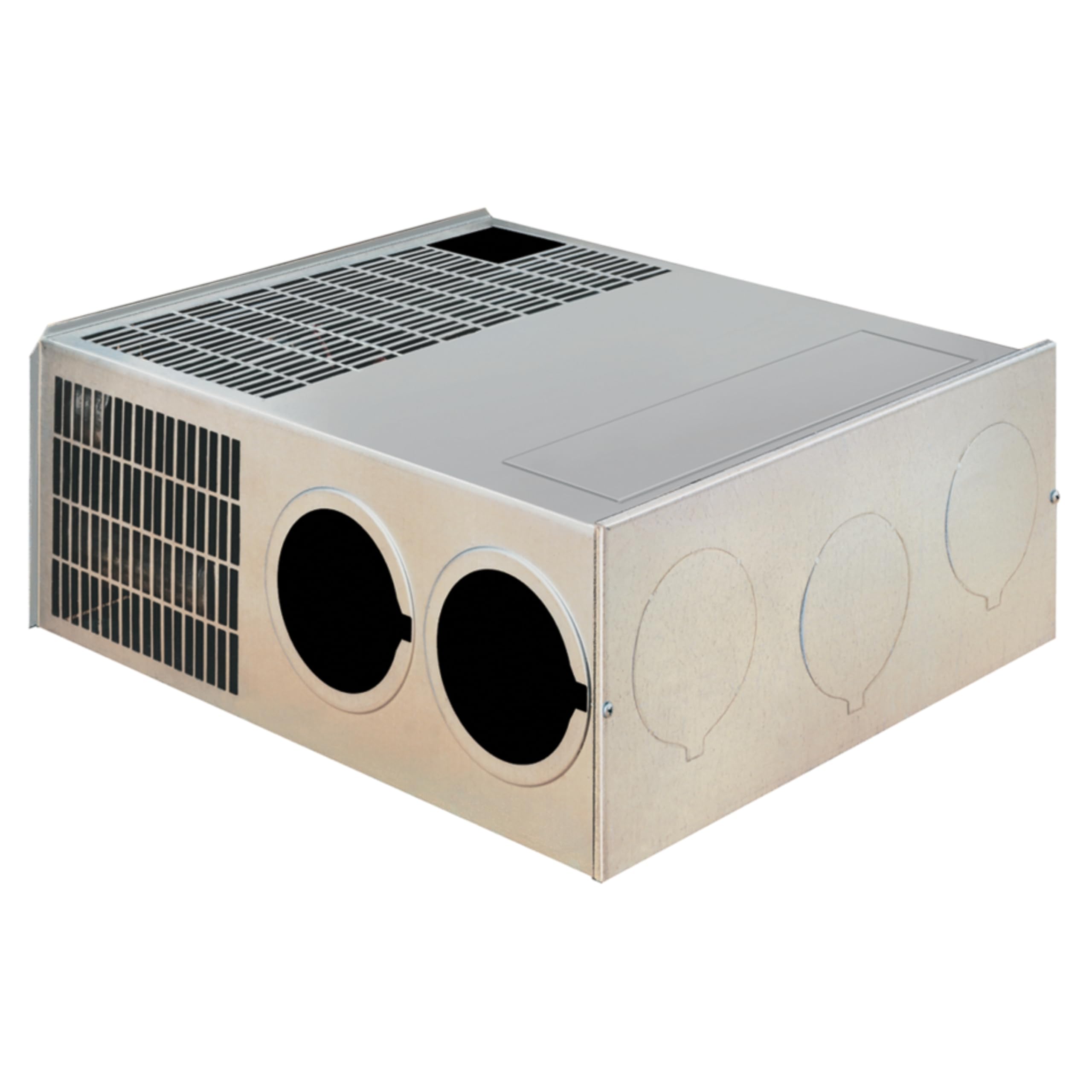
Thirty-five thousand BTUs of ducted heat for a rig that has to survive a Wisconsin winter.
The defining spec here is 35,000 BTU/h delivered through ducts rather than straight out of a grille, so warm air reaches the bedroom and the bathroom, not just the hallway vent. It drops into either a vertical or horizontal orientation, which gives you flexibility in a tight RV cavity, and the low-profile body measures 20 by 17 by 7.5 inches at 30.6 pounds.
Ignition is direct spark with sealed, forced-draft combustion, so the burn chamber is sealed off from the living space. That is the same safety architecture Suburban uses across the line. It requires the Suburban #6258xxx exterior access door for outside service access, plus an interior wall thermostat sold separately.
Owners who fitted it as a straight replacement report it keeps up in genuine cold. Fitting it into an existing opening is easy work — one 2009 Puma owner swapped a 35F for this and said it heats great through a Wisconsin winter, with the caveat that it is “not at all quieter than the original furnace.” Weigh the value angle honestly: at 4.0+ stars from 20+ ratings, there are damaged-in-shipping reports and one unit that did not last a season, so check the housing the day it lands.
The long-run question: resealing the intake and exhaust when you reuse an existing outside cover is the fiddly part, and heat durability of that sealant is worth checking each season. It is a solid ducted replacement, not an upgrade in quietness.
Pick it when: your rig already runs ducted heat and you need the same footprint in a fresh unit.
Skip the swap if: noise is your main complaint with the old furnace — this will not fix it.
6. Empire Direct-Vent Wall Furnace, LP 15K

Runs on gas alone — no fan, no wiring, no power bill at the cabin.
The whole point of this unit is that it uses no electricity at all. Piezo ignition (a push-button spark, the same idea as a gas grill starter) lights it without a plug, which makes it the natural fit for an ice fishing shack, a cabin or any room that loses power in a storm. It vents directly through an outside wall, so combustion gases leave the building and the room stays breathable.
Its slim cabinet tucks against an exterior wall and comes in a beige textured finish over a cast-iron build. Clearances are spelled out plainly: 12 inches on top, 1 inch to the sides, zero at the bottom, with a 4-1/2 to 13 inch wall depth and a 6-1/4 inch diameter vent opening. The LP gas inlet is a standard 1/2 inch NPT fitting.
The caveat is support and setup. You must buy a thermostat separately — there is no wall thermostat in the box, only the unit’s own controls. The rating sits at 3.5+ stars from 20+ ratings, and the split in those reviews is stark: people replacing a 30-year-old Empire with the same footprint are delighted, while those who hit a stuck pilot report trouble reaching the company. Buy from an authorized dealer if warranty service matters to you.
Why cabin owners like it
- Zero electricity needed — runs entirely on gas
- Piezo ignition removes any power dependency
- Direct vent keeps exhaust out of the room
- Clear, published clearance and vent specs
What to go in knowing
- Thermostat is not included
- Warranty service runs through the dealer, not direct
- Pilot and gas valve issues show up in a minority of reports
Built for: off-grid shacks, cabins and backup rooms where the power may go out.
Elsewhere with: a dealership you can walk into, since service is the weak link here.
7. Rinnai FC824N Natural Gas Heater

Twenty-four thousand BTUs that turn a three-car garage into a sixty-degree workshop.
The FC824N is the bigger sibling to the FC510N, and the jump in output is what sells it: 24,000 BTU instead of 10,000, aimed at larger rooms, workshops and open-plan living spaces. It runs on natural gas, mounts to a wall, and needs no duct or flue work, pulling just 0.24 amps.
Performance is the aspect that wins the most ground with owners, with heat output right behind it. It holds temperature in a fully glazed 20-by-20 room, and one Michigan garage with a 10-foot ceiling sat at 60 degrees “without hardly working at all.” The programmable thermostat and self-diagnostics keep it predictable, and the safety package — flame failure device, overheat switch, oxygen depletion sensor and tilt switch — works the same as on the smaller model.
Two things to go in eyes-open about. The ignition makes a brief buzz when it lights — a couple of seconds, then quiet — and the price puts it at the top of the ventless range. It is rated 4.5+ stars from 80+ ratings, the strongest score among the ventless picks, which is why it can justify the outlay for a room you intend to use every day.
How it behaves in winter: fan speeds are switchable between high and low, and it cycles periodically to hold the setpoint rather than blasting constantly. The one recurring note is the ignition buzz and a high up-front cost — not a fault, just part of the trade.
The right call for: a garage, workshop or great room you want warm on demand without ducts.
Consider the FC510N instead if: your space is under 200 square feet and you do not need the extra output.
8. Dometic DFMD30111 Medium Furnace, Low-Profile LP Gas Furnace
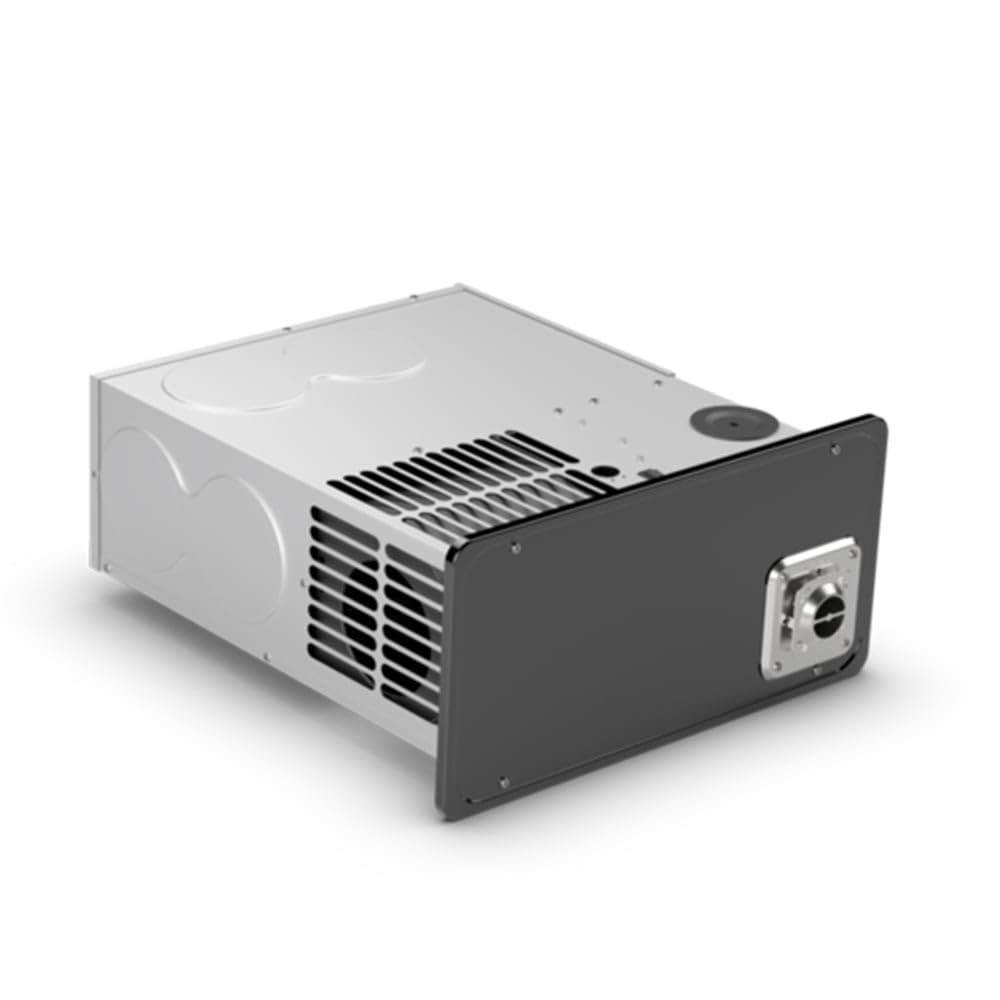
Quiet, even airflow for a mid-size coach that has to heat without hot spots.
The engineering story here is the heat exchanger, designed to spread air more evenly rather than dumping heat at one end of the coach. That reduces the hot-and-cold corners that plague older RV furnaces, and Dometic claims it heats the coach quicker with less gas along the way. Output sits at 30,000 BTU, which covers medium RVs and trailers without overworking a 12-volt DC system.
Noise is where the design earns its keep. Reduced air turbulence inside means a noticeably calmer blower than the factory furnace it tends to replace. It is also UL listed and certified for safe use in RVs and campers, and installs in either a horizontal or vertical configuration. Weigh it against the Suburban NT-20SEQ and the gap is size and job: the Dometic’s 30,000 BTU handles a medium coach, while the Suburban’s 20,000 BTU is for smaller interiors and van builds.
Here is the honest part. Cost is the most-discussed point in the reviews, and it is not framed as praise — several owners find it expensive, which is a fair read for a premium RV component. Functionality opinions split too, with a few ignition-failure reports after limited use. It is rated 3.5+ stars from 30+ ratings, with the happy cases being drop-in replacements that fit the existing cutout and work all season.
Fit first, price second: if your coach takes a 30,000 BTU LP unit in that footprint, the upgrade in quietness is real. If you are unsure of the size or your cutout, confirm the model number against your coach build sheet before ordering.
Choose it if: you own a medium trailer and want quieter, more even ducted heat.
Hold off if: you need the lowest reliable entry price — the budget RV options cover that job.
9. Goodman GR9S800803BX Furnace

The standard-efficiency workhorse for mild winters and tighter install budgets.
Eighty percent AFUE means this furnace turns four-fifths of your gas into heat, with the rest leaving through the vent. In a mild climate where the furnace runs fewer hours, that trade is a reasonable one, and it keeps the up-front cost below the condensing models. Output is 80,000 BTU into the same 17.5-inch cabinet width as the higher-efficiency models, so a like-for-like swap is straightforward.
It shares the multi-speed ECM motor with the rest of the Goodman line, which smooths blower speed and calms the airflow noise. The aluminized steel primary heat exchanger is the same construction used across this family, and it is R32-ready — meaning the refrigerant handling is prepped for newer systems.
The install rule is the same as its 96% sibling: upflow or horizontal only, never downflow. If you need a downflow, you have to look for a model beginning with GD9 instead. Accessories like line sets, thermostats and LP conversion kits are sold separately. It holds 4.0+ stars from 10+ ratings, with delivery timing and condition doing most of the talking in the feedback.
Why it makes sense
- Standard-efficiency cost with real 80,000 BTU output
- Same 17.5-inch cabinet as the high-efficiency line
- Quiet multi-speed ECM motor
- Aluminized steel primary heat exchanger
Where it holds back
- 80% AFUE gives up a meaningful slice of fuel versus 96%
- Cannot be installed downflow
- Not the right call for a cold climate where run hours are high
Good fit for: mild-winter homes and value-focused replacements where the extra efficiency will not pay back quickly.
Better served by: the 96% models if your winters are long and cold.
10. Empire DV-215-SGLP Wall Furnace

A fifteen-thousand-BTU wall box that heats a cabin without a power feed.
Like the other Empire model here, this one is defined by using no electricity at all — it mounts on an outside wall and vents directly to the outdoors. Fifteen thousand BTU is cabin and camp territory, and it comes in a powder-coated beige cabinet. An optional blower is available as an add-on if you want to push the warm air further than convection carries it.
The strength here is longevity by design. Owners replacing 20- or 30-year-old units find the same model still in production, which is rare in this category. One long-serving swap read: “I wish we had gotten this sooner. It is so much better than our old one.” The control interface is a simple button and touch setup, and it runs off a standard household plug when you do add the blower.
Be realistic about the low points. The rating sits at 3.0+ stars from 20+ ratings, and the criticism is specific: a gas valve that sticks or needs a light, weak thermocouples, and no manufacturer support when purchased direct rather than from an authorized dealer. If you are buying this for a cabin you visit seasonally, the simplicity is a virtue. If you need unattended freeze protection, the valve reliability is the thing to think hard about.
Where it pays off: seasonal cabins and camps where a simple, direct-vent gas heater is the whole system. Where to be careful: a light for the pilot and a dealer relationship are the two things that keep it dependable.
Best matched to: a camp or cabin that needs straightforward wall-mounted heat.
Choose the DV215SGXLP instead if: you hit pilot trouble on a prior Empire or want a dealer-backed purchase.
11. Goodman GR9S960803BN 80,000 BTU Furnace
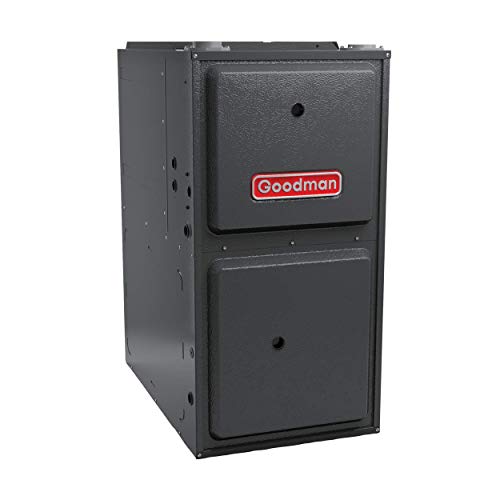
Same high-efficiency heart as the top pick, sold with nationwide installation support.
This is the same 96% AFUE, 80,000 BTU furnace as our Best Overall, listed by a seller that arranges nationwide installation and excludes California. If the appeals of buying through a seller who coordinates the fit and validates the delivery appeal to you more than shopping the bare box, this is the route. The core hardware is identical: multi-speed ECM motor, aluminized steel heat exchanger, 17.5-inch cabinet.
Owners who took this path describe the experience in shipping and setup terms rather than heating terms. “Installed easily, fired right up. Powerful fan, quiet operation. Very satisfied with initial installation.” That is the pattern in the reviews — quick delivery, a seller who double-checks the drop-off, and a furnace that starts on the first try.
Compare it directly to the 80% model and the efficiency gap is the whole argument: 96% AFUE versus 80% AFUE on 80,000 BTU of output, which is real money over a cold season. It weighs 114 pounds, spec’d at 115 volts, and it holds 4.0+ stars from 60+ ratings. The one gap flagged in feedback is that the horizontal vent kit is not included, so plan to source it.
What you are really buying: the same furnace, with a seller who handles delivery coordination. If you already have your own installer lined up, that service adds little. If you do not, it removes a headache.
Go this way if: you want the 96% efficiency plus a seller-managed delivery and install path.
Otherwise: the base model does the same job for buyers with their own contractor.
12. Goodman GR9T960803BN Gas Furnace

Two stages of heat, so the burner idles instead of slamming on and off all day.
Two-stage operation is the difference between a furnace that runs full blast then shuts down, and one that runs low and steady on mild days and only ramps up when it gets genuinely cold. That translates into steadier temperatures room to room and less on-off cycling noise. It sits at 96% AFUE with 80,000 BTU output in a 17.5-inch cabinet, matching the single-stage models on raw heat while adding that comfort layer.
Long-term owners back this one with time rather than a first impression: “Have had it 5 years with zero problems.” A DIY fit can throw a code on first start — one install showed an EAF fault because the R32 sensor defaulted on and triggered mitigation mode without a paired cooling unit, fixed by disabling the A2L function in the menu. Once past that, it ran clean.
The practical trap is that initial setup code, which can look like a fault when it is really a configuration default. It weighs 118 pounds — a touch heavier than the single-stage version at 114 pounds — and it holds 4.0+ stars from 20+ ratings. For cold-climate homes with long heating seasons, the two-stage comfort is worth the step up over “Most Versatile” territory; in a mild climate, the single-stage will feel identical.
The case for two stages
- Low and high output reduces cool spots and cycling
- 96% AFUE on 80,000 BTU of output
- Proven over five-year ownership reports
- Same 17.5-inch footprint as the rest of the line
Where it costs you
- First-start EAF code can confuse a DIY install
- Two-stage hardware costs more than single-stage
- No downflow option — GD9 is the series for that
Overkill if: your winters are short and mild — a single-stage model will feel the same in the room.
13. Rinnai EX38DTWN Wall Furnace

Thirty-eight thousand BTUs of modulating wall heat for a whole small house.
Modulating technology is the spec that makes this unit work for a full home rather than one room: it trims the flame up and down to hold temperature instead of cycling between full heat and off. At 38,400 BTU it can raise a poorly insulated 1,200 square foot house with 10-foot ceilings by 10 degrees in under 15 minutes, and the built-in fan pushes warmth toward the bedrooms, which run slightly cooler but stay comfortable.
The venting is easier than people expect: a single 3-inch hole through the wall, done with a hole saw through vinyl siding and concrete block. In a 24-by-24 detached garage at 37°F outside, it raised the interior from 47°F to 61°F in one hour. It is quiet, has its own built-in thermostat and multi-function timer, and needs no separate wall thermostat. Parent buyers will like the cool-to-the-touch cabinet.
The catch is the thermostat floor: it will not be set below 60°F. That is fine for living spaces and hopeless for a shop where you want a 45°F or 50°F working temperature. It is also the heaviest unit here at 108 pounds and needs 40 inches of front clearance. It holds 4.0+ stars from 20+ ratings, driven almost entirely by how well it modulates and how simple the vent run is.
What earns the premium
- 38,400 BTU modulates to hold a steady setpoint
- Single 3-inch vent hole keeps install simple
- Built-in thermostat and timer, no extras needed
- Cool-to-touch cabinet with a safety lock
What limits it
- Cannot be set below 60°F — no good for cold shops
- 108 pounds and 40 inches of front clearance needed
- Premium pricing puts it at the top of the list
It fits: a small or poorly insulated home, basement or garage where you want real heat without ductwork.
Not for: a workshop you want to keep in the 40s — the 60°F floor rules it out.
Know the Specs
AFUE: How Much Gas Becomes Heat
AFUE (Annual Fuel Utilization Efficiency) is a percentage that tells you how much of the gas you buy ends up as heat in your house. An 80% furnace turns four-fifths of its fuel into warmth and sends the rest out the vent. A 96% condensing unit captures most of that remainder by condensing the exhaust, so you pay for less wasted gas over the season. Higher AFUE usually costs more up front and needs proper drainage for the condensate, so it pays back across years of cold weather, not instantly.
BTU Output and CFM Airflow
BTU (British thermal unit) is the measure of heating power — how much warmth the unit can produce. CFM (cubic feet per minute) is how much air its blower can push through the ducts. Both matter together: a furnace with plenty of BTUs but a weak CFM will warm the room near the register first and leave the far rooms cold. A multi-speed ECM motor lets the blower vary its speed to spread heat evenly and run more quietly than a fixed-speed blower.
Venting: Direct Vent vs Ventless
A direct-vent heater pulls outside air for combustion and pushes exhaust back out through a wall, so the burn is sealed away from your living space. It needs a hole through the exterior wall but keeps the room dry and breathable. A ventless unit needs no flue at all, which makes installation quick, but it releases combustion byproducts into the room it heats — so it suits a single space and usually needs a CO monitor nearby. Match the vent type to the room, not the other way around.
Upflow, Downflow and Horizontal Orientation
These describe which way the heated air leaves the furnace. Upflow pushes warm air up into a duct stack above the unit; horizontal sends it sideways; downflow sends it downward. Many furnaces are built for upflow or horizontal only and cannot be flipped, which means orientation rules out as many models as efficiency does. Check your existing duct layout before shopping — a model beginning with GD9 is the downflow series in the Goodman line.
Common Questions
What AFUE rating should I look for in a natural gas furnace?
Can I install a gas furnace myself and still keep the warranty?
Can an upflow furnace be installed as a downflow?
Is a ventless gas heater safe to run in a bedroom?
How many BTUs do I need to heat an RV or van?
Does a gas furnace need electricity to run?
What is the difference between a furnace and a boiler?
Why does a new furnace show an error code on first start?
How much wall clearance does a direct-vent wall furnace need?
Do I have to buy a thermostat separately for an RV furnace?
The Bottom Line
The natural gas furnace that makes the most sense for most whole-home swaps is the Goodman GR9S960803BN, because 96% AFUE and 1,200 CFM of airflow deliver high-efficiency heat through standard ductwork at the strongest score in this lineup. If your home runs on radiant tubing rather than ducts, the Rinnai i150SN is the boiler to plan around. For a single cold room, the Rinnai FC824N gives you 24,000 BTU of ventless heat without touching the flue.
One honest nudge before you commit: confirm your duct orientation and your installer’s willingness to work with a customer-supplied unit first, because those two details decide which of these you can actually use.
How we choose
We do not accept paid placement. Every pick is matched to a real buyer and a real use-case; we do not hands-on test units.
Sources
Specifications: manufacturer listings and product documentation. Review insights: verified customer reviews, as of October 2026. Pricing: not shown on this page (it changes often); check the current price via the retailer link.
As an Amazon Associate, Aappliancez earns from qualifying purchases. This does not affect which products we feature.