Disclosure: Some links in this post are affiliate links. As an Amazon Associate I earn from qualifying purchases, at no extra cost to you. Learn more
Specs are compiled from manufacturer listings and verified buyer reviews and can change over time — please confirm the key details on the product page before buying.
You want a huge, sharp picture on your wall, and the Epson Home Cinema 5050UB delivers that best here — it earns the top spot for deep blacks and razor-sharp 4K detail. Most buyers assume every “4K” projector shows the same 8.3 million pixels. Many use pixel shifting (a lower-resolution chip flashes its image several times per frame to mimic 4K). That can look excellent, but it is not the same as a panel that physically holds 3,840 x 2,160 pixels. This guide sorts out which projectors actually give you the sharpness and color you pay for.
This guide is built by comparing the manufacturers’ published specifications and the patterns across verified customer reviews, so you get each pick’s real strengths and trade-offs instead of marketing spin.
Whether you are replacing a decade-old projector or upgrading from a TV, the picks below cover dark theaters, sunlit living rooms, and budgets from entry-level to premium. Here is what separates a great native 4k projector from one that just looks good in the store.
Top Picks


How To Choose The Best Native 4K Projector
To pick the right one, match three things to your room: how much light the projector throws (brightness), where you can physically place it, and whether the resolution is genuinely native 4K or an approximation. Nail those three and the rest of the spec sheet matters far less.
Resolution: native 4K versus pixel-shifted 4K
A true native 4K projector displays 8.3 million pixels on its imaging panel, the full 3,840 x 2,160 grid. Some models use a shifting technique to flash fewer pixels twice and mimic that grid — good, but not identical. If sharpness is your priority, look for “native 4K” or “true 4K” in the specs, not “4K supported.”
Light source and brightness
Brightness is measured in lumens, and more lumens help the image cut through room light. Lamp projectors output strong light but the bulb dims over time and eventually needs swapping, which is why long lamp-life ratings in hours matter. Laser and LED sources hold their brightness longer and turn on instantly. If your room has windows or lamps on during movie night, aim for 2,500 lumens or more.
Placement: throw ratio and lens shift
Throw ratio decides how far back the projector must sit for a given screen size. Lens shift lets you nudge the image up, down, or sideways without physically moving the unit — a huge help for ceiling mounting. If you are ceiling-mounting in a fixed spot, prioritize generous lens shift and a zoom range wide enough to hit your screen size from that distance.
Side-by-Side Comparison
| Model | Best For | Brightness | Contrast Ratio | Display Type | Amazon |
|---|---|---|---|---|---|
| Epson Home Cinema 5050UB★ Best Overall | Dark-room movie nights | 2600 lm | Up to 1,000,000:1 | 3LCD | Amazon |
| LG CineBeam HU710PWBest Value | Flexible living-room setup | 2000 lm | 2,000,000:1 | DLP, Laser | Amazon |
| BenQ TK800Brightest Pick | Bright rooms and sports | 3000 ANSI lm | 10000: 1 | DLP | Amazon |
| XGIMI H2 | All-in-one streaming | 1350 lumen | 10000:1 | DLP | Amazon |
| Optoma UHD50 | Entry 4K cinephiles | 2400 lm | Up to 500,000:1 | LCD | Amazon |
| NEBULA Cosmos 4K SE | Dolby Vision fans | 1800 lm | 400:1 | LED + Laser | Amazon |
| Dangbei DBOX02 | Sunroom and bright spaces | 2450 lumen | 5000:1 | Laser | Amazon |
| XGIMI HORIZON 20 | Gaming and 4K cinema | 3200 lm | 100000:1 | Laser | Amazon |
| LG CineBeam HU70LA | Ceiling-mount home cinema | 1500 Lumen | 16:9 | DLP | Amazon |
| BenQ HT5550 | Color-accurate media rooms | 1800 lumen | 100000:1 | DLP | Amazon |
| Sony VPL-XW5000ES | Dedicated theaters | 2000 lm | High | LCoS | Amazon |
Detailed Reviews
1. Epson Home Cinema 5050UB 4K PRO-UHD 3-Chip 3LCD Projector
Our pick — 4.5+★ from 400+ verified ratings; the strongest balance of quality and price.
OLED-grade blacks from a 3-chip engine that splits light into full RGB every frame.
If you want a dedicated dark-room theater and judge a projector by how deep its blacks go, this is the one that keeps winning people over. Its three-chip 3LCD design (three separate chips for red, green, and blue) throws the full color signal at once, so you get full color brightness with no rainbow flicker — a strobing color fringe called “rainbowing” that single-chip DLP machines can show. The contrast runs up to 1,000,000:1 (a measure of how deep blacks are versus bright whites), and here is where it separates from the LG CineBeam HU710PW below: that LG lists a stunning 2,000,000:1, but the Epson’s handling of shadow detail and its 2,600 lumens (light output) are what owners consistently call theater-quality in a blacked-out room.
What genuinely wins people over is the picture itself, backed by top-tier build quality. As owners put it, this delivers “OLED-comparable blacks in dark rooms” and replaces a trip to the theater. The 3-chip design also kills the color-brightness trade-offs cheaper machines suffer, so flesh tones look natural rather than washed out. Setup is refreshingly simple — power, one HDMI, then focus and zoom — and the fan stays quiet enough to forget it is running.
One thing this machine is not: small. Owners moving up from compact units describe it as much larger and note that a hefty ceiling mount may be needed to hang it. It also relies on pixel-shifting rather than a panel that natively resolves 4K, though owners say the result is indistinguishable on screen. An occasional HDMI handshake delay when switching sources is the sort of quirk to expect, not a defect.
Where it earns its keep
- 3-chip 3LCD throws full RGB without rainbow artifacts
- Contrast up to 1,000,000:1 for deep, detailed blacks
- Quiet operation and simple two-cable setup
What to weigh first
- Large and heavy — plan for a sturdy mount
- Pixel-shift 4K rather than a native 4K panel
Build the theater around this one: ideal for a light-controlled room where black levels and color accuracy are the whole point.
Think twice if you travel with your projector: its size and weight are aimed at a permanent ceiling installation, not a backpack.
2. LG CineBeam UHD 4K Projector HU710PW
A laser-and-LED hybrid that dials up a massive 300-inch image with instant-on power.
The headline number here is contrast: 2,000,000:1 (a measure of how deep blacks are versus bright whites), which towers over the BenQ TK800’s 10000:1. This model is for you if you want the flexibility to reposition the picture constantly — a 300-inch maximum screen size, plus lens shift (moves the image without moving the projector) and zoom so you can resize and move the image without shifting the projector itself. Its 4/9/15-point warping (digital correction) lets you square up the picture from awkward angles with less distortion.
It runs real 4K at 3840 x 2160 with 8.3 million pixels, and the hybrid light source pairs one laser with two LEDs. Picture quality is the star, with owners calling it a clear step up from older Epson units. HDR10 with Dynamic Tone Mapping rebalances the image frame by frame, Filmmaker Mode strips out extra processing, and the green scene push some users noticed is a calibration quirk rather than a flaw in the panel.
The honest catch is how it handles dark rooms. Its black floor is limited by a small DLP chip, so it shines more in a living room with some ambient light than in a blacked-out theater. Owners also flag the occasional dead pixel turning up after a few years, and the remote can accidentally launch apps. For most living-room setups, neither is a deal-breaker — but for a pitch-black cinema, a projector with a deeper black ceiling is the better match.
The living-room angle: instant-on and brilliant brightness make it a natural fit for a space that is never fully dark, and the 2,000,000:1 contrast gives scenes serious pop.
Know before you mount: lean toward a setup where you will leave the aspect ratio alone once you have it dialed in.
Reach for this if: you want a bright, instantly-on hybrid for a multi-use room and value setup flexibility above all.
Look elsewhere if: your room is a blacked-out theater where the deepest possible blacks are non-negotiable.
3. BenQ TK800 True 4K UHD HDR Home Entertainment Projector
Three thousand lumens built for rooms where the lights stay on and the game is playing.
Match day in a lit living room is exactly what this projector was designed around. It throws 3000 ANSI lumens and balances vivid color above 92 percent Rec.709, so the picture survives the ceiling lights most rival models fight against. True 8.3 million pixels deliver the 4K UHD detail, and a dedicated football and sports mode with CinemaMaster Audio+2 pushes the audio and motion toward stadium feel.
It is also the most compact of the higher-brightness picks, with a light profile, vertical keystone, and 1.2x zoom that make installation a short job. Owners upgrading from a dim 1080p machine call the jump huge, and the picture quality is what gets praised most. from the start the color leans slightly cool on very bright whites, and a faint halo can appear around a large 140-inch image — minor notes for a machine at this brightness level.
The recurring gripe worth knowing is power-up behavior: some units blink green and need a quick unplug before they will start, and a few owners ran into firmware that needed servicing to fix input lag. Sized against its reputation, these read as the occasional rough unit rather than a pattern, and this is a projector to buy for the sunlit room you actually watch in.
Its whole reason to exist: unbeaten daytime watchability among these picks, at 3000 ANSI lumens with sports-tuned audio.
Set expectations on startup: if it blinks and refuses to power on, an unplug usually sorts it out.
Best for: the football and TV watcher who never wants to close the blinds.
Skip if: you want a flawless remote-press, always-on-first-try power sequence every single time.
4. XGIMI H2 True 1080p Movie Projector

An all-in-one streamer with dual Harman Kardon speakers and hands-off auto setup.
If you want streaming, sound, and a smart interface in one box rather than a stack of gear, this is the pick. It packs dual 8W Harman Kardon speakers with DTS-HD and Dolby Digital, an Android TV 10.0 platform with 5000+ Google Play apps, and Chromecast built in so you can mirror from an Apple or Android device. Setup is genuinely hands-off, with auto focus, ±40-degree auto keystone correction, auto screen alignment, and obstacle avoidance all working without your input.
Note that this is a 1080p native projector that accepts 4K input, not a native 4K model — the auto adaptation technology and full-list price bracket put it among the friendlier entry points. What owners praise hardest is overall quality, especially the picture and the audio, which is where the Harman Kardon tuning earns its keep. The 1350 ANSI lumens and 10000:1 contrast hold up well for a projector in this class, and the X-VUE 2.0 engine with 60Hz motion smoothing keeps fast scenes clean.
The wrinkles are in the streaming side. Netflix is not available as a native app, so you will run it through another device or cast it. Connectivity can also be finicky with Bluetooth, and low-quality sources look soft because there is no 1080p upscaling on tap. Buy it for the integrated sound-and-stream package; look to a true native 4K machine if raw pixel count is your goal.
What buyers enjoy
- Dual Harman Kardon speakers fill a room on their own
- Auto focus, keystone, and obstacle avoidance make setup instant
- Android TV 10.0 with Chromecast built in
Worth flagging
- No native Netflix app
- 1080p native rather than true 4K resolution
Pick this for simplicity: it is the set-and-forget entertainer for someone who wants one box and great built-in sound.
Not for the pixel purist: its native resolution sits below the true native 4K models on this list.
5. Optoma UHD50 True 4K Ultra High Definition DLP Home Theater Projector

The budget route into a full 8.3 million-pixel 4K image, powered by the Texas Instruments chipset.
This is where the entry fee into true 4K drops. The Optoma UHD50 enables 8.3 million addressable pixels through the Texas Instruments 4K UHD DLP chipset (a chip that creates the image), which is four times the pixels of a 1080p HDTV — a razor-sharp step up from the XGIMI H2 above, which tops out at 1080p native. It runs 2400 lumens (light output) with HDR10 (high dynamic range for better contrast) and DCI-P3 wide color gamut covering the Rec2020 range (color standards for richer, more accurate colors), plus an RGBRGB color wheel (spins to create colors) for richer, more cinematic color.
Picture quality is what buyers praise most, with owners finding 4K UHD Blu-rays and TV shows looking genuinely fantastic and calling it an excellent affordable 4K option. The lamp is rated up to 15,000 hours, roughly two two-hour movies a day for over a decade. It is gaming-ready with the latest consoles, and Dynamic Black smooths the lamp output to sharpen shadow detail with a contrast up to 500,000:1.
Understand what you give up for the lower entry price: this unit has no horizontal lens shift (side-to-side image adjustment), so placement is fussier than on the pricier picks — one recurring complaint is a rainbow effect in fast, high-contrast scenes, and a few buyers report resolution flicker their units needed attention for. For a first true 4K projector in a controlled room, those are trade-offs many buyers accept with open eyes.
Resolution you can see: 8.3 million pixels and HDR10 at the friendliest entry into this class.
Mount carefully: without horizontal lens shift you will be fussing with position to get the image lined up.
Ideal first 4K projector: for the movie fan stepping up from 1080p who wants real pixel count on a budget.
Pass if: you need generous lens shift or are especially sensitive to rainbow fringing in bright action scenes.
6. NEBULA Cosmos 4K SE Portable Projector, 1,800 ANSI Lumens

Dolby Vision in a projector with Google TV and Netflix baked right in.
For the buyer who wants a home-theater feel with zero external dongles and the option to move it room to room, this is a strong contender. It runs 4K with Dolby Vision and Dolby Audio, throws up to a massive 200-inch screen, and handles Netflix in 4K through its built-in Google TV — no streaming stick needed. Brightness comes from HybridBeam technology that combines LED and laser light sources for 1,800 ANSI lumens and 1.07 billion rich colors.
The IEA 4.0 setup is where it earns its keep for amateurs: real-time autofocus, keystone correction, automatic obstacle avoidance, screen fit, wall color adaptation, and ambient light adaptation all run on their own. Owners describe the picture as crisp and bright enough in daylight, with sound loud enough to carry a small to medium gathering and a breezy Google TV setup. The Dolby Vision support is genuinely rare at this level and gives HDR content noticeably more punch.
The reality check is reliability. A recurring note is auto features needing to re-calibrate or refocus on their own during use, and a small number of owners mention wandering performance over time. Treat the automation as a convenience rather than a guarantee, and this smart package is well-regarded by the buyers who keep it in the space where the auto-adaptation actually helps. Its contrast ratio of 400:1 is the lowest here, so it favors rooms with some light rather than deep-dark cinema.
Why owners like it: Dolby Vision plus Google TV plus a 200-inch ceiling on screen size is a genuinely rare combination at this tier.
The honest limit: its 400:1 contrast is the most modest on this list, so give it a bright-to-dim room rather than a pitch-black one.
Best for the streamer: someone who wants Dolby Vision, Google TV, and Netflix in one movable package.
Think twice if: your priority is deep black levels in a fully dark theater room.
7. Dangbei DBOX02 Laser Projector 4K GTV

A licensed-Netflix laser that stays sharp and vivid even on a sunlit wall.
If your projector spot gets real daylight, this is the one built to shrug it off. Its ALPD laser technology produces 2450 ISO lumens and eliminates the speckle effect common to traditional laser projectors, delivering a smoother, more consistent image up to 200 inches. Owners watching outdoors and on a carport wall report it stays bright and sharp in poor lighting, with cinematic color — something the lower-brightness picks simply cannot match in daytime.
Google TV runs the show with 10,000+ apps including licensed Netflix, YouTube, Prime Video, and Hulu, plus one-touch Netflix activation, Chromecast, and Google Home voice control. Gaming and movie night get dual 12W speakers with Dolby Audio and DTS:X, Blu-ray 3D support, and dual HDMI ports including eARC. InstanPro AI handles autofocus, auto keystone, screen fit, and obstacle avoidance for a genuinely quick setup.
The mixed notes are worth knowing. Autofocus sometimes needs a manual nudge, and fan noise and rainbow artifacts in bright credits show up in some units. Owners upgrading from older Epson machines call the brightness and clarity jump impressive, and for a sunroom or basement with the lights on, those are minor against the daylight performance. This is the pick to beat when ambient light is the enemy.
What stands out
- 2450 ISO lumens hold up in daylight and outdoors
- Licensed Netflix plus 10,000+ Google TV apps, no dongle needed
- Dual 12W speakers with Dolby Audio and DTS:X
Before you commit
- Autofocus occasionally needs a manual trigger
- Some units show fan noise and rainbow artifacts in bright scenes
Built for bright rooms: the natural choice when daylight or household lights are always on.
Skip if: you demand fully hands-off autofocus and never want to touch a remote setting.
8. XGIMI HORIZON 20 4K RGB Triple Laser Home Projector
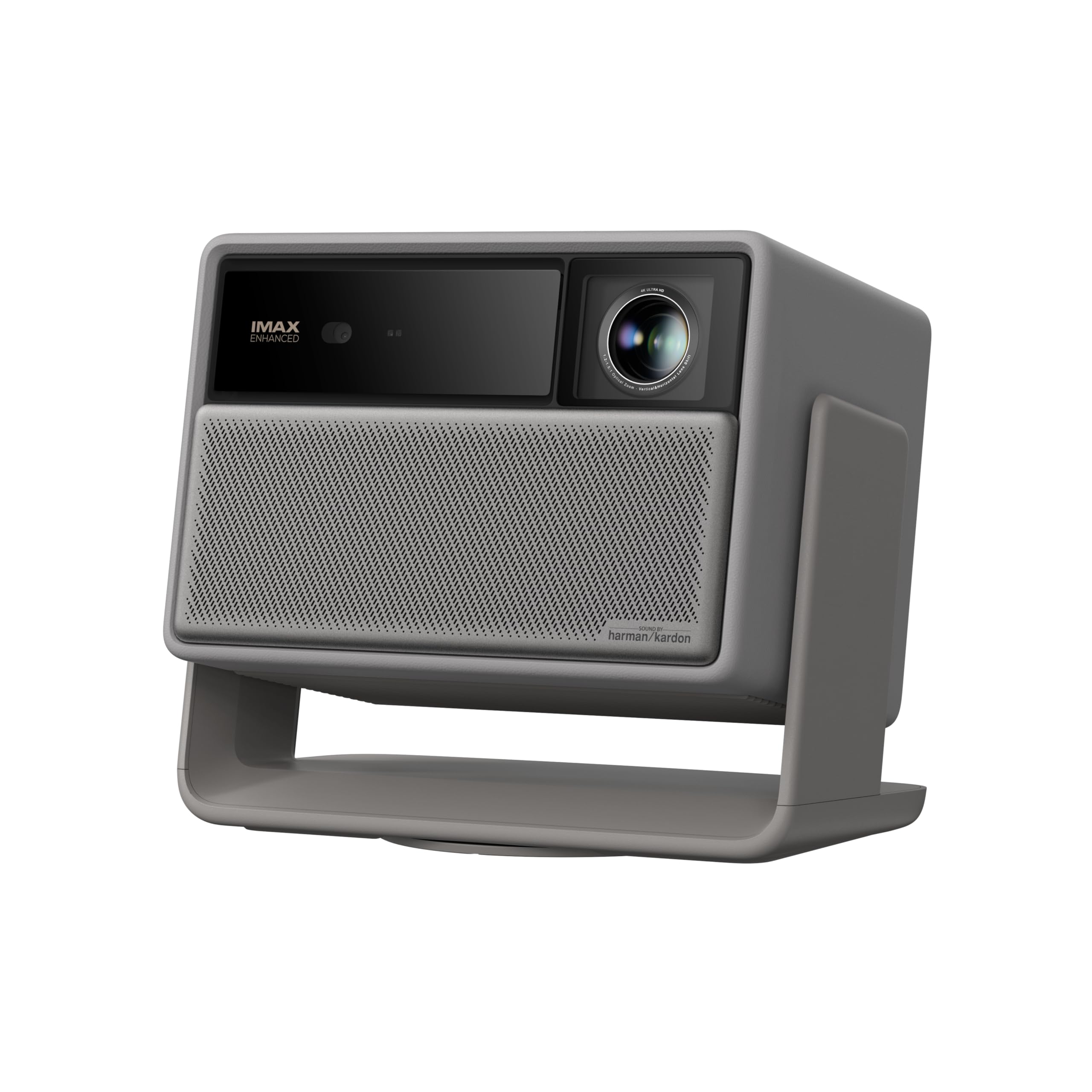
Three thousand two hundred lumens, 1ms response, and 240Hz for gamers who want it big.
If you are a big-screen gamer who hates motion blur, you will find a lot to like here. The X-Master RGB triple laser engine (three lasers for red, green, and blue) delivers 3200 ISO lumens (light output) and a 100,000:1 contrast ratio (a measure of how deep blacks are versus bright whites), and the gaming specs are the sharpest edge in this whole group: a 1ms response (how fast the screen updates), 240Hz fluidity (refresh rate for smooth motion), plus VRR (variable refresh rate for sync) and ALLM (auto low latency mode for faster response). It carries IMAX Enhanced, Dolby Vision, HDR10+, and Filmmaker Mode (picture presets for movies), all feeding from built-in Google TV with licensed Netflix and Harman Kardon speakers.
Setup freedom is a real selling point, with flexible lens shift and optical zoom giving you crisp, distortion-free visuals from a range of positions. Owners highlight the vertical lens shift and the way it automatically resizes the picture to fit the screen, and describe the fan as near-silent while the image stays bright enough to watch in daytime. The 100,000:1 contrast and 3200 lumens tow well beyond the 2000 lm LG CineBeam HU710PW for daylight performance.
The one thing to expect: subtitles can briefly show color separation during fast motion, a side effect of high frame-rate processing rather than a fault. Owners upgrading from inexpensive 1080p projectors call the picture sharp and the contrast strong on a 130-inch screen, and consider the base model better value than costlier versions.
The gaming pitch: 1ms response and 240Hz with VRR and ALLM place it at the top of this list for consoles.
Small caveat: white subtitles can show a quick color separation in fast motion — cosmetic, not a defect.
Reach for this if: you want one machine that games smoothly and doubles as a bright daytime projector.
Look elsewhere if: you need total silence and zero motion processing artifacts at all times.
9. LG CineBeam UHD 4K Projector HU70LA

A wheel-less LED projector built to hang from the ceiling and last for years.
This model is aimed at you if you want to mount it up once and forget it. Its wheel-less 4-channel LED light source (no spinning color wheel) avoids the discoloration that can affect LCD and the rainbow effect of DLP, Its LED is rated for 30,000 hours with no lamp to replace. It delivers 4K UHD at 3840 x 2160 with 8.3 million pixels, and its up to 140-inch screen size keeps a big picture within reach.
The Magic Remote and AI ThinQ add Google Assistant and Alexa control, so you can navigate by voice, and the 1.25x zoom plus Remote Focus let you adjust the image without climbing back to the mount. HDR10 with Dynamic Tone Mapping rebalances frame by frame, and TruMotion keeps motion fluid. Picture quality is what wins owners over most, with the set holding up even in low to moderate light and several calling it among the best they have owned.
The caveats center on placement and light control. Zoom is minimal, so you may have to move the projector physically to change screen size, and the mounting holes sit close together, which can complicate an existing bracket. In a dark room, black levels and dark scenes are the weak spot, so plan for a room with some ambient light. Speakers are modest, and owners recommend a sound system alongside it.
Why it lasts
- 30,000-hour LED light source with no lamp replacement
- Magic Remote with Google Assistant and Alexa built in
- Sharp 4K UHD and low fan noise
Set-up realities
- Minimal zoom means physically moving it to resize
- Weak black levels for a fully dark theater
A set-and-forget install: right for someone hanging it from the ceiling in a room with gentle daylight.
Not for pitch-black rooms: dark-scene depth falls short of the dedicated theater models here.
10. BenQ HT5550 True 4K UHD Home Theater Projector with HDR-PRO

A color-first projector with HDR-PRO, frame interpolation, and 100% DCI-P3 coverage.
For the buyer who treats color accuracy as the whole ballgame, this is the specialist pick. It advertises 100 percent DCI-P3 and 100 percent Rec.709 coverage for best colors, and its Enhanced Tone Mapping pairs an Active Iris with Dynamic Black to raise perceived contrast so dark details stay visible. Frame interpolation keeps fast action fluid, and HDR-PRO rounds out the imaging side at 1800 lumens with a 100000:1 contrast ratio.
Customers note outstanding results even on a painted cinder block wall, with one describing it as outperforming a prior Epson UB and beating a professional theater screen. Picture quality is what gets the most praise, and it has stayed in service for years with owners who bought it refurbished. The 100000:1 contrast and true 4K UHD panel give it the color and shadow depth a color-focused buyer is chasing.
There is one important buying note: a couple of owners received gray-market units without a warranty card and later saw stuck pixels — white dots on the image. Buy from a seller with proper warranty support even if it costs a little more, and those stuck-pixel worries largely go away. This is a color purist’s projector, best in a dedicated media room where its strengths show.
Where it wins: 100% DCI-P3 and 100% Rec.709 with HDR-PRO tone mapping make it a color-precision machine.
Buy with warranty: a gray-market unit can arrive without a warranty card and later develop stuck pixels, so choose a supported seller.
Made for color accuracy: the pick for a media room where faithful color and shadow detail matter most.
Skip if: you are hunting the lowest entry price and can’t buy from a warranty-backed seller.
11. Sony VPL-XW5000ES 4K HDR Laser Home Theater Projector

A genuine native 4K SXRD panel with a laser rated for 20,000 hours.
If the “native” in native 4K is exactly what you have been holding out for, this is the true article. Its all-new Native 4K SXRD panel resolves a full 3840 x 2,160 pixels on the panel itself — no pixel-shifting approximation, unlike almost every other pick here. Its laser light source outputs up to 2,000 lumens and is rated for 20,000 hours, so there is no bulb to swap. Flagship-level X1 Ultimate processing drives the image.
Contrast is where it earns its keep, with owners praising the amazing detail in dark scenes and calling it the best they have used. TRILUMINOS PRO reproduces natural shades across saturation, hue, and brightness, and Wide Dynamic Range Optics deliver a 95% DCI-P3 color gamut at its 2,000-lumen brightness. It is also built to move fast when needed: it handles 4K at 60Hz with input lag under 21 ms, and 2K at 120Hz with input lag under 13 ms, while Motionflow keeps 4K motion smooth.
Even at this level, there are things to plan around. The unit is stationary and designed to live in one spot, and its brightness steps back compared with lumen-first picks like the 3200 lm XGIMI HORIZON 20, in exchange for the deeper native-panel color and contrast. It earns its place as the top of this lineup for the cinephile who values a true 4K panel above raw lumen count.
The purist’s choice: a real native 4K SXRD panel and a 20,000-hour laser put it in a class of its own here.
Plan the room: it is a stationary, install-once machine, so commit your space before you buy.
Best for dedicated theaters: the buyer who wants a true native 4K panel and laser longevity and will not compromise.
Skip if: you need maximum brightness for a daylight room or a projector you can pick up and move.
Know the Specs
Brightness (ANSI Lumens)
Lumens measure how much light the projector throws, and they decide whether your image survives a lit room. A lower-lumen unit tends to look its best after dark, while a brighter one can hold up in daylight. Compare the listed values head-to-head: the BenQ TK800’s 3000 ANSI lm and the XGIMI HORIZON 20’s 3200 lm lead the pack on raw brightness.
Contrast Ratio
Contrast is the gap between the brightest white and the deepest black, and it governs how much depth a dark scene shows. A high figure like the LG HU710PW’s 2,000,000:1 can give vivid pop, while a native-panel machine like the Sony VPL-XW5000ES can still deliver strong detail in shadows. A very low ratio, such as the NEBULA Cosmos 4K SE’s 400:1, favors rooms that are not fully dark.
Light Source
The light source decides brightness, lifespan, and color. Lamp projectors output strong light but the bulb dims over time, while laser and LED sources hold up longer — the LG HU70LA’s LED is rated at 30,000 hours and the Sony’s laser at up to 20,000. LED-plus-laser hybrids, like the NEBULA Cosmos 4K SE and LG HU710PW, blend both approaches.
Resolution and Pixels
True native 4K means the imaging panel holds the full 8.3 million pixels at 3840 x 2160. Some models reach that figure through a shifting technique rather than a native panel, which still looks sharp. If a genuine native panel is your requirement, that narrows the field to machines like the Sony VPL-XW5000ES.
Common Questions
Is a pixel-shifted 4K projector as good as a native 4K one?
How many lumens do I need for a bright livingroom?
Will a 4K projector work with my gaming console?
Do I need to replace a lamp or does it last forever?
Why do some projectors show rainbow colors during fast scenes?
Can I use a 4K projector in a fully dark theater room?
Does the built-in streaming app include Netflix?
How far back does the projector need to sit from the screen?
What is lens shift and why does it matter for ceiling mounting?
Do these projectors need a separate sound system?
Will a 4K projector look sharp on a plain painted wall?
The Bottom Line
For most buyers, the best native 4k projector in this lineup is the Epson Home Cinema 5050UB, because its 3-chip 3LCD design delivers deep blacks and accurate color without rainbow artifacts, and it remains a crowd favorite that owners return to for its theater-grade picture. If brightness in a lit room matters most, the Dangbei DBOX02 and its 2450-ISO-lumen laser (light output) keeps the image vivid in daylight, while the XGIMI HORIZON 20 pairs 3200 lumens with 1ms gaming response. And if you want a genuinely native 4K panel instead of pixel shifting, the Sony VPL-XW5000ES is the one that satisfies that specific demand.
How we choose
We do not accept paid placement. Every pick is matched to a real buyer and a real use-case; we do not hands-on test units.
Sources
Specifications: manufacturer listings and product documentation. Review insights: verified customer reviews, as of October 2026. Pricing: not shown on this page (it changes often); check the current price via the retailer link.
As an Amazon Associate, Aappliancez earns from qualifying purchases. This does not affect which products we feature.