Disclosure: Some links in this post are affiliate links. As an Amazon Associate I earn from qualifying purchases, at no extra cost to you. Learn more
Specs are compiled from manufacturer listings and verified buyer reviews and can change over time — please confirm the key details on the product page before buying.
Cedar siding nails have one job, and most people get it wrong: they pick a nail that rusts, bleeds streaks down the wood, or lets the boards cup and pull. If you want the short answer — go stainless. Stainless steel nails won’t react with cedar’s natural acids the way galvanized steel can, so you avoid the black bleed marks that ruin a finished wall.
This guide is built by comparing the manufacturers’ published specifications and the patterns across verified customer reviews, so you get each pick’s real strengths and trade-offs instead of marketing spin.
Cedar eats ordinary fasteners for breakfast. Its natural tannins and acids attack plain steel and even some galvanized coatings, which is why the wrong nail turns into a rusty streak within a season. What matters most is the shank design, the coating or alloy, and whether the nail was built for the gun you already own — and those three things decide everything. A smart pick here is simply the one that holds tight, resists corrosion, and matches your nailer, which is exactly what the best nails for cedar siding are meant to do.
Top Picks

How To Choose The Best Nails for Cedar Siding
Choosing a cedar siding nail isn’t about picking the longest or the cheapest box. It’s about three things that actually determine whether your wall survives a decade of rain and sun: the metal’s corrosion resistance, the shank’s grip, and the format compatibility with your nailer or hammer. Get those right and cedar stays put.
Stainless steel versus hot dipped galvanized
Cedar contains natural acids and tannins that corrode ordinary steel fasteners. Type 304 stainless steel resists this better than most galvanized coatings, and stainless nails won’t bleed rust stains into the wood. Hot dipped galvanized steel offers corrosion resistance at a lower cost, but for seaside or high-moisture applications, Type 316 stainless is the safer call. If your cedar is coastal, always pick stainless.
Ring shank grip and cedar cupping
A ring shank — the series of ridges cut into the nail’s shank — dramatically increases withdrawal resistance, meaning the nail fights back when the wood tries to work it loose. This matters most for cedar because cedar cups and warps as it dries. Smooth shank nails pop; ring shank nails hold. If you have ever pulled a warped cedar board off a wall, you know the difference immediately.
Length, gauge, and matching your nailer
Nail length needs to be roughly three times the thickness of the board you’re attaching, plus a bit for penetration into the sheathing behind it. A 1-1/2 inch nail suits thinner cedar shingles and lap siding; a 1-3/4 inch or 2 inch nail suits thicker boards and sheathing. Wire coil nails work only in coil nailers, so verify your gun’s degree (15 degree is standard) and collation format before you buy a box.
Side-by-Side Comparison
| Model | Best For | Length | Diameter / Gauge | Material | Amazon |
|---|---|---|---|---|---|
| Metabo HPT Coil Siding Nails 3,600 Count, 1-3/4″ x.092★ Best Overall | High-volume siding and fencing jobs | 1-3/4 Inch | .092 Inch | Hot Dipped Galvanized Steel | Amazon |
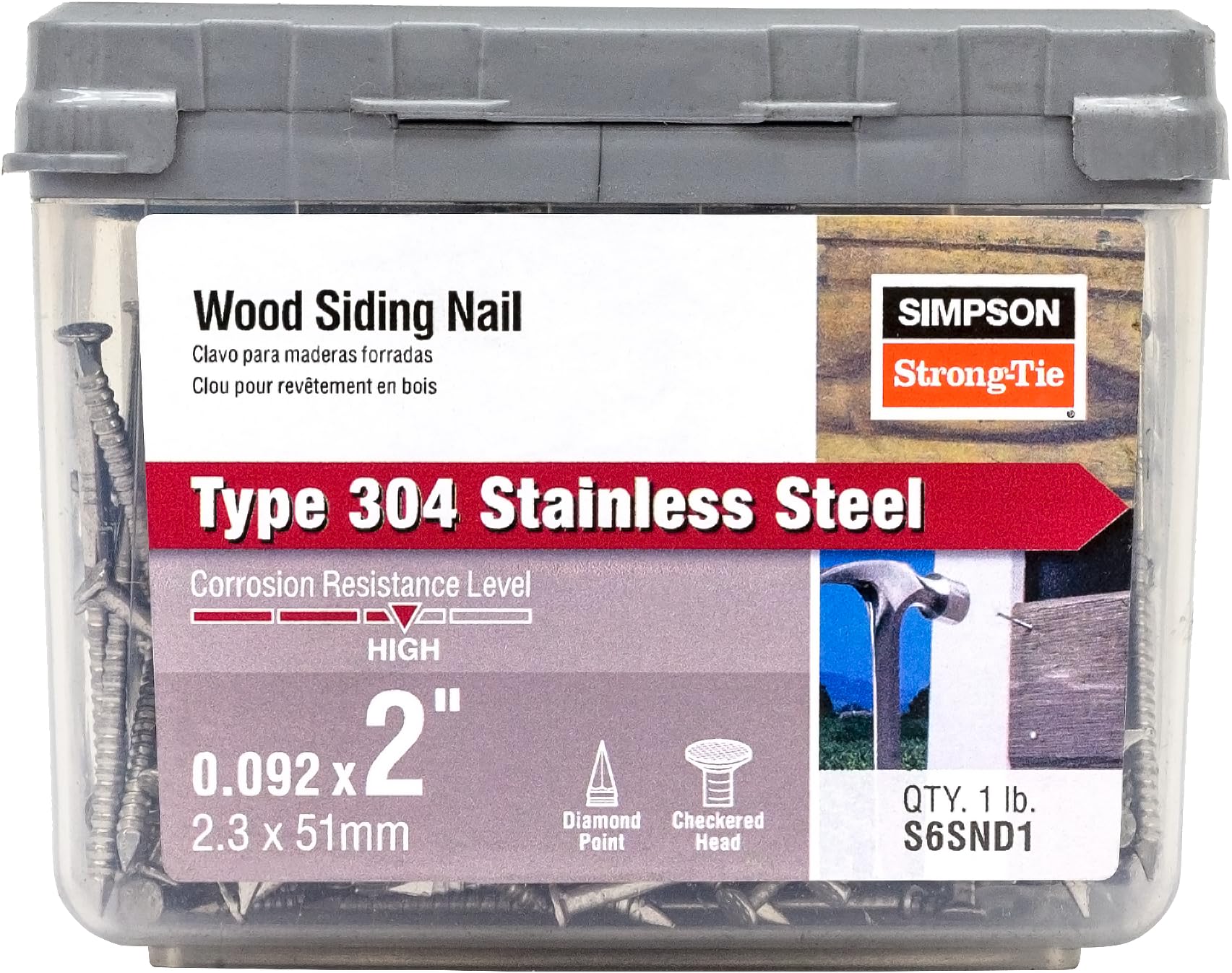
| Simpson Strong-Tie S6SND1 Ring-Shank Wood Siding NailPremium Pick | Coastal and premium cedar work | 2 Inch | 13 Gauge /.092 Inch | Type 304 Stainless Steel | Amazon |
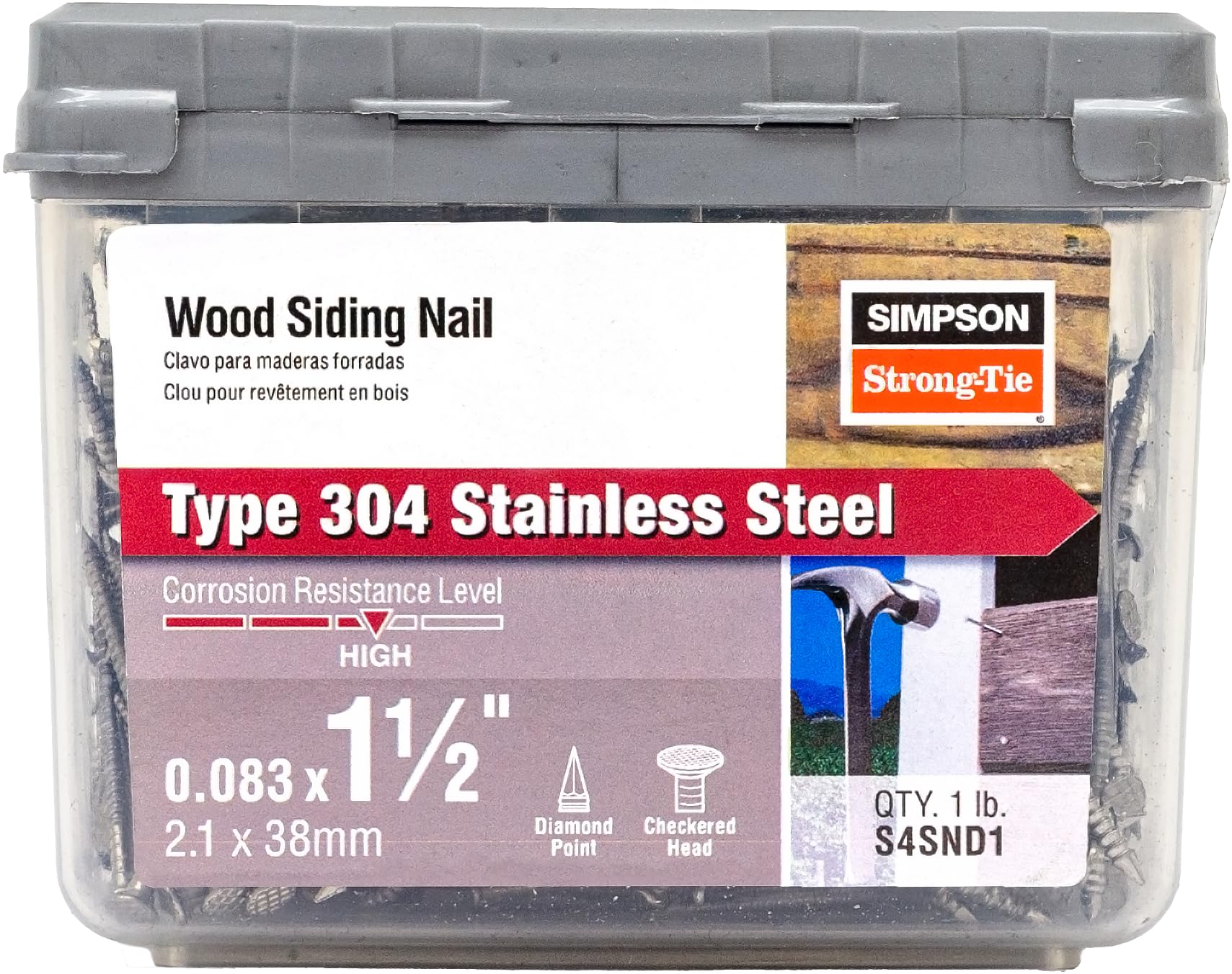
| Simpson Strong-Tie S4SND1 Ring-Shank Wood Siding Nail | Cedar shingles and thin lap siding | 1-1/2 Inch | 14 Gauge /.083 Inch | Type 304 Stainless Steel | Amazon |
| findmall 3600 Count Siding Nails 1-3/4″ by.092 Inch | Budget bulk coil nailing | 1-3/4 Inch | .092 Inch | Hot-Dipped Galvanized Steel | Amazon |
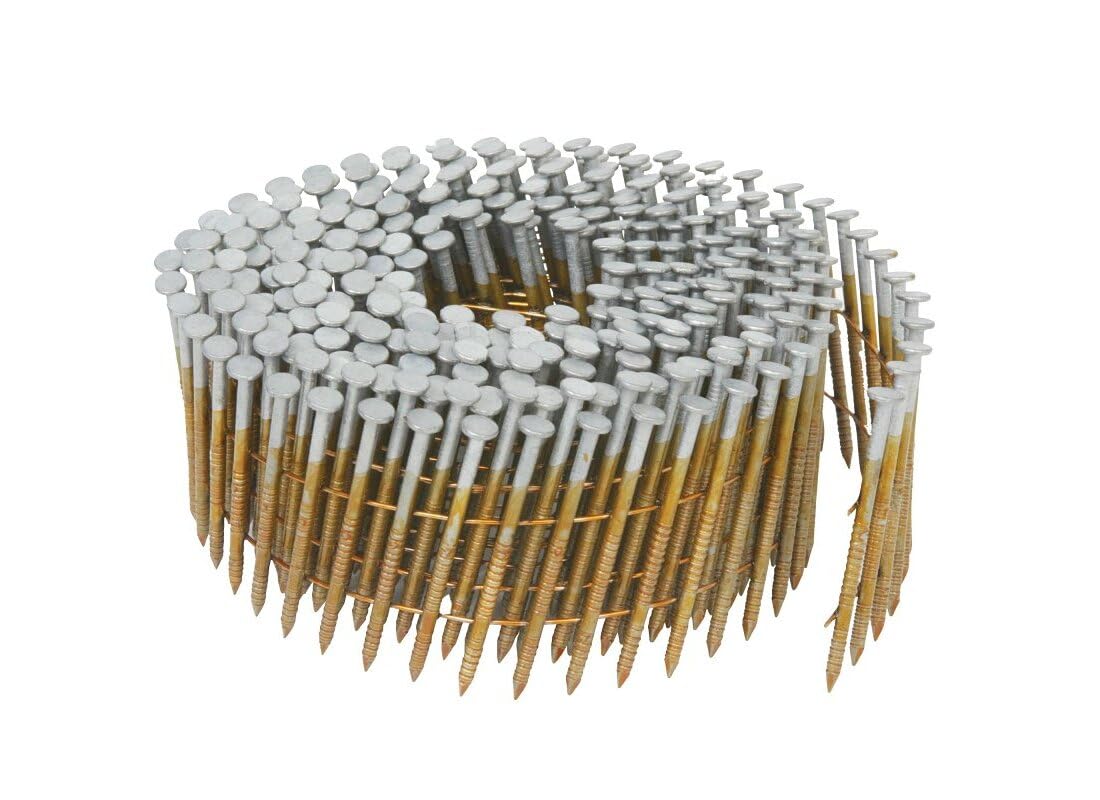
| Metabo HPT Siding Nails 2-Inch x.092, 3,600 Count | Thicker siding and sheathing | 2 Inch | .092 Inch | Hot Dipped Galvanized Steel | Amazon |
Detailed Reviews
1. Metabo HPT Coil Siding Nails 3,600 Count
Our pick — 4.5+★ from 700+ verified ratings; the strongest balance of quality and price.
The 3,600-count coil that keeps a 15 degree siding nailer fed through a full wall of cedar
If you’re nailing down a full wall of cedar, the thing you’ll notice first is how rarely you stop. Each box holds 3,600 collated steel nails — enough to keep a coil gun running far longer between swaps than a loose-nail setup. The 15 degree wire coil format is the standard for most siding nailers, and these 1-3/4 inch x.092 inch full round head ring shank nails are built for the job.
The ring shank is where the real grip comes from. Those ridges bite into cedar and sheathing so the boards stay tuned and tight instead of working loose as the wood moves season to season. What buyers report most is simply that these feed well — one owner put it plainly after running thousands through a Makita nailer: “I used several thousand installing siding on my shop and a shed.” That’s a wall-sized test, not a test strip.
The hot dipped galvanized coating resists corrosion in treated lumber, and the low carbon steel construction is ICC-ES and ACQ rated for pressure-treated applications. Pair it with a Metabo HPT nailer, or most Bostitch, Makita, and DeWalt coil guns, and the feed is smooth. Weighing in at 13 pounds per box, it’s a substantial load — plan to carry it to the wall, not clip it on your belt.
Two honest catches. The jamming reports run mixed — some jobs are flawless, some buyers hit coil snags, largely dependent on gun cleanliness and feed alignment. And this is galvanized, not stainless, so if your cedar is within salt-spray range of the coast, the stainless Simpson nails below are the safer bet for avoiding rust bleed.
What Earns Its Place
- 3,600 nails per box keeps you nailing instead of reloading
- Ring shank bites hard and resists cedar cupping over time
- Hot dipped galvanized handles pressure-treated lumber
- 15 degree wire coil fits most standard siding nailers
Where It Falls Short
- Galvanized, not stainless — not the first choice for coastal cedar
- 13-pound box is heavy to haul around a job site
- Feed reliability depends on keeping the gun clean
Best for: Anyone running a coil nailer on a full siding, fence, or sheathing job who wants volume and reliable grip in one box.
Look elsewhere if: Your cedar sits in a salty or coastal environment where stainless steel is the only truly safe coating choice.
2. Simpson Strong-Tie S6SND1 Ring-Shank Wood Siding Nail
The Type 304 stainless nail for coastal cedar, ring shank and all
Here is where the cedar conversation actually starts. These Simpson Strong-Tie nails are Type 304 stainless steel — a metal that resists cedar’s natural acids instead of reacting with them, so you don’t get the black rust streaks that show up with galvanized fasteners over time. If your siding lives near salt water, this is the material that lasts.
They’re 2 inches long, 13 gauge,.092 inch diameter, with a diamond point for easy driving and an annular ring shank that boosts withdrawal resistance against cedar’s tendency to cup. The Checker-pattern head is a nice touch — it breaks up glare and blends into the wood grain so the nail virtually disappears into the board, which matters when the cedar itself is the visual point of the wall.
The 2-inch length suits thicker boards and through-to-sheathing work; this is a longer, heavier-gauge fastener than the Simpson S4SND1 in the next slot, which comes in at 14 gauge and 1-1/2 inches. Count on these to drive clean and hold. What owners keep returning to is the design’s ability to save the wood: one put it as preventing “hammer marks on cedar,” with pre-drilling at board ends recommended to stop splitting. In a coastal setting, another owner noted stainless is simply required there because galvanized corrodes.
The one friction point: Rings add grip, but hand-hammering these into hard cedar takes effort — a couple bent on knots during a real install. They’re most at home in a gun, not over a wrist.
The payoff: Once they’re in, they stay — several owners note they’re very hard to pull back out, which is exactly what you want from a siding nail holding cedar through decades of weather.
Reach for this if: Your cedar is coastal, high-moisture, or premium work where rust bleed is not an acceptable outcome.
Look elsewhere if: You need a loose-nail box for a coil gun or are nailing in bulk by machine.
3. Simpson Strong-Tie S4SND1 Ring-Shank Wood Siding Nail
The 14 gauge stainless nail sized for cedar shingles and thin lap siding
Cedar shingles and thin lap siding call for a lighter fastener than full boards, and that’s exactly what this is — 1-1/2 inches long by.083 inch, 14 gauge, so it punches in clean without splitting a thin shingle. Same Type 304 stainless as the longer Simpson nail above, which means the same rust-free behavior against cedar’s acids, just in a smaller profile that suits finer work.
The single detail owners rave about is the grip. The annular ring shank grabs hard, and that’s the whole game with cedar — you want the shingle to stay exactly where you put it. These are rated Type 304, and the same product line calls out that Type 316 stainless is the better choice for seaside jobs where extra corrosion resistance is needed. The diamond-point tip and ring shank together give strong holding power.
A few practical realities come with stainless. It’s softer than ordinary steel, so these can bend if you drive one off-angle into a knot — a light tap-and-straighten territory rather than a defect. They also hold so well that pulling one back out to fix a placement can damage the board, so measure twice. And stainless fasteners are genuinely hard to find locally, which is why owners tend to buy them here rather than hunt the hardware aisle.
Where these win: The stainless construction means no rust bleeding into cedar, which owners specifically note as the reason they reach for these over galvanized.
Fit note: At 1-1/2 inches and 14 gauge, these suit cedar shingles and thin lap; for thicker boards and sheathing, go up to the 2-inch Simpson nail instead.
Best suited to: Shingle and thin-lap cedar projects where you want stainless protection in a smaller, board-friendly nail.
Think twice if: You’re driving thousands of nails by hand — stainless resists light hand-hammering as cleanly as coil nails.
4. findmall 3600 Count Siding Nails

Bulk galvanized coil nails with a ring shank grip that holds panels tight
If you want the most nails for the least outlay, this is the box that gets you there — 3,600 hot-dipped galvanized coil nails, 1-3/4 inch by.092 inch, full round head with a ring shank. The HDG coating is built to resist corrosion in pressure-treated lumber too, which suits cedar over treated sheathing. The grip, when the nails fire clean, is aggressive.
Owners describe the hold as fierce. The nails grab so hard into OSB and sheathing that pulling a panel back off usually ruins the panel — which tells you the withdrawal resistance is doing its job. That’s the upside you’re chasing with a ring shank, and this box delivers it. The.092 inch diameter matches the Metabo 1-3/4 inch coil nails, but where the Metabo nails feed reliably from the start, this findmall batch’s consistency is the variable.
You do trade polish for volume here. This is an entry-level brand, and the coating and collation quality are not as consistent as the name-brand coils — a few owners note tangles and misfeeds on bad batches, while others report flawless runs. If you land a good batch, it fires well for the price; if you get a rough one, expect more clearing than you’d like during the job.
The Value Play
- 3,600 count at an entry-level cost
- Aggressive ring-shank grip holds panels tight
- Hot-dipped galvanized coating for treated lumber
- Fits CN55/CN57-style coil guns
Worth Knowing
- Batch consistency varies — some boxes feed flawlessly, others tangle
- Coating quality is not as refined as name-brand coils
- Galvanized, not stainless, so not ideal for coastal cedar
Good fit for: Budget-conscious fence and sheathing projects where you’re running a coil gun and want bulk without paying premium.
Look elsewhere if: Cracked cedar accent work demands uniform, reliable nails from box to box — a name-brand coil will be the safer investment.
5. Metabo HPT Siding Nails 3,600 Count
The 2-inch coil nail that reaches through thick cedar into the sheathing
Cedar that’s thicker than a shingle needs a nail with more reach, and that’s the case for a 2-inch fastener rather than the 1-3/4 inch coil option. At 2 inches by.092 inch with a full round head and ring shank, these hot-dipped galvanized nails penetrate deep enough to anchor through cedar into the sheathing. They’re compatible with the Metabo HPT NV65AH2 and most 15 degree coil guns.
The 3,600-count box keeps a siding job moving, and the ring shank grip is serious. Owners describe nails that hold so firmly you’d pull the head off before the nail comes loose, and the feed performance is what gets praised most — shooters report running six coils through a gun without a single jam. That kind of run length is what makes a 2-inch nail worth having in volume.
The trade-off is the same one that applies to any galvanized coil: as the Metabo 1-3/4 inch nails above also note, treatment here is hot dipped galvanized rather than stainless, so cedar in a salt-spray zone is still better served by a stainless fastener. For inland jobs on standard cedar siding, sheathing, fence, and decking, this 2-inch version simply reaches where the shorter one can’t. Each box weighs 14 pounds.
What wins people over: Reliable feeding over long runs — as owners put it, one ran six coils through without a jam. Combined with the strong hold, that’s a coil you can set and forget through an afternoon of siding.
A fair caution: Long nails are more likely to split a thin cedar edge if you drive too close to a board end, so keep them for the thicker board applications they were built for.
Pick this one when: Your cedar is thicker stock that needs a 2-inch fastener to reach the sheathing, and you’re running a 15 degree coil gun.
Skip it for: Thin cedar shingles, where the extra length is wasted — the 1-1/2 inch Simpson nails fit that job far better.
Know the Specs
Shank Type: Ring Shank vs Smooth
A ring shank is a series of ridges cut around the nail’s shaft. Those ridges dig into wood fibers and create far more withdrawal resistance than a smooth shank, which means the nail resists being pulled out as cedar swells and shrinks with the seasons. For cedar siding, ring shank is almost always the right call — it’s what prevents cupping.
Coating: Hot Dipped Galvanized vs Stainless
Hot dipped galvanized steel gets a zinc coating that resists corrosion, good enough for inland and treated-lumber work. Stainless steel, especially Type 304, resists the natural acids in cedar better and avoids rust bleed altogether — which is why it’s the coating choice for coastal jobs or anywhere cedar’s tannins would attack a lesser nail.
Gauge and Diameter
Gauge is the thickness of the nail’s shaft — lower numbers mean a thicker nail. A 13 gauge nail is thicker than a 14 gauge one, so it resists bending better but splits thin boards more easily. Diameter is measured in inches, so a.092 inch nail is thicker than a.083 inch nail, and the larger diameter is a better match for thicker cedar stock.
Collation and Nailer Compatibility
Collated nails are held together by wire or paper so they feed through a nailer magazine. Wire coil nails (like the 15 degree coils here) only fit coil nailers, so the degree and format must match your gun. A 3,600-count box means fewer reloads on a full siding job.
Common Questions
Will galvanized nails bleed rust into cedar siding?
Should I use Type 304 or Type 316 stainless nails for cedar?
What length nail should I use for cedar shingles versus cedar boards?
Will these nails fit my coil nailer?
How many nails do I need for a cedar siding project?
Do I need to pre-drill cedar siding to stop it splitting?
Why do my stainless siding nails bend when I hammer them in?
Can I use these nails for cedar fencing as well as siding?
What does a ring shank actually do for a siding nail?
Are hot dipped galvanized nails strong enough for pressure-treated lumber?
The Bottom Line
For the majority of shoppers, the nails for cedar siding winner is the Metabo HPT Coil Siding Nails 3,600 Count because it pairs the high-volume 3,600 count with a ring shank that grips cedar hard and a 15 degree coil format that keeps most nailers fed. If you want the rust-free protection that only stainless delivers, grab the Simpson Strong-Tie S6SND1, a 2-inch Type 304 stainless nail built for premium and coastal cedar. And for shingle and thin-lap work, the Simpson Strong-Tie S4SND1 is the one to reach for.
How we choose
We do not accept paid placement. Every pick is matched to a real buyer and a real use-case; we do not hands-on test units.
Sources
Specifications: manufacturer listings and product documentation. Review insights: verified customer reviews, as of October 2026. Pricing: not shown on this page (it changes often); check the current price via the retailer link.
As an Amazon Associate, Aappliancez earns from qualifying purchases. This does not affect which products we feature.