Disclosure: Some links in this post are affiliate links. As an Amazon Associate I earn from qualifying purchases, at no extra cost to you. Learn more
Specs are compiled from manufacturer listings and verified buyer reviews and can change over time — please confirm the key details on the product page before buying.
After a tooth extraction or gum surgery, the wrong rinse can turn a tender mouth into a painful one. What you want is a mouthwash that cleans without alcohol burn, doesn’t sting the healing site, and still keeps bacteria in check. The short answer: an alcohol-free rinse with a gentle, non-burning formula is the safest bet — and the five picks below are the ones worth your attention.
This guide is built by comparing the manufacturers’ published specifications and the patterns across verified customer reviews, so you get each pick’s real strengths and trade-offs instead of marketing spin.
Below you’ll find the picks that stay gentle while still doing the job, plus what to check before you swish. The right mouthwash after oral surgery should calm a healing mouth, not sting it.
Top Picks
How To Choose The Best Mouthwash After Oral Surgery
The first thing to understand is that a healing mouth is not a normal mouth. A fresh extraction socket or a stitched gum line is an open wound, and anything harsh will let you know immediately. That rules out the strong, alcohol-heavy rinses you might use on a normal day.
Alcohol-free is the starting line, not the finish
Alcohol gives that sharp burn and can dry out tender tissue. Every pick here skips it. But alcohol-free alone isn’t enough — you also want a formula that doesn’t sting, and a flavor that won’t make you wince when it touches the site.
Look at what actually fights bacteria
Some rinses use CPC (cetylpyridinium chloride, a bacteria-fighting ingredient), some use HOCl (hypochlorous acid, a germ-fighting molecule your body makes naturally), and some use iodine. Each works differently. After surgery, the goal is gentle cleaning, so a non-stinging formula matters as much as the active ingredient.
Match the rinse to the healing stage
In the first days, you want the mildest option you can find. As the site closes, you can lean on a stronger gum-support rinse. Many dentists advise not swishing vigorously at first — a gentle rinse, not a hard gargle, is what you’re after.
Side-by-Side Comparison
| Model | Best For | Size | Alcohol-Free | Active Ingredient | Amazon |
|---|---|---|---|---|---|
| TheraBreath Healthy Gums Oral Rinse★ Best Overall | Best Overall | 1 Liter | Yes | CPC | Amazon |
| TheraSol PremixGentlest Texture | Gentlest Texture | 2 lb bottle | Yes | — | Amazon |
| TheraBreath Fresh Breath Oral Rinse | Long-Lasting Freshness | 1 Liter | Yes | Xylitol | Amazon |
| BRIOTECH Oral Swish | Post-Extraction Healing | 17 oz | Yes | HOCl | Amazon |
| Molecular Iodine Mouth Rinse | Once-Daily Simplicity | 8 Fl Oz | Yes | Molecular Iodine | Amazon |
Detailed Reviews
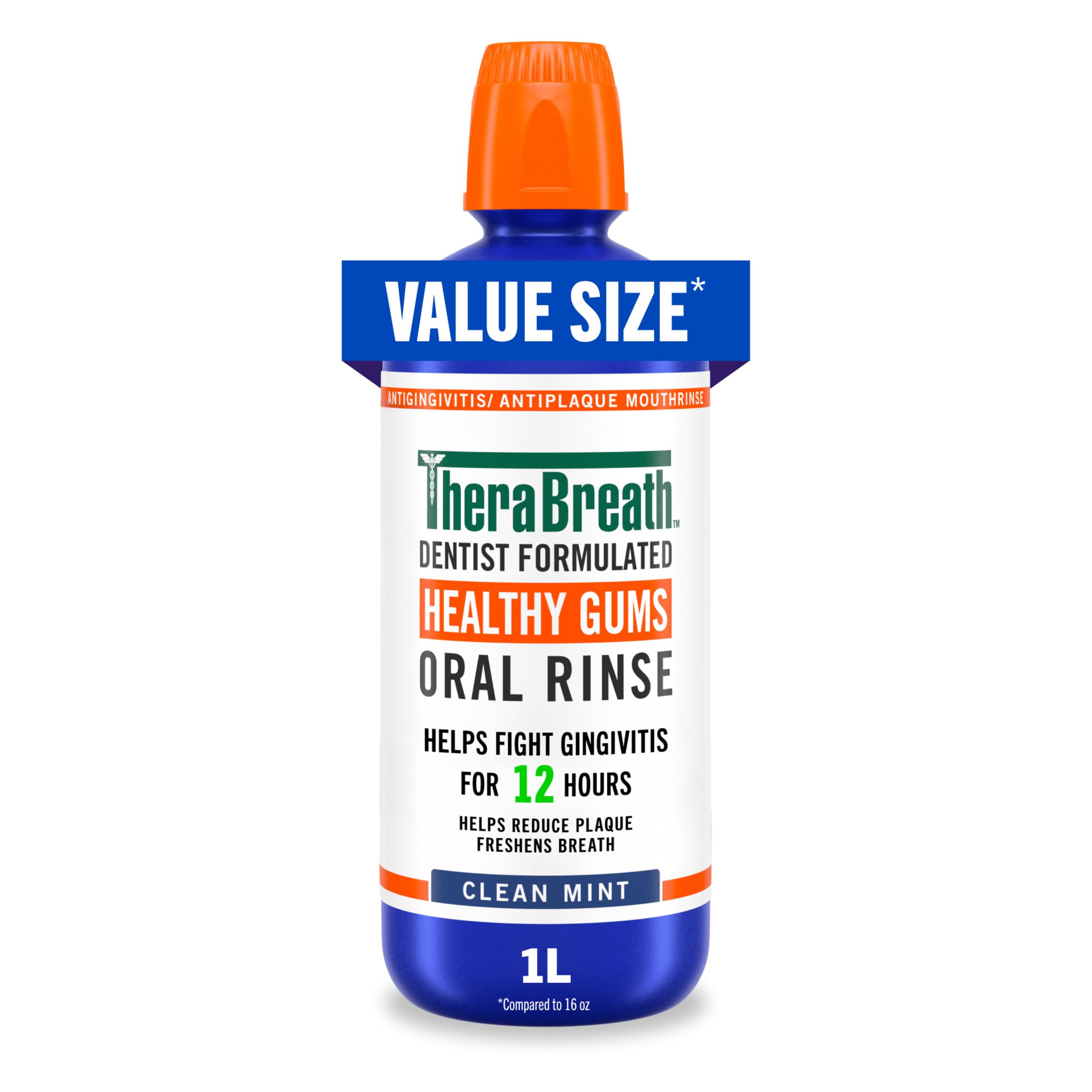
1. TheraBreath Healthy Gums Oral Rinse, Clean Mint, 1 Liter
Our pick — 4.5+★ from 1,000+ verified ratings; the strongest balance of quality and price.
A one-liter alcohol-free rinse built to calm gums while it cleans — and it doesn’t sting.
This 1-liter bottle of Clean Mint rinse does the most work while staying kind to a healing mouth. Its formula is built around CPC (cetylpyridinium chloride — a bacteria-fighting ingredient that targets the germs linked to gum disease), so it keeps working for 12 hours after each rinse. For a sore mouth that still needs protection, that long window is exactly the point.
What wins people over is the effectiveness — no other concern gets close to it. Buyers who rinse twice a day report gum soreness easing within a couple of weeks. The mint flavor is clean and mild, not the harsh blast of a traditional rinse, and there’s no burning or stinging when it hits tender tissue. One buyer summed up the whole appeal simply: “Has a good flavor and doesnt burn.” The formula is also vegan, gluten-free, halal, kosher, and free of dyes, SLS/sulfates, and parabens, and the clear liquid doesn’t stain teeth.
The catch is a minor one for most people: it’s a one-minute swish, then spit, and you shouldn’t eat or drink for 30 minutes after. After surgery that pause is a feature, not a problem — it gives the site time to settle. It’s a slightly heavier bottle at 2.36 pounds, so plan to leave it on the counter rather than tote it around.
What works in its favor
- CPC formula fights gum-disease bacteria for 12 hours per rinse
- No burn, no sting — the gentlest way to still get real cleaning
- 1-liter bottle with no dyes, SLS, sulfates, or parabens
- Clear liquid that won’t stain teeth
Worth knowing before you buy
- One-minute swish plus a 30-minute no-eat window adds routine
- 2.36-pound bottle is a countertop item, not a travel one
Go for it if: you want a single rinse that supports gum healing and freshens breath without any sting.
Hold off if: you need something pocket-sized or flavored sweetly enough to feel like a treat.
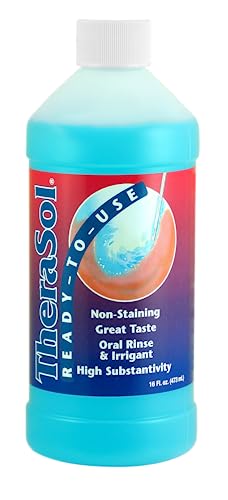
2. TheraSol Premix
A pre-mixed rinse gentle enough for a mouth too raw to handle anything sharp.
A 2-pound pre-mixed bottle that skips the burn entirely — no irritation, no stinging, nothing that grabs at a healing site. Its appeal is that soothing quality: it cleans thoroughly while feeling more like a gentle wash than a mouthwash. For a mouth in the first week after surgery, that’s a meaningful difference.
Quality is the trait it’s known for, followed by how well it cleans. Buyers report their dentists recommend it by name, including one veneer specialist who sends patients to it. It handles both veneers and natural teeth without staining them, and the pre-mixed bottle means no measuring — just pour and swish. One buyer who uses it nightly after brushing and flossing put it plainly: “I hadn’t had a dental check in ten years and my teeth and gums were in perfect health!”
There’s no listed active-ingredient breakdown on the label description, so if you want to know exactly which germ-fighting compound you’re swishing, you won’t find it spelled out here. The formula is what it is — a dentist-favored blend that behaves gently. For a tender mouth that’s a fair trade, but worth knowing before you buy.
The real-world read: no sting, no stain, no fuss — it’s the pick for the earliest, most sensitive days when anything sharp is too much.
Where it gives up ground: the label doesn’t detail an active germ-fighting ingredient the way the others do, so you’re trusting the blend rather than reading a specific compound.
Reach for this if: your mouth is raw and you want the softest possible rinse that still cleans well.
Look elsewhere if: you like seeing a named active ingredient on the front of the bottle.
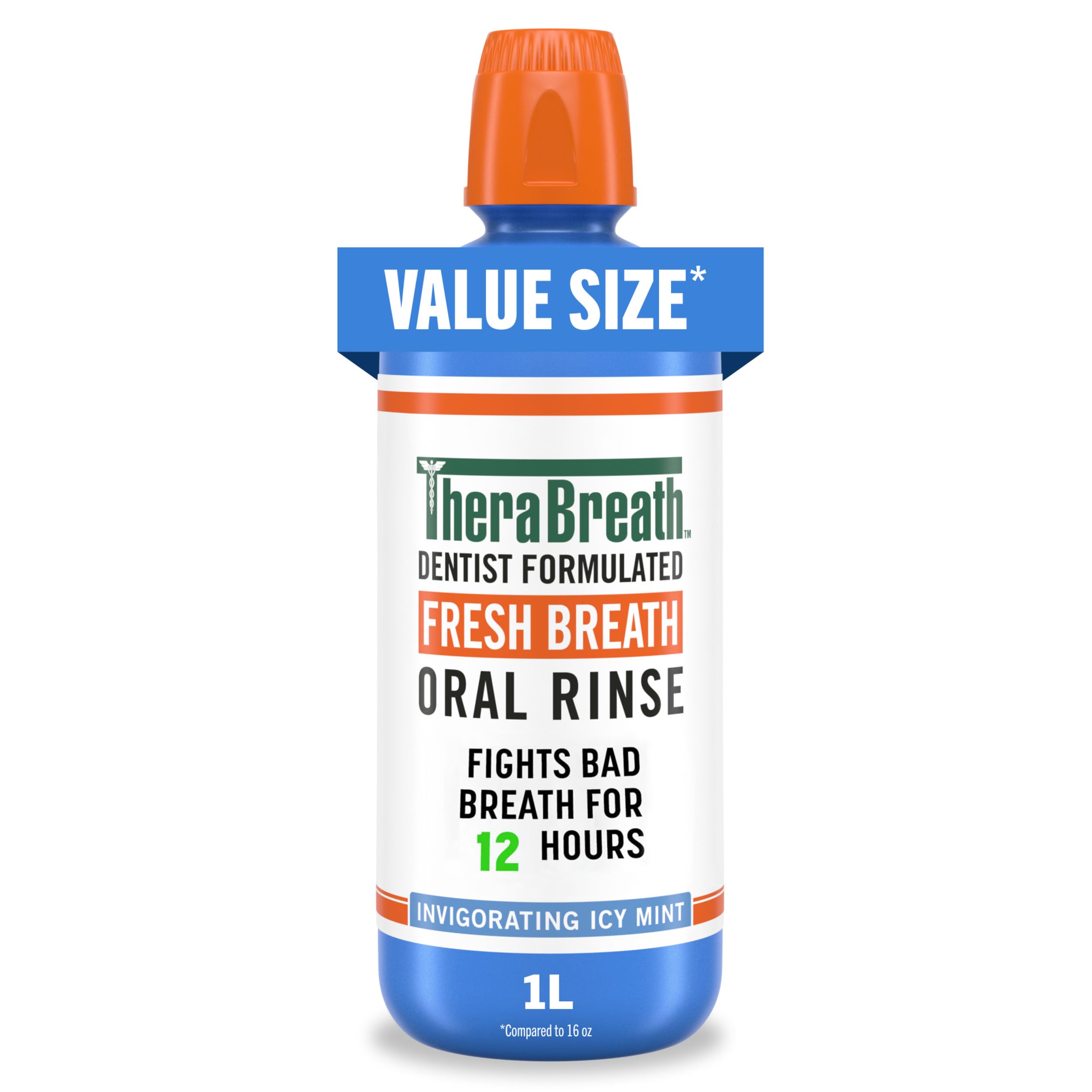
3. TheraBreath Fresh Breath Oral Rinse, Icy Mint, 1 Liter
The crowd favorite for a reason — it freshens breath all day without drying out a healing mouth.
Where the Healthy Gums rinse targets gum protection, this one makes its name on all-day freshness. It’s a 1-liter Icy Mint rinse that’s dentist-formulated, alcohol-free, and ADA-accepted. It’s made with xylitol (a sweet-tasting ingredient that helps reduce plaque buildup) and skips dyes, colors, SLS/sulfates, and parabens. The invigorating mint is what hits first — bright, not overwhelming.
Quality leads the conversation here by a wide margin, with effectiveness close behind. People report it working all day and leaving their mouth clean rather than dry. It’s also a long-haul favorite — one buyer has stuck with it for nearly four years and never looks elsewhere. If breath odor after surgery is your worry, this is the one that quietly overdelivers.
The honest note: the taste splits opinions. Some find the mild mint perfect, while a few find the first swish slightly bitter before it settles. That’s a flavor quibble, not a formula flaw — and it tends to fade with use. If you want a rinse that tastes like candy, look elsewhere; if you want one that keeps a healing mouth clean and fresh without the high alcohol burn, this delivers.
Why it belongs here: all-day freshness with zero burn, on a formula the ADA accepts — rare for something this gentle.
The verdict: the best pick if breath freshness is your main worry and you don’t want alcohol anywhere near a sore mouth.
One caveat: the mint can land slightly bitter on the first few swishes before you get used to it.
4. BRIOTECH Oral Swish 17 oz

A 17-ounce HOCl rinse that buyers specifically reach for right after a tooth comes out.
This is the one written into post-extraction stories. It’s a 17-ounce solution built around HOCl (hypochlorous acid, a naturally occurring germ-fighting molecule) and it’s free of alcohol, peroxide, fluoride, SLS, triclosan, and artificial flavors or dyes. That’s a lot of things it leaves out — and for a healing mouth, every one of those omissions matters.
Effectiveness is the standout, with sensitivity support ranking second. Buyers with a mint allergy gravitate to it because there’s no fragrance at all, and it can do double duty as a gargle, an oral-irrigator refill, or a soak for retainers and mouth guards. One post-extraction buyer put it this way: “Purchased for use after teeth extraction.” The same person noted an allergy to most other mouthwashes and liked that it addresses the bacteria behind bad breath rather than covering it up.
If you’ve had a tooth out and every commercial rinse stings, this is worth a serious look. But the honest trade-off is the taste — it’s salty, not sweet, and a few people find it strong for everyday use once the healing is done. It’s also a smaller 17-ounce bottle than the one-liter options, so heavier users will go through it faster. For that first raw week, though, the non-stinging feel is exactly what you want.
Why extraction patients pick it
- HOCl formula that’s non-stinging and non-irritating
- Free of alcohol, peroxide, fluoride, SLS, and artificial dyes
- Works as a gargle, water-flosser refill, or retainer soak
The honest trade-off
- Salty taste — not for anyone expecting a sweet mint
- 17-ounce bottle runs out faster than a liter
- Some find it stronger than needed for daily long-term use
Best for: the first days after an extraction, when any sting at all is too much.
Skip if: you can’t get past a salty rinse or you want a big bottle that lasts months.
5. Molecular Iodine Mouth Rinse 8 Fl Oz

An 8-ounce iodine rinse you use just once a day — simple, but it makes its own case.
This is the no-fuss pick. It’s an 8-ounce iodine-based rinse, alcohol- and fluoride-free, meant for a single daily swish and gargle, then spit. The form of iodine here is “free molecular iodine,” which the maker says isn’t bound in the formula — so unlike typical iodine rinses, it won’t stain your teeth. For a healing mouth, a non-staining iodine rinse is a small but welcome detail.
Effectiveness is what it’s known for, with cleaning effectiveness right behind. Owners mention waking up with a fresh mouth after using it, and it’s favored by people with ongoing gum problems — one describes using it to keep an infection under control until a tooth could be removed. It’s also the simplest habit on this list: no measuring, no special equipment, just rinse once and you’re done.
The catch is the taste and the size. The flavor is divided — some like the clean taste, others find it dreadful, and there’s a lingering sweet note from the sweetener that a few people wish weren’t there. It’s also an 8-ounce bottle, the smallest here, so it won’t last as long as the one-liter options. The iodine smell is detectable but, as one buyer put it, “It doesn’t bother you. It doesn’t hurt your mouth.”
The strong suit: a once-a-day iodine rinse that cleans deeply and won’t stain teeth — good for someone managing ongoing gum trouble.
The downside: the taste splits people and the small bottle means more frequent reordering.
Pick this if: you want the simplest once-daily habit and don’t mind an iodine taste.
Pass if: you need a big bottle or a sweet-tasting rinse to get through the swish.
Know the Specs
Alcohol-Free and Non-Burning
Alcohol is what gives classic mouthwash its sharp burn, and it can dry out tissue that’s trying to heal. An alcohol-free formula skips that sting, so you can swish without flinching. All five picks here are alcohol-free, which is the first thing to check after surgery.
CPC, HOCl, and Iodine
CPC (cetylpyridinium chloride) and HOCl (hypochlorous acid) are germ-fighting ingredients; iodine is another. Each works differently to reduce plaque and bacteria. After surgery, the goal is gentle cleaning, so pick the ingredient that doesn’t irritate your particular mouth — and always ask your dentist which suits your healing stage.
Common Questions
How soon after oral surgery can I start using mouthwash?
Is alcohol-free mouthwash safe for a healing extraction site?
Does mouthwash help a canker sore after dental work?
What does CPC in mouthwash actually do?
Can I use mouthwash instead of brushing after surgery?
Why does my post-surgery mouthwash taste salty?
How long should I swish a post-surgery rinse?
Should I avoid eating or drinking after rinsing?
Is a fluoride-free rinse better after oral surgery?
The Bottom Line
For most people recovering from dental work, the mouthwash after oral surgery that balances gentle cleaning and gum support best is the TheraBreath Healthy Gums Oral Rinse, because its CPC formula fights gum-disease bacteria for 12 hours with no sting at all. If you want the softest possible touch in the earliest, rawest days, the TheraSol Premix is the one dentists keep pointing to. And for a post-extraction mouth that can’t tolerate mint or sting, the BRIOTECH Oral Swish earns its place as the healing-week rinse.
How we choose
We do not accept paid placement. Every pick is matched to a real buyer and a real use-case; we do not hands-on test units.
Sources
Specifications: manufacturer listings and product documentation. Review insights: verified customer reviews, as of October 2026. Pricing: not shown on this page (it changes often); check the current price via the retailer link.
As an Amazon Associate, Aappliancez earns from qualifying purchases. This does not affect which products we feature.