Disclosure: Some links in this post are affiliate links. As an Amazon Associate I earn from qualifying purchases, at no extra cost to you. Learn more
Specs are compiled from manufacturer listings and verified buyer reviews and can change over time — please confirm the key details on the product page before buying.
If your steel toe shoes leave your feet throbbing by lunch, the fix is not thicker socks — it is a shoe with a real cushioning platform under the ball of your foot. The seven picks below cover every job site reality: pull-on Western boots for ladder work, athletic slip-ins for warehouse concrete, and dress oxfords that hide the steel cap entirely.
This guide is built by comparing the manufacturers’ published specifications and the patterns across verified customer reviews, so you get each pick’s real strengths and trade-offs instead of marketing spin.
Your feet hurt at the end of a shift because of the midsole and the toe box shape, not the badge on the side. This list breaks down each pair on exactly those terms. Every pick here is chosen using verified owner feedback, so you can find the most comfortable steel toe shoes without guessing.
Top Picks


How To Choose The Best Most Comfortable Steel Toe Shoes
Comfort in a safety shoe is a cushioning question first and a leather question second. The steel cap is rigid by design, so the shoe has to make up for that stiffness everywhere else — in the midsole, the footbed, and the amount of room in front of your toes.
Start with the toe box shape, not the size number
A wide square toe gives your toes a flat, roomy shelf to rest on. That is why a square-toe pull-on can feel fine in your normal size while a narrow cap pinches even a half size up. If you have wide feet or high arches, look for a boot that names its entry system or wide sizing directly.
Sizing runs differently across brands. Some Western boots fit roughly a full size smaller than your sneaker size, so try the brand’s own sizing guide before you order.
Look for the cushioning layer under your foot
The midsole is the foam layer between your foot and the outsole — it is what absorbs the repeated impact of walking on concrete. A boot that names a specific cushioning platform (shock-absorbing, energy-return, or memory foam) is telling you where that comfort comes from.
Removable insoles matter too. A shoe with a replaceable footbed lets you swap in your own insert once the original flattens, which stretches the useful life of the pair.
Match the outsole to your floor
Slip resistance is not one universal grade. A rubber outsole with a deep lug pattern grips wet docks and snowy lots, while a smoother siped sole suits soapy factory floors. Think about the surface you walk on most before you pick.
If you kneel or climb ladders all day, shaft height matters. A tall 8-inch shaft supports the ankle but can press when you crouch; a low-cut shoe flexes freely.
Check the safety rating you actually need
An ASTM-rated steel toe protects against compression and impact — the two ways a falling or rolling load hurts a foot. Electrical hazard (EH) rated soles add protection against live circuits. Match the rating to your employer’s requirement, not to the highest number you can find.
Side-by-Side Comparison
| Model | Best For | Toe Type | Weight | Cushioning | Amazon |
|---|---|---|---|---|---|
| Ariat WorkHog Wide Square Toe★ Best Overall | Ladder work and long shifts | ASTM rated steel toe | 2 pounds | ATS Max platform with EVA midsole | Amazon |
| Skechers Holdredge Ryker Slip-inEasiest On And Off | Hands-free warehouse wear | Composite toe | 1.4 pounds | Air-Cooled Memory Foam | Amazon |
| Timberland PRO Endurance 8 Inch | Wet, cold, heavy-duty sites | Steel safety toe | — | Puncture-resistant plate, insulated | Amazon |
| Florsheim Work Coronis Oxford | Dress-code floors | Steel toe | 15.5 ounces | Slip-resistant rubber outsole | Amazon |
| KEEN Utility Flint 2 Low | Hiking-style site walking | Steel toe | 22.40 oz per shoe | KEEN.ReGEN midsole | Amazon |
| Ariat Groundbreaker Wide Square Toe | Oil and grease environments | Steel toe | 1.9 pounds | Comfort insoles, Duratread outsole | Amazon |
| New Balance Calibre Comp Toe | Walking-heavy inspections | Composite toe | — | Acteva foam with NB Comfort Insole | Amazon |
Detailed Reviews
1. Ariat Men’s WorkHog Wide Square Toe Steel Toe Work Boot
Our pick — 4.5+★ from 800+ verified ratings; the strongest balance of quality and price.
The ladder-work pull-on that stays flat underfoot through a full shift.
What makes this boot the top pick is the platform underneath you. Ariat’s ATS Max system (their name for a shock-absorbing, side-to-side stable base) sits on a lightweight EVA midsole, which is the foam layer that soaks up the repeated pounding of a ladder or a concrete slab. Side-to-side stability is the part that stops the wobble that tires out your legs.
The entry system earns its keep. Ariat’s U-Turn Entry System is built to slide on over high arches and wide feet, and the wide square toe gives your toes a flat shelf rather than a pinched point. That shape is why toe room keeps coming up as a win rather than a complaint. This is a 2-pound boot, and against the Skechers Holdredge Ryker at 1.4 pounds you can feel that extra mass — the trade is a sturdier Western-built shell that doubles as motorcycle wear.
Fit is the one thing to plan around. The leather softens with wear, but the steel cap does not, so the size you buy has to be right from day one. Owners tend to size down about half from their running shoe, and wide-bodied feet get a better result in the EE width. Break-in is short — most pairs feel right within days, not weeks. As the review pages sum it up: “I buy these every year for my son! Perfect steel toe comfortable boot!”
What earns it the top spot
- ATS Max platform with EVA midsole cushions ladder rungs and concrete alike.
- U-Turn Entry System handles high arches and wide feet.
- Wide square toe gives the steel cap room so toes stay flat.
- Duratread outsole resists abrasion while staying flexible.
- ASTM F2892-11 EH rated for electrical hazard work.
Where it asks more of you
- At 2 pounds it carries more weight than lighter athletic-style pairs.
- Sizing is unforgiving — order half a size down and choose EE for wide feet.
- The steel cap itself never softens, so a bad size stays a bad size.
Reach for this if: you climb ladders or stand all day and want a pull-on that needs almost no break-in.
Measure first: the leather gives, the steel cap does not — get your size right before the first shift.
2. Skechers Men’s Holdredge Ryker Hands Free Slip-in
Step in, heel locks, walk — no laces to touch all day.
For warehouse floors and 15,000-step days, the hands-free build is the whole story. There are no laces to tie, and the heel pillow design (a padded collar that cups the back of your heel) is what keeps the shoe from sliding off mid-stride. Air-Cooled Memory Foam under the foot gives you the cushioning, and a slip-resistant outsole handles the traction.
What wins people over is comfort, with quality close behind — this is a shoe that gets worn for a full 40-hour week and a whole lot of concrete without foot pain. Its 1.4-pound build is the lightest thing on this list, and against the 2-pound Ariat WorkHog the difference reads as a springier step. The composite toe (a non-metal safety cap) means it meets safety requirements without the cold-metal feel of a steel cap.
Expect a break-in period and a split on fit. Some buyers find their usual size snug at first, and a wide size can still press on the inner toes for the first stretch of wears. Give it a couple dozen short wears and the upper relaxes into what many owners call their best slip-in yet. Buyers report: “The fit is pretty snug at first, I ordered my normal size 12, and after a few minutes they became much more comfortable.” A small number of pairs also show heel-fabric wear after a couple of months of heavy use, so treat the heel area with care.
The real draw: a lace-free safety shoe with a memory foam footbed that survives a warehouse week.
The honest catch: it runs snug from the start and wants a patient break-in before it feels right.
Best match: warehouse and plant workers who are in and out of shoes dozens of times a shift.
Think twice if: you want zero break-in or have very wide toes that dislike any initial pressure.
3. Timberland PRO Endurance 8 Inch Steel Toe Work Boots

Built for the crew that stands in slush, grease, and factory chill all shift.
Where this boot pulls ahead is the cold and the wet. It is waterproof and insulated, with a puncture-resistant plate underfoot — a stiff shield that stops a nail or a shard from pushing up through the sole. It also carries a safety toe and a rubber toe guard that keeps the leather from wearing through where you scuff it.
The comfort here is the sturdy kind. Owners stand 10 hours on concrete in these and report no blisters plus solid ankle, arch, and heel support. On greasy floors the grip is a known weak spot, but on wet seaweed and slick decks it holds. The 8-inch shaft supports your ankle through long days, though it can press when you kneel to work.
Weight is the trade you make for the armored bottom. It is a heavy boot — the puncture plate is the reason — and laces run through faster than on a light shoe. Expect a break-in of about a day rather than weeks, and roughly two years of wear with occasional polish. One of the best value reads on the list for anyone comparing it to a premium ranch boot.
Why trades pick it: waterproofing, insulation, and a puncture-resistant plate cover the hazards a light sneaker cannot.
Size it up: the armored sole adds heft, so plan for a heavier step than an athletic work shoe.
Go with this: for outdoor or wet-site work where a nail-stopping sole and warmth matter more than lightness.
Not your pair if: you need a featherweight shoe for fast indoor walking.
4. Florsheim Work Coronis Men’s Oxford

The safety shoe nobody at the meeting can spot as a steel toe.
This is the pick for the person who needs a safety toe and a presentable shoe in the same breath. The steel cap is built to hide under a normal oxford shape, so it reads like a dress shoe with slacks. The leather upper carries a cushioned ankle rim, and the rubber sole is built for slip resistance on sticky factory floors.
At 15.5 ounces it is a light shoe — the lightest on this list after the Skechers slip-in — and owners walk and drive in it without complaint. It meets ASTM F2413 testing standards and carries electro-static dissipative technology, which bleeds off static charge on sensitive floors. The toe area is roomy, and the fit runs true.
Know where it stops. It suits occasional wear and light walking, not daily heavy labor — the sole is a dress-style rubber, not a lugged work tread. Durability is genuinely mixed in the feedback; some pairs come apart, while others have run a decade and still work as backup. If your job is mostly walking a factory floor in a collared shirt, this is the comfortable dress answer.
Its whole point: a steel toe that stays invisible under a dress oxford, with the roomy toe box to keep walking comfortable.
The trade: dress-sole durability will not match a lugged work boot on a demolition site.
Made for: office-and-floor roles where a safety toe and a shirt-and-slacks look are both required.
Wrong tool for: full-time heavy labor where the sole gets punished daily.
5. KEEN Utility Men’s Flint 2 Low Steel Toe Construction Boots
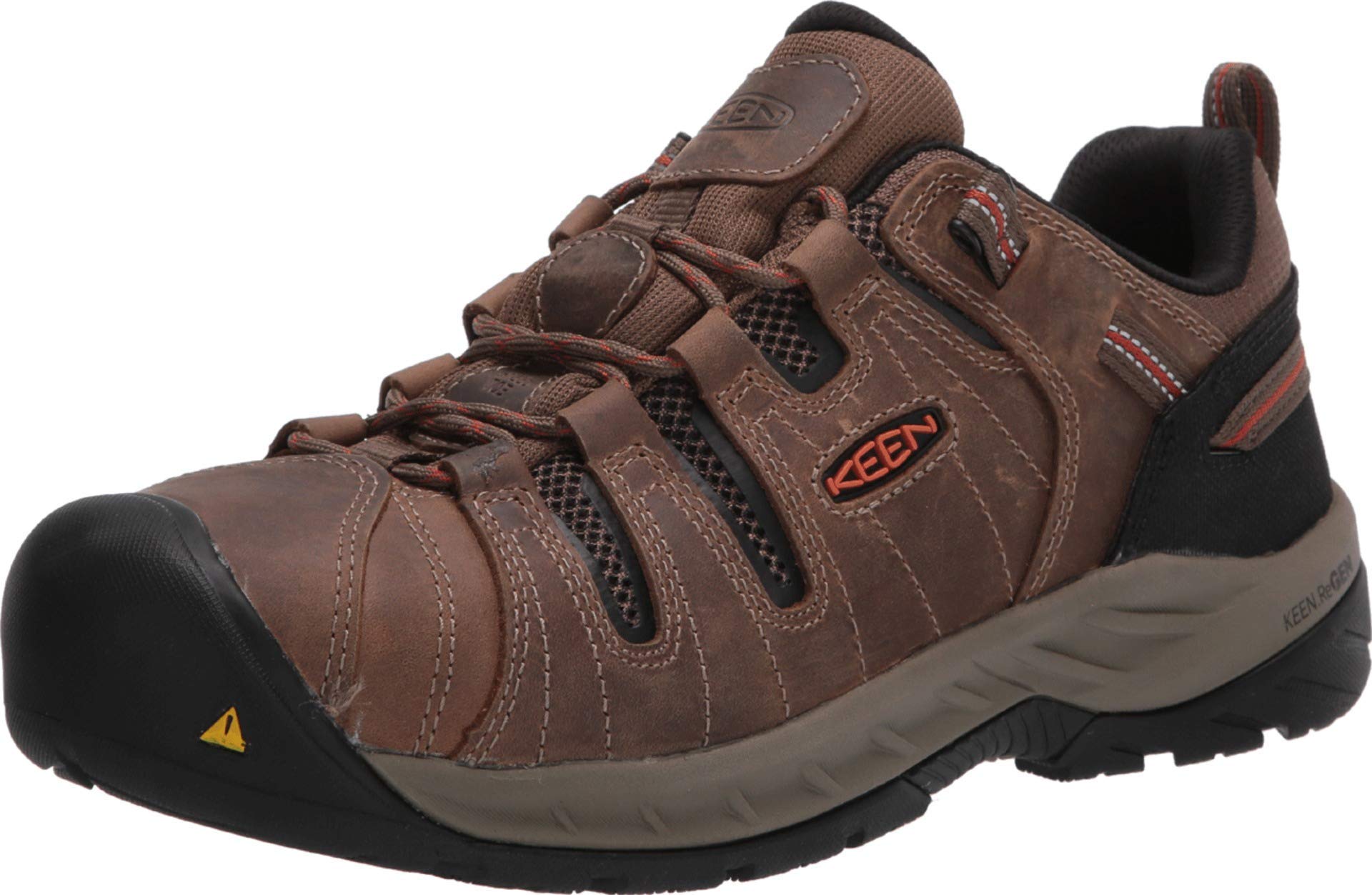
A hiking boot shape that makes a steel toe feel like nothing at all.
The cushioning is the headline. KEEN’s ReGEN midsole is built to return 50% of the energy from every step, so the foam pushes back as you walk. The wide toe box is the other half of the comfort story — it gives the steel cap space so it never crowds your toes.
This is a lighter-duty work shoe aimed at construction, landscaping, and general maintenance, not a heavy demolition boot. The water-resistant leather and moisture-wicking lining keep your feet cool and dry, and the insole is removable so you can swap in your own. It also uses a probiotic-based technology that breaks down odor in sweat, so the inside stays fresher over long weeks.
Quality is what carries it, and fit has a solid following — the wide cut runs true. Two honest limits show up. The mesh flex points can melt under welding or hot-work, so keep these away from sparks. And the soles are the weak spot in the durability feedback, with some pairs separating over time while others last three years or more. The reviews also call the look plain — browns only, not a shoe you buy for style.
Reasons owners keep buying
- KEEN.ReGEN midsole targets 50% energy return per step.
- Wide toe box keeps the steel cap off your toes.
- Removable PU insole lets you fit your own insert.
- Water-resistant leather with a moisture-wicking lining.
- Probiotic-based odor technology keeps the inside fresh.
Limits to know before you buy
- Mesh flex points are not meant for welding or hot-work sparks.
- Sole durability splits in feedback — some last years, some separate.
- Color choices are limited to browns.
Reach for this if: you want an athletic, hiking-style steel toe for lighter-duty construction and landscaping.
Keep it away from: welding benches and any job that throws sparks at your feet.
6. Ariat Groundbreaker Wide Square Toe Steel Toe Work Boot
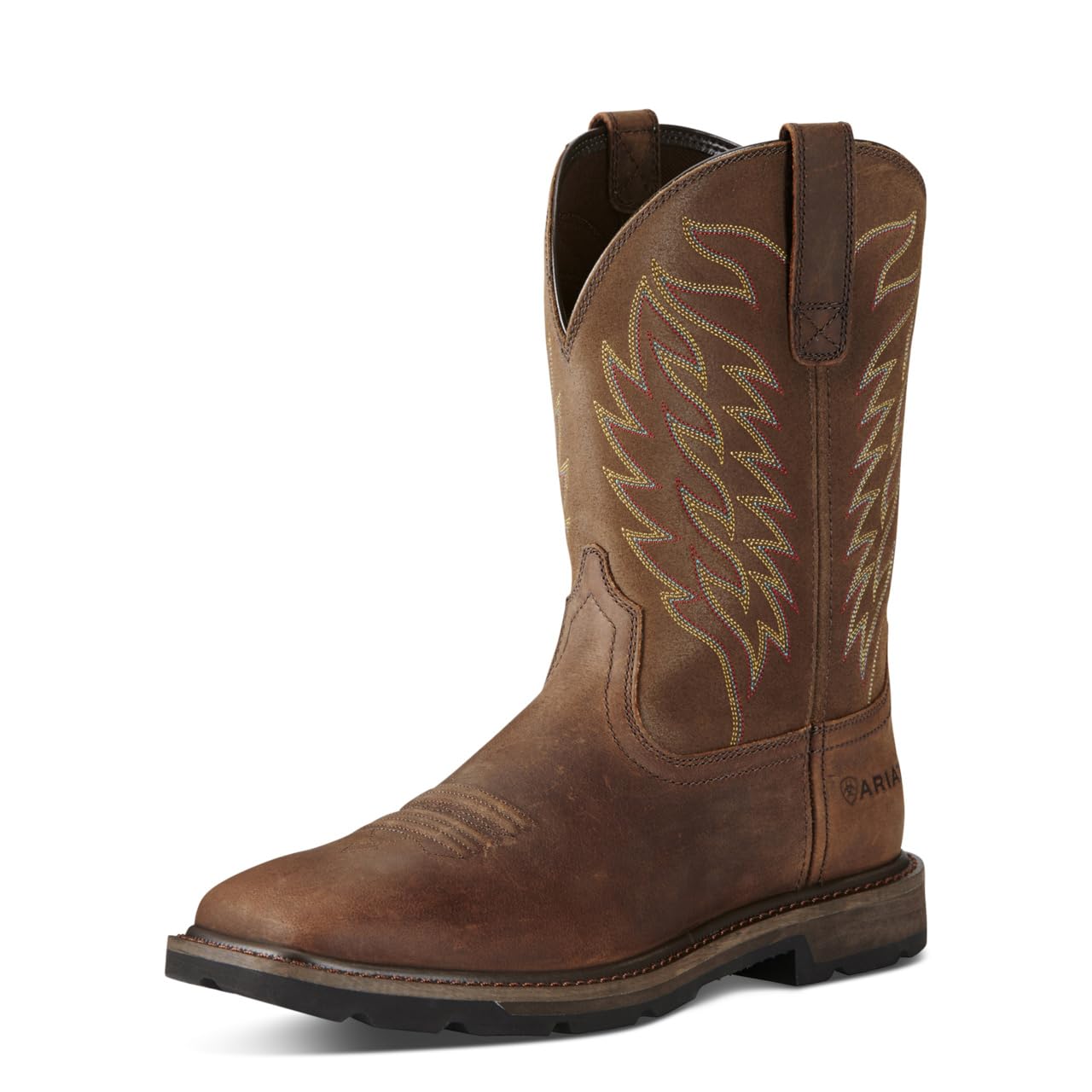
A Western-style steel toe with almost no break-in before a first shift.
Most boots demand a week before they stop fighting your foot. This one is built to show up ready. Full-grain leather up top, comfort insoles inside, and a Duratread outsole (Ariat’s abrasion-resistant rubber that stays flexible) do the work, and owners mention walking straight into a 9-hour shift without a break-in period. It also handles oil and grease on the floor without complaint.
At 1.9 pounds it sits just under the WorkHog’s 2 pounds — close enough that the two feel similar in hand, but the Groundbreaker’s push-on entry is noticeably less fussy than some tall Western shafts. The square toe is roomy in front. Quality is what carries the reputation, and comfort follows close behind.
Two things to weigh before you buy. Sizing runs big on some pairs, so check before you commit. And the pull-on opening can be a real struggle for a small number of owners in a wide or upsized fit after a long shift — if you have stiff hands or a high arch, test that entry first. The sole padding can also shift into a lump after months of hard rope work, though the boot stays comfortable otherwise.
Best part of the day: the zero break-in — most boots need a week, this one starts comfortable.
Test it early: some pairs run big and the pull-on opening can be stiff for high arches.
Pick this up if: you want a dressy Western steel toe that works around oil and grease from day one.
Try a different cut if: pull-on entries have ever been hard for your feet or hands.
7. New Balance Men’s Work & Safety Calibre Comp Toe Work Boots
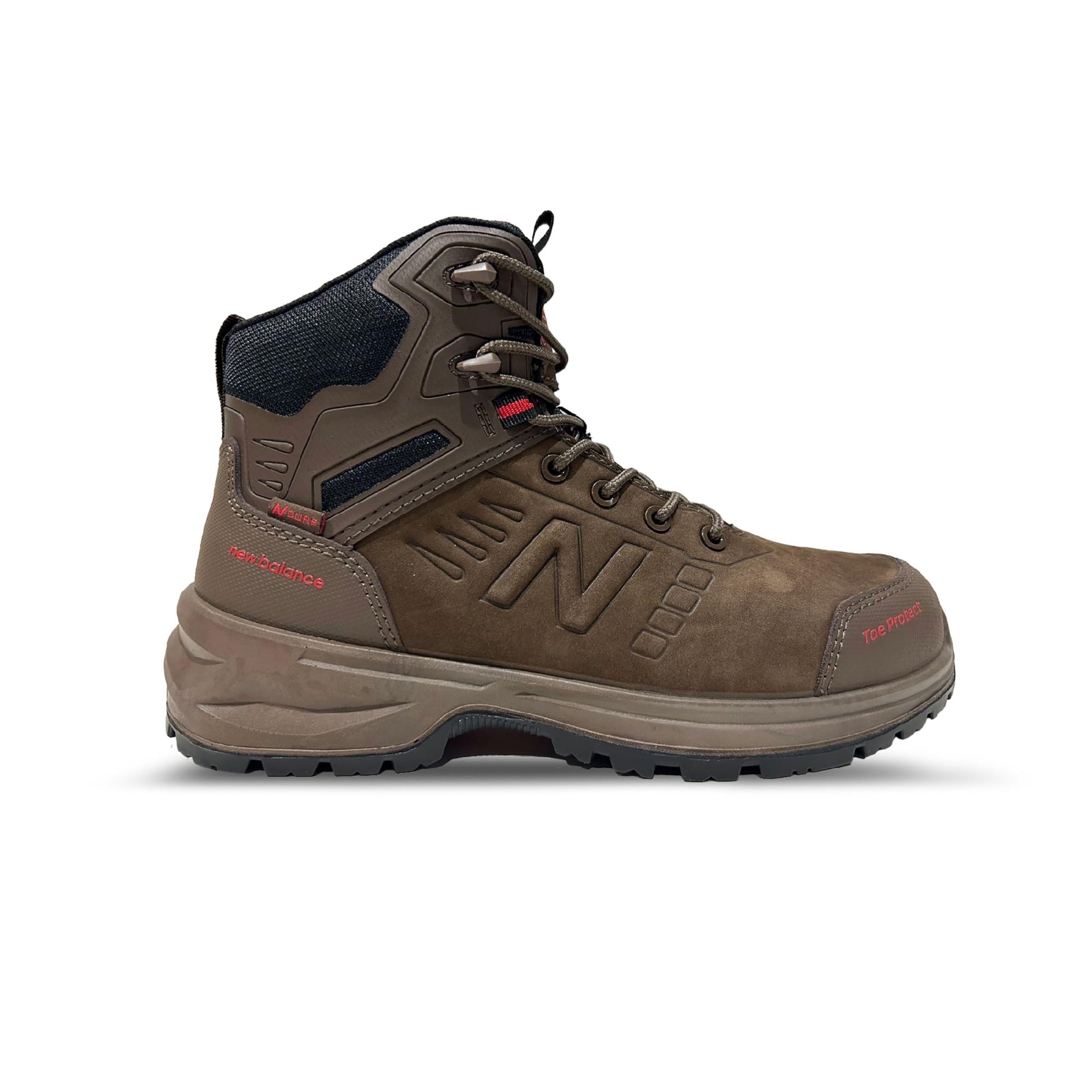
Sneaker-style cushioning for the person who logs miles on the job.
People keep these on all day because of the comfort. The NB Comfort Insole and Acteva foam in the sole (a lightweight foam that flexes instead of fighting your foot) make them feel like a walking shoe. The composite toe — a non-metal cap — keeps the safety rating without cold metal on your toes. The dual-use tread blends trail and running lugs, so it grips off-road as well as indoors.
For walking-heavy days this is a strong match. Inspectors and maintenance crews who cover three or four miles a shift find them light and supportive, and the roomy toe box keeps the cap away from your toes. A side zipper makes them easy to get on and off. They also shed water well — one factory-floor wearer power-washed them weekly and stayed dry.
Now the honest part. This is a walking boot, not a laborer’s armor — the leather is not insulated for harsh winter, and heavy abuse can wear it faster than a lugged work boot. Laces cinch from the toe end and stay tight, so you may have to tie loosely. Breathability is limited by the full leather, and the zipper can need a firm pull. Treat it as the comfortable choice for lighter duty and it delivers.
What the walking crowd loves
- Acteva foam plus NB Comfort Insole gives sneaker-style cushioning.
- Composite toe keeps the safety rating without steel’s cold feel.
- Side zipper means quick on and off without untying.
- Dual-use tread blends trail and running lugs for mixed ground.
- Water repellency holds up to weekly power-washing.
Where it comes up short
- Not insulated enough for harsh winter without heated insoles.
- Laces pull tight from the toe end and stay that way.
- Full leather limits breathability on hot days.
Made for: inspectors and maintenance staff who walk miles and want a sneaker-soft safety toe.
Look elsewhere if: you need insulation for freezing sites or a boot that shrugs off heavy demolition work.
Know the Specs
Steel Toe vs Composite Toe
A steel toe is a metal cap rated to protect against compression and impact — the classic protection against a dropped or rolling load. A composite toe is a non-metal cap that meets similar safety standards but feels less cold against your toes and is often lighter. If your site does not require steel specifically, the composite option on the Skechers and New Balance picks is a real comfort advantage. The Florsheim and both Ariat boots use a steel cap.
Midsole And Footbed Cushioning
The midsole is the foam layer between your foot and the outsole, and it is what actually saves your feet on hard floors. Keen’s ReGEN midsole aims for 50% energy return, the Skechers uses Air-Cooled Memory Foam, and the New Balance uses Acteva foam. A removable insole is a bonus — the Keen Flint 2 and New Balance both let you swap in your own insert once the stock one flattens.
Outsole And Slip Resistance
The outsole is the bottom rubber layer that touches the ground. An abrasion-resistant compound like Ariat’s Duratread resists wear while staying flexible. A slip-resistant rubber sole grips wet floors, and a puncture-resistant plate under the sole stops nails from pushing up. Match the tread to your surface — deep lugs for snow and slush, smoother siped soles for soapy factory floors.
Shaft Height And Entry
Shaft height is how far the boot rises above your ankle. An 8-inch shaft like the Timberland PRO supports the ankle but can press when you kneel. A low-cut shoe flexes freely and is easier to walk in. Entry systems matter too — a hands-free slip-in, a side zipper, or a pull-on set of finger holes all change how fast you get out the door.
Common Questions
Do steel toe shoes get more comfortable after break-in?
Which is more comfortable, a steel toe or a composite toe?
How do I stop a steel toe shoe from rubbing my toes?
Are steel toe shoes good for standing on concrete all day?
Can I wear steel toe shoes for a dress code at work?
How long do steel toe work boots typically last?
What does ASTM F2413 or ASTM F2892 mean on a work boot?
Can I swap in my own insoles on these work shoes?
Are pull-on work boots harder to break in than laced shoes?
The Bottom Line
If your days are on ladders and concrete, reach for the Ariat WorkHog Wide Square Toe first — it blends a shock-absorbing ATS Max platform, an easy entry for wide feet, and a steel cap that stays off your toes. For a hands-free warehouse shoe, grab the Skechers Holdredge Ryker Slip-in and give it a short break-in. And if you need a safety toe that looks smart with a collared shirt, the Florsheim Work Coronis hides it best.
Comfort here comes from three things: the right toe box shape, a cushioning midsole, and a shoe that matches your floor. Pick the pair that fits your day and your feet stop aching by 4 p.m.
How we choose
We do not accept paid placement. Every pick is matched to a real buyer and a real use-case; we do not hands-on test units.
Sources
Specifications: manufacturer listings and product documentation. Review insights: verified customer reviews, as of October 2026. Pricing: not shown on this page (it changes often); check the current price via the retailer link.
As an Amazon Associate, Aappliancez earns from qualifying purchases. This does not affect which products we feature.