Disclosure: Some links in this post are affiliate links. As an Amazon Associate I earn from qualifying purchases, at no extra cost to you. Learn more
Specs are compiled from manufacturer listings and verified buyer reviews and can change over time — please confirm the key details on the product page before buying.
If you are on your feet for ten hours and your slip-on boots leave you limping to the truck, the problem is usually the insole and the shank, not your feet. This guide sorts the nine strongest pull-on work boots by what really decides comfort on a concrete slab: a cushioned footbed you can swap, a sole that grips wet steel, and a collar that does not grind your ankle. The Irish Setter Two Harbors 11″ takes the top spot here.
This guide is built by comparing the manufacturers’ published specifications and the patterns across verified customer reviews, so you get each pick’s real strengths and trade-offs instead of marketing spin.
A comfortable slip-on lives or dies on its footbed, shank, and gore panels, and each pick below explains exactly which parts carry that job. That is exactly how this breakdown of the most comfortable slip on work boots is organized.
Top Picks

How To Choose The Best Most Comfortable Slip on Work Boots
Comfort in a pull-on boot is not one feature. It is the padding under your arch, the way the elastic panels hug your instep, and how much of the day the sole absorbs before your heels start ringing. Get those three right and the leather barely matters.
Is the footbed removable, and does the arch support match your feet?
A removable insole is the single easiest comfort upgrade you can make. It lets you pull the stock pad out and drop in your own orthotic. The Wolverine Wellington and the Danner Bull Run Chelsea both take aftermarket insoles without a fight, and the Carhartt Wedge Chelsea uses an Insite footbed that is built for high-rebound cushioning. The KEEN Kenton Mid stock pad is firmer, and it is the first thing most owners change.
How a slip-on holds your foot without laces
Laceless boots grip through twin gore panels — the elastic strips on each side that squeeze the instep. If that squeeze is loose, your heel lifts and slides, which is where blisters start. A boot that fits snug on day one will stretch with the leather. A boot that already slips on day one usually gets worse, not better. That is why sizing down half a size is a common adjustment on laceless builds.
Steel toe, soft toe, or composite?
Toe type changes both protection and interior room. Steel toe is the classic safety standard. Composite and carbon toe are non-metallic, which matters in plants that run metal detectors, and they shed the cold a steel cap holds onto in winter. A few of these boots ship in both soft and steel versions, so confirm the listing before you buy — one buyer found the toe on their order did not match the description.
Outsole grip decides whether you shuffle or walk
A wedge sole sits flat and soft and clears gravel well, which suits shop floors and wood. A lugged rubber outsole bites into mud and wet steel but traps dirt in the treads. Oil- and slip-resistant rubber compounds are the ones to look for if your day involves coolant, grease, or standing water. Check the sole compound first if you work on inclined metal.
Side-by-Side Comparison
| Model | Best For | Toe Type | Footbed | Outsole | Amazon |
|---|---|---|---|---|---|
| Irish Setter Two Harbors 11″★ Best Overall | All-day concrete and rig work | Steel toe | No break-in cushioning | Anti-slip rubber | Amazon |
| Georgia Boot Eagle One ChelseaWaterproof Workhorse | Wet farm and mud work | Soft toe | AMP memory foam | Oil, slip, chemical, heat resistant rubber | Amazon |
| ROCKROOSTER Bakken Slip-OnBest for Wet Plants | Brewery and food-plant shifts | Soft or steel toe option | Break-in-free padded insole | Slip, oil and heat resistant rubber | Amazon |
| KEEN Utility Kenton Mid | Light-duty plant and warehouse work | Composite toe | Removable insole | Grippy rubber | Amazon |
| Carhartt Wedge Chelsea | Mixed jobsite and after-work wear | Steel and soft toe versions | Insite high-rebound footbed | Dual-density rubber | Amazon |
| Ariat Groundbreaker Wide Square Toe | Cowboy-boot wearers on steel toe jobs | Steel toe | Comfort insole | Duratread outsole | Amazon |
| Wolverine Wellington | Flat-floor shop and indoor trades | Soft toe | Removable full-cushion footbed | Treated rubber, non-marring | Amazon |
| ARIAT Turbo Chelsea | Wet industrial sites and long shifts | Carbon toe | Energy Max anti-fatigue insole | Oil and slip resisting, 150°C hot contact | Amazon |
| Danner Bull Run Chelsea | Electricians and carpenters moving in and out | EH-rated, toe type not stated | Cushioned footbed, orthotic friendly | Oil and slip resistant | Amazon |
Detailed Reviews
1. Irish Setter Two Harbors 11″ Mens Steel Toe Work Boot
Our pick — 4.5+★ from 700+ verified ratings; the strongest balance of quality and price.
An 11-inch steel-toe pull-on that buyers report needs no break-in before a full shift.
What makes this the pick for anyone standing on concrete all day is that it needs nothing from you up front. Owners mention no break-in period, so the boot goes from box to a 12-hour shift without blister tape. These boots carry a 4.5+ star score from a large body of buyers, and the complaint rate on the basics — fit, warmth, waterproofing — is low. For an 11-inch pull-on steel toe, that consistency is the whole story.
Set it beside the Georgia Eagle One below and the difference is measurable in time. The Georgia needs a short break-in, while these Irish Setters go from box to a 12-hour shift without a warm-up. An oilfield hand in harsh Wyoming conditions is on a third pair. Someone who works standing on concrete floors, in mud or snow, describes them as the most comfortable boot they have ever worn and mentions this being only the second pair in 11 years. A fire service and oil-and-gas worker called them the boot they would never switch from and ordered several more to keep on hand.
The honest catch is that the leather starts stiff on some feet. A size 9D arrived tight and reached a perfect fit only after two rounds of neatsfoot oil over about a month. Order your true size and treat the leather rather than sizing up. The other trade-off is weight: an 11-inch steel toe shaft is a lot of boot, so if you want sneaker-light you are looking at the wrong end of this list.
What earns it the top slot
- Arrives comfortable — no break-in period reported by owners
- Steel toe protection with a real anti-slip outsole that holds up on an oil rig
- Waterproofing still holding after 15 months of rain and snow
- Takes wide feet well and stays warm in cold conditions
What you should know before ordering
- Stiff leather on some pairs until oiled in
- Heavy 11-inch build compared with a low Chelsea
- Long-term waterproofing shows minor separation spots, though no leaks
Buy this if: you want steel toe protection that feels broken in from the first shift on concrete, rig, or yard.
Think twice if: you want a light, low-cut boot for quick in-and-out work — this shaft is a full 11 inches.
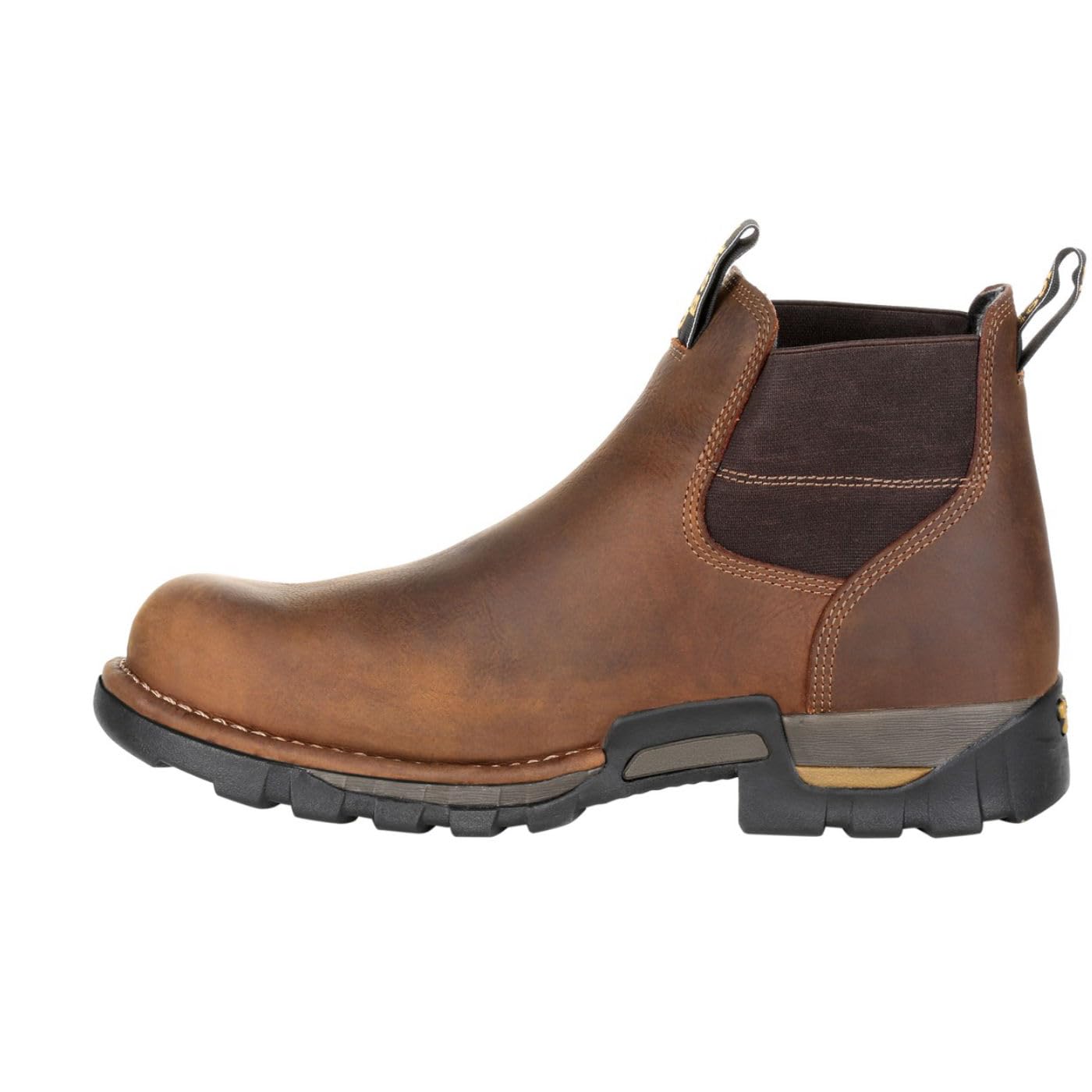
2. Georgia Boot Eagle One Waterproof Chelsea Work Boot
Full-grain leather, twin gore panels, and a memory foam bed built for mud and rain.
A Chelsea boot has to do two things at once: slide on fast and stay put once it is on. The Georgia Eagle One handles the first part with nylon pull tabs and elastic side panels, and the second with an AMP memory foam insole that cradles the foot. A wide TPU shovel shank — a stiff plate under the arch — runs the length of the sole for support. Its rubber outsole is rated resistant to oil, slip, chemicals, heat, and abrasion, which is the spec that matters when the ground is wet and greasy.
What wins people over here is comfort, and it shows up in the long shifts. One buyer wore theirs for 12 loads across a 9-hour workday plus a 3-hour commute with no sores and strong arch support from the shovel shank. A farm worker reports the last pair lasting 2.5 years and outlasting several other brands. The boot is waterproof through the Georgia Waterproof System, and it holds up in ankle-deep rain and puddles.
The trade-off is durability at the seams. Stitching between the upper and sole has failed for some owners after roughly 2 to 2.5 years of near-daily wear, and the waterproof seams take on water once the leather coating is worn down and dirt has worked in. Treat the leather with mink oil to keep the water resistance alive. Fit also runs on the snug side: wide sizes still feel tight at first, and thin-sock wearers may need to size down.
Where it earns its keep: this is the pick for anyone working outside in wet, muddy conditions where the waterproof membrane and heat-resistant sole carry the day.
Where it asks for care: oil the leather regularly and watch the upper-to-sole stitching over the long haul.
Reach for this if: your day is farm, ranch, or wet outdoor work and you want a slip-on that sheds muck.
Look elsewhere if: you need a steel toe — this build is soft toe, and some orders have shipped with a soft toe even when steel is advertised.
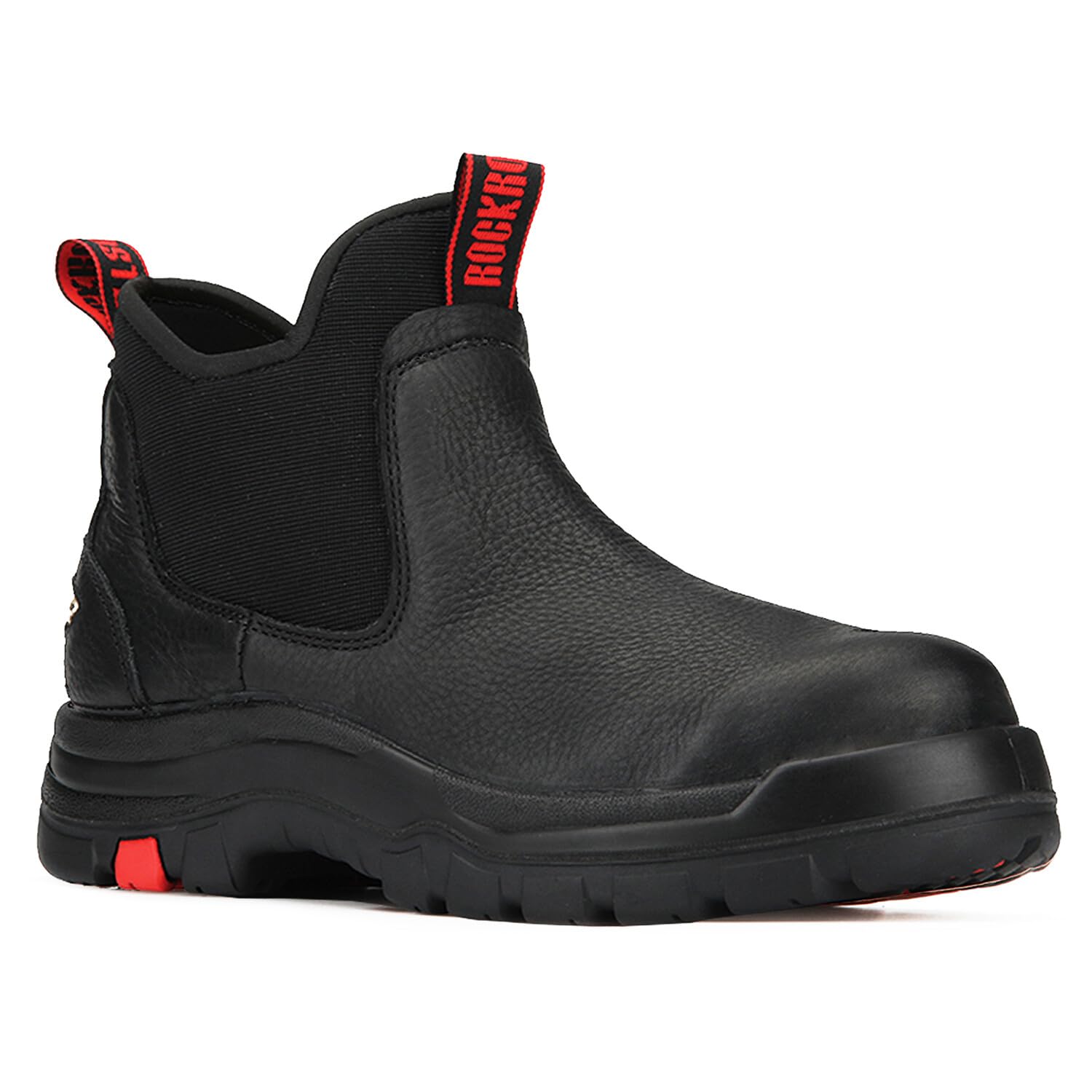
3. ROCKROOSTER AK303-Soft Toe Work Boots
A break-in-free Chelsea that survives caustic cellar floors and keeps you dry all shift.
The spec that carries this boot is its Hydroguard waterproof membrane. It keeps feet dry in the wet, chemical-heavy environments where a leaky boot ruins the day, and the elastic collar is designed to avoid the ankle rubs that make a break-in period miserable. The rubber outsole is rated slip, oil, and heat resistant, and the sole carries an electrical hazard rating under the ASTM safety standard — meaning the sole is built to resist conducting a shock.
This is the boot with a following in brewery and food-plant work. Someone on their third pair for brewery cellar work reports each lasting over a year in caustic, staying dry and comfortable all shift. Another owner put them through mud, paint, fuel spills, soaking, and a bike crash, and buffed the scuff out. Buyers describe it as the brand that outlasted Doc Martens, Rossi, and Cat in their experience.
The sizing is the thing to get right. These run big, so a sneaker-wearer who normally takes a 12 orders an 11.5, and anyone with narrow feet downsizes by half. One owner who followed a size-down recommendation found it too small and had to return for their normal size, so treat web advice as a guide, not gospel. Breathability is the other honest limit: these boots run warm in hot weather, and the ankle elastic keeps water out but is water resistant rather than fully proof there.
The standout: physical rubber outsoles and an EH-rated sole make this the pick for anyone standing in wet or electrically sensitive work areas.
The catch: size down is not universal advice — the boot runs large for most, but a few feet need their true size.
Best for: brewery, food production, and chemical-water work where dry feet matter more than breathability.
Skip if: you work in summer heat and need a boot that moves air — these trap warmth.
4. KEEN Utility Men’s Kenton Mid Composite Toe Work Sneakers

A skate-shoe look with a protective composite toe, built at 18.3 oz per shoe.
At 18.3 oz per shoe (519 grams), this is the lightest thing on the list with a protective toe. That number matters when you climb ladders or spend the day on your feet — less boot to lift with every step. It is built on KEEN’s traditional wider form and takes removable insoles, so you can swap in your own support without fighting the boot. The composite toe is non-metallic, which means no cold steel against your toes and no magnetic trigger at a plant gate.
The Kenton Mid is a light-duty pick: assembly line, maintenance, manufacturing, warehousing, and distribution. What wins people over is the weight for a safety toe. Owners with wide feet call the fit roomy, and the soles grip well on smooth concrete with coolant, oil, or transmission fluid on it — one owner notes the tread showed minimal wear after real use. Sizing runs big, though, so half a size down from your sneaker size is the safe move. A few report the top of the foot pinches for the first few long shifts before it gives.
The honest limit is durability on the upper and the stock insole. One tech on 50-60 hours a week replaced the stock insoles at three months because they lacked support, and reported the upper failing over time. This is not a boot you buy for years of punishment — it is the boot for someone who wants a light, sneaker-feel safety shoe for indoor work and is fine replacing it sooner. The stock sole is also firm, and a padded aftermarket insole makes a real difference.
Why it made the list
- 18.3 oz per shoe — the lightest protective option here
- Composite toe for non-metallic protection
- Wide fit and removable insoles
- Grips slippery concrete with coolant and oil on it
What to plan around
- Sizing runs a half size large
- Firm stock insole — budget for an aftermarket padded one
- Upper durability is the weak point under heavy daily use
Pick it if: you work a light-duty indoor job and want the lightest boots with a protective toe on this list.
Not for you if: you want one pair to survive years of 50-plus-hour weeks on rough ground.
5. Carhartt Chelsea Boots

The wedge-sole Chelsea that goes from a muddy site to dinner without looking like a work boot.
The comfort comes from the Insite footbed. It pairs high-rebound cushioning with podiatrist-designed arch support, the spec that keeps feet from aching through a long shift. A FastDry lining pulls moisture off your feet, and the twin gore panels plus oil-tanned leather make it a true pull-on. Underneath, a dual-density Carhartt rubber outsole is slip resistant, and Goodyear welt construction — a stitched construction method — adds to how long the sole and upper stay joined.
The style is doing real work here. Owners describe moving from the jobsite straight to meeting up with friends without changing. A contractor wearing a size 14 wide finds the toe room generous and the lugged outsole better in mud and rain than the slick-soled Chelseas it replaces. The easy pull-on design is a genuine benefit when you are in and out of the truck all day.
Two honest limits. The first is weight: one contractor calls these super heavy compared with other Chelseas, heavy enough that they reach for a different pair in dry summer. The second is fit, which runs loose — feet have been known to slide at the heel during long walks. Thicker socks or a half-size down fixes most of it. The leather also scratches easily, so treat it as a working boot and not a show pair.
Where it shines: high-rebound Insite cushioning plus a rugged wedge outsole is a strong pairing for mixed indoor-outdoor work.
The trade-off worth naming: it is on the heavy side for a Chelsea, and the fit runs loose enough that heel slide is a real risk on long walks.
Go for it when: you want one boot that handles a muddy jobsite and still looks sharp at dinner.
Pass if: you need light and feathery, or a snug fit right from the start.
6. Ariat Groundbreaker Steel Toe Work Boot
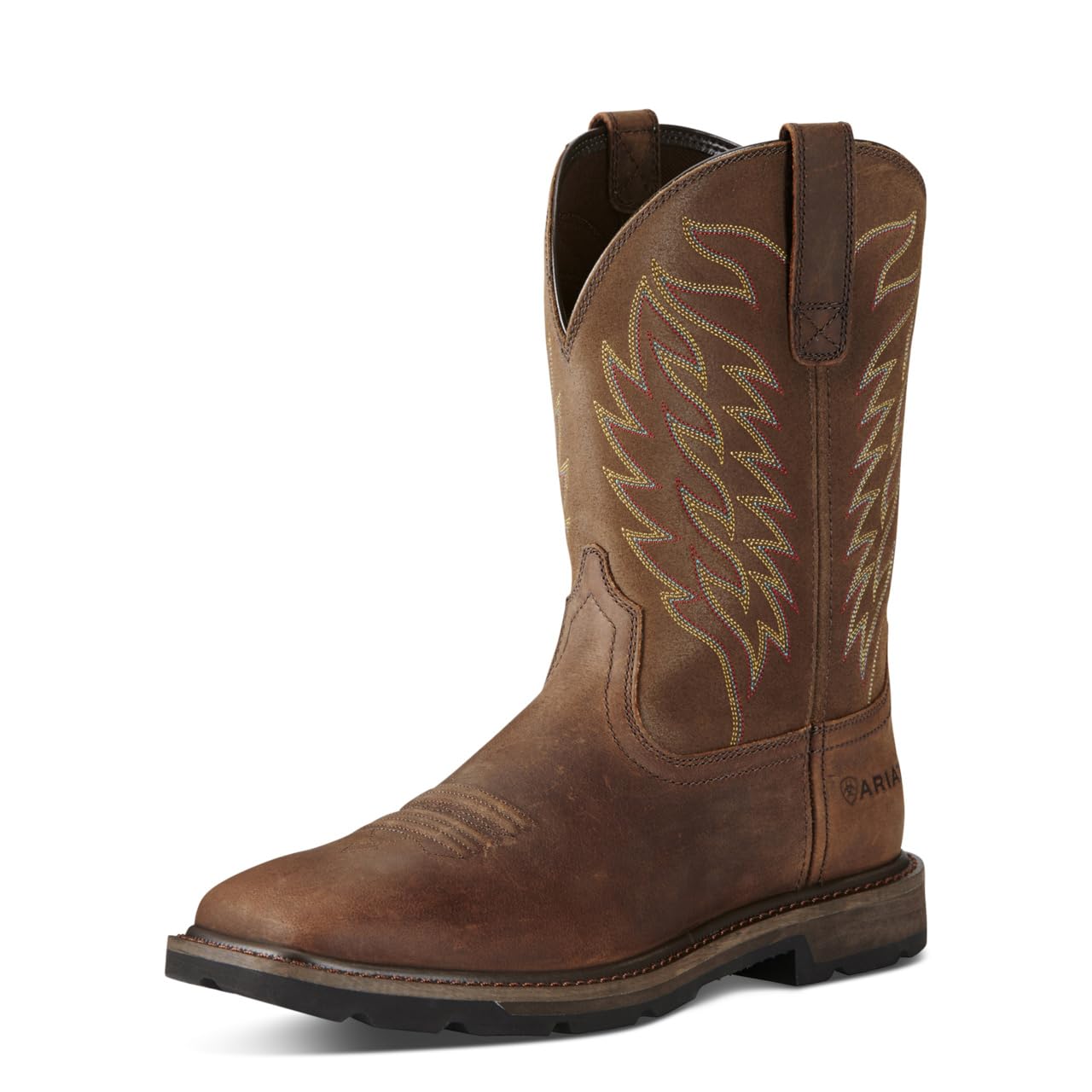
A steel-toe square cowboy boot one buyer wore straight from the box through a 9-hour shift.
This is the pick for the rider or ranch hand who wants cowboy-boot looks without a break-in period. The upper is 100% full-grain leather, the toe is steel, and the Duratread outsole is designed for wear resistance with flexibility. Comfort comes from interior insoles, and owners put it to work fast — one buyer went straight from the box into a 9-hour shift with no break-in needed.
Durability is the long game here. A rope access worker in shipyards and refineries wore a pair through 14 months and stayed dry through occasional dips. Families that wear Ariat consistently report the boots lasting years, and one owner has been wearing a pair daily for about six months without trouble. If you already like the Ariat fit, the wide square toe is the roomy option for a steel-toe job.
The fit cuts large, so a size down is a common move. The bigger concern is the difficulty of getting the boot off — one buyer with a wide, sized-up fit still struggled daily to pull them over their heel after a 10-hour shift. Watch the sole padding too: a shipyard worker found the cushioning shifted into a lump at around ten months and had to flatten it out.
What you are buying: true cowboy-boot styling with steel toe protection and a flexible wear-resistant outsole.
The honest caveat: the pull-on throat can be a fight to get off at the end of a long day, and the fit runs a size big.
The right fit if: you want a square-toe steel boot that looks the part and wears in immediately.
Steer clear if: you want a slipper-easy removal at the end of a 10-hour shift.
7. Wolverine Wellington Work boots
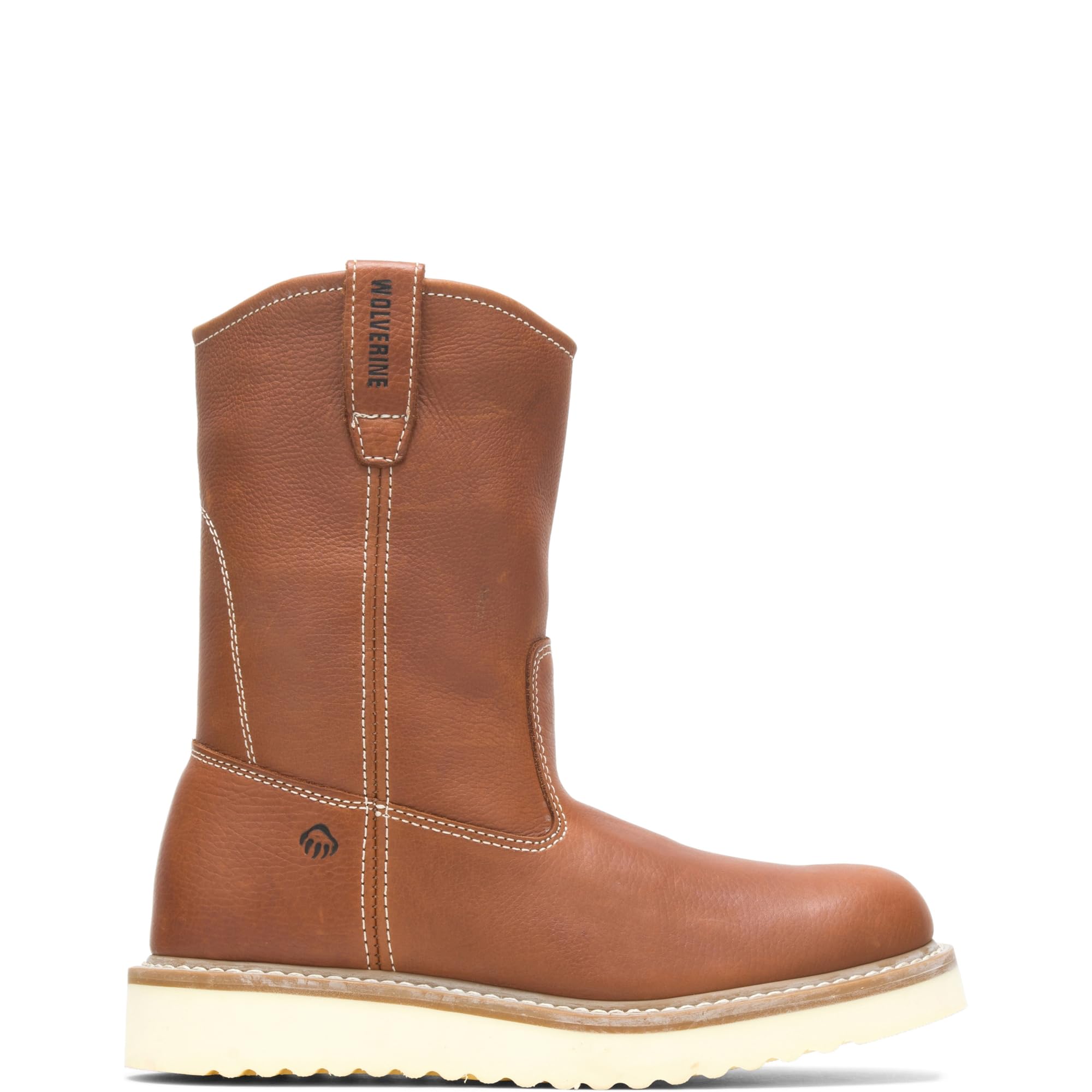
A ten-inch Wellington with a soft wedge sole that never picks up gravel on the shop floor.
Fit is this boot’s headline. Buyers across a big body of reviews put fit at the top of what they praise, and the leather softens to mold to the foot after a few wears. It uses full-grain leather over Goodyear welt construction, with a removable full-cushion footbed for support and a lightweight nylon shank to keep the arch from folding. A springy rubber midsole under a non-marring wedge sole is the reason it never scrapes up a shop floor.
The sole is what flat-floor workers notice. Owners love the wedge for standing on steel surfaces because it does not snag the way a heeled sole does. A retired union ironworker praised the soft feel of the wedge. Another owner notes the sole does not pick up gravel, which keeps a clean shop clean. It runs true to size, so order your real size and skip the down-sizing you might hear about.
The honest catch is the sole’s lifespan under hard use. The soft foam core sole with a hard rubber outer is comfortable but not hydraulic-fluid resistant, and the sole has been known to crack before the leather fails. Some owners get 3 to 4 years out of a pair with seasonal wear; if you pour fluid on it daily, expect less. A rare report of a pair arriving with a fit problem and unraveling seams points to occasional quality misses, so check them over when they land.
The draw: a soft, gravel-shedding wedge sole for indoor flat floors and standing on steel.
The limit: a foam-core sole that is not rated for hydraulic fluid and will crack with heavy exposure.
Made for: shop, wood, and indoor steel-floor work where a flat non-marring sole is a real advantage.
Not made for: heavy fluid exposure or rugged outdoor terrain.
8. ARIAT Work Men’s Turbo Chelsea Waterproof Carbon Toe EH

A waterproof carbon-toe Chelsea rated to shrug off hot contact up to 150°C.
For serious industrial work, the specs stack up. The carbon toe meets ASTM F2413 for safety toe protection and electrical hazard resistance, the sole meets ASTM F3445 for slip resistance, and it passes hot contact tests at 150°C/302°F. A carbon toe is non-metallic, so it clears metal detectors. The DRYShield waterproof breathable build keeps feet dry, and the Energy Max anti-fatigue insole plus a cushioning midsole absorb shocks through long shifts.
What wins people over is how it holds up in wet, hard industrial sites. One owner wore theirs 2 years in brewery and construction work — waterproof throughout, with a carbon toe that survived a dropped angle grinder — and ranked it above several other work boot brands. A fire and EMS worker called it the most comfortable station boot of their career, with a tread that eased end-of-shift soreness. Owners consistently note the boots last around 1.5 years on daily industrial wear.
The recurring concern is grip on steep metal. An owner flagged poor traction on inclined steel matting and sloped ground, so keep that in mind if steep surfaces are your terrain. Break-in runs 4 to 5 days for some feet, and the composite toe can crowd the toe box at first for first-time buyers. Treat fit carefully and size to your true measurement.
The industrial case
- Waterproof DRYShield build plus ASTM F3445 slip resistance
- Carbon toe rated to ASTM F2413, non-metallic and metal-detector friendly
- 150°C hot-contact rated outsole
- Energy Max insole for long shifts
Where it can fall short
- Grip on inclined steel matting is not reliable for every wearer
- Composite toe leaves less interior toe room than steel
- Break-in of a few days before daily wear
Go here if: you work wet industrial sites and want a waterproof carbon-toe Chelsea that clears metal detectors.
Look elsewhere if: your day involves steep sloped metal, where grip is uneven.
9. Danner Bull Run Chelsea Work Boots
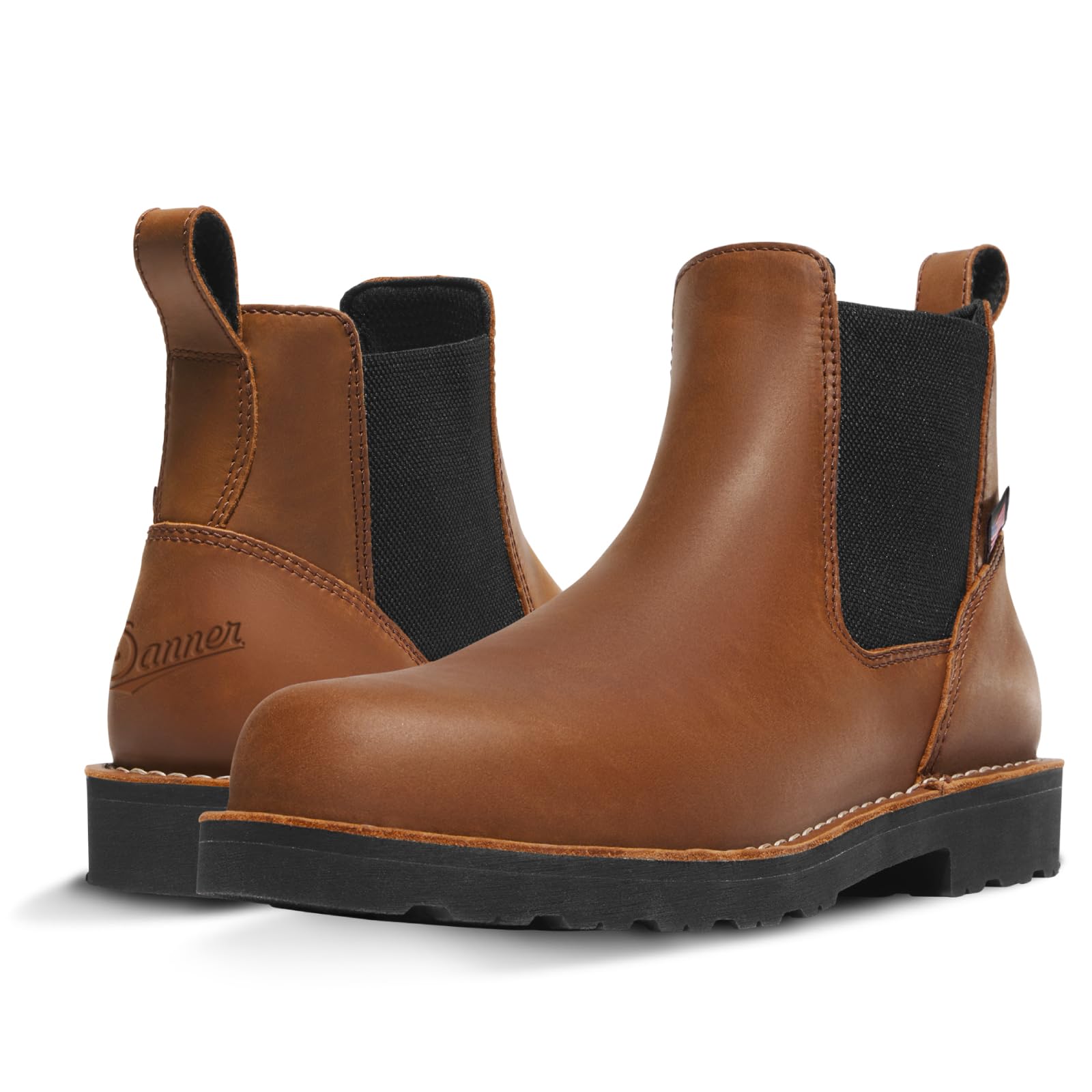
A laceless EH-rated Chelsea that takes a Superfeet orthotic and slips on between outside and inside.
This is the pick for electricians and carpenters who are in and out of buildings all day. The slip-on construction means no laces to trip over when you move from outside to inside, and the full-grain leather upper is soft but durable. It carries EH protection, meaning its build is rated for electrical hazard resistance. The oil- and slip-resistant outsole is built to keep you comfortable standing on wood, tile, or concrete for long days.
The fit is the standout for tricky feet. Buyers with awkward feet find them comfortable all day with no foot or back pain, and a pair worn with a green Superfeet insole reaches a near-custom fit. Owners note it runs slightly big, so a true-to-size order suits most, and the heel stays put with no excessive stretch. A 35-year work boot wearer called them the most comfortable ones ever from the start and plans to get them re-crafted when the soles wear.
The honest limits are break-in and value. Some pairs need a break-in period before they feel right, and there are buyers who feel that for the price, more cushioning should arrive built in — one ended up shopping for inserts. A small number report a bad fit from the start. The upside is that this is a boot built to be resoled, so the leather lasts far longer than the first sole.
The reason to pick it: an orthotic-friendly fit that works with your inserts, plus a resolable build for long-term service work.
The honest gap: it needs a break-in, and the cost-of-entry cushioning is leaner than some buyers expect.
Made for: electricians, carpenters, and anyone who wears orthotics and moves between indoors and outdoors all day.
Rethink it if: you want cloud-soft cushioning right from the start for the money.
Know the Specs
Gore panels and fit
Twin gore panels are the elastic strips that let a laceless boot go on and grip your instep. Snug panels hold your heel steady; loose ones let it slide. That is why laceless boots often ask for a half size down, and why a boot that already slips on day one rarely tightens up.
Footbed cushioning
The insole is the pad your arch sits on. High-rebound foam springs back with each step, and a podiatrist-designed arch holds its shape. A removable footbed lets you swap for your own orthotic, which is the single biggest comfort lever on a laceless boot.
Steel, composite, and carbon toe
Steel toe is the classic safety cap. Composite and carbon toe are non-metallic, which clears metal detectors and avoids the cold steel feel in winter. Non-metallic toes often leave a little less interior toe room, so fit them the same way you would a steel boot.
Wedge sole versus lugged outsole
A wedge sole sits flat, soft, and clean on shop floors. A lugged outsole bites into mud and wet steel but traps dirt. Oil- and slip-resistant compounds matter most if you stand on coolant, grease, or water, so match the sole to your surface.
Common Questions
Do slip-on work boots need a break-in period?
Should I size down for a laceless work boot?
Is a steel toe or a composite toe more comfortable?
Can I put my own orthotic insoles in these boots?
How long do slip-on work boots last with daily wear?
Are waterproof slip-on boots fully watertight?
What does an EH rating on a work boot mean?
Will a slip-on work boot stay on when I lift or kneel?
Which slip-on boot is best for concrete floors?
Are these boots true to size or should I order wide?
The Bottom Line
For most people, the winner among these most comfortable slip on work boots is the Irish Setter Two Harbors 11″ because it needs no break-in and takes steel toe protection straight onto a concrete slab. If wet outdoor or farm work is your day, grab the Georgia Eagle One Chelsea for its waterproof membrane and heat-resistant sole. And if you need a light, sneaker-feel boot for indoor plant work, the KEEN Kenton Mid is the one to reach for. The Irish Setter Two Harbors carries a 4.5+ star score from a large body of buyers, with a low complaint rate on fit, warmth, and waterproofing.
How we choose
We do not accept paid placement. Every pick is matched to a real buyer and a real use-case; we do not hands-on test units.
Sources
Specifications: manufacturer listings and product documentation. Review insights: verified customer reviews, as of October 2026. Pricing: not shown on this page (it changes often); check the current price via the retailer link.
As an Amazon Associate, Aappliancez earns from qualifying purchases. This does not affect which products we feature.