Disclosure: Some links in this post are affiliate links. As an Amazon Associate I earn from qualifying purchases, at no extra cost to you. Learn more
Specs are compiled from manufacturer listings and verified buyer reviews and can change over time — please confirm the key details on the product page before buying.
If your floors are the problem — stuck-on paw prints, dried coffee rings, the grey film that comes back a day after you mop — you do not need another do-everything machine that vacuums badly and mops worse. You need a robot built around wet cleaning. The picks below put their effort into scrubbing, water control, and getting under the furniture you dread reaching behind, and the strongest of them is a compact spinning-mop unit that quietly works a hard floor while you are somewhere else entirely.
This guide is built by comparing the manufacturers’ published specifications and the patterns across verified customer reviews, so you get each pick’s real strengths and trade-offs instead of marketing spin.
Most of these machines also vacuum, so the trick is spotting which one treats mopping as its main job and which treats it as a bolt-on. Below you will find how each one handles water, edges, rugs, and its own dirty mop pads — the four things that decide whether you keep using it or park it in a closet. Read this before you spend on a mopping only robot.
Top Picks

How To Choose The Best Mopping Only Robot
Wet cleaning is a different animal from vacuuming. A mop has to carry water, spread it evenly, press into the floor, and then get that dirty pad cleaned before it drags grime around your kitchen. That is why the spec sheet that sells a vacuum rarely tells you how a mop will perform.
Spinning discs or a flat vibrating pad
Two designs dominate. Spinning mop discs rotate with pressure — one unit in this list presses with the weight of its own 3.2lb body — and they tend to lift sticky residue from tile and sealed wood. A flat pad that vibrates or glides is gentler and thinner, which usually means it reaches further under low furniture. Decide which problem you have more of: hardened stains, or a sofa with almost no clearance.
Does it lift its mop over rugs
This is the single biggest everyday annoyance with wet robots. Some lift the pad automatically when they sense carpet, and the spec sheet will state the lift height in millimeters. Others have no lift at all and will happily drag a wet pad across your low-pile rug. If your home is wall-to-wall hard floor with no rugs, this matters less. If you have a runner in the hallway, check for a stated lift figure.
Water tank size and how you refill it
A small tank means a mid-clean refill, and a refill means stopping whatever you were doing. Look at the stated capacity in liters or milliliters and match it to your floor area. Also check the fill opening — a narrow hole needs a funnel, and a tank you have to lift off the dock adds a step to every session.
What the dock does while you are out
A self-washing dock rinses the pads with hot water and dries them with warm air, which is what keeps a damp mop from smelling between runs. Some also refill the clean tank and empty the dirty one. The rest — clearing hair from the brush, wiping the base, topping up cleaning solution — stays manual, so buy the level of automation you will actually keep up with.
Side-by-Side Comparison
| Model | Best For | Stated Runtime | Tank / Bin Capacity | Mop Type | Amazon |
|---|---|---|---|---|---|
| uninell UR3★ Best Overall | Apartments and first wet robots | 180 minutes | 3.5 liters | Mop pad, one included | Amazon |
| ECOVACS DEEBOT T50 OmniLow-Clearance Pick | Low furniture and pet hair | 200 minutes | 4 liters | Extending spinning mop | Amazon |
| MOVA P10 Pro Ultra Gen 2Deep-Scrub Pick | Deep stain scrubbing | 40 minutes | — | Spinning pads, 260RPM | Amazon |
| Bagotte BL20pro | Hands-off dust handling | — | — | Mop pad, combo unit | Amazon |
| EVERYBOT EDEG2 | Quiet mopping in small flats | 1 years (stated) | 210 ml | Dual spinning discs | Amazon |
| roborock Qrevo S Pro | Big homes with pets | 180 minutes | 2.7 liters | Dual spinning, 10 mm lift | Amazon |
| Narwal Freo X10 Pro | Long-hair households | 210 minutes | 2.5 liters | Dual spinning, 12mm lift | Amazon |
| DREAME L60 Ultra FE | Corner and baseboard reach | 240 minutes | 4.3 liters | Swinging mop, self-wash | Amazon |
| iRobot Roomba Max 705 Combo | Hands-off daily upkeep | 75 minutes | 0.5 liters | Roller mop, 200 RPM | Amazon |
Detailed Reviews
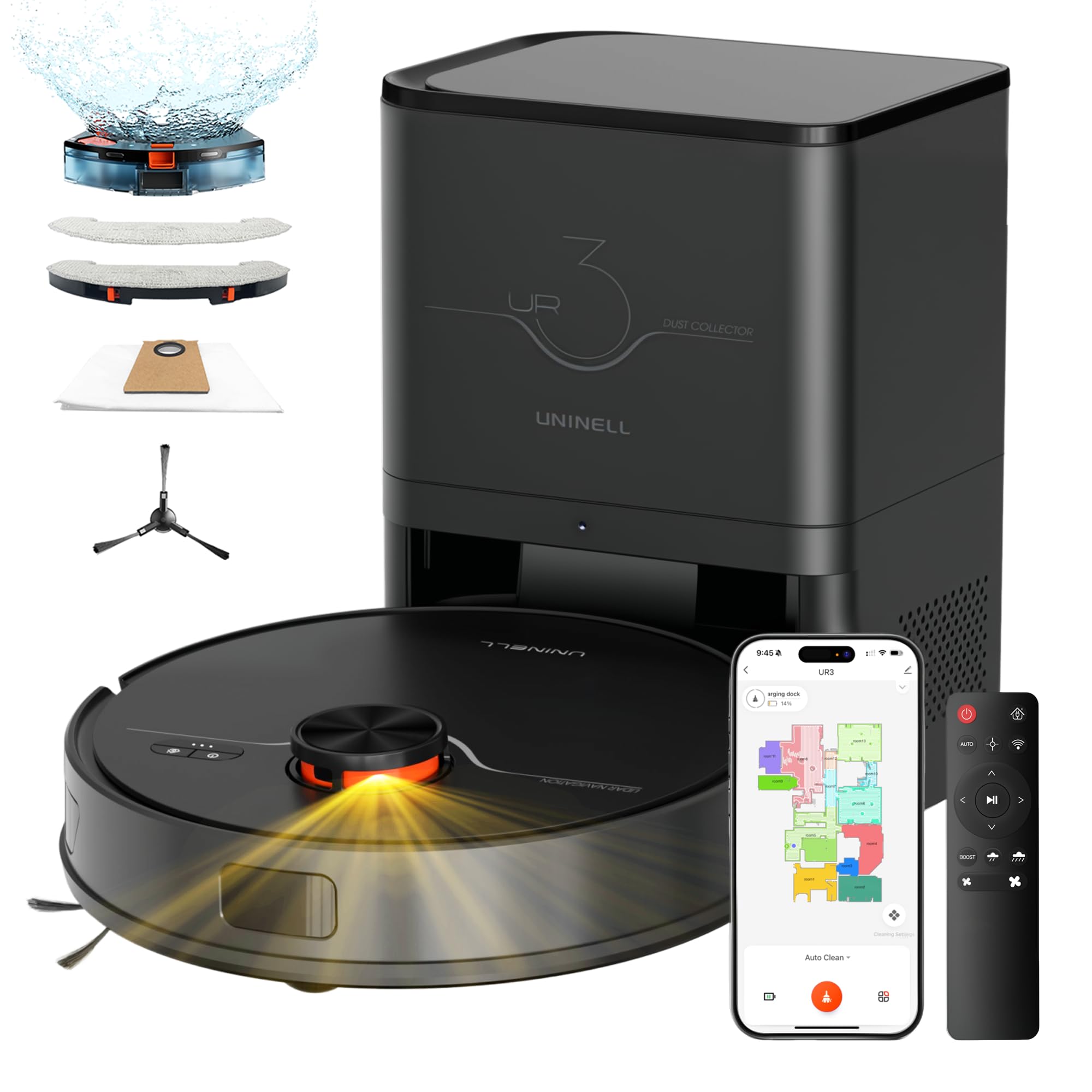
1. uninell UR3-Robotic Vacuum
Our pick — 4.0+★ from 350+ verified ratings; the strongest balance of quality and price.
The low-slung all-rounder that keeps a hard floor clear without you lifting a finger.
Start with the number that shapes your whole week: a claimed 180 minutes of runtime. That is long enough to finish a one-bedroom or a small two-bedroom flat in a single charge, so the robot is not stopping halfway and hunting for its dock with the kitchen still wet. It lives in a compact 12″L x 4″W x 12″H body, which is what lets it slide under a low bed frame where a taller machine would just bump and give up.
The reason this takes the top spot is balance. You get a 3.5 liter capacity — the biggest tank-and-bin figure in this comparison apart from the DREEBOT’s 4 liters — a squeeze-in footprint, and app, remote, push-button and voice control all on one machine. It maps the house quickly, sets up without a fight, and sweeps and mops in the same pass. Owners call it worth the money and simple to run, and reviews keep mentioning setup that took minutes rather than afternoons.
Here is the honest part. The mop pad is a simple pad, and it does not lift on rugs — it will carry a damp cloth over a low-pile rug instead of hopping up, so treat the mopping as maintenance for hard floor rather than a deep scrub. The dock also does not wash the pad or refill the water tank for you, which means a rinse and a top-up between sessions. If you have a shag rug, the sweeper can snag on it, so either keep that rug’s door closed or set a boundary. For everything else — tile, sealed wood, a dog shedding in the hallway — it works, and it earns its place. What wins people over most is the cleaning coverage across the whole house; 4.0+ stars across 350+ ratings reflects a machine owners keep recommending.
What carries the day
- 180 minutes of runtime means a whole flat in one pass, no mid-clean dock trip.
- 3.5 liter capacity plus a 12″ x 4″ x 12″ body gets it under low furniture.
- App, remote, button and voice control — four ways in, so anyone in the house can start it.
- Picks up pet hair and dust without tangling the roller.
Where it holds back
- The mop does not lift for rugs, so low-pile rugs get damp.
- No dock-side pad wash or water refill — you rinse and refill by hand.
- The sweeper can catch on a shag rug.
Best for: Tile or sealed-wood homes where you want a single quiet machine covering the floors while you are out.
Think twice if: Your rooms are all rugs and you expected the pad to lift clear of them.
2. ECOVACS DEEBOT T50 Omni
Built for the gap under your sofa that no other robot on this list can reach.
At 3.19 inches tall, this is the slimmest body in the roundup, and that one figure changes where you clean. Sofas, beds, and low cabinets you have given up on become reachable, and the LiDAR mapping (a spinning laser that draws the room so the robot knows where it is) reads those tight clearances instead of avoiding them. The dock is the other half of the pitch: it washes the mops with 167°F hot water, dries them with 113°F warm air, refills the clean tank and empties the dust, so the pad is not sitting damp and sour between runs. Two hundred minutes of runtime covers a large single floor without a recharge.
Compare it directly against the uninell above. The DEEBOT holds 4 liters of capacity where the uninell holds 3.5, and runs 200 minutes against 180 — bigger bin, longer run. What it adds on top is edge work. The side brush and mop physically extend to hug walls, so the strip along the skirting board actually gets wiped instead of missed. Owners running it for months on single-floor tile homes report spotless floors, and cleaning performance is what they mention first.
The friction points: The app and the mapping are the two spots that split opinion. Some owners find the app great and the map spot-on; others say it takes several attempts to build a decent map, and the app can reset preset settings without asking. A rare unit arrives missing mop plates or bags. Budget one afternoon for tuning, and know that multi-floor homes are where it struggles most.
Pick this one when: Low furniture has been a dead zone in your cleaning routine and you want the dock to wash pads for you.
Pass if: You need one robot to handle several floors reliably — the multi-level mapping is the weak link.
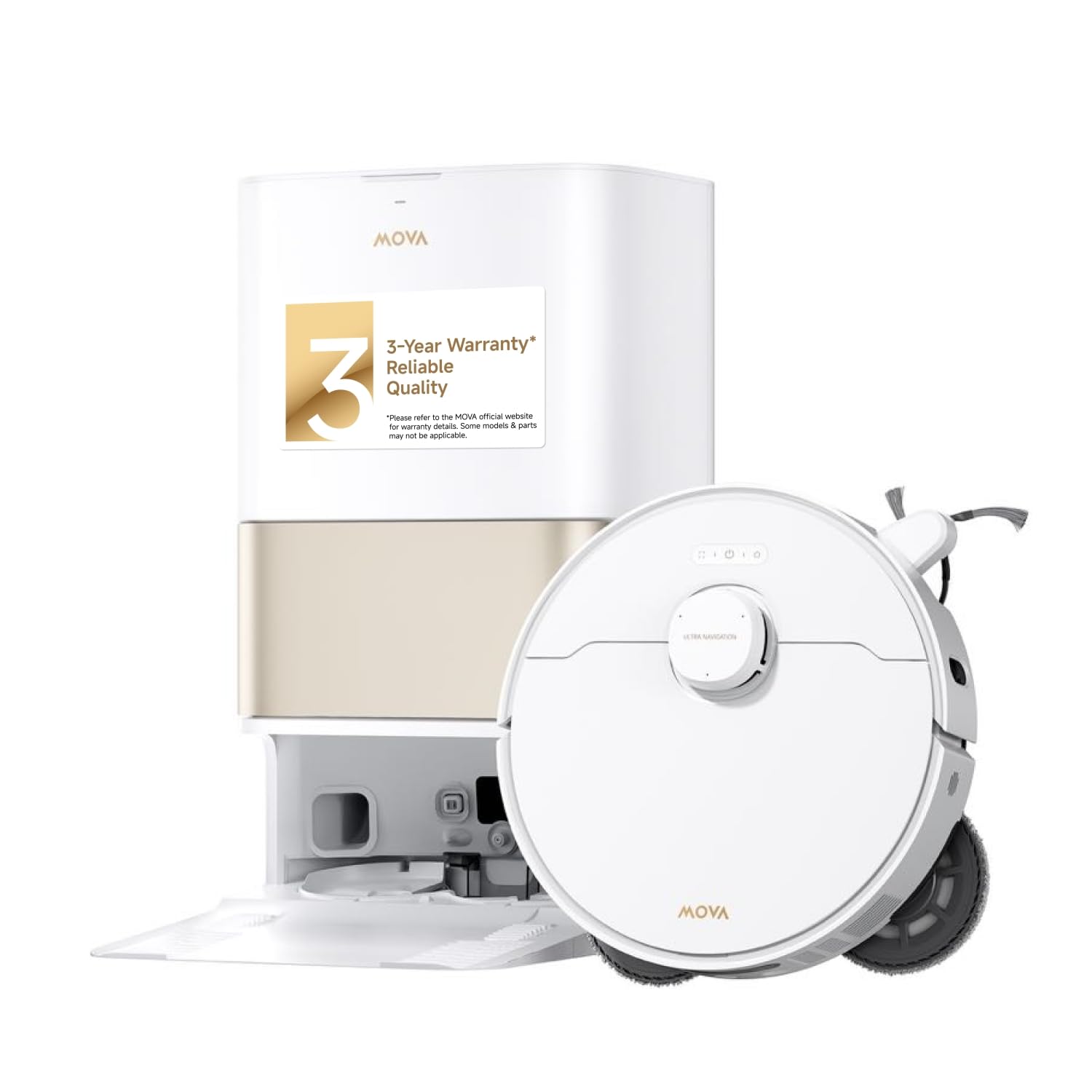
3. MOVA P10 Pro Ultra Gen 2
Presses down hard on dried spills instead of skating over them.
The mopping here is not a damp cloth dragged around — it is 12N of downward pressure from the TurboPress system applied through spinning pads turning at up to 260RPM, and that combination is what lifts a dried coffee ring off tile. The dock heats water to 212°F to wash the pads, then dries them with hot air, so the mop head is fresh and not smelling of last night’s kitchen. Edge cleaning extends the mop to the skirting board, and a three-part anti-tangle setup — side brush, V-shaped rubber main brush, anti-tangle wheel — keeps long hair from winding the roller.
Owners rank its cleaning performance above almost everything else about it. A daily user with a 1900 sq ft home splits the work across two schedules and reports floors visibly cleaner and brighter after mopping, and the self-cleaning dock means the pads get washed without you handling them. The suction is rated at 26,000Pa, which is the second-highest figure in this comparison — behind the DREAME’s 30,000Pa but well ahead of the rest.
The honest catch: The stated runtime is only 40 minutes, the shortest here except for the Roomba’s 75. Owners running large floors describe needing one recharge mid-clean, and mop pad cleaning intervals need adjusting for big rooms or the pads run dirty.
Obstacle handling is the other wildcard: It has no camera, and the avoidance is the mixed part of the picture — cords and cables occasionally snag. The mopping is simply better than the navigation.
Worth it for: Kitchens and entryways with real staining, where scrub pressure matters more than long runtime.
Not the one if: You have a large open floor plan and want one uninterrupted pass.
4. EVERYBOT EDEG2

A true mop-only machine — no vacuum, no dust bin, just wet scrubbing at whisper volume.
If the phrase “mopping only” is literal for you, this is the closest match on the list. Two spinning discs scrub with the pressure of the robot’s own 3.2lb body, an electronic water pump feeds a 210 ml tank at four adjustable levels, and the whole thing runs at a stated 42 dB — quiet enough to work through a meeting or a nap. At 3.5 inches tall it ducks under low furniture, and the body is small enough to carry between a bathroom and a pantry without a charging dock in each room. Owners single out its quiet, compact nature and its careful obstacle detection as the reasons they keep reaching for it.
It genuinely has a place: small apartments, small hard-floor areas, a quick daily damp pass where you do not want a heavy combo unit on the floor. The remote control means no app and no WiFi, which is refreshing if you do not want another login. But it comes with clear limits you should weigh honestly.
Why it fits a small home
- 42 dB operation is the quietest claim on this list.
- 210 ml tank with 4 water levels gives you real control over dampness.
- No app, no mapping — a remote and a spinning mop, simple to run.
- Small enough to carry room to room and store in a cupboard.
The limits to plan around
- No mapping, so it wanders rather than covering in rows; it can drift onto low-pile rug.
- No dock — when the charge runs down you go find it and plug it in.
- You rinse the pads and refill the tank yourself, often mid-task.
- Owners repeatedly flag long-term durability as the weak point, so treat it as a light-duty helper for small hard-floor areas.
Made for: Studio flats and single bathrooms where a full combo robot is more machine than the space needs.
Look elsewhere if: You want a set-and-forget schedule with self-charging — no dock here means babysitting.
5. Bagotte BL20pro
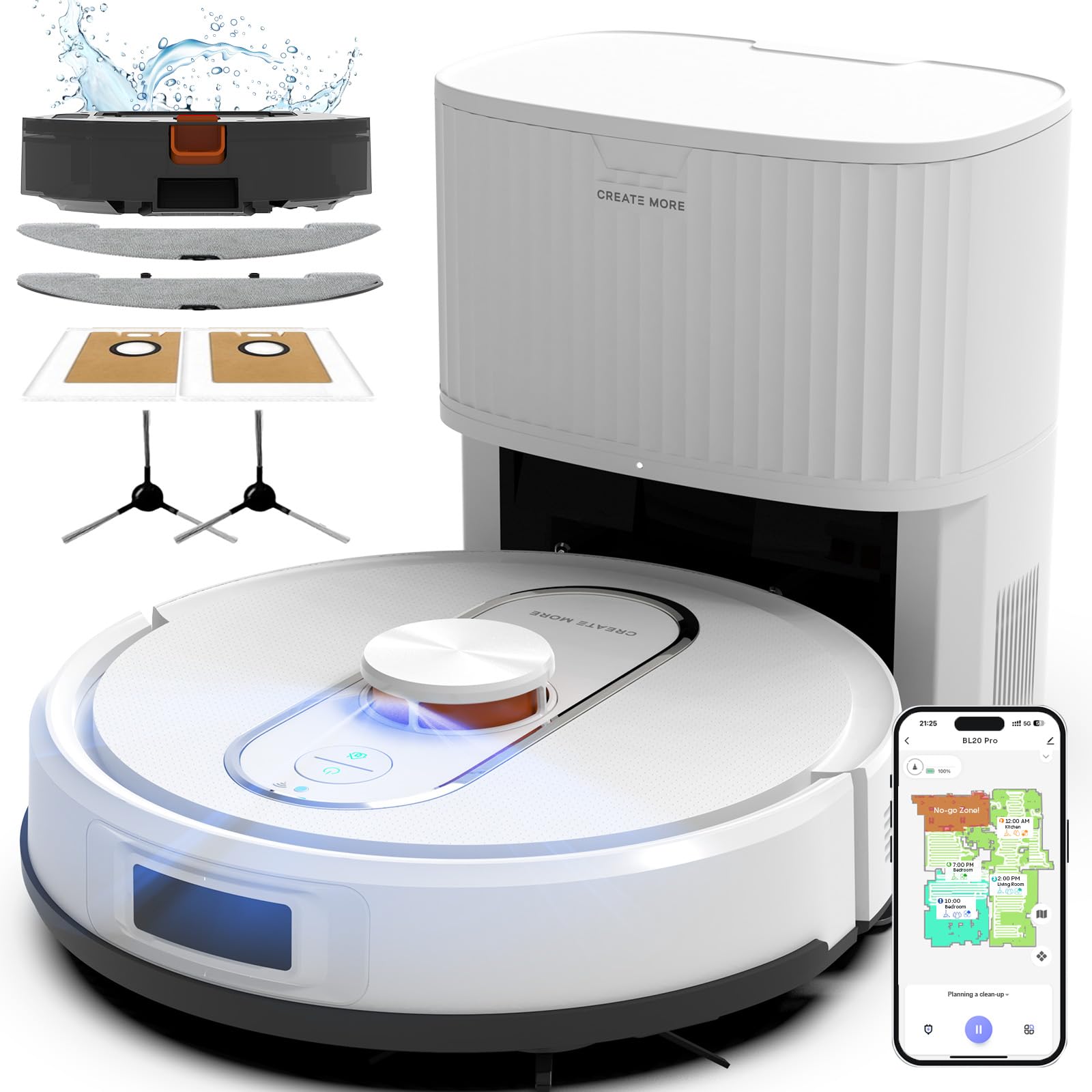
The combi unit that empties its own dust into a sealed bag so you can ignore it for longer.
Bagotte’s pitch is the dock: it self-empties into a sealed bag so you are not touching a bin, and the listed 6000Pa suction handles pet hair and crumbs on both hard floor and carpet. The LiDAR mapping scans the room in 360° and plans a route, and the app lets you draw No-Go Zones to keep it off a particular rug or out of a room. Sweeping, vacuuming, and mopping happen in one pass.
Where the value shows is in what owners actually say when it behaves: cleaning power that beats their old machine, obstacle navigation that returns to base reliably. Where it catches people out is consistency — reliability and performance both split opinion, and a machine that stops after two months is a real outcome some buyers hit. Customisability also draws mixed reactions, and replacement parts have been hard to source, which matters when a brush wears down.
Small irritations worth knowing: The emptying cycle is very loud and gives no warning before it starts, so do not schedule it during a call. The water tank drains quickly and has a small fill hole that wants a funnel.
The app is the other weak spot: It can remap on its own and reset room names, so zone setup sometimes needs redoing.
A fit if: You primarily want dust and debris handled automatically and will mop occasionally with the pad.
Hesitate if: You rely on parts being easy to buy and expect a perfectly stable app.
6. roborock Qrevo S Pro
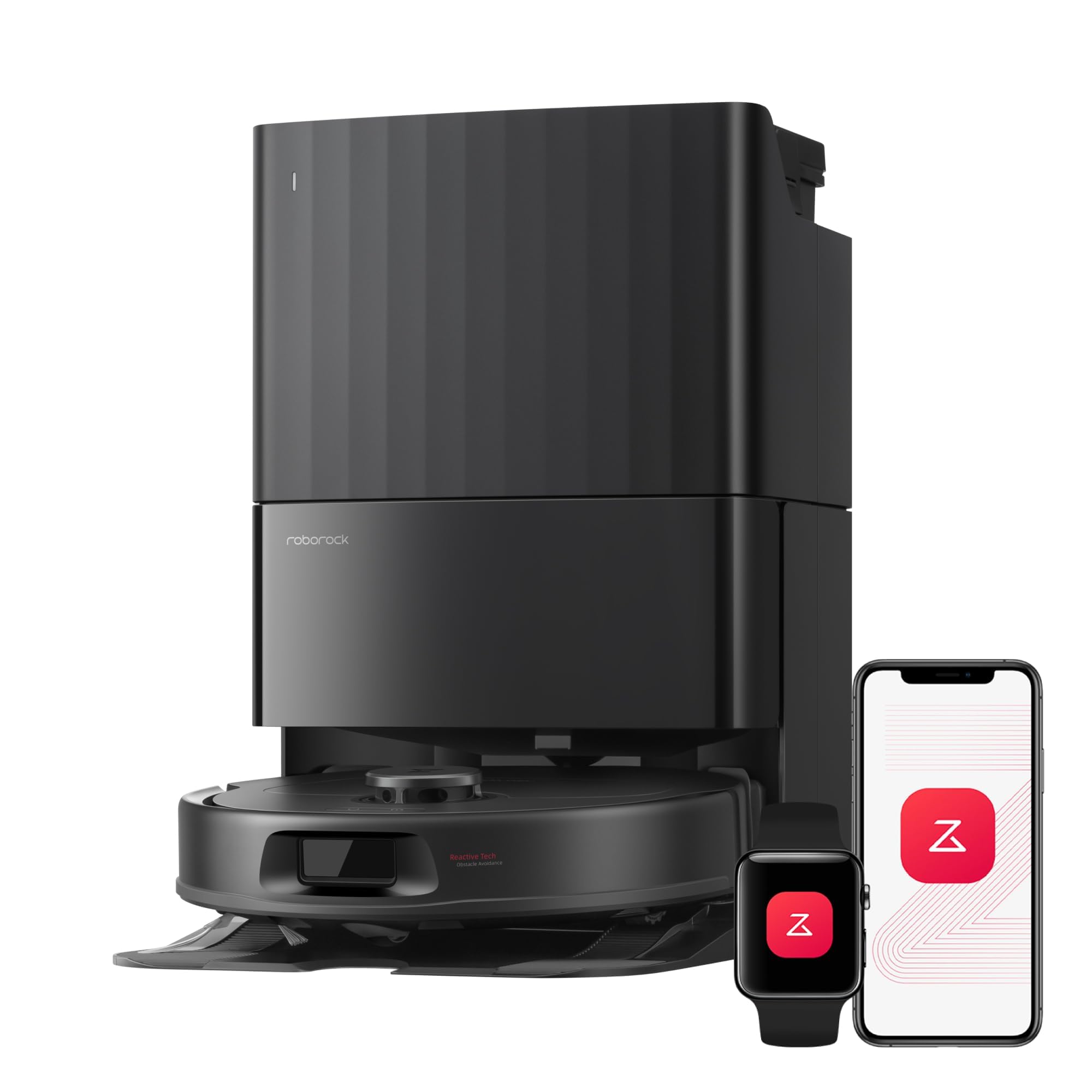
A long-runtime mop for large floors that lifts its pads clear when it hits carpet.
Two figures sell this one for a big house. First, 180 minutes of runtime on a large floor. Second, 10 mm of mop lift — the pads rise a full centimetre when the robot senses carpet, so a runner in the hallway does not get soaked. The dock empties dust into a sealed 2.7 liter bag, washes the pads with 167°F water and dries them at 113°F, and the dual mop system adjusts its water flow to match the mess. It also handles the pet hair problem head-on with a zero-tangle side brush and an all-rubber main brush.
Owners who live with heavy-shedding animals report the anti-tangle parts do their job, and the noise level sits at a stated 55 dB — quiet enough that cleaning alongside the TV is not a battle. Mapping and daily scheduling get good marks, and the self-empty dock keeps the routine moving without a bin trip.
The two-part caveat: The default vacuum-and-mop-in-one mode can cake wet dirt in the nozzle and let the pads drag hair — the fix is to run a vacuum pass and then a separate mop pass, and use plain water in the tank. And the app has reported quirks: per-room settings that do not stick, a 24-hour clock you cannot change.
Buy this for: A large home with shedding pets where you want carpet protection from lifted pads and long runtimes.
Skip if: You want one button to do vacuuming and scrubbing in a single flawless pass — it needs two passes to stay clean.
7. Narwal Freo X10 Pro
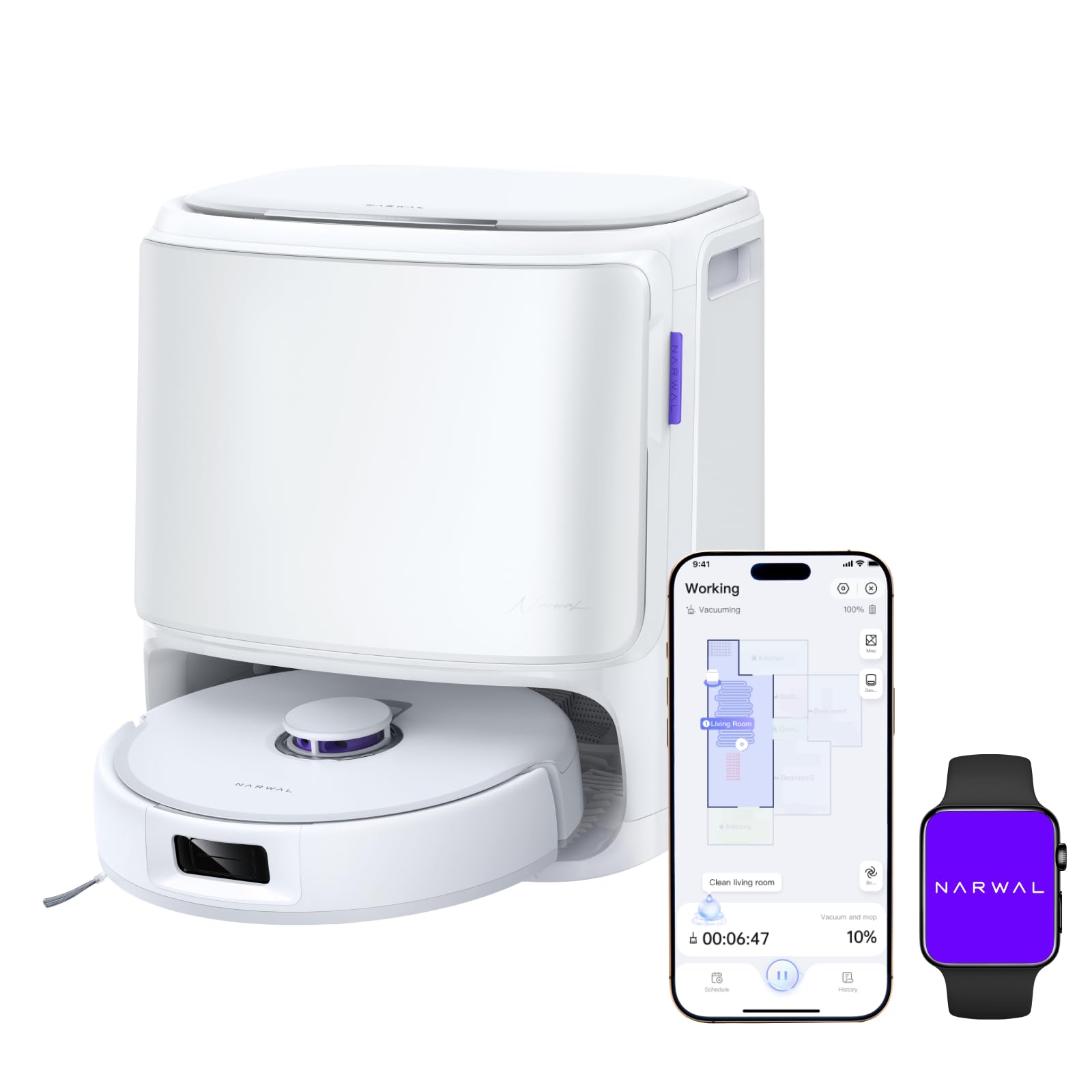
Raises its mops 12mm over rugs and compresses debris so the bin lasts up to 120 days.
The mop-lift figure here is the highest stated in this comparison at 12mm, which is the difference between a damp streak across your living room rug and a clean dry edge. That lift pairs with dual spinning mops pressing at 8N to scrub stains, and the whole wet side is supported by a 210-minute runtime and a 2.5 liter capacity. The DualFlow roller is built so long hair funnels straight into the bin instead of wrapping the brush — handy in a house with a long-haired dog. The dock washes and dries the pads with warm air and holds up to 120 days of debris.
Owners with pets and messy households describe the daily vacuum and every-other-day mop as the routine that replaced hours of hand work, and the anti-tangle brush means no weekly hair-cutting session. A big floor area gets covered with auto-recharge-and-resume and stair detection keeping it out of trouble. Owners running it daily report hand-mopping drops to about once a week.
Where it shines
- 12mm mop lift is the highest here, so rugs stay dry.
- 210-minute runtime plus auto-recharge-and-resume covers a large floor.
- DualFlow roller keeps long hair out of the brush.
- Big dock bag holds up to 120 days of debris.
Where it stumbles
- The dock is large and wants wall space.
- No vacuum-grade suction for deep carpet — the mopping is the star, not the carpets.
- Requires the app and WiFi to schedule; no detergent other than its own.
- Some scrubbers can detach and trigger an error mid-clean.
Make it your pick if: You have shedding pets, rugs with low clearance issues, and want the wet side handled without hair cutting.
Reconsider if: Deep carpet cleaning is a priority — the vacuum side is secondary to the mop.
8. DREAME L60 Ultra FE

Sends an arm out to wipe the corners your other robots leave grey.
The Dual Flex Arm moves a side brush and a swinging mop outward, so baseboards, toe-kicks, and the narrow gap beside the fridge actually get product against them instead of a missed strip. Pair that with 30,000Pa of suction — the highest figure in this comparison — and a TriCut rubber brush with a built-in blade that cuts long hair as it rolls, and you have a machine that both scrubs and stays untangled. The mop pads get a 212°F high-temperature wash on a PTC washboard so greasy residue and odor do not build up between runs, and the PowerDock handles the drying, dust emptying, and solution refill.
What owners notice is the everyday result: floors kept spotless with minimal input, and fine dust pulled out of cracks and gaps. Pet homes with heavy shedders report no visible hair left after a run, and the mapping and obstacle handling get steady praise — the robot identifies obstacles and routes around them instead of getting stuck. That cleaning performance is the thing people bring up most.
The word to the wise: Longevity is the main question. One machine worked well for three months, then began sending itself back to the wash dock every five minutes — “it’s short on the lifespan,” as that review puts it. Treat it as a strong performer that rewards regular maintenance.
App-wise: Expect a learning curve before the per-room settings feel natural.
Consider it for: Homes with real baseboard grime and long-haired pets, where corner reach and high-temp pad washing matter.
Pause if: You want a decade-long workhorse and are not ready to deal with a unit that may need attention within the first year.
9. iRobot Roomba Max 705 Combo
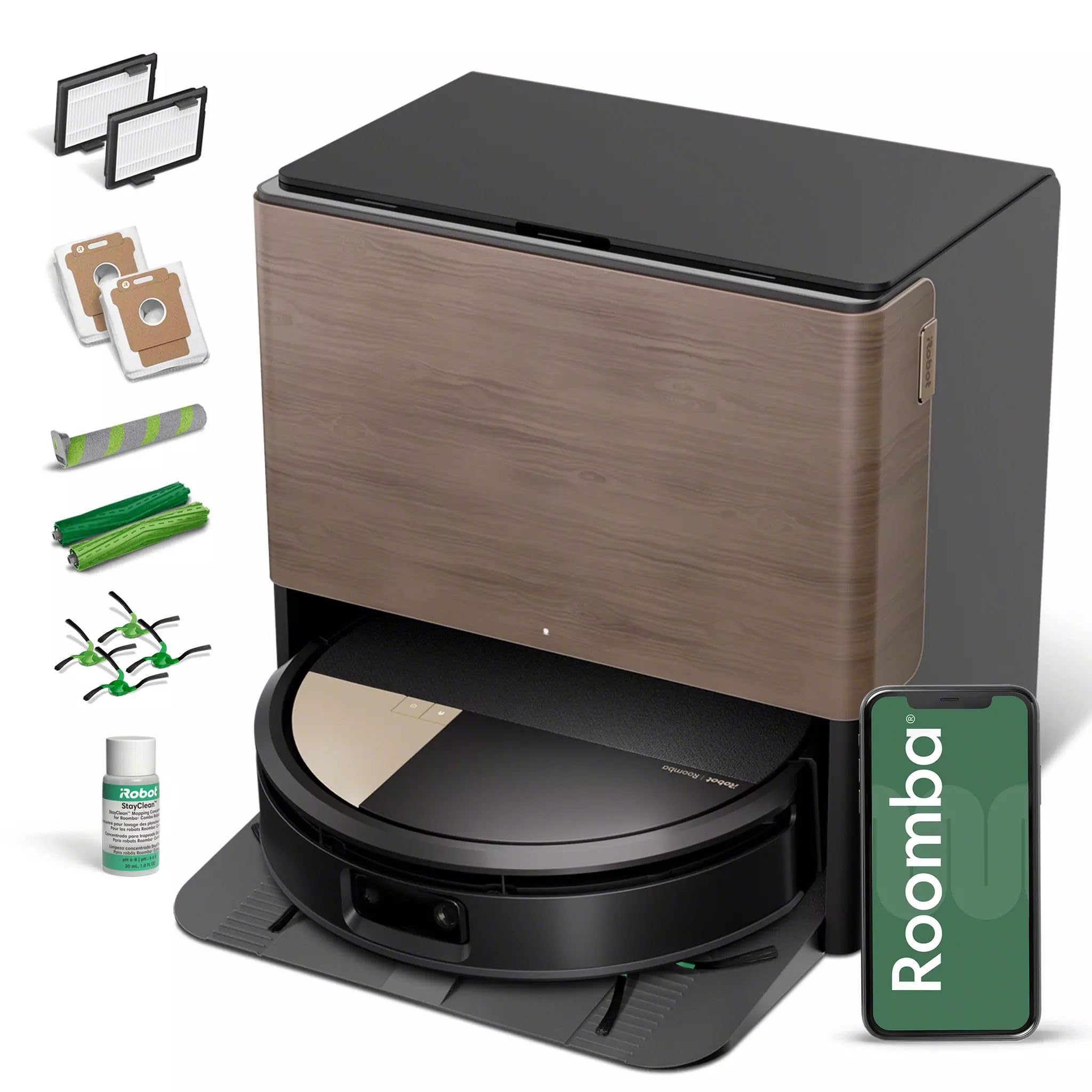
The dock that washes, dries, and refills for weeks — with a roller mop that cleans itself as it goes.
This is the most automated package here. The PowerSpin roller mop spins at 200 RPMs and continuously cleans itself while mopping, and a protective cover slides over it to keep carpets dry as it crosses from hard floor to rug. The AutoWash Dock provides 75 days of auto-emptying, 8 weeks of heated mopping, roller washing, and heated drying, plus auto solution dispensing, so the upkeep stretches out considerably compared with a hand-rinse routine. PrecisionVision AI recognises cords, socks, and pet waste and routes around them, and ClearView Pro LiDAR builds 3D maps and names rooms.
Owners praise the quality of the build and the quiet operation — complaints about noise are few. It runs quieter than you would expect from a machine this size. The premium price is the elephant in the room, and reliability draws complaints: some units circle in one spot, and a leaking reservoir recurs in owner reports. The battery life is also only 75 minutes, the lowest runtime in this roundup by a wide margin, so a large floor means stopping and recharging.
The real trade-off: The hands-off dock and obstacle avoidance are excellent, but the runtime and durability keep this from the top spot. If you live in a compact home and want the dock to do the dirty work, that dock is the strongest asset here.
Choose it when: You want a premium branded robot with the most self-contained dock and reliable obstacle detection.
Think hard if: Your floors are large or your patience for service visits is thin — 75 minutes and some reliability wobbles make this a fit for small homes with low tolerance for manual work.
Know the Specs
Mop lift height (mm)
Mop lift is how far the pads or discs raise when the robot senses carpet. The figures in this list range from none to 12mm. A stated lift means a low-pile rug stays dry as the robot crosses it; no lift means the pad drags. If you have rugs, this is the number to check before anything else.
Water tank capacity versus dust bin capacity
These are two different reservoirs and often get confused. A tank figure like 210 ml describes the clean-water side on a mop-only unit; a capacity figure like 3.5 or 4 liters on a combo describes the combined bin-and-tank volume. Match the number to how much floor you actually need to wet before a refill.
Runtime in minutes
The clean run per charge. A stated 240 minutes covers a large open floor; a stated 40 to 75 minutes means one big room or a short pass before a recharge. Do not compare runs across different floor types — carpet drains the battery faster than tile.
Scrub pressure and spin speed
Pressure is often quoted in newtons (N), the force the pads push into the floor, and spin speed in RPM (revolutions per minute). Higher pressure and speed lift dried spills better but are harder on delicate finishes. A gentle vibrating pad is softer on wood but weaker on hardened stains.
Dock temperature: wash and dry
Docks quote a wash temperature in degrees Fahrenheit and a dry temperature. A hot wash dissolves grease and odor from the pad; a warm-air dry keeps the pad from sitting damp. Keep the difference between wash and dry in mind — a hot wash with no dry still leaves a wet pad between runs.
Noise level in decibels
Quieter runs let you clean alongside conversation or a meeting, and loud cycles happen during self-empty. A mop-only unit that states 42 dB will whisper; a combo with a strong self-empty will have a loud burst during the empty cycle. Plan around that burst.
Common Questions
Can a mopping robot really clean dried-on food from a kitchen floor?
Will these robots mop over my rugs and carpets?
Do I still have to wash the mop pads by hand?
Is a mopping-only robot better than a vacuum-and-mop combo?
How much water does the tank hold and how often do I refill?
Will a robot mop scratch my sealed hardwood?
Do these need WiFi to run on a schedule?
What happens when the battery runs low mid-clean?
Can I put my own floor cleaner in the water tank?
The Bottom Line
If you want one machine that covers the whole hard floor and gets under low furniture, the uninell UR3-Robotic Vacuum is the pick — 180 minutes, a 3.5 liter reservoir, and a 12-inch body that squeezes where the tall robots cannot. If low furniture has been a dead zone and you want the dock to wash the pads for you, the ECOVACS DEEBOT T50 Omni wins on that 3.19-inch body and its hot-water dock. And if dried stains and big floors are your reality, the MOVA P10 Pro Ultra delivers real pressure on the mess and a 212°F pad wash to back it up.
My advice: buy for the weakest part of your floor plan. If that is a low sofa, buy low clearance. If it is a sticky kitchen, buy scrub pressure. If it is a rug in the hallway, buy lift. The uninell UR3 is the balanced all-rounder, but the right robot for you is the one built for your worst room.
How we choose
We do not accept paid placement. Every pick is matched to a real buyer and a real use-case; we do not hands-on test units.
Sources
Specifications: manufacturer listings and product documentation. Review insights: verified customer reviews, as of October 2026. Pricing: not shown on this page (it changes often); check the current price via the retailer link.
As an Amazon Associate, Aappliancez earns from qualifying purchases. This does not affect which products we feature.