Disclosure: Some links in this post are affiliate links. As an Amazon Associate I earn from qualifying purchases, at no extra cost to you. Learn more
Specs are compiled from manufacturer listings and verified buyer reviews and can change over time — please confirm the key details on the product page before buying.
If you want sugar’s taste without sugar’s blood-sugar spike, start with a monk fruit blend that measures one-to-one like the real thing. That single trait decides more than anything else — it means you can follow your grandmother’s banana bread recipe without rewriting it. Everything below sorts the sweeteners by what they actually do in your coffee cup, your batter, and your iced tea pitcher.
This guide is built by comparing the manufacturers’ published specifications and the patterns across verified customer reviews, so you get each pick’s real strengths and trade-offs instead of marketing spin.
Two things trip up almost every first-time buyer: whether the bag is a blend or pure extract, and whether the label says erythritol. Get those two facts straight and picking the monkfruit sweetener for your kitchen becomes a five-minute decision.
Top Picks
How To Choose The Best Monkfruit Sweetener
Sugar replacement is not one product — it is three different products wearing the same name. A bulked-up blend that scoops like sugar, a liquid you squeeze into iced tea, and a concentrated powder that sweetens a whole pitcher with a pinch. Buy the wrong one for your habit and you will be disappointed no matter how good the sweetener is. Buy the right one and you stop thinking about it entirely.
Blend or pure extract — the fork in the road
A blend mixes monk fruit extract with a bulking agent, usually erythritol, a sugar alcohol (a sweetener that occurs naturally and carries far fewer calories than sugar). That bulking is what lets the bag measure one-to-one against sugar. A pure extract skips the bulking entirely. It is dramatically sweeter per gram, so a 1/32 teaspoon does the job of a spoonful of sugar. Choose a blend if you bake by the recipe. Choose a pure extract if you mainly sweeten drinks and want a bag to last through the year.
Why “erythritol-free” is a whole search category
A meaningful slice of shoppers arrive specifically hunting monk fruit with no sugar alcohols at all. The reasons vary, but the pattern is real — plenty of listings now lead with “No Erythritol” in the title because that is what buyers type. If that is your filter, learn to read the ingredient line rather than the front of the bag, because a product can carry monk fruit on the label while erythritol sits right underneath it.
Scoop size tells you more than the price tag
Flip the bag over and find the serving line. If a serving is 2 teaspoons, you are holding a blend. If a serving is 1/8 or 1/32 teaspoon, you are holding a concentrate and one bag can outlast several blend bags. Neither is better — but a concentrate used by the teaspoon will taste metallic, and a blend used by the pinch will taste like nothing. Match the scoop to the bag and you get what the review page promised.
Side-by-Side Comparison
| Model | Best For | Form | Size | Erythritol | Amazon |
|---|---|---|---|---|---|
| Lakanto Classic Monk Fruit Sweetener with Erythritol, 5 Lb★ Best Overall | Everyday baking at volume | Granular blend | 5 pounds (80 Ounce) | Yes — blended in | Amazon |
| WHOLE EARTH Monk Fruit Sweetener with Erythritol, 4LBSBest Value | Coffee, tea and batch cooking | Granular blend | 4 pounds (64 Ounce) | Yes — blended in | Amazon |
| SPLENDA Monk Fruit Liquid Sweetener DropsBest for Travel | Cold drinks away from home | Liquid drops | 1.68 fluid ounces | None — liquid format | Amazon |
| Pyure Organic Monk Fruit Sweetener, 12 Oz | Twice-as-sweet scooping | Granular blend (allulose) | 12 Ounce | None — allulose base | Amazon |
| SweetLeaf Organic Monk Fruit Sweetener 28.2 Oz | Organic 1:1 recipes in bulk | Granular blend (organic) | 28.2 Ounce | Yes — organic erythritol | Amazon |
| Monk Fruit In The Raw, 40 Count Packets (Pack of 4) | Desk drawer and travel | Single-serve packets | 40 Count, 4-pack (4.48 Ounce) | Blend includes natural dextrose | Amazon |
| NOW Foods Organic Monk Fruit Extract Powder, 0.7 oz | Pinch-per-cup purists | Pure extract powder | 0.7 ounces | None — single ingredient | Amazon |
| Micro Ingredients Monk Fruit Sweetener with Allulose, 2 lb | Allulose fans who bake | Granular blend (allulose) | 2 pounds (32 Ounce), 226 servings | None — allulose base | Amazon |
| Sweet Nature Monk Fruit Sweetener Classic, 48 Oz | Browning in cooked recipes | Granular blend, browns | 48 Ounce | Yes — blended in | Amazon |
| DureLife Organic Monk Fruit Sweetener 5 Oz | No-erythritol drink sweetening | Pure extract powder | 5 ounces, 450+ servings | None — no fillers | Amazon |
| Smart Monk 100% Monkfruit Extract Powder, 3oz | Long-haul single purchase | Pure extract powder | 3 ounces (85g) | None — single ingredient | Amazon |
Detailed Reviews
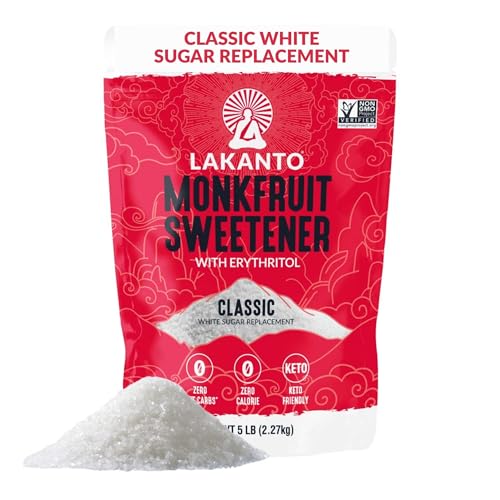
1. Lakanto Classic Monk Fruit Sweetener with Erythritol, 5 Lb
Our pick — over 4.5★ from 84,000+ verified ratings; the strongest balance of quality and price.
The five-pound bag you buy once and forget about for months
If you go through sweetener the way a family goes through bread, this is the one that stops the constant reordering. At 80 ounces it is 25% more product than the WHOLE EARTH bag by weight — 5 pounds against 4 pounds — so you can keep a full jar on the counter and a spare in the pantry. It is a granular blend, meaning monk fruit extract cut with erythritol, a sugar alcohol that bulks the powder out so it scoops and measures like white sugar.
The reason this earns the top spot is how faithfully it drops into existing recipes. It is a 1:1 replacement for white sugar in coffee, tea, baking and cooking, so you do not need a conversion chart taped inside a cabinet door. It dissolves in liquids and behaves in baked goods, and it carries zero calories and a zero glycemic index — meaning it is formulated not to raise blood sugar. It is also gluten-free and non-GMO.
One thing to know before you bake: this sweetener runs sweeter than sugar in the oven, and the review pages sum it up well — “I have tried doing a 1 to 1 replacement in cooking and feel that it’s too sweet for me, but if I use it to replace 1/2 of the sugar, it works well.” Buyers also note the grains are fine enough to dissolve fully even in a cold drink. The practical answer is to start at half the sugar your recipe calls for in baking and taste from there.
What earns the top slot
- 80 ounces in a single bag — the largest practical size for a household that bakes often
- True 1:1 swap for white sugar, so existing recipes need no conversion
- Zero calories and a zero glycemic index
- Gluten-free, non-GMO formula
The oven quirk to plan around
- Runs sweeter than sugar in baking — most owners cut the recipe amount by half
Buy this bag if: you want one large, reliable swap-in for sugar across coffee, cereal and baked goods.
Consider the smaller sizes instead if: you bake rarely, since 80 ounces is a long commitment for a single coffee drinker.
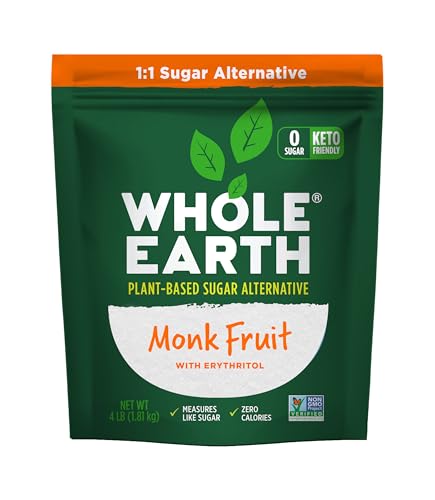
2. WHOLE EARTH Monk Fruit Sweetener 4LBS
The four-pound blend that tastes like sugar and costs noticeably less per scoop
Whole Earth blends monk fruit extract with erythritol, a sugar alcohol derived from non-GMO corn, and the mix measures 1-to-1 just like sugar. At 4 pounds and 64 ounces it undercuts the Lakanto bag on size — 25% less by weight — which is exactly why it works as the value pick for anyone whose sweetener mostly disappears into coffee and tea rather than into a cake tin. The suggested serving is 2 teaspoons (8g), so plan on going through it at a normal kitchen pace rather than a teaspoon-at-a-time concentrate pace.
What wins people over here is the flavor, and it wins by a wide margin: taste is the most-praised thing about this bag, with value for money a comfortable second. The texture reads like sugar, the powder does not clump, and it sweetens coffee, tea, cocktails, baked goods and snacks. It carries zero calories and a low glycemic index, and is positioned for keto, paleo, low-carb and diabetic diets. Dissolving is listed as one of the stronger marks among what buyers discuss, which matters if you drink iced tea rather than hot.
Digestibility is the one place where opinions split rather than align. Some people handle the erythritol base without a second thought, and some do not — if you already know sugar alcohols bother your stomach, treat that as a reason to look at the allulose blends or a pure extract instead of a defect in this bag. Everyone else gets a large, sugar-tasting blend at a reasonable per-scoop cost.
Where it earns its place: a 64-ounce bag with a sugar-matching texture that does not clump and dissolves cleanly in cold drinks.
Who should read past it: anyone who already knows erythritol upsets their stomach — the allulose options further down this list are the better fit.
Reach for this if you want the sugar taste without the sugar bill and you mostly sweeten drinks.
Look elsewhere if a 64-ounce bag would outlast your interest in baking.
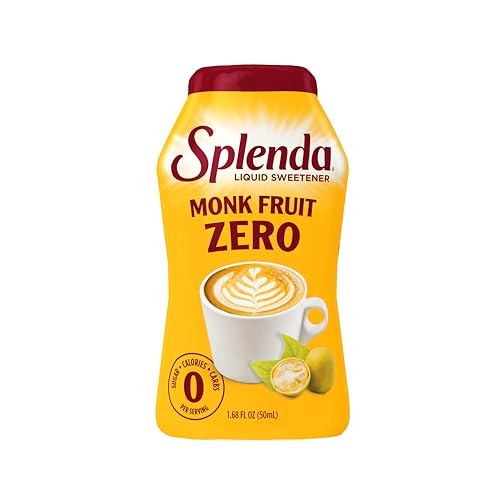
3. SPLENDA Monk Fruit Liquid Sweetener Drops
A bottle that fits a purse and still sweetens whatever you order
At roughly 3.43 x 1.69 x 1.34 inches, this bottle is dramatically smaller than the WHOLE EARTH pouch — a 3.1x gap on package dimensions — which is the entire point. It slips into a pocket or purse, works at room temperature, and needs no refrigeration after opening, so it lives in a desk drawer or a glovebox without complaint. One squeeze is 1/16 of a teaspoon, which delivers the sweetness of half a packet of Splenda No Calorie Sweetener.
There is no erythritol in the liquid format, and that is a big part of why keto and diabetic buyers gravitate here. It dissolves in both hot and cold drinks, which is where the format shines — powder in iced coffee tends to sink, drops do not. It is zero calories, zero sugar, shelf stable, and portable enough to fix a bad cup of restaurant coffee. For people who drink most of their sweetener away from home, the whole category of blends is the wrong tool.
The honest catch is the taste and the bottle. Flavor feedback splits rather than unites — some find it naturally sweet while others pick up a metallic note in coffee, though the same review notes it disappears in Greek yogurt. Portioning is the second issue: the squirt bottle is hard to control, and a dropper would be easier for anyone who likes precision. Neither is a dealbreaker for a travel bottle, but both are worth knowing before you buy.
The travel case for it: a shelf-stable liquid with no sugar alcohols that fits a pocket and dissolves in hot or cold drinks.
The trade-off: taste is a coin flip in coffee, and the squirt top makes precise dosing harder than a dropper would.
Best matched to commuters, students and anyone who sweetens drinks on the go.
Not the pick for bakers who need a cup-for-cup swap — liquid cannot do that job.
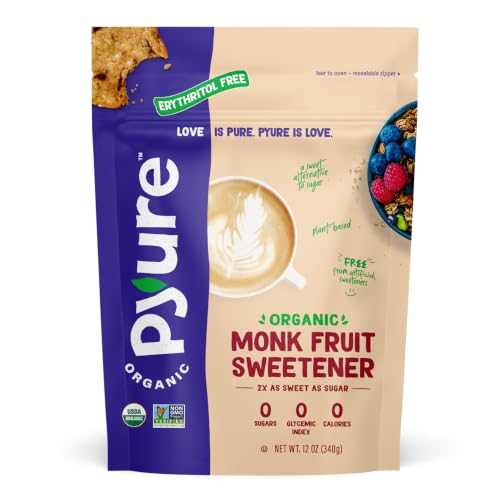
4. Pyure Organic Monk Fruit Sweetener 12 Oz
Twice as sweet as sugar, so the twelve-ounce bag outlasts bigger ones
This is the pick for anyone who resents how fast a sweetener bag empties. Pyure runs 2x sweeter than sugar, so every scoop stretches further and a 12-ounce bag goes considerably farther than the number suggests. It is made with organic monk fruit extract and allulose rather than erythritol, which is the detail that puts it on the shortlist for shoppers deliberately working around sugar alcohols.
The formula is built for the full range of uses: coffee, tea, smoothies, batters, glazes and frostings, with the company claiming it dissolves easily and holds texture in every application. It is zero calorie with a zero glycemic index, aimed at keto, diabetic, paleo, vegan and low-carb diets. It carries certified USDA Organic status and is vegan, gluten-free, erythritol-free and made with non-GMO ingredients.
Because it is twice as sweet, start smaller than the recipe says and adjust — the 12-ounce bag will still go further than you expect. One long-time buyer with type 1 diabetes put it plainly: “I have tried a lot of sugar substitutes over the years, and I have to say this one taste the most like sugar.” A handful of shoppers note that a trace of erythritol still shows up despite the erythritol-free positioning, so if that ingredient is a hard line for you, read the current label carefully before ordering.
What stands out
- 2x sweeter than sugar — a smaller scoop does the same job
- Allulose and organic monk fruit base, no erythritol formula
- Certified USDA Organic, vegan and gluten-free
- Zero calorie with a zero glycemic index
Before you order
- Some buyers still report a trace of erythritol on the ingredient line
- Double sweetness means recipe amounts need rethinking
Worth it for organic shoppers who want maximum sweetness per scoop and no erythritol concern in the base formula.
Think twice if you need a strict cup-for-cup measure — the 2x sweetness works against that.
5. SweetLeaf Organic Monk Fruit Sweetener 28.2 Oz
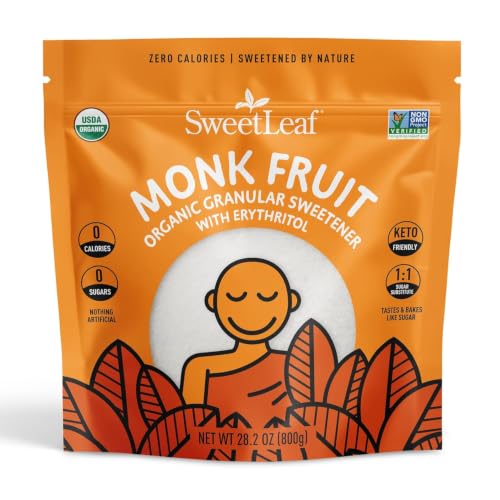
Organic, measure-for-measure, and built for people who actually cook
SweetLeaf approaches the swap from the recipe side. This is a 1:1 natural sugar alternative designed for coffee, tea, yogurt and baking, blended from organic erythritol — a sugar alcohol derived from organic fruit — and monk fruit extract, matched to the texture and taste of table sugar. At 28.2 ounces it sits between the small jars and the enormous bulk sacks, which suits a household that bakes but does not run a bakery.
The ingredients are the headline: all-natural, non-GMO, organic, keto friendly, with no sugars, calories or carbs and no artificial ingredients. Monk fruit itself is a small green melon named by Buddhist monks who first discovered its sweetening power centuries ago. Among what buyers discuss, taste is the runaway favorite — a pleasant sweetness that is not overpoweringly sweet, with effectiveness noted alongside it because it behaves the same as regular sugar in a recipe.
The recurring complaint is texture. The crystals are chunkier and less fine than regular sugar, which makes them harder to dissolve evenly in a cold drink — fine in hot coffee, less ideal in a smoothie. Cost is the second note, with value for money landing in mixed territory and some shoppers finding it priced higher than comparable bags. Neither ruins a good product, but both are the kind of thing you would want to know before committing to a full 28.2-ounce bag.
The case for it: certified-organic measure-for-measure scooping with a lightly sweet, non-assertive taste.
Where it stumbles: coarse crystals resist dissolving in cold liquids, and the bag costs more than similar-sized competitors.
Pick this one if you bake often from scratch and want organic on the label.
Pass if you mainly sweeten iced drinks — a finer powder dissolves far better.
6. Monk Fruit In The Raw, 40 Count Packets (Pack of 4)
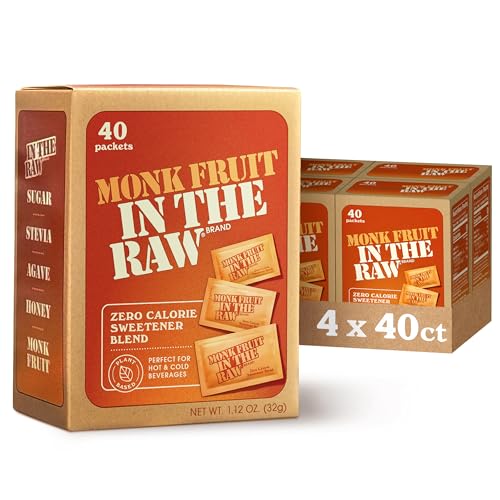
The packet nobody at the office will mistake for a sugar sachet
Portioning is the whole idea here. Four boxes of 40 single-serve packets means 160 tear-open doses, each one already measured for a cup of coffee or tea, hot or cold. Nothing to scoop, nothing to spill, nothing to carry a bag around for. It suits a desk drawer, a briefcase, a travel kit, or a kitchen that hosts a lot of guests who all take their coffee differently.
The blend pairs pure monk fruit with a touch of natural dextrose rather than erythritol, which is a meaningful difference from most bags on this list and the reason some shoppers hunt this specific version down. It is vegan, non-GMO, gluten-free and keto-friendly. Because monk fruit is non-glycemic — meaning it does not raise blood sugar — it is positioned for people with diabetes or anyone cutting sugar down. The brand has been selling Sugar In The Raw packets for over 50 years, so the format is thoroughly road-tested.
On flavor, the packet lands on the mild side rather than the overly sweet side, and it is routinely described as noticeably gentler than stevia. The most-talked-about trait across the feedback is simple effectiveness — it does the job in a cup without a chemical aftertaste. Where buyers split is on what is actually inside: some reviewers found dextrose as expected, others report receiving erythritol, so if the ingredient matters to you, verify the version before ordering. It is also a pricier way to buy sweetener per ounce than a bulk bag.
Why the packets win
- 160 pre-measured single-serve packets across four boxes
- Milder and less aggressive than stevia, easy to hand out
- Vegan, non-GMO, gluten-free and keto-kind
- Portioned for travel, office and guest service
Worth checking first
- Ingredient reports vary between dextrose and erythritol versions
- Per-ounce cost runs higher than scooping from a bag
Suits you if convenience beats economy and you sweeten one cup at a time.
Not the right buy if you bake by the cup — packets cannot measure that way.
7. NOW Foods Organic Monk Fruit Extract Powder 0.7 oz
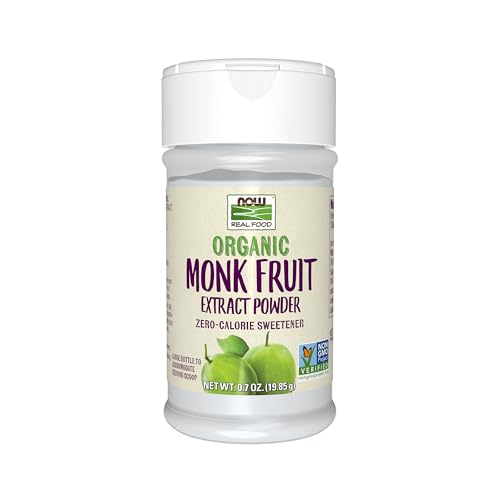
One ingredient, one tiny scoop, and months of coffee covered
There is exactly one thing in this jar, and that is the appeal. NOW Real Food Organic Monk Fruit Extract Powder is a pure powder with no additional ingredients — no erythritol, no allulose, no blending agents — and it has a delightfully vibrant, sweet taste with very little aftertaste. A scoop is included so you can measure to taste rather than guess. Compare that to the bulked blends above, where the bag’s flavor comes largely from what the monk fruit is cut with.
The certification list on this jar is long and specific: Non-GMO Project Verified, Vegan, USDA Organic, Gluten Free, Soy Free, Sugar Free, Nut Free, Corn Free, Dairy Free, Egg Free, Keto Friendly and Low Sodium. It is packaged in the USA by a family owned and operated company in business since 1968. Because it is a pure extract with no sugar alcohol filler, it sidesteps the digestive complaint that shows up around erythritol blends entirely.
Three things define the ownership experience. First, potency: the sweetness is intense enough that one to two tiny scoops handle a drink, and the jar lasts correspondingly long. Second, cost per ounce is high — this is the trade-off for purity, and buyers report so directly. Third, the container itself is awkward; the flip-top design makes it tricky to get a measuring spoon in, and the powder wants a good stir to dissolve fully. Overdose it and you get a faint metallic mouthfeel, so start small and build up.
What makes it distinct: a single-ingredient certified-organic powder with a scoop, aimed squarely at people avoiding sugar alcohols.
The honest downside: it is the most expensive way to buy monk fruit, and the flip-top jar fights your measuring spoon.
The one to grab if you want monk fruit and literally nothing else in the jar.
Better left alone if you want a bag you can scoop a tablespoon from without thinking.
8. Micro Ingredients Monk Fruit Sweetener with Allulose, 2 lb
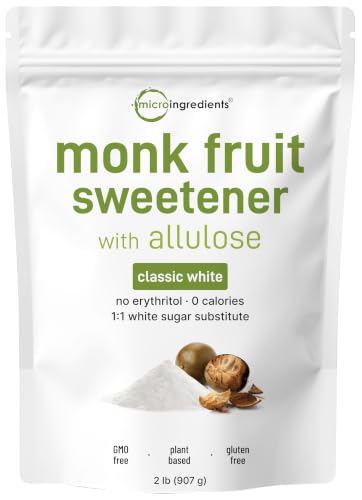
For anyone who crossed erythritol off the list but still wants to bake
This is the two-in-one answer for a specific shopper: someone who wants a scoopable, bake-ready sweetener but does not want erythritol doing the bulking. Micro Ingredients pairs zero-calorie monk fruit with allulose in a 2-pound bag holding 226 total servings, with a scoop included for consistent measuring. The ingredients are keto and vegan friendly, non-GMO, manufactured in a cGMP-compliant facility, third-party lab tested, and free of soy, dairy and gluten. It mixes easily into beverages, baking and everyday recipes.
What wins people over here is the taste and the texture together. The powder has a fine consistency, dissolves easily in cold drinks, and lands close to sugar while needing less of it — the classic mark of a good blend. Buyers also lean on its versatility, using it in baking and ice cream making as readily as in coffee. For anyone who has been burned by a gritty or clumpy substitute, the fine grain is the detail that changes the daily experience.
Two things to plan for. If you bake with it, drop your oven temperature from 350°F to 325°F so the surface does not catch ahead of the inside — a real fix buyers have worked out for allulose blends. And value for money is the mixed spot in the feedback, along with digestibility, since allulose agrees with some stomachs and not others. On the positive side, one long-time convert reports the palate genuinely retrains: the coffee dose dropped from five heaping tablespoons initially down to four teaspoons, which says the sweetener is doing real work.
Why allulose buyers pick it
- Monk fruit and allulose blend with no erythritol
- 2 pounds with 226 servings and a measuring scoop included
- Fine powder that dissolves cleanly in cold drinks
- Non-GMO, vegan-friendly, third-party lab tested
Adjustments to expect
- Baking needs a lower oven setting — 325°F instead of 350°F per buyer experience
- Digestibility and value for money both draw mixed reactions
Go with this if you want a sugar-like blend with allulose instead of erythritol and you actually bake.
Better to look on if you want the absolute cheapest per-serving option — the allulose base carries a premium.
9. Sweet Nature Monk Fruit Sweetener Classic 48 Oz
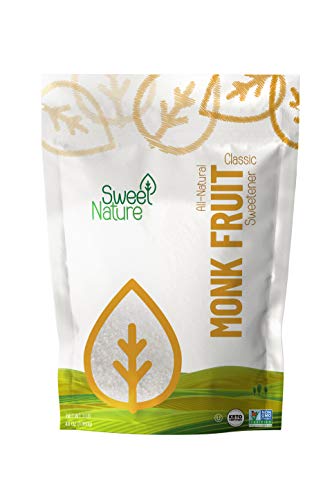
The one that browns — for people whose recipes live in the oven
Most sugar substitutes fail at one specific job, and that job is caramelizing. This Sweet Nature blend is built for it: made with erythritol and monk fruit extract, it browns like sugar and is meant for cooking and baking rather than just stirring into a mug. It is a Golden variety, a designation that matters because it behaves more like brown sugar in a batter. At 48 ounces it is one of the larger bags here, and the conversion is simple — 1 teaspoon equals 1 teaspoon of sugar, 1 cup equals 1 cup.
The rest of the label covers the usual ground: 100% all natural, gluten-free and kosher, with no artificial chemicals or genetically modified ingredients. It has a zero glycemic response and is recommended for keto, low-carb and gluten-free diets. The brand notes monk fruit has been used as a sweetener for centuries in countries around the world, and that it is easily metabolized by the digestive system, which the maker frames as the reason it suits recipes calling for larger amounts of sweetener.
Where the feedback lands is on taste — it is what buyers praise most, described as tasting better than sugar with no bitter aftertaste. Where it splits is on ingredients, since some shoppers confirm the natural fruit sourcing while others point out it is predominantly erythritol. A few find it hard on the stomach. If you bake at volume and want a Golden blend that browns properly in a pan or an oven, this is the one on this list built for that exact task.
The standout trait: a Golden monk fruit blend that browns like sugar, with a simple 1-teaspoon-to-1-teaspoon conversion.
Mention it plainly: the base is mostly erythritol, and a few owners mention stomach sensitivity to it.
Ideal for bakers who need caramelization and a full-size bag for frequent cooking.
Look past it if you want a pure extract with nothing blended in.
10. DureLife Organic Monk Fruit Sweetener 5 Oz

A cleaner-label extract with a big enough jar to actually last
DureLife takes the pure-extract idea and puts it in a more workable size. This is a single-ingredient, concentrated monk fruit extract — no erythritol, no sugar alcohols, no fillers, no artificial additives, colors or aftertaste. A 5-ounce jar delivers 450+ servings, so the small measure you use per drink adds up to a very long stretch of use. The powder blends into beverages and batters, and a little flavors a lot.
The credentials are on the heavy side for this category: USDA Certified Organic, non-GMO, independently verified, Keto Certified and OU Kosher, with no artificial colors, flavors or preservatives. It works across beverages, baked goods, sauces and both sweet and savory dishes. Its low glycemic index means it does not spike blood sugar, and the total absence of erythritol is what draws no-erythritol shoppers to this jar.
If you are switching from a blend, the biggest adjustment is arithmetic. One shopper who made the move reports that half a tablespoon sweetens a whole gallon of tea, where the erythritol blend previously needed three-quarters of a cup — the same job with a fraction of the scoop. The flavor is close to sugar rather than identical to it, and a small number of people find the intensity bitter rather than sweet, since taste buds genuinely vary. It is also pricey per jar, though the serving count spreads that out.
What puts it near the top
- 100% pure monk fruit extract with no erythritol or fillers
- 5 ounces yielding 450+ servings — a very long run per jar
- USDA Certified Organic, Keto Certified and OU Kosher
- Works in drinks, batters, sauces and savory dishes
Where it asks patience
- Costly per jar up front, even though the servings stretch far
- Taste treads close to sugar rather than matching it exactly
Settle on this if you are strictly avoiding erythritol and want an organic, keto-certified extract.
Choose a blend instead if you need to measure cup-for-cup in cakes and cookies.
11. Smart Monk – 100% Monkfruit Extract Powder, 3oz / 85g
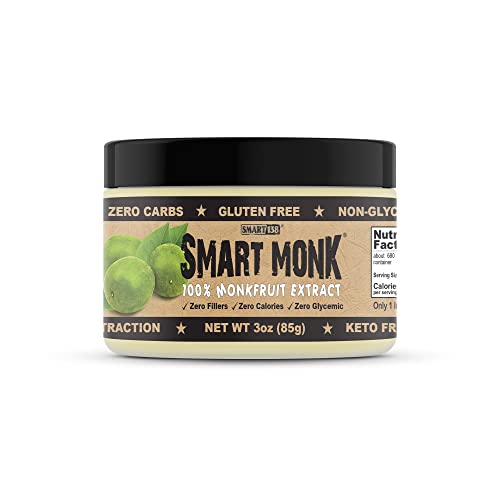
A pinch so small the container is measured in years, not months
Smart Monk is the deepest end of the concentrate pool. The ingredients list holds exactly one item — monk fruit extract, also known as Luo Han Guo — with no fillers, and the powder runs nearly 150 to 200 times sweeter than table sugar. A single pinch, defined here as 1/32 teaspoon, is enough to sweeten a morning coffee. There is no sugar alcohol anywhere in the jar, which the brand frames as a way to avoid the gas, bloating and chemical taste some people get from sugar alcohols.
The math on longevity is the draw. One container holds 85g of pure monk fruit extract, which the brand equates to 800 servings, and it carries the volume claim of approximately 680 servings on its own product page. Either way, this is a purchase you make and then forget about, which explains why buyers describe using it across very long stretches. The extract is gluten-free and non-GMO, derived from a small sub-tropical melon grown in South-East Asia.
The catch is precision. “Must be used extraordinarily sparingly or the aftertaste is horrible” is how the potency problem gets described, and it is the honest headline for anyone switching from a blend — 1/32 teaspoon can be too much for a single serving, so a fingertip is often the right dose. Buyers also report the sweetener does not hold up in cooked dishes and is better added after cooking, and that the strength varies somewhat from container to container. For coffee and tea sweetening, though, a tub that runs this long is hard to argue with.
Why it lasts forever
- 100% monk fruit extract — a single ingredient, no fillers
- Nearly 150–200x sweeter than table sugar; 1/32 teaspoon per serving
- 85g container equated to 800 servings
- No sugar alcohols, gluten-free and non-GMO
Handle with care
- Overdo the pinch and the aftertaste turns unpleasant
- Not suited to cooking — add it after the heat is off
Made for you if you sweeten coffee and tea daily and want one tub to carry you a very long time.
Steer clear if you bake regularly — this powder is built for the cup, not the oven.
Know the Specs
Blend vs. Pure Extract
A blend bulks monk fruit extract with something likeallulose or erythritol so the powder scoops and measures like sugar — that is what makes a 1:1 swap possible in your recipes. A pureextract skips the bulking agent entirely, which is why its serving size drops to a 1/8 or 1/32 teaspoon. Neither approach is better; the blend wins for baking by the cup, and the pure extract wins for stretching a small jar across a year of coffee.
Erythritol, Explained
Erythritol is a sugar alcohol — a naturally occurring sweetener that carries far fewer calories than sugar and does not raise blood sugar the way sugar does. It is the most common bulking agent in monk fruit blends because it mimics sugar’s texture so closely. Some shoppers avoid it on principle or because of personal stomach sensitivity, which is why manufacturers now print “No Erythritol” directly on the front of the bag. If that filter matters to you, read the ingredient line rather than the packaging.
Serving Size and Scoop
The serving line on the back of the bag tells you which kind of product you are holding. A 2-teaspoon (8g) serving signals a granulated blend you can scoop generously, like table sugar. A 1/8 or 1/32 teaspoon serving signals a concentrated powder where the tiny included scoop is the measuring tool — wildly overshooting it is the single most common reason someone dislikes a pure extract. Match your scoop to the serving without improvising and the flavor lands where the product intended.
Zero Glycemic Index
A zero glycemic index means the sweetener is formulated not to raise your blood sugar after eating it. For anyone watching glucose — whether for diabetes, a low-carb diet, or general health — that is the whole reason to switch from sugar. Many monk fruit sweeteners also carry zero calories, which is separate from the glycemic question. The two numbers together — zero calories and a low or zero glycemic index — are the core promise of this entire category.
Common Questions
Can I use monk fruit sweetener cup-for-cup in place of sugar in baking?
What is the difference between monk fruit with erythritol and monk fruit with allulose?
How much pure monk fruit extract equals one teaspoon of sugar?
Does monk fruit sweetener raise blood sugar the way sugar does?
Do these sweeteners dissolve well in cold drinks like iced tea?
Is monk fruit sweetener keto friendly?
Can monk fruit sweetener be used in hot coffee or tea?
How long does a bag or jar of monk fruit sweetener last?
Why does my monk fruit sweetener have a bitter or metallic taste?
Do any of these monk fruit sweeteners contain sugar alcohols?
The Bottom Line
For most kitchens, the best monkfruit sweetener is the Lakanto Classic — an 80-ounce bag that swaps 1:1 for white sugar, dissolves cleanly, and carries zero calories with a zero glycemic index, so you stop rewriting recipes. If flavor is what sold you on sugar in the first place, the WHOLE EARTH bag is worth a look for a sugar-matching taste in a 64-ounce size. And if erythritol is the one thing you want nowhere near your coffee, the DureLife organic pure extract delivers 450+ servings from a single-ingredient 5-ounce jar. Whichever shape of sweetener suits your habits, matching the scoop to the bag is what turns a good product into one you reorder.
How we choose
We do not accept paid placement. Every pick is matched to a real buyer and a real use-case; we do not hands-on test units.
Sources
Specifications: manufacturer listings and product documentation. Review insights: verified customer reviews, as of October 2026. Pricing: not shown on this page (it changes often); check the current price via the retailer link.
As an Amazon Associate, Aappliancez earns from qualifying purchases. This does not affect which products we feature.