Disclosure: Some links in this post are affiliate links. As an Amazon Associate I earn from qualifying purchases, at no extra cost to you. Learn more
Specs are compiled from manufacturer listings and verified buyer reviews and can change over time — please confirm the key details on the product page before buying.
If you are hunting for a monk fruit sweetener that skips erythritol, the short answer is this: buy the Sweet Nature Monk Fruit Sweetener Classic for everyday spooning and baking, because it measures one-to-one with sugar. Almost every “monk fruit” bag on the shelf is mostly erythritol with a splash of monk fruit, and that blend is exactly what a lot of people are trying to get away from — the cooling mouthfeel and the stomach grumbles. What follows is a straight read on the picks that either leave erythritol out entirely or make it a working choice rather than the main ingredient.
This guide is built by comparing the manufacturers’ published specifications and the patterns across verified customer reviews, so you get each pick’s real strengths and trade-offs instead of marketing spin.
You will see the difference fast once you know what to check on the label. A pure extract is measured in drops or mini scoops, not cups, so the sweetening power per container is the number that really tells you what you are getting. Everything below is drawn from the product listings and the buyer feedback on them, laid out so you can pick the format that fits your kitchen. Use this walkthrough of the monk fruit sweetener without erythritol to narrow it down.
Top Picks
How To Choose A Monk Fruit Sweetener Without Erythritol
The label is where this decision lives or dies. “Monk fruit sweetener” on the front of a bag tells you almost nothing, because the words are a category, not an ingredient list. Flip to the back and read the order the ingredients are listed in — the first one is the biggest by weight.
Read the first ingredient, not the front of the bag
If erythritol sits at the top of the list, you are holding a bulk filler with a little monk fruit for flavour. A true monk fruit product lists monk fruit extract as the star, or pairs it with something like allulose instead. The Sweet Nature bag gets flagged for this by its own buyers, since some find it leans heavily on erythritol — that is exactly the thing to watch for here.
Match the format to how you actually sweeten
A liquid dropper suits drinks — coffee, tea, a glass of lemonade. A concentrated powder suits anyone who wants a tiny scoop and a long-lasting jar. A granulated one-to-one blend suits baking, because it scoops and measures like the sugar you already know. Pick the format first and the brand second.
Check the conversion rate before you cook
This is the step people skip and then regret. A concentrated extract can be many times sweeter than sugar per unit of weight, so dumping in a spoonful meant for sugar will wreck a batch. Look for the ratio on the label and start small — you can always add more sweetness, but you cannot take it out.
Side-by-Side Comparison
| Model | Best For | Format | Net Weight | Sweetening Strength | Amazon |
|---|---|---|---|---|---|
| Sweet Nature Monk Fruit Sweetener Classic★ Best Overall | Everyday spooning and baking | Granulated | 16 Oz | 1 tsp = 1 tsp sugar | Amazon |
| It’s Just Liquid Monk Fruit ExtractBest for Drinks | Drinks and travel | Liquid dropper | 1.5 fl oz | Six drops per drink | Amazon |
| Monk Fruit Extract 25X Sweeter Than Sugar | Concentrated daily sweetening | Concentrated powder | 3 oz | 25X sweeter than sugar | Amazon |
| NOW Foods Organic Monk Fruit Extract Powder | Certified-organic purists | Pure powder with scoop | 0.7 oz | — | Amazon |
| Micro Ingredients Golden Monk Fruit Sweetener with Allulose | Brown-sugar baking | Granulated blend | 2 lbs | 1:1 brown sugar | Amazon |
Detailed Reviews
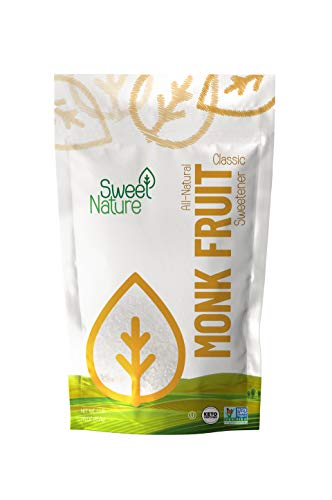
1. Sweet Nature Monk Fruit Sweetener Classic 16 Oz
Our pick — 4.5+★ from 850+ verified ratings; the strongest balance of quality and price.
The one you can spoon straight into your tea without recalculating a single recipe.
Here is the practical reason this takes the top spot: the conversion rate is written right on the bag, one teaspoon of this equals one teaspoon of sugar. That is the whole ballgame for anyone who bakes or cooks by habit, because it means your existing recipes keep working without a conversion chart taped to the cupboard door. One cup of this replaces one cup of sugar, flat out.
The 16-ounce bag is built around that idea. It is certified gluten-free and kosher, lists no artificial chemicals among its ingredients, and is marketed to keto and low-carb kitchens. What wins people over is the taste — spoon-for-spoon sweetness with no bitter edge, which is the one thing that sinks most sugar substitutes. The brand also states it delivers zero glycemic response, so it won’t spike blood sugar the way a spoonful of table sugar does.
The honest catch sits in the ingredient list, and it is worth knowing before you commit to a big bag. Some buyers report that despite the monk fruit framing, this blend leans heavily on erythritol — so if erythritol is the exact thing you are trying to dodge, read the label carefully first. A handful of people also mention digestive adjustment. For everyone else, the value story is strong: a 16-oz bag that measures like sugar is a lot of sweetening for a modest spend. Compare that to the concentrated 3-oz powder further down, which stretches to 566 servings but asks you to scoop 0.15 grams at a time — different job, different kitchen.
What earns the top slot
- One-to-one conversion means your recipes need no math
- Tastes like sugar with no bitter finish, which is the praise it gets most
- 16-oz bag covers everyday tea, coffee, and baking without constant restocking
- Gluten-free and kosher, with no artificial chemicals listed
Read this before you buy
- The blend leans on erythritol, so check the label if avoiding it entirely
- A few people mention stomach adjustment when starting out
Grab the big bag if: you want a straight sugar swap for tea, coffee, and baking with zero recipe math.
Pause first if: erythritol is the ingredient you are actively avoiding — this one is a blend, not a pure extract.
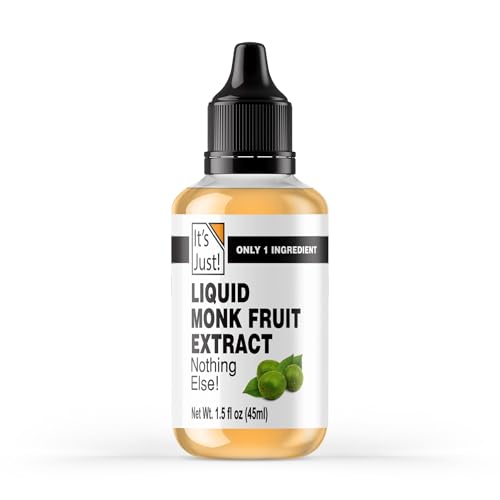
2. It’s Just – Liquid Monk Fruit Extract – 1.5 fl oz
Six drops and your iced tea is sweet — no powder to dissolve, no grit at the bottom.
This is the pick for the drink-first crowd, and the ingredient list backs it up plainly: 100% monk fruit extract with no added alcohol, no preservatives, and — the key part — no erythritol. Each batch is tested for heavy metals, gluten, and microbiology, and a QR code on the label links to the lab results. It is non-GMO, gluten-free, and bottled in the USA.
The whole bottle weighs 0.81 ounces, so the thing to understand is that you are buying concentrate, not a bulk sweetener. The brand suggests six drops to sweeten a drink. Buyers who’ve dialled in their own ratio report using far more for a big glass — as one put it, they use 24 drops (that’s about 4 tsp) in a 16.9oz lemonade and 18 drops in tea to hit the sweetness they want. The taste reads honey-like, slightly less sweet, with a faint bitter note some actually prefer over honey. It works well in iced tea and coffee, where it dissolves and vanishes.
Know the trade-offs going in. Taste is the mixed part — a minority find it barely sweet and not worth the cost, while the flavour fans keep coming back. The bottle is also super tiny, and because you’re often reaching for 18 to 24 drops, you can drain it faster than the size suggests. It’s a compact, child-safety-capped bottle that lives happily in a bag for travel, though — and unlike the bulk 16-oz bag up top, this one earns its place by portability, not volume.
Where it wins: zero erythritol, third-party tested, and a dropper that makes sweetening a single cup genuinely clean — no stirring powder into a cold drink.
Size your expectations: 1.5 fl oz goes quicker than you’d guess once you’re dosing 18 to 24 drops a glass, and the taste splits opinion.
Reach for this if: your sweetener mostly goes into coffee, tea, and lemonade, and you want pure extract with no erythritol.
Look elsewhere if: you bake by the cup — this dropper is built for drinks, not batch cooking.
3. Monk Fruit Extract 3oz

A 0.15-gram scoop does the work of a full teaspoon of sugar — a jar that lasts and lasts.
Start with the number that defines this jar: it is 25 times sweeter than sugar. One mini scoop of 0.15 grams matches a full teaspoon of sugar at 4 grams. That ratio is why the 3-oz bottle is rated for 566 servings — the brand says it delivers sweetness equal to over 11 cups of sugar. It lists no fillers and no artificial flavoring, and it is Non-GMO with zero calories and zero glycemic impact.
What buyers like most is simply how far a tiny amount stretches. It’s the kind of jar that sits in the cupboard for months because you’re using pinches, not spoonfuls. Daily coffee drinkers who stir it into unsweetened soy milk report their glucose readings stay flat. It comes with its own measuring scoop, and the texture is a fine powder rather than crystals. The brand points out the container can appear more or less full because it’s sold by weight and powder density varies — the total sweetness is still the same.
Two things to plan for. First, respect the potency — dump in what looks like a normal spoon and you’ll overshoot badly, so start with 4-5 tiny scoops per serving and adjust. Second, the flavour is polarising by use case. In strongly flavoured things like granola it blends in fine, but in a plain herbal tea a faint aftertaste can surface; it’s happiest in coffee, smoothies, sauces, and oatmeal. As a format, this sits between the dropper’s portability and the big 16-oz bag’s convenience — more servings per gram than either, but it asks for a light hand.
The value angle: 566 servings from a 3-oz jar is a genuinely long runway, because each dose is measured in tenths of a gram rather than spoonfuls.
The catch: potency cuts both ways — use it in mild drinks and a faint aftertaste can show, so save it for flavoured recipes until you’ve found your dose.
Best matched to: daily coffee and recipe sweetening where you want a concentrated jar that goes the distance.
Think twice if: you sweeten plain, delicate drinks — the aftertaste is more noticeable where there’s nothing to mask it.
4. NOW Foods Organic Monk Fruit Extract Powder 0.7 oz
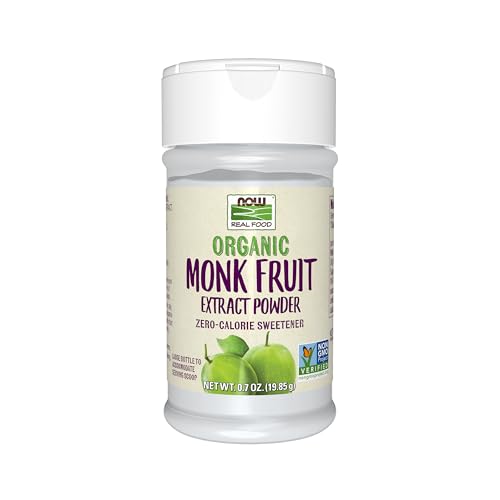
The clean-label one — a single-ingredient powder with a long list of certifications on the label.
If you read ingredient panels for a living, this is the one that reads cleanest. It is a pure powder with no additional ingredients, and it carries USDA Organic, Non-GMO Project Verified, Vegan, Gluten Free, Soy Free, Sugar Free, Nut Free, Corn Free, Dairy Free, Egg Free, Keto Friendly, and Low Sodium classifications. NOW has been family- and employee-owned since 1968. The powder is a very fine grind that, by all accounts, doesn’t clump.
The serving scoop is included, and a little goes a long way. It dissolves well in coffee and tea and mixes without clumping. This is the pure-extract format done minimally — the kind of jar that lives next to the espresso machine rather than in the travel bag. Put it next to the larger 3-oz concentrated powder above: both are pure extract with no erythritol, but this one is the smaller, certified-organic route, while the other stretches to far more servings by weight.
Set expectations on size and price. At 0.7 ounces this is a small jar, and it is priced like a premium organic product, which some buyers find steep for the size — one satisfied user flatly said it’s “amazing” if price isn’t your concern. On taste, most find it smooth and sweet with little aftertaste, but a sour note does surface for some, especially when tasted alone. That’s a genuine split, not a universal flaw. Use it in coffee, tea, or a strongly flavoured mix and it holds up well.
Certifications worth noting
- USDA Organic plus a full slate of free-from certifications
- Single-ingredient powder — nothing added, nothing to decode
- Fine powder that dissolves clean without clumping
- Includes a scoop so you can dose precisely
Where it asks more of you
- Small 0.7-oz jar for a premium spend
- Aftertaste can register for some when tasted straight
Pick this when: organic certification and a one-ingredient label are worth more to you than jar size.
Try something else if: you want a bulk supply that won’t run low — this one is deliberately small and premium.
5. Micro Ingredients Golden Monk Fruit Sweetener 2 lbs
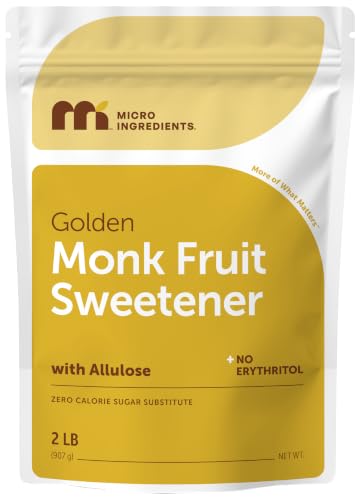
The brown-sugar stand-in that actually browns and caramelises like the real thing.
Here’s a format the others don’t offer: a golden granulated blend of monk fruit and allulose, made to replace brown sugar one-to-one. Because it’s blended for texture rather than pure extract, it browns and caramelises like regular sugar, without the cooling mouthfeel erythritol brings. The 2-lb pouch holds up to 226 servings, and it’s keto- and vegan-friendly with 0 fat and 0 calories per serving.
This is the pick for the baker in the house. The two-ingredient formula mixes easily into coffee, tea, smoothies, and desserts, but the real payoff is in the oven — cookies come out tasting like they were made with sugar, so much so that a batch made for a diabetic husband drew the verdict that “you couldn’t tell flavor wise it wasn’t real sugar.” One caveat on technique: cookies don’t spread out the same way, so press them down a little before baking. It’s also free from soy, dairy, gluten, preservatives, and tree nuts, and each batch is third-party lab tested.
What’s the recurring knock? Sweetness and value. A few people find it not quite as sweet as regular sugar, so you end up using a bit more than usual, and some don’t consider it a bargain for the size. But if avoiding erythritol is the goal, this is deliberately built the other way — allulose is the co-star, not a filler. Next to the 16-oz granulated bag up top, this one carries the caramel-and-brown-sugar job that a plain swap simply can’t do.
Bank the baking win: a one-to-one brown sugar replacement that browns and caramelises, with no erythritol and no cooling effect — a real option for cookies and syrups.
The honest limit: it runs slightly under real sugar in perceived sweetness, so heavy sweet-tooths may need more, and the price-per-pound isn’t the bargain end.
Your match if: you bake, you want brown-sugar behaviour, and you need erythritol out of the recipe.
Pass if: you sweeten a single cup of tea most days — a granulated pouch this size over-serves that job.
Know the Specs
Sweetening Strength (the conversion rate)
This is the number that decides how much you use, and it varies wildly across formats. A one-to-one blend matches sugar spoon for spoon, so a recipe’s cup of sugar becomes a cup of sweetener. A concentrated extract can be 25 times sweeter than sugar, which means a fraction of a teaspoon does the whole job. Always find this ratio before you cook, and start with less than you think — a batch made too sweet can’t be walked back.
Servings Per Container
The jar that looks smallest can be the most economical, because serving count tracks sweetness, not volume. A 3-oz concentrated jar can yield 566 servings when each dose is 0.15 grams, while a bulk granulated pouch trades that concentration for convenience. Watch for the brand’s own note that powder is sold by weight, not volume — the container may look partly empty and still hold the full sweetness, because how tightly fine powder packs changes the fill line, not the total weight.
Format: Liquid, Powder, or Granulated
Liquid drops dissolve instantly and suit drinks — no stirring, no grit. Concentrated powders give you a tiny scoop and a long-lasting jar. Granulated blends scoop and measure like sugar, which makes them the choice for baking. Match the format to how you’ll actually use it, because a perfect product in the wrong format is a frustrating one.
Why Erythritol-Free Matters To You
Erythritol is a sugar alcohol used as cheap bulk in many blends, and some people specifically want to avoid it — whether for the cooling mouthfeel or digestive reasons. To skip it, read the ingredient list and confirm monk fruit (or a named co-ingredient like allulose) leads, rather than erythritol. A product framed as “monk fruit” can still be mostly erythritol, so the fine print on the back is your real guide.
Common Questions
How can I tell if a monk fruit sweetener contains erythritol?
Why is pure monk fruit extract measured in drops or tiny scoops instead of cups?
Can I use a liquid monk fruit extract in baking as well as drinks?
Which monk fruit sweetener works best for cookies?
Is a monk fruit sweetener without erythritol really zero calorie and zero glycemic?
How do I stop my coffee going too sweet with a concentrated monk fruit extract?
Do monk fruit sweeteners raise blood sugar the way regular sugar does?
Why does my container look partly empty even though it’s a full jar?
Should I choose liquid or powder monk fruit for everyday tea?
How long does a monk fruit sweetener stay good once opened?
The Bottom Line
If you want the everyday answer — a sweetener you can spoon into your tea with zero recipe math — the Sweet Nature Monk Fruit Sweetener Classic is the one to grab, holding 4.5+ stars and a strong crowd behind it. For single drinks and travel, the It’s Just Liquid Monk Fruit Extract gives you pure extract you can drop straight into a glass. Bake by the cup and the Micro Ingredients Golden blend with allulose is the brown-sugar swap that behaves in the oven. And if concentrated value is your aim, the 25X concentrated powder turns a 3-oz jar into 566 servings. Whichever path you choose, confirm the ingredient list actually leads with monk fruit — that single check is what separates a real erythritol-free sweetener from a filler blend.
How we choose
We do not accept paid placement. Every pick is matched to a real buyer and a real use-case; we do not hands-on test units.
Sources
Specifications: manufacturer listings and product documentation. Review insights: verified customer reviews, as of October 2026. Pricing: not shown on this page (it changes often); check the current price via the retailer link.
As an Amazon Associate, Aappliancez earns from qualifying purchases. This does not affect which products we feature.