Disclosure: Some links in this post are affiliate links. As an Amazon Associate I earn from qualifying purchases, at no extra cost to you. Learn more
Specs are compiled from manufacturer listings and verified buyer reviews and can change over time — please confirm the key details on the product page before buying.
If your nose feels like sandpaper every morning, you don’t need a stronger decongestant — you need water that actually stays put. Saline sprays flush and leave; a moisturizing nose gel or oil coats the passage and releases moisture for hours. That difference decides whether you wake up crusted or comfortable.
This guide is built by comparing the manufacturers’ published specifications and the patterns across verified customer reviews, so you get each pick’s real strengths and trade-offs instead of marketing spin.
Below you’ll find five picks sorted by what they actually do — from a drug-free saline mist gentle enough for a one-year-old to a pharmacist-designed gel built around CPAP tubing. The goal is simple: no more guessing which moisturizing nose spray ends the 3 a.m. dry-nose wake-up.
Top Picks

How To Choose The Best Moisturizing Nose Spray
The one question that cuts through every label: does this product add water, or does it pull water out? Saline sprays and saline gels are salt plus water, and salt absorbs moisture. That is why some people spray more and feel drier. A true moisturizer — a water-based gel, a hyaluronate gel, or an oil — puts hydration back into the tissue instead of borrowing it.
Match the format to your worst hour
Dry nose hits hardest at night, in heated rooms, on planes, and in high-altitude or desert air. A fine mist works well for a quick daytime reset and for clearing a stuffy toddler nose before sleep. A gel or oil is the better call when you need one application to hold through the night, because it sits on the tissue and releases slowly rather than running straight down your throat.
Check who it is cleared for
Age matters more than brand here. A drug-free isotonic saline mist can be safe for daily use on children as young as 12 months, while a pharmacist-designed gel with no use restrictions suits all ages. If you run a CPAP, BiPAP, or oxygen line, look for a formula that is water-based and won’t degrade your tubing or mask cushions — that is a real cost saver over time.
Read past the first line of the label
Two details separate a decent pick from a great one: the water content (weight by volume) and whether preservatives are in the mix. A gel that is 50% water by weight gives you something to actually rehydrate with. A preservative-free sterile spray is the cleaner choice for sensitive or already-irritated passages. And a drop-based oil gives you the most control per application — one drop per nostril can carry you a long way.
Side-by-Side Comparison
| Model | Best For | Format | Age / Use Range | Key Moisture Agent | Amazon |
|---|---|---|---|---|---|
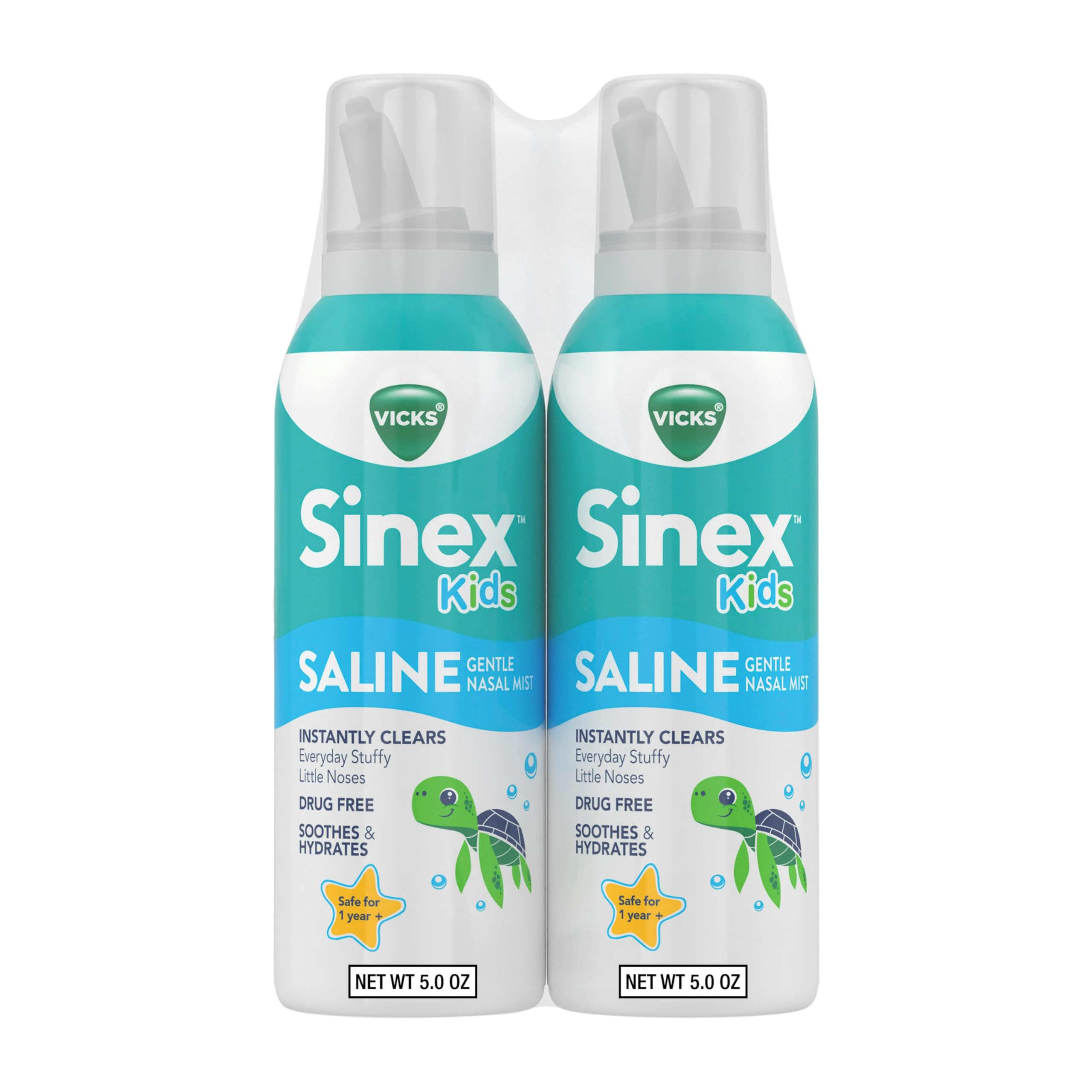
| Vicks Sinex Children’s Saline Nasal Spray★ Best Overall | Kids and sensitive everyday noses | Ultra-fine mist, 5 OZ x 2 | Ages 1+ | Isotonic saline + aloe | Amazon |
| ANCIENT SECRETS Saline Nasal Spray, Breathe AgainBest Sterile Formula | Sterile seawater cleansing | Fine mist, 3.38 Fl Oz | 2–4 uses daily | Purified Atlantic seawater | Amazon |
| Aquegel Nasal Moisturizer + Lavender | Overnight and CPAP dryness | Water-based gel jar, 0.5 oz | All ages, no use restrictions | 50% water + lavender | Amazon |
| Baraka Dry Nose Oil | Cold climates and travel | Oil with dropper, 30 mL | All ages | Sesame oil + essential oils | Amazon |
| NeilMed NasoGel Nasal Saline Gel Spray | Drip-free targeted hydration | Gel spray, 30 mL x 2 | Daily care routines | Sodium hyaluronate + aloe | Amazon |
Detailed Reviews
1. Vicks Sinex Children’s Saline Nasal Spray
Our pick — over 4.5★ from 950+ verified ratings; the strongest balance of quality and price.
A drug-free mist gentle enough for a one-year-old that still clears a grown adult’s nose.
The crowd favorite of this list at 4.7 stars across 900+ ratings, and it earns that spot by doing one narrow thing exceptionally well. The ultra-fine saline mist carries a hint of aloe and no added preservatives, and it is an isotonic solution — meaning the salt concentration matches your body’s own fluids, so it soothes rather than stings. It is safe for daily use on children as young as 12 months old.
What wins people over is the effectiveness. The mist is fine enough to go exactly where you aim it, whether that is a toddler’s nostril or your own, and one spray per nostril is enough to open things up and keep them open. Owners describe it as scent-free and not salty, with no irritation — and several use it well beyond the children’s aisle, including for seniors. Allergy season and cold season both get handled by the same bottle.
The two-pack is a genuinely useful format here: keep one at home, one in the diaper bag. Compared to the Aquegel gel, this is the lighter, quicker option — great for clearing and refreshing, but it won’t coat and hold overnight the way a gel does. Buyers report: “one of the bottles was damaged but i kept because i needed it asap… overall this is an essential for babies and toddlers.” An occasional bottle arriving dented is the rare miss; the formula itself keeps people coming back.
What earns it first place
- Ultra-fine mist targets the nostril directly instead of pooling in your throat
- Isotonic saline with a hint of aloe and no added preservatives — gentle on daily use
- Cleared for children as young as 12 months, drug-free, no decongestant medicine
- Two 5 OZ bottles cover home and travel
The honest trade-off
- It clears and refreshes, but a mist won’t hold moisture through a full night the way a gel or oil does
- The 10-ounce two-pack is a heavy box compared to a single 0.5-ounce gel jar, so it lives on the shelf rather than in a pocket
Reach for this if: you want one drug-free bottle that works for a one-year-old and an adult senior alike, or you’re tired of overpaying elsewhere for basic saline.
Look elsewhere if: your dryness is a deep, cracking overnight problem — that’s gel territory, not mist territory.
2. ANCIENT SECRETS Saline Nasal Spray, Breathe Again
Sterile seawater in a bottle — nothing added, nothing to react to.
If you’ve ever wondered what makes this one different from a plain drugstore saline, the answer is in the source. It’s made from purified saline seawater pulled from the Atlantic Ocean, and it is completely sterile and preservative-free — just salt and water, which is exactly what people with reactive or already-irritated noses want to see on the label. At 3.38 Fl Oz it is a mid-size bottle, and it’s designed for 2–4 uses a day, or as often as you need it.
What people rave about here is the strength. Owners find it more potent than other cans of saline, and the sensation is clean and ocean-like rather than medicinal. It clears and calms even a stuffy, irritated nose — one long-time user calls it the best nasal wash they’ve tried, because it’s pure seawater rather than processed saline. There’s no pain and no unpleasantness, just an easy release of fine mist into each upper nostril. Unlike the Vicks mist, which leads with kid-friendly gentleness, this one leans into raw cleansing power.
The sprayer is the story: the honest catch lives in the hardware, not the liquid. Owner feedback flags the sprayer fit and the spray pressure as the weak point — the recurring gripe is that the nozzle doesn’t seat perfectly, which can make the mist feel inconsistent. Treat it gently and it holds up; several owners have used it indefinitely and just asked the company to improve the fit.
Buy it for: sterile, preservative-free seawater that out-cleans a standard saline without any added ingredients.
Think twice if: you want a perfectly even, hard-fine mist every single press — the nozzle fit is the compromise.
3. Aquegel Nasal Moisturizer + Lavender
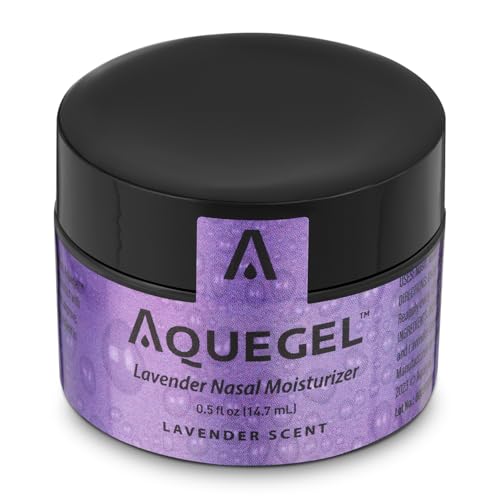
The only pick here built to keep feeding your nose moisture for a full twelve hours.
Here’s the spec that matters: this gel is 50% water by weight, and its time-released base activates at body temperature. Instead of dumping water once, it dissolves one layer at a time, releasing micro-encapsulations of water plus lavender across a 12-hour stretch. That design is why a single 0.5 oz jar is rated to cover 30–45 days of daily use — a little truly goes a long way. It’s non-medicated, non-addictive, and steroid-free, and it was pharmacist-designed with oxygen therapy in mind.
For CPAP, BiPAP, and oxygen users this is close to purpose-built. It’s water-based and non-flammable, and it won’t degrade your tubing, masks, or cushions — CPAP users say it prevents painful sores where the cushion rubs, and its water-based formula won’t break down the mask. The lavender scent is subtle; some noses barely register it, but the moisturizing job gets done regardless. It’s a fraction of the weight of a big mist bottle at 0.5 ounces, so it disappears into a nightstand drawer or a travel kit.
The recurring gripe is everything around the gel: the jar itself. It arrives in a small case that owners describe as sharp and prone to cracking — one moved the contents into a different container entirely — and the amount per jar draws the most pushback on value. That said, it’s a small, fixable packaging annoyance on a product that works, not a reason to walk away. For a nightly set-and-sleep gel instead of a 3 a.m. re-spray, this is the one.
Why it earns a slot
- 50% water by weight with a body-temperature time-release base rated for 12 hours of moisture
- Water-based and non-flammable — safe around CPAP, BiPAP, and oxygen tubing
- One 0.5 oz jar lasts an estimated 30–45 days of daily use
Where it stumbles
- The included case cracks and feels sharp; plan to transfer the gel to your own container
- Per-jar value draws more criticism than any other aspect here
The standout spec: a body-temperature release system rated at 12 hours — the longest single-application moisture window on this list.
Not your pick if: you want a spray-and-go format and nothing to scoop.
4. Baraka Dry Nose Oil – Hydrating Nose Moisturizer w/Dropper

A sesame-oil dropper for anyone whose nose dries out the moment the air turns cold or thin.
Cold weather, dry climates, high altitudes — the conditions that crack a nose open are exactly what this 30 mL oil is aimed at. The base is sesame oil, which hydrates without the greasy residue you’d expect, and it’s enriched with organic essential oils including Cardamom, Everlast, German Chamomile, and Roman Chamomile. It was developed with the Pacific Institute of Aromatherapy. A 1.25 x 1.25 x 4 inch bottle with a dropper means you control the dose — one drop per nostril, twice daily, is the usual rhythm.
The moisturizing here is the whole reason people stay loyal. One reviewer credits it with healing a 10-year nasal wound from high-altitude dryness, applied twice daily with a q-tip. In the Colorado mountains, it beat petroleum jelly and natural gels that caused throat drip and a bad taste — a couple of swabs in the morning after a steam, and the moisture held with virtually no drip. One 30 mL bottle runs roughly three months at twice-daily use.
A scent you’ll acclimate to: the oil smell is the one thing owners mention as odd at first — though it fades to tolerable within about a week. The other caveat is a brand-new bottle, which can drip fast, so press gently and use it sparingly until it settles. It’s also a moisturizer, not an allergy treatment; it won’t touch a pollen reaction the way a saline mist will.
Suits you if: winter air, dry heat, or altitude is wrecking your nose and you want an oil that sinks in rather than sits on top.
skip it if: you need something scentless from day one or a fast fix for allergy congestion.
5. NeilMed NasoGel Nasal Saline Gel Spray, 30mL (Pack of 2)
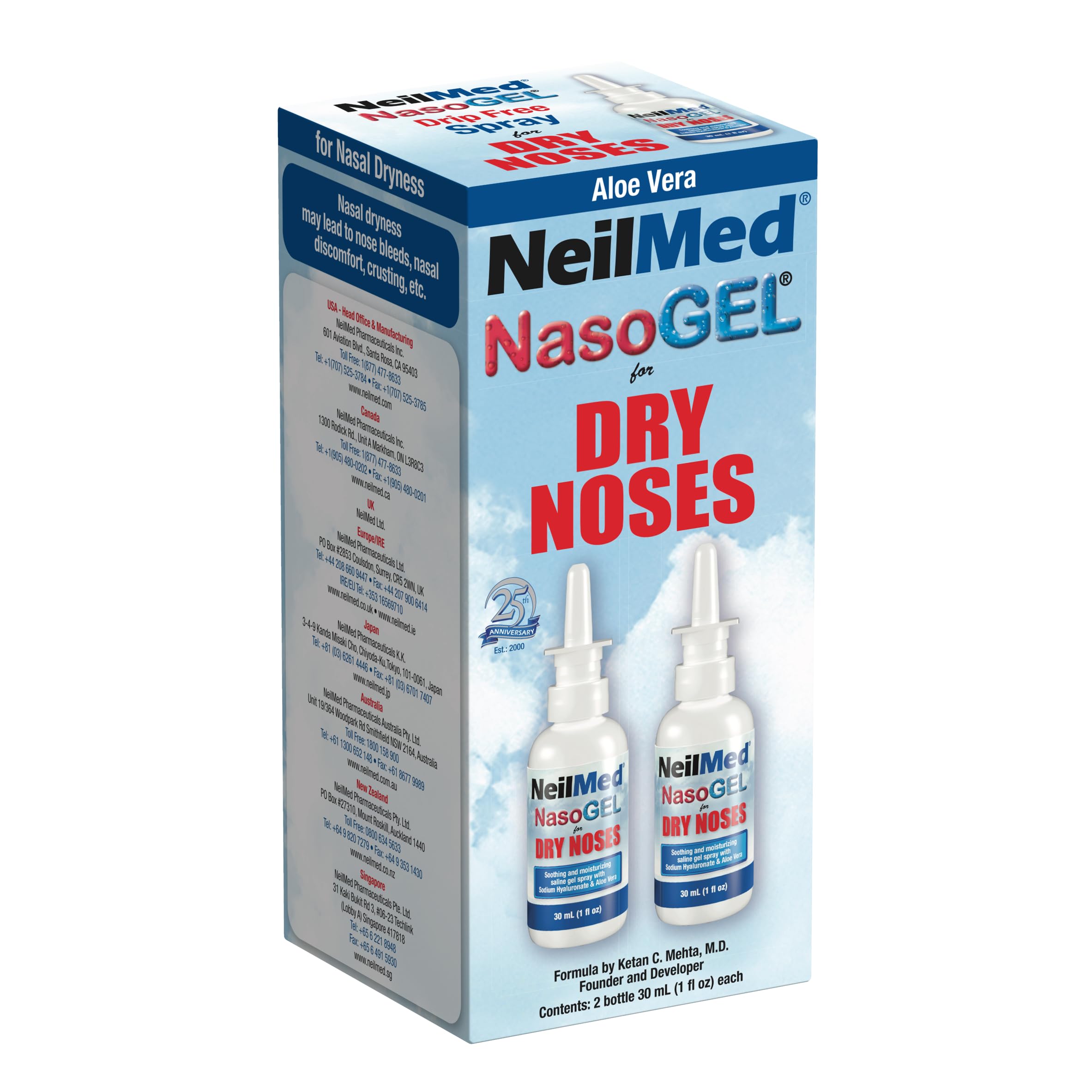
Gel hydration in a spray bottle — no scooping, no drips, no sting.
This is the pick for anyone who wants gel-level moisture but refuses to deal with a jar. It’s a water-soluble saline gel spray that delivers targeted moisture without dripping, and it comes as two 30 mL bottles. The formula pairs sodium hyaluronate — a deep-hydration ingredient that holds onto water in the tissue — with aloe vera to soothe irritation. At 1 ounce for the pair it is the lightest, most travel-friendly option here, and the spray format drops straight into a daily CPAP, oxygen, or high-altitude routine.
The effectiveness is what carries it, and the moisturizing side does the heavy lifting alongside. Owners note it doesn’t cake or harden, stays light rather than thick, and still gets the job done — one person with Sjögren’s calls it wonderful despite the price. It’s odorless, and it doesn’t sting or burn on application, which matters when the tissue is already raw. In the high desert, it is a welcome antidote to dry noses. If you fly often or live with indoor heat, this earns its seat in the carry-on.
Longevity is the honest split: people disagree on how long a bottle stretches, and the value question follows close behind. It’s also a lighter gel than the Baraka oil’s thicker feel, so if you want the heaviest possible overnight coat, that oil still wins. But for a no-mess, no-drip, sting-free application you can do anywhere in ten seconds flat, few formats beat this.
Where it pulls ahead
- Sodium hyaluronate plus aloe vera for lasting hydration and soothing
- Drip-free spray format — no jar, no scoop, no mess
- Odorless and non-stinging on already-irritated tissue
- Two 30 mL bottles at 1 ounce total makes it the easiest to carry
The rub
- Bottle longevity is the most-disputed point — how far one stretches varies by user
- Thinner than an oil, so it won’t lay down the heavier overnight coat some people want
Your match if: you want deep-hydration ingredients in a format you can hit in seconds, anywhere, without a drip.
Pass if: you want the thickest possible barrier layer for a whole night — go oil.
Know the Specs
Water percentage and delivery base
This is the number that tells you whether a product adds moisture or merely moves it around. A gel listed at 50% water by weight has real water to feed your tissue, and a body-temperature release base spreads that water out over hours instead of all at once. An oil works differently — it seals the surface and holds hydration in rather than delivering a large water payload, which is why oils tend to suit cold, dry, high-altitude air. If a formula has no water in it at all, it can only slow moisture loss, not replace it.
Delivery format: mist, spray gel, or dropper
Format decides where the product goes and how long it sits. An ultra-fine mist reaches deep and clears quickly, which suits a quick reset or a squirmy toddler. A gel spray deposits thicker moisture without dripping, so it stays where you aim it. A dropper gives you the most control — one drop per nostril, applied twice a day, is a common routine. The trade-off is always speed versus staying power: the fastest formats leave soonest, and the ones that linger take a few extra seconds to apply.
Common Questions
What is the difference between a saline spray and a moisturizing nose gel?
Is a moisturizing nose spray safe to use every day?
Which moisturizing nose spray works best with a CPAP machine?
How long does one application of a moisturizing nasal gel actually last?
Can I use a nasal oil and a saline spray together?
Are these moisturizing nose sprays safe for children and older adults?
Will a moisturizing nose spray help prevent nosebleeds from dry air?
What’s the difference between a mist and a drip-free gel spray?
How should I store a nasal moisturizer so it stays effective?
The Bottom Line
The winner is the Vicks Sinex Children’s Saline Nasal Spray because it does the everyday job better than anything else here — drug-free, fine-misted, cleared for ages 1+, and gentle enough for a senior to use daily. If dry air or CPAP is cracking you open overnight, the Aquegel Nasal Moisturizer + Lavender is built for it, with a 50% water gel that releases for 12 hours. And when you need deep hydration in a bottle you can hit in seconds without a drip, the NeilMed NasoGel is the one to reach for. Match the format to your worst hour.
How we choose
We do not accept paid placement. Every pick is matched to a real buyer and a real use-case; we do not hands-on test units.
Sources
Specifications: manufacturer listings and product documentation. Review insights: verified customer reviews, as of October 2026. Pricing: not shown on this page (it changes often); check the current price via the retailer link.
As an Amazon Associate, Aappliancez earns from qualifying purchases. This does not affect which products we feature.