Disclosure: Some links in this post are affiliate links. As an Amazon Associate I earn from qualifying purchases, at no extra cost to you. Learn more
Specs are compiled from manufacturer listings and verified buyer reviews and can change over time — please confirm the key details on the product page before buying.
The right pick is a fragrance-free, non-greasy cream you can layer over a raw nose and cheeks without stinging. The wrong pick is anything scented, thin, or drying. Below you get four real options, sorted by what each one actually does for burned, tight, peeling skin.
This guide is built by comparing the manufacturers’ published specifications and the patterns across verified customer reviews, so you get each pick’s real strengths and trade-offs instead of marketing spin.
I ranked these on what matters for a burned face: a thick, calming texture, no fragrance to irritate raw skin, and long moisture that lasts past one application. Here is what to buy when your face is hot and tight, and which jar earns its spot on your shelf — keep reading for the moisturizer for sunburn face that fits your skin.
Top Picks

How To Choose The Best Moisturizer for Sunburn Face
Your face is the thinnest, most exposed skin you own, so a cream that feels fine on your arms can sting on your nose. A good sunburn moisturizer does two jobs at once: it pours water back into dried-out skin and it helps hold that water there so you are not reapplying every hour.
Fragrance is the first thing to drop
Perfume and essential oils are the most common reason a cream stings raw, overheated skin. A fragrance-free formula gives you moisture without the tingle-on-fire feeling. All four creams here skip added fragrance, which is the single reason they work on a face that is already angry.
Thick does not have to mean greasy
A burn sucks moisture out and leaves skin tight, so a richer cream holds more water than a runny lotion. The worry is that rich means sticky. Look for a cream that says it absorbs quickly, because a face cream that sits on top of your skin feels awful under a pillow or a mask.
Barrier ingredients do the long-haul work
Ceramides are fats that naturally sit in your skin barrier — the outermost layer that keeps water in. When that layer is stressed, ceramides and hyaluronic acid (a water-binding molecule) help rebuild it so moisture stays put. Niacinamide is a form of vitamin B3 that helps calm the look of redness. You will see these named on the labels below, and they are worth checking for if your face peels after a burn.
Match the cream to the moment
An everyday body-and-face cream is your baseline for the days after sun exposure. An after-sun lotion is built for the first hot, red hours. And if your burn itches badly, a lotion with an itch-relief ingredient is doing a different job from a plain cream. Know which phase you are in before you buy.
Side-by-Side Comparison
| Model | Best For | Size | Key Actives | Fragrance | Amazon |
|---|---|---|---|---|---|
| Cetaphil Moisturizing Cream, 20oz★ Best Overall | All-day face and body moisture | 20 oz | Glycerin, vitamin B5 and B3 | Fragrance-free | Amazon |
| BLUE LIZARD After Sun Soothing Lotion, 6 oz | Fresh post-sun redness and heat | 6 oz | Aloe, shea butter, cucumber extract | Free of synthetic fragrance | Amazon |
| CeraVe Moisturizing Cream, 19oz | Barrier repair and daily use | 19 oz | Hyaluronic acid, 3 ceramides | Fragrance-free | Amazon |
| CeraVe Anti Itch Lotion, 16oz | Burns that itch badly | 16 oz | 1% pramoxine hydrochloride, niacinamide | Fragrance-free | Amazon |
Detailed Reviews
1. Cetaphil Moisturizing Cream 20oz
Our pick — 4.5+★ from 41,000+ verified ratings; the strongest balance of quality and price.
The big, quiet cream that keeps a burned face fed for two straight days.
Cetaphil states its cream keeps dry skin hydrated for 48 hours per application, so one layer at night can carry a burned face through the next hot afternoon without constant reapplying. It is a 20 oz tub, which matters on a burn you treat morning and night for a week.
The texture splits the difference you want on a burned face: thick enough to feel like it is doing something, but the makers describe it as absorbing without a heavy or greasy film. Sweet almond oil and vitamin E sit alongside glycerin, plus vitamins B5 and B3 (panthenol and niacinamide) — the B3 being the one that helps calm the look of redness. And because it is fragrance-free and non-comedogenic (it will not clog pores), you can put it on a raw nose without a sting.
What wins people over is the moisture itself, which is by far the most-discussed quality in its reviews — and it is a cream that delivers without the shine. Buyers report it “resolved years of very dry skin” after a week of post-shower use — the kind of daily consistency a post-burn routine needs.
What earns it the top spot
- 48-hour hydration claim means fewer reapplications on a burned face
- 20 oz tub covers face and body through a full week of healing
- Fragrance-free, non-comedogenic formula built for sensitive skin
- Niacinamide helps calm the look of redness
- Thick cream that still absorbs without a greasy film
Where it asks for patience
- It is a plain cream — no cooling or itch-relief ingredient, so a hot, itchy burn may want something extra
- The 20 oz size is a lot of product if you only burn once a year
Made for: anyone who wants one dependable fragrance-free cream to carry a burned face through the peeling days.
Look elsewhere if: your burn is actively itching and you want a lotion with a dedicated itch-relief ingredient.
2. BLUE LIZARD After Sun Soothing Lotion 6 oz
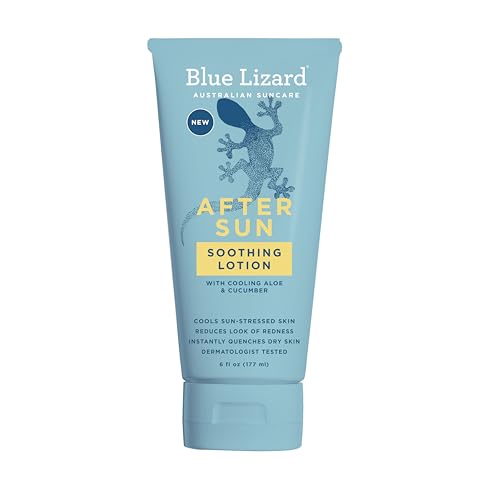
The one built for the hot, red hours right after the sun.
This is not an everyday body cream — it is a 6 oz after-sun lotion aimed squarely at the first day of a burn. The formula leads with aloe for a cool, refreshing burst on sun-stressed skin, then shea butter and humectants (ingredients that pull water into the skin) to lock that moisture in. Cucumber extract and beta glucan go after the look of redness, which is the whole reason you reach for an after-sun product rather than a plain jar.
The size is the honest catch, and it is a big one next to the Cetaphil tub. At 6 oz it is a fraction of that 20 oz cream — fine for a face, tight if you want to treat shoulders and arms too. If you need volume, the Cetaphil holds far more for the same job. What this one buys you instead is the cooling, calming purpose-built formula, and it is vegan and hypoallergenic with no synthetic fragrance.
Relief is the quality that carries this lotion in reviews, with the look of redness close behind — Owners mention it “soothed sunburn” and “dramatically reduced redness in days,” with blisters shrinking by day two and clearing by day four. That is a concrete arc, not a vague claim. The trade-off is feel: the same report called it “slightly tacky/sticky after application,” so give it a few minutes to settle before you lie down.
Short and effective: 6 oz goes a long way on a face, and the aloe-and-cucumber formula is designed for the redness phase rather than after it.
Plan around the size: buy it as your first-48-hours pick and keep a larger cream on the shelf for the week that follows.
Your move if: the burn is fresh, hot, and visibly red and you want cooling relief now.
Give it a pass if: you are past the red phase and mostly need big-volume daily moisture across face and body.
3. CeraVe Moisturizing Cream 19oz

Three ceramides and 19 oz of barrier-rebuilding cream for peeling skin.
If your face peels after a burn, the problem is your skin barrier — the outer layer that holds water in. CeraVe builds this cream around three essential ceramides (the fats that make up roughly half the lipids in that barrier, per the label) plus hyaluronic acid to hold water, with a 24-hour hydration claim. That is the deeper repair job a sunburn needs once the heat drops.
It carries the National Eczema Association Seal of Acceptance, and it is fragrance-free, paraben-free and non-comedogenic — the checklist you want for a face that is already irritated. It also holds the texture that brands often get wrong: rich and velvety, but absorbed quickly without the greasy, sticky finish. This 19 oz tub weighs 1.19 pounds, which runs slightly lighter than the Cetaphil’s 1.25 pounds despite being about the same size.
Texture is the second most-discussed trait here, right behind moisture — the recurring note is that it soaks in fully, with buyers reporting it absorbs within minutes and one user at 35 seeing smoother skin after a week. The recurring gripe is weight: this is a thick cream, and if you want something mist-light for daytime wear over a big burn, it can feel heavy. A 4 oz size difference either way is not the issue; the feel is.
Built for repair: the three-ceramide blend targets the barrier itself, so it earns its place in the days after the red fades and the peeling starts.
The thick-cream caveat: it is rich by design — dab less on your face than you would on your arms until you know how your skin drinks it.
Reach for this if: your burn has gone tight and flaky and you want ceramides doing the repair work.
Think twice if: you want a featherweight daytime layer — this one is unapologetically thick.
4. CeraVe Anti Itch Lotion 16oz

The only lotion here with an itch-blocking ingredient — for burns that make you scratch.
When a sunburn itches, moisture alone does not cut it. This 16 oz lotion carries 1% pramoxine hydrochloride — a topical numbing ingredient the label says temporarily relieves itching tied to sunburn, insect bites and poison ivy. That is a different tool from the plain creams above, and it is the reason this one sits at the end of the list rather than the top.
The label claims relief within two minutes, lasting up to 8 hours, based on a clinical study of 34 subjects (individual results may vary). Alongside the pramoxine sit niacinamide to help calm skin and hyaluronic acid to hold moisture, plus the same three essential ceramides found in the CeraVe cream above. It is fragrance-free, steroid-free and non-comedogenic, and it fits face, body and hands.
What people describe is fast relief that does not feel clinical — customers note it stops itchy shins and bug bites quickly, absorbs fast with no residue, and works chilled from the fridge for extra cooling on a hot burn. One note: it runs lighter than the CeraVe cream tub and costs more per ounce in the bigger picture, so treat it as a targeted itch tool rather than your main face moisturizer.
The itch specialist: if scratching is your main problem, this is the one pick with an active itch-fighting ingredient on the label.
Narrow job, real value: keep it for flare-up days and let a plain cream handle the routine moisture.
Pick this if: your burn itches badly enough to scratch and you want fast, temporary relief.
Skip the swap if: you only need sustained moisture — a plain cream does that job for less.
Know the Specs
Fragrance-free vs. lightly scented
Fragrance is added smell, and on raw, burned skin it is often what makes a cream sting. “Fragrance-free” means no perfume was added, which is why all four picks here carry that label. “Free of synthetic fragrance” (as BLUE LIZARD states) is a slightly different promise — check the wording if your skin reacts to scent at all.
Ceramides and hyaluronic acid
Ceramides are fats that already live in your skin barrier; hyaluronic acid is a molecule that holds water. Together they do the long-haul work of keeping moisture in after a burn dries your skin out. CeraVe names three ceramides and hyaluronic acid on both its cream and its anti-itch lotion.
Pramoxine hydrochloride
This is a topical itch-relief ingredient — it dulls the urge to scratch rather than just wetting the skin. At 1%, as on the CeraVe Anti Itch Lotion, it is meant for temporary relief of itching tied to sunburn, bites and poison ivy. It is a different job from plain moisture, so use it when itching is the problem.
Non-comedogenic and hypoallergenic
“Non-comedogenic” means the formula is made not to clog pores; “hypoallergenic” means it is made to be less likely to trigger a reaction. On a face that is already stressed, both are worth checking before you layer anything new on a burn.
Common Questions
Can I put a moisturizer on a sunburned face the same day?
Is a thick cream or a light lotion better for a burned face?
Should I use a moisturizer with fragrance on sunburned skin?
What is the difference between CeraVe Moisturizing Cream and CeraVe Anti Itch Lotion?
How often should I reapply moisturizer on a sunburn?
Can I use an after-sun lotion as my everyday face moisturizer?
Will an anti-itch lotion stop the peeling after a sunburn?
Is it safe to put these creams on a child’s sunburn?
Do these moisturizers work for sunburn on the face and body both?
What does non-comedogenic mean for a sunburned face?
The Bottom Line
For most people, the moisturizer for sunburn face winner is the Cetaphil Moisturizing Cream, because it combines 48-hour hydration, a fragrance-free non-comedogenic formula, and a 20 oz tub that carries a burned face through the whole healing week. If the burn is fresh, hot and red, grab the BLUE LIZARD After Sun Soothing Lotion for its cooling aloe and cucumber formula. And if the burn itches hard enough to scratch, the CeraVe Anti Itch Lotion is the one to reach for. The CeraVe Moisturizing Cream is the steady barrier-repair pick in between.
One honest nudge: the Cetaphil’s 4.5+ stars across 41,000+ ratings is the strongest crowd standing here, and a jar that dependable is worth keeping on the shelf before the next long day outside.
How we choose
We do not accept paid placement. Every pick is matched to a real buyer and a real use-case; we do not hands-on test units.
Sources
Specifications: manufacturer listings and product documentation. Review insights: verified customer reviews, as of October 2026. Pricing: not shown on this page (it changes often); check the current price via the retailer link.
As an Amazon Associate, Aappliancez earns from qualifying purchases. This does not affect which products we feature.