Disclosure: Some links in this post are affiliate links. As an Amazon Associate I earn from qualifying purchases, at no extra cost to you. Learn more
Specs are compiled from manufacturer listings and verified buyer reviews and can change over time — please confirm the key details on the product page before buying.
If you only remember one thing about buying a MIPS helmet, make it this: the slip-plane liner is the feature you are paying for, but the fit is what actually keeps you safe. A loose shell lets your head rattle inside the liner, which is the exact motion MIPS is designed to manage. So the deciding factor is not the brand name but which shell shape, size range, and closure system actually locks onto your head.
This guide is built by comparing the manufacturers’ published specifications and the patterns across verified customer reviews, so you get each pick’s real strengths and trade-offs instead of marketing spin.
You want a helmet that protects your brain on angled hits, not just straight drops. Every pick here has a rotational-impact liner (a low-friction layer that lets the shell twist slightly on impact). What separates these nine helmets is shell shape, vent count, and whether the retention dial can be turned with gloves on. This guide to the best mips helmet options sorts nine real helmets by the jobs they do well.
Top Picks


How To Choose The Best MIPS Helmet
Buyers often focus on the safety tech and forget the shell underneath. A MIPS liner (Multi-directional Impact Protection System — a low-friction layer between the foam and your head that lets the shell rotate slightly on angled hits) helps, but it only works if the helmet fits you correctly. Check these four points in order.
Measure your head in centimetres, not by hat size
Wrap a soft tape around your head just above the eyebrows, keep it level, and write the number down. Every sizing range in this article is published in centimetres for a reason: a size chart built on “medium” or “large” labels varies wildly between brands. A 58cm head is a medium in one brand and an extra-large in another.
Check the closure style before you commit
Dirt and dual-sport helmets often use a double-ring (two D-rings threaded through each other) closure, which is what race and motorcycle standards expect. Bike, skate, and trail lids usually use a side-release buckle. Neither is better at protecting you — one is simply faster to get on and off, and one is more adjustable once set.
Match the vent count and visor to where you actually ride
A helmet with 26 vents and four brow ports (extra front openings that push air across your forehead) is built for hot climbs. A helmet with nine intake and four exhaust vents is built for motocross roost, where airflow is secondary to shell strength. Buying a heavy vented shell for city errands wastes the design, and buying a low-vent shell for summer trail climbs leaves you overheated.
Know which certification you need
DOT and FMVSS 218 are motorcycle standards. CPSC covers bicycle helmets in the US. ECE 22.06 is a European motorcycle standard. A lid that carries DOT but no bicycle standard is overbuilt for pedalling and much heavier than you want on a climb — a trade-off worth understanding before you buy.
Side-by-Side Comparison
| Model | Best For | Certification | Closure | Vent Count | Amazon |
|---|---|---|---|---|---|
| Fox Racing V Core MIPS★ Best Overall | Motocross and dirt | DOT, FMVSS 218 | Double Ring | Nine intake, four exhaust | Amazon |
| POC Tectal Race MIPSTrail Specialist | Trail and all-mountain | — | Snap clasp | Ventilated airflow channels | Amazon |
| Bell Sixer MIPSCamera Mount Pick | Trail riding with a camera | — | Quality click dial | 26 vents, 4 brow ports | Amazon |
| Giro Register MIPS II | Universal-fit commuting | — | Adjustable fit system | — | Amazon |
| Giro Verce MIPS | Smaller heads, long rides | — | Adjustable strap | — | Amazon |
| Triple Eight Gotham MIPS | Skate and urban riding | CPSC, ASTM F1447, ASTM F1492 | Side release buckle | Strategically placed vents | Amazon |
| Smith Persist MIPS | Road and gravel | CPSC, CE EN 1078, AS/NZS 2063 | Adjustable dial | 21 fixed vents | Amazon |
| Smith Vantage MIPS | Snow and cold-weather riding | ASTM F 2040, CE EN 1077:2007 CLASS B, CPSC, CE EN 1078 | BOA 360 dial | 21 vents | Amazon |
| Bell MX-9 Adventure MIPS | Dual sport and adventure | DOT, ECE22.06, FMVSS 218 | — | Velocity Flow ventilation | Amazon |
Detailed Reviews
1. Fox Racing V Core MIPS Motocross Dirt Bike Helmet
Our pick — 4.5+★ from 550+ verified ratings; the strongest balance of quality and price.
A motocross shell that carries motorcycle-grade certification plus a slip-plane liner at a trail-rider price.
Here is the number that decides this one: FMVSS 218. That is the Federal Motor Vehicle Safety Standard for motorcycle helmets, and the V Core carries it alongside the DOT certification — meaning this is a shell built to a road-legal motorcycle standard, not just a bicycle standard. You get a double-ring closure (two D-rings threaded through each other) to go with it, which is the system race and motorcycle riders trust because it does not loosen as you ride.
Airflow is where Fox clearly spent design time. Nine intake vents and four exhaust vents pull air in through the front and push it out the back, and the build weighs little enough that you are not craning your neck on a slow, hot lap. The magnetic visor release system keeps the peak planted under roost but is designed to detach in a crash so it does not twist your neck. Four shell sizes and five EPS liner sizes mean the shape can actually match your head instead of just stretching to cover it.
Know this trade-off: the shell meets its certifications, so the interior padding and cheek pads feel snug. One rider at 5’7″ and 140lb found a medium “fits nearly perfectly,” with cheek pads “slightly tight but prefer snug over loose.” Sizing is the one area where buyers disagree, so measure your head first. If you fall between two sizes, go up. Buyers describe the shell as sturdy yet light for the price.
What earns the top spot
- Carries FMVSS 218 and DOT motorcycle certification, not just a bike standard
- Nine intake and four exhaust vents keep air moving on hot, slow laps
- Magnetic visor release designed to separate in a crash and spare your neck
- Four shell sizes and five EPS sizes give a genuinely accurate shape match
- Double-ring closure stays exactly where you set it
Where it asks something of you
- Cheek pads run snug — a snug fit is the point, but it is not a soft first impression
- Fit splits buyer opinion, so measuring your head is essential
- Between sizes, the maker’s own advice is to size up
Buy this one if: you ride dirt, dual-sport, e-bike, or a fast electric unicycle and want motorcycle-standard protection around your head.
Think twice if: you want a plush, roomy interior — this shell is built snug on purpose, and a loose fit is the thing MIPS is trying to prevent.
2. POC Tectal Race MIPS Mountain Bike Helmet
The trail shell that covers more of your head than a road lid and still breathes on a full-day climb.
POC keeps the weight down with a unibody PC shell (a single polycarbonate outer piece), a reinforced EPS liner (expanded polystyrene — the crushable foam that absorbs impact), and aramid bridges (high-strength fibre strips bonded into the foam to hold the structure together after a hit). It weighs 0.37 kg. The Bell Sixer weighs 16 ounces, so this is a genuinely light mountain lid that won’t punish you on a long pedal.
What wins people over is the coverage and fit combination. The shape sits lower at the temples and the back of the head than a road helmet, and the 360° size adjustment system cinches around the whole circumference instead of just the rear. The adjustable peak lifts so you can stash goggles or sunglasses underneath, and there is a goggle clip for the ride up. Buyers who chose it for gravel and mountain use call out that it “breathes great, fits secure” and note the vents are far enough apart that strapping a night light on for a dusk ride actually works.
Its measurements run larger than the Bell Sixer — 13.39 x 8.66 x 9.45 inches versus 10 x 8 x 8 inches — which reflects the deeper coverage rather than extra bulk on your head. The recurring gripe is the snap clasp; a magnetic buckle would be a cleaner finish at this level, and a couple of buyers found the blue colourway carries more purple than the photos suggest. Neither changes how it rides. Measure carefully against the published 54.5–58.5cm real-world range, and this is the helmet all-mountain riders reach for first.
The structural case: Aramid bridges plus a unibody PC shell is a serious build for a sub-400g mountain helmet. The deeper temple coverage matters in a real trail crash, not just on a spec sheet.
One honest note: The snap clasp is the most common criticism — it works, but it is the one component that feels a step below the rest of the build.
Match for: trail, enduro, and gravel riders who want a low-sitting shell with full-circumference adjustment.
Not the one for: riders who will not measure their head — this shell rewards an accurate circumference reading and punishes a guess.
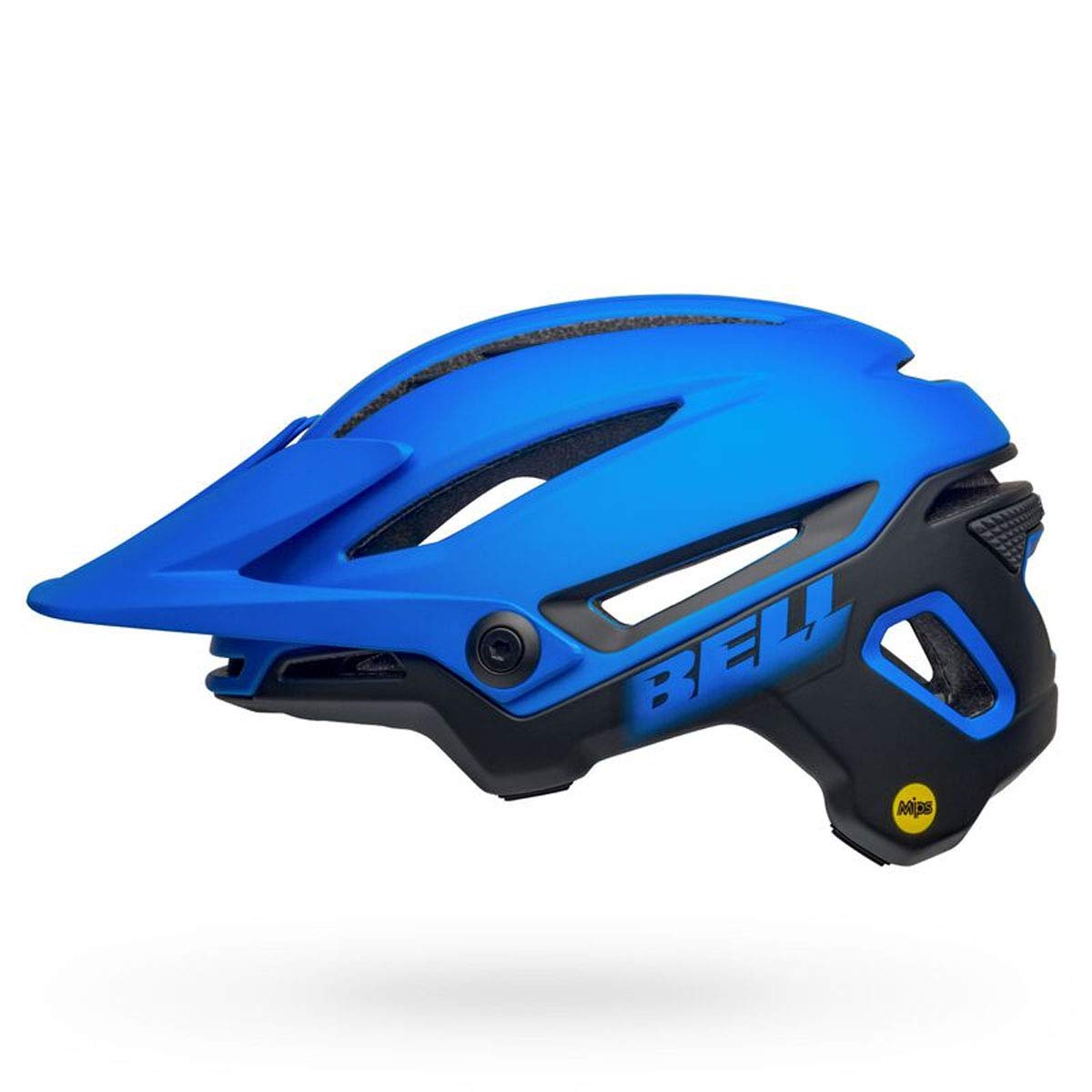
3. Bell Sixer MIPS
A trail lid with a camera mount that breaks away on impact instead of levering your head sideways.
You get 26 vents and 4 brow ports (extra front openings that push air across your forehead). That is more venting than almost anything else on this list, and it is built for riders who climb in the heat. The Float Fit Race retention ties into the MIPS liner (a low-friction layer between the shell and your head), so the fit system and the slip-plane work together. You get three-way adjustment: height, pad width, and tension.
Where the Sixer separates itself is the moulded-in camera mount. It needs no zip ties or tape, and it is engineered to snap away on impact so a mounted action cam does not act like a lever against your skull. The four-position adjustable visor handles sun angle and goggle stashing. Buyers praise the “quality click dial” — once clipped under your neck, the dial draws the webbing around your head and the helmet simply does not move, even on choppy terrain.
Watch one part: the yellow rubber MIPS retention clips are not field-replaceable, so if one fails the helmet is unusable. The plastic visor bolts are known to back out within weeks, though metal bolts fix that permanently. Compare sizes with the POC above: this shell is 10 x 8 x 8 inches and 16 ounces versus the POC’s 13.39 x 8.66 x 9.45 inches and 0.37 kg. Crash reports read the way you want: a dented shell, a cracked foam rib, and a rider who walked away.
Verdict in one line: The sixer pairs the highest vent count here with the smartest accessory mount, and it earns its place on trail-duty alone.
The maintenance reality: Those MIPS retention clips are the weak point. They are a consumable you cannot swap, so a rider who logs serious mileage should note it before committing.
Good fit for: trail riders who record their rides and want a shell that does not shift on rock gardens.
Worth pausing on: if you want a mount you can bolt on and forget about for years, the non-replaceable retention clips and plastic visor bolts are the two things to baby.
4. Giro Register MIPS II

The one-size shell built so you do not gamble on a size chart at all.
Giro’s Universal Fit sizing is the whole pitch here: instead of choosing between small, medium, and large, you get one sculpted shell with an easily-adjustable fit system, and it is designed to land right on the first try. That is the feature a casual commuter actually cares about. Its two-piece construction fuses a tough outer hard shell to a polycarbonate lower shell (the “Hardbody lower wrap”) permanently bonded to the liner, which adds durability without piling on weight.
The fit system does real work for real riders. A commute helmet gets adjusted every single day — ponytail up, hair down, hat underneath in winter — and the dial handles all of it without you re-threading anything. That is the kind of point that shows up in the feedback, described as comfortable with an easily adjustable fit that suits whatever is going on with your hair that morning.
What it is not is a weight-saving race shell. At 1.5 pounds it sits on the heavier side of this group, and the universal shell means you trade the precision of a five-size range like the POC’s for the convenience of never choosing wrong. Racing and long climbs belong to the lighter lids on this list. For city riding, errands, and a bike-share commute the trade is exactly right — and the matte colourway draws genuine compliments.
Why it earns a slot: Universal Fit removes the single biggest source of helmet returns — ordering the wrong size — and the in-mold Hardbody lower wrap gives it a finished, durable feel.
The honest ceiling: Its 1.5-pound build is heavier than the road and trail lids above, and one shell cannot match a dedicated size range for precision. That is the deal you accept for never guessing.
Built for: commuters, casual riders, and anyone who has ordered a helmet online before and had to send it back.
Look elsewhere if: you chase gram savings on long climbs or want a certified mountain shell for real trail work.
5. Giro Verce MIPS
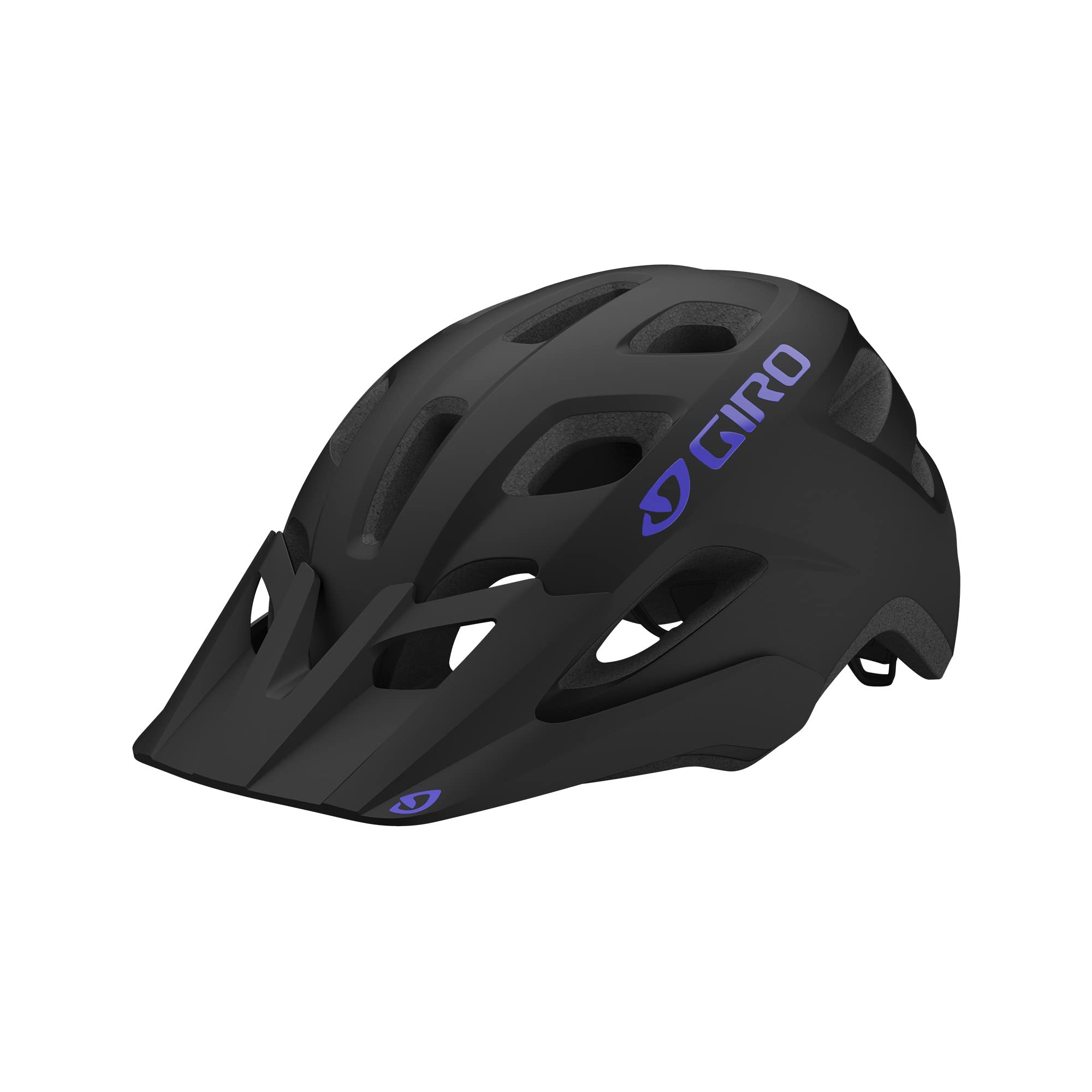
A small-head shell that disappears after twenty minutes on a long ride.
The size label on this one is the whole story: UW-50-57CM. That is a universal-women’s shell covering 50 to 57 centimetres, which is the range a lot of riders cannot find properly served anywhere else. For a head that sits at the bottom of that band, this is one of the few MIPS-equipped shells built to actually fit rather than to swallow you. The polycarbonate outer shell and polyester, nylon and foam interior round out a build that rides at 1.5 pounds.
Comfort is the other half. Riders describe it as light enough that they “can forget you have it on” on long rides, and the fit adjusts quickly with a strap that is easy to unclip and re-seat. Ventilation is decent rather than class-leading, which is fine for the road and path riding this shell is aimed at. One rider with an irregular head shape noted it still fitted comfortably and stayed secure through a full ride.
Two gripes to know. The fit runs small, so riders above the middle of the stated range should not gamble on it, and the size simply is not available for everyone. The yellow MIPS sticker also draws criticism for its look, though a reflective sticker over the top turns it into a visibility upgrade. At 4.5+ across 400+ ratings it clearly keeps most buyers happy; just treat the published range as a ceiling, not a starting point.
The fit advantage: A 50–57cm universal-women’s shell with a fully adjustable strap is a genuinely narrow brief, and it serves smaller heads far better than a stretched medium from a wider range.
Where it stops: Ventilation is moderate and the shell only reaches a certain head size — if you sit above the top of that range, this is not your lid, full stop.
A match for: smaller heads, women riders, and anyone who has worn a “small” that still floated.
Wrong pick if: your measured circumference lands near or above 57 centimetres — the range is a hard limit, not a suggestion.
6. Triple Eight Gotham MIPS

Three certifications in one shell, so it crosses between bike and skateboard without a second purchase.
Most helmets carry one safety standard. The Gotham carries three: the US CPSC standard for bicycle helmets, ASTM F1447 for recreational bicycling and roller skating, and ASTM F1492 for skateboarding and trick roller skating. Three real sizes back that up — XS/S covers 48 to 54cm, S/M covers 55 to 58cm, and L/XL covers 59 to 61cm — with a 180-day manufacturer warranty on top. If you ride a bike one week and a board the next, that combination saves you buying two lids.
The retention system is the standout. The reflective dial tightens the band to your actual head circumference instead of a generic size. It includes two sets of fit pads and a chin strap with a side-release buckle, so you can tune comfort after it arrives. Buyers praise the fit most — the pad placement and the MIPS liner work together. The tough vented ABS outer shell with its subtle brim feels like a solid upgrade over thinner skate shells.
Expect some bulk. The ABS shell that gives it durability is heavier and thicker than the injection-moulded polycarbonate shells on the mountain lids here, and the ventilation is adequate rather than generous, so it gets warm on a peak-summer skate. Put the black matte colour down as a cool-weather pick for night rides; riders who chose it over white note they regretted losing the visibility and daytime coolness. Size down if you measure near a boundary — a 58.5cm head measured into L/XL but fitted properly in S/M.
The versatility read: Three certifications plus three real size bands is the correct way for a skate helmet to handle both the bike path and the skatepark.
The trade to balance: That same tough ABS shell brings weight and modest airflow. It is a winter-and-urban shell, not a summer trail climbing helmet.
Reach for this if: you skate and cycle, or you want one certified lid that works around town and on the path.
Not the fit for: hot-weather riders and anyone who wants a vented shell for summer climbs — the ABS build is tough, not airy.
7. Smith Persist MIPS

A road shell at 310 grams that pairs with your glasses instead of fogging them up.
Two technologies share the shell here: MIPS for rotational forces, and Zonal Koroyd — a mesh of hollow tubes that crushes on impact to absorb energy while still letting air through. Smith only places it in zones rather than the whole helmet, which is why it stays light at 310 grams. That is the lightest build on this list by a clear margin against the POC’s 0.37 kg, and it is the difference between a helmet you notice on a 60-mile ride and one you forget about.
The AirEvac system is the detail that road and gravel riders feel immediately. It routes airflow so the vents work with Smith’s eyewear instead of leaving your lenses to fog, and there are 21 fixed vents (each one permanently open) pushing air through. The rear dial fine-tunes the fit without the whole helmet shifting. Riders who moved up from cheaper shells describe noticing it had vanished from their awareness after a few minutes — light, no neck strain, and the MIPS liner shifts so slightly you never feel it.
The certification line is the reassuring part: CPSC, CE EN 1078, and AS/NZS 2063, so it is legal to ride across three regions. There is no adjustable visor and no goggle clip, which is exactly what you would expect from a road-first design and exactly why trail riders should look at the POC above instead. Against the Giro Register II, this shell leads on weight and airflow but gives up the universal-fit convenience; you will need to know your circumference and pick a size.
Where it wins: Zonal Koroyd plus MIPS plus 21 open vents at 310 grams makes this one of the strongest road and gravel combinations here.
Where it is set up differently: No adjustable peak, no goggle clip. That is a road design decision, not a limitation — but it rules it out for real trail work.
Worth it for: road and gravel riders who wear glasses or sunglasses and want a shell light enough to forget.
Look past it if: your riding involves goggles, a low peak, and branches at eyebrow height — this shell was not drawn for that.
8. SMITH Vantage MIPS
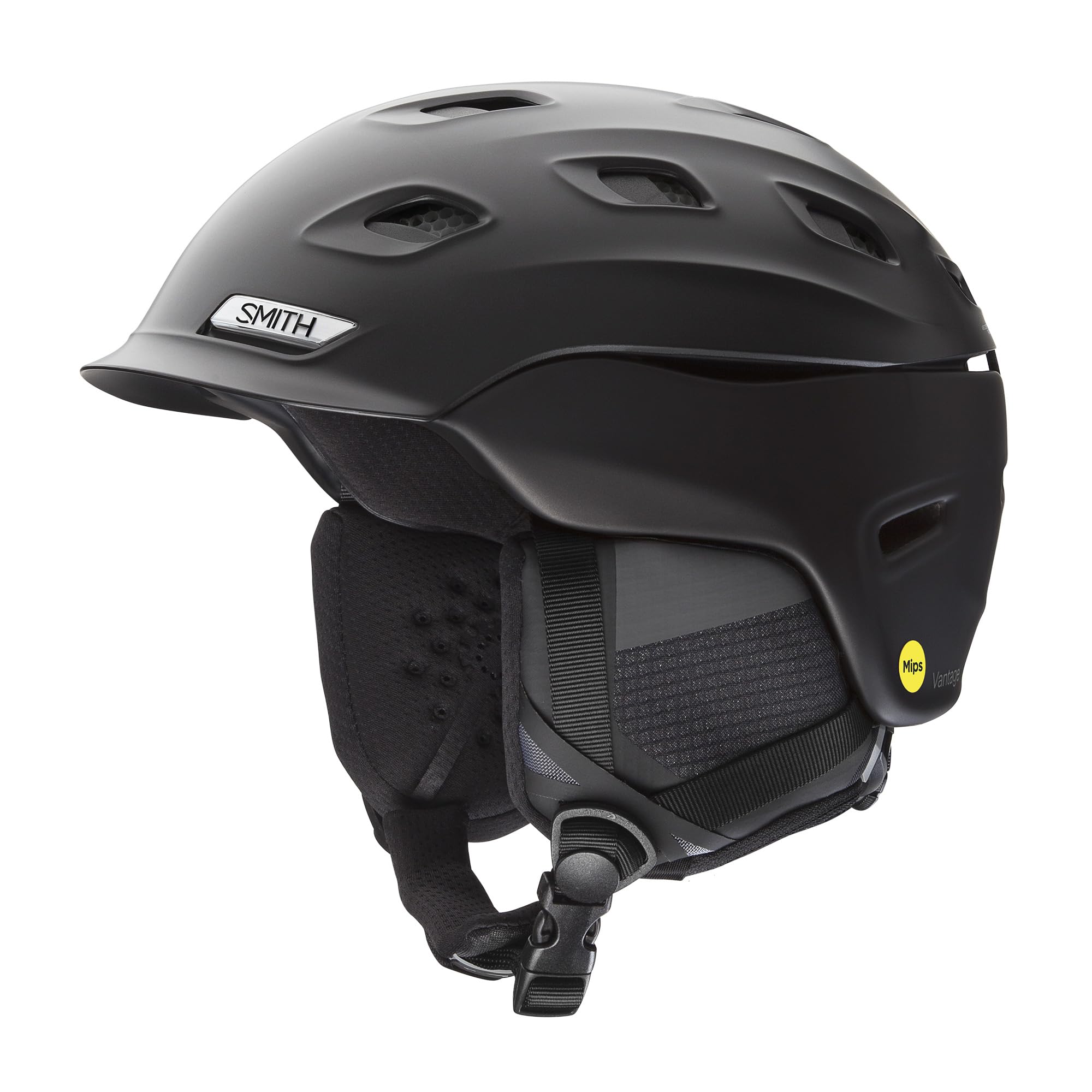
A snow helmet with a vent switch you can work with one gloved hand.
This is the cold-weather pick, and the spec that makes it one is the dual regulator climate control: 21 vents you can open and close from the front and rear adjusters with one hand. On a lift in sub-zero wind, that single-handed control is the difference between managing your temperature and fumbling at your helmet with a mitten. It carries an unusually broad certification list, covering ASTM F 2040, CE EN 1077:2007 CLASS B, CPSC, and CE EN 1078.
The BOA 360 Fit System lets you micro-adjust around your whole head with the turn of a dial, and the removable Snapfit SL2 ear pads add warmth and take audio chips. The AirEvac system integrates with Smith’s goggles the same way the Persist works with sunglasses, keeping lenses clear on snow instead of fogged. It weighs 530 g, which is roughly what a proper snow lid should — the extra mass is the ear pads and the vent mechanism doing their job in conditions no road helmet here was designed for.
Buy this one for the fit, but know the sizing quirk. It runs small, and the size chart is the recurring complaint. A head measuring 58cm that would usually be a medium or large landed in an XL, and the L/XL shell is not as roomy as its printed range implies. Order one size above what the chart suggests. Owners who did that while skiing describe a confident, comfortable fit with venting they can open or close at will. Owners call the shell comfortable and durable, but the size chart runs tight, so order up.
The winter case: One-handed vent control, ear pads with audio support, and a BOA dial that wraps your whole head make this a proper snow helmet, not a repurposed bike shell.
The measurement caveat: The size chart runs tight and is the one thing to plan for. Sizings run small across the board, so going up one is the practical advice.
Well suited to: skiers and snowboarders who want on-the-move vent control and goggle integration in one shell.
Choose differently if: you need a shell for summer trail or road riding — this one is built for cold, and its weight and ear pads reflect that.
9. Bell MX-9 Adventure MIPS Dual Sport Helmet

One shell that goes from singletrack to blacktop by swapping or removing its shield.
Bell built the MX-9 Adventure to cover both surfaces without a second helmet. The integrated clear faceshield is anti-fog and anti-scratch, it flips up with enough room underneath for goggles in rough conditions, and it can come off entirely. The adjustable visor comes off too if you want a plain street look. It carries DOT and ECE22.06 alongside FMVSS 218, which is a motorcycle-grade set of certifications rather than a bicycle standard, so this is a lid built for road speed.
Inside, the Velocity Flow ventilation moves air through the shell, and the removable, washable, anti-microbial liner (a fabric liner treated to resist odour) keeps a sweaty helmet from becoming a permanent problem. Buyers keep coming back to the value: the rare combination of a convertible shield, MIPS, and motorcycle certification at this level is the reason riders compare it to helmets that cost far more and still choose it. The dual-sport build extends that value across a full day, and a long-riding owner finds it comfortable enough to wear without the usual end-of-day fatigue.
Plan around two things. It runs heavy at 3.75 pounds, and the visor catches crosswind, so long freeway stretches are not its natural habitat. Riders describe it as well suited to scooter or moderate-speed runs, while accepting the wind noise that comes with a peaked, vented shell. The visor also fogs in cold and does not clear at cruising speed, so a Pinlock insert is a sensible add-on. The supplied cheek pads can feel tight at first, and Bell sells smaller ones that fix it. Weigh those against the price and the certification list, and it is hard to argue with the deal.
Best reason to buy: Convertible shield plus DOT, ECE22.06, and FMVSS 218 certification is a lot of dual-sport capability in one shell.
The honest drawback: At 3.75 pounds with a peaked visor catching wind, it is happiest at moderate speeds and in cooler weather rather than long freeway hauls.
Pick this: for dual-sport, adventure, and street-scooter riders who want one certified helmet that crosses surfaces.
Steer away if: you plan long fast freeway trips and want a quiet, featherweight shell — the visor catch and the 3.75-pound weight will wear on you.
Know the Specs
What MIPS actually is
MIPS stands for Multi-directional Impact Protection System — a low-friction layer between the shell and your head that lets the helmet rotate slightly during an angled impact. The goal is to cut the rotational force that reaches your brain on angled impacts. It only works if the helmet fits snugly, because a loose shell lets your head rattle around inside it and defeats the slip-plane before it even engages.
Vent count and airflow channels
Vent count tells you how much air the shell is designed to move. A lid with 26 vents and four brow ports is built for hot climbing, while one with nine intake and four exhaust vents is built for dirt where shell strength matters more than airflow. More vents is not automatically better — it depends on how hard you are working and how hot it gets where you ride.
Certifications, in plain English
DOT and FMVSS 218 are motorcycle standards, CPSC covers bicycle helmets for riders age five and older, and ECE22.06 is a European motorcycle standard. A helmet carrying only bicycle standards is far lighter than one carrying motorcycle standards. Buy to the speed and surface you actually ride.
Closure style and fit systems
A double-ring closure threads two D-rings and is what motorcycles and racing expect. A side-release buckle is quicker to take on and off. Fit systems — a rear dial, a BOA 360 wrap, or a universal five-size shell — change how precisely the helmet grips your head. Measure in centimetres and match it to the range the maker publishes.
Common Questions
Does a MIPS helmet fit the same as a regular helmet?
How do I measure my head for a helmet in centimetres?
Is DOT certification better than CPSC for a bike helmet?
Can I use a dual sport helmet for mountain biking?
Why do some MIPS helmets run small?
Should I replace my helmet after a crash?
Is a heavier helmet automatically safer?
Can I wash the padding inside a MIPS helmet?
Does a MIPS liner work with goggles and sunglasses?
What does a double-ring closure like the Fox V Core change?
The Bottom Line
For most riders, the mips helmet winner is the Fox Racing V Core MIPS because it carries motorcycle-grade FMVSS 218 and DOT certification at a mid-range cost — a real safety standard, not marketing. If you pedal mountain trails and want the deepest head coverage with the lightest shell, grab the POC Tectal Race MIPS at 0.37 kg. And for road or gravel miles where fogged sunglasses are the daily battle, the Smith Persist MIPS at 310 g is the one to reach for.
One honest note on the crowd favourite: the Fox holds 4.5+ stars across 500+ ratings, and it earns that standing because it delivers certified motorcycle-grade protection where most buyers expect to pay premium-tier money. That is the reason to buy it, and it is the reason to measure your head before you click.
How we choose
We do not accept paid placement. Every pick is matched to a real buyer and a real use-case; we do not hands-on test units.
Sources
Specifications: manufacturer listings and product documentation. Review insights: verified customer reviews, as of October 2026. Pricing: not shown on this page (it changes often); check the current price via the retailer link.
As an Amazon Associate, Aappliancez earns from qualifying purchases. This does not affect which products we feature.