Disclosure: Some links in this post are affiliate links. As an Amazon Associate I earn from qualifying purchases, at no extra cost to you. Learn more
Specs are compiled from manufacturer listings and verified buyer reviews and can change over time — please confirm the key details on the product page before buying.
If you are managing blood sugar, the grain on your plate matters as much as the portion size. Millet is a small, round gluten-free grain with a lower glycemic impact than white rice for many people, which is why it appears on diabetic-friendly shopping lists. The picks below are the ones worth your pantry space — sorted by how they actually cook, taste, and hold up in everyday meals.
This guide is built by comparing the manufacturers’ published specifications and the patterns across verified customer reviews, so you get each pick’s real strengths and trade-offs instead of marketing spin.
Some millets come as whole hulled grains you boil like rice, while others are milled into flour for baking. Whole hulled millet suits boiling and pilafs; millet flour suits baking. This breakdown of the millet for diabetes shelf covers both, so you can pick the bag that actually gets used.
Top Picks

How To Choose The Best Millet for Diabetes
You do not need a nutrition degree to pick well here. You need to know what form of millet you are buying, what is printed on the label, and how you plan to cook it. Form, label figures, and packaging are the three decisions that matter.
Whole Grain Or Flour
Whole hulled millet is the seed with the outer husk removed, and you cook it in water the way you would rice. It keeps its shape, so it works in salads, pilafs, and as a rice swap at dinner. Millet flour is that same grain ground fine, and it goes into breads, muffins, and pancakes instead. If you want a grain you can eat as a side dish, buy whole. If you bake, buy flour.
What The Label Should Tell You
Look for the words gluten free and whole grain, and check whether the bag states a protein or fiber figure per serving. A flour that lists 11 grams of protein and 9 grams of dietary fiber per serving is giving you a real number to compare against, not a vague health claim. Organic certification and non-GMO verification are also worth checking if those matter to you. None of these guarantee a specific effect on your blood sugar — they tell you what is actually in the bag.
Packaging And Freshness
Whole grains go stale and turn bitter over time, so packaging is not a minor detail. Resealable bags let you open, scoop, and close without transferring to another container. Multi-packs of smaller bags keep the portion you are not using sealed until you need it. Paper packaging is a newer option some buyers specifically seek out for environmental reasons, though it needs a dry spot in the pantry once opened.
Side-by-Side Comparison
| Model | Best For | Form | Package Size | Key Label Detail | Amazon |
|---|---|---|---|---|---|
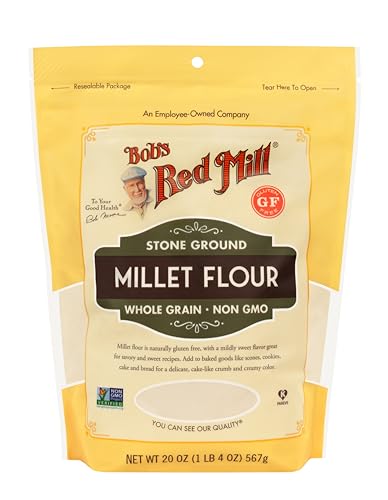
| Bob’s Red Mill Stone Ground Whole Grain Millet Flour★ Best Overall | Gluten-free baking | Flour | 20 oz (Pack of 4) | Stone ground, whole grain | Amazon |
| Relative Foods Organic Hulled MilletMost Versatile | Everyday rice swap | Whole hulled grain | 5 lb (80 oz) | No desiccant or glyphosate in drying | Amazon |
| Relative Foods Organic Millet Flour | Blending into flour mixes | Flour | 3 lb (48 oz) | 11 g protein, 9 g fiber per serving | Amazon |
| Grand Teton Ancient Grains White Millet | Paper-packaging shoppers | Whole hulled grain | 2.5 lb (40 oz) | USDA-certified organic, biodegradable paper bag | Amazon |
| Bob’s Red Mill Millet Hulled | Stocking the pantry | Whole hulled grain | 28 oz (Pack of 4, 112 oz total) | Kosher certified, trans fat free | Amazon |
Detailed Reviews
1. Bob’s Red Mill Millet Flour, 20 Ounce (Pack of 4)
Our pick — 4.5+★ from 1,000+ verified ratings; the strongest balance of quality and price.
The baker’s millet — a fine stone-ground flour that swaps into bread and muffin recipes without a fight.
When you are cooking for blood sugar, the flour you bake with is the hardest piece to replace. Bob’s Red Mill solves that with a stone-ground whole grain millet flour that behaves more like a wheat flour than most gluten-free alternatives — smooth in the bowl, mild in flavor, and light in color so it does not darken your finished loaf. It is the top pick here because it works in breads, muffins, and pancakes.
You get four resealable bags of about 1.5 pounds each, so you can open one bag, bake from it, and keep the other three sealed and fresh until you need them. Buyers report the packaging keeps the flour from going stale between sessions, and one owner summed it up simply: “Great taste, not bitter.” That matters — millet flour can turn harsh if it sits, and the sealed bags keep it sweet.
The brand runs a separate 100% gluten free facility and batch tests with an ELISA Gluten Assay test, which is a lab check that confirms a product stays under the gluten threshold. It is Non-GMO Project Verified and vegan. This one holds a 4.5+ star rating across 1,000+ ratings, and what wins people over most is the overall quality of the grind itself.
Where It Delivers
- Four resealable bags of about 1.5 lb each keep the flour fresh between bakes
- Stone ground for a smoother texture closer to almond flour than gritty alternatives
- Batch tested in a dedicated gluten free facility with an ELISA Gluten Assay test
- Non-GMO Project Verified and vegan
Where It Costs You
- The recurring note is price — value for money is the one thing buyers are split on
- You need to store it dry; flour absorbs pantry moisture faster than whole grain
Grab this if: you bake gluten-free bread, muffins, or cinnamon rolls and want a flour that does not need babysitting.
Think twice if: you plan to eat millet as a rice-style side dish — this is ground flour and will not hold grain shape in a pilaf.
2. Relative Foods Organic Hulled Millet, Gluten-Free, 5 lb
The whole-grain workhorse — 5 lb of hulled millet that goes from breakfast porridge to dinner rice swap.
For breakfast porridge, this 5 lb bag of hulled millet is the one to start with. The Relative Foods hulled millet is 5 lb of whole grain that cooks up creamy like mashed potatoes or fluffy like rice — your call on the water ratio. Owners eat it daily with fruit and nuts, blend it into sweet potato soup, and use it in place of rice across most of their meals. The people who have stuck with it the longest describe three straight years of monthly reorders, which tells you plenty about how it holds up.
Texture is the thing that earns the loyalty here, and it makes sense — hulled millet has a natural crunch that keeps a bowl from feeling like paste. The grain is a drought-tolerant crop that serves as a stand-in for rice or potatoes, and it is packed in an allergen-free facility. The bag is resealable, so you scoop what you need and seal the rest back up rather than decanting into a jar.
Two things do the heavy lifting in customer feedback: how the texture holds when cooked and how easy the grain is to prepare, with cleanliness also drawing steady praise.
The flavor surprise: millet has a nutty character that most people do not expect from a grain billed as a health food — one description puts it as “delightfully nutty-flavored” and quick to cook.
Be ready for: you have to cook it. There is no shortcut here, so set aside the simmer time your method needs.
Reach for this if: you want a single bag that handles porridge, salads, stir fry, and a rice substitution all week.
Pass on it if: you are looking for something to bake with — this is unground grain and needs milling or cooking first.
3. Relative Foods Organic Millet Flour, 3 lb

The label-reader’s flour — real protein and fiber numbers printed right on the bag for anyone tracking intake.
Most gluten-free flours tell you almost nothing. This one leads with 11 grams of protein and 9 grams of dietary fiber per serving, which is the kind of printed detail that makes it easier to plan a meal when you are watching what you eat. It is Proso millet grown on farms in South Dakota, Wyoming, Colorado, and Nebraska, then milled and packaged in the USA.
The manufacturer advises using 20-25% of millet flour when blending with other gluten-free flours like rice flour, potato starch, and sorghum flour. That blend guidance is genuinely useful — it tells you this is a mix-in flour rather than a one-to-one wheat replacement, and it keeps you from baking a dense brick on the first try. What buyers praise most is the overall quality of the flour, and they back it up with results: sourdough loaves that come out looking right, cinnamon rolls that pass for the real thing, and even pan-fried trout that gets a clean, easy coating.
It is packaged in a vegan, allergen-free facility and comes with a money back guarantee. Compared with the 5 lb whole hulled millet above, this bag is 3 lb — smaller, because a little flour goes further in a recipe than a scoop of grain does in a bowl.
The blend rule: stick near 20-25% of the mix and pair it with lighter flours; use more and the crumb gets heavy.
Best for: cooks who build their own gluten-free flour blends and care about what the number panel says.
Not the one if: you want a single flour to swap straight into any recipe — this is designed to be part of a blend.
4. Grand Teton Ancient Grains White Millet, 2.5 Pounds

Grown by a farming family and sealed in paper — the organic choice for anyone avoiding plastic in the pantry.
Not everyone wants another plastic bag in the cupboard, and this one answers that directly. Grand Teton Ancient Grains is a family of sixth-generation farmers, and they pack this hulled millet in sturdy biodegradable paper bags they stich shut after filling — no plastic contact at all. It is 2.5 lb of food-grade 100% USDA-certified organic millet, grown with no pesticides, synthetic chemicals, or GMOs.
The grain itself is naturally gluten free with a mild, slightly nutty flavor and a hint of sweetness, which is why it works across such a wide range of dishes. Owners use it as a rice substitute, simmer it into a creamy porridge, add it to soups and salads, and grind it into flour for crackers. The Ezekiel bread made with it gets singled out in feedback, and the quality of the grain is the standout. For someone building a plate around a lower-impact grain, this is a very clean option.
There is one honest trade-off: this is the smallest bag in the lineup at 2.5 lb, so a household that eats grain daily will finish it faster than the 5 lb option above. The paper bag also needs a dry pantry spot once it is opened, since it will not reseal the way a plastic zip top does.
what separates it: paper packaging that is recyclable and keeps the grain out of contact with plastic until you open it.
Pick this one if: organic certification and plastic-free packaging rank high on your list.
Look elsewhere if: you go through millet quickly and want the largest bag for the fewest trips — this is the smallest package here.
5. Bob’s Red Mill Millet Hulled, 28-Ounce (Pack of 4)

Four 28-ounce bags of hulled millet — the pantry-stocking pick when you want to stop reordering every month.
This is the volume play. You get four separate 28-ounce bags for a total of 112 ounces of all-natural hulled millet — kosher certified, trans fat free, and cholesterol free. If you have already decided millet belongs in your rotation, this is the most practical way to buy it, because the unopened bags sit sealed on the shelf while you work through the one in use.
What people respond to most is the flavor, and the texture is a close second. Buyers describe it as similar to couscous but surprisingly crunchy, which makes it work in cold salads as well as hot bowls. It is easy to prepare and works as a gluten-free grain throughout the week. One condensed review notes it sidesteps both rice and pasta concerns — no gluten, no arsenic worry from rice — and comes in cheaper than quinoa, which is a fair way to frame the value of a pantry staple this size.
Compared with the 5 lb Relative Foods bag above, this works out to 112 ounces total across four packages, so it is the bigger commitment. If you are still figuring out whether you like millet, start smaller — this pack assumes you are already sold.
Why It Works
- Four separate 28-ounce bags mean only one is open at a time, so the rest stay fresh
- Couscous-like texture with a noticeable crunch that holds up in cold salads
- All-natural, kosher certified, trans fat free, and cholesterol free
Worth Knowing
- 112 ounces total is a lot to commit to before you know whether millet suits your cooking
- Four bags take up real shelf or pantry space
Suits you if: millet is already a weekly staple and you would rather buy in bulk than reorder constantly.
Start smaller if: you have never cooked millet — try a single bag first and come back once you know your favorite way to serve it.
Know the Specs
Whole Hulled Grain vs Flour
Hulled millet is the seed with the outer husk removed, and you boil it in water the way you would cook rice. It keeps its shape, which is what makes it work in pilafs and salads. Millet flour is that same grain ground fine and is meant for baking, usually blended with other flours rather than used alone. Pick the form based on whether your kitchen leans toward cooking or baking, not on which sounds healthier — both come from the same grain.
Protein and Fiber Per Serving
When you are managing blood sugar, the number panel on the bag tells you more than the front label does. A flour listing 11 grams of protein and 9 grams of dietary fiber per serving is giving you concrete figures you can plan around. Whole grains generally carry their own nutrient load, but flour is where the printed numbers tend to be most specific, so it is worth flipping the package over before you commit to a large bag.
Texture When Cooked
Millet can land anywhere from creamy to fluffy depending on how much water you use and how long you simmer it. Less water and a shorter cook gives you separate, rice-like grains. More water and a longer cook gives you a soft porridge. Most people find the fluffy result easier to fold into dinner plates, and the creamy version works better for breakfast. Either way, expect a light nutty flavor with a faint sweetness underneath.
Packaging and Shelf Life
Whole grains go stale and can turn bitter over months on the shelf, so how the bag closes matters. Resealable plastic bags let you scoop and seal without decanting. Multi-packs of smaller sealed bags keep the unused portion protected until you need it. Paper packaging is a newer option some buyers seek out for environmental reasons, but once opened it needs a dry spot and a clip or container to stay fresh.
Common Questions
Is millet a good grain choice for someone managing blood sugar?
Should I buy whole hulled millet or millet flour?
How do I cook millet so it turns out fluffy instead of sticky?
How much millet flour should I add to a gluten-free blend?
Does millet taste bitter?
How should I store a large bag of millet once it is open?
What is the difference between hulled millet and regular millet?
Can I use millet in place of rice in everyday meals?
Is millet naturally gluten free?
Which millet form lasts longest in the pantry?
The Bottom Line
For most people building meals around blood sugar, the millet for diabetes winner is the Bob’s Red Mill Stone Ground Whole Grain Millet Flour because it does the most jobs well — stone ground, packaged in four resealable bags that stay fresh, and batch tested in a dedicated gluten free facility, with the quality of the grind as its most consistent strength. If you want a whole grain for porridge and rice swaps, grab the Relative Foods Organic Hulled Millet, which brings a nutty texture and a 5 lb bag to the table. And for a blend-in flour with printed protein and fiber figures, the Relative Foods Organic Millet Flour is the one to reach for. Whichever you choose, start with a single bag, find your favorite way to cook it, then buy in the size that matches how often it lands on your plate.
How we choose
We do not accept paid placement. Every pick is matched to a real buyer and a real use-case; we do not hands-on test units.
Sources
Specifications: manufacturer listings and product documentation. Review insights: verified customer reviews, as of October 2026. Pricing: not shown on this page (it changes often); check the current price via the retailer link.
As an Amazon Associate, Aappliancez earns from qualifying purchases. This does not affect which products we feature.