Disclosure: Some links in this post are affiliate links. As an Amazon Associate I earn from qualifying purchases, at no extra cost to you. Learn more
Specs are compiled from manufacturer listings and verified buyer reviews and can change over time — please confirm the key details on the product page before buying.
You want yogurt that sets thick in the jar, not a runny puddle you have to strain twice — and the milk you start with decides most of that. The short answer: a whole milk with real butterfat and no gums gives your cultures the fat and protein they need. Ultra-pasteurized (UHT — milk heated hard so it keeps on a shelf) or powdered whole milk works as well as fresh, as long as you know what it does to the culture.
This guide is built by comparing the manufacturers’ published specifications and the patterns across verified customer reviews, so you get each pick’s real strengths and trade-offs instead of marketing spin.
Below you get five whole-milk options that actually set — powder and shelf-stable — with the butterfat, protein and shelf-life numbers that change your results. If you want the widest margin for error in a first batch, the picks here cover what makes the milk for making yogurt worth buying.
Top Picks

How To Choose Milk For Making Yogurt
The milk you choose does three jobs at once: it feeds the cultures, it supplies the fat that makes yogurt taste rich, and it supplies the protein that builds the curd. Get fat, protein and culture right and the milk gels into a spoonable curd without added thickeners. Get them wrong and you get whey pooling on top.
Butterfat decides how rich the jar tastes
Whole milk carries more butterfat than skim, and butterfat is what makes the set curd taste rich instead of sharp. Powdered whole milk reconstitutes to a set milk-fat level, so you know what you are getting before you start. Look for the percentage on the label and treat it as the first box to tick.
Protein builds the set
The cultures turn lactose into acid, and that acid makes the protein clump into a gel. More protein per cup means a firmer gel and less straining afterward. Shelf-stable whole milk that lists protein per cup gives you a way to compare cartons without guessing.
Pasteurization level changes the handling, not the culture
UHT (ultra-high temperature) milk is heated hotter and longer than standard pasteurized milk, which is why it can sit on a shelf unopened. It still cultures fine — plenty of home yogurt makers use it because they can stock the pantry. Once a carton is open, though, it goes in the fridge, so plan on using it within the window the brand states.
Powder versus liquid
Powder wins on shelf life and on batch consistency: you measure, you mix, you culture. Liquid shelf-stable cartons win on convenience and on drinking the leftovers. If you culture weekly, a 2500-gram can of powder outlasts a six-pack of cartons. If you culture monthly, sealed UHT cartons sit unopened without going stale.
Side-by-Side Comparison
| Model | Best For | Form & Milk Fat | Total Volume | Shelf Life Signal | Amazon |
|---|---|---|---|---|---|
| Peak Dry Whole Milk Powder★ Best Overall | Big-batch powder users | Powder, 3.5% milk fat reconstituted | 88.18 Ounce | Sealed can, freezer-friendly | Amazon |
| Schreiber Shelf Stable Whole MilkMost Versatile | Pantry backup and small fridges | Liquid UHT, whole | 192 Fluid Ounces | No refrigeration until opened | Amazon |
| Prairie Farms Whole Milk UHT | Yogurt makers who want liquid milk | Liquid UHT, whole, 8g protein per cup | 128 Fluid Ounces | Room temp unopened, 7 days after opening | Amazon |
| Darigold Shelf Stable Whole Milk | Single-serve and small households | Liquid UHT, whole, 15g protein per bottle | 168 Fluid Ounces | No refrigeration needed | Amazon |
| Medallion Brand Whole Milk Powder | Baking, bread and small batches | Powder, 3.25% butterfat reconstituted | 17.64 Ounce | Dry powder, resealable | Amazon |
Detailed Reviews
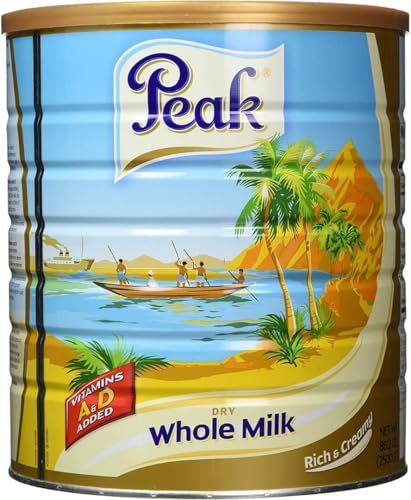
1. Peak Dry Whole Milk Powder, 2500 Gram
Our pick — 4.5+★ from 450+ verified ratings; the strongest balance of quality and price.
A 2500-gram can of whole milk powder that turns water into a yogurt base worth culturing.
If you make yogurt on a schedule, powder removes the single biggest variable: the milk going off before you get to it. This can holds 2500 grams and 88.18 ounces — a lot of batches — and it is a product of Holland that reconstitutes to 3.5% milk fat. That is the same fat level as whole liquid milk, so your cultures get the fat they need to build a creamy curd. Measuring is simple: it mixes into cold or hot water, so you can start with water straight from the tap.
Where it earns its place at the top is consistency and flavor. What wins people over is the quality itself — that is the trait owners come back to again and again — and the taste reads sweeter and richer than a lot of liquid options. As owners put it, one scoop per 8oz cup adds “thickness/creaminess” and mixes up “milkshake-like” when you go strong. That extra body is exactly what you want in a yogurt jar. The powder also carries added vitamins A and D, so you are not losing the fortification you would get from a carton.
The honest catch is texture if you rush it. Mix into room-temperature water with a whisk and it dissolves clean without a grainy mouthfeel, but dump it into cold water and stir half-heartedly and you will find lumps that survive into the batch. It is also a bigger outlay than a single carton, so it makes most sense if you will work through a can. The one thing to know is that it is a specialty item — you will not find it on a supermarket shelf next to the fresh milk, so plan your reorders.
On volume, compare it against the Schreiber six-pack: this can delivers 88.18 ounces of dry powder against 192 fluid ounces of ready-mixed milk. So the cartons give you more finished liquid per order, while the powder gives you a base you mix to your own strength. If you want control over richness, the powder wins.
What makes it the front-runner
- Reconstitutes to 3.5% milk fat — real whole-milk richness for the cultures
- 2500 grams / 88.18 ounces stretches across many yogurt batches
- Mixes into cold or hot water, so no stove step is required
- Added vitamins A and D keep the fortification of a carton
Where it asks more of you
- Whisk it into room-temp water or you get lumps in the batch
- Not stocked in most supermarkets, so reordering takes planning
- Larger upfront outlay than buying one carton at a time
Go for it if: you culture weekly and want a base you can measure to a consistent strength every time.
Think twice if: you make one small jar a month — a carton will waste less.
2. Schreiber Shelf Stable Milk 6 Pack
Six 32-ounce cartons you can stash in a cupboard and culture whenever the mood hits.
If your yogurt habit is irregular — a batch here, a batch there — this is the format that stops wasting milk. The six-pack totals 192 fluid ounces, and the cartons are pasteurized at a high temperature so unopened boxes need no refrigeration at all. You keep them in the pantry, pull one when you are ready, and culture it. Each 32-ounce carton is 100% real Grade A whole milk with no additives or preservatives, and it is Kosher.
Taste is what carries this pick. Buyers consistently describe it as tasting like regular whole milk, and having it on hand without a fridge run is the whole point. For yogurt, the “no sour milk” factor is the real win — as buyers report, “Since I started using this, I have not had sour milk.” That means your starter and your base are always ready when you are.
Neither points at a defect — UHT milk simply tastes different to some palates, and in yogurt that difference is mostly buried under acidity and culture tang. Worth noting: this is the highest-volume option here, so it suits a household that will finish a carton within a few days of opening.
Pantry math: 192 fluid ounces across six cartons is more finished milk than the Prairie Farms four-pack delivers at 128 fluid ounces, and none of it needs fridge space until you open a box.
One caution: check what arrives. A few orders have turned up as the wrong milk variety entirely, so verify the label before you culture.
Best fit: dorm rooms, small fridges, and households that culture in bursts and want milk waiting on the shelf.
The limitation: it is a pricier way to buy milk than a fresh jug, so heavy daily drinkers may find it expensive.
3. Prairie Farms Whole Milk Shelf Stable
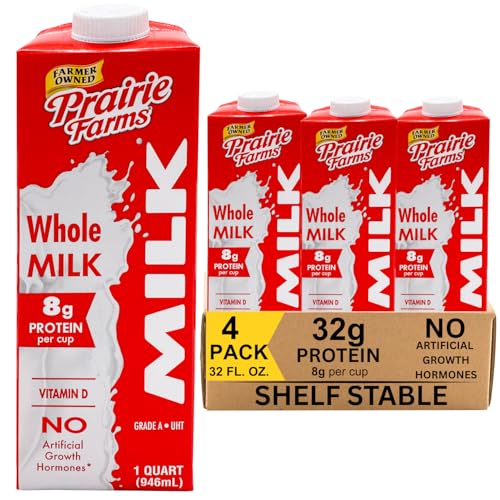
The carton that home yogurt makers keep coming back to, because UHT milk sets reliably.
Start here if you are culturing your first jars and want a liquid milk rather than a powder. Each serving carries 8g of protein per cup plus calcium, potassium, and vitamins A and D, and it is Grade A homogenized whole milk. The protein is what forms the gel, so you get a firmer set than a skim base gives you. The four-pack totals 128 fluid ounces and weighs 9.15 pounds — a lot heavier than the Schreiber six-pack’s 2 pounds — so plan on carrying it in from the porch rather than tucking it under one arm.
It earns a yogurt-specific label for a simple reason: UHT milk has already been heated hard, so its proteins are primed for culturing. Owners who make yogurt at home report it “works great for making homemade yogurt” with “nice results.” What most people praise is the taste, followed closely by how long it keeps unopened on a shelf. Unopened cartons sit at room temperature without losing quality; once you open one, it goes in the fridge and gets used within 7 days, so time your batch accordingly.
Be honest about the flavor profile. UHT milk leans slightly toward evaporated milk rather than fresh creamy milk, and a few drinkers find the texture a little off. In a cultured yogurt that note mostly disappears, but if you also drink the milk straight, taste it cold. It is gluten free, Kosher, preservative and hormone free, and made in the USA by a farmer-owned cooperative.
Yogurt-first reasoning: 8g protein per cup plus a UHT process is the combination that gets you a set curd with less straining.
Fair warning: the value question is mixed — plenty find it a fair deal, others call it pricey, and a damaged-box shipment is possible.
Reach for this if: you want a liquid whole milk that has a track record of setting homemade yogurt.
Look elsewhere if: you need the milk to drink fresh and creamy on its own — that is not what UHT does best.
4. Darigold Shelf Stable Whole Milk, 15g Protein (14oz, 12ct)
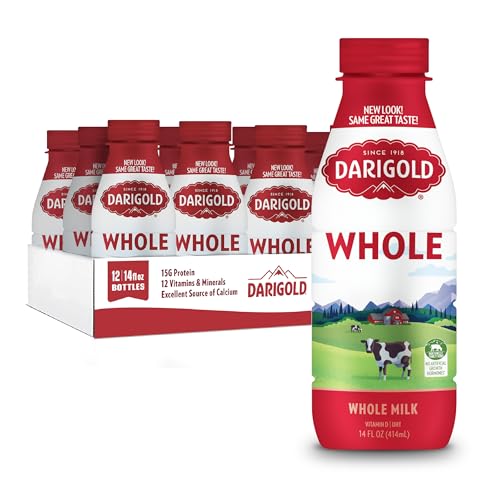
Twelve single-serve bottles that let you culture a small jar without opening a quart.
Small households get the most from this one. Twelve 14-ounce bottles total 168 fluid ounces, and each bottle packs 15g of protein plus vitamin D, calcium and potassium. The bottle size is the feature: you open exactly what you need for one batch of yogurt, and nothing sits half-used in the fridge turning sour. For anyone living solo or making a single jar at a time, that is a cleaner workflow than a quart carton.
Owners tend to describe the taste as close to fresh milk when it is cold, and they like that it needs no refrigeration before opening. It holds up in a lunch bag, chills fast in a freezer, and pours well over ice if you want it cold in a hurry. The milk comes from cows not treated with the artificial growth hormone rbST. The cap is the one recurring annoyance — it can be extremely tight, tight enough that a few people reach for pliers on the first open.
Where this pick slots in for yogurt is portion control. Because each bottle is a fixed 14 ounces, you can pitch one bottle per small batch and keep the math simple. The flavor does read a touch different from fresh — a slight caramel note is the common description — and drinking it very cold hides that. Skip this one if you culture large batches; the Prairie Farms four-pack gives you 128 fluid ounces in bigger pours, while these 14-ounce bottles are built for one jar at a time.
Why it works: a 14-ounce bottle is roughly one small yogurt batch, so nothing is left over to spoil.
Small snag: the caps are very tight from the start — grip them firmly and expect a fight on the first bottle.
Suits you if: you live alone, culture single jars, and want a backup supply that never spoils.
Not for you if: you make yogurt by the quart and would rather pour from one big carton.
5. Medallion Brand Whole Milk Powder 500g
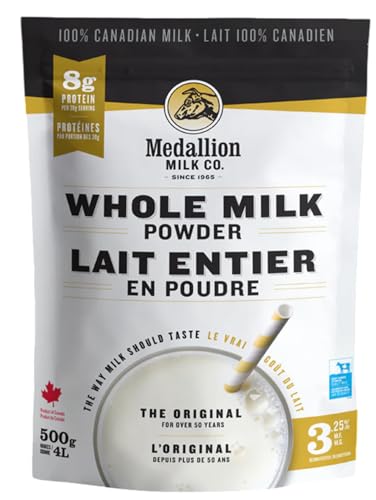
A Canadian whole-milk powder that bakes beautifully and cultures in small test batches.
While the Peak can is built for volume, this 500-gram bag is built for baking and for trying things out. It reconstitutes to 3.25% butterfat, which is genuine whole-milk richness, and it is dried milk from Manitoba, Canada, free of antibiotics and with no rbST or rBGH. The label positions it for baking, bread making, and drinking, and for anyone whose yogurt plans share counter space with bread and muffins, that versatility earns it a spot.
Texture is where it shines. Read the instructions and it mixes well; go off-script and you get clumps. For yogurt, the smaller bag is a smart way to test whether a powdered base suits your process before committing to a bigger can, and 3.25% butterfat gives cultures enough fat to build a decent curd. It is also one of the few options here explicitly made without the growth hormones, which some buyers look for.
Two practical notes before you buy. This is the smallest volume on the list at 17.64 ounces, so compare it to the Peak’s 88.18 ounces if you plan to culture often — the Medallion is a test-and-bake size, the Peak is a supply. And shipping has been inconsistent: a few bags arrived leaking or spoiled, and there is no return on a damaged delivery for some orders, so inspect the seal as soon as it lands. Customer feedback is broadly favorable on taste — most say it beats instant milk and lands close to fresh.
The kitchen crossover: 3.25% butterfat and no rbST or rBGH make it a natural for breads and baked goods as well as cultured batches.
The honest limit: the 500-gram bag is small for regular yogurt making — buy it to try, not to stock.
Worth it for: bakers who want a whole-milk powder that pulls double duty in bread and a small yogurt trial.
Skip if: you need a bulk base — the larger can covers far more batches.
Know the Specs
Butterfat Percentage
Butterfat is the fat in milk, and it is what makes yogurt taste rich rather than sharp. A powder that reconstitutes to 3.5% milk fat gives you the same fat level as whole liquid milk. A 3.25% butterfat powder lands slightly lower but still whole-milk territory. More fat means a creamier curd and less whey separation. Lower-fat milk will still culture, but you will likely strain it to get body.
Protein Per Serving
Protein is the scaffolding of yogurt. The cultures produce acid, the acid makes protein clump into a gel, and that gel is your set. A milk listing 8g of protein per cup, or 15g of protein per bottle, gives you a readable way to compare bases. Higher protein generally means a firmer set and less straining. If your yogurt sets loose, check protein per cup on the label before changing anything else.
Ultra-Pasteurization (UHT)
UHT stands for ultra-high temperature — the milk is heated hotter than standard pasteurization so it can sit unopened at room temperature. The upside for yogurt makers is that UHT proteins are already primed, and many report reliable sets from it. The trade-off is flavor: UHT milk can lean slightly toward evaporated milk. Once opened, UHT milk must be refrigerated and used within the window the brand states — Prairie Farms specifies 7 days.
Powder vs. Liquid Volume
Powdered milk is measured dry and mixed to your own strength, so a 2500-gram can or a 500-gram bag goes further than the number suggests once you add water. Liquid shelf-stable cartons tell you the finished volume directly in fluid ounces. Powder lets you mix to your own strength and keeps for months; liquid cartons pour straight into the pot and the leftovers are drinkable. Pick the format by your culturing cadence: weekly favors powder, occasional favors cartons.
Common Questions
Can you use UHT shelf-stable milk to make yogurt?
Is whole milk better than skim for making yogurt?
Can you make yogurt from powdered milk?
How much protein should the milk have for thick yogurt?
Does shelf-stable milk need refrigeration for yogurt making?
Why did my yogurt come out runny?
How long does the milk last after opening for a yogurt batch?
Can you mix powdered and liquid milk in a yogurt batch?
Is hormone-free milk better for making yogurt?
How much milk do I need for one batch of yogurt?
The Bottom Line
For most people making yogurt at home, the Peak Dry Whole Milk Powder is the one to buy: it reconstitutes to 3.5% milk fat, it measures to a consistent strength every batch, and it does not spoil between yogurt days. If you prefer a liquid base and want a carton with a track record for setting homemade yogurt, the Prairie Farms Whole Milk is the one. And if you culture in small batches or live alone, the Darigold 14-ounce bottles let you open exactly what one jar needs.
How we choose
We do not accept paid placement. Every pick is matched to a real buyer and a real use-case; we do not hands-on test units.
Sources
Specifications: manufacturer listings and product documentation. Review insights: verified customer reviews, as of October 2026. Pricing: not shown on this page (it changes often); check the current price via the retailer link.
As an Amazon Associate, Aappliancez earns from qualifying purchases. This does not affect which products we feature.