Disclosure: Some links in this post are affiliate links. As an Amazon Associate I earn from qualifying purchases, at no extra cost to you. Learn more
Specs are compiled from manufacturer listings and verified buyer reviews and can change over time — please confirm the key details on the product page before buying.
If your vlogs sound hollow, echoey, or full of wind rumble, a clip-on wireless mic fixes it faster than any camera upgrade. The short answer: a small clip-on wireless mic that records your voice close to your mouth will beat any camera’s built-in mic on every shoot, and the picks below cover every budget and every phone or camera setup.
This guide is built by comparing the manufacturers’ published specifications and the patterns across verified customer reviews, so you get each pick’s real strengths and trade-offs instead of marketing spin.
You will see what each mic actually weighs, how long it runs, and where it falls short, so you can match one to your own filming style instead of guessing. Below is a hands-on-style breakdown of the best microphone for vlogging.
Top Picks

How To Choose The Best Microphone for Vlogging
Start with where your mouth sits relative to the mic. A lav clipped to your collar captures your voice from a few inches away, which is why it sounds fuller than a mic sitting on the camera two feet back. That single distance difference decides most of your audio quality before any spec matters.
Clip-on wireless or on-camera shotgun
Clip-on wireless systems give you freedom to walk, turn, and gesture without losing your voice. On-camera shotguns like the Movo VXR10 and RØDE VideoMic GO II point forward and reject sound from the sides, so they suit run-and-gun filming where you stay behind the camera. If you talk to the lens with your hands free, a lav wins. If you film other people or scenery, a shotgun wins.
The connector you actually need
Check your phone’s port before anything else. USB-C receivers fit modern Android phones and iPhone 15 and later, while older iPhones need a Lightning receiver or adapter. Cameras typically take a 3.5mm TRS cable. Some kits ship all three receivers in the box, which saves you buying adapters later.
Battery, range, and the safety net
Look at transmitter runtime first, because a dead mic mid-shoot ruins the take. Charging cases stretch that runtime across a whole day of shooting. Range matters more than you think outdoors, where bodies and walls block signal. A safety track or internal recording gives you a backup file if the wireless link drops.
Side-by-Side Comparison
| Model | Best For | Audio Format | Stated Battery | Transmission Range | Amazon |
|---|---|---|---|---|---|
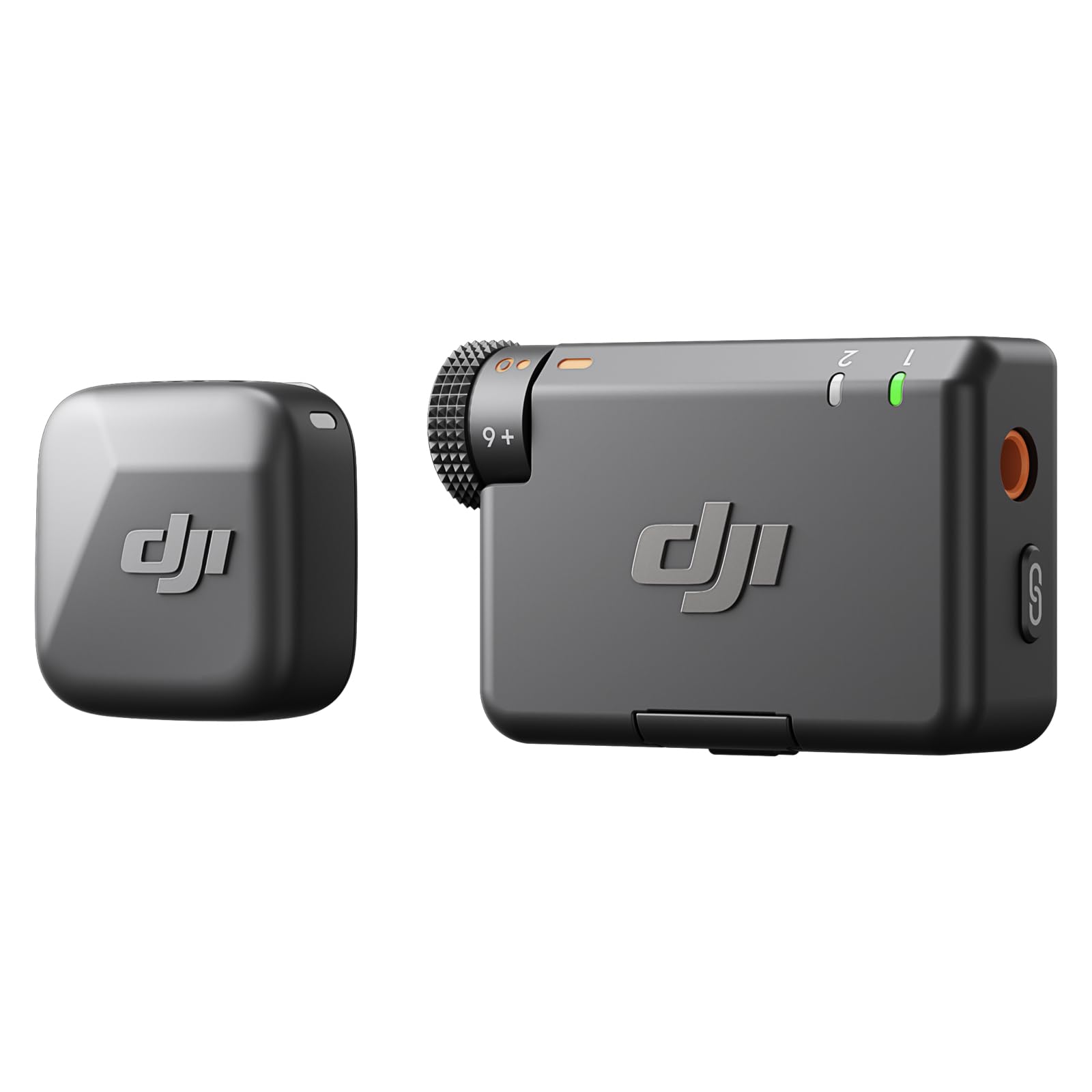
| DJI Mic Mini (1 TX + 1 RX)★ Best Overall | Everyday solo vlogging | 48kHz sampling | 10 hours | 400 m | Amazon |
| Hollyland LARK A2 (2TX+1RX+Case)Best for Two Speakers | Two-person shoots on a budget | 48kHz/24-bit | 7 hours per TX, 42 hours with case | 200 m / 650 ft | Amazon |
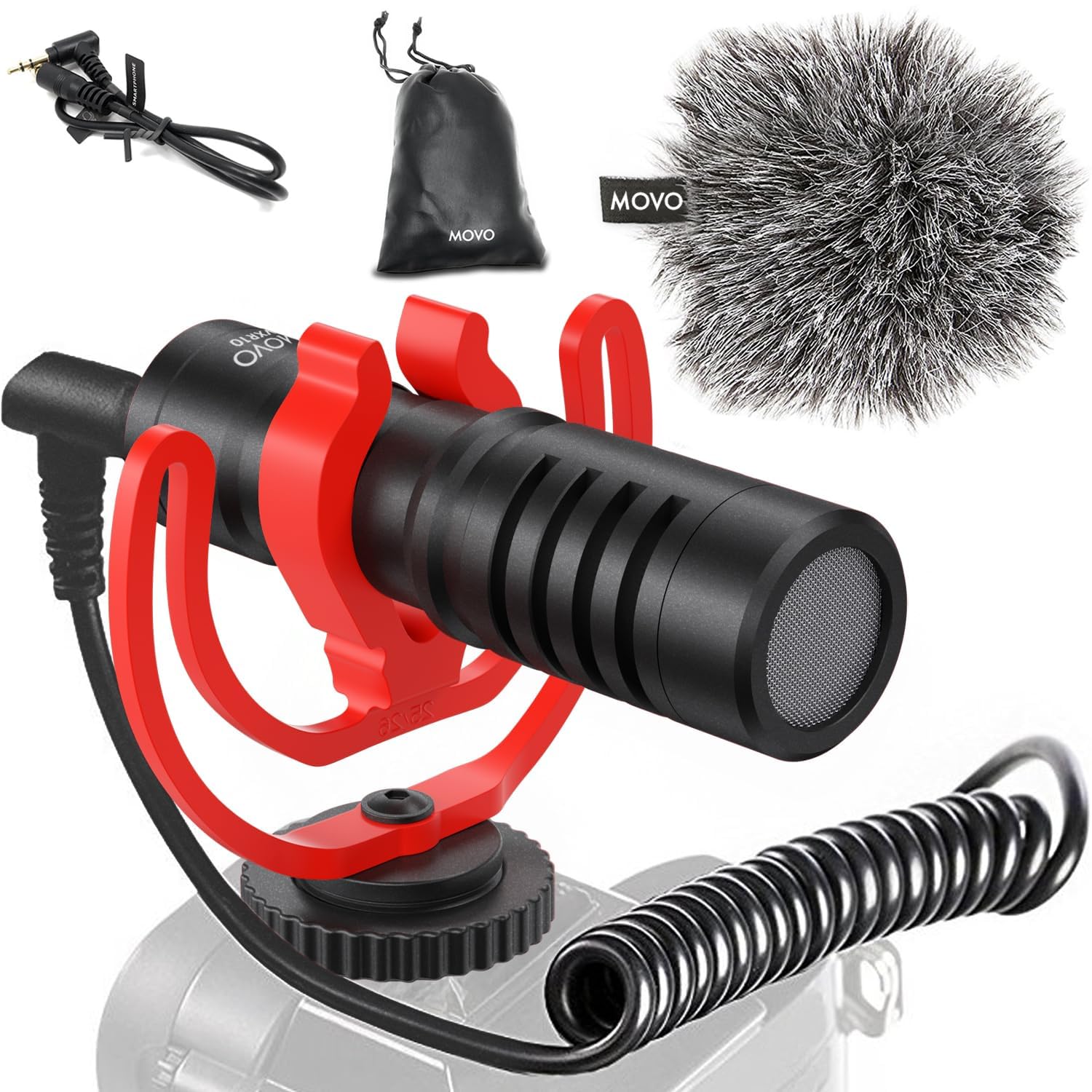
| Movo VXR10 ShotgunBest On-Camera Value | Budget on-camera audio | 100–20000 Hz range | No battery (plug-in power) | Wired 3.5mm | Amazon |
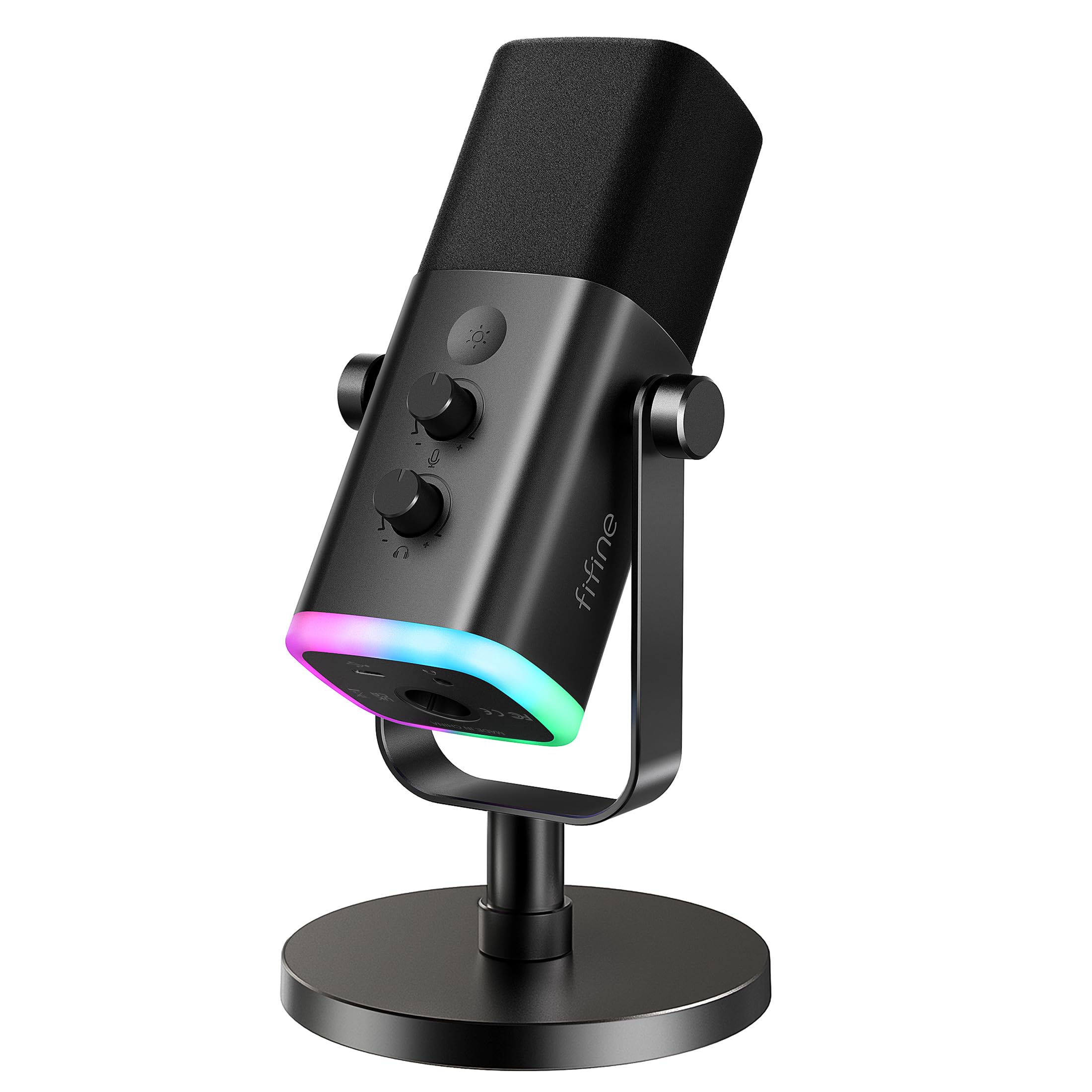
| FIFINE AmpliGame AM8 | Desk-bound streaming and podcasts | 50Hz–16KHz | USB powered | Wired USB/XLR | Amazon |
| Hollyland Lark M2 (USB-C) | Phone-first creators | 48kHz/24-bit | 10 hours, 30 hours with case | 1,000 ft line-of-sight | Amazon |
| NEEWER CM28 | Backup internal recording | 48KHz/16-bit WAV | 9 hours TX, 8 hours RX | 200 m / 656 ft | Amazon |
| DJI Mic Mini (2 TX + Case) | Multi-day and two-speaker shoots | 48kHz sampling | 48 hours with charging case | 400 m | Amazon |
| Hollyland Lark M2 (2TX+3RX) | Mixed phone and camera rigs | 48kHz/24-bit | 10 hours, 40 hours with case | 300 m / 1,000 ft LOS | Amazon |
| MAONO Wave T5 | Voice presets without editing | 48kHz/24-bit | 9 hours per TX, 40 hours with case | 300 m open area | Amazon |
| RØDE VideoMic GO II Helix | Battery-free camera audio | 20Hz–20kHz | No battery required | Wired USB-C / 3.5mm | Amazon |
| DJI Mic 2 (2 TX + 1 RX + Case) | Pro-grade backup recording | 32-bit float internal | 18 hours with case | 250 m / 820 ft | Amazon |
Detailed Reviews
1. DJI Mic Mini (1 TX + 1 RX), Ultralight, Detail-Rich Audio
Our pick — 4.5+★ from 25,500+ verified ratings; the strongest balance of quality and price.
Ten grams of transmitter that vanishes on your collar and still sounds broadcast-clean
If you vlog solo and want the simplest possible upgrade, this is the pick to start with. The transmitter weighs 10 g, which is light enough that the clip never drags a t-shirt out of shape on camera. It records at 48kHz sampling — a measure of how many audio snapshots the mic takes each second, and a higher number means a fuller, less brittle voice. The 120 dB SPL ceiling means a sudden laugh or shout stays clean instead of crackling into distortion.
Battery is the practical reason people keep reaching for it. Each transmitter and receiver runs up to 10 hours on a charge, which covers a full day of shooting without hunting for an outlet. The 400 m transmission range gives you room to walk off and still stay connected, even in a busy street where signals usually get crowded. Buyers report getting “10+ hrs use without recharge.” Two noise cancellation levels let you pick Basic indoors and Strong in noisy places, and automatic limiting drops the volume when your input spikes so clips stay usable.
Its biggest draw is DJI ecosystem fit: the transmitter pairs directly with Osmo Pocket and Osmo Action cameras, no receiver needed. The catch is that this kit is a single transmitter and receiver, so two-person interviews need a second setup. It also skips internal backup recording, which is why the DJI Mic 2 further down exists.
Where it earns its place
- 10 g transmitter you forget you are wearing
- 48kHz sampling and 120 dB SPL for clean, full vocals
- Up to 10 hours per transmitter and receiver
- Direct pairing with DJI Osmo cameras, no receiver needed
What you give up
- No internal backup recording on the transmitter
- One transmitter only, so two speakers need another unit
- Advanced noise suppression needs the app
Go for it if: you vlog solo on a phone or DJI camera and want clean audio in about a minute of setup.
Think twice if: you film two people talking at once — you would want the two-transmitter version instead.
2. Hollyland LARK A2 Wireless Microphone
Two transmitters, a charging case, and a safety track that saves the take you almost ruined
Interview-style vlogs and two-host channels are where this kit makes the most sense. You get two transmitters and one receiver, so each speaker clips on their own mic instead of leaning into a shared one. At 8.5 g each, the transmitters sit flat against a collar. The recording runs 48kHz/24-bit with a stated ≥68dB signal-to-noise ratio — that ratio is the gap between your voice and the background hiss, and a bigger gap means less hiss under your words.
Battery is the headline. Each transmitter runs up to 7 hours, or up to 9 hours with AI Power Saving switched on, and the charging case pushes total life to 42 hours. A quick 5-minute USB-C charge gives you up to 1 hour of recording, which is the difference between finishing your intro and going home. Transmission reaches 200 m (650 ft) on 2.4GHz, so walking shots and crowded events stay connected.
The feature that earns its keep is the -6dB Safety Track — a second recording made quieter so a sudden shout does not clip your main file. AI Auto-Limit does the same job live, pulling the level down when volume spikes. The trade-off worth knowing: the three noise cancellation levels live in the HollyAudio app, so a few of the smart adjustments ask you to open your phone first. Its three noise cancellation levels hold up outdoors, though the deepest tuning lives in the HollyAudio app.
Two mics, one price: the pair of transmitters and the charging case make this a strong option if your vlogs feature another person.
The honest limit: the deepest noise-cancellation tuning and AI voice polish sit in the app rather than on the mic body.
Reach for this if: you film with a second person and want one case that keeps both mics charged for a whole day.
Look elsewhere if: you want every noise setting on a physical button with no app at all.
3. Movo VXR10 Universal Shotgun Mic for Camera
A tank-like aluminum shotgun that clamps to your camera shoe and runs without a battery
This is the pick for the vlogger who films what is in front of them, not themselves. It is a directional shotgun mic — meaning it listens forward and pushes down sound arriving from the sides — with a 100–20000 Hz frequency range. Point it at your subject and the chatter behind you fades back. The aluminum body survives a bag being thrown in a car, and the built-in shock mount absorbs handling bumps so your audio stays clean without extra gear.
Buyers praise its build quality and bundled accessories most, with value a close second. It ships with a fuzzy windscreen, a carrying pouch, both TRS and TRRS cables, and two shock mounts, so unboxing is the whole setup. It needs 3.5mm mic input and plug-in power, meaning newer USB-C and Lightning phones will need an adapter. Owners mention using it with a “GoPro Hero 13 + Media Mod for two months.”
The honest trade-off is compatibility, which is the recurring gripe. Some cameras such as Canon Rebel T6/T7 do not support external mics, and a few units have arrived with static that cables and settings could not fix. Position it 1–5 ft from your subject for the cleanest sound. This is a solid entry-level on-camera mic, not a studio instrument — and for vlog-style work where you film yourself talking, a wireless lav like the Lark A2 above will beat it.
Pick this when: you film other people or scenes on a DSLR, mirrorless, or GoPro and want directional audio with no battery to charge.
Pass if: you shoot yourself handheld — a clip-on lav handles that far better.
4. FIFINE AmpliGame AM8 USB/XLR Dynamic Microphone
A desk mic that starts on USB and graduates to XLR without you buying a new one
The AM8 is a cardioid dynamic mic — “cardioid” means it listens in a heart-shaped pickup in front and rejects sound behind it, which is why it does not pick up your keyboard as harshly as an omnidirectional capsule. Its frequency response is 50Hz–16KHz, and that range keeps your voice natural rather than artificially bright. It plugs straight into a laptop by USB for a beginner, then switches to XLR when you add an audio interface. Record from 2 to 6 inches, with the top of the mic pointed at your mouth.
If you record commentary or narrate gaming content at a desk rather than on the move, this is a strong seat. The tap-to-mute button sits independent of your computer’s software, and the LED reminder stops you from talking into a muted mic. A headphone jack gives you live monitoring, and the gain knob has some resistance so small turns stay precise. Sound quality lands high on buyer satisfaction, and the RGB ring adds a bit of personality to a dim room.
Two limits matter. This is a stationary mic, not a lav — it will not clip to a shirt while you walk, so it suits vlog voiceovers recorded at a desk rather than on-location filming. RGB and the function key also only work over USB, so an XLR setup loses the lighting and controls. Some customers note that at maximum gain it picks up more room noise. As a first desk mic, its USB-today, XLR-later design makes it a flexible starting point.
Start simple, grow later: plug in USB today and add an interface for XLR tomorrow — the same body carries both.
Know the boundary: it lives on a stand or boom arm, so plan your voiceover recording at the desk.
Best for: podcasters and streamers who want a desk mic that can grow into XLR without being replaced.
Not for: anyone who films outdoors and needs to move while talking.
5. Hollyland Lark M2 Wireless Microphone (USB-C)

A button-sized mic that wins on the one spec that matters: nine grams on your shirt
The marketing phrase “lightest mini microphone” is backed by a number you can feel — 9 g per transmitter. It sits flat on a collar, so there is no drooping and no visible bulk in a close-up. The recording is 48kHz/24-bit with a 70dB signal-to-noise ratio, which is the quiet-floor metric that keeps your voice sitting cleanly above room hum. It handles up to 115dB sound pressure level, so a shout or a loud venue still records without breaking up.
This USB-C version is built for phone-first vloggers. It plugs straight into Android phones, iPhone 15 and later, action cameras, and computers, with a receiver that clicks in without a cable. Battery runs up to 10 hours per charge with ENC off, and the charging case gives two full recharges for 30 hours of total use — each recharge in under 1.5 hours. Transmission reaches 1,000 ft line-of-sight. Its appeal is factory pairing: the transmitter and receiver arrive linked, so you unbox and record.
A neat extra doubles as a control: pressing the noise-cancellation button twice on the transmitter starts or stops video recording on your phone. That saves you touching the screen mid-take. The catch is fit-related: some cases are too thick for the receiver to seat fully, and the noise-cancellation tuning wants the HollyAudio app for more than on and off. It is not waterproof, so keep it out of rain.
Worth the weight
- 9 g transmitter, practically invisible on camera
- 48kHz/24-bit capture with a 70dB signal-to-noise ratio
- Up to 10 hours per charge, 30 hours with the case
- Double-tap remote start for phone video
Set your expectations
- Thick phone cases can block the receiver seating
- Fine noise-cancellation levels need the app
- Not waterproof, so avoid wet shoots
The strong choice for: phone vloggers who want the smallest possible mic on screen and the fastest possible start.
Skip the phone-first route if: you shoot mostly on a camera body and need a 3.5mm receiver in the box.
6. NEEWER CM28 Wireless Lavalier Microphone

The kit that records to its own memory, so a dropped signal never costs you the take
Where this stands apart is the internal storage. Each transmitter holds 4GB and doubles as a recording pen, saving up to 9 hours of uncompressed 48KHz WAV audio straight onto the mic. If the wireless link glitches, your voice still exists on the transmitter. You get 3 export modes (mono, stereo, and Ms), a one-tap decibel gain adjustment, and an LCD screen showing battery, mode, and connection at a glance.
Battery runs 9 hours on each transmitter and 8 hours on the receiver, and the protective charging case gives you two full recharges in 1.5 hours each. Transmission reaches 200 m (656 ft) in open areas on 2.4GHz. The one-click noise cancelling chip keeps your voice clear, and the kit ships with two windshields and magnets for clipping to a collar or pocket. It works with phones, cameras, iPads, and MacBooks through the included adapters.
The honest caveat is sound fidelity in demanding conditions. Stated specs claim a 200m range and 48KHz WAV, but a couple of demanding uses have reported thin low-end and clipping at higher gain when recording loud live music. For everyday voiceover and talking-head vlogs, it holds up cleanly. The wind muffs also pop off easily when you move fast. If you need concert-grade fidelity, look higher; for social video, this is a good value kit.
The safety net: 4GB of internal recording per transmitter is the feature that makes this worth a look.
Read the fine print: it shines on voice; complex loud audio can reveal its limits.
Consider this if: you want an on-mic backup file and a display that tells you what is happening mid-shoot.
Prefer something else if: your recordings lean on music or live bands rather than spoken voice.
7. DJI Mic Mini (2 TX + 1 RX + Charging Case)

Two ten-gram transmitters and a case that keeps recording for two full days of shooting
This is the same Mic Mini platform as the Best Overall pick, but doubled up. You get two 10 g transmitters plus the receiver and a charging case, so a two-person shoot is covered from one kit. Audio stays at 48kHz sampling with the same 120 dB SPL ceiling, and the 400 m range keeps both speakers connected across a busy street. Each transmitter is pre-paired to the receiver, so it records as soon as it clips on.
The main upgrade over the single kit is the case battery. DJI states up to 48 hours with the charging case, which covers multi-day trips, long livestreams, and back-to-back interviews without a wall outlet. Both mics pair directly with DJI Osmo cameras over OsmoAudio, no receiver needed. Automatic limiting pulls the level down when a sudden sound spikes, and the two noise cancellation levels (Basic indoors, Strong outdoors) let you match the space.
The trade-off is weight in your bag and the fact that even with two transmitters it still skips internal backup recording. If you need a second copy of every take, the DJI Mic 2 below is the answer. But for two-speaker vlogs where you want the smallest possible mics and the biggest possible runtime, this is a strong match.
Built for: two-host vlog channels and interview setups that want compact mics and case-level runtime.
Look past it if: you need a standalone backup recording of every take inside the mic itself.
8. Hollyland Lark M2 Wireless Microphone

Two tiny mics with three receivers, so phone, camera, and computer are all covered
If your shoots move between an iPhone, a camera, and a laptop, this is the version to consider. The kit includes a camera receiver, a USB-C receiver, and a Lightning receiver, so the same 9 g transmitters plug into whatever you are holding that day. Audio is 48kHz/24-bit with a 70dB signal-to-noise ratio, and the transmitters handle up to 115dB sound pressure level — enough headroom for loud venues or a sudden laugh.
Range is the strongest spec on the sheet at 300 m (1,000 ft) line-of-sight, with a high-gain LDS antenna designed to cancel the interference your own body causes when you turn. Battery runs up to 10 hours per transmitter with ENC off, and the case adds recharges for 40 hours of total use. This camera version also supports UAC, so the receiver plugs into a computer directly without an external sound card. Buyers put it simply: “If you want a mic that just works across phone, camera, and laptop, this kit is it.”
The camera receiver also lets you switch between mono and stereo modes with a button, and three LEDs show volume level at a glance. Where some find friction is connectivity: the firmware updater has failed on some Mac machines, and the receiver may need a USB-C extender to seat through a phone case. The 40-hour battery figure comes with the case attached, not on the mic alone.
Why the extra receivers matter: one kit crosses phone, camera, and computer so you stop buying adapters for each rig.
Watch for: firmware updates and thick phone cases are the two places this kit asks for extra patience.
Pick this one if: you rotate between a phone, a camera, and a laptop on the same channel.
You can skip the extra receivers if: you only ever film on one phone, where the smaller kits go further.
9. MAONO Wave T5 Wireless Lavalier Microphone

Four voice presets that make you sound polished before you touch an editor
Most mics make you edit your voice in post. This one gives you four one-tap presets instead, so the tone you want is baked in at recording time. “Vocal Enhancer” is the balanced default, “Brightness” adds crispness for social clips, “Warmth” softens your tone for storytelling, and “Magnetic Radio” gives a deep broadcaster sound. Recording is 48kHz/24-bit with an 80dB signal-to-noise ratio and a 120dB sound pressure ceiling, so sudden loud moments stay clean.
The receiver comes in three versions in the box — USB-C, Lightning, and camera — so it works across phones and cameras without extra purchases. Each 9 g transmitter runs up to 9 hours, and the charging case extends total use to 40 hours. It also supports charging your phone while the receiver stays connected via Type-C, which is handy on long outdoor shoots. Range is 300 m in open areas and 100 m when the transmitter is behind your back or in a pocket, which covers walking-away shots.
Noise cancellation gives you 3 modes and 14 levels through the Maono Link app, with a dedicated ENC chip (environmental noise cancellation — it separates your voice from the background). The honest caveat is pairing and reliability, which is where the data shows the most friction: pairing needs both units flashing rapidly, and some reviewers point out needing a firmware fix that customer support walked them through. Treat setup as a five-minute one-time task and this kit is rewarding.
What makes it different
- 4 voice presets baked in for less editing time
- Three receivers (USB-C, Lightning, camera) in one box
- 9 hours per transmitter, 40 hours with the case
- 120dB sound pressure ceiling for loud scenes
Where it asks patience
- Pairing requires both units in rapid-flash mode
- A firmware update has occasionally needed support help
- Best noise-cancellation control sits in the app
The match for: creators who want a broadcaster-style tone without learning EQ or post-production software.
Be ready for: a one-time pairing step that rewards you with presets for every future shoot.
10. RØDE VideoMic GO II Helix On-Camera Shotgun Microphone

A 57 g shotgun with no battery, no switches, and a shock mount that swallows bumps
The spec that sells this one is its 57 g weight — light enough to sit on a camera or phone rig without pulling the frame off balance. It uses a 20Hz–20kHz frequency range and needs no battery at all, so there is nothing to charge and nothing to forget. You connect it by 3.5mm TRS to a camera or by USB-C to a smartphone, tablet, or computer, which makes it plug-and-play with a longer cable reach than most on-camera mics.
The HELIX isolation mount is the clever part: it decouples the mic from the camera body so handling knocks and bumps do not land in your audio. RØDE Connect and RØDE Central apps add a high-pass filter, high-frequency boost, and a pad for refining the sound on a phone or computer. The deluxe windshield handles a bit of wind. Sound is clean and slightly bassy, which you can smooth out with EQ later.
The catch is gain control. Adjustable gain only works when connected by USB to a phone or computer — on the 3.5mm camera input it defaults to its normal setting with no adjustment. Point it at your subject and it shines; aimed at a room it will pick up more. If you vlog yourself on a phone, a lav is more forgiving; if you film your surroundings, this is a strong signal-to-noise value.
No charging, no fuss: the battery-free design removes one whole failure point from your shoot.
Know the limit: gain adjustments live only on the USB connection, not the camera cable.
Go for it if: you film scenery, travel, or interviews and refuse to carry another battery.
Think twice if: you need on-the-fly gain control from a camera’s 3.5mm input.
11. DJI Mic 2 (2 TX + 1 RX + Charging Case)

The one with a recorder inside each mic, so a dropped signal never costs you the take
If your shoots are one-take interviews or live streams you cannot repeat, this is the premium step up. Each transmitter doubles as a standalone recorder with up to 14 hours of internal recording, and 32-bit float means the file keeps its detail even if your levels spike. In plain terms, 32-bit float is a recording method that captures a wider range so a loud shout or a clipped moment is still recoverable in editing. You also get 250 m (FCC) range, intelligent noise cancelling, and up to 18 hours of use with the charging case.
Pairing is instant from the start, and the receiver includes both USB-C and Lightning adapters, so an iPhone and an Android phone are both covered. The 1.1-inch color OLED touchscreen on the receiver lets you swipe through settings, and haptic feedback confirms your taps. Headphone monitoring lets you hear what the mic hears. Shoppers say that the case is roughly the size of a Red Bull can, which makes it easy to toss in a bag.
The trade-off is the price you pay for that backup: this is the highest-priced pick on the list, and its noise reduction is good rather than the absolute best in DJI’s own line. You also need the 3.5mm TRS cable for a camera connection. For a creator who cannot reshoot an interview, the internal 32-bit float file is the insurance that justifies the extra spend.
The premium case
- 32-bit float internal recording on each transmitter, up to 14 hours
- 250 m (FCC) range and up to 18 hours with the case
- 1.1-inch OLED touchscreen with haptic feedback
- USB-C and Lightning adapters in the box
Where the money goes
- Highest price of the group
- Noise reduction is good, not the best in DJI’s line
- Camera use still needs the 3.5mm TRS cable
Choose it when: a reshoot is impossible and a backup recording inside every mic is worth the premium.
Save your money if: you shoot relaxed, repeatable content where the Mic Mini already covers you.
Know the Specs
Sampling rate and bit depth
Sampling rate is how many audio snapshots the mic takes each second; 48kHz is the standard for video, and it means the mic captures enough detail that your voice sounds natural rather than thin. Bit depth is the range of volume it can record cleanly — 24-bit gives more headroom than 16-bit, and 32-bit float goes further by letting you recover a loud spike that would otherwise clip.
Signal-to-noise ratio and SPL
Signal-to-noise ratio is the gap between your voice and the background hiss; a bigger number means less hiss under your words. SPL (sound pressure level) is how loud a sound the mic can capture without distorting, so a higher figure handles a shout or a loud venue better.
Transmission range
Range is the distance the mic keeps a stable wireless link to the receiver. Line-of-sight figures assume a clear path with no walls or bodies blocking the signal, so real-world range usually comes up shorter indoors — plan for less than the number on the box.
Battery and charging case
Transmitter runtime is how long a single mic records before it needs power. A charging case adds full recharges on the go, so the total hours often reflect the case rather than one mic alone — read which number is which before you buy.
Common Questions
Will these wireless mics work with my iPhone?
Do I need a camera or will a phone be enough for vlogging?
What is the difference between a lavalier and a shotgun mic?
How long do the transmitters actually run on a charge?
Can I film two people talking at the same time?
What happens if the wireless signal drops mid-take?
Do these mics need an app to work?
Will a shotgun mic like the Movo VXR10 work with my newer phone?
Is 24-bit audio better than 16-bit for vlogging?
How close should I place a clip-on mic to my mouth?
The Bottom Line
For most vloggers, the microphone for vlogging winner is the DJI Mic Mini (1 TX + 1 RX) because its 10 g transmitter and 48kHz sampling deliver clean vocals in a setup that takes about a minute. If you film with a second person, grab the Hollyland LARK A2 for its two transmitters and 42-hour case. And for one-take interviews where a dropped signal would ruin the shoot, the DJI Mic 2 with its 32-bit float internal recording is the one to reach for. Whichever you pick, moving from a built-in camera mic to a clip-on lav is the biggest single jump in perceived audio quality your vlogs can get.
How we choose
We do not accept paid placement. Every pick is matched to a real buyer and a real use-case; we do not hands-on test units.
Sources
Specifications: manufacturer listings and product documentation. Review insights: verified customer reviews, as of October 2026. Pricing: not shown on this page (it changes often); check the current price via the retailer link.
As an Amazon Associate, Aappliancez earns from qualifying purchases. This does not affect which products we feature.