Disclosure: Some links in this post are affiliate links. As an Amazon Associate I earn from qualifying purchases, at no extra cost to you. Learn more
Specs are compiled from manufacturer listings and verified buyer reviews and can change over time — please confirm the key details on the product page before buying.
If your hairline is thinning and you want to try a microneedle roller at home, the short answer is this: buy a roller built from real individual needles and use it on a shaved or bare scalp area, not on long hair. Two of the three rollers here use genuine individual needles that puncture cleanly, while one multi-head kit is built for face and body and its own buyers warn it is not for hair. That single difference decides your pick.
This guide is built by comparing the manufacturers’ published specifications and the patterns across verified customer reviews, so you get each pick’s real strengths and trade-offs instead of marketing spin.
Roller needle count, needle material, and whether a head is safe to run through hair matter more than brand names. This breakdown of the microneedle for hair loss covers all three so you can pick with confidence.
Top Picks

How To Choose The Best Microneedle for Hair Loss
Hair-loss rolling is a different job from face rolling. On a thinning hairline you are rolling over skin that has hair growing through it, and the wrong roller catches that hair and yanks it. The three things that decide whether a roller helps or hurts are needle construction, needle count, and whether the head is built to pass through hair. Everything else is comfort and upkeep.
Real needles versus stamped metal wheels
Some cheap rollers are stamped metal discs with raised spikes, not separate needles. A stamped wheel tends to tear skin rather than puncture it cleanly, which is the opposite of what you want on a delicate hairline. Look for the phrase “real individual needles” in the listing — all three rollers here that mention it are built this way, and that is the first box to tick.
Titanium or stainless steel
Titanium needles resist bending and rust, which matters because a bent needle drags instead of piercing. Stainless steel is also fine and cleans up well, and one pick here runs 192 individual stainless steel needles with no bending. Either material works; skip any roller whose needles arrive bent or that rusts after an alcohol wipe.
Rolling a hairline versus a bald patch
A 192 or 200-needle roller works over a thin temple hairline. For a fully bald spot, buyers report that a longer needle length in the 1.0-1.5 range is the better call. What you do not want for hair is a multi-head face kit with small, closely packed heads designed for cheeks and foreheads — those catch hair.
Side-by-Side Comparison
| Model | Best For | Needle Count | Needle Material | Weight | Amazon |
|---|---|---|---|---|---|
| Microneedling Derma Roller 200 Titanium Needles★ Best Overall | Thinning hairline and scalp use | 200 needles | Titanium | 2.4 ounces | Amazon |
| YaFex Derma Roller for Face and Body – 6 in 1 Titanium Kit | Face and body, bald or shaved areas | 300, 720, and 1200 needle heads | Titanium | 1.76 ounces | Amazon |
| Derma Roller – 192 Real Individual Stainless Steel Needles | Beginner hairline rolling on a budget | 192 needles | Stainless steel | 2.08 ounces | Amazon |
Detailed Reviews
1. Microneedling Derma Roller 200 Titanium Needles
Our pick — 4.5+★ from 400+ verified ratings; the strongest balance of quality and price.
Two hundred titanium needles built to pierce a thinning hairline instead of tugging it
This roller earns the top spot because it has 200 real individual titanium needles, not a stamped metal wheel. Titanium is a light, rust-resistant metal, so the needles stay straight instead of bending and dragging. One buyer reports “Noticed hairline growth within 3 weeks” and calls it “easy to use, doesn’t catch in hair.” Not catching in hair is the whole game when you are rolling a thinning hairline rather than a bald patch.
Against the 192-needle roller further down, this one carries 200 needles to its 192 — eight more points of contact working the same strip of scalp with each pass. It also runs a touch heavier at 2.4 ounces versus 1.76 ounces for the YaFex kit, which gives you a steadier hand over a hairline than the lightest option does. The 24K gold plating is there to keep the surface gentle for sensitive skin, and the non-slip ergonomic handle keeps your stroke controlled along the temple line where it counts.
Effectiveness is what this roller gets praised for most, whether the job is a hairline or stretch marks. The catch is the storage case: the needles are sharp and a few buyers have bent or broken them lifting the roller out, so take it out slowly. One honest note on the crowd: the 192-needle pick carries more reviews, but this one holds the higher score, and the gap in count is close enough that rating is the better signal.
Working in its favor
- 200 real individual titanium needles resist bending and rust
- Doesn’t catch in hair, so it suits a thinning hairline
- Ergonomic non-slip handle for a controlled stroke
- Cleans up with isopropyl alcohol without rusting
The fine print
- Needles can bend if you yank the roller out of its case
- Skin irritation is the mixed note in the feedback
Go with this if: your hairline is thinning and you want a titanium roller that glides through fine hair instead of snagging it.
Be careful with: the storage case — pull the roller free slowly so you don’t bend the needle tips.
2. YaFex Derma Roller 6 in 1 Titanium Kit

Six heads, five swaps, and one big caveat if your goal is hair
This is a face-and-body kit, and it is not the roller to buy for a thinning head of hair. Owners mention the trade-off plainly — “Cons: NOT for hair loss—despite claims it cuts/rips out hair; use only on bald/shaved areas.” The small, closely packed heads that work beautifully on a cheek or a forehead will catch and pull longer hair. On a shaved scalp or a bare patch, that problem disappears.
Where it shines is range. You get 300 and 720 needle heads at 0.25mm, a 1200-needle head at 0.3mm, and 5 replaceable heads in total, so a fine head for a small area and a denser head for a larger one both sit in the case. At 1.76 ounces it is the lightest roller of the three and easy to hold through a slow, even pass. There is also a built-in alcohol storage dish for soaking the head, which is a genuinely handy detail when you clean between sessions — one buyer asked for exactly that and got it.
Effectiveness earns the most praise across this kit, with the size options a close second. Users report real changes on fine lines and wrinkles, and one who paired it with professional hyaluronic acid and a 10-minute LED red light saw results build over about 2 months. If your hairline is your only target, this is the wrong tool; if you want one kit that also handles face and body, it is the most capable set here.
Who it suits: someone who wants a single kit for face, body, and a shaved or bald scalp area, with sizes to match small and large zones.
Skip it for hair: the heads snag on length, so a full thinning hairline with hair on it is not what this set was built for.
Reach for it when: you want a multi-head set for bald or shaved areas and body skin, and you like the built-in alcohol dish for soaking.
Look elsewhere if: your hairline still has hair growing through it — the compact heads will pull rather than roll.
3. Derma Roller – 192 Real Individual Stainless Steel Needles
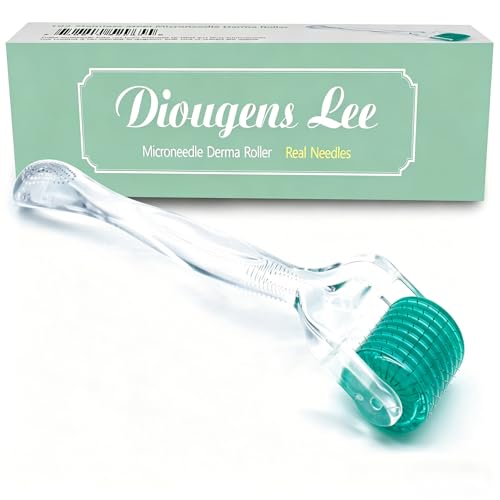
An entry-level stainless roller that has already grown baby hairs on a front hairline
One buyer reports it “works like magic” — used once a week, “in a month i already started seeing the my baby hair on my front hair line started growing.” That is a once-a-week routine on a thin front hairline, which is exactly the job most people buying a microneedle for hair loss want done. It runs 192 real individual stainless steel needles — the second-most of the three behind the 200-needle titanium pick — with no bending and a smooth roll.
The comparison worth knowing: this roller’s storage case is the roomiest of the three, packed in a 6.5 x 1.77 x 1.73 inch case versus 5.91 x 1.69 x 1.54 inches for the titanium roller. In plain terms the roller sits with more breathing room and the tips are less likely to catch on the way out. At 2.08 ounces it also carries lighter than the titanium pick’s 2.4 ounces, so it is easy to hold steady through a slow pass.
Effectiveness and build quality are the two notes that come up most, and total beginners tend to stick with it. When it stings, it stings in a shocking-but-not-painful way — eyes watering on the first pass is normal, and washing your face well first is the difference between a good session and a sore one. Quality is the other highlight, with stainless needles built to keep rolling straight. For a bald spot rather than a thin hairline, buyers suggest a longer 1.0-1.5 needle length instead.
The budget case: 192 stainless steel needles, a roomy case, and real hairline reports make this the cheapest sensible place to start rolling.
The honest limit: stainless needs a good alcohol clean and careful drying, and a few users note skin irritation, so start slow.
Start here if: you are a first-timer rolling a thin front hairline once a week and want a solid stainless roller without overthinking it.
Size up if: you are targeting a fully bald spot — buyers recommend a longer 1.0-1.5 needle length for that.
Know the Specs
Needle Count (192, 200, 300 to 1200)
Needle count is the number of separate piercing points on the head. A 192 or 200-needle roller spreads the work across many fine points, which is what you want over a hairline. Higher counts like 720 or 1200 pack more needles into a smaller area, so they feel denser and cover a smaller zone per pass — good for a cheek, trickier over hair.
Needle Material (Titanium vs. Stainless Steel)
Material decides how the needles hold up. Titanium resists bending and rust, so tips stay straight and pierce rather than drag. Stainless steel is strong and easy to clean, and one pick here rolls 192 stainless needles without bending. Whichever you choose, wipe with alcohol and dry it fully, and retire a head the moment a tip bends.
Head Size and Replaceable Heads
A single fixed head is simple and predictable. A replaceable-head kit swaps the working surface — small heads for fine areas, wide heads for body skin. The trade-off is that small, closely packed heads catch longer hair, so a multi-head kit is best kept to bald, shaved, or bare skin.
Handle Weight and Grip
A lighter roller, like the 1.76-ounce kit, is easy to hold for a quick pass. A slightly heavier one in the 2.08 to 2.4-ounce range gives a steadier, more controlled stroke along a curved hairline. Look for a non-slip handle so your hand does not slip mid-roll.
Common Questions
Will a microneedle roller actually help a thinning hairline?
Is a titanium or stainless steel needle better for hair loss rolling?
Can I use a 6-in-1 derma roller kit on my scalp if I still have hair?
How often should I roll my hairline?
What needle length do I need for a bald spot versus a thin hairline?
How do I clean and store a derma roller so the needles stay sharp?
Why does my scalp sting or water when I roll?
Is a roller with real individual needles different from a metal disc wheel?
Will rolling irritate sensitive skin?
The Bottom Line
For most people chasing a thinning hairline, the winner is the Professional Microneedling Derma Roller with 200 Titanium Needles, because 200 real individual titanium needles glide through fine hair without snagging and resist bending and rust. If you want one kit that also covers face, body, and a shaved scalp, grab the YaFex 6-in-1 Kit — just keep it off a full head of hair. And if you are a first-timer who wants the simplest, most affordable start on a front hairline, the 192-Needle Stainless Steel Roller is the one to reach for. The titanium roller’s 4.5+ star score and its users’ once-a-week routine make it the cheapest fair test you can run on your own hairline.
How we choose
We do not accept paid placement. Every pick is matched to a real buyer and a real use-case; we do not hands-on test units.
Sources
Specifications: manufacturer listings and product documentation. Review insights: verified customer reviews, as of October 2026. Pricing: not shown on this page (it changes often); check the current price via the retailer link.
As an Amazon Associate, Aappliancez earns from qualifying purchases. This does not affect which products we feature.