Disclosure: Some links in this post are affiliate links. As an Amazon Associate I earn from qualifying purchases, at no extra cost to you. Learn more
Specs are compiled from manufacturer listings and verified buyer reviews and can change over time — please confirm the key details on the product page before buying.
If you record ASMR, the microphone is doing half the work. A soft brush on a mic, a whispered word, a tap on a wooden block — these sounds live in the quietest part of the audio range. A mic that captures them cleanly makes your recording feel close and intimate. A mic that hisses or clips turns every soft moment into background noise. The fix is not the priciest mic on the shelf but the right capsule for your room. It is a dynamic capsule for a noisy room or a condenser for a quiet one, plus USB for plug-and-play or XLR for an interface.
This guide is built by comparing the manufacturers’ published specifications and the patterns across verified customer reviews, so you get each pick’s real strengths and trade-offs instead of marketing spin.
Below you will find seven options sorted by what they actually do well for close-mic intimacy, from budget-friendly starters to premium studio pieces. Every pick here handles gentle, low-volume detail work, and the notes below explain which room, which voice, and which setup each one fits. This is the practical shortlist of the mic for asmr if you want clean whispers on the first take.
Top Picks

How To Choose The Best Mic for ASMR
ASMR is the quietest genre of audio most people ever record. Your loudest moments are whispers and your quietest are a fingertip on a page. That flips the usual shopping logic: loudness matters less than how little noise the mic adds when nothing is happening. Check self-noise before loudness specs and you avoid the most common first-buy mistake.
Dynamic or condenser — the first fork in the road
A dynamic capsule (a sturdier design that reacts less to distant sound) is the safer choice for a noisy bedroom. It tends to reject the fan, the street, and the neighbour’s television. A condenser capsule (a more sensitive design that catches tiny detail) gives you more air and texture on a whisper. The catch is that it also catches everything else in the room. If you record next to a running PC, lean dynamic. If your room is genuinely quiet, a condenser rewards you with detail.
Self-noise is the spec nobody explains
Self-noise is the faint hiss the microphone makes on its own, expressed in decibels (dB). At 15 dB to 20 dB, a whisper sits on near-silence; at 100 dB or more, you hear hiss when you raise the gain. For ASMR, a low self-noise figure is what keeps a whisper sounding close and clean. The figures on these models range from 15 db to 110 db, so check this number before anything else if your content is mostly soft sounds.
How close you work changes the whole setup
ASMR is recorded close, usually inches from the capsule. That means a cardioid pattern, which listens mostly in front and rejects the back, does a lot of your noise control for you. Mouth noise becomes part of the performance, so a foam windscreen or the built-in filter matters. A gain knob within reach lets you raise the level without leaning in closer. A headphone jack lets you hear the tiny details you would otherwise miss.
Side-by-Side Comparison
| Model | Best For | Capsule | Connection | Self-Noise | Amazon |
|---|---|---|---|---|---|
| Elgato Wave:3 MK.2★ Best Overall | All-round USB recording with live control | Condenser, cardioid | USB-C | 110 db | Amazon |
| FEELWORLD PM1Metal Build Pick | Metal build on a budget tier | Dynamic, cardioid | USB-C and XLR | 95 db | Amazon |
| FIFINE AmpliTank Tank3 | Quiet-room work with ONBOARD controls | Dynamic, cardioid | USB and XLR | 20 db | Amazon |
| Blue Yeti | Flexible multi-pattern recording | Condenser, three-capsule array | USB | 100 db | Amazon |
| Audio-Technica AT2020USB-X | Detailed voice capture in a silent room | Condenser, cardioid | USB | 80 db | Amazon |
| Shure MV7+ | Broadcast-grade voice with live processing | Dynamic, cardioid | USB-C and XLR | 15 db | Amazon |
| SteelSeries Alias Pro Kit | XLR studio sound with a hardware mixer | Cardioid | XLR | 78 db | Amazon |
Detailed Reviews
1. Elgato Wave:3 MK.2 USB Condenser Microphone, DSP Effects
Our pick — 4.5+★ from 10,000+ verified ratings; the strongest balance of quality and price.
A whisper-friendly condenser that refuses to distort when you push a sound too hard.
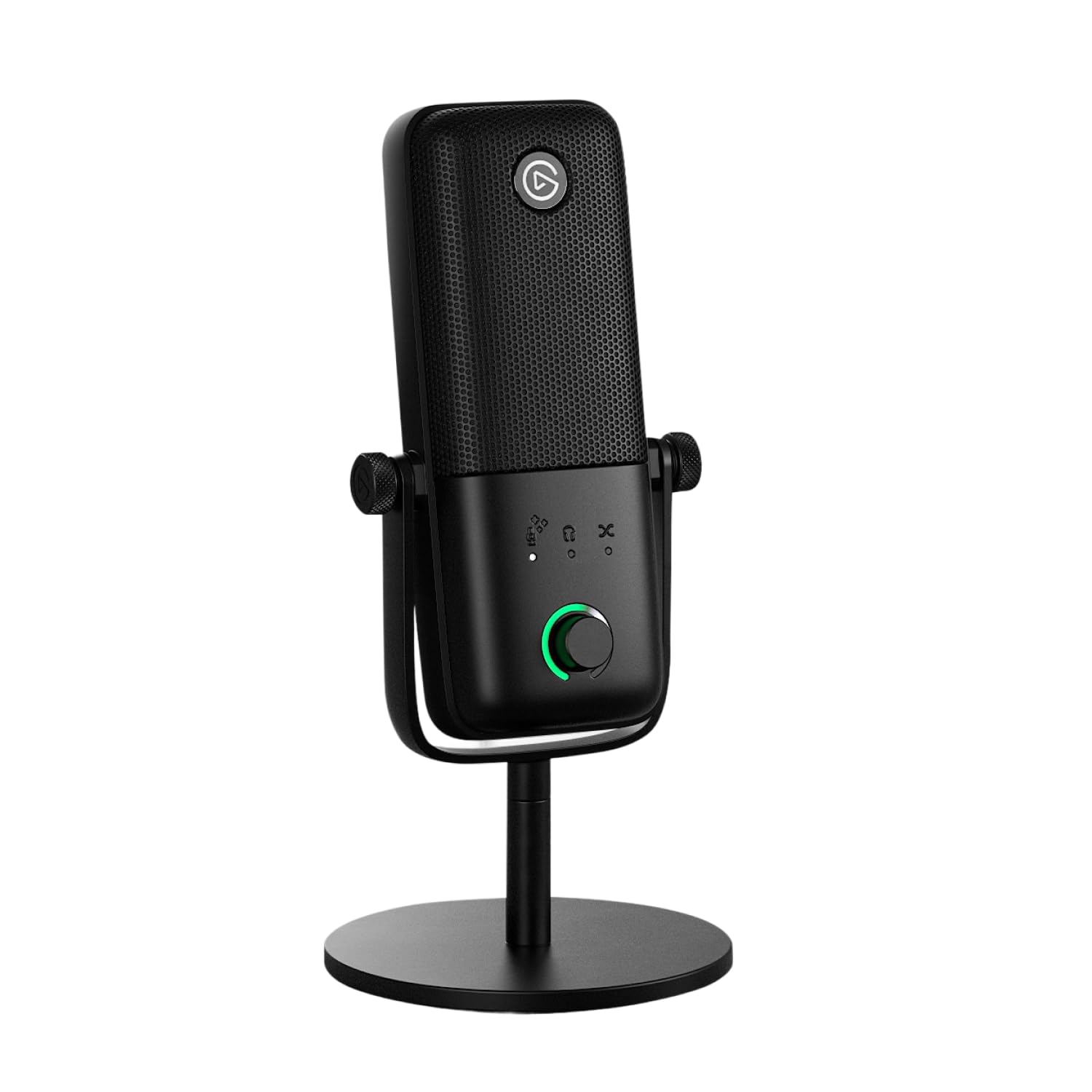
The reason this one sits at the top is simple: it does the boring parts of ASMR recording for you. Clipguard 2.0 (a multi-stage system that stops your audio from clipping, meaning it will not crackle when a sound spikes) makes distortion from a sudden tap or an accidental bump close to impossible. Auto Gain (an automatic level setter) picks your recording volume for you in a moment, so you do not have to guess whether a whisper is loud enough. For a first ASMR setup, that is the difference between a usable take and a re-record.
What wins people over is the sound itself — a cardioid condenser capsule (a front-facing design that ignores most of what happens behind it) that carries close detail without sounding thin. The built-in de-esser tames the sharp S and T sounds that ASMR whispering pushes right to the front. You get a voice enhancer, a compressor and EQ on board, plus a multifunction dial and tap-to-mute under your hand. The integrated headphone jack means you hear the smallest lip and breath detail live, which is exactly what a soft-sound recording depends on.
There is also the Wave Link app, and this is where the long-term owners stay put. It works as a virtual mixer with channel mixing and plugin support. One buyer with five years on the same mic describes it replacing a good chunk of hardware: “5-year user: excellent sound quality at 3–6 inches; free Wave Link software acts as virtual mixer with channel mixing, plugin support, EQ/effects, replacing – hardware.” The trade-off: this is a sensitive condenser at 110 db of audible noise, so it will pick up the room around you. It is not the pick for a room next to a busy street.
What sells it
- Clipguard 2.0 and Auto Gain keep levels safe on the loudest and quietest takes.
- Built-in de-esser and voice enhancer smooth out whisper hiss and sharp consonants.
- Tap-to-mute and a multifunction dial sit within reach while you record.
- Wave Link software handles routing, EQ and plugins without extra hardware.
Where it asks for care
- A sensitive condenser capsule, so background noise comes through unless your room is quiet.
- At 7.52 ounces it is heavier than the little metal dynamic mics below.
Reach for it if: you want one USB mic that handles levels, effects and monitoring without extra gear, and your recording space is decently quiet.
Hold off if: your desk sits beside a fan or an open window, because a sensitive capsule will capture that too.
2. FEELWORLD PM1 XLR USB Black Metal Podcast Dynamic Microphone
A pocket-sized all-metal dynamic with two ways in and a tap-to-mute that never clicks.
The number that stands out here is 3.52 ounces. That is dramatically lighter than the Elgato above at 7.52 ounces, which is a 2.1x gap. On a desktop stand, that low weight means you can nudge it into close ASMR position with one finger and it stays put. The metal enclosure means it shrugs off knocks. A cheap plastic mic in close-mic work picks up the handling — this one does not rattle.
What it gives you is flexibility on a budget tier. You get XLR output for a mixer or audio interface later, plus a USB-C input for plug-and-play on a laptop or phone today. A 50Hz-14kHz frequency response (the range of low-to-high tones it captures) covers the low rumble of a brush and the high shimmer of a page turn. A cardioid pattern keeps coming from the sides out of the recording. Real-time monitoring through a 3.5mm headphone jack lets you hear the smallest sound live. The front mute key is silent on purpose, so muting never lands on a take as a click.
Where this ASMR microphone asks one honest question: the touch controls can feel fussy until you learn them. Buyers report: “You need a pop filter and the button is not reactive. I returned it. I liked it though but looking for a mic I can use with a pop filter. I liked the look and the LED light.” A soft sound close to the capsule also benefits from a windscreen, and there is one thing to remember: RGB light, the mute key and volume control do not work in XLR mode, since the audio device takes over there.
Two ways in: XLR and USB-C both on one metal body means you can start simple and move to an interface without buying again.
Timed caveat: count on a day of learning the touch controls and adding a pop filter for close whispers.
Best for: the shopper who wants a compact metal mic with both USB and XLR on an entry-level budget and does not mind a little touch-control practice.
Think twice if: you need silent, click-free gain changes at speed, because the touch buttons take a moment to learn.
3. FIFINE AmpliTank Tank3 XLR/USB Podcast Dynamic Microphone

The lowest self-noise number on the whole list, at a mid-range price point.
Read the specs beside the Elgato and a big gap appears. The Elgato sits at 110 db of audible noise, while the FIFINE AmpliTank sits at 20 db. Lower is quieter. In ASMR terms that means less hiss between your sounds and a blacker silence behind a whisper. Add a dynamic capsule with noise reduction and shock absorption, and you get a mic that does not flinch at a humming fan. That is why it fits quiet-room close work so well.
The little trio of controls makes soft-sound recording easier too. A gain knob and a headphone volume knob on the side let you raise the level without yelling or whispering into it. A physical mute button avoids the accidental mute a touch button invites. The all-metal body keeps the capsule stable. A 50Hz—16KHz frequency range covers the low end of breathing and the upper edge of a whisper. Both a 3/8-inch and a 5/8-inch thread take a stand or boom arm, so you can bring it right up to your mouth.
Its honest limits are small and specific. The headphone preamp runs quiet and needs a boost — a note that shows up alongside praise for the sound overall. If you push the top end against premium mics, the low-mid bump can sound a little muffled, though EQ handles it. And the mute button only works when you are plugged in over USB, not over XLR. Those are fit notes, not dealbreakers for a mic that earns its praise on sound quality first and build second.
Why it earns the price: 20 db of self-noise plus a cardioid dynamic capsule beats far pricier mics in a room that is not perfectly treated.
The small trade-off: the headphone output is on the quiet side, so plan on pushing the knob to hear fine detail.
Pick this if: you want the quietest background on the list and an XLR upgrade path later, without paying premium money.
Look elsewhere if: you need loud, immediate headphone monitoring without touching the gain.
4. Logitech Blue Yeti USB Microphone
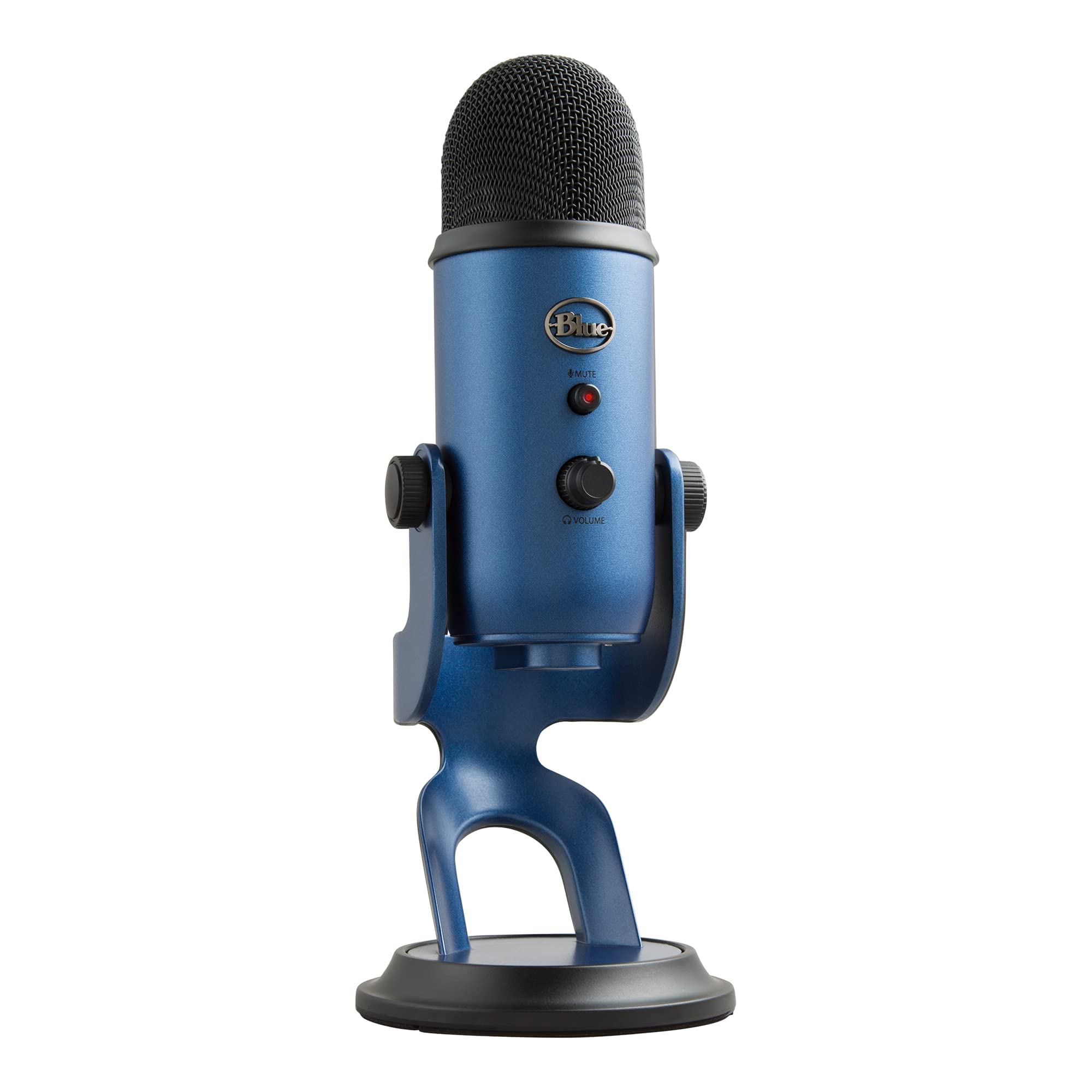
One mic that switches shape for a solo whisper, a stereo scene or a two-person recording.
The Yeti is the most familiar face in this group, and it earns that on flexibility. A custom three-capsule array gives you four pickup patterns — cardioid, omni, bidirectional and stereo. For ASMR, that means switching to stereo if you want a left-right brush effect, or staying on cardioid for a tight whisper. Onboard headphone volume, pattern selection, instant mute and mic gain sit right on the body. A positionable desktop stand lets you tilt it toward your mouth for close work with no extra cost.
A buyer who has owned two describes the connection as the practical win: “Yeti’s USB signal volume is far stronger than Snowball or USB-XLR cables (weak/static).” The same buyer found the omni and stereo patterns exceeded expectations. That matters if you want to place objects around the mic and record their movement. Windows and Mac both accept it as plug-and-play over USB. One vocal session is enough to notice it is a condenser, so treat your room as part of the recording.
The number to weigh is 100 db of audible noise. A condenser this sensitive will catch room tone, and the Yeti is known for catching distant sounds. It is also the pick for someone who wants one mic for podcasting and streaming too, not just ASMR. The main recurring gripe is the older connection standard, and durability gets mixed notes, so handle it like the tool it is. Against the FIFINE above it is far more flexible but far less forgiving of a noisy room.
Reasons to own one
- Four pattern options let you move between solo whisper, stereo scene and two-person recording.
- Gain, mute and headphone controls sit right on the body under your fingers.
- Strong, clean USB signal and true plug-and-play on Mac and PC.
Points to plan around
- Very sensitive — plan a quiet room or work in post to tame the room tone.
- The desktop stand is large, so it takes a real corner of the desk.
The right buy for: creators who want one mic to cover ASMR, podcasts and calls, and who can manage their room.
Not the first pick if: your space carries a lot of ambient noise and you want close-mic work to stay clean with no fuss.
5. Audio-Technica AT2020USB-X Cardioid Condenser USB Microphone

Built for capturing the texture of a whisper in a room that already sounds quiet.
Here is what the Audio-Technica promises on paper: a high-resolution converter running at 24-Bit/96 kHz, a cardioid condenser capsule, and a frequency range that stretches from 20 hz to 20 khz. That wide range is why it hears the air around a whisper and the small shift in breath that other mics smooth over. The result is detail you can edit rather than a sound already shaped for you. For ASMR creators who like to sculpt in post, that is the point.
The hardware is thoughtful too. A soft-touch capacitive mute button mutes silently, so a mid-take correction never lands as a click. A two-state LED ring glows blue when powered and red when muted, so you always know which state you are in. A built-in headphone jack means you monitor straight from the mic. The body is stainless steel, and the package includes a custom desk stand plus a USB-C to USB-A cable and a USB-A to USB-C adapter. Setup is plug-and-play on a laptop.
The catch is sensitivity in the honest direction. This is a condenser at 80 db of audible noise and it hears everything, including a leaf blower outside or a rustling page. In a noisy room, it will test you. It also needs a powered USB hub when you pair it with an iPad, according to buyer experience. And there are mixed notes on long-term reliability, so adding a shock mount is a fair protective move. That is the same advice a buyer gave after using theirs for acoustic guitar.
Sound in one line: 24-Bit/96 kHz conversion and 20 hz–20 khz coverage make this the detail-first pick for a genuinely quiet room.
Fair warning: it is highly sensitive, so park it away from your PC fans and the street before you press record.
Fits: the detail-driven ASMR creator with a treated space who wants a wide frequency range and silent muting.
Skip if: you record in a busy flat and want a mic that forgives ambient noise.
6. Shure MV7+ USB-C & XLR Podcast Dynamic Microphone – White

The quietest background in the group, with a dynamic capsule that shuts out the room.
At 15 db of audible noise, the MV7+ has the lowest self-noise number in this entire list, edging past the FIFINE’s already low 20 db. For ASMR, that is the difference between a faint hiss and near-silence under a whisper. Add a dynamic capsule with cardioid pickup, and the mic leans into the sound of your voice while pushing the fan and the street away. It also runs Auto Level Mode, which adjusts gain for you based on how far you are from the capsule and how loud you speak. You can whisper and then speak normally without resetting anything.
The features around the capsule are built for on-camera work. A full-color LED touch panel takes tap-to-mute and level monitoring, with 16.8 million color options if you want it to match your channel. Built-in reverb (Plate, Hall and Studio settings) adds depth to a voiceover take. The real-time denoiser trims background hiss. Dual USB-C and XLR outputs take you from a plug-and-play laptop to an audio interface without buying a second mic. It is OBS-certified for streaming software, so it drops into a live setup cleanly.
The honest trade-off is the white finish, which shows fingerprints and dust, and the touch panel can feel oversensitive if your hand brushes it. The XLR cable is included, but a stand is not. You are also paying premium money, which is where this pick sits. For that, you get a dynamic capsule with 15 db of self-noise and voice isolation that keeps whispers clear. That is why people who want a single mic for both ASMR and broadcast work end up here.
The number to remember: 15 db of audible noise means the quiet between whispers is genuinely quiet, not masked by hiss.
The bill to plan for: no stand in the box, so budget for one and for wiping the white finish.
The choice for: someone who wants near-silent backgrounds, voice isolation and a path from USB to XLR without a second purchase.
Not for: a shopper who wants the simplest setup with the gear included, since the stand is extra.
7. SteelSeries Alias Pro Kit Microphone

An XLR capsule with its own hardware mixer, built for people who want to touch the mix.
The Alias Pro takes the most hardware-forward approach here. You get an XLR microphone plus an XLR stream mixer with customizable controls and RGB, and that mixer lets you watch your audio levels at a glance while you perform. A capsule up to three times bigger than other mics gives it a wide vocal range, so the low rumble of a brush and the upper edge of a whisper both come through. There is a cardioid pattern and an integrated shock mount to cut vibrations from the desk. A free software suite adds mixing, app routing and AI noise cancellation.
Buyers describe warm, clear sound, and the physical mixer is a genuine difference from every USB mic above. If you like nudging a gain knob with your fingers during a take, this is that kind of mic. It also supports one or two PCs over USB-C, which suits a streaming desk built around a dedicated machine. For ASMR it delivers a clean, present voice, and its 78 db of audible noise keeps the background manageable. The plastic enclosure is lighter than the metal bodies above, and the shape gets praised for how natural it sits on the desk.
Two names show up in the setup notes. The first is software — this is not plug-and-play in the strict sense, because it needs the SteelSeries suite and some audio configuration before it sings. The second is adjustability, where some find the range of controls limited. Buyers also note the software can be intrusive, hijacking the default output on restart. So this pick earns its spot for the hands-on creator who wants a hardware mixer and does not mind a setup session.
Built for the hands-on desk
- XLR mic plus a hardware mixer with RGB makes gain and mute one-touch.
- Up to three times bigger capsule gives a wide vocal capture range.
- Integrated shock mount reduces desk vibration under the capsule.
Where it costs you time
- Needs the SteelSeries software and some audio configuration before it is ready.
- Polycarbonate body, which feels lighter than the all-metal options.
Made for: the creator who wants an XLR mic and a real mixing desk alongside it, and enjoys tuning software.
Probably not for: someone who wants to unbox, say one line and start recording.
Know the Specs
Self-Noise in Decibels
Self-noise is the mic’s own quiet hiss, and it is the single figure most ASMR creators should check first. Lower means blacker silence. A mic near 15 db to 20 db lets a whisper sit on nearly nothing, which is what close recording needs. A higher number like 110 db means the mic brings in more of its own noise floor, so you may hear hiss when you push the gain.
Capsule Type and Pickup Pattern
A dynamic capsule tends to ignore distant noise and suits a busy room. A condenser capsule rewards a quiet room with fine detail. The pickup pattern, usually cardioid for these mics, decides which side the mic listens to. Cardioid means mostly in front, which is why close ASMR work benefits from it — your whisper gets focus while the wall behind you stays out.
Common Questions
Is a dynamic or a condenser mic better for ASMR whispers?
What self-noise number should I look for in an ASMR microphone?
Can I connect an XLR microphone like the SteelSeries Alias Pro straight to my laptop?
Do I need a pop filter for close-mic ASMR recording?
Will the Shure MV7+ or FIFINE Tank3 pick up my PC fan in the background?
Which of these mics is best if I want to start with USB and upgrade to XLR later?
Does the Blue Yeti’s stereo pattern help with ASMR?
Is the Audio-Technica AT2020USB-X usable on an iPad for ASMR recording?
How close should I speak to an ASMR microphone?
Will the SteelSeries Alias Pro record ASMR without extra software?
The Bottom Line
For most people, the mic for asmr winner is the Elgato Wave:3 MK.2, because it handles the boring parts — auto gain, anti-clipping and a built-in de-esser — so a first whisper take comes out clean over USB-C. The Wave Link app is the longer-haul win, doing the mixing and EQ that would otherwise mean buying an interface. If your room is noisy and you want the quietest background, the Shure MV7+ at 15 db of self-noise is the one to reach for, and it takes you to XLR when you outgrow USB. And if you want near-silence on a lower budget with room to grow, the FIFINE AmpliTank Tank3 at 20 db delivers a lot of that same quiet for far less.
One honest nudge: the Blue Yeti is the crowd favorite, with tens of thousands of owners and 4.5+ stars, but its four pickup patterns suit a multi-purpose desk better than a noisy bedroom. Most buyers are happy with these mics; the recurring gripe is that sensitive condenser capsules pick up room noise. Match the capsule to your room — dynamic for a noisy space, condenser for a quiet one — and the whispers come through clean.
How we choose
We do not accept paid placement. Every pick is matched to a real buyer and a real use-case; we do not hands-on test units.
Sources
Specifications: manufacturer listings and product documentation. Review insights: verified customer reviews, as of October 2026. Pricing: not shown on this page (it changes often); check the current price via the retailer link.
As an Amazon Associate, Aappliancez earns from qualifying purchases. This does not affect which products we feature.