Disclosure: Some links in this post are affiliate links. As an Amazon Associate I earn from qualifying purchases, at no extra cost to you. Learn more
Specs are compiled from manufacturer listings and verified buyer reviews and can change over time — please confirm the key details on the product page before buying.
If you live where the thermometer bottoms out in double digits below zero, you already know the difference between a jacket that says “winter” and one that actually keeps you alive in it. The short answer: for serious cold, you want a coat with a real cold rating attached, not a fashion label. These seven have actual temperature ratings, real insulation specs, and long enough bodies to cover your backside when the wind is horizontal.
This guide is built by comparing the manufacturers’ published specifications and the patterns across verified customer reviews, so you get each pick’s real strengths and trade-offs instead of marketing spin.
The good news is that verified owner reviews on these sub-zero coats make the weak spots easy to spot before you buy. Here’s the honest breakdown of the men’s winter jackets for extreme cold.
Top Picks

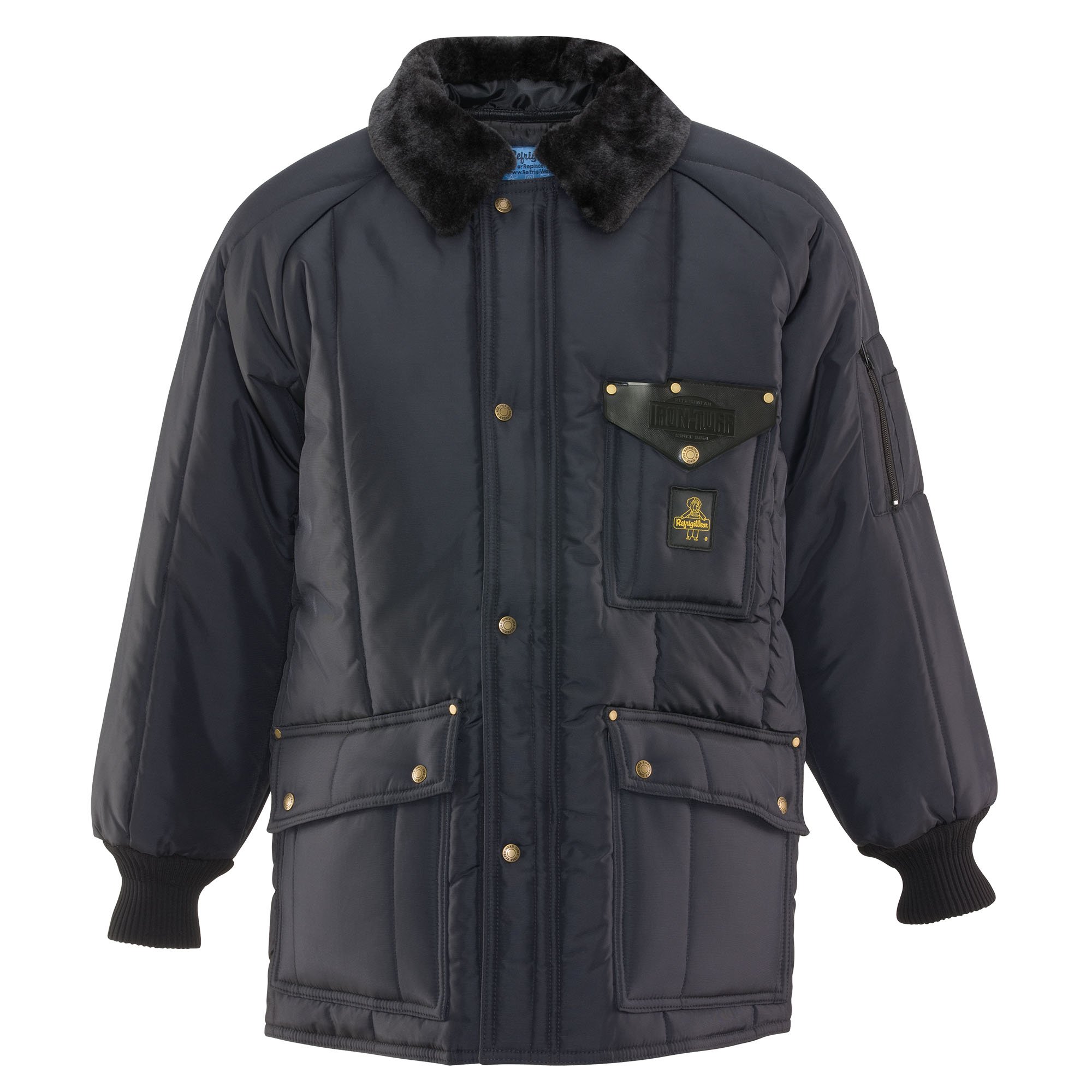
How To Choose The Best Men’s Winter Jackets for Extreme Cold
Buying for deep cold is a different sport than buying a coat for a mild-city commute. Below zero, a jacket has three jobs: stop wind from stealing your body heat, trap the warmth you make, and cover everything so the snow melts on the shell instead of on you. The specs below — comfort rating, fill type, and shell construction — are the ones that decide whether you stay warm at a bus stop or not.
The comfort rating in degrees is a starting point, not a guarantee
A comfort rating tells you the temperature the maker built the coat to handle — RefrigiWear rates one of its jackets to -50°F and another to -60°F. But that number assumes you’re wearing sensible layers underneath and moving around, not standing still in a cotton t-shirt. Two owners tested the same parka in very different situations and got very different results, which is worth remembering before you judge a coat by its sticker.
Down verses synthetic insulation
Down — a natural fill of goose or duck feathers measured in “fill power” — is the lightest warmth per ounce you can strap to your back. The McMurdo uses 600 fill waterfowl down, which means a generous amount of loft for its weight. Synthetic fill, like the N-3B Parka’s polyester interlining, gives a little less warmth per ounce but keeps trapping heat when it gets damp. Which you want depends on whether your cold is dry-and-pretty or wet-and-miserable.
Fit: room for layering, without the baggy penalty
Heavy coats are meant to be worn over a hoodie or a wool sweater, and nearly every complaint in this category comes from buying too small or too large. The sizing language here (loose fit, slightly longer body, relaxed cut) is a clue about how much room you’re getting inside. Where a brand says its sizing runs large, trust it; where a brand’s own size chart disagrees with reviewers, order for the layer you’ll actually wear.
Shell, seams, and cuffs: where wind gets in
Storm flaps, knit cuffs, and a dropped hem are the details that keep wind from creeping up your back. A full-length storm flap over the zipper, elastic inner cuffs that close around your wrist, and a hem that drops below your belt are the design details that stop cold air creeping up your back. Water resistance on the shell matters too when snow melts on you indoors.
Side-by-Side Comparison
| Model | Best For | Cold Rating | Insulation | Weight / Shell | Amazon |
|---|---|---|---|---|---|
| Alpha Industries Men’s N-3B Parka★ Best Overall | Best Overall | Extreme cold (Air Force spec) | Polyester interlining | Nylon shell, heavyweight | Amazon |
| RefrigiWear Iron-Tuff SiberianBulletproof Durability | Bulletproof durability | -50°F comfort rating | Insulated workwear build | 3.15 pounds | Amazon |
| RefrigiWear Iron Tuff Ice Parka | Knee-length work coat | -50°F comfort rating | Dense insulation, sewn-through seams | Heavy, not packable | Amazon |
| Carhartt Yukon Extremes | Outdoor jobsite warmth | Extreme cold | 150g 3M Thinsulate | 6.5-ounce, 500-denier Cordura nylon | Amazon |
| RefrigiWear PolarForce | Best Cold-to-Weight Ratio | -40°F comfort rating | Insulated softshell build | 4 pounds | Amazon |
| RefrigiWear Hooded Insulated Work Jacket | Deepest Rated Cold | -60°F comfort rating | 600g insulation + 200g AirBlaze polyester | Water-resistant shell | Amazon |
| The North Face McMurdo Parka | Wettest Cold, Longest Cut | Heavyweight cold weather | 600 fill recycled waterfowl down | Waterproof DryVent 2L shell | Amazon |
Detailed Reviews
1. Alpha Industries Men’s N-3B Parka
Our pick — 4.5+★ from 300+ verified ratings; the strongest balance of quality and price.
The one real pilots wore, built to the same spec the US military demanded.
Warmth is the whole job here, and the N-3B does it with a nylon outer shell over a polyester interlining — a two-layer build designed to stop cold air seeping through. The snorkel hood is the signature: a deep, lined tunnel trimmed with faux fur that covers your face down to the nose, with an adjustable draw cord and take-up strap so you can cinch it tight. If you have ever walked into a headwind and felt your scarf fail, this is the fix.
What holds up best over years of hard use is how much of the original military design survived. Reinforced elbow patches, a full-length storm flap, and inset knit cuffs at the wrist are all still there. One reviewer noted changing a tire at -6°F with a -25°F windchill after three years of ownership, and described the parka as warm enough to work in without locking up their arms. Another who wore a replacement model overseas described the polyester fill as holding its warmth when damp — the reason synthetic fill is chosen over down for wet cold.
The honest catch is sizing. The fix is simple: order for the layer you plan to wear underneath, or size up one step if you plan to stack a hoodie. A separate gripe about the buttons being weakly sewn is the kind of thing one owner resolved with a needle and thread in five minutes. It is a heavy, bulky jacket by design — this is not a coat you pack.
Where It Earns The Crown
- Snorkel hood with adjustable draw cord and faux-fur trim covers your face, not just your head
- Full-length storm flap plus inset knit cuffs seal the two spots cold air always finds
- Reinforced elbow patches and nylon shell built to the spec the US Air Force demanded
- Polyester fill keeps trapping heat when it gets wet — down would not
- Proven at -6°F with -25°F windchill on a driveway tire change, three years in
What To Anticipate
- Extra-large sizing runs small — order for your layers, not your t-shirt
- Heavy and bulky; this is not a coat that folds into a bag
- Buttons are lightly sewn and worth a reinforcing stitch on arrival
Wear This When: Your winter means windchill warnings and a driveway that still needs shoveling.
Size Up If: You plan to layer a hoodie or sweater underneath — the small-cut XL will not forgive it.
2. RefrigiWear Iron-Tuff Siberian Insulated Workwear Jacket
A warehouse-grade work coat rated to -50°F that refuses to die.
RefrigiWear rates this one to -50°F of comfort, and the fingertip-length cut is deliberate — it covers your whole torso down past the belt, so there is no gap at the waist when you bend over. Construction quality is the thing that wins people over here, and it comes from a company whose coveralls have been issued to warehouse workers for decades. One buyer put it plainly after a test winter, calling it high quality and long-lasting while noting it is stiff when new.
That stiffness is real: it arrives like a board and softens only after weeks of wear. It arrives like a board and needs wear to soften into a coat, which is not a defect but a break-in period. Buyers who bought it for a specific job — New England winters, a warehouse floor, a dog run — describe the warmth and the durability as worth the effort. The metal zipper with snaps is a genuine design strength, since the plastic kind is the usual failure point on workwear.
Two things to know before you order. First, this coat runs big: a buyer who identifies as 5′ 8″ and 170 pounds with an athletic build found the extra-large too large even with a hoodie underneath, and sized down. Second, a hard plastic collar at the neck presses on the throat when zipped fully — one wearer found this a real problem, though it is the only complaint of its type. If you have a short neck or hate snug collars, this coat will annoy you at full zip.
Where steel beats softshell: this is a work coat first — it keeps its warmth and its shape after seasons of real use, and the fingertip length blocks the wind from reaching your lower back.
Room to move (or swim): sizing is genuinely generous, so treat the chart as a starting point and consider a step down if you are between sizes.
Reach For This If: You want one coat you will still be wearing in a decade and do not mind breaking it in.
Consider Alternatives If: You hate a stiff collar against your throat when zipped all the way up.
3. RefrigiWear Iron Tuff Ice Parka, Men’s Winter Jacket
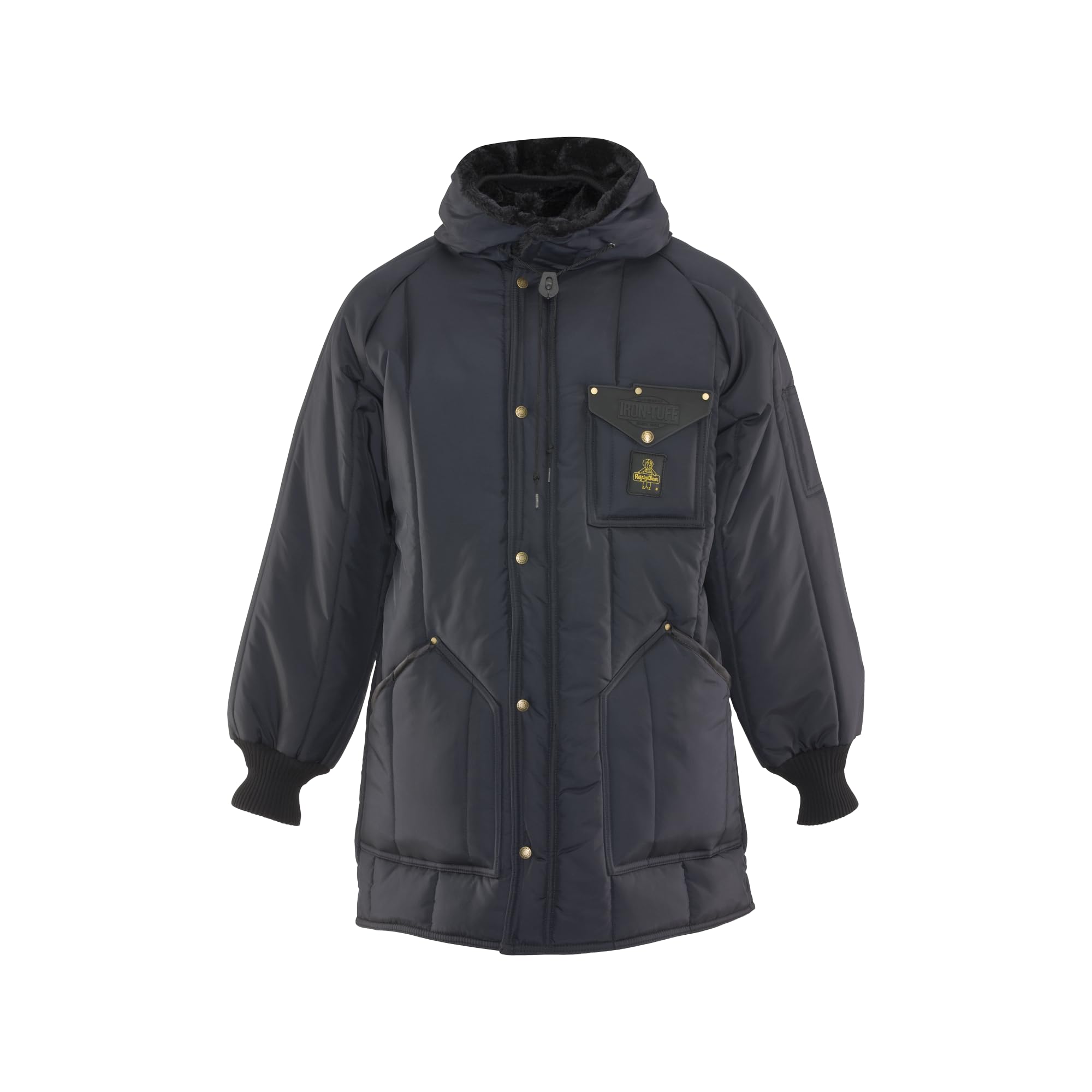
Thigh-to-knee coverage rated to -50°F, built like a tent in the best way.
The length is the headline: this parka reaches near the knees on most wearers, covering the thighs a shorter coat leaves exposed. Rating is -50°F, the shell is a thick, slick nylon-like fabric over dense insulation with sewn-through seams — a stitching style that pins the insulation in place so it does not shift and leave cold spots. Buyers describe it as feeling like an impermeable tent in the most reassuring way, and one called it sturdy enough to plausibly last for decades of winter service.
What it is not is soft. It arrives stiff, like heavy canvas, and needs weeks of wear to relax. It is also heavy and not packable at all — this lives on a hook, not in a suitcase. Hood sizing came up more than once: it is on the small side and will not fit over a hard hat. The pockets are deep but unzipped, with no interior storage, and the zipper is a metal type that does not run the full length of the hem.
Sizing is where buyers most often get it wrong, consistently running a size smaller than other brands. One wearer at 5’7″ needed to size up to a large just to fit layers for a dog-sledding trip, and another at 5’8″ went to XXL for layering room. If you want to stack a sweater and a hoodie underneath, go up. If you are wearing it over a shirt, size chart accuracy holds better. There is one report of a defective unit that failed in 25°F testing, which reads as a one-off rather than a pattern given the rest of the picture.
The Case For The Ice Parka
- Knee-length cut covers the thighs, which is where a shorter coat always fails on a long walk
- -50°F comfort rating with dense, sewn-through insulation that stays put
- Heavy-duty zipper and deep unzipped pockets sized for gloves and tools
- Shell sheds wind and snow; described as sturdy enough to last decades
The Part Nobody Mentions First
- Arrives stiff and stays stiff for weeks — break-in is real
- Runs a full size smaller than comparable brands; size up if you layer
- Hood will not fit over a hard hat
- Heavy and not packable; no inside pockets
Best Served Cold: Snowblowing, dog-sledding, and standing around in freezing wind — this is a statement piece that means it.
Wrong Shape If: You want a hood that fits over a hard hat or a jacket that folds into a pack.
4. Carhartt Men’s Yukon Extremes Loose Fit Insulated Coat

Built for the guy who works outside in it, not just walks to the car.
Three technologies stack up here: a 6.5-ounce, 500-denier Cordura nylon shell, 150g 3M Thinsulate insulation, and Wind Fighter technology that does exactly what its name says. Rain Defender durable water repellent coats the shell so snow and light rain bead up instead of soaking in. The seams are triple-stitched throughout, which is why this thing shrugs off abrasion that would wear through a fashion parka in a season.
Visibility is a detail you do not appreciate until you need it: 3M Scotchlite Carbon Black reflective taping on the center back and front pockets catches headlights, so a dark early-morning shift is a bit safer. The corduroy-trimmed collar with hood snaps and the rib-knit storm cuffs round out the sealing. One wearer who works outside daily reported doing a -15°F shift kept warm and still flexible enough to work, and called the pocket setup out specifically for small tools.
Most buyers describe this as running large, and that is intentional — it is a loose fit built for layering. A 5’11”, 212-pound buyer who normally wears an XL found a large the better fit with room to layer and full arm mobility. The metal zipper is a notable upgrade over the plastic type found on some competing names. The recurring gripe is the double zipper, which some find fussy to line up and re-zip.
Best on a worksite: the reflective taping, triple-stitched seams, and snap-close front pockets make this a coat that takes abuse and stays visible.
Plan your layer: the loose fit really is loose, so a step down from your usual size buys a cleaner silhouette.
Suits You If: Your cold involves a truck, a ladder, and a shift that starts before sunrise.
Not For You If: You want a slim silhouette or hate fiddling with a double zipper.
5. RefrigiWear Men’s Insulated PolarForce Jacket

Warm to -40°F without turning you into a walking barricade.
Most of the coats on this list earn their rating through sheer bulk. The PolarForce earns its -40°F rating at 4 pounds, with flex panels at the elbows and back. RefrigiWear rates it to -40°F, and at 4 pounds it sits well below the heavy workwear parkas while still blocking the kind of cold that makes people cancel plans. The flex fabric panels at the elbows and back are the clever part — they let your arms move without the coat fighting you, and one owner working outdoors in Alaska described no constriction at all.
What buyers report most is immediate warmth: one Wyoming wearer called it completely wind-blocking across two sub-zero winters. A wearer who spent two winters in Wyoming sub-zero conditions described it as blocking wind completely, with the surprising downside that it can be almost too warm over a hoodie indoors. Another rode a bicycle in 20°F Colorado weather and stayed comfortable, expecting zero degrees to be fine given the performance. It handles a t-shirt in sub-zero northern Minnesota winters, and the flex zones stop the shell from stiffening into a plastic crinkle in the cold.
The design flaw worth knowing is the neck hole. The collar sits low with a soft stand-up shape, and cold air has an easier path in at the throat than on a snorkel-hood coat. That is where a scarf or neck gaiter earns its keep. Bulkiness is the other honest note: it is roomy and slightly bulky, not a fitted layer.
What wins people over: movement. The flex panels at the elbow and back let you drive, shovel, or climb a ladder without the coat riding up or binding at the shoulders.
Dress the neck: the low collar is the one weak spot against wind, so pair it with a gaiter on the coldest days.
Pick This When: You want serious warmth but refuse to trade away the ability to bend your arms.
Look Elsewhere If: You want a high snorkel-style collar that closes over your chin.
6. RefrigiWear Hooded Insulated Work Jacket, Rated to -60°F
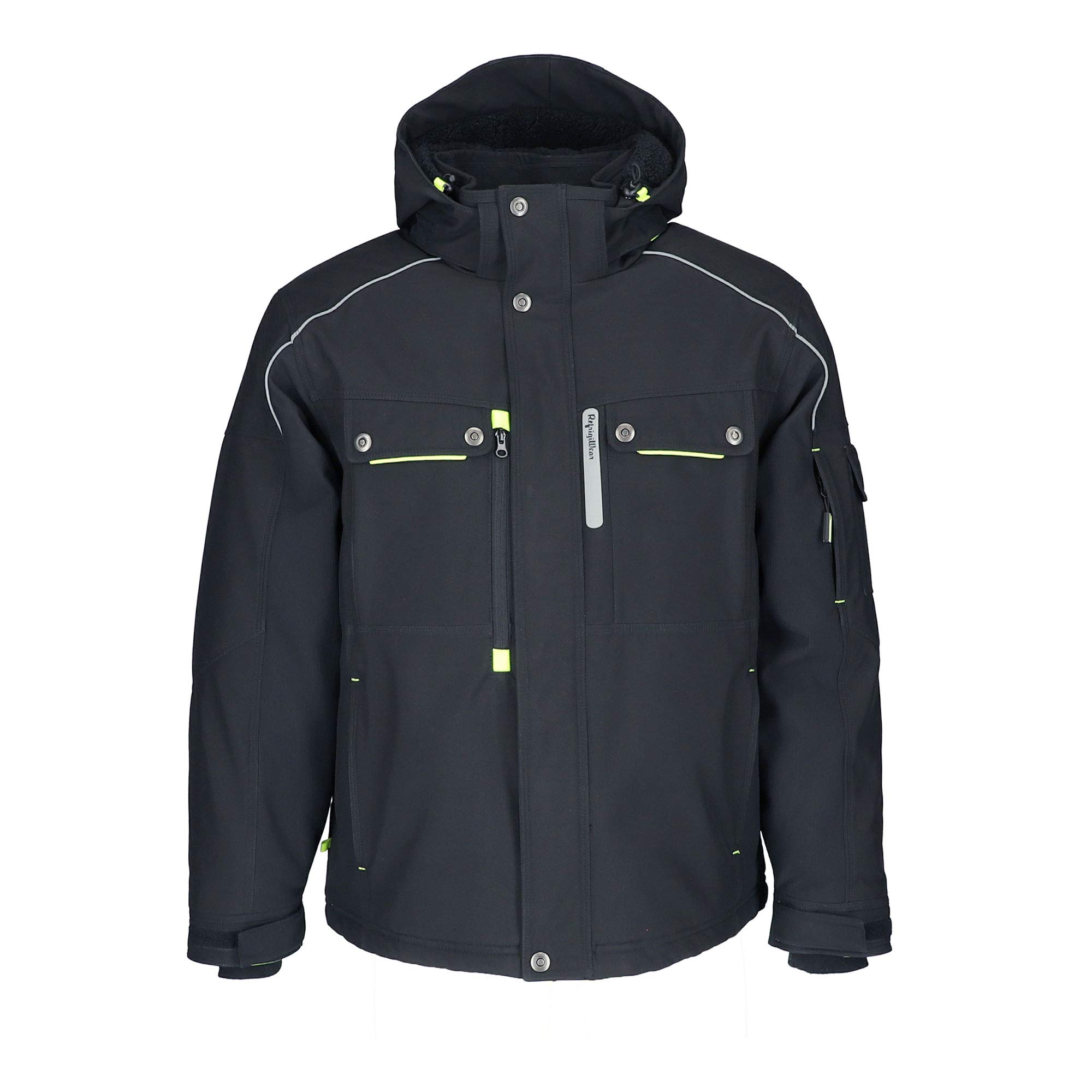
The coldest-rated coat here, packing 600 grams of insulation into a movable shell.
A -60°F comfort rating is the deepest number on this entire list, and it comes from 600g insulation paired with 200g AirBlaze polyester. That combination is built around keeping thermal retention and mobility in the same coat, rather than treating them as a trade-off. The shell has a water-resistant finish for snow and rain, and the Performance-Flex fabric at the shoulders means bending and reaching do not fight the seams.
Details that separate it from a basic parka: a zippered front with snap-close storm flaps, an inner drawcord and adjustable cuffs to seal warmth in, and a detachable hood with reflective piping for low-light visibility. Hand warmer pockets and interior storage are there too. Warmth is what owners praise most, and one parent reported a 13-year-old stayed comfortable at -30°F through farm use, describing it as windproof and washing well. Another noted it never feels the wind chill at all.
Two things to weigh. The size runs big on several buyers, so err toward your normal size rather than sizing up. And the zipper is the weak point — there are reports of a flimsy zipper on an otherwise solid build, which is a fair thing to check on arrival. A single stitching flaw in one pocket showed up too, small enough that the buyer would still buy it again. This is a hand-wash coat, so plan accordingly.
Why It Goes Deepest
- -60°F comfort rating — the coldest on this list — from 600g insulation plus 200g AirBlaze polyester
- Performance-Flex shoulders let you bend, reach, and lift without the coat binding
- Snap storm flaps, inner drawcord, and adjustable cuffs seal warmth at every opening
- Detachable hood with reflective piping shows up in low-light and dawn work
- Water-resistant shell sheds snow and rain during an active shift
Faithful Trade-Offs
- Runs big on some buyers — do not size up reflexively
- The zipper is the recurring soft spot on an otherwise sturdy build
- Hand wash only, so no machine cycle on laundry day
The Cold-Weather Specialist: Cold storage, farm work, and any job that keeps you outside when the forecast reads -30°F.
Check First: Give the zipper a test pull when it arrives and order your true size.
7. The North Face Men’s McMurdo Parka

The longest, driest coat here — down warmth wrapped in a fully waterproof shell.
Where the workwear coats block wind and shrug off snow, the McMurdo goes further: a seam-sealed DryVent 2L shell with a non-PFC durable water repellent finish that is waterproof and breathable at the same time. Inside is 600 fill recycled waterfowl down, which packs a lot of warmth into a coat that owners describe as not too bulky or heavy. The recycled nylon outer is 100% recycled nylon woven, and the coat is The North Face’s longest men’s style — it hangs well down past the hips.
The real-world proof is the wind. A 6’3″, 205-pound buyer sized down to a large and wore it at -23°F with a 30mph wind — a -48°F wind chill — and reported that the shell blocked the wind and the down kept them warm. That is the combination that matters: down alone gets chilled when wind cuts through it, and this shell stops that. Fit runs true to size per the brand, and owners who want layers are advised to size up. Multiple secure-zip chest and dual-entry hand pockets hold valuables, and there is a zippered interior left breast pocket.
The gripes are small but honest. The faux-fur hood trim is removable and some find it itchy with little offered in return — pull it off if that bugs you. Delivery delays showed up in one account. At 4.5+ stars across 100+ ratings, this is a coat people keep and recommend, not one they return. The relaxed fit hangs away from the body, so it can be worn over heavy mid-layers, and the adjustability of the 3-piece hood with drawcord is a genuine weather tool.
Built for wet cold: a seam-sealed waterproof shell over 600 fill down is the only combination on this list that handles rain, slush, and wind at the same time.
The one you pack: down compresses where synthetic workwear does not, so this is the coat that travels and packs down.
Right Choice If: Your winter is wet — coastal slush, freezing rain, and a walk that lasts more than ten minutes.
Skip The Trim If: The faux-fur ruff itches you; it detaches, so the coat is unchanged underneath.
Know the Specs
Comfort rating in degrees Fahrenheit
A comfort rating is the temperature the maker built the coat to keep you warm in — like -50°F or -60°F — assuming you are dressed sensibly underneath and not standing still. It is a construction benchmark, not a promise, and the same coat can fail a poorly chosen test and pass a well-dressed one. Treat it as a ranking tool among picks.
Fill power and grams of insulation
Down is measured in fill power — 600 fill means a specific loft, where higher numbers trap more warmth per ounce. Synthetic insulation is measured in grams, like 150g or 600g, which is simply the weight of the fill packed in. More grams means more warmth but more bulk; that is why the -60°F coat needs 600g while a lighter -40°F coat uses far less.
Denier and fabric weight
Denier measures how thick a fabric’s yarn is. A 500-denier nylon like the Carhartt’s is heavier and more abrasion-resistant than a thin fashion shell, which is why it survives a worksite. Heavier denier trades some softness for toughness.
DWR and waterproof shells
DWR stands for durable water repellent — a finish that makes water bead and roll off instead of soaking in. It is different from a fully waterproof, seam-sealed shell like the DryVent 2L, which stops water entering at the seams as well. DWR handles snow and light rain; a seam-sealed shell handles a downpour.
Common Questions
Is a -50°F comfort rating actually safe for real winter cold?
Should I size up or down in an extreme cold jacket?
Is down warmer than synthetic insulation in extreme cold?
What is the difference between a work parka and a fashion winter coat?
Does a longer coat really make a difference below zero?
Will these jackets work for snowblowing and shoveling?
How should I wash an insulated work jacket?
Do I need a waterproof shell or is water-resistant enough?
Can I wear a hard hat or hood over these jackets?
What is the coldest-rated jacket on this list?
The Bottom Line
For most readers facing genuine sub-zero weather, the best pick is the Alpha Industries N-3B Parka — real military-spec hood, knit cuffs, storm flap, and a warmth reputation strong enough to survive driveway tire changes at -6°F. One honest caveat: the XL runs small, so buy for your layers. For pure wet-cold protection, grab the The North Face McMurdo Parka, whose seam-sealed waterproof shell over 600 fill down is the only combination here that handles rain and freezing wind together. And if your job puts you outside at -30°F, the RefrigiWear Hooded Insulated Work Jacket carries the deepest comfort rating on this list at -60°F, with the flex shoulders to keep you moving.
How we choose
We do not accept paid placement. Every pick is matched to a real buyer and a real use-case; we do not hands-on test units.
Sources
Specifications: manufacturer listings and product documentation. Review insights: verified customer reviews, as of October 2026. Pricing: not shown on this page (it changes often); check the current price via the retailer link.
As an Amazon Associate, Aappliancez earns from qualifying purchases. This does not affect which products we feature.