Disclosure: Some links in this post are affiliate links. As an Amazon Associate I earn from qualifying purchases, at no extra cost to you. Learn more
Specs are compiled from manufacturer listings and verified buyer reviews and can change over time — please confirm the key details on the product page before buying.
If your ankles roll inward with every step, you already know the pattern: sore arches by lunch, aching knees by evening, and shoes that wear down on the inside edge long before the outside. This guide is built to fix that. Below you will find nine stability and support shoes that hold a pronating foot in line, sorted by what each one does best — from the all-around crowd favorite to the max-cushion plush pick to the walking shoe built for long days on hard pavement. Every pick names the exact support system it uses, so you can match the shoe to your foot instead of guessing.
This guide is built by comparing the manufacturers’ published specifications and the patterns across verified customer reviews, so you get each pick’s real strengths and trade-offs instead of marketing spin.
Support shoes range from firm and snappy to plush and pillowy, and the wrong match leaves you fighting the shoe all day. Stability comes from three things working together: a midsole that resists rolling inward, a wider base that catches your step before it collapses, and a heel that locks your foot down. The picks below cover all three approaches, so you can find the one that matches how much cushion you want against how much control you need, without paying for support you will never feel.
Top Picks

How To Choose The Best Men’s Shoes for Overpronation
Overpronation means your foot rolls too far inward when it lands, and that extra roll is what sends strain up through your arch, knee, and hip. The shoe you pick has one job: stop that inward collapse before it finishes. Everything else — color, brand, price — is secondary to whether the shoe actually slows the roll and keeps your heel planted.
Beyond the arch bump
Most beginners think a hard lump under the arch is what fixes pronation. It is not. The shoes that control roll best use geometry instead: a wider base, raised sidewalls that cradle your foot, and a midsole that resists squashing on the inner side. A firm arch insert can even feel aggressive against a sensitive foot. Look for language like guide rails, a dual-density frame, or a broader landing platform — those are the real anti-roll tools.
Cushion versus control
You can absolutely have both, but the balance matters. A plush max-cushion shoe that stays stable is the dream for long days on your feet. A firm shoe gives sharper control and a snappier feel but can feel punishing on concrete. If you walk or stand all day, lean toward more cushion. If you run fast or pronate severely, lean toward firmer support and accept a stiffer ride. The picks below span that spectrum, so decide which end of it you live on.
Width and the toe box
A pronating foot often spreads wider as it rolls, so a snug shoe will fight you. A roomy toe box and the option of a wide width keep your toes from getting pinched when the foot moves. Several picks here come in wide and extra-wide sizing, and one even accepts a custom orthotic in place of the stock insole. Getting the width right matters as much as the support itself.
Side-by-Side Comparison
| Model | Best For | Stability System | Cushioning | Weight | Amazon |
|---|---|---|---|---|---|
| Brooks Adrenaline GTS 23★ Best Overall | All-day wear and running | GuideRails support | DNA Loft v3 | 2 pounds | Amazon |
| New Balance Fresh Foam X 860 V14Best For Severe Pronation | Severe overpronation running | Built-in stability | Fresh Foam X midsole | 3 pounds | Amazon |
| Saucony Hurricane 24Best Max Cushion | Max-cushion recovery days | CenterPath Technology | PWRRUN PB & PWRRUN foam | 10.6oz (302g) | Amazon |
| Saucony Omni 21 | Value daily trainer | Dual-density PWRRUN | Dual-density PWRRUN | 2.43 pounds | Amazon |
| Saucony Guide 18 | Everyday cushioned trainer | CenterPath Technology | PWRRUN foam | 1.87 pounds | Amazon |
| Orthofeet Leo | Custom orthotics and foot pain | Ortho-Cushion system | Cushioned orthotic sole | — | Amazon |
| ASICS GT-1000 14 | Budget pronation support | GT-1000 stability support | Energized cushioning | 1.44 pounds | Amazon |
| New Balance Fresh Foam X 880 V15 | Cushioned walking and work | Structured upper support | Fresh Foam X midsole | 3 pounds | Amazon |
| Brooks Addiction Walker Suede | Street walking and standing | Walking stability support | Cushioned walking sole | 2 pounds | Amazon |
Detailed Reviews
1. Brooks Men’s Adrenaline GTS 23 Supportive Running Shoe
Our pick — over 4.5★ from 950+ verified ratings; the strongest balance of quality and price.
The stability shoe owners keep buying again and again — one pair at a time, for years.
This is the pick for the pronator who wants one shoe that does everything: runs the daily loop, walks the dog, stands at work, and looks fine doing all of it. The Adrenaline GTS 23 uses Brooks’ GuideRails support, which is a system that gently steers your foot back into line only when it starts to roll too far — rather than pushing hard under the arch the whole time. That means it feels supportive without feeling aggressive. It also weighs 2 pounds, which is genuinely light next to the New Balance 860 V14 at 3 pounds, a meaningful comfort edge over a long day on your feet.
What wins people over is the overall build — the quality is the single thing owners rave about most, with comfort right behind it. Reviewers describe long-running training blocks on it, half marathon after half marathon, return visits after trying rival brands, and a level of cushioning that takes the ache out of a long day. One owner summed up four pairs of the same model this way: “Durable, stylish, fully waterproof; performs in -15°F blizzards and 100°F humid jungle hikes, gym, hiking, daily work. 500-600 miles with full support.” The cushioning here is DNA Loft v3, a soft-but-springy foam that stays comfortable mile after mile without the mushiness that makes some stability shoes feel slow.
The one thing to sort out is sizing — fit runs mixed across the reviews, with a few buyers finding the toe box tight on the first wear before it breaks in. It is not a dealbreaker, just order with a little room and give it a week. The color on some versions runs bolder than the photos suggest, if that matters to you. Beyond those two small notes, this shoe is about as close to a safe pick as a support shoe gets.
Why It Tops The List
- GuideRails guide your foot back into line without a hard jab under the arch
- At 2 pounds it is lighter than the New Balance 860 V14’s 3 pounds
- DNA Loft v3 cushioning keeps long days and long runs comfortable
- Buyers report getting 500-600 miles with full support still intact
- Breaks in to a roomy, true-to-size fit after the first week
Where To Set Expectations
- Fit feedback is mixed — some buyers find the toe box snug at first, so allow break-in time
- The GTX waterproof version keeps winter weather out, but the standard mesh upper lets cold air through in deep winter
Buy it if: you want one pair of support shoes for running, walking, and standing all day, and you value cushion that stays light on the foot.
Look elsewhere if: you pronate so severely that you need a firmer, more planted feel — the New Balance 860 V14 below gives you that.
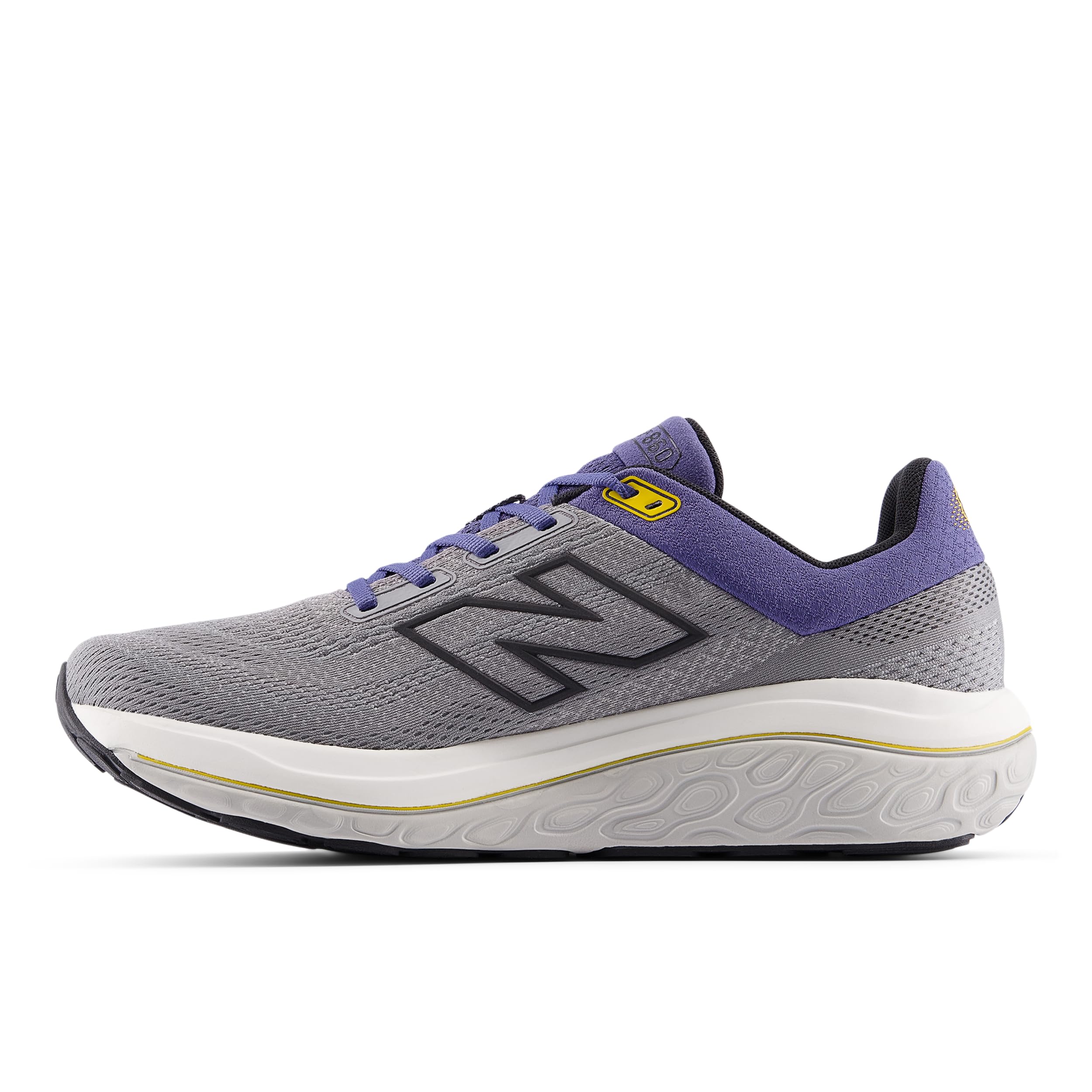
2. New Balance Mens Fresh Foam X 860 V14
Built-in support for heavy pronators who still want plush foam underfoot.
If your overpronation is severe, this is the shoe to start with. The 860 V14 has its stability worked into the shoe’s structure rather than added as a separate piece, so it holds your foot in line on every step without any single pressure point. The Fresh Foam X midsole is the headline — a soft, springy cushion that one owner described as feeling like running on springy pillows, and it does that trick while keeping the shoe stable underneath. That combination is rare, because most shoes with this much foam give up control to get it.
The cushioning is the second-most-called-out thing about this shoe after comfort, and the fit is praised for the wide width that fits a range of foot shapes. For a daily walker or light runner, the shoe straightens out a bad step and stays comfortable doing it. For a half-marathoner dealing with severe pronation, the story is the same: this is the most cushioning they can get while keeping the shoe stable. There is a short break-in, and the midfoot feels a little pushy forward at first, but it settles after a few miles.
The honest note here is that this shoe carries more heft than the Brooks Adrenaline GTS 23 — 3 pounds versus the Brooks’ 2 pounds — so it feels heavier in hand and on the foot. The cushioning is worth the trade if plush matters more to you than lightness, but if you want a featherweight feel, head back up to the Adrenaline. The 860 is the pick when support and comfort are the whole assignment.
Why it earns the spot: the Fresh Foam X midsole delivers plush cushioning while the built-in structure keeps a severe pronating foot steady — a balance most stability shoes cannot hold. Wide width options make it a comfortable fit for a broad range of feet.
Who it is for: the runner or walker whose foot rolls hard inward on every step and who wants the softest ride that still stays in control. skip it if you want a light, snappy shoe — the 3-pound build is on the heavier side.
Reach for this if: plush cushion under a firm, stable frame is exactly what your knees have been asking for.
Try the Adrenaline instead if: you want the same support class but a lighter shoe on your foot mile after mile.
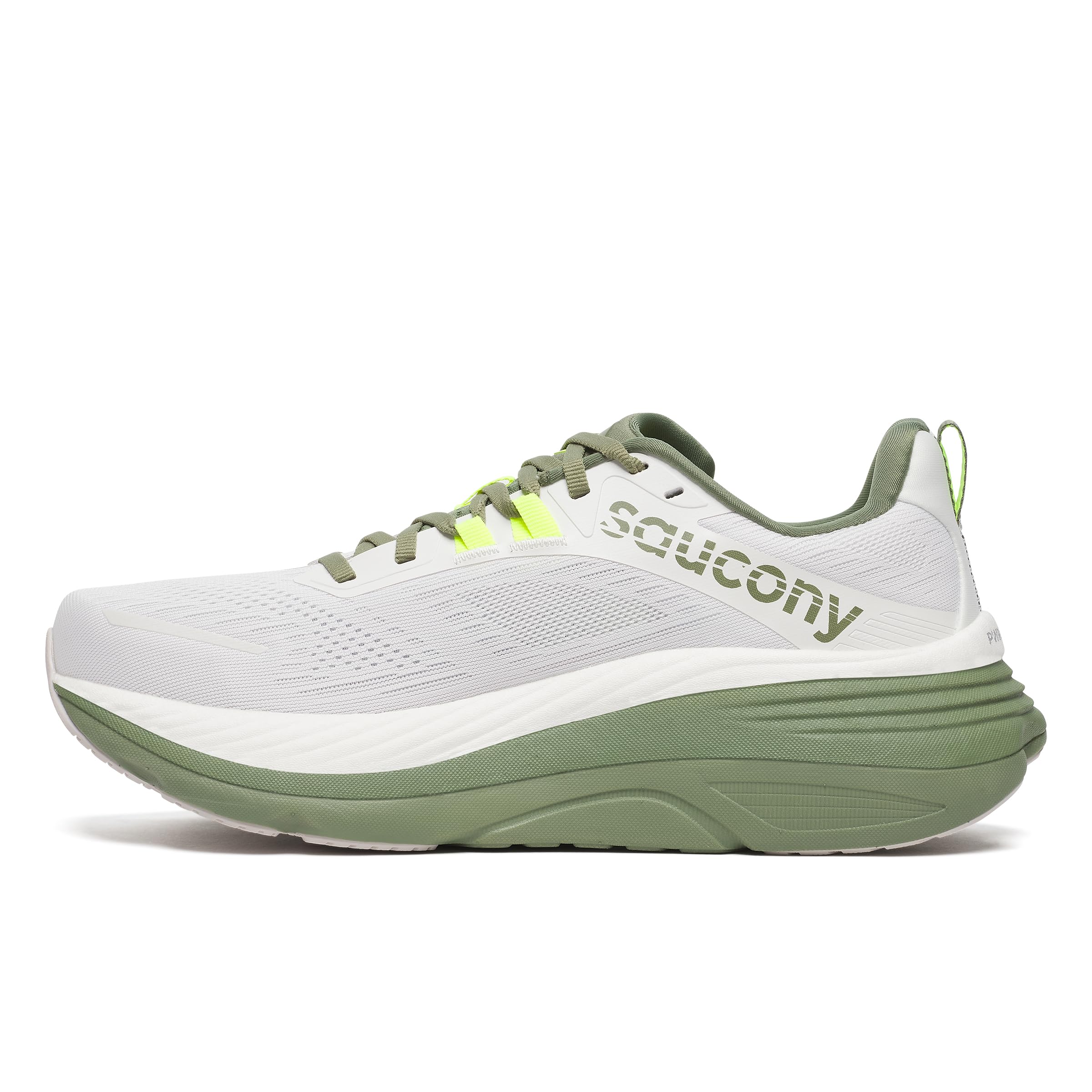
3. Saucony Men’s Hurricane 24 Sneaker
Two foams stacked into one shoe for the softest stable ride on the list.
The Hurricane 24 is what you buy when comfort is the deciding factor and you refuse to give up stability to get it. Saucony stacks two foams here — a plush, energy-returning PWRRUN PB layer over a firmer PWRRUN frame — so you get pillow-soft cushioning on top with a supportive shell underneath. The weight is 10.6oz (302g), which is light for how much foam it carries. CenterPath Technology is the geometry trick: a broader base with more ground contact and higher sidewalls, so the shoe catches your foot before it rolls too far inward or outward.
What buyers love is the non-intrusive stability. Instead of a hard arch bump, the support comes from the shape of the shoe, so there is no pronounced arch feel pressing into your foot. An owner who lost over 160 pounds and dropped from a size 13M 4E down to a 12.5M put it well: this is the most comfortable max-stack stability shoe they had tried, with a wider base that controls pronation, a breathable build, and a wide toe box — and lighter than the competitors they compared against. The quality and cushioning get the strongest praise, and it holds up for long or recovery runs.
The trade-offs are worth knowing before you buy. Fit is mixed — some owners find the wide toe box perfect while others say the shoe runs small, so check sizing. Durability is the other split, with a few buyers reporting the pair breaking down within a year, which is a real consideration for a daily trainer. One owner also flagged that a second pair built in a different country fit firmer and more narrow than the first. If you want a softness-first stable shoe and can accept a little variance, this is a strong ride.
The Draw
- Dual-foam stack gives plush cushion over a supportive frame
- CenterPath geometry controls roll through a wider base, not a hard arch piece
- Light for its cushion at 10.6oz (302g)
- Breathable mesh and a wide toe box keep the fit airy
The Fine Print
- Sizing runs mixed — some find it small, so try before committing
- A few owners mention the shoes breaking down inside a year
- One reviewer noted build quality varied between pairs from different factories
Best matched to: the runner who wants maximum softness without losing the stability that keeps a pronating foot in line.
Think twice if: you expect a shoe to survive more than a year of hard daily use — durability feedback is split.
4. Saucony Mens Omni 21

Steady support that costs less than the flagships and still handles the daily miles.
The Omni 21 is the value play: a support shoe priced below the flagship stability models that still delivers good cushioning and real control. Its trick is dual-density PWRRUN cushioning, which means the foam is firmer on the inner side to resist the inward roll and softer elsewhere for comfort. The 11 x 4 x 7-inch footprint is more compact than the New Balance 860 V14’s 14 x 9 x 5-inch build, so it feels tidier on the foot. Quality and support are the two things buyers praise most, and they compare it favorably to pricier stability shoes from the big brands.
Support here is particularly good for overpronation, and a lot of owners wear it all day rather than just for a run. The cushioning is ample for short daily runs and walks, and one 77-year-old runner called it the most comfortable pair they had ever owned — feet feeling normal after a 4-to-5-mile jog. Another long-term owner is on a third pair in three years, running over a thousand miles in each and even hiking Mount Whitney in them. That is the kind of mileage that tells you the value price is not cutting corners on durability.
The one recurring quirk is a squeak that some owners notice, which is harmless but can put you off wearing them as often. It is a sound issue, not a structural one. The other thing to weigh is that the Omni is a firm platform — buyers describe it as a sturdy shoe that works better for walking than for fast running. For a walker or a casual runner who wants dependable support without paying flagship money, that firm ride is a feature, not a flaw. Just try your size in store if you can, since fit is the most common note.
Where the money goes: dual-density PWRRUN puts firmer foam on the inner side to slow inward roll and softer foam everywhere else for comfort, so you get genuine stability at a value-tier price. Owners get over a thousand miles per pair, which stretches the value further.
Go with this if: you want proven pronation support for walking and light running without paying flagship prices.
Pass if: a squeaky sole would bother you, or you need a plush pillowy feel — this is a firm, sturdy platform.
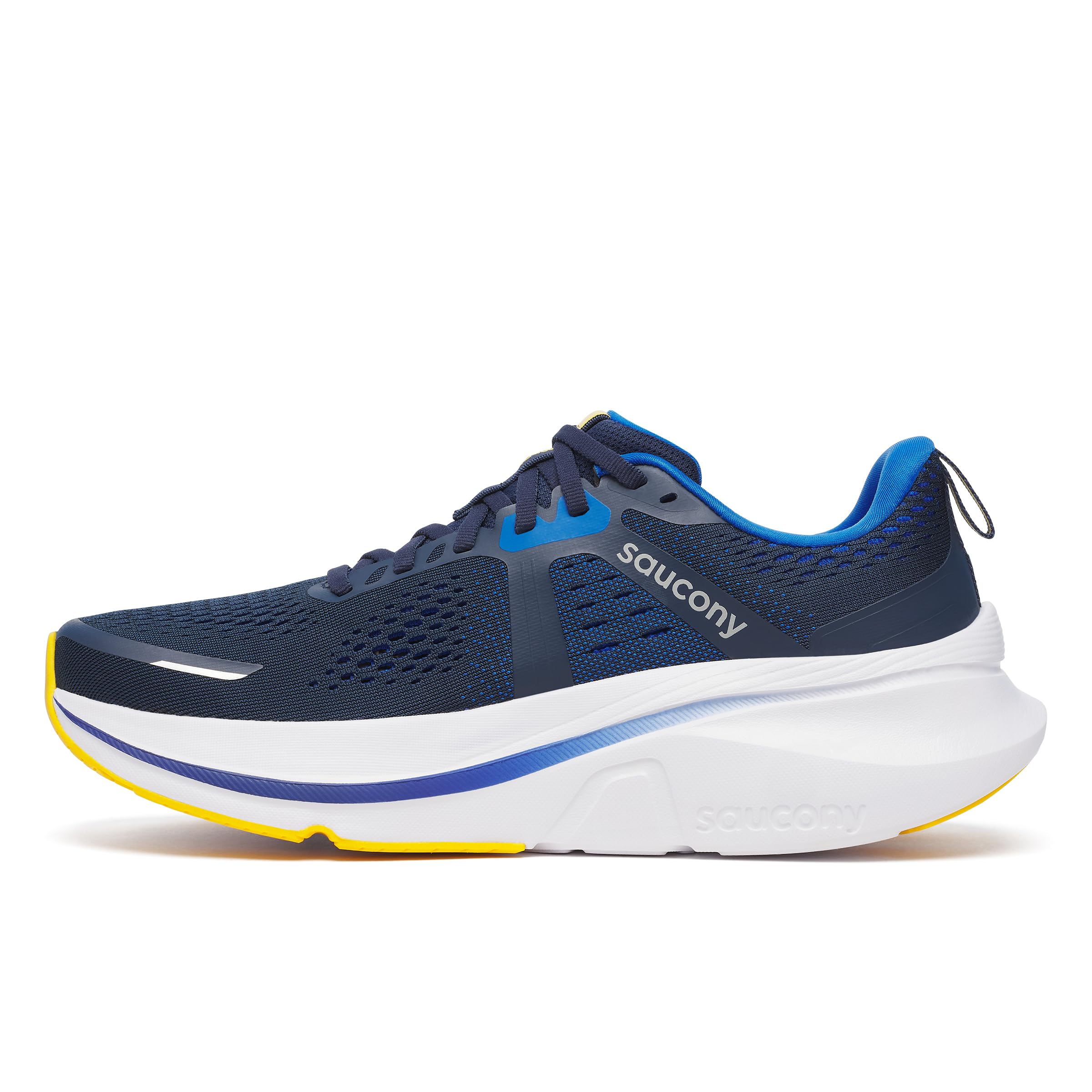
5. Saucony Men’s Guide 18 Sneaker
A cushion-first trainer that keeps a pronating foot centered through its shape.
The Guide 18 is the pick for a daily trainer that leans soft. It pairs Saucony’s PWRRUN foam — a cushion that is springy rather than squishy — with CenterPath Technology, the same geometry used in the Hurricane above. CenterPath keeps your foot centered by maintaining a standard centerline, raising the sidewalls, and shaping the sole into a slight rocker that eases your toe off. The result is support that comes from the shoe’s shape rather than a hard insert under the arch, which makes it forgiving on sensitive feet.
Cushioning is the headline for larger runners and anyone logging serious miles. An owner who ran hills and speed repeats straight from the start described the ride as bouncier and more supportive than comparable ASICS models, and another 50-year-plus runner compared it to the cloud feel of a racing flat with an uncanny amount of support. The fit gets strong marks too — quality and fit are the two most-praised things, and the wide toe box helps a flat-footed foot stay comfortable. Several owners say it eases foot and joint aches after long days on their feet.
The honest catch is durability. The sole and the mesh upper are the two spots owners flag, with a few noting a hole wearing through near the big toe or the foam wearing quickly for heavy users. If you are hard on soles or log very high mileage, that is the trade-off to weigh. For a lighter runner or a walker doing normal daily distances, the Guide 18 is a comfortable, well-made trainer that earns its spot — just do not expect it to outlast a firmer, more expensive build.
What Stands Out
- PWRRUN foam gives a soft, bouncy cushion that stays springy
- CenterPath geometry keeps the foot centered through shape, not a hard arch bump
- Wide toe box fits flat-footed and broad feet comfortably
- Lighter build at 1.87 pounds feels quick on the foot
What To Know
- Durability is the split point — some owners see sole and toe-box wear inside the first season
- Firmer, costlier options outlast it for very high-mileage runners
The fit here: a soft, cushioned daily trainer for walkers and regular runners who want comfort and gentle guidance.
Don’t pick it if: you log very high mileage and need the sole to hold up for a long season — go firmer and heavier for that.
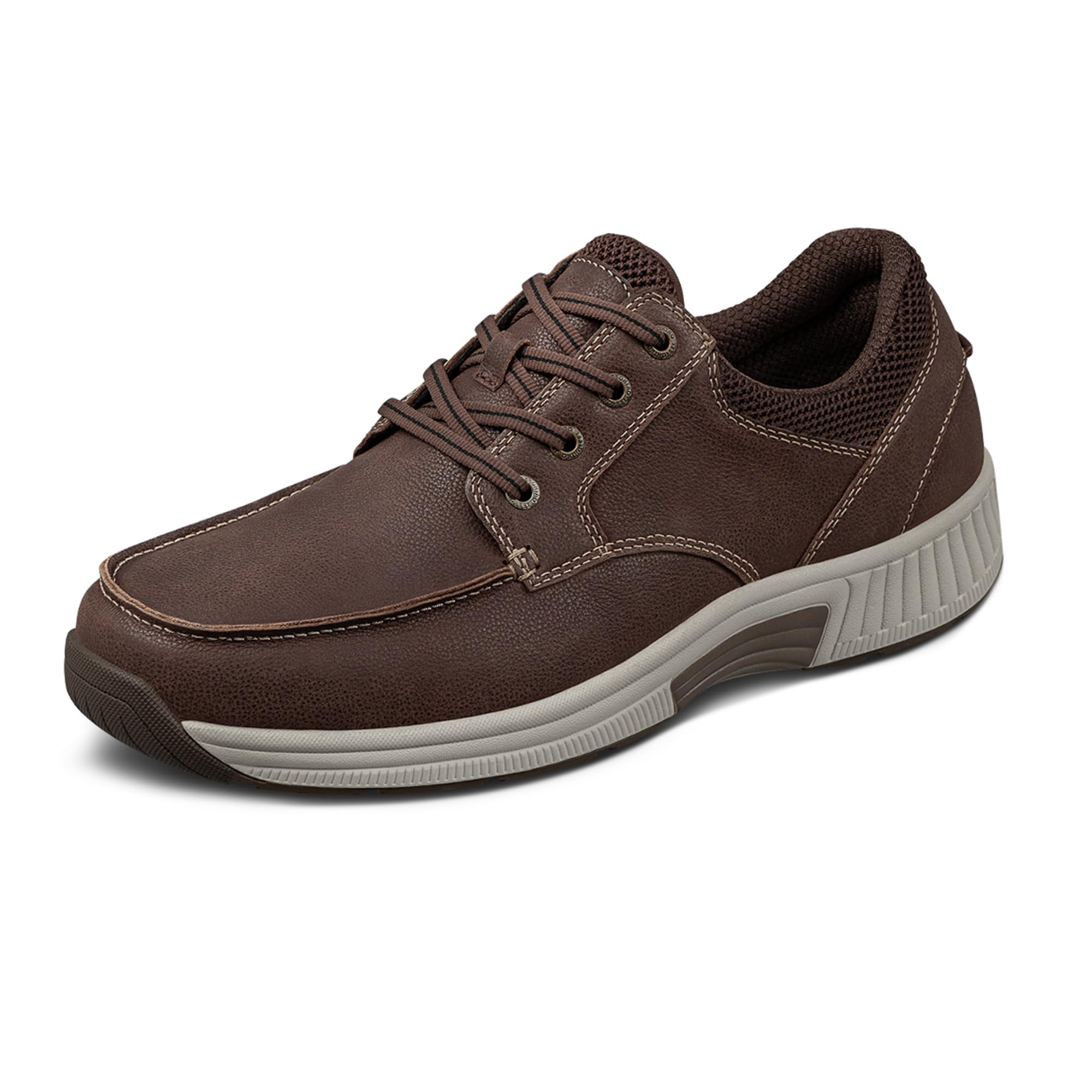
6. Orthofeet Leo Orthopedic Men’s Leather Walking Shoes
A leather walking shoe with a removable insole that accepts your own custom orthotic.
This is the pick for anyone whose overpronation comes with serious foot pain or a need to use a custom orthotic. The Orthofeet Leo builds in three things: a premium orthotic support, a cushioned sole, and a roomy, pressure-free upper. The key feature for pronators is the removable insole with extra depth, which lets you swap in your own orthotic — a fit that most running shoes cannot offer. The leather build makes it dressy enough for work and casual wear, so it can pull double duty where a mesh trainer cannot.
What owners consistently mention is the feel of the shoe on a hard day. Comfort and quality land at the top of the praise, and buyers with neuropathy and flat feet describe thick, supportive soles that make pavement walking easier. Several long-term customers wear nothing else and keep coming back for more pairs, which says a lot about the fit and durability. The wide sizes and the roomy toe box help accommodate a broad, sensitive foot without pinching.
The honest note is that the leather version runs firmer and less flexible than the brand’s mesh models — a few buyers feel a stiffer, more plastic-like shell that does not crease to the foot. Sizing also needs a look, since some owners had to go a half-size up. If you want a soft, broken-in leather feel straight from the box, the mesh line suits you better; if you need orthotic compatibility and all-day support, this is the right tool.
What makes it different: the removable insole, extra depth, and roomy upper let you run a custom orthotic inside a structured leather walking shoe — a pairing that is hard to find in a running trainer. Owners with sensitive feet praise the cushioning and fit.
Built for you if: you wear custom orthotics, need a wide pressure-free fit, and want a leather shoe that works for work and walking.
Not your pick if: you want a soft, flexible mesh fit — the leather version feels firmer on first wear.
7. ASICS Men’s GT-1000 14 Running Shoes
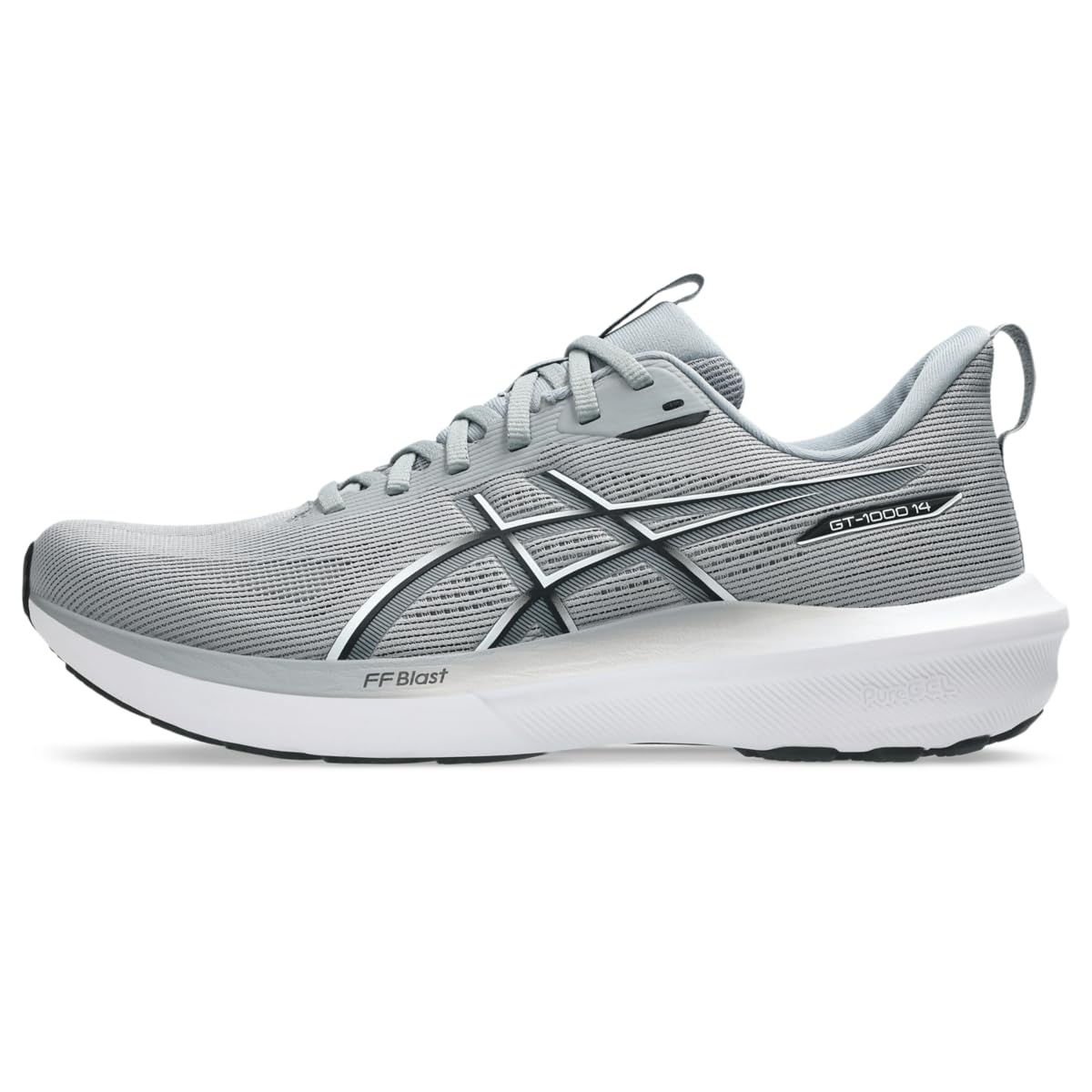
Named support for inward roll at an entry-level price, and it weighs next to nothing.
ASICS builds the GT-1000 14 for exactly this problem: the shoe is designed to support feet that roll inward too far, with extra stability for daily training. It also happens to be the lightest shoe on this list at 1.44 pounds, which is a real edge if a heavy stability shoe has ever left your legs dragging. The cushioning is engineered to feel energized rather than dead, so the ride stays lively even though it is built for support.
The customer feedback lines up with the design. Quality and comfort are the most-mentioned strengths, with fit close behind, and the shoe comes in wide sizes for a broader foot. Arch support and pronation relief both draw praise, and owners say it holds up for all-day standing without arch ache. Appearance gets a nod too — the shoe looks sharp enough for everyday wear, not just the gym.
Durability is the split point. Some owners get a full season or more, and a few see it wear faster under heavy daily use, so it is best suited to a walker or a regular runner rather than someone flogging it for ultra mileage. It is the entry-level pick in the ASICS approach, and the price reflects that. If your budget is tight and you want real pronation support in a featherweight shoe, this is the one to beat — just plan to replace it a little sooner than the premium picks above.
Where it wins: the support is designed specifically for overpronation, and at 1.44 pounds it is the lightest shoe here — a rare mix of support and low weight at an entry-level price. Wide sizes and arch support keep it comfortable for a range of feet.
The trade-off: durability feedback is mixed, with some owners seeing faster wear under heavy use. Treat it as a value pick for regular days, not a high-mileage workhorse.
Start here if: you want proven pronation support and a light, lively ride at the lowest price on the list.
Step up if: you need a shoe that will survive a full year of heavy mileage — the firmer picks above last longer.
8. New Balance Men’s Fresh Foam X 880 V15

A cushioned everyday shoe that shines on long walks, work shifts, and wide feet.
The 880 V15 is the walking-first pick. Its cushioning comes from the same Fresh Foam X midsole used across New Balance’s line — a soft, plush foam that one owner compares to walking on clouds. A structured engineered mesh upper adds support around the foot for all-day wearability, so it holds up whether you are logging a long walk or standing at a work bench for hours. Quality and comfort are the two things buyers call out most, and the wide width options make it a comfortable fit for broad feet.
For longer distances this shoe delivers. Owners wear it for multi-hour walks and feel no leg fatigue, and the arch support keeps the foot from collapsing as the miles stack up. It is available in a wide size including 4E, and one buyer at 6’3″ and 290 pounds found the size 16 very comfortable and liked that it came in an attractive design rather than the plain look of big-and-tall stores. It is genuinely versatile — good for walking, running, and work. The catch is sizing: several buyers advise going a half size up, and one notes it runs short overall.
Durability is the mixed note. Some owners get almost a year of constant wear out of them with no signs of the shoe coming apart, which is genuinely good for the category, while a few report the shoe wearing faster than they hoped. If you want a soft, cushioned, wide-foot-friendly shoe to live in, this is an easy pick — just size up if you are between sizes and expect to replace it after a long stretch of daily wear.
Tops On This Pick
- Fresh Foam X midsole stays plush over multi-hour walks with no leg fatigue
- Structured mesh upper adds support for all-day wear
- Wide options up to 4E fit broad and large feet comfortably
- Works for walking, running, and work across the day
The Watch-Outs
- Sizing runs short — several owners recommend ordering half a size up
- Durability feedback is mixed, with a few finding faster wear than expected
Your match if: you spend long hours on your feet, need a wide width, and want cushioning that lasts through a long walk.
pass on it if: you want a shoe for fast running — this one is tuned for comfort and walking first.
9. Brooks Men’s Addiction Walker Suede Walking Shoe

A suede walking shoe that keeps a pronating ankle lined up on pavement for hours.
The Addiction Walker Suede is built for hard pavement and long shifts, not the treadmill. Its standout feature is arch support that keeps your ankles aligned as you walk, which is exactly what a pronating foot needs when you are on your feet for hours at a time. The suede upper gives it a put-together look that works for street walking and casual wear alike, and comfort is the single thing owners mention most by a wide margin. It weighs 2 pounds and comes in a spread of colors.
If your overpronation shows up mostly on long walks rather than runs, this is the one to reach for. The arch support keeps the foot steady through the step, and owners describe the shoe wearing well for street walking. The appearance and color options get regular praise, so it is a pick that looks as good as it feels. For someone who does a couple of miles a day on sidewalk and then stands around the rest of the time, the cushioning and support hit the mark.
The two things to sort out are fit and longevity. Fit is mixed — some owners get a perfect first-time size while others find it runs narrow, so try before you commit if you have a wide foot. Durability also splits, with plenty of buyers getting a solid stretch of street walking and a few reporting the shoe wearing out faster than expected. It is a fine walking shoe for steady pedestrian use; for people who need maximum cushion or wide widths, the picks above serve better.
Why walkers like it: the arch support keeps ankles aligned while walking, so a pronating foot stays steady on hard pavement through long shifts. The suede upper looks sharp enough for everyday wear, and comfort is the most-praised quality.
Pick this if: you walk mostly on pavement and want a suede walking shoe with steady arch support for long days.
Consider another pick if: you have a wide foot that needs extra room, or you need the shoe to last through very heavy daily mileage.
Know the Specs
Stability Systems
Stability systems are the anti-roll machinery inside a support shoe, and they come in a few flavors. A guide-rail design steers your foot back into line only when it rolls too far, which feels natural and unpushy. A dual-density or dual-foam frame puts firmer material on the inner side so it resists the inward collapse while staying soft elsewhere. A geometry-based system like CenterPath uses a broader base and raised sidewalls to cradle the foot rather than pressing under the arch. Matching the type to your foot — firm and planted or soft and guided — is the biggest decision you will make.
Cushioning And Stack Height
Cushioning is the soft foam layer under your foot, and stack height is simply how thick that layer is. More stack means more plushness and more shock absorbers under a hard landing, which suits long walks, recovery runs, and hours on concrete. Less stack means a firmer, snappier ride with sharper control, which suits faster running and severe pronation. The trick is that you can now get high cushion and real stability together, as the dual-foam and geometry picks here show — you no longer have to trade soft comfort for control. Decide if you want pillow-soft or firm and planted, then choose accordingly.
GuideRails Support
GuideRails are Brooks’ support design: instead of building up the arch, they place firm rails around the sides of the foot that only engage when your step starts to roll inward. The benefit for a pronator is support without the hard arch bump that can feel aggressive on a sensitive foot. It is one of the more forgiving ways to manage overpronation, and it is why the Adrenaline GTS 23 feels supportive without fighting your foot.
CenterPath Technology
CenterPath is Saucony’s stability approach: it keeps a standard centerline through the shoe, raises the sidewalls around the foot, and shapes the sole into a rocker that eases your toe off. The effect is support that comes from the shape of the shoe rather than a separate insert, so the foot feels guided and centered without a pronounced arch feel. It runs through the Hurricane 24 and the Guide 18 above.
Common Questions
What is the difference between a stability shoe and a neutral shoe?
Do I really need stability shoes if I overpronate?
Can I put my own orthotics in these shoes?
How long should a stability running shoe last?
Will a wide width help with overpronation?
Is max cushioning bad for a pronating foot?
Should I size up or down in stability shoes?
Are leather walking shoes good for overpronation?
How tight should stability shoes fit around the heel?
Can I run in a walking shoe if I overpronate?
The Bottom Line
If overpronation is your daily battle, the men’s shoes for overpronation winner is the Brooks Adrenaline GTS 23. It pairs GuideRails support that steers your foot back into line with DNA Loft v3 cushioning that stays comfortable mile after mile — and at 2 pounds it is lighter than the heavier New Balance 860 V14’s 3 pounds. If you need the softest ride that still holds a pronating foot steady, the Saucony Hurricane 24 is the max-cushion choice. And for custom orthotics and pressure-free comfort in a leather walking shoe, the Orthofeet Leo is the one to reach for.
Whichever way you lean, pick the shoe that matches your cushion preference against your control need, order with a little room in the toe, and give any pair a week to break in before you judge it. The right stability shoe stops the inward roll before it finishes, which is what quiets the ache in your arch and knee.
How we choose
We do not accept paid placement. Every pick is matched to a real buyer and a real use-case; we do not hands-on test units.
Sources
Specifications: manufacturer listings and product documentation. Review insights: verified customer reviews, as of October 2026. Pricing: not shown on this page (it changes often); check the current price via the retailer link.
As an Amazon Associate, Aappliancez earns from qualifying purchases. This does not affect which products we feature.