Disclosure: Some links in this post are affiliate links. As an Amazon Associate I earn from qualifying purchases, at no extra cost to you. Learn more
Specs are compiled from manufacturer listings and verified buyer reviews and can change over time — please confirm the key details on the product page before buying.
Motion sickness ruins the trip you paid for — the queasy roll in your stomach, the cold sweat, the urge to find the nearest exit. The right motion sickness medicine depends on your trigger: winding roads, open water, or amusement rides. This guide covers chewable tablets, coated pills, and a drug-free wristband-and-patch kit, so you can match the fix to your trigger instead of guessing at the pharmacy shelf. The top pick here is a chewable 300-count bottle with a 4.8-star record across 500+ owners. If you want something you can slip behind your ear with no pill at all, there is a kit for that too.
This guide is built by comparing the manufacturers’ published specifications and the patterns across verified customer reviews, so you get each pick’s real strengths and trade-offs instead of marketing spin.
Some people need relief that kicks in before the car even pulls out of the driveway, while others want a drug-free option they can wear all day. Below you will find the honest differences between meclizine chewables, coated Gravol tablets, and acupressure bands — a complete medicine for motion sickness breakdown built around how each one actually gets used.
Top Picks

How To Choose The Best Medicine for Motion Sickness
The biggest mistake first-time buyers make is grabbing whatever box is closest at the airport gift shop. Motion sickness medicine is not one-size-fits-all — a pill that works for a ferry crossing can leave you groggy for a business meeting, and a chewable that saves a road trip may do nothing for a child under twelve. Four factors separate one option from another.
Active ingredient and how fast it hits
The active ingredient decides how quickly you feel relief. Meclizine, the ingredient in Rugby Travel Sickness tablets, is a chewable that starts working fast because your body absorbs it as you chew. Dimenhydrinate, the ingredient in the Gravol coated tablets, is meant to be swallowed whole and can take longer to kick in. If you need relief before a drive begins, a chewable tends to be the more practical pick.
Drowsiness and alertness
Some motion sickness medicine makes you sleepy, and some does not. If you are the one driving, or you have a workday after your flight, a non-drowsy formula matters more than anything else on the label. Check the box copy carefully — drowsiness varies by ingredient and by brand, and the Gravol line is specifically noted for keeping users alert.
Tablet format and swallow-ability
Coated tablets are easier to swallow than plain ones, and chewables skip the swallowing problem entirely. For anyone who gags on pills — kids, older adults, or anyone already feeling nauseous — format is not a minor detail. The Gravol FilmKote coating is designed to be taste-free and slippery, which makes it a reasonable choice for people who struggle with bitter pills.
Drug-free versus medicated options
Not everyone wants a pill. Acupressure wristbands and ginger patches offer a drug-free path, and they are the only realistic option for children as young as three. The trade-off is that drug-free relief tends to be milder, so it suits mild-to-moderate queasiness better than a violent case of seasickness.
Side-by-Side Comparison
| Model | Best For | Format | Supply | Key Feature | Amazon |
|---|---|---|---|---|---|
| Rugby Travel Sickness, Tablets★ Best Overall | Long trips and family use | Chewable tablet | 300 count | Meclizine, non-drowsy | Amazon |
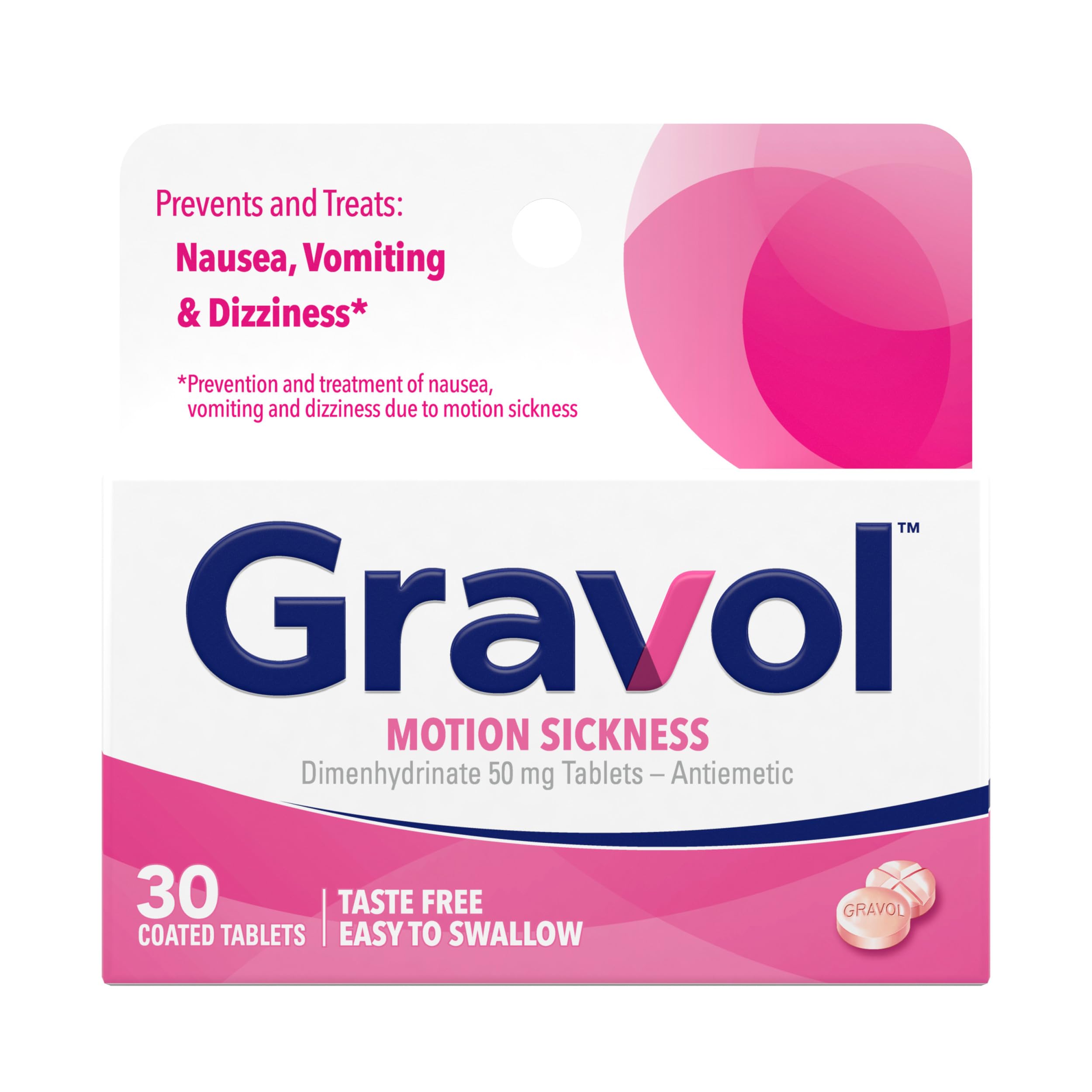
| Gravol Motion Sickness Relief Coated TabletsPremium Pick | Fast, taste-free relief | Coated tablet | 30 count, 50 mg | FilmKote easy-swallow coating | Amazon |
| Easy to Swallow GRAVOL Antinauseant | Big-bottle value | Taste-free tablet | 30 tablets | Prevents and treats dizziness | Amazon |
| Sea Sickness Kit for Cruise | Kids and pill-free travel | Wristbands + patches | 2 bands, 10 patches | Drug-free P6 acupressure | Amazon |
| MediNatura BHI Nausea Relief | Homeopathic and FSA/HSA buyers | Fast-dissolving chewable | 100 count | Gluten-free, plant-based | Amazon |
Detailed Reviews
1. Rugby Travel Sickness, Tablets (300 ct)
Our pick — over 4.5★ from 500+ verified ratings; the strongest balance of quality and price.
Three hundred chewable tablets that cover a daily commute and every road trip for a year.
If your problem is the queasy feeling that hits the moment the car starts moving, this is the bottle to keep in the glovebox. The active ingredient is meclizine, which calms the inner ear — the balance sensor that reacts to rocking and rolling. Chewing means absorption starts while the tablet is still in your mouth, so relief can begin on the road rather than twenty minutes down the highway. It suits anyone twelve and older, and the chewable format means nobody has to swallow a pill while already feeling sick.
The real reason this earns the top spot is the value math. For comparison, this bottle runs 3.53 ounces versus the 0.48-ounce Gravol 30-count pack — the Rugby carries a far bigger supply in a still-portable package. But note one honest caveat: the data notes an equilibrium-based user who keeps meclizine on hand permanently because nothing else has ever fully worked. That is the profile this option suits best — someone who wants a reliable, always-available remedy rather than a one-time fix.
The bottle shape is a little large for a pocket, so this is really a bag-or-glovebox product rather than a keychain one. If you only travel once a year, an individual blister pack may be easier — but the 300-count format is the smartest pick for anyone who reaches for motion sickness relief more than occasionally.
What stands out
- Meclizine chewable with rapid onset — relief can start before you reach the highway
- 300-count bottle means years of coverage for occasional travellers
- Suitable for adults and children twelve and older
- Non-drowsy formula keeps you alert on the drive
What to keep in mind
- Bottle is bulky compared with a single-dose blister pack
- Not intended for children under twelve
Reach for this if: you want one bottle that handles motion sickness for a household over multiple years.
Look elsewhere if: you need something sized to slip into a small pocket or purse for a single trip.
2. Gravol Motion Sickness Relief Coated Tablets 50 mg 30 Count
A Canada-first nausea tablet that finally landed in the U.S. with a slippery, taste-free coating.
Here is the thing nobody tells you before your first cruise: the bitter pill you have to choke down while already queasy is part of what makes the whole experience worse. Gravol solved that with a FilmKote coating — a thin, taste-free shell that slides down without releasing any flavour until it is well past your tongue. Each 50 mg tablet is dosed for adults at one or two tablets every four hours, and for children over six at half to one tablet every six to eight hours. That makes it one of the few options here that scales for the whole family with careful dosing.
What owners praise most is that it does not leave you foggy. The brand describes itself as Canada’s number-one anti-nausea line, now sold in the U.S., and the reported experience tracks with that — buyers describe it as superior to Pepto tablets and note that it does not carry the chalky films those leave behind. One repeat purchaser wrote “I have purchased them several times.” Some users do report feeling tired after taking it, and the honest framing there is that it is a mild trade-off some people would happily make to feel human again.
Compare this to the Rugby chewable above: this one is a swallowed tablet, not a chewable, so it relies on oral dosing rather than quick chewing. It weighs just 0.48 ounces, which is light enough that it disappears into a travel pouch. If you want a coated pill that a nervous flyer can quietly take before boarding, this is the one.
Where this earns its price: the FilmKote coating is the story. It turns a pill that some people dread into something easy to take while you are already feeling sick, and the 50 mg dosage plus clear adult and child schedules makes it easy to plan around before a flight or a drive.
The honest catch: the format is a swallowed tablet, so anyone who truly cannot take pills will prefer a chewable or a fast-dissolving option instead. And because the drowsiness level varies person to person, try one dose at home before relying on it for a day of driving.
Confident verdict: the best fit for adults who want a taste-free, easy-swallow pill for carsickness, airsickness, or seasickness — this is the do-it-all portable option.
Fair warning: if you cannot or will not swallow tablets, plan on a chewable or a wristband kit instead.
3. GRAVOL 30 tablets Antinauseant

The Canadian stalwart with tear-open packaging and a reputation for killing queasiness in twenty minutes.
If you have ever watched a travel vlogger swear off Dramamine in favour of something called Gravol, this is that bottle. The tablet is designed to treat and prevent motion sickness, plus related nausea, vomiting, and dizziness. It uses the same FilmKote taste-free coating as the entry above, so swallowing is easy and there is no bitter aftertaste. The tear-open packaging is the detail travel-focused buyers tend to love most — you can peel a single dose out in a car seat, on a tray table, or on a swaying deck without wrestling with a child-proof cap.
What wins people over is how it handles the swing without slowing them down. Users report relief from nausea and dizziness within twenty minutes without losing their alertness, and a flight attendant-style rescue story runs through the reviews — being handed one during a rough flight and never looking back. One traveller reports “no drowsiness on 8hr plane ride or multi-hour train rides.” The honest limits: the effects last roughly four hours, so a long cruise day needs a second dose, and the packaging notes it is a Canadian product, which is why it is not sold in mainline U.S. stores. It earns a strong four-point-seven score with the crowd here.
The motion-sickness case for it: tear-open packaging plus a taste-free tablet is the ideal travel shape — you can dose quickly and quietly without fumbling for a cap.
Where it stops short: roughly four hours per dose means a long day at sea will need a second tablet, and the Canadian packaging may put off buyers looking for a widely stocked U.S. brand.
Best suited to: cruisers, frequent flyers, and anyone who values pack-and-go simplicity over buying locally.
Consider other options if: you need a full eight-hour window between doses or want to buy the same brand in a standard U.S. pharmacy.
4. Sea Sickness Kit for Cruise
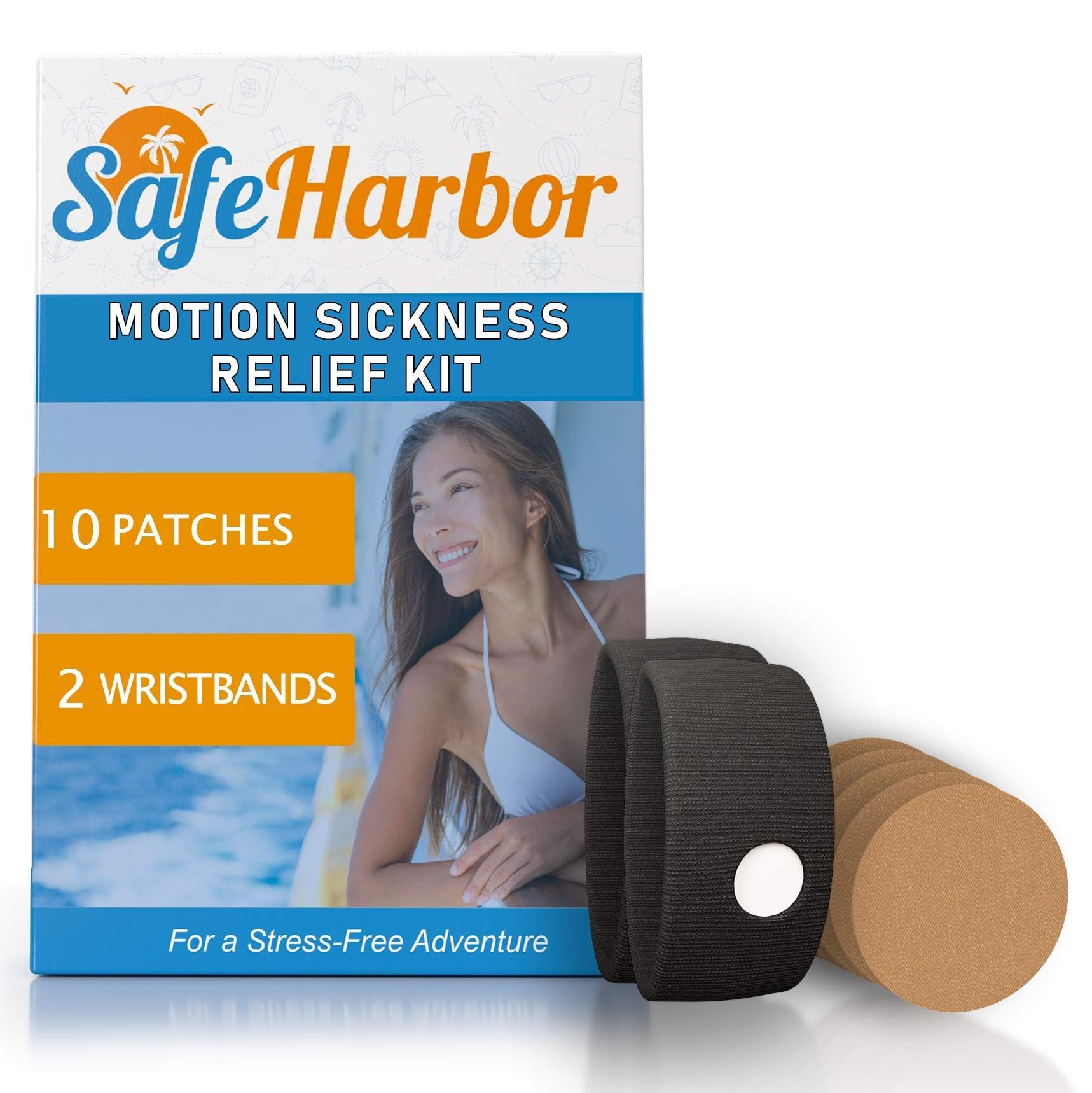
A drug-free two-part kit that turns a queasy three-year-old into a happy cruiser.
Nobody wants to hand a pill to a preschooler, and this kit exists exactly for that problem. You get two reusable motion sickness wristbands plus ten ginger patches — no medication, no swallowing, no drowsiness. The wristbands work on the P6 acupressure point, a spot on the inner wrist that the motion-sickness world has relied on for generations. The patches go behind the ear or on the wrist and are billed as waterproof and discreet, with each one lasting a full day at sea. The whole kit weighs just 1.45 ounces, so it disappears into a carry-on alongside your sunscreen.
The strongest reason to buy this is family coverage. Kids age three and up can wear the bands, so the same kit works for a toddler on a winding road and an adult on a tender ride. What wins people over is how portable the whole thing is — buyers describe using the bands and patches to head off car sickness on long drives and reporting that they stayed on through days of wear. One cruiser’s review says it plainly: “I didn’t get sea sick!”
The honest catch is fit. This kit is made for adults, teens, and kids, and some wearers report the bands feel too small or slip on thinner wrists. The patches get mixed reactions too, and that is expected for any herbal ginger product — some find them helpful, others do not. For the money you are getting a two-tool approach, which means you can try the bands first and fall back to the patches if the water turns rough.
What people love about it
- Drug-free relief suited to ages three and up
- Two tools in one kit — acupressure bands plus ten ginger patches
- Featherweight at 1.45 ounces, fits any carry-on
- Reusable bands mean one purchase covers multiple trips
Where it falls a bit short
- Band sizing is reported as snug on some wrists
- Ginger patch results vary by user
Straight answer: the right pick for any parent travelling with kids, or any adult who prefers to skip medication entirely.
Only caveat worth flagging: the wristbands run a bit small, so check the fit before you pack for a long cruise.
5. MediNatura BHI Nausea Relief Chewable Tablets 100 Count
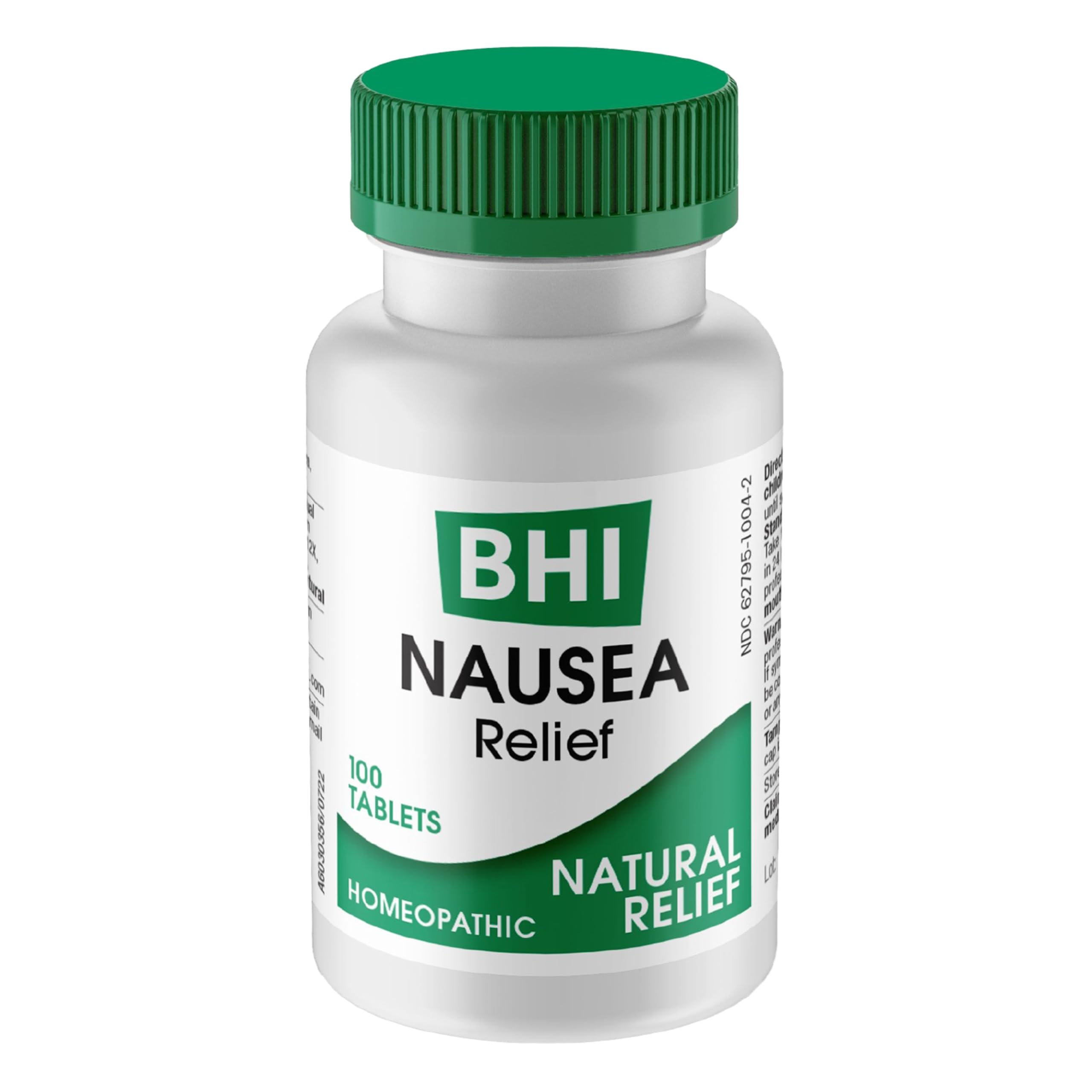
A plant-based chewable that dissolves almost instantly and comes FSA/HSA eligible for the whole family.
If you want something that is gluten-free, non-addictive, free of artificial sweeteners, flavours, dyes, and preservatives, and easy to give to a child as young as four, this bottle belongs in the house. The tablets are made with plant-based ingredients and dissolve fast, so no swallowing is involved. The brand advertises no known drug interactions or contraindications and the product is FSA/HSA eligible, which matters if you are shopping with a health account. It is a common pick for families dealing with the queasy-from-the-flu sort of nausea — buyers describe giving it to a twelve-year-old with digestive trouble and to kids who cannot handle a pill.
The chalky texture and near-tasteless profile are note before you buy. Buyers describe it as a homeopathic staple — something people keep on hand because it works in about half an hour and, as one happy user puts it, “they’re easy to chew and they work.” The main complaint from the review pages is travel-unfriendliness: the bottle’s lid has been reported to pop open in a purse or a bag, spilling tablets and making a mess. Pack it in a zip bag if you are tucking it into a carry-on.
Who this fits: households that want a clean-label, chewable nausea tablet with no known interactions, and shoppers who want to use FSA or HSA funds.
What to plan for: the tablet has a chalky mouthfeel that some people dislike, and the bottle needs to be stored upright to avoid the reported spill.
Made for you if: you want a natural, dissolvable tablet that suits kids and adults and fits a health savings account.
Think again if: you need the harder-hitting, prescription-strength feel of a meclizine tablet for open water.
Know the Specs
Active Ingredient
The active ingredient is the chemical that stops the queasiness. Meclizine, the ingredient in the Rugby chewables, calms the inner ear — the balance sensor that goes haywire on open water. Dimenhydrinate, the ingredient in the Gravol coated tablets, is a different route to the same end. The homeopathic MediNatura tablets take a plant-based path with no known drug interactions. If you are already taking other medications, check with a pharmacist before mixing — several of these formulas are advertised as non-drowsy but individual alertness still varies.
Dose and Timing
Timing is everything with motion sickness medicine. Chewables, like Rugby and the MediNatura BHI tablets, absorb as you chew, so they tend to work quickly. Coated tablets, like Gravol, are meant to be swallowed whole, so plan on taking them before the triggering motion starts — the brand’s own guidance is at least thirty minutes ahead of the trip. Match the dose to your body weight and the trip length; the Gravol line is dosed in 50 mg increments for adults and half a tablet increments for children over six. A long cruise day may need a second dose.
Common Questions
How long before a flight should I take motion sickness medicine?
Is the Gravol Motion Sickness tablet safe for a child under twelve?
Do these motion sickness medicines make you drowsy?
Can I take a chewable motion sickness tablet while already nauseous?
How long does one dose of Gravol Motion Sickness Relief last?
Does the Sea Sickness Kit for Cruise work for a three-year-old?
Is the MediNatura BHI tablet a homeopathic medicine?
Do I need a prescription for any of these motion sickness medicines?
Is the Rugby chewable safe for adults and children of every age?
Can I take motion sickness medicine with other medication?
The Bottom Line
For most travellers, the motion sickness medicine that does the most per bottle is still the Rugby Travel Sickness chewables — 300 meclizine tablets at 4.8 stars across 500+ owners is genuine value for a household that reaches for relief more than once a year. If you want a taste-free, easy-swallow pill that ships in a light travel count, the Gravol Motion Sickness Relief coated tablets are the pick to grab. And if you are packing for a child or anyone who would rather go drug-free, the Sea Sickness Kit for Cruise pairs two acupressure bands with ten ginger patches in a kit that weighs barely over an ounce.
Whichever route you take, one practical nudge: buy before you travel, not at the airport. Having the right format in your bag — chewable, coated, or drug-free — is the difference between a trip you enjoy and a trip you survive.
How we choose
We do not accept paid placement. Every pick is matched to a real buyer and a real use-case; we do not hands-on test units.
Sources
Specifications: manufacturer listings and product documentation. Review insights: verified customer reviews, as of October 2026. Pricing: not shown on this page (it changes often); check the current price via the retailer link.
As an Amazon Associate, Aappliancez earns from qualifying purchases. This does not affect which products we feature.