Disclosure: Some links in this post are affiliate links. As an Amazon Associate I earn from qualifying purchases, at no extra cost to you. Learn more
Specs are compiled from manufacturer listings and verified buyer reviews and can change over time — please confirm the key details on the product page before buying.
Most women buy compression socks, wear them twice, and quietly banish them to a drawer — because the pair felt like a tourniquet at the ankle or slid down by lunchtime. The fix is not a fancier brand; it is matching the compression level and the calf measurement to your own legs. Below you get five pairs that real women actually keep wearing, sorted by what each one does best: all-day standing shifts, long flights, swelling, or dressing up under a skirt.
This guide is built by comparing the manufacturers’ published specifications and the patterns across verified customer reviews, so you get each pick’s real strengths and trade-offs instead of marketing spin.
You will see how a 20-30 mmHg (the pressure grade measured in millimeters of mercury) changes what a sock feels like, why a knee-high and a pantyhose solve different problems, and which pair suits your calf size. Read on for the medical compression socks for women picks worth your drawer space.
Top Picks
How To Choose The Best Medical Compression Socks for Women
Compression socks are not one product — they are a pressure grade wrapped around a fit. Get the grade right and the fit wrong, and you will fight them every morning. Get both right and you forget you have them on by mid-afternoon.
Start with the mmHg grade, not the colour
The number on the box, like 20-30 mmHg, is the pressure the sock puts on your leg — measured in millimeters of mercury, the same unit a blood-pressure cuff uses. A 20-30 mmHg pair is a firm, medical-level squeeze. It is the grade most women buy for swollen ankles, heavy legs, and long flights.
Lighter grades feel gentler but do less for real swelling. If you are buying for travel or a job on your feet, stay in the 20-30 mmHg band and let the fit decide the rest.
Measure your calf and ankle before you order
The single most common reason a pair gets returned is a size chart ignored in favour of a shoe size. Compression socks are sized by calf circumference and, often, ankle circumference. Run a soft tape around the widest part of your calf and write the number down before you look at any listing.
A pair that is too loose around the ankle gives no support at all. A pair that is too tight at the top band digs in and leaves marks. Both problems come from the same skipped step.
Knee-high, thigh-high, or pantyhose
Knee-high socks stop below the knee and cover the calf — the workhorse shape for standing all day and for flying. Pantyhose and thigh-high styles run the full leg and suit swelling that reaches above the knee, plus anyone who wants a smooth line under a dress. Pantyhose also brings its own fit quirks, like torso length, that socks never have.
Open toe or closed toe
An open-toe design lets your toes breathe and makes the sock easier to check and easier to pull on. A closed toe feels more like an ordinary sock and hides seams inside a shoe. If you have long toenails, an open toe is the kinder choice.
Side-by-Side Comparison
| Model | Best For | Compression | Style | Pack | Amazon |
|---|---|---|---|---|---|
| BBFREY 20-30 mmHg (3 Pairs)★ Best Overall | Everyday swelling and wide calves | 20-30 mmHg | Knee-high | 3 pairs | Amazon |
| Nurse Yard Compression SocksShift-Ready Pick | 12-hour nursing and teaching shifts | 20-30 mmHg | Knee-high, zero-toe | 1 pair | Amazon |
| Laubawck Compression Pantyhose | Under dresses and long flights | 20-30 mmHg | Pantyhose | — | Amazon |
| High-Waist Opaque Compression Pantyhose | Swelling that reaches above the knee | 20-30 mmHg | High-waist pantyhose | — | Amazon |
| Amazon Basics Medical Compression Stockings | Post-surgery and open-toe comfort | 20-30 mmHg | Knee-high, open toe | 1 pair | Amazon |
Detailed Reviews
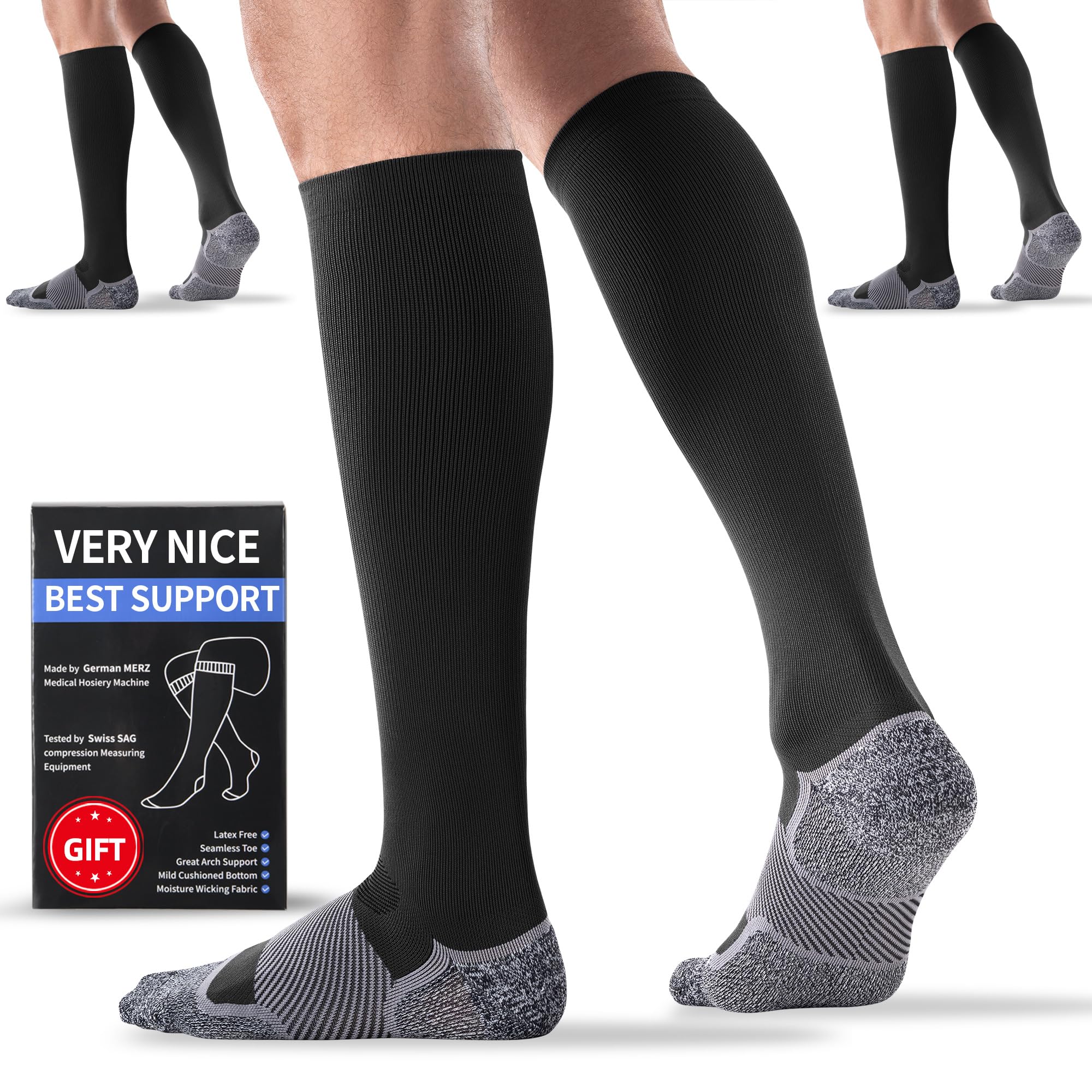
1. Medical Compression Socks 20-30 mmHg for Men Women (3 Pairs)
Our pick — 4.5+★ from 950+ verified ratings; the strongest balance of quality and price.
Three pairs of firm 20-30 mmHg support that stay put for 11-plus hours and still slide on easier than most.
This is the pair to buy if you want real medical-grade squeeze without a wrestling match every morning. The 20-30 mmHg rating is firm medical pressure — the grade that targets puffy ankles and heavy calves after standing shifts or flights. Buyers with wide calves are the loudest fans: one reports a 14.5-inch calf size S/M fitting a women’s 10.5 shoe, with the size chart reading true.
What wins people over is the build quality — the socks are knit on German medical sock machines and pressure-tested, and the cushioning sits lightly at the toe and heel. That translates to a sock that keeps its squeeze after washes instead of going slack. Padded underfoot means they wear comfortably inside shoes, and the firm top band holds without digging in.
The honest catch: compression this firm still needs patience to pull on, and buyers who are elderly or frail have found them hard to get off. Measure your calf first, too — the snug fit rewards getting the size right and is unforgiving if you guess.
Why This Earned Top Spot
- Three pairs per pack, so you can rotate one in the wash without running out
- Holds graduated pressure across a full day without sliding or bunching
- Light cushioning at toe and heel for all-day comfort inside shoes
- Wide-calf buyers report an accurate, comfortable fit
Where It Asks More Of You
- Firm 20-30 mmHg takes patience to pull on, especially if grip strength is limited
- Sizing is unforgiving — measure calf and foot before you order
- Hand or cold machine wash only; machine drying is not recommended
Reach for this if: you want a multi-pair set for daily swelling, travel, or sport and need a firm, reliable squeeze.
Think twice if: you have limited hand strength or need a pair you can slip off in seconds.
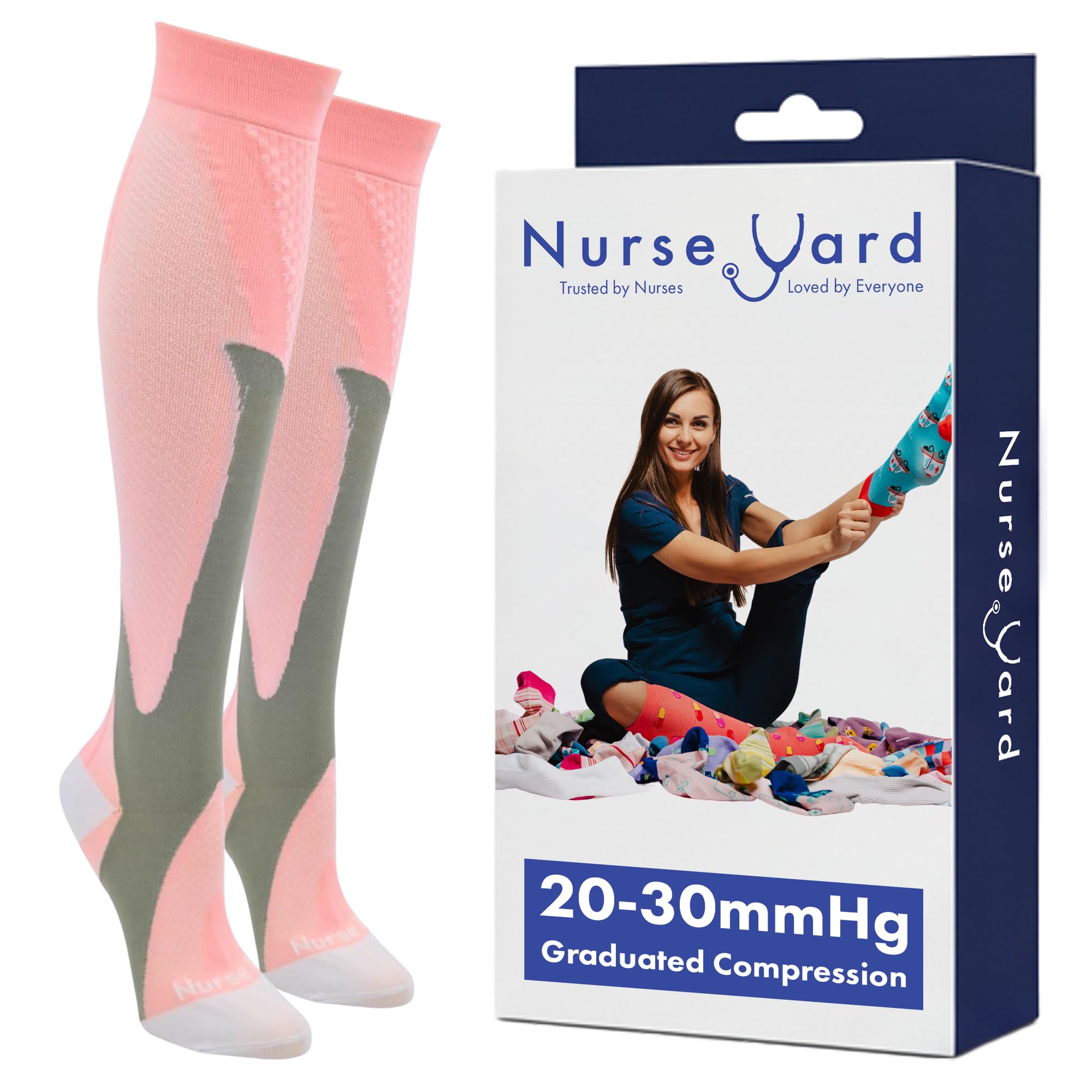
2. Nurse Yard Compression Socks
Built for the 12-hour shift crowd — a zero-toe design that skips toe pressure and eases tired legs by bedtime.
Nurse Yard targets the people who are on their feet the longest: nurses, medical staff, and teachers. The 20-30 mmHg graduated squeeze runs 30 mmHg at the ankle down to 20 mmHg at the calf, pushing blood back up the leg. The zero-toe construction removes pressure at the toes, which is the spot most compression socks pinch.
Nurses and teachers report less soreness and swelling after 12-hour shifts, and the fabric is light, soft, and non-scratchy rather than itchy wool-adjacent. One owner with a roughly 17-inch calf found the fit spot-on and says the leg feels great by bedtime.
Here is the trade-off worth knowing: sizing runs big around the lower leg for some, and the fit and comfort feedback is genuinely mixed in the reviews. A few also flag skin marks, so check the materials against any sensitivity before you commit to a full week. It is a one-pair purchase, so treat the size chart seriously.
What Owners Validate: the compression itself is the standout — firm, consistent, and staying in place through extended wear, which is exactly what a long shift demands.
What To Watch: this is one pair, not a set, and the sizing feedback swings, so measure rather than assume your usual size fits.
The verdict: a sensible single pair for nurses and teachers who want firm leg support through a long standing day.
Only skip it if: you prefer a multi-pair value set or need a guaranteed-consistent fit from the start.
3. Compression Pantyhose Stockings for Women Men, 20-30 mmHg

Opaque black compression tights that pass as ordinary hosiery while giving your whole leg a 20-30 mmHg hug.
If you want support that hides under a skirt or dress, these pantyhose do it — the material reads as normal black tights, not a medical garment. The 20-30 mmHg grade covers the full leg, so any swelling above the knee gets attention too. Buyers compare the feel to far pricier pairs and call the compression 10/10.
Long flights are where these earn their place: owners mention wearing them through 8-plus-hour trips, and one shopper says they stayed comfortable on a long shift. That shopper also notes they are not built for everyday use, so if you are on your feet daily, alternate them with knee-highs. Reviewers praise the compression and the value most.
The fit is the honest sticking point. The sizing chart runs off, so measure your thigh and calf and choose a smaller waist size if you sit between two. The crotch also runs short on some bodies, and the fabric is see-through and slightly scratchy — wear them under a thicker pant or yoga pant.
Pick these when: you need full-leg support that disappears under office wear or travel outfits.
Be prepared for: a sizing chart that needs a tape measure plus a short torso fit that takes adjusting.
4. 20-30mmHg Compression Pantyhose

A high-waist full-leg stocking that stays put under clothes and calms swelling from injury or long travel.
This pair goes after swelling that reaches above the knee, with a high waistband that keeps the leg hug anchored. The 20-30 mmHg grade runs ankle to thigh, and the opaque fabric hides veins and swelling rather than putting them on display. Buyers describe firm, comfortable support without feeling over-tight, and material soft enough to sit under clothing all day.
For real legs-in-recovery use, it has pulled its weight: one buyer’s injury swelling stayed down through a long plane trip, and the support and quality are what buyers mention most. One buyer with POTS says her symptoms ease while she wears them.
The fit is where it splits opinions — the buttock area runs roomy enough that the tights do not pull down, which suits curvier hips but not everyone. They are also genuinely hard to pull on the first few times; put them on before you are in a rush. Do not order if you are sensitive to latex, rubber, or neoprene, given a reported reaction.
The Case For It: full-leg 20-30 mmHg coverage with a high waist that stays anchored and fabric that hides under a skirt.
Plan Around This: putting them on takes effort and the roomy seat means the fit favors fuller hips over a slender frame.
Suits you if: your swelling reaches the thigh or knee and you want support that reads as tights.
Not the pick for: anyone short on time in the morning or sensitive to latex-type materials.
5. Amazon Basics Medical Compression Stockings
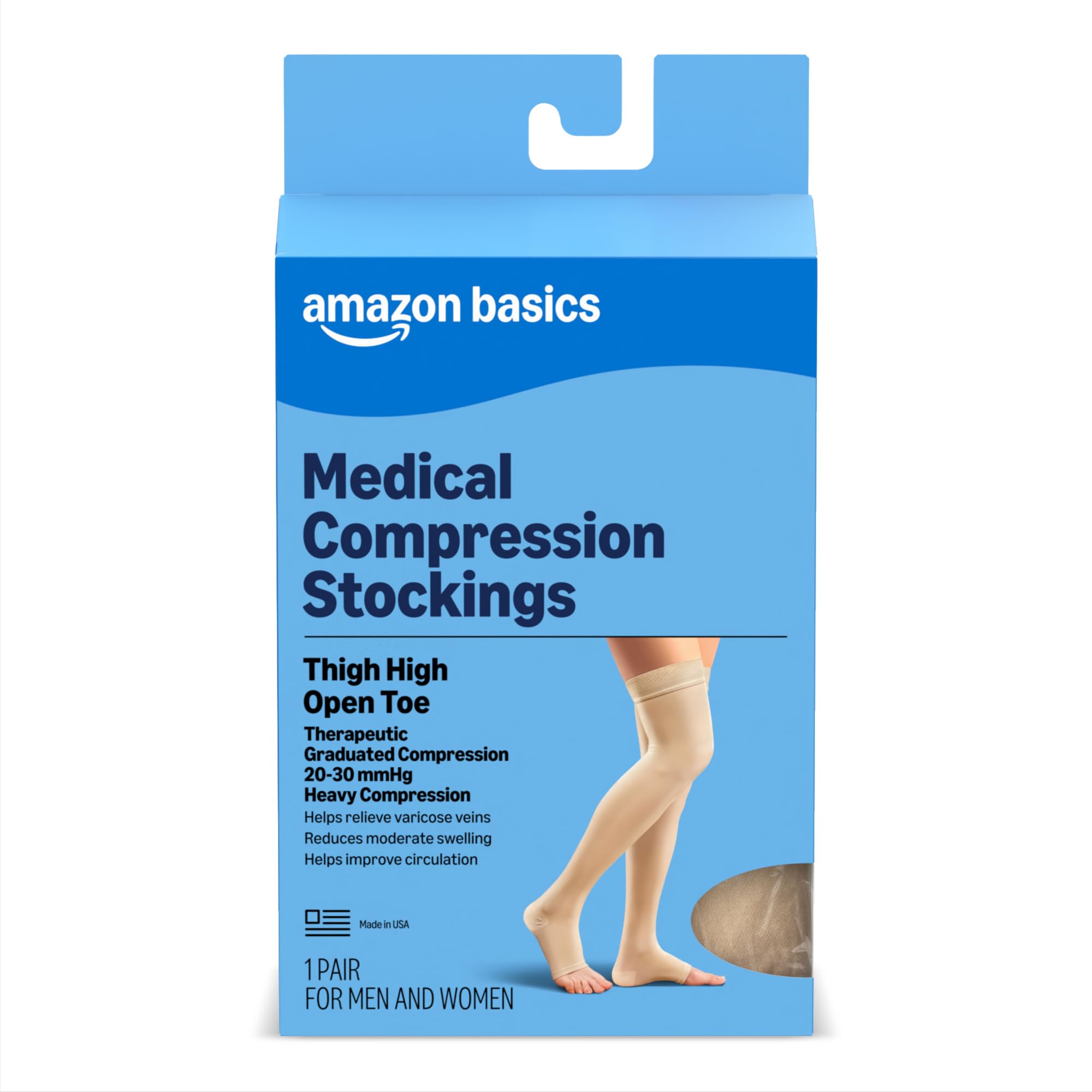
An open-toe, hospital-grade stocking with a silicone grip top that is easier to pull on than clinic pairs.
Amazon Basics leans on the recovery crowd: a toe-less design for breathability and easy inspection, plus a silicone grip dot-top lining that fights rolling. The 20-30 mmHg is heavy-strength medical compression, and the hospital-grade yarn is durable and made in the USA. Post-surgery customers note these are far easier to put on than the hospital-issued pair that kept rolling down, and they stay up all day.
Quality is what buyers praise most — the fabric is breathable and the support is noticeable through long days standing or sitting. The unisex opaque beige fabric conceals while it compresses, which many appreciate in a recovery setting.
Know the fit limits: the ankle runs loose for buyers who specifically want ankle support, and the length can be too long for petite frames — one 5-foot-1-inch buyer could not size down for length. A few also find the fabric tears easily at the nails, so treat the open toe gently when pulling them on.
Standouts That Matter
- Silicone grip top resists rolling and slipping through the day
- Open toe is breathable and easy to check during recovery
- Durable hospital-grade yarn built for repeated wear
- Easier to put on than many clinic-issued stockings
The Trade-Offs To Know
- Ankle support runs loose for buyers who need it firm
- Too long for petite frames with no size-down for length
- Long nails can snag the fabric easily
Good match for: recovery after surgery, varicose veins, or anyone who wants an open-toe stocking that stays up.
Wrong pick for: petite legs or buyers who specifically need firm ankle compression.
Know the Specs
mmHg Compression Grade
mmHg stands for millimeters of mercury — the pressure unit on the sock. A 20-30 mmHg pair gives a firm, medical-level squeeze suited to swelling, heavy legs, and long flights. Lower grades feel gentler but do less for real puffiness. Match the grade to your need, then let fit decide the rest.
Graduated vs Uniform Compression
Graduated compression is tighter at the ankle and looser toward the calf, nudging blood back up the leg. That is why many pairs list two numbers, like 30 mmHg at the ankle down to 20 at the calf. Uniform pressure can feel more like an elastic band and does less to move flow upward.
Knee-High vs Pantyhose Coverage
Knee-high socks cover only the calf and are the workhorse for all-day standing and flying. Pantyhose and thigh-high styles run the whole leg, which matters when swelling reaches the knee or higher. Pantyhose adds torso-length fit quirks that socks never have, so check the crotch and waist measurements.
Calf and Ankle Fit
Compression socks are sized by calf and often ankle circumference — not shoe size. A tape measure around the widest part of your calf is the number that matters. Too loose at the ankle gives no support; too tight at the top band digs in. Measure before you order, every time.
Common Questions
How do I know which mmHg compression grade I need?
Should I size compression socks by my shoe size or my calf measurement?
Can I wear 20-30 mmHg compression socks all day?
What is the difference between knee-high compression socks and compression pantyhose?
Why are my compression socks so hard to put on?
How should I wash medical compression socks so they keep their squeeze?
Are open-toe compression stockings better than closed-toe?
What should I do if compression socks leave marks or irritate my skin?
Do compression socks help with swelling from long flights or standing shifts?
The Bottom Line
For most women weighing medical compression socks for women, the BBFREY 3-Pair set is the clear winner — a firm 20-30 mmHg squeeze, three pairs to rotate, and a fit that wide-calf buyers trust. If you need full-leg support that hides under a dress, reach for the Laubawck Compression Pantyhose. And for recovery with an open toe and a grip-top that stays up, the Amazon Basics Medical Compression Stockings deliver hospital-grade support with easier mornings.
How we choose
We do not accept paid placement. Every pick is matched to a real buyer and a real use-case; we do not hands-on test units.
Sources
Specifications: manufacturer listings and product documentation. Review insights: verified customer reviews, as of October 2026. Pricing: not shown on this page (it changes often); check the current price via the retailer link.
As an Amazon Associate, Aappliancez earns from qualifying purchases. This does not affect which products we feature.