Disclosure: Some links in this post are affiliate links. As an Amazon Associate I earn from qualifying purchases, at no extra cost to you. Learn more
Specs are compiled from manufacturer listings and verified buyer reviews and can change over time — please confirm the key details on the product page before buying.
If your sacroiliac joint flares every morning, the mattress under you is doing more damage than your shoes or your desk chair. The SI joint is the small, tough joint where your pelvis meets the base of your spine, and it hates a bed that lets your hips sink lower than your shoulders. What you need is a mattress firm enough to keep your spine tracking straight all night, with enough give at the pressure points that you are not fighting the surface to turn over. Below you will find eleven picks sorted by what each one actually does for an angry SI joint — firm support, cooling, motion isolation, and a couple of supportive braces that work alongside your bed.
This guide is built by comparing the manufacturers’ published specifications and the patterns across verified customer reviews, so you get each pick’s real strengths and trade-offs instead of marketing spin.
Some beds cradle the pelvis and some let it drop; the difference shows up the morning after. Here is how to tell them apart before you buy a mattress for Sacroiliac Joint Pain.
Top Picks

How To Choose The Best Mattress for Sacroiliac Joint Pain
An SI joint that hurts is usually telling you your pelvis is moving when it should be stable. On a mattress, that translates to one problem: your hips sinking deeper than your ribs. Pick a bed that stops that drop and you have solved most of the morning pain before you even get out of it. Everything else — cooling, motion isolation, edge support — is comfort on top of that foundation.
Firmness is not the same as support
A bed can feel rock hard on top and still let your hips sag, especially if the top layer is thick plush foam sitting on a soft base. What you want is a firm support layer underneath with a thin comfort layer on top — so your pelvis stays level while your shoulder and hip bones still get padded. That is why a 14-inch bed with a plush Euro Top and a firm interior can feel softer than a thin all-foam mattress yet hold your back better.
Why pocket coils matter for side sleepers
Individually wrapped coils (each spring in its own fabric pocket, so it moves on its own) push up under your heavier parts and let your lighter parts stay put. For side sleepers with an irritated SI joint, that independent push keeps the hips and shoulders from collapsing into one line. One owner summed up the difference as “no more back pain” the first night on a pocket-coil build. Innerspring beds with connected springs cannot do this — the whole surface moves together.
Cooling is not vanity when you are in pain
Overheating makes you toss, and tossing twists the pelvis. Gel-infused foam and breathable knit covers help pull heat off your skin so you stay in one position longer. If you run hot at night, this is worth as much as an extra inch of foam. Look for a cover described as cool-to-the-touch or a knit that breathes, not just a foam advertised as cooling with no airflow path behind it.
Set-up and expansion
Every bed here ships compressed in a box, and all of them need time to puff back to full height. Most makers ask for 48 to 72 hours. Sleep on a half-expanded mattress and you will feel the base layers before the foam has settled, which reads as too firm. Let it breathe first — it changes how the bed feels on night one.
Side-by-Side Comparison
| Model | Best For | Profile & Size | Firmness | Construction | Amazon |
|---|---|---|---|---|---|
| Signature Design by Ashley 12 Inch Memory Foam★ Best Overall | Best Overall | 12″ / Queen | Medium Firm | Memory Foam | Amazon |
| JustRoomy 14 Inch Firm HybridCoolest Sleeper | Hot sleepers | 14″ / Queen | Firm | Hybrid | Amazon |
| Paskyee SI Joint BeltDaytime Stabilizer | Daytime pelvic support | Regular (30″–47″ hips) | Adjustable | Neoprene | Amazon |
| MOOA 12 Inch Cooling Hybrid | Couples and light sleepers | 12″ / Queen | Medium Firm | Hybrid | Amazon |
| EGOHOME 12 Inch Memory Foam | All-foam value | 12″ / Queen | Medium Firm | Memory Foam | Amazon |
| Dainely SI Joint Belt | Wearing under clothes | Large (42″–55″) | Adjustable | Neoprene | Amazon |
| Zinus 14 Inch Lumbar+ Memory Foam | Targeted lumbar zoning | 14″ / Queen | Medium | Memory Foam | Amazon |
| Kin By Tuft & Needle Firm 8″ | Firm foam on a budget | 8″ / Full | Firm | Memory Foam | Amazon |
| Suiforlun 14 Inch 7-Zone Hybrid | Full-body zoning | 14″ / King | Medium Firm | Hybrid | Amazon |
| Sealy Dreamlife 14″ Foam | Plush foam feel | 14″ / King | Plush | Gel Foam | Amazon |
| Sealy Dreamlife 14″ Hybrid | Plush coil support | 14″ / Queen | Plush | Hybrid | Amazon |
Detailed Reviews
1. Signature Design by Ashley 12 Inch Memory Foam Queen Mattress
Our pick — 4.5+★ from 51,500+ verified ratings; the strongest balance of quality and price.
The 12-inch memory foam queen that keeps its shape long after cheaper hybrids have dipped.
The defining number here is 12 inches of medium-firm memory foam, and for an SI joint that matters because a thick foam core spreads your weight across the whole pelvis instead of letting one spot take the load. It is the crowd favorite in this group — 4.5+ stars across 51,000+ owners — and the reason is simple: it holds up. One reviewer noted that a more expensive hybrid developed dips within three months while this bed still showed no sag at seven. If you have already burned money on a bed that cratered under your hips, that story lands.
Buyers report less sciatica and back pain and easier mornings within two weeks. That is the kind of change SI joint sufferers are chasing. A 5’9″, 240 lb sleeper and her 6’2″ husband both found it supportive, which tells you the foam does not cave under heavier bodies. The 79″L x 59″W x 12″Th footprint is a standard queen, so it drops onto most platform beds and adjustable bases without a fight.
The catch is firmness. Some owners find it genuinely hard, and a few heavier sleepers say the extra-firm base underneath the soft top caused back discomfort rather than relief. If you know you need a plush surface, this is not that bed. It ships compressed and expands to full height in roughly four hours at room temperature, but plan to let it breathe a full day before you judge it. Deep-pocket sheets are worth buying — the 12-inch profile stretches standard sheets.
What holds up night after night
- Medium-firm memory foam keeps hips from dropping below shoulder level
- 51,000+ owners and a 4.5+ star read — the most proven pick here
- No dips or sag reported at seven months where a pricier hybrid failed
- CertiPUR-US certified foam and a stretch knit cover that stays put
Where it asks you to compromise
- Firmness splits opinion — some find it too hard, especially heavier sleepers
- Needs deep-pocket sheets and a full day to expand
- Foundation or box spring sold separately
Buy it if: you want the most proven SI-joint-friendly bed in this group and a firm-but-cradling feel is what your back wants.
Think twice if: you already know you need a soft, plush surface — the firm base here is not that.
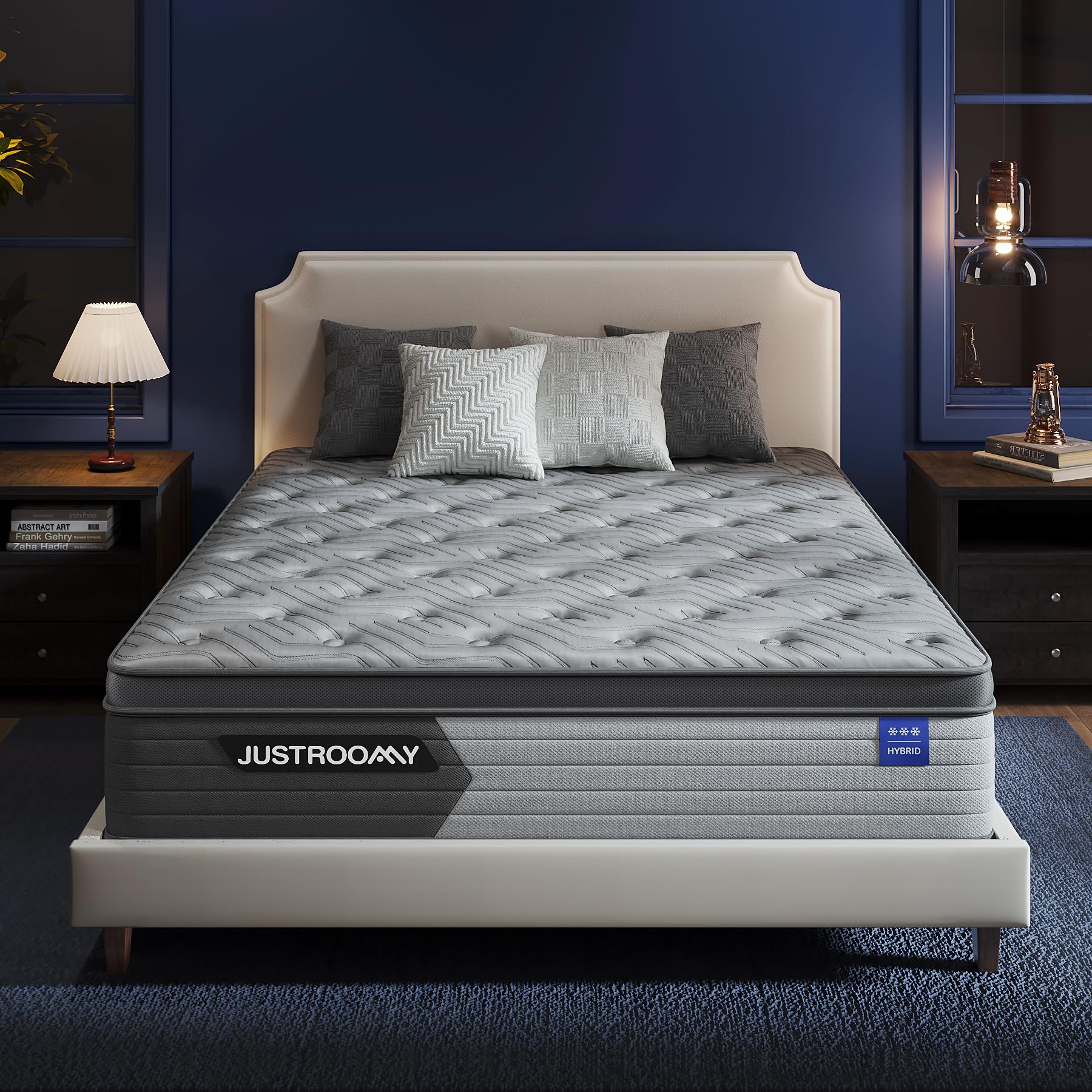
2. JustRoomy Queen Size Firm Mattress 14 Inch Hybrid
A 14-inch firm hybrid with 768 pocket springs and a cover that stays cool to the touch.
Start with the springs: 768 individually wrapped coils, each in its own fabric pocket, push up independently under your hips so your pelvis stays level while your shoulders still get a little give. That is exactly the balance an irritated SI joint needs, and it is why a firm bed like this one does not have to feel like a board. The 14-inch profile sits 2 inches taller than the Ashley queen, which matters if you have a deep mattress frame or just like a higher bed to climb out of.
What wins people over here is comfort — it is the most-praised thing in the reviews, and a 6’7″, 275 lb owner slept better on it than on anything in years. The ice silk top and gel memory foam are the cooling play: the cover uses a mid-molecular weight ice silk fabric that the maker says lowers perceived temperature, so you sweat less and twist less. For a hot sleeper whose SI joint flares on humid nights, that is a real benefit, not a marketing extra.
The honest limit: some owners find the firmness uneven — firm underneath but not as supportive as expected — and a few question the value. The top 2 to 3 inches feel plush over the firm base, so if you want uniform firmness all the way down you will notice the difference. This is a newer model with a thin review base compared to the Ashley, so you are taking a bit more of a chance on long-term durability.
The cooling payoff: the ice silk cover and gel memory foam work together to keep the surface from heating up, so you stay in one position and your pelvis is not twisted by tossing.
Worth flagging: the plush Euro Top over a firm base splits opinion on firmness — check that your body likes that layered feel before committing.
Reach for this if: you run hot at night and need independent coil support under your hips.
Look elsewhere if: you want one consistent firmness from top to bottom — this bed layers soft over hard.
3. Paskyee Sciatica Belt, Sacroiliac Hip Band for Men and Women
The daytime companion that holds your pelvis steady while you are upright, not asleep.
Your mattress handles the night; this belt handles the hours you spend standing, walking, and lifting — the times an unstable SI joint actually complains. The regular size fits a hip circumference of 30″ to 47″, measured right above the hips, and a plus size covers 47″ to 56″. It is a neoprene band with a wraparound dual-belt design: a main belt for baseline support plus three additional straps that let you dial the compression yourself. The maker advises wearing it day and night for at least two weeks and not over-tightening it.
Effectiveness is what this belt is known for, and the volume of owners who say it eased their SI joint pain is the strongest reason it earns a spot beside your bed. The anti-slip material keeps it from riding up your hips, and the slim profile slides under clothes for the office or the gym. A chronic hip-pain sufferer with multiple surgeries behind them got enough relief to hike again.
The trade-off is wear. The neoprene lining on this belt has cracked and stretched for some owners after heavy sweaty use, so treat it as a support garment that needs a backup rather than a once-and-done purchase. Fit is the other variable — some find it too tight and others find the Velcro lets go. Order to your measured hip circumference rather than your clothing size and you avoid most of that.
Why it earns its place
- Dual-belt design lets you control compression on each side
- Anti-slip lining keeps the band from riding up during walks
- Breathable and light enough to wear under clothes or overnight
- Regular and plus sizes cover hip circumferences from 30″ to 56″
Keep in mind
- Neoprene lining has cracked and stretched for some heavy users
- Velcro grip and tightness are hit or miss depending on fit
- Hand wash or dry clean only — no machine washing
Best for: anyone whose SI joint pain spikes during the day — walking, gardening, or long shifts on your feet.
Skip if: you cannot commit to wearing it consistently for a couple of weeks before judging results.
4. Dainely Sacroiliac SI Joint Support Belt, Large 42–55″
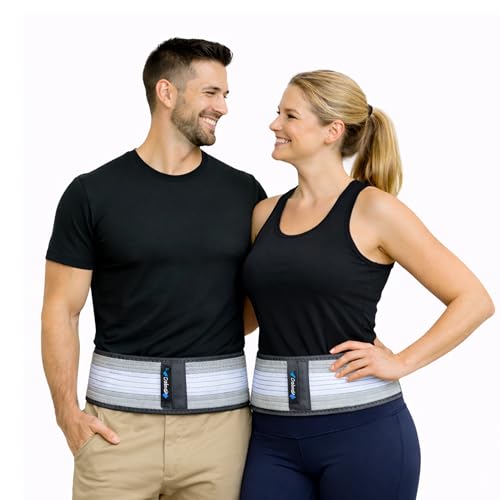
A low-profile belt built to disappear under clothing while it holds the pelvis in line.
Where the Paskyee above leans on triple-strap compression, this Dainely belt goes for a slim, perforated neoprene build with anti-slip silicone strips sewn into the inner lining. That silicone is what stops it sliding, rolling, or bunching during a walk or a long sit, and it is the detail that makes it usable for a full workday. The dual-layer compression gives you adjustable fit, and it carries an HSA/FSA eligible tag, which matters if you buy support gear through a health account.
Sizing is the thing to get right. This is the Large, built for a 42″ to 55″ hip measurement, with a Medium covering 30″ to 40″. The maker’s own advice is to size up if you land between sizes, and that is worth following — a belt that pinches is one you will stop wearing. Breathable and flexible for extended wear, it suits the person whose SI joint needs support through long standing, walking, sitting, or light exercise.
Few owners have reviewed this one yet compared to the Paskyee, so the long-term picture is thinner. What is on record is positive on comfort and support — people report wearing it first thing in the morning before walking, working, or gardening and finding it very helpful. It is hand wash only, so plan to keep it clean with a simple soak rather than the machine.
The quiet advantage: perforated neoprene and a low-profile cut mean it goes under clothes without a visible bulge, so you actually wear it to work instead of leaving it at home.
Fit call: the 42″ to 55″ size is built for larger hips, and sizing up when you are between sizes is the maker’s own advice — measure first.
Best for: anyone who needs pelvic support that stays put under office clothes and qualifies for HSA/FSA spending.
Not for: hips measuring under 42″ — you would need the Medium instead.
5. MOOA Queen Mattress 12 Inch Cooling Hybrid
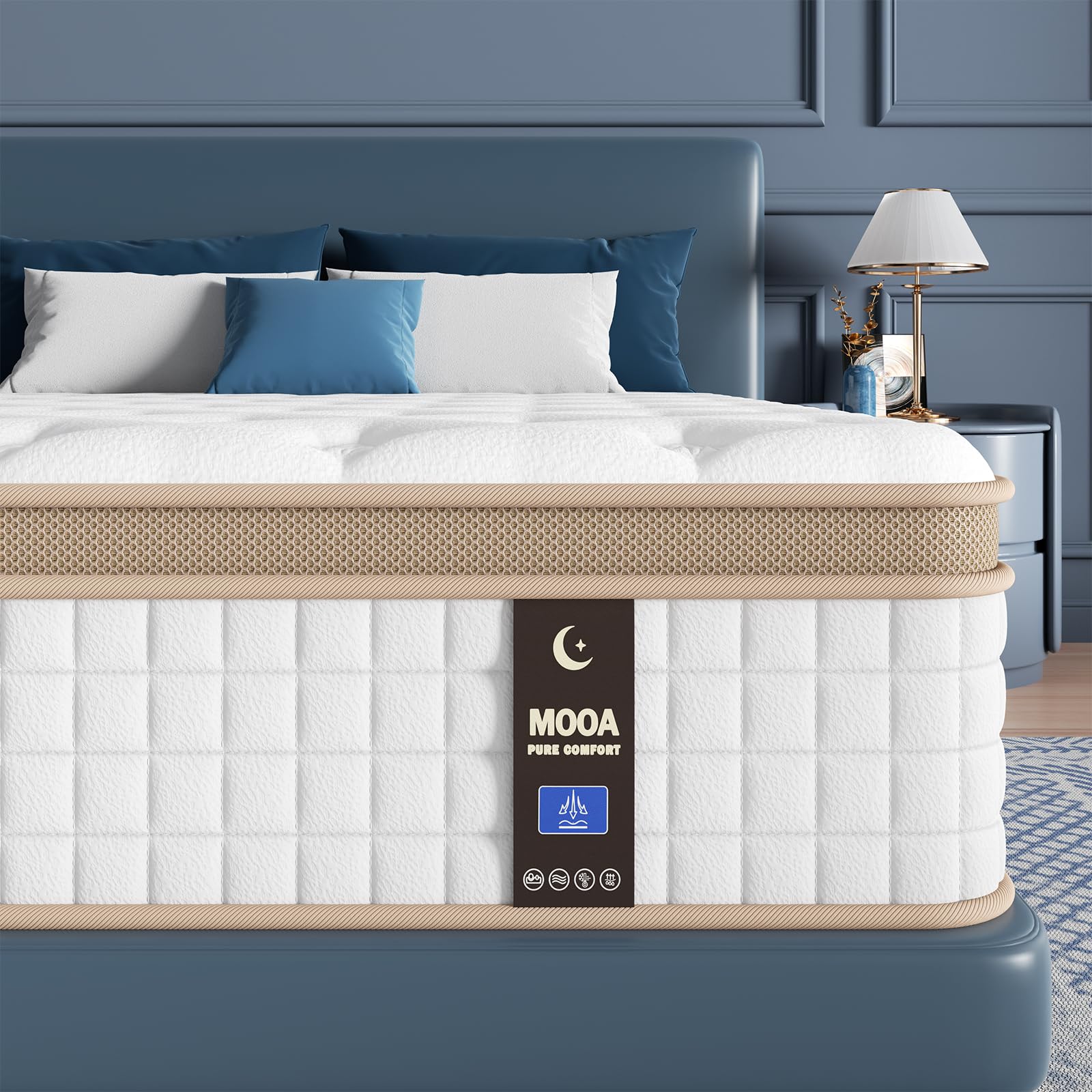
Zoned support and pocket coils that keep your hips level while your partner turns over.
The build here is zoned: pocket coils and cushioning layers are arranged to give targeted support to the shoulders, waist, hips, and legs. For a pelvis that flares when it drops out of line, that zoning is the point — the hip zone gets firmer support so your pelvis does not sink lower than your ribcage. It is a medium-firm 12-inch queen at 80″L x 60″W x 12″Th, so it sits a touch longer than the Ashley queen’s 79-inch length and fits standard frames.
The thing everyone raves about is the quality — it is the most-praised aspect in the reviews by a wide margin — and the sense that this bed was built to last. The 4D knitted cover breathes, gel memory foam pulls heat away, and open airflow channels between the coils let moisture escape, which keeps a hot sleeper from thrashing. Motion isolation is real too: each coil moves on its own, so a partner’s turn or a pet jumping up does not ripple across to your side.
One recurring gripe is worth hearing: some side sleepers find only about 2 inches of foam over the springs, so the coils can be felt through the surface. If you are a light side sleeper who wants a deep, pillowy cradle, this bed may not be plush enough. The reinforced edges are a genuine plus for anyone who sits on the side to get dressed — the perimeter stays firm rather than rolling you off. It expands in 48 to 72 hours and is fiberglass-free.
The zoning that helps: targeted coil support under the hips and waist keeps your pelvis from dropping out of alignment, which is the whole game for SI joint pain.
Side-sleeper note: the foam layer over the coils is thin enough that some side sleepers feel the springs — a plush topper fixes it if you need more cushion.
Grab it if: you share a bed and need zoned hip support plus motion isolation so a restless partner does not wake you.
Consider a topper if: you are a light side sleeper who needs more foam between you and the coils.
6. EGOHOME Queen 12 Inch Memory Foam Mattress

CertiPUR-US foam with a graphene cover for anyone who wants all-foam comfort without the springs.
This one skips coils entirely and goes pure memory foam in a 12-inch medium-firm queen, which gives it a very different feel from the pocket-coil beds here — quieter, with stronger motion isolation. The foam is CertiPUR-US certified and endorsed by the International Chiropractors Association, and the inner cover is fiberglass-free for sleepers who have reacted badly to fiberglass bedding. The graphene-technology cover is deodorizing and antistatic, and it is the detail that sets this apart from a plain foam bed.
What wins people over here is comfort — it is the single most-praised aspect in the reviews by a huge margin, followed by value for money. Owners describe sleeping through the night, and one chronic-pain sleeper who switched from a sagging spring mattress reported no pain or limping after four months. That is the kind of turnaround an SI joint sufferer is looking for, though it comes with a firmness caveat.
Here is the honest fork: the medium-firm label does not hold for everyone. Some owners, especially side and belly sleepers, find it softer than advertised and sink too deep, while others call it firm enough. Heavier sleepers in particular report it feeling more plush than medium-firm. If you need a bed to hold you firmly on top of the surface, test this one with care. Note too that there is no trial period — once a mattress is opened it cannot be returned.
The foam case
- 12 inches of CertiPUR-US memory foam with no coils to poke through
- Graphene cover is deodorizing and antistatic
- Fiberglass-free inner cover for sensitive sleepers
- Strong motion isolation from the all-foam build
The honest catch
- Medium-firm runs soft for some side and belly sleepers
- No trial period — opened mattresses cannot be returned
- Longevity is a question mark for some owners
This suits you if: you want a quiet, all-foam medium-firm bed with strong motion isolation and no fiberglass.
Look elsewhere if: you need reliable firm support or a try-before-you-keep window, because this one has neither.
7. Zinus 14 Inch Queen Lumbar+ Memory Foam Mattress
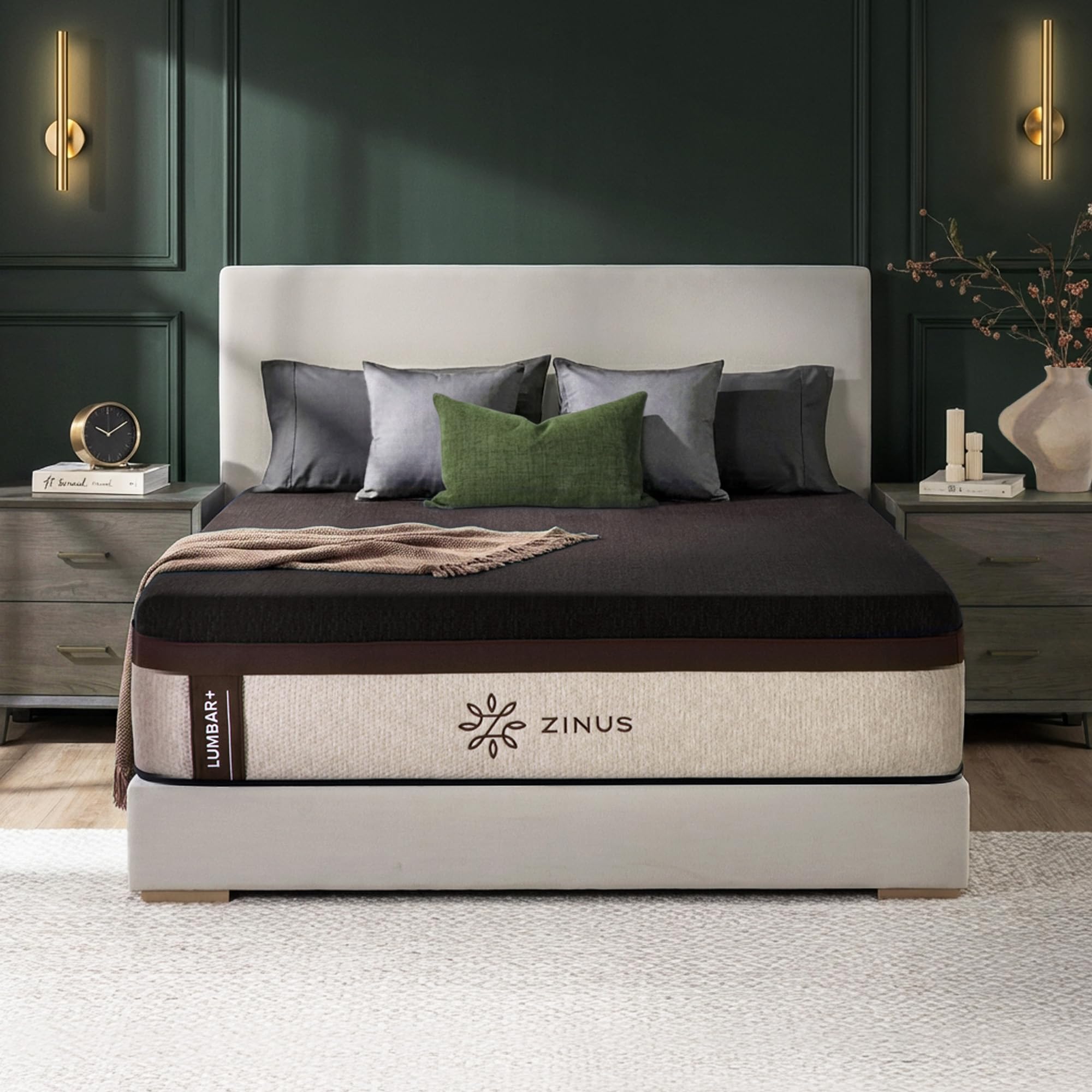
Three firmness zones aimed straight at your lower back, with more foam under you than most.
The 14-inch height is not padding — it is more foam, and more foam means deeper cushioning and better pressure distribution. Zinus arranges that foam into three distinct firmness zones that respond differently across your lower back, so the lumbar area gets dedicated support rather than one uniform slab. For an SI joint that needs the pelvis held level, that zoning is the most interesting thing about this bed. It is a medium feel, supported up to 500 lbs and backed by a 10-year limited warranty.
Gel memory foam draws heat off the surface, and the cover is treated to feel cool to the touch, working with gel-infused foam to pull warmth away from your skin. It is infused with green tea extract to neutralize odors, and any mild off-gassing on unboxing typically dissipates within 24 to 48 hours. The foams are CertiPUR-US certified and the cover meets OEKO-TEX Standard 100, which tests for over 100 harmful substances.
Buyers split sharply on this one. Some owners like the medium feel and report excellent motion isolation (a partner’s tossing won’t ripple across to you) and cooler sleep than an old spring bed. Others find it too soft, or softer over months — one long-term owner describes it sinking deeply enough to cause back and neck discomfort. That softening is the real risk for a bed whose whole pitch is lumbar support. If you run hot and want a taller foam bed with zone-targeting (extra support built into the hip area), it is worth a look. If long-term firmness is non-negotiable, this is a gamble.
Where it shines: three-zone foam and a 14-inch profile put genuine cushioning under your hips, with cooling gel and a cool-to-the-touch cover for warm sleepers.
The honest caution: this bed edges softer over months, which can erode the firm support an SI joint depends on — go in expecting a medium that may ease further.
Best for: warm sleepers who want a tall, zoned foam bed with targeted lumbar cushioning.
skip it if: you need firmness that stays put for years — some owners see it soften well past the return window.
8. Kin By Tuft & Needle Firm 8″ Adaptive Foam Full Mattress

A firm 8-inch foam full mattress that punches above its price and its height.
Tuft & Needle’s adaptive foam here is open-celled to breathe and bounce back, and the maker designs it to feel more supportive than latex or memory foam so you sleep cooler. That support-forward feel is why a firm sleeper with an aching SI joint can lie on it without sinking into a hip-height dip. It is an 8-inch full at 75″L x 54″W x 8″Th, fiberglass-free and GreenGuard Gold screened for over 10,000 harmful chemicals with CertiPUR-US foam inside.
Owners stay with this one: a four-year owner says it held up well and still feels like good value, and 1.5-year users report no indentations or dips. Understand the firmness before you buy — a 6-inch Kin was too hard for one sleeper, who upgraded to the 8-inch and found it softer and pain-free, so the height changes the feel. Side sleepers who want give around the hip find it eases hip and lower back pain and is easy to get out of without sinking in.
The low 8-inch profile is the trade-off. On a deep frame it may look low, and one owner who wanted a true firm found the surface too soft with hips sinking; another noted the edge gave way under 135 lbs. This is a firm-ish foam bed, not a brick, so read the word “firm” loosely. It ships compressed and springs up quickly, and the maker notes a chemical smell that fades over a few days.
Why the price feels right
- Adaptive foam designed to feel more supportive than latex or memory foam
- Owners mention no dips after 1.5 and 4 years of use
- GreenGuard Gold and CertiPUR-US certified, fiberglass-free
- Sleeps cool for a foam bed and comes with a 10-year warranty
What to know before you buy
- 8-inch height looks low on a deep bed frame
- Firmness varies with sleeper weight — hips can still sink for some
- Chemical smell lingers a few days after unboxing
Pick this if: you want a firm-ish foam full mattress at a value price with a proven record of holding its shape.
Know this going in: it is not a true brick-firm bed, and heavier sleepers may feel their hips gradually sink.
9. Suiforlun 14 Inch King Mattress 7-Zone Hybrid

Over 1,000 coils in seven ergonomic zones, built to hold a big bed and a big body level.
Where the MOOA zones four areas, this Suiforlun splits support into seven, with over 1,000 individually wrapped coils arranged to give targeted firm support to your back and lumbar area while still contouring at the shoulders and hips. For an SI joint that needs the pelvis squarely supported, that lumbar-focused zoning is the draw. The perimeter gets three rows of 2.3mm coils for stronger edge support, so you can sit on the side without rolling off. It is a 14-inch king at 80″L x 76″W x 14″Th.
The comfort story is memory foam over coils: gel memory foam cradles pressure points, the quilted Euro Top adds a fluffy layer, and the cooling-fiber cover pulls heat away as soon as you lie down. Customers note it expands quickly — faster than expected — so let it settle before judging it. A 200 lb side sleeper found back and neck pain resolved in about three weeks and called it far better than their previous bed. The 120-night trial gives you real time to test that.
The firmness divides people, as it does on most hybrids here. Some find it too firm, and back support opinions split between relief and pain; a few wish it were medium rather than medium firm. One detail to know: the pillow-top side means you can rotate it but not flip it, which matters if two people sleep on it nightly and want to even out wear. After seven months with three jumping kids and a 6’4″ husband, one owner reported no sagging, so the durability record is encouraging.
Seven zones, real edge support: the 1,000-plus coil layout targets the lumbar area firms up under your back while the 2.3mm perimeter coils keep the edges usable.
Rotation, not flipping: the pillow top is one-sided, so plan to rotate it rather than flip it to even out the wear.
Best for: king-bed buyers who want fine-grained zoned support and a long trial window before committing.
Consider the fit: if you prefer a true medium, this medium-firm build may read too firm — and remember it cannot be flipped.
10. Sealy Dreamlife 14″ Foam Mattress-in-a-Box King
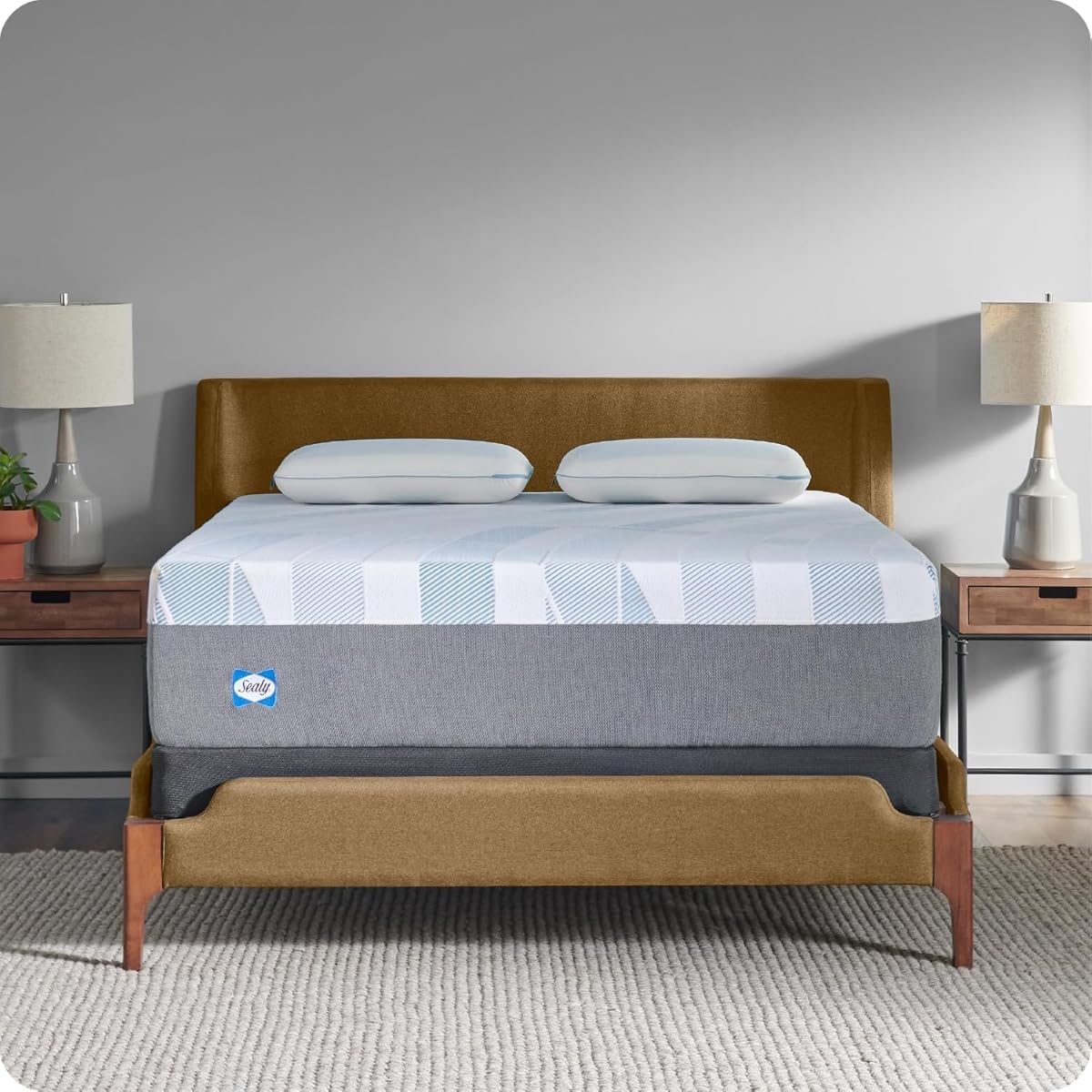
A plush all-foam king from a legacy brand, with a full 3 inches of gel memory foam up top.
The layering here is explicit: a 3-inch SealyComfort gel memory foam layer conforms to your body for tailored pressure relief, sitting on a 3-inch SealySupport high-density transition foam that adds durability underneath. That is a lot of cushioning before you reach the base — a plush feel for side sleepers who want their hip bone cradled rather than pressed. It is a 14-inch king at 80″L x 76″W x 14″Th, and the SealyCool stretch knit cover breathes to help regulate temperature.
The strength is comfort and a restful night — owners describe deep sleep and no morning soreness, and the cover stays stable on a slatted frame. A perimenopausal sleeper who used to wake at 3 a.m. now sleeps through on it, a sign the temperature regulation works. The foam is CertiPUR-US certified and built without formaldehyde, ozone depleters, or regulated phthalates.
Two honest notes on a plush bed aimed at SI joint buyers. First, one owner found the right side of theirs never fully expanded to fill the cover, so check the bed closely in the first days. Second, and more important for alignment: “plush” is the opposite of what some SI joint sleepers need, and a very soft surface lets hips sit lower than the ribcage. This bed suits the person who has confirmed a plush feel keeps their joints calm; if you need firm support, look to the medium-firm picks instead.
Where the cushioning lives: 3 inches of gel memory foam over 3 inches of transition foam delivers a deep, plush cradle that hot sleepers can still use thanks to the breathable knit cover.
Plush means plush: this is the softest-leaning pick here, so it is only right for a body that already knows it likes a giving surface — not for anyone who needs firm alignment.
This fits you if: you want a plush, temperature-regulating king and softness actually helps your joints settle.
Don’t choose it for: firm support — a plush surface can let the hips drop, which is the opposite of what many SI joints want.
11. Sealy Dreamlife 14″ Hybrid Mattress-in-a-Box Queen

Sealy’s plush foam comfort stacked on 7 inches of encased coils, in a queen box.
The hybrid version of the Dreamlife above swaps the all-foam base for 7 inches of SealyResponsive encased coils — individually wrapped springs that allow independent movement and reduce motion transfer. That coil layer is the difference for couples: when your partner rolls over, the springs under you do not all move together. The top stays the same 3-inch SealyComfort gel memory foam over 3.25 inches of SealySupport transition foam, in a 14-inch queen at 80″L x 60″W x 14″Th.
What owners like most is comfort and a deeply restful night, plus value for the Sealy name. It expands cleanly despite some early reviewer worry, a light chemical smell clears after a couple of days of decompression, and one owner reported the first night without a box spring gave the most relaxed sleep in ages. The stretch knit cover breathes to keep temperature in check, and the foam is gel-infused for pressure relief.
But be clear about the firmness label: it is plush, and the support opinions split hard. Some sleepers find it too soft, with one finding it sank to the inner coils even at the edges, while others find it soft yet supportive. A removable-cover claim one owner tried to rely on was disputed, so treat the cover as fixed.
Why some sleepers love it
- Encased coils reduce motion transfer so a partner’s move does not wake you
- 3″ gel memory foam plus 3.25″ transition foam for plush pressure relief
- Breathable SealyCool knit cover helps regulate temperature
- Fits a slatted platform frame without a box spring
Where it divides opinion
- Plush support is too soft for some sleepers, who sink to the coils
- Removeable-cover claim has been disputed by owners
- Heavy and needs two people to move it
Choose it if: you want Sealy’s plush coil-on-foam feel for a shared queen bed and motion isolation matters to you.
Pick a firmer bed instead if: plush surfaces let your pelvis drop — this one is on the soft end of the scale.
Know the Specs
Firmness vs support
Firmness is how hard the top feels when you press your hand into it. Support is whether the layers underneath keep your body level. They are not the same thing. A plush mattress can still support well if the base foam or coils are firm, and a hard-feeling mattress can still let your hips sink if the base is soft. For sacroiliac joint pain, you want support first and firmness second — the goal is a pelvis that stays level with your shoulders and ribcage, not a surface that simply feels hard.
Pocket coils vs memory foam
Pocket coils (individually wrapped springs) push up independently under each part of your body, so a heavier hip gets more push than a lighter shoulder. That keeps your spine level and keeps a partner’s movement from rippling across the bed. Memory foam contours and cradles, which eases pressure points but can let heavier hips sink if the foam is soft. Many hybrids combine both: foam on top for cushioning, coils underneath for support. Which suits you depends on if you need more push under the hips or more give at the shoulders.
Zoned support explained
Zoned support means the mattress is built with different firmness in different bands — often firms under the hips and lumbar area with softer zones at the shoulders. For an SI joint, the hip and lumbar zones are the ones to watch. A three-zone or seven-zone build can help keep the pelvis from dropping out of line while still letting your shoulders settle in. Read the manufacturer’s zone description rather than assuming; not every zoned bed puts the firm band under the hips.
Cooling covers and gel foam
Gel-infused memory foam and knit or ice silk covers help pull heat off your skin so you stay in one position longer. Overheating makes you toss, and tossing twists the pelvis. Look for a cover described as breathable, cool-to-the-touch, or a knit that promotes airflow, plus open channels between coils if it is a hybrid. Cooling is a comfort feature rather than a joint fix, but better sleep in one position means less overnight strain on the SI joint.
Height and expansion time
Mattress height matters for two reasons: a taller bed (14 inches, say) gives you more foam or coil layers and often a firmer support base, and it also means a higher surface to climb out of. Every mattress here ships compressed in a box and needs time to inflate — usually 48 to 72 hours, sometimes faster at room temperature. A half-expanded mattress feels firmer than it will once settled, so let it breathe before you judge it. A mattress in a box also means you need to haul a heavy package inside, often with two people.
Certifications and safety
CertiPUR-US certified foam is tested for emissions, content, and durability, and GreenGuard Gold screens for a long list of chemicals. Fiberglass-free construction matters if you are sensitive to fiberglass or worried about it in bedding. These certifications tell you what is inside the mattress, not how it will feel on your body, so treat them as a safety filter and judge firmness and support separately.
Common Questions
Will a medium firm mattress help sacroiliac joint pain?
Should I choose pocket coils or memory foam for SI joint support?
How long should I wait before judging a mattress in a box?
Does a sacroiliac belt help when I am sleeping?
Is a plush mattress bad for sacroiliac joint pain?
Will a queen mattress fit my existing bed frame?
How heavy is a mattress in a box and can I set it up alone?
Do these mattresses come with a warranty or trial period?
Can a mattress topper fix a mattress that is too firm?
How do I stop a supportive belt from riding up or loosening?
The Bottom Line
For most people hunting a mattress for sacroiliac joint pain, the winner is the Signature Design by Ashley 12 Inch Memory Foam Queen — medium firm foam that holds its shape, a proven record of relieving sciatica and morning grogginess, and 51,000+ owners behind it. If you run hot and want independent coil support under your hips, grab the JustRoomy 14 Inch Firm Hybrid with its ice silk cover and 768 pocket springs. And if you share a bed and need zoned hip support with motion isolation, the MOOA 12 Inch Cooling Hybrid is the one to reach for. Pair whichever bed you choose with a supportive belt — the Paskyee SI Joint Belt — for the daytime hours on your feet, and give the bed a couple of nights to fully expand before you judge it.
How we choose
We do not accept paid placement. Every pick is matched to a real buyer and a real use-case; we do not hands-on test units.
Sources
Specifications: manufacturer listings and product documentation. Review insights: verified customer reviews, as of October 2026. Pricing: not shown on this page (it changes often); check the current price via the retailer link.
As an Amazon Associate, Aappliancez earns from qualifying purchases. This does not affect which products we feature.