Disclosure: Some links in this post are affiliate links. As an Amazon Associate I earn from qualifying purchases, at no extra cost to you. Learn more
Specs are compiled from manufacturer listings and verified buyer reviews and can change over time — please confirm the key details on the product page before buying.
Your ceiling is sagging like a hammock, and you want to know which fabric actually holds and which one shows every crease forever. The short answer: buy material with foam already laminated to the back, check the real cut size against your roof board before you order, and choose a finish that matches what came out of the car. Everything below is built around those three checks, because they are what separate a tidy weekend reupholstery from a second attempt.
This guide is built by comparing the manufacturers’ published specifications and the patterns across verified customer reviews, so you get each pick’s real strengths and trade-offs instead of marketing spin.
A sagging roof liner is usually the first thing passengers notice, so the fabric you choose carries more weight than the job suggests. Below you’ll find the measurements, foam thicknesses and finish options that make picking a material for headliner far less of a gamble than it feels.
Top Picks

How To Choose The Best Material for Headliner
Headliner fabric is not upholstery fabric with a nicer name. It is a thin face cloth bonded to a foam layer, and that foam layer is the part doing the real work. It gives the cloth something to press into when you smooth it, it hides the bumps and old glue ridges on the roof board, and it deadens the hollow drum sound a bare metal roof makes. Buy a panel without it and you will be gluing cloth directly to a board that shows every flaw.
Measure the board, not the cabin
Pull the headliner board out and measure it front to back and side to side, then add a few inches of slack so the fabric can wrap around the edges and be trimmed later. The mistake beginners make is measuring the interior opening and ordering a panel that lands exactly on the boundary. There is no recovering from a panel that is short on one side.
Decide folded versus rolled before you buy
Almost every panel here ships folded and boxed, which is cheaper to ship but leaves a grid of creases. Several makers now ship in a tube so the fabric arrives flat. If you are installing in cool weather, a folded panel will need time in the sun or light ironing before it relaxes. A rolled panel skips that step entirely.
Match the face fabric to the rest of the cabin
A flat knit is the safe choice when you want the car to look like it left the factory that way. Suede and micro-suede are the upgrade route — darker, softer, with a nap that catches light differently from every angle. Neither is better in the abstract. One is invisible, the other is a statement, and you should pick based on which one you actually want to sit under for the next several years.
Side-by-Side Comparison
| Model | Best For | Panel Size | Foam Backing | Face Material | Amazon |
|---|---|---|---|---|---|
| MOTUKA Micro-Suede★ Best Overall | Big roofs and DIY suede upgrades | 79″ x 60″ | 3/16″ | Polyurethane suede | Amazon |
| Fabric Empire Flat KnitBest Factory Match | Restoring a factory look by the yard | 60″ wide, sold by the yard | 3/16″ | 100% polyester knit | Amazon |
| WUJODOR Suede | Quiet cabins and curve-heavy boards | 54″ x 60″ | Foam laminated | Suede polyester | Amazon |
| SARANDAVE Burgundy | Colour-matching a burgundy interior | 60″ x 54″ | 3/16″ | Classic cloth | Amazon |
| Hiksuky Mesh Brown | Long roofs and crease-free delivery | 97″ x 60″ | 1/9″ | Mesh fabric | Amazon |
Detailed Reviews
1. MOTUKA 79″ x 60″ Black Suede Headliner Fabric
Our pick — 4.5+★ from 650+ verified ratings; the strongest balance of quality and price.
The largest panel in this lineup, and the one that turns a sagging roof into a velvet ceiling.
Space is the reason to start here. At 79 inches long and 60 inches wide, this is the biggest cut in the lineup — at 79 inches versus the WUJODOR panel at 54 inches and the SARANDAVE at 60 inches. That extra length is what lets one piece cover a full-size roof board without a seam running down the middle of the cabin. It also leaves enough offcut to wrap the edges properly and still trim to a clean line.
What wins people over is the face itself. The micro-suede is a soft polyurethane fabric with a matte, light-drinking finish, and owners consistently describe it as soft, smooth and installer-friendly. It cuts cleanly, it takes spray adhesive without soaking through, and it presses into curves rather than fighting them. The 3/16-inch foam layer underneath is the quiet hero — it springs back after pressing, so it hides old glue ridges on the board and stops the fabric from telegraphing every bump. One buyer used it for a starlight headliner install and got the fiber-optic points to sit cleanly, which is about the hardest test you can put a face fabric through.
Here is the honest catch, and it is a shipping catch rather than a fabric catch. This panel arrives folded in a box rather than rolled, so it shows creases out of the packaging. The fix is not complicated: lay it out in the sun for a few hours, stretch it slightly as you bond it down, and smooth it as you go. Owners who did exactly that ended up with a flat, even finish. There is also a real fit note on size — one buyer found it right for a 2012 Cadillac Escalade but not the longer ESV or EXT body, so measure your board rather than assuming the badge on your tailgate settles it.
What earns the top spot
- The biggest panel here at 79″ x 60″, enough for a full-size roof without a centre seam
- Micro-suede face that cuts cleanly and takes spray adhesive without soak-through
- 3/16″ foam backing hides board imperfections and holds its shape under pressure
- Dark matte finish that reads as velvet from the seats
- Buyers praise the material itself more than anything else about this panel
Plan around these
- Ships folded in a box, so expect creases you need to sun out or iron
- Measure carefully on long-wheelbase versions of big SUVs before ordering
- Stock can disappear for stretches, so buy when you see it available
Go with this one if: your roof board is long, you want the suede look, and you would rather have slack to trim than come up short.
Think twice if: you are installing in a cold garage — a folded panel needs warm daylight or an iron before it will lie flat.
2. Fabric Empire 3/16 Black Ink Headliner Fabric
The only one here you buy by the yard, so a two-door coupe does not pay for a minivan’s roof.
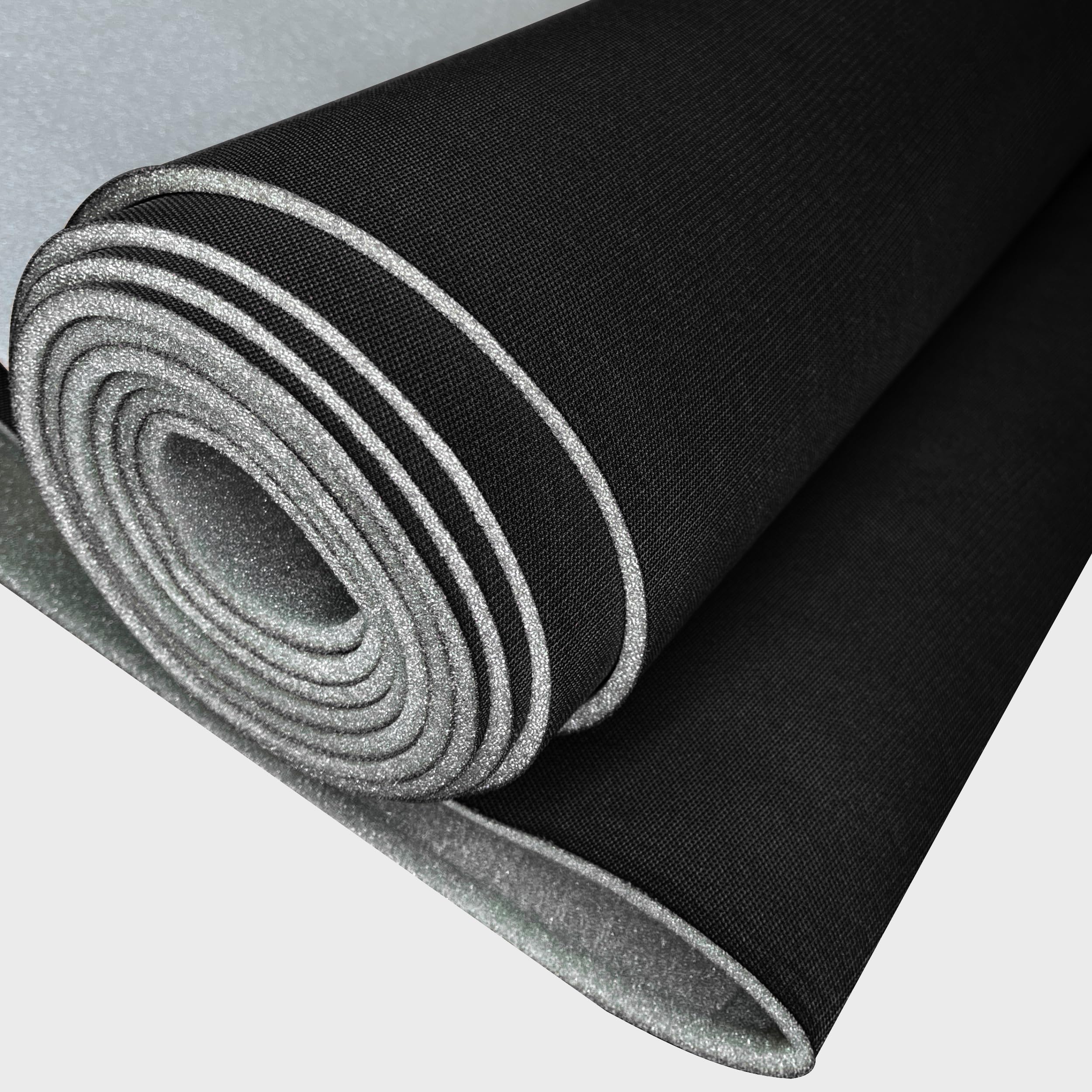
Cut-to-length is the whole point of this listing. You order as many running yards as you need, the fabric arrives in one continuous piece, and you stop paying for offcut you will never use. The roll is a full 60 inches wide, and the face is a flat knit — a smooth, untextured weave with no nap, which is the type of cloth most vehicles left the factory wearing. For a sagging roof on a compact sedan or a small coupe, that combination means you buy close to what you need and nothing more.
The build is straightforward on paper and proven in practice. It is 100% polyester at 11 ounces per yard, laminated to a 3/16-inch polyurethane foam backing, and the face is UV treated so it should hold colour instead of fading toward grey under constant sun. Matching is where this fabric earns its keep. Buyers chasing a factory interior have reported near-exact results — a “Clear Gray” cut going into a 2007 Honda Accord came out as a close match to the original grey, and the weave reads as OEM rather than as an obvious replacement. Material quality is the strength buyers talk about most, with the appearance and colour match close behind.
Two practical things worth knowing before you cut. First, this is a thin knit, so when you wrap it around the edges of the board, the foam can bunch and show through the corners — trim the foam off the last inch or so where it folds over and the edge sits much cleaner. Second, budget adhesive generously: one large can has been reported to cover only about half of a full headliner, so plan on two. It arrives double-wrapped and without creases, which is a real advantage over the folded panels in this lineup.
The yard-by-yard advantage: continuous length and a true 60-inch width mean you buy to fit instead of buying a precut panel and hoping it lands right.
The finish-quality ceiling: this is honest OEM-grade cloth, not a luxury upgrade — some buyers have noted it is decent rather than exceptional, and one spotted marks where spray glue bled through a section.
Reach for this if: you want the roof to look like the factory fitted it, or your vehicle is small enough that a precut panel would waste half the fabric.
Look elsewhere if: you are chasing a suede upgrade — this is a knit, and it will read as a clean repair, not a cabin overhaul.
3. WUJODOR Black Suede Headliner Fabric 54″ x 60″
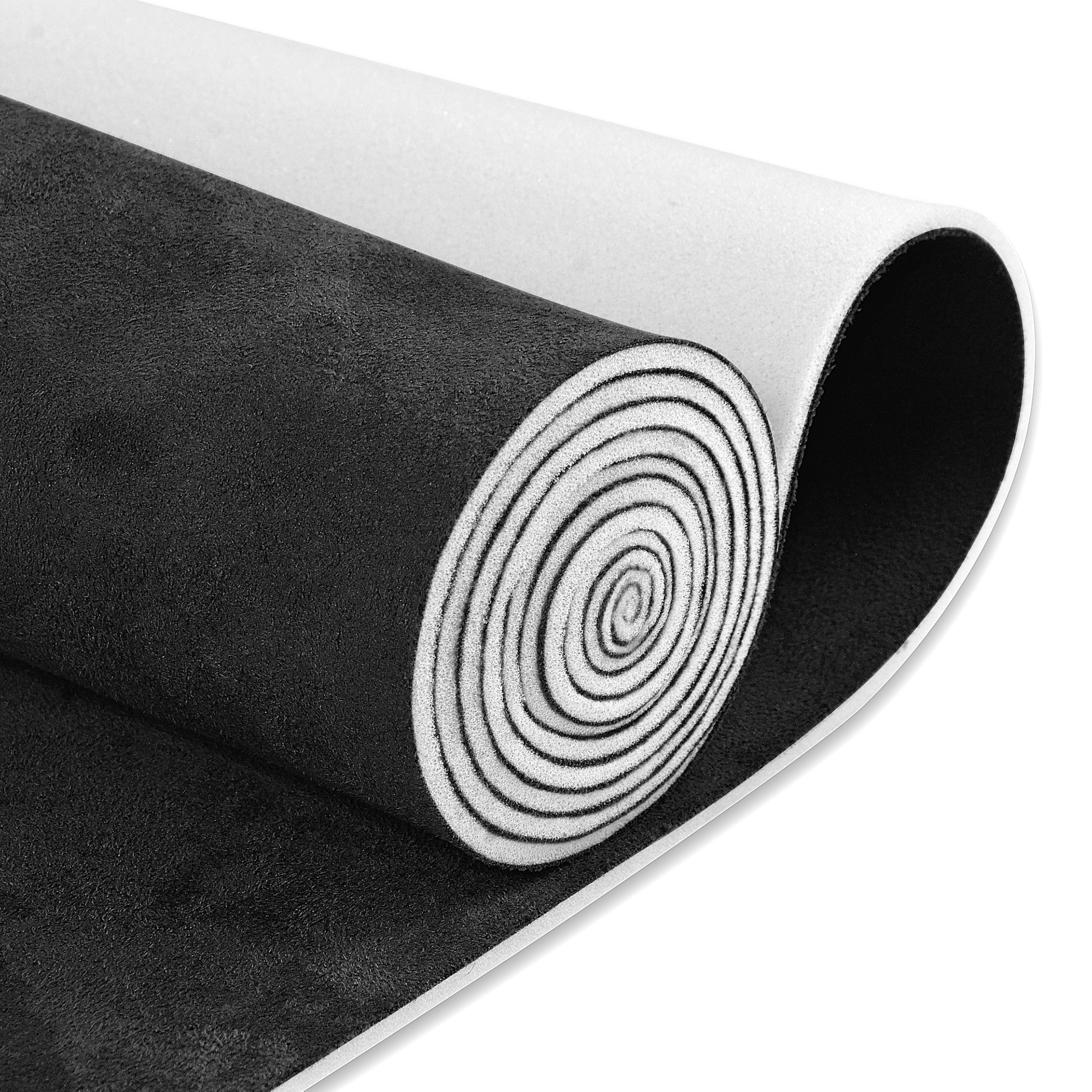
Built to pull double duty: fresh suede on the ceiling and a measurably quieter cabin underneath it.
Most headliner fabric is asked to look good. This one is also asked to work, and the maker puts a number on it — a high-density microporous foam structure the maker credits with 3 to 6 dB of cabin noise reduction. That is a real, stated figure for a fabric layer, and it means the drone of highway tarmac arrives softer than it did with the old sagging cloth. The same dense structure blocks solar heat and darkens the cabin for privacy. The fabric weighs 250 to 400 g/m².
The handling story is where it separates itself from the other suede panel here. This is a four-way stretch face over a foam-laminated backing, and the stretch is what lets it conform to curved surfaces — A-pillar sweeps, sunroof surrounds, rear quarter curves — without bulging or pulling tight into a wrinkle. Buyers fitting it to a Ford Bronco interior reported it bonding securely with trim adhesive spray and no soak-through, and the foam layer hiding imperfections in the old board underneath. The 54-inch length does, however, make it the shortest panel in this lineup, at 54 inches versus the MOTUKA at 79 inches and the SARANDAVE at 60 inches, so full-size roof boards will need a seam or a different cut.
Creases are the recurring theme in the review pages, and the maker is upfront about why — this ships folded, and the light creases come out with light ironing. That works, but it is a step you should schedule rather than discover on install day. Set it flat, iron on a low setting with a cloth between the iron and the face, and give it an hour before you start spraying.
Where it pulls ahead: a stated 3–6 dB noise reduction and a four-way stretch face suit curved roof boards and cabins you want quieter, not just tidier.
The trade you accept: at 54 inches it is the shortest panel in this lineup, and the fold creases need ironing out before the adhesive goes on.
The right fit: offset or curved roof boards, off-roaders, and anyone who wants the cabin to feel calmer as well as newer.
The mismatch: a long-wheelbase roof — the 54-inch length will not cover it in one piece.
4. SARANDAVE Headliner Fabric 60″ x 54″ Burgundy

The burgundy option that rescues an interior nobody else makes fabric for any more.
Most headliner fabric comes in black, grey or beige, and that is fine until you own something with a burgundy cabin and a roof to match. This panel exists for exactly that situation. The colour is the headline here, and the reviews back it up — buyers land on it specifically because the shade lines up with their interior, and the finished roof reads as a professional shop job rather than a home repair. For a truck or a classic with a coloured interior, that alone decides the purchase.
Under the colour it is a conventional, well-executed build. The foam backing measures 3/16 inch, which absorbs sound for a quieter drive and gives the face a soft touch rather than a taut, drum-like feel. It cuts, glues and staples without complaint, so beginners and experienced hands get the same workable material. Sizing notes are unusually clear for this category — the piece is 60 by 54 inches, and the maker advises measuring your board front to back and adding 6 inches of slack. Follow that and you avoid the most common failure in this job. It also arrives folded, with the maker noting that laying it flat lets the creases relax out.
The one thing to watch is durability over the long haul. Quality is the aspect buyers talk about most by a wide margin, and the finished look comes in second, but the foam-to-face bond is the weak point on a minority of panels — the fabric can start separating from its backing over time. Treat the backing gently during install, keep adhesive off the foam edges where you wrap, and you are working with the same material that produces near-OEM results on trucks and Hondas alike. Ironing is the other routine step: wrinkles from the fold respond to a warm iron.
Why it gets picked
- A burgundy shade that lets a coloured interior stay coloured
- 3/16″ foam backing softens the face and absorbs road noise
- Cuts, glues and staples easily for first-time installers
- Clear sizing rule from the maker: measure the board and add 6 inches
Where it asks for care
- Ships folded, so plan on ironing or a warm day to settle the wrinkles
- A minority of panels develop separation between face and foam over time
Pick this when: black or grey would look wrong in your cabin and a factory-style cloth in burgundy is the only finish that works.
Skip it when: your interior is standard black or grey — the other panels here give you more length for the same job.
5. Hiksuky Auto Headliner Fabric 97″ L × 60″ W Brown
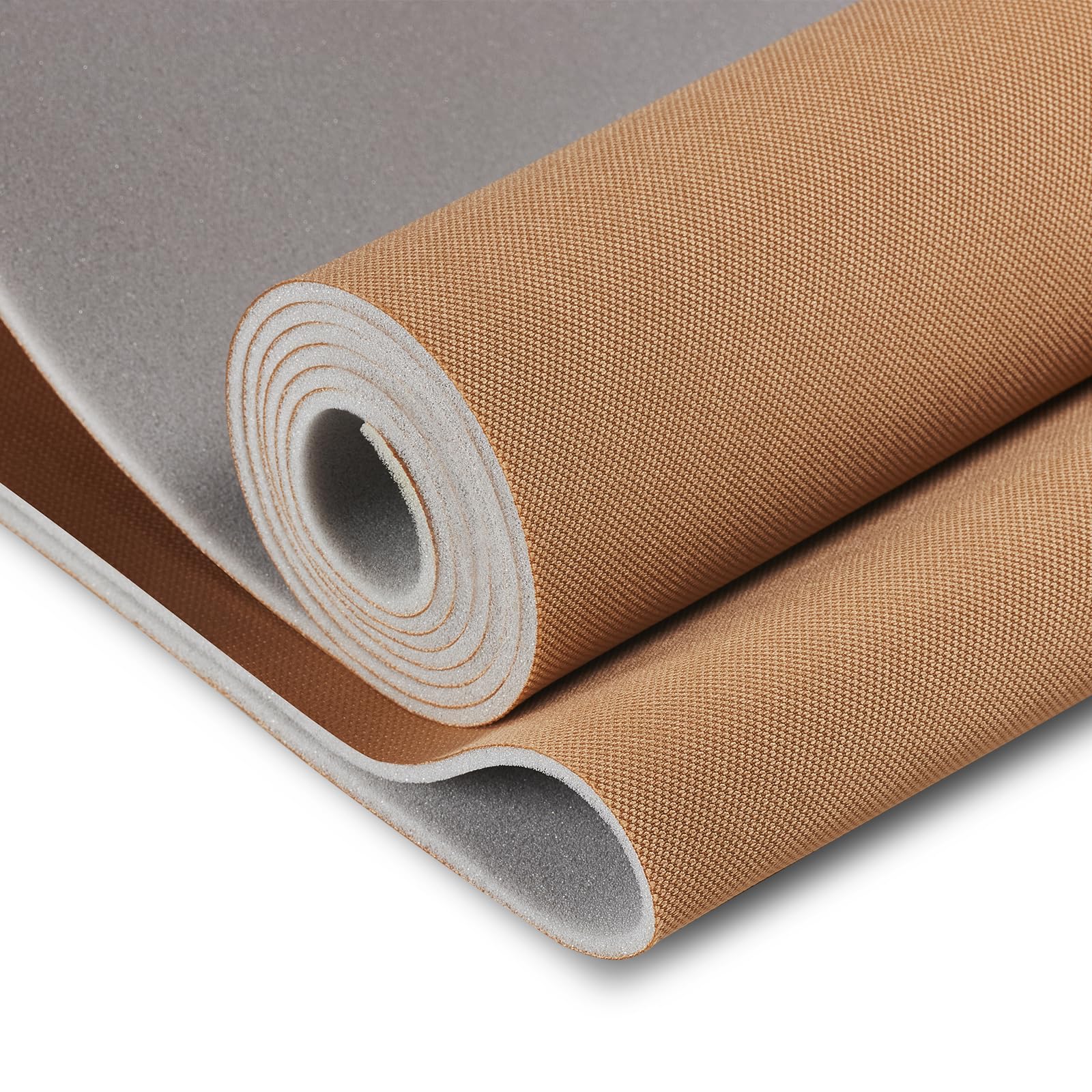
At 97 inches this is the longest fabric here, and it arrives rolled in a tube so it is flat when you unbox it.
Length and delivery are the two reasons this one stands out. The 97-inch run is the longest in this lineup — at 97 inches versus the MOTUKA’s 79 inches, which matters when your roof board is a van, a long-wheelbase wagon or an RV. And because it ships rolled inside a tube rather than folded in a box, it arrives flat and smooth. On the review pages, the buyers who are happiest tend to mention exactly that, and one described unrolling a crease-free fabric that looked the same as the original liner it replaced.
The face here is a mesh rather than a knit or a suede, at 1/9 inch of foam behind it. Brown is the shade on offer, so this is a colour choice as much as a material one — it suits older trucks, RVs and campers whose trim was never black in the first place. The mesh surface insulates against noise per the maker, and the quality of the roll is the strength that gets mentioned most, with the feel of the material close behind. Installers have fitted it to a Jeep Cherokee, a 1992 Silverado and a 2003 Pontiac Bonneville, and the Bonneville write-up is worth borrowing from: pull the glass and the headliner out for an OEM-grade finish, clean the old board thoroughly, and if you work in the car, go slowly with a spray adhesive and a roller, using clothespins to hold the edges while the glue grabs.
Two honest limits. The width is a true 60 inches but the reports describe it as just wide enough for some wide headliners, and the size feedback on this listing is the area where buyers are least happy — measure twice and add slack. There is also the occasional crease down the middle of a roll, which is harder to hide if your project does not have spare material to cut around. Order knowing where your cuts will fall, and both concerns shrink.
The case for it: 97 inches of flat, rolled fabric means long roofs and crease-free delivery in one purchase.
Measure first: it fits wide headliners only just, so treat the board measurement as the deciding number.
Best suited to: vans, RVs and long-wheelbase roofs where 97 inches of flat fabric is the difference between one piece and a seam.
Not the pick for: a wide board you have not measured — this is the panel most likely to leave you short at the edges.
Know the Specs
Foam Backing Thickness
The foam is the layer between the cloth and your roof board, and it comes in fractions of an inch — 3/16 inch on several panels here, 1/9 inch on another. Thicker foam gives you more forgiveness: it presses into the old board, absorbs sound, and hides the ridges of dried glue from the previous headliner. Too thin and every imperfection telegraphs through the fabric. It also adds a soft, padded feel when you press the ceiling with your hand.
Panel Size and Cut Direction
Headliner panels are sold as a length by a width, and the two numbers are not interchangeable — the longer dimension has to run front to back on your roof board. Measure the board, then add several inches of slack for wrapping the edges. A precut panel that is long enough but too narrow will not wrap around the sides, and there is no fix for that once the adhesive is on.
Face Fabric: Knit, Mesh or Suede
A flat knit is a smooth weave with no nap, closest to what most vehicles had from the factory. Mesh is a textured weave that suits older trucks and campers. Suede and micro-suede have a nap — a soft directional surface that shifts shade as light moves across it — and read as a clear step up in finish. Knit hides the repair; suede announces the upgrade.
Creases and How Fabric Ships
Fabric that ships folded arrives with a grid of creases that need sun, time or a warm iron to relax. Fabric that ships rolled in a tube arrives flat. Neither changes the material itself, but the rolled option saves you an evening of flattening. If you buy folded, unbox it early and lay it flat rather than opening it on install day.
Common Questions
How much headliner fabric do I need for a full roof board?
Will a foam-backed headliner fabric sag again after a few years?
What kind of adhesive should I use with headliner fabric?
Can I install headliner fabric without removing the roof board?
How do I get the creases out of folded headliner fabric?
Is suede headliner fabric harder to keep clean than a knit?
Does a thicker foam backing actually reduce noise in the cabin?
Can I use headliner fabric for door panels or a boat cabin too?
What is the difference between 3/16 inch and 1/9 inch foam backing?
Why do some headliner panels arrive with marks where the glue bled through?
The Bottom Line
For most people redoing a roof, the material for headliner that covers the most ground is the MOTUKA Micro-Suede. Its 79-inch length handles a full-size board in one piece, the 3/16-inch foam hides whatever the old ceiling left behind, and the suede face gives the cabin an obvious lift. It also holds 4.5+ stars across 600+ ratings, making it the crowd favourite as well as the size winner. If your roof board is curved or you want a quieter cabin, the WUJODOR Suede is the one — four-way stretch and a stated 3 to 6 dB noise reduction. And if your car has a burgundy interior that black fabric would ruin, the SARANDAVE panel is the only one here in the right colour.
How we choose
We do not accept paid placement. Every pick is matched to a real buyer and a real use-case; we do not hands-on test units.
Sources
Specifications: manufacturer listings and product documentation. Review insights: verified customer reviews. Pricing: not shown on this page (it changes often); check the current price via the retailer link.
As an Amazon Associate, Aappliancez earns from qualifying purchases. This does not affect which products we feature.