Disclosure: Some links in this post are affiliate links. As an Amazon Associate I earn from qualifying purchases, at no extra cost to you. Learn more
Specs are compiled from manufacturer listings and verified buyer reviews and can change over time — please confirm the key details on the product page before buying.
Dull, cloudy marble is almost never a lost cause — it is usually just a surface problem, and the right powder fixes it. The catch is that “marble polishing powder” now covers two very different jobs, and buying the wrong one wastes your weekend. Some are etch removers for water rings and lemon-juice spots. Others are true polishes that need a machine and a felt or wool pad to bring back gloss. This article sorts the five picks worth your money by what they actually do well.
This guide is built by comparing the manufacturers’ published specifications and the patterns across verified customer reviews, so you get each pick’s real strengths and trade-offs instead of marketing spin.
Match the powder to the damage and the surface, and you get real shine back without a contractor. That single decision is what separates a great result from a wasted afternoon with a product meant for a different stone or a different depth of damage, which is exactly the problem the best Marble Polishing Powder solves.
Top Picks
How To Choose The Best Marble Polishing Powder
The first question is not which brand — it is what kind of damage you are looking at. A dull, hazy film over the whole counter is different from a few white rings where a glass sat. One needs a polishing powder worked with a machine; the other is a spot repair you can do by hand.
Etch remover or polishing powder?
An etch remover targets the chalky white marks left when acid touches calcium-based stone. It is worked into the spot with a cloth, no power tools, and it is designed for light-to-medium marks. A polishing powder is different: it rebuilds gloss across a whole surface and usually needs a felt, wool, or hog’s hair pad spinning on a machine to generate heat and friction. If you buy a polishing powder for a single etch ring, you will work far harder than you need to.
Know your stone before you buy
Marble, travertine, limestone and onyx are calcite-based — the powders here are built for those. Granite and quartz are harder and behave differently, so check the label rather than assuming. Dark or black marble is the one to be careful with, because some etch removers use a bleaching-type acid that can lighten the surface. Always test on a spare tile or a hidden corner first.
What grit and format mean for you
Grit type drives the finish. Diamond is the hardest and cuts fastest; aluminum oxide and cerium oxide are finer and better for bringing up a reflective sheen. Format matters too: a dry powder you dip a damp cloth into for spot work, versus a paste you spread and buff. Match the format to the job and the job gets much shorter.
Side-by-Side Comparison
| Model | Best For | Grit Material | Size | Application | Amazon |
|---|---|---|---|---|---|
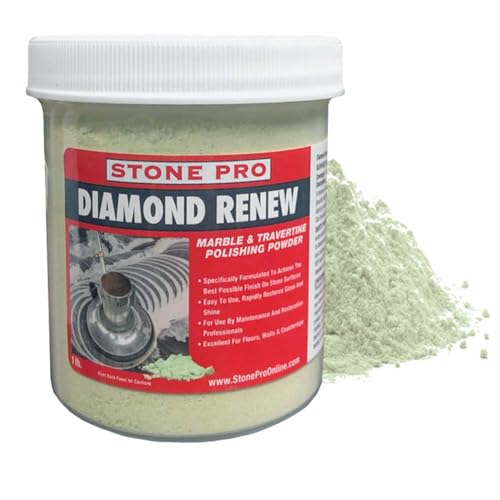
| Diamond Renew Polishing Powder★ Best Overall | Machine polishing floors and countertops | Diamond (ultra fine) | 1 lb | 175 RPM floor machine or 600 RPM hand machine | Amazon |
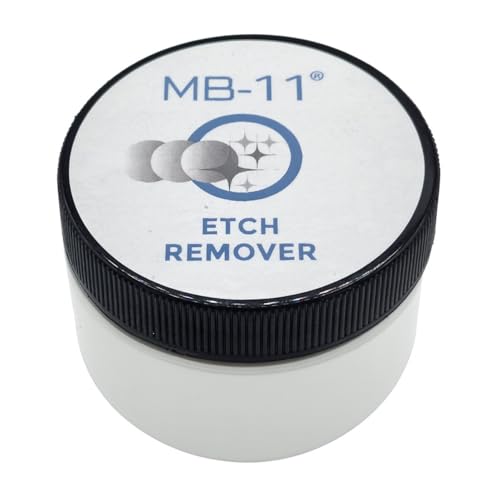
| MB Stone MB-11 Touch-Up Etch RemoverBest for Spot Etches | Spot-removing water rings by hand | Aluminum Oxide (fine) | 1 oz can | Damp cloth, no power tools | Amazon |
| Marble Polish Paste Granite Polish Quartz Cleaner | Whole-counter gloss on mixed stone | Silicon Dioxide (fine) | 34 oz | Polishing machine, diamond or wool pads | Amazon |
| Etch Remover Marble Polishing Compound | Tool-free restoration on light marble | Liquid paste abrasives | 8 oz | Hand rub, no power tools | Amazon |
| Tenax Marble Polishing Powder | Contractor-size machine polishing | Cerium Oxide, Grit 2000 | 1 kg (2 lb) container | Felt pads on a buffing machine | Amazon |
Detailed Reviews
1. Diamond Renew Polishing Powder 1 lb
Our pick — over 4.5★ from 50+ verified ratings; the strongest balance of quality and price.
A diamond-grit powder for machine-polishing dull marble, travertine and limestone back to a mirror shine.
This is the one to buy if you own, or can borrow, a floor machine. The active ingredient is diamond — the hardest grit in this lineup — and it is graded ultra fine, so it cuts wear patterns and shallow scratches without leaving a coarse surface behind. Typical use is a 175 RPM floor machine (a slow-spinning buffer) or a 600 RPM hand machine for smaller areas. Buyers report a dull kitchen tile coming up to a mirror shine in a fifteen-to-twenty minute pass on a burnisher with a white pad.
What makes it the strongest all-rounder is the range. It works on marble, travertine and limestone, and on floors, countertops, walls and showers. It is fine on sealed and unsealed surfaces both, and it will not fight the cleaning agents you already use. At 1 lb, it also outlasts the little spot jars — a damp-cloth touch-up jar in this group holds just 1 oz, and this tub holds far more working powder for whole-floor jobs.
StonePro has made this in the US for 25 years. Set expectations honestly, though — the second pass matters. This powder removes shallow scratches, abrasions and etchings and renews shine, but it is a workhorse, not a final polish. Left alone it can dry to a semi-gloss haze. Serious users follow it with a fine finishing paste and a wool or hog’s hair pad to reach the deep gloss. The acid smell is also strong, so ventilate the room while you work.
Why it earns the top spot
- Diamond grit at ultra-fine grade cuts wear patterns fast with only a few passes.
- Works across marble, travertine and limestone, indoors or out.
- Safe on sealed and unsealed stone, so you can polish before you seal.
- 1 lb container covers whole floors, not just a single countertop.
What you are signing up for
- It is not a final finish — plan on a second paste for a mirror gloss.
- You need a 175 RPM or 600 RPM machine; it is not a hand-rub product.
- The acid smell is strong, so ventilate the room.
- One buyer could not get results working it by the directions, so technique and pad choice matter.
Made for: anyone reviving a large marble or travertine surface with access to a floor or hand machine.
Look elsewhere if: you only have a handful of faint rings and no machine — a wipe-on spot remover will save you the setup.
2. MB Stone MB-11 Touch-Up Etch Remover 1 oz
The one-ounce can for light marble counters that barely get hit anymore.
For a few faint water rings on a bathroom vanity or tabletop, you can skip the machinery entirely. MB-11 is a dry powder: dip a damp cloth into it, then rub the mark. No buffing pads, no drill, no floor machine. This countertop fix is among the most common homeowner jobs here, and the powder lasts a long time, so one can keeps working for years of touch-ups. One ounce (about 28 grams) sounds tiny, but it is a concentrate. The 34 oz paste in this article is the big-format option for the same money and volume, so if you need coverage rather than a touch-up, that one makes more sense.
Where it wins clearly is the deep-clean case. One buyer had five etch rings that had sat on a marble tabletop for twelve years. Worked in by hand, the powder cleared all five in fifteen minutes and left the top flawless. That is the scenario to buy this for: small, old, low-traffic marks that a whole surface has no business being polished for.
Be clear-eyed on two things. First, it only suits light to neutral colored calcite-based stone like Carrara marble and travertine — not dark stone, honed or matte surfaces. Second, it demands elbow grease. The etch removal results are genuinely mixed: some marks come out completely, others simply will not budge, and rough or deep etches are off limits. Treat it as the tool for shallow spots, not a rescue for severe damage.
What it is built for: a damp cloth and a soft finger-rub routine on a small, faint mark — nothing more.
The honest limit: order the wrong base color and this powder cannot help at all — dark and matte surfaces are explicitly out.
Reach for this if: your marble is light, your marks are faint, and you want no equipment in the room.
Think twice if: your etches are rough to the touch, deep, or on dark or matte stone — those are beyond this jar.
3. Marble Polish Paste 2.2LB
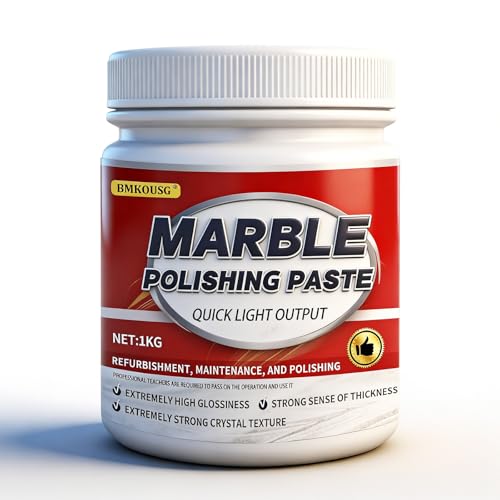
A 34-ounce paste tub aimed at whole-counter gloss you can reapply for years.
This paste earns its spot on volume and versatility. At 34 ounces, it gives you roughly thirty-four times the powder in the one-ounce MB-11 above, so it is the tub to grab if you want to touch up the whole kitchen rather than one ring. It is a paste, not a dry powder, so you spread it on a soft dry cloth or a pad and buff it in with a polishing machine and diamond or wool pads. Its grit material is silicon dioxide (a fine abrasive) with a wax emulsion (a liquid blend that helps the grit glide), which is what produces the high-gloss surface, crystal clarity and thickness you are after.
The stone range is broad — marble, granite, quartz and artificial stone — making it the safest single purchase if your home mixes surfaces rather than committing to one. It needs a machine for a real result, though.
The honest note: hard stone can fight it. On a dense black-and-brown granite counter, one buyer found it removed surface grit and left the counter smoother, but did nothing for scratches and left a lingering white residue that took extra cleaning. On marble, the story was the opposite — it wiped out water marks fine. So treat this as the marble-and-soft-stone option first, and expect to spend some time working the residue off hard, dark granite.
The stand-out spec: 34 ounces of silicon-dioxide paste in a single tub, which lasts through repeat jobs on a countertop.
The catch it carries: a polishing machine is required, and dark granite tends to leave residue behind.
Best for: a mixed-stone household that wants one paste for marble, granite and quartz, applied with a machine.
skip it if: you own only rough-textured granite and no polishing pads — you will not reach the finish without them.
4. Etch Remover Marble Polishing Compound 8 oz.

A liquid-paste etch remover that tidies a white marble counter by hand.
This one is built for the classic homeowner job: a marble countertop or table with light etches, water spots and small scratches, fixed without hauling out a machine. The formula is a liquid paste rather than a dust, so it does not throw a cloud of grit around the kitchen, and the blend of abrasives and active agents is meant to do the work with a cloth and some elbow grease. It is made in the US by stone-restoration specialists and has no expiration date. If it settles or dries out in the jar, you simply add water to bring it back to a slurry (a thin, spreadable mix).
On light marble it delivers. One buyer removed mango-juice and water-mark etches from white marble kitchen counters after a baking-soda paste had failed. The trade-off is time and arm strength: that job took a couple of hours, and the deep, old marks still need persistence. If you have a small area, hand-rubbing works; a 12-inch corner can absorb half an hour on its own.
Read the stone type before you buy, though. This paste uses a light acid and is explicitly not for granite, but the sharper warning is on dark marble. On a black marble coffee table, the acid reportedly lightened the surface and left it worse, so this is a white-and-light-stone product. Wear latex or nitrile gloves when you use it — the acid eats into plastics.
Where it delivers: light marble counters and tables, cleaned up by hand with no machine and no dust.
Keep it away from: dark and black marble, where the light acid can lighten the surface, and from granite, which it is not made for.
Reach for this if: you have white or light marble, light-to-medium etches, and no power tools.
Think twice if: your stone is dark, black or granite, or your damage is deep — this one has a narrow safe lane.
5. Tenax Marble Polishing Powder – 1kg (2 lb. Container)
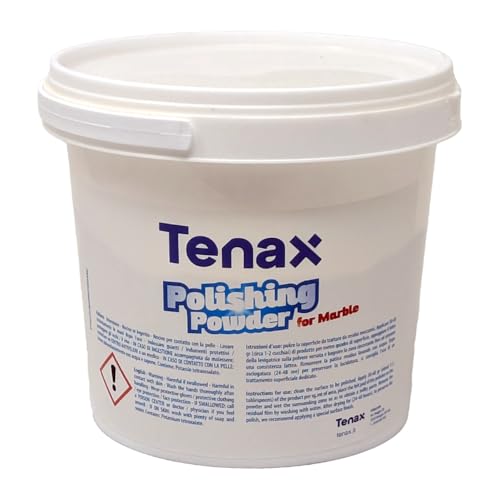
A two-pound cerium-oxide tub built for contractors polishing worn marble slabs.
Tenax is the pick for someone doing this at volume. It arrives as a ready-mixed paste for restoring and maintaining worn marble — you add water, buff with felt pads, and it is designed to bring up the high reflective finish you see on polished marble tiles and slabs. The grit is cerium oxide (a fine polishing abrasive) at Grit 2000, a very fine grade that works on the final, glossy end of the job rather than cutting deep wear. At 1 kg (a 2 lb container) it is the biggest single tub in this lineup, so it holds up to repeat polishing across a floor or a commercial job rather than one countertop.
The feel of the file is that this is a professional’s consumable. The thing buyers rate most is raw quality — the paste is consistent and dependable for restoring luster, and it can lift etched areas within minutes of working it.
The catch is that the shine itself gets mixed reviews: some owners mention much shinier stone, others say it stops short of a true mirror finish. And it is not a starter kit — it is designed for felt-pad buffing, so you need a machine and the right pads on hand. If you want a small tub for the odd touch-up, this is more powder than a casual buyer needs.
The contracting-spec: cerium oxide at Grit 2000 in a 1 kg tub — the finest, largest-format polish here.
What it asks of you: felt pads and a buffing machine, plus accepting that the final gloss varies from surface to surface.
Best for: a contractor or a household with a lot of worn marble to maintain in one go.
pass on it if: you are polishing a single vanity — the volume and machine requirement outweigh the job.
Know the Specs
Grit material
This is the cutting agent inside the powder. Diamond is the hardest and removes wear patterns and shallow scratches fastest, which is why Diamond Renew clears old marble in a few passes. Aluminum oxide and cerium oxide are finer and lean toward building a reflective sheen rather than cutting deep. Silicon dioxide, in the paste format, is paired with a wax emulsion to give the surface gloss. Match the grit to the job: heavy dullness wants a hard abrasive, while a final glow wants the fine stuff.
Format and application
Powders and pastes divide into two camps. A dry powder you dab with a damp cloth is for hand spot work on individual etches, and it needs no machine. A paste you spread and buff is for whole surfaces and usually needs a 175 RPM floor machine, a variable-speed hand machine, or a drill with felt or wool pads. Buying a paste for a single ring wastes powder; buying a spot powder for a whole floor wastes your weekend, so pick the format your job actually fits.
Stone compatibility
Marble, travertine, limestone and onyx are calcite-based, and most of these products are built for them. Granite, quartz and artificial stone are harder and behave differently. Dark and black marble is the case to watch — some etch removers use a bleaching-type acid that can lighten dark stone. Always confirm your stone type against the label, and test on a hidden patch first.
Container size and coverage
Size decides how many jobs you get, not how well it works. One-ounce cans are concentrated touch-up portions, while 8 oz pastes, 1 lb powders and 2 lb tubs are meant for fuller surfaces. More powder does not mean a better finish — it means fewer reorders. Buy the size that fits the area you are actually polishing, and the value lines up naturally.
Common Questions
Will marble polishing powder work on my granite counters too?
Is marble polishing powder safe on dark or black marble?
Do I need a machine to use marble polishing powder?
How long does a jar or tub of polishing powder last?
Will polishing powder remove deep scratches or just light ones?
Can I polish marble that has already been sealed?
Does polishing powder leave a residue I need to clean off?
How do I choose between an etch remover and a polishing powder?
Is marble polishing powder safe for quartz countertops?
Do I need to wear gloves or ventilate when polishing marble?
The Bottom Line
There is no single answer to the marble polishing powder question — the right one depends on what your marble actually needs. If you have a machine and a whole surface to revive, the Diamond Renew Polishing Powder is the strongest overall call: diamond grit, a 1 lb tub, and a reputation for bringing fifteen years of dull marble back to a mirror finish. If you only have a few faint rings and no power tools, reach for the MB-11 1 oz touch-up powder instead. And if your home mixes marble, granite and quartz and you want one paste to cover the lot, the 34 oz tub is the pragmatic pick.
How we choose
We do not accept paid placement. Every pick is matched to a real buyer and a real use-case; we do not hands-on test units.
Sources
Specifications: manufacturer listings and product documentation. Review insights: verified customer reviews, as of October 2026. Pricing: not shown on this page (it changes often); check the current price via the retailer link.
As an Amazon Associate, Aappliancez earns from qualifying purchases. This does not affect which products we feature.