Disclosure: Some links in this post are affiliate links. As an Amazon Associate I earn from qualifying purchases, at no extra cost to you. Learn more
Specs are compiled from manufacturer listings and verified buyer reviews and can change over time — please confirm the key details on the product page before buying.
If you are seeing maggots, the problem is almost never the maggots themselves — it is the wet, warm, food-rich spot they hatched in, and most general bug sprays never reach it. The picks below split into two jobs: contact sprays that kill larvae where you soak the spot, and vapor pods that hang inside a lidded bin and stop the next batch of eggs from hatching. Match the tool to the job and the cycle stops.
This guide is built by comparing the manufacturers’ published specifications and the patterns across verified customer reviews, so you get each pick’s real strengths and trade-offs instead of marketing spin.
You will see which formulas carry a real active-ingredient percentage, which ones are plant-based and safe around pets once dry, and which are built only for enclosed spaces like a lidded trash can. Here is what separates a useful maggot killer spray from a bottle that only smells strong.
Top Picks
How To Choose The Best Maggot Killer Spray
Maggots are fly larvae — the worm stage that hatches from eggs a fly laid on something moist and rotting. That single fact decides your whole buying strategy. A contact spray kills only the larvae the liquid reaches. It leaves the eggs untouched, which is why the same bin is crawling again four days later.
Contact sprays versus vapor pods
A contact spray is what you reach for when the maggots are already visible — in a bin, under a bag, along a garage floor drain. Soak the surface and the larvae die where they sit. A vapor pod works differently: it hangs inside a lidded bin and slowly releases a gas that fills the enclosed air, so flies that get in do not survive long enough to lay a new batch. Pods only work inside a closed container. Hang one on an open patio and the vapor drifts off before it does anything.
Read the active ingredient line, not the bottle size
A 32-ounce bottle of mostly water is not stronger than a 16-ounce bottle with a higher active percentage. Look for the percentage on the label. A product listing 18.6% dichlorvos is a vapor insecticide for enclosed spaces. A plant-based bottle will name its oils — geraniol, cinnamon oil, cottonseed oil, peppermint oil, cedar oil — and those need more frequent reapplication because oils break down in air and sunlight. Neither is wrong. They solve different problems.
Pet-safe is a timing question, not a label
Plant-based sprays are usually described as safe around pets once the surface is fully dry. That word “dry” is doing all the work. Spray, keep the animal out of the room until it dries, and the risk window closes. A synthetic vapor pod belongs inside a sealed bin for the same reason — enclosed, out of reach, doing its job where nothing licks it.
Side-by-Side Comparison
| Model | Best For | Active Ingredient | Form | Volume / Count | Amazon |
|---|---|---|---|---|---|
| Natria Neem Oil Spray for Gardening★ Best Overall | Plants and garden soil | Clarified Hydrophobic Extract of Neem Oil 0.9% | Ready-to-use spray | 24 fl oz | Amazon |
| FortaGrow Peppermint & Clove SprayBest Value | Indoor baseboards and entryways | 4% peppermint oil, 2% clove oil | Ready-to-use spray | 16 oz | Amazon |
| TERRO Garbage Guard | Sealed trash cans and dumpsters | Dichlorvos 18.6% | Adhesive vapor pod | 2 count | Amazon |
| Nature’s Dome Pest Control Spray | Kitchen, pantry and patio | Cinnamon oil, Cottonseed oil, Geraniol | Ready-to-use spray | 16 fl oz | Amazon |
| Wondercide Peppermint Indoor Spray | Whole-home and pet households | 4.2% cedar oil, 2.2% sodium lauryl sulfate, 1.5% peppermint oil, 0.1% sesame oil | Ready-to-use spray | 32 fl oz | Amazon |
Detailed Reviews
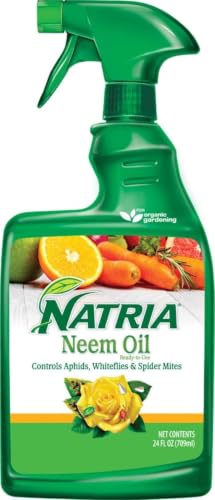
1. Natria Neem Oil Spray for Gardening – 24 oz Bottle
Our pick — 4.0+★ from 36,500+ verified ratings; the strongest balance of quality and price.
The one botanical bottle that treats the plant and the pest on it at the same time
Most people chasing maggots are actually chasing them in a garden bed, a compost pile, or the soil around a fallen fruit — and that is exactly where this bottle earns its place. It carries a 0.9% clarified hydrophobic extract of neem oil, which is a plant-derived oil that smothers soft-bodied insects and mites on contact and also coats leaf surfaces to block fungal spores. Because it is listed for use up to the day of harvest, you can spray a vegetable bed and still eat from it, which is the reason this one sits at the top.
What makes it genuinely useful here is that it is two products in one bottle. The label covers aphids, whiteflies, spider mites, Japanese beetles, fruit flies and scales, plus disease control for black spot, botrytis, downy mildew, powdery mildew and scab. A single 24-fluid-ounce trigger bottle needs no mixing — you point and spray, which matters when you are dealing with a soggy spot that is already unpleasant to stand near. Owners describe it killing ants, mealybugs and spider mites outright, and the general read is that a little goes a long way.
The honest trade-offs come in two places. First, timing: repeated owner reports warn against spraying when direct sunlight is hitting the plant, because the oil plus strong sun can burn foliage — spray in the evening instead. Second, and this is the real fit question, the effectiveness feedback is mixed and some long-time users suspect the concentration has been reduced over time, reporting roughly half the knockdown they used to get on a heavy infestation. It also arrives at 1.5 pounds, which is 0.31 pounds heavier than the FortaGrow spray further down this list — worth knowing if you are carrying it up a ladder.
The case for keeping one on the shelf
- 0.9% neem oil extract handles both insects and listed fungal diseases in one bottle
- Approved for use up to the day of harvest, so edible beds are fair game
- No mixing — the trigger sprayer is ready the second you need it
- Mild scent that owners consistently describe as far less harsh than conventional bug spray
Where it will frustrate you
- Can burn foliage if applied while direct sunlight is on the plant
- Knockdown on a heavy infestation is inconsistent, and some users feel the formula changed
- Not a bin product — this is a plant and soil treatment, not a trash-can solution
Reach for this if: your maggot problem is in a garden bed, a compost heap, or soil under fruit trees, and you want one bottle that also handles the mildew and spot diseases that show up alongside pests.
Look elsewhere if: the larvae are inside a wheelie bin — go to the TERRO pod below, because neem oil needs to touch the surface and bins are a job for vapor.
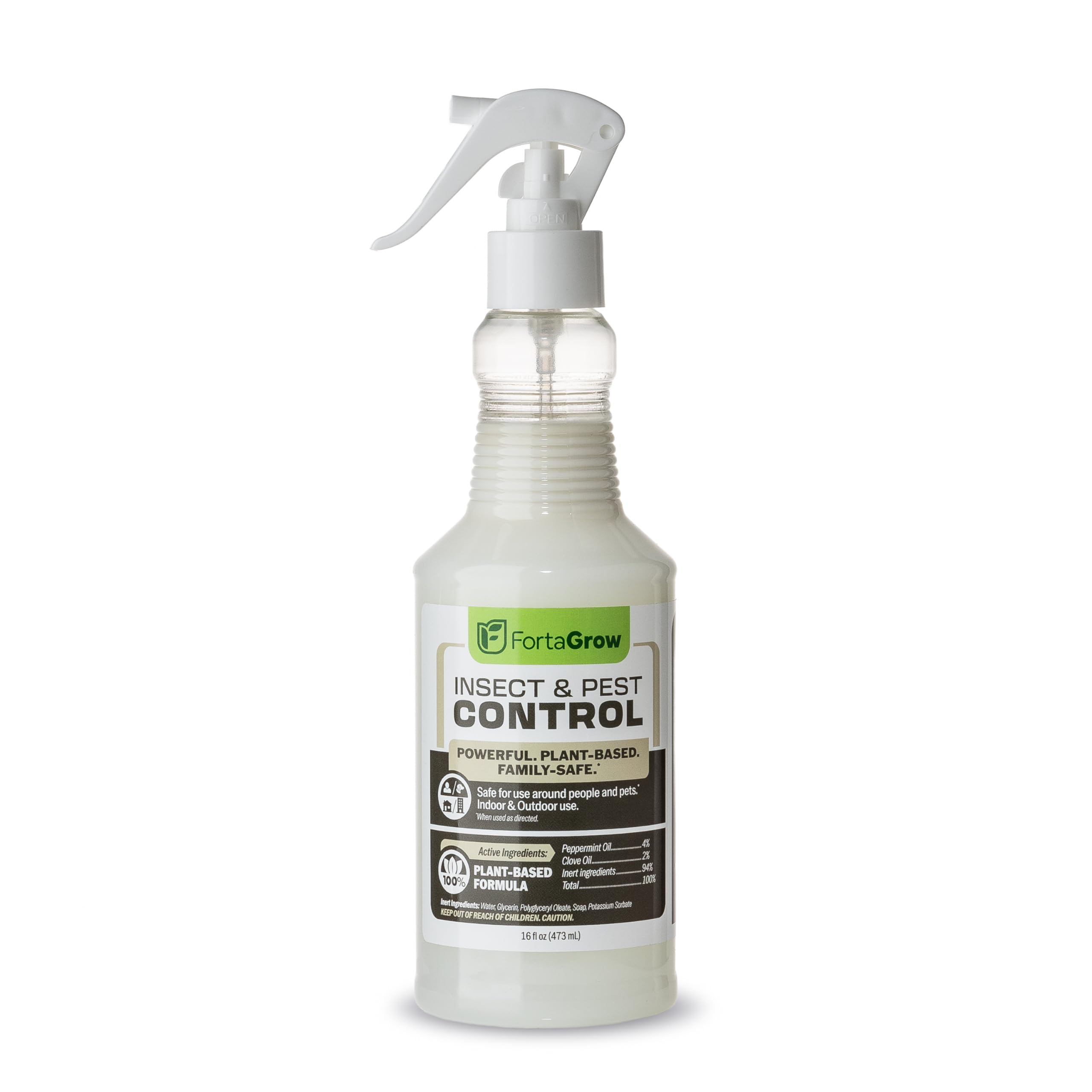
2. FortaGrow Insect & Pest Control Spray
A 4% peppermint punch built for baseboards, entryways and the gap under the kitchen sink
The label here names its two actives outright: 4% peppermint oil and 2% clove oil. Those percentages are the whole pitch — the maker states that combination packs two to four times more active ingredient than most natural sprays, and a stated 4% is a number you can compare against the oil blends further down this list. It is formulated to kill and repel spiders, ants, flies, gnats, roaches and beetles on contact, and you apply it around baseboards, entryways, kitchens and storage areas rather than on plants.
The scent is the part owners actually talk about. A peppermint and clove blend leaves behind a clean mint smell rather than a chemical one, and it fades after a few hours instead of lingering all day. The most striking account comes from buyers dealing with an old farmhouse that was taking in a steady daily flow of stink bugs, spiders and other invaders — two applications in a single month and the influx stopped, with no vacuuming or squashing needed. Crickets chewing holes in window screens and spiders gathering in corners are the other repeated win.
Two caveats worth your attention before buying. The sprayer itself is the weak point — a recurring gripe is bottles that arrive with a trigger that will not spray at all, so check yours immediately and return it fast if it is dead on arrival. And gnats are the one target where results split hard, with at least one buyer finding the spray did nothing and the smell overwhelming instead. It is also the lightest bottle in this roundup at 1.19 pounds, which makes it the easy one to carry room to room.
The strongest selling point: a stated 4% peppermint and 2% clove oil load, applied twice a week, handles a genuinely heavy seasonal bug influx — the old-farmhouse results are the proof.
Check before you commit: the trigger is the known weak link, and gnats are the pest it struggles with most. If gnats are your problem specifically, set your expectations low.
Best matched to: indoor perimeter work — baseboards, door thresholds, under-sink cabinets and storage rooms where you want a plant-based spray you can use repeatedly.
Second-guess it if: you need to treat a compost pile or outdoor soil, or if the trigger arrives broken — this bottle is a home-interior tool, not a garden treatment.
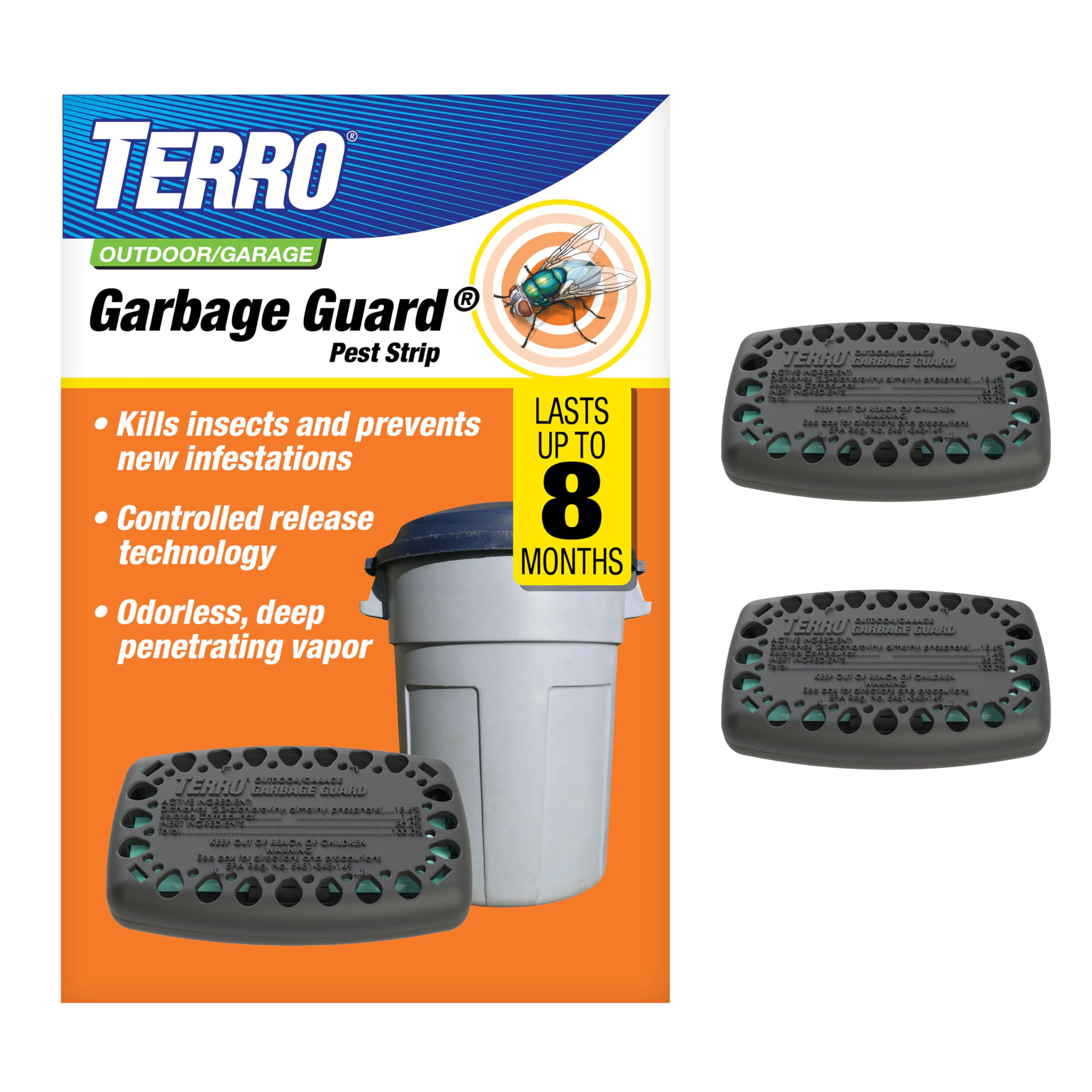
3. TERRO Garbage Guard Trash Can Insect Killer, 2-Pack
Not a spray at all — a vapor pod that keeps a lidded bin from hatching flies in the first place
This is the pick that actually answers the maggot problem rather than the fly problem. You stick an adhesive pod inside your trash bin, close the lid, and the pod releases a vapor that fills the enclosed air and kills flies, maggots, roaches and beetles before they can cycle. The active ingredient is 18.6% dichlorvos — a vapor insecticide that only makes sense in a sealed space, which is exactly why it is designed for trash cans, dumpsters and garage bins with lids.
The numbers that matter are 2.4 ounces per pod and up to 4 months of protection from controlled-release diffusion, which is the whole reason this beats spraying a bin every few days. The maker states it works even in a large can with a lid, and it holds an EPA specification listing. In practice the reports line up: flies and gnats stop showing up, and the maggots never appear in the can at all.
Now the honest part — the adhesive is the recurring complaint, and it is worth planning around. One side of the backing is hard to peel, the pad damages easily, and vibration from emptying the can loosens it, with several pods ending up lost at the bottom. The fix that keeps coming up in owner write-ups is mechanical rather than adhesive: two #10-24×1″ flat-head screws with nylon-insert wing nuts and O-rings, a 5/32″ drill bit, and gaff tape over the lid holes. Do that and the pod stays put. Separately, understand what this does not do — it kills what is inside the can but will not stop a fly from laying eggs on a bag before it goes in, and it will not neutralize odor.
What it delivers
- Up to 4 months of continuous protection per pod from controlled-release vapor
- 18.6% dichlorvos fills the enclosed air, so maggots never get a chance to appear
- Two pods per pack, at 2.4 ounces each, hanging quietly out of the way
- EPA specification listing and a manufacturer with a long track record on traps
Plan around this
- The included adhesive is the weak point — pods loosen and drop into the can
- Backing is difficult to peel and damages easily
- Does not stop flies from laying eggs on a bag before it enters the bin, and does not kill odor
This is the one for: anyone whose maggots are turning up in a wheelie bin, dumpster or garage can — the vapor kills the cycle instead of the individual worm.
skip it if: your bin has no lid, or you are not willing to swap the included tape for screws — an open can lets the vapor escape and the pod will simply fall in.
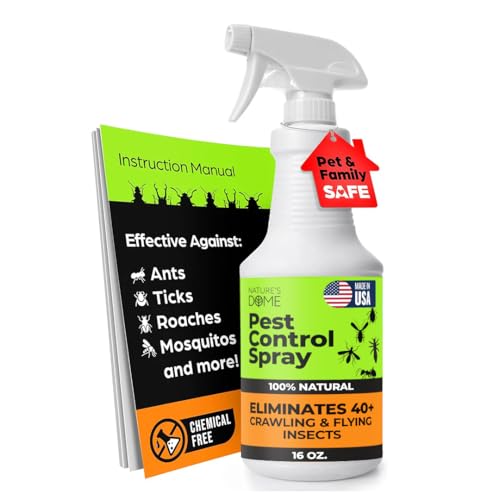
4. Nature’s Dome Pest Control Spray 16 Oz
Three named oils, an adjustable nozzle, and a target list that runs from ants to bed bugs
What sets this bottle apart is that all three actives are printed on the label — geraniol, cinnamon oil and cottonseed oil — with no synthetic pyrethroids in the mix. Geraniol is a plant alcohol used as the primary insect-killing component in many botanical formulas; the cinnamon and cottonseed oils round out the blend. It is listed as killing ants, roaches, spiders, fleas, flies, gnats and bed bugs on contact, while repelling ticks and mosquitoes where applied.
The applicator is a real differentiator. An adjustable nozzle lets you switch between a broad mist for patios and decks and a targeted stream for cracks, baseboards and hard-to-reach gaps — a level of control the simpler trigger bottles in this list do not offer. It is also non-staining and carries an EPA specification listing, and the manufacturer states it can be used on mattresses and upholstery seams for bed bugs, provided you mist lightly, spot-test the fabric first and let it dry completely.
Here is the honest catch, and it is a duration one. Essential-oil formulas evaporate, so this needs regular reapplication to hold a barrier — that is the trade-off of going plant-based rather than synthetic. Reports describe it keeping ants away when sprayed consistently, killing fire ants on contact, and leaving a bearable herbal scent with nothing chemical about it. On the other side of the ledger, at least one buyer found the odor strong enough to hang around for days while the deterrent effect faded after roughly a day, and found it only killed ants when soaked directly. Correct application is most of the story here.
Where it beats the field: the adjustable nozzle and non-staining formula make this the most flexible bottle here — the same can handles a broad patio pass and a pinpoint crack shot without swapping tools.
What to budget for: regular reapplication, because oils do not leave a lasting residue the way synthetic formulas do.
Pick this if: you want one plant-based bottle that can move between the kitchen baseboards, the patio and a mattress seam, and you are comfortable respraying on a schedule.
Think twice if: you want a set-and-forget barrier — the oils break down and the protection fades with them.
5. Wondercide Indoor Pest Control Spray Peppermint 32 oz
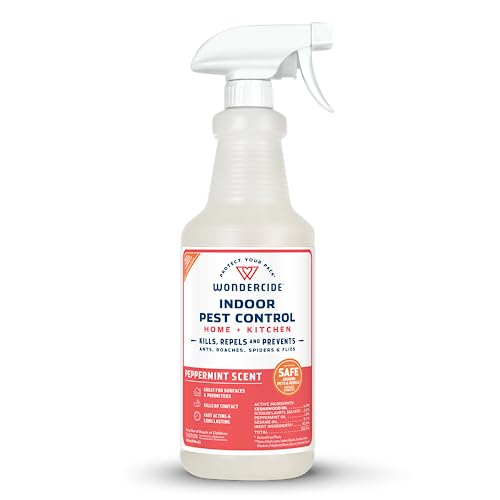
The 32-ounce bottle that treats eggs and larvae, not just the adults you can see
Of everything here, this is the one that thinks about the lifecycle. It is listed as a flea treatment for the home that kills adults, eggs and larvae in carpet, furniture, bedding and flooring — meaning it goes after the next generation, which is the same logic you need for any larvae problem. The active blend is 4.2% cedar oil, 2.2% sodium lauryl sulfate, 1.5% peppermint oil and 0.1% sesame oil, with the remaining 92% inert ingredients including water, glycerin and vitamin E.
Coverage is the other reason it holds this spot. A 32-fluid-ounce bottle runs twice the volume of the 16-ounce sprays above, and the target list is long: ants, roaches, spiders, flies, fleas, ticks, wasps, scorpions, mosquitoes, fruit flies, silverfish, moths, gnats, carpet beetles, earwigs, palmetto bugs and waterbugs. It is also one of the few bottles here explicitly built for spraying around windows, doors, baseboards, under sinks, in cabinets and around appliances, plus dog kennels and cat condos. It is USA made, cruelty-free, and free of artificial colors and fragrances.
The real-world picture is split, and it is worth being clear about why. The formula is built to be gentle enough for repeated use around cats and dogs when applied as directed and allowed to dry — that pet-friendly positioning is the thing buyers value most about it. But the same formula draws mixed results on how hard it hits. Where it works, it works well and the peppermint scent is genuinely liked; where it does not, buyers report a strong smell and pests that shrug it off. The safer and gentler a plant formula is, the more often you have to reapply, and that is the direct trade you are making.
That is the point of the size. Spray it as often as needed across the rooms where pests actually travel.
Why it earns the biggest bottle slot
- Kills adults, eggs and larvae — the lifecycle approach larvae problems actually need
- 32 fluid ounces of coverage, the largest bottle in this roundup
- Pet-safe positioning when used as directed and allowed to dry fully
- No artificial colors, fragrances or harsh ingredients, and cruelty-free
The trade you are making
- Effectiveness and scent both divide opinion — a gentle formula means more frequent reapplication
- At 2.1 pounds it is the heaviest bottle here, so it lives where you need it rather than in a cabinet
- Plant-based means shorter residual protection than a synthetic spray would leave
Choose this if: you have pets, you want one large bottle that covers a whole house, and you are targeting eggs and larvae rather than just the adults in front of you.
Pass on it if: you want a fast, hard knockdown on a heavy visible infestation — a botanical formula needs patience and repeat passes.
Know the Specs
Active Ingredient Percentage
This is the number that tells you how much of the bottle actually does the work. A label reading 18.6% dichlorvos means nearly a fifth of that pod is the killing agent, and it is a vapor designed for enclosed spaces. A plant-based bottle lists smaller percentages of specific oils — 4.2% cedar oil, 1.5% peppermint oil, 4% peppermint with 2% clove — because oils are the active and the rest is carrier and water. Higher percentage does not automatically mean better for your situation. It means the formula is a different class of product, aimed at a different job.
Vapor Pod Versus Contact Spray
A vapor pod works by slow diffusion: it releases a gas that fills a closed space, which is why it carries up to 4 months of stated protection from a single 2.4-ounce pod. Take it out of a lidded bin and it does nothing. A contact spray is the opposite — it kills only where the liquid lands, so thorough coverage is essential and larvae tucked under a bag or in a corner survive. For maggots specifically, the pod handles prevention inside a can, and the spray handles treatment on surfaces you can reach. Most people dealing with a real infestation end up wanting both.
Ready-To-Use Versus Concentrate
Every pick here is ready-to-use, which matters more than it sounds. Concentrates are cheaper per use but require measuring, diluting and matching the mix to the job. A ready-to-use trigger or adjustable nozzle means you point and spray the moment you find the problem, and the label dosing stays consistent because you are not mixing anything yourself. If you are treating a spot that has already turned unpleasant, that convenience is worth the trade.
Reapplication and Residual
Synthetic formulas leave a residue that keeps working for a while after the surface dries. Plant-based oils do not — they break down in air and sunlight, so the protection fades and you spray again. That is the honest cost of going botanical, and it is the single biggest reason two people can buy the same bottle and report opposite results. One sprays once and expects a week of coverage; the other sprays regularly and reports that the pests stayed away.
Common Questions
Will a plant-based maggot spray actually kill maggots or just repel flies?
Can I use a sprey inside a trash can to kill maggots?
Are these maggot and fly sprays safe to use around pets and children?
How long does a maggot spray keep working after it dries?
Why do maggots keep coming back a few days after I spray?
What is the difference between a neem oil spray and a peppermint or cedar oil spray?
Do I need to mix or dilute any of these sprays before use?
Does a trash can vapor pod stop maggots before they appear or only kill the ones already there?
Can these sprays be used on mattresses and upholstery for bed bugs?
Should I use a spray or a vapor pod if my problem is in an outdoor wheelie bin?
The Bottom Line
For most people, the right maggot killer spray answer is Natria Neem Oil Spray, because 0.9% neem oil extract kills soft-bodied pests on contact and controls the listed plant diseases in the same pass, with no mixing and approval for use up to the day of harvest. If your larvae are indoors along baseboards and entryways instead, the FortaGrow Peppermint & Clove Spray gives you a stated 4% peppermint oil formula built for exactly those surfaces. And for larvae in a wheelie bin, seal it with the TERRO Garbage Guard — up to 4 months of vapor protection per pod beats spraying the can every few days. The one nudge worth making: whichever bottle you pick, add the pod to the bin on the same order, because killing what you can see without stopping the next hatch is how most people end up buying the same spray twice. Shop the labels for the active-ingredient percentage, treat the source, and the cycle actually ends.
How we choose
We do not accept paid placement. Every pick is matched to a real buyer and a real use-case; we do not hands-on test units.
Sources
Specifications: manufacturer listings and product documentation. Review insights: verified customer reviews, as of October 2026. Pricing: not shown on this page (it changes often); check the current price via the retailer link.
As an Amazon Associate, Aappliancez earns from qualifying purchases. This does not affect which products we feature.