Disclosure: Some links in this post are affiliate links. As an Amazon Associate I earn from qualifying purchases, at no extra cost to you. Learn more
Specs are compiled from manufacturer listings and verified buyer reviews and can change over time — please confirm the key details on the product page before buying.
If your lower back decides your schedule — which chairs you sit in, how long you can stand at a counter, whether you dare pick up a laundry basket — start with an electrical stimulation unit like the TENS 7000. At 4.5+ stars from 112,000+ ratings, it’s the cheapest way to test whether nerve-blocking pulses calm your particular ache. But pulses aren’t the right answer for every spine problem, so this guide maps every machine type against the kind of pain you actually have.
This guide is built by comparing the manufacturers’ published specifications and the patterns across verified customer reviews, so you get each pick’s real strengths and trade-offs instead of marketing spin.
Some machines pull your spine apart, some knead the muscle beside it, and some simply hinge you backward to let gravity work; picking the wrong style wastes money and months. This walkthrough separates those styles so you can choose the best machines for back relief on the first try.
Top Picks

How To Choose The Best Machines for Back
Every product here attacks back trouble from a different angle, and that angle — not the brand name — is what decides whether you feel better. Read the four questions below before you spend anything.
Does your pain want pulling, kneading, or pulsing?
Traction and inversion both stretch your spine lengthwise. Traction tables and the Stamina-style stretcher do it while you stay upright; inversion tables hang you backward. A massager works sideways instead, digging into the muscle next to the spine rather than the discs. A TENS unit sends small electrical pulses through electrode pads to interrupt the pain signal itself. If you have never used any of these, the pulse approach is the cheapest experiment.
Check the height range and weight capacity before anything else
An inversion table is only useful if it fits your body and holds you safely. Look for a stated height range — the Teclor covers 4’3” to 6’8”, while the Teeter review pages mention owners settling on a taller setting than their measured height because the pivot point changes how the table tips. Weight capacity is the second gate: 350 lbs on the Teclor, 300 lbs on the Teeter EP-560, and 250 lbs on the Stamina InLine. Pick a table with headroom over your own weight.
Space and setup time are real costs you pay every day
A table you dread unfolding is a table that gathers dust. The Teclor folds for storage and the Teeter folds without disassembly. Assembly time ranges from about 15 minutes on the Teclor to roughly an hour on the Stamina per owner reports, so budget an evening if you buy a full cage-style stretcher.
Side-by-Side Comparison
| Model | Best For | Relief Style | Weight Capacity | Power Source | Amazon |
|---|---|---|---|---|---|
| TENS 7000 Digital TENS Unit★ Best Overall | First-time pain-pulse testing | Electrical stimulation pads | — | 1 9V battery (included) | Amazon |
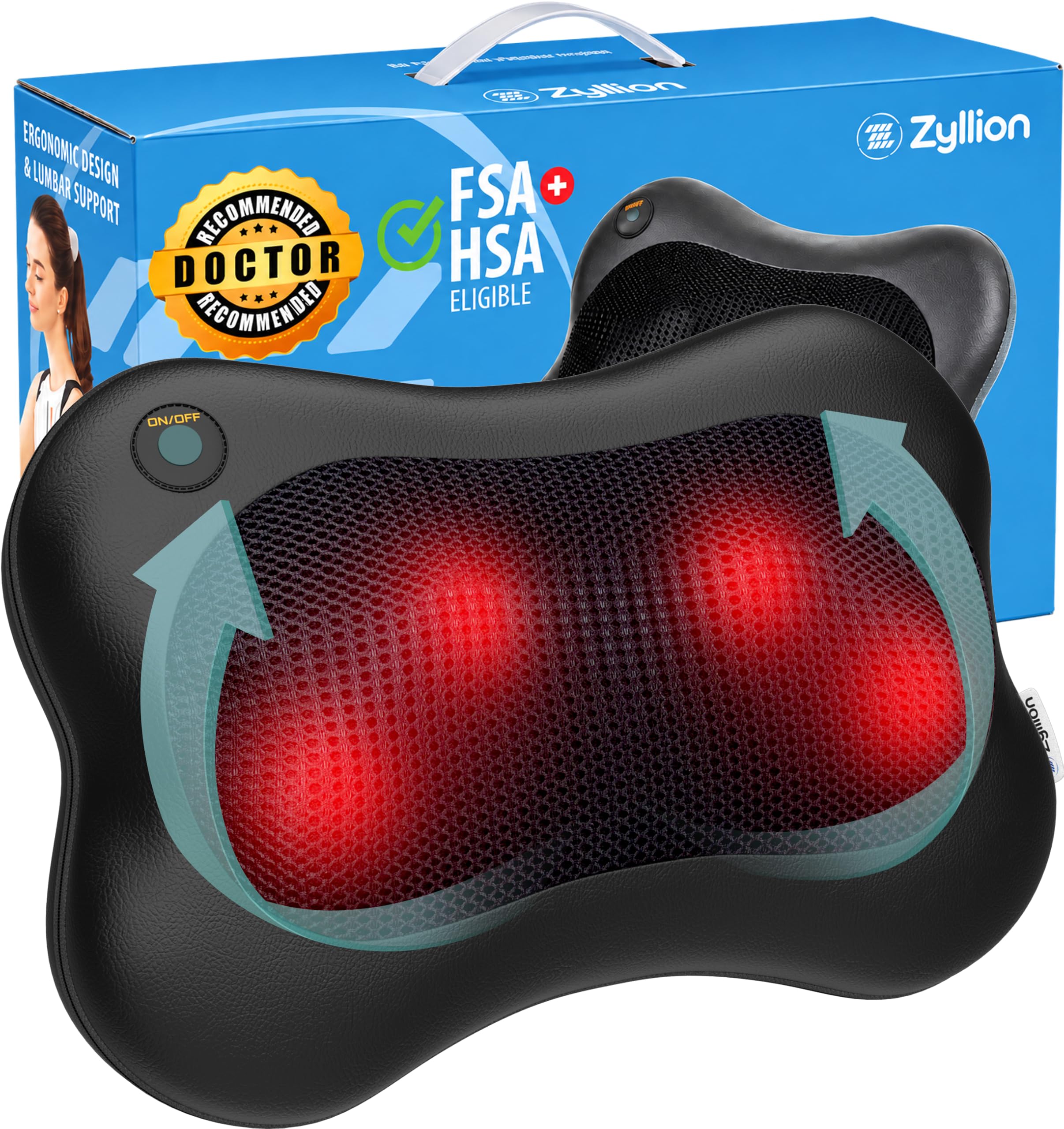
| Zyllion ZMA-13Desk-Side Comfort | Neck and shoulder knots at a desk | 3D shiatsu kneading with heat | — | Corded, 6-foot cable | Amazon |
| Full Body Massage Mat | Full-body stretch without hanging upside down | 3D stretching and airbag traction | — | Corded with handheld controller | Amazon |
| Teclor Inversion Table | Budget inversion with a wide backrest | Gravity inversion | 350 lbs | No power needed | Amazon |
| Teeter EP-560 | Serious inversion with medical registration | Gravity inversion with stretch handholds | 300 lbs | No power needed | Amazon |
| Stamina InLine Traction Control System | Upright traction when inversion is off-limits | Standing traction and stretch | 250 lbs | No power needed | Amazon |
Detailed Reviews
1. TENS 7000 Digital TENS Unit with Accessories
Our pick — 4.5+★ from 112,500+ verified ratings; the strongest balance of quality and price.
The cheapest way to find out whether pain-blocking pulses work on your back.
This is a small battery-powered box that sends mild electrical pulses through sticky electrode pads on your skin, and it is designed to interrupt the pain signal before it reaches your brain. You get the unit itself, 2 lead wires, a four-pack of reusable electrode pads, one 9V battery, a manual, and a hard carry case — everything you need to start on day one. At 13.7 ounces it slides into a bag, and the whole kit measures 8.75 x 2 x 7.75 inches, so it lives in a drawer or a tote without complaint.
The buying case rests on two things: adjustability and cost. You can dial intensity up or down, change the rhythm, and set a session timer, which is what lets you hunt for the setting your body responds to instead of accepting one fixed pulse. For chronic back and sciatica pain, one buyer reports it “Enabled standing 2 hrs pain-free vs. prior 3-min limit” after physical therapy, injections, and chiropractic work had failed. Bear in mind that this is not a one-session miracle. Owners commonly describe taking several sessions to find the modes that suit them, and the pads stay usable only until their stickiness fades, so a spare pad pack is a sensible add-on.
Two honest caveats. Battery life splits opinion hard — one buyer put it squarely: “It definitely works for everything it says it will. And I enjoy how effective it is for my pain. But the battery life didn’t last at all like I anticipated.” A fresh 9V solves that, and keeping a spare is smart. The other is that you must place pads correctly on clean skin for the current to reach the right spot — the included manual covers this, and the pads are reusable rather than one-shot.
What earns it the top spot
- Complete kit in the box: lead wires, four reusable pads, 9V battery, manual, and a hard case.
- Adjustable intensity, rhythm, and session timing let you tune to your own pain pattern.
- Compact and light at 13.7 ounces, so it travels and stores easily.
- Wireless freedom from the wall — plain 9V battery power.
Where it asks patience
- Battery life is the recurring gripe; pack a spare 9V.
- Pads lose stickiness over time and need replacing.
- Finding the right mode takes a few trial sessions.
Reach for this if: you want an affordable, self-tunable starter for nerve-style back and leg pain.
Think twice if: you expect to feel relief on the very first try without cycling modes.
2. Zyllion ZMA-13 Back and Neck Massager with Heat
Four rotating silicone nodes that dig into knots while your chair holds the cushion in place.
Where the TENS unit fights pain with electricity, this Zyllion fights it with pressure. Four soft silicone 3D nodes rotate in a deep-kneading pattern that mimics a thumb working a knot, and you can position it sideways along your spine, diagonally across two sore areas, or under your glutes. It measures 13 x 9.5 x 3.5 inches and weighs 3.9 pounds — that is 13 x 9.5 x 3.5 inches versus the TENS unit’s 8.75 x 2 x 7.75 inches, so the Zyllion is the far bulkier piece to park on a chair and the TENS kit is the one you carry in a bag. Adjustable straps secure it to an office chair or a car headrest, and a bonus car adapter is in the box.
What wins people over is the heat, on top of the kneading. Owner descriptions put it plainly: it heats really well and “actually gets very hot after 20-30 minutes,” so it can be a genuinely warming rubdown rather than a lukewarm imitation. The build also earns credit for surviving real pressure — the cushion takes a person’s back weight, and one long-term user reports each unit lasting 3+ years under heavy use. Safety is handled with an intelligent 20-minute auto-shutoff timer, overheat protection, and nodes that auto-rotate every minute to prevent muscle overuse.
The catch is that it is corded — a 6-foot power cable means you find a wall outlet. Most people see that as a feature, since the massager never fades mid-session; one owner noted a preference for plug-in precisely so it “doesn’t lose power quickly.” The 4/5 reviews flag a single annoyance instead: the on/off button sits on the front and can get pressed accidentally when you lean back, which trips the excessive-heat safety shutoff and forces a cooldown before you can restart. Leaning forward a touch avoids it. Durability is a smaller, mixed note — most cushions hold up for years, but an occasional unit quits, so keep the warranty in mind.
The mechanical reason it works: four nodes plus firm pressure plus heat reach the muscle tightness that pulses alone don’t touch, which is why desk-bound shoulders and necks respond well.
The realistic limit: it cannot reach deep spinal structures, so treat it as muscle relief around the back, not decompression of a disc.
Best for: anyone who wants a real hands-on knead at their chair with no batteries to fail.
Look elsewhere if: you need to move around while using it — the 6-foot cord ties you to a socket.
3. Full Body Massage Mat with Heat

Airbags that inflate and twist your whole body — no hanging upside down required.
This mat does not knead, roll, or vibrate. It inflates small airbags under your neck, back, waist, and hips to stretch and traction you in place, which is the gentlest approach on this list and the easiest on joints. You choose from 4 program modes (Auto, Stretch, Twist, Flow), 3 intensities, and 3 heat levels of 115℉, 130℉, and 149℉. The back section’s heating is optional, and the handheld controller lets you pick a body zone — neck, back, or hip — without scrolling through a menu.
At 10 pounds and foldable with a velcro strap and handle, it is the most portable full-body option here, which matters if you want to lie on it in the evening and stow it in a closet by morning. It fits users from 5’0″ to 6’2″ thanks to an adjustable neck section, and the passive airbag stretch suits people who cannot or will not go upside down. Recovery-minded owners appreciate it: the stretching approach helps loosen hips and lower back without the head pressure an inversion table can bring.
The one rule you have to respect is where you lay it. It works on a bed, sofa, or floor, and the maker advises against chairs and recliners — but owners add a wrinkle: too-soft a mattress and too-hard a floor both blunt the effect, so a padded surface like a massage-table pad coaxes out the best stretch. The other thing to know before you buy: the airbags inflate by pump, and that pump is audible — a hiss and thump as bags fill. It is quiet enough for TV or falling asleep, but not silent. Set it up on a suitable surface and the trade-off is small.
What surprised me about the design: 4 modes, 3 intensities, and 3 heat levels give you real range within a passive method, and the fact that it can simply be a warm, gentle stretch after a long day is a different kind of relief than active kneading.
Pick this if: you want full-body decompression in a 10-pound pad you can fold and store.
skip it if: you expect deep shiatsu pressure or need it to work on a chair.
4. Teclor Inversion Table for Back Pain Relief

A wide, long backrest and a 350-pound steel frame without the premium inversion price.
Inversion tables use gravity to stretch your spine — you lie back, the table tips, and your body lengthens. The Teclor’s advantage is comfort at the contact points: a 30.3-inch-long, 15.3-inch-wide backrest that is deliberately generous so your back is supported rather than pinched. The height adjustment runs 4’3” to 6’8”, and the headrest slides through a 4-inch range, so most households can share it. The extra-long handle makes tipping smooth and controlled.
Because it holds up to 350 lbs on a steel frame, it suits heavier users too — one 350-lb owner reports the frame holds their weight without wobble, and that even 15 minutes brings temporary back relief. Assembly runs quick for some, around 15 minutes with the included tools, while others spend about 45. Folding for storage means it does not eat a room.
The 4/5 critiques are worth knowing before you buy. The backrest padding is stapled and functional rather than plush, and the foam on the ankle holders has been called flimsy by one owner. The lumbar support strip is a hook-and-loop pad with no backboard to anchor it, so expect to adjust it yourself. These are build-finish notes, not functional failures — the table tips, stretches, and holds as designed. If you want a sturdier-padded machine and don’t mind spending more, the Teeter EP-560 is the step up.
Why it earns the spot
- 30.3 x 15.3-inch backrest supports the whole back comfortably.
- 350-lb steel-frame capacity accommodates heavier users.
- 4’3” to 6’8” height range with a 4-inch headrest adjustment.
- Folds away for compact storage.
What to know before you order
- Stapled backrest padding is functional, not plush.
- Ankle-holder foam is thin on some units.
- Lumbar pad needs manual repositioning.
- Assembly time varies — budget an evening.
You’ll like it if: you want a wide, supportive inversion table that stows away without a premium price.
You’ll want the step up if: padded comfort and finish matter more to you than cost.
5. TEETER EP-560 Inversion Table
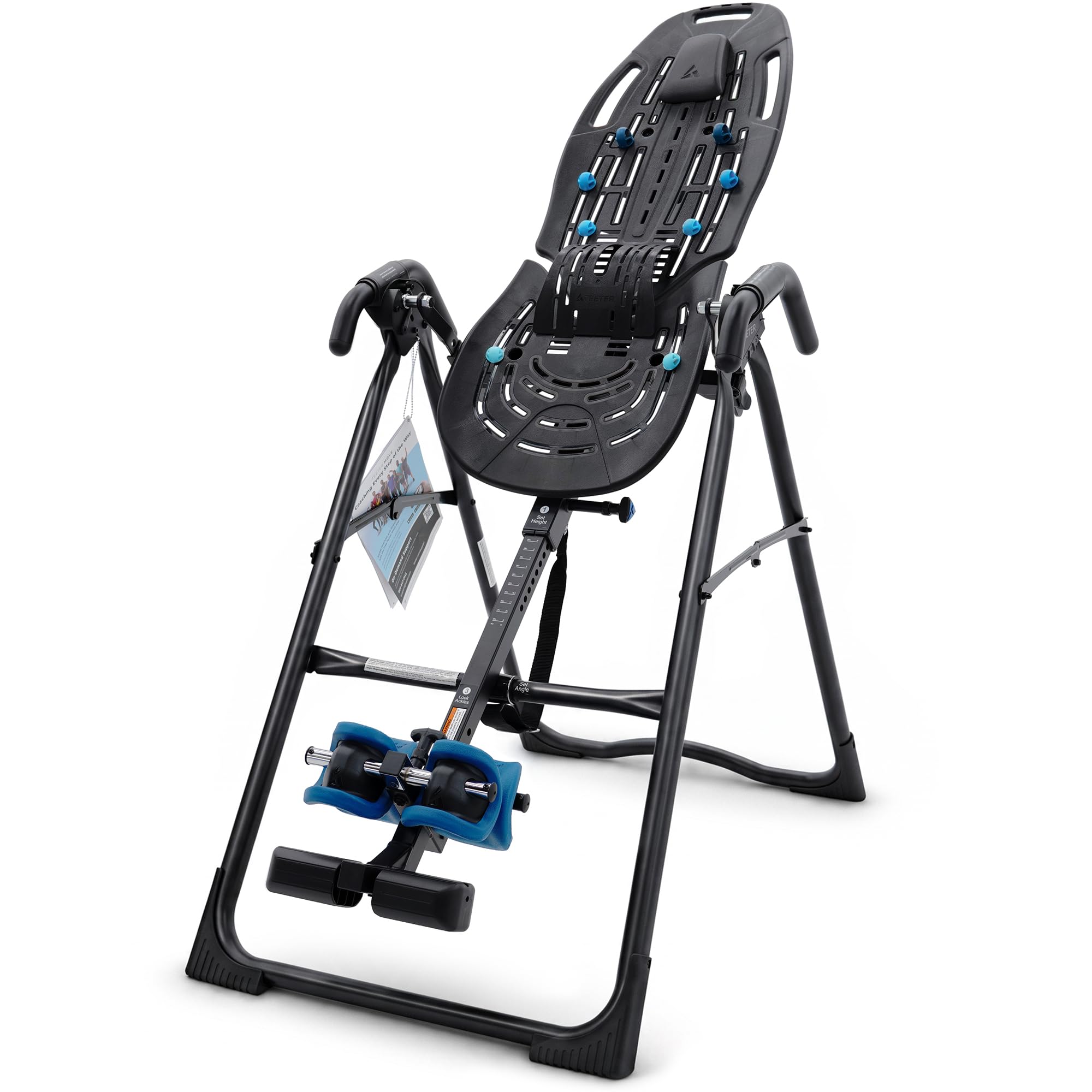
The sturdier, medically registered step up — heat-treated steel and bulletproof ankle cups.
The EP-560’s headline is that it is registered with the FDA as a 510(k) medical device, which is a regulatory classification meaning the maker registered it for specific conditions rather than a plain exercise product. That matters if you want a machine built and certified for back care: its labels cover back pain, muscle tension and spasm, herniated disc, sciatica, degenerative disc disease, spinal stenosis, spinal curvature due to tight muscles, and facet syndrome. It is also UL Safety Certified and built from heat-treated steel for strength.
The comfort engineering is genuinely thoughtful. Patented wrap-around ankle cups keep your feet locked without pinching, and a dial adjusts the foot platform to two positions so you can fit it securely before tipping. Grip-and-Stretch handholds let you stretch arms overhead while inverted. The whole thing folds away in seconds with no disassembly, and it holds up to 300 lbs.
Set up correctly and it behaves well: owners describe balancing it with a height setting that occasionally runs one notch above the stated height so the table actually tips at their build. Assembly is described as straightforward, often done solo. The honest catch is weight — the frame is 65 pounds and does not glide casually, so people with bad backs have reported needing help moving it. Comfort at the head and shoulders splits opinion: some find the hard plastic backrest cool and easy to clean, others want more give. On our top pick the TENS unit is a cheaper way to test electricity-based relief before you commit to a full table.
The engineering rationale: wrap-around ankle cups and a dial-controlled 2-position foot platform give a secure fit so you can relax into the stretch, and the FDA 510(k) registration tells you the maker applied for back-condition labeling, not just a fitness badge.
The size reality: 65 pounds of steel means this is not a one-arm carry, and the balance point may need a taller height setting than you expect.
Choose it if: you want a medically registered, sturdily built inversion table and don’t mind the heft.
Not for you if: a 65-pound frame or a firm backrest would put you off using it.
6. Stamina InLine Traction Control System
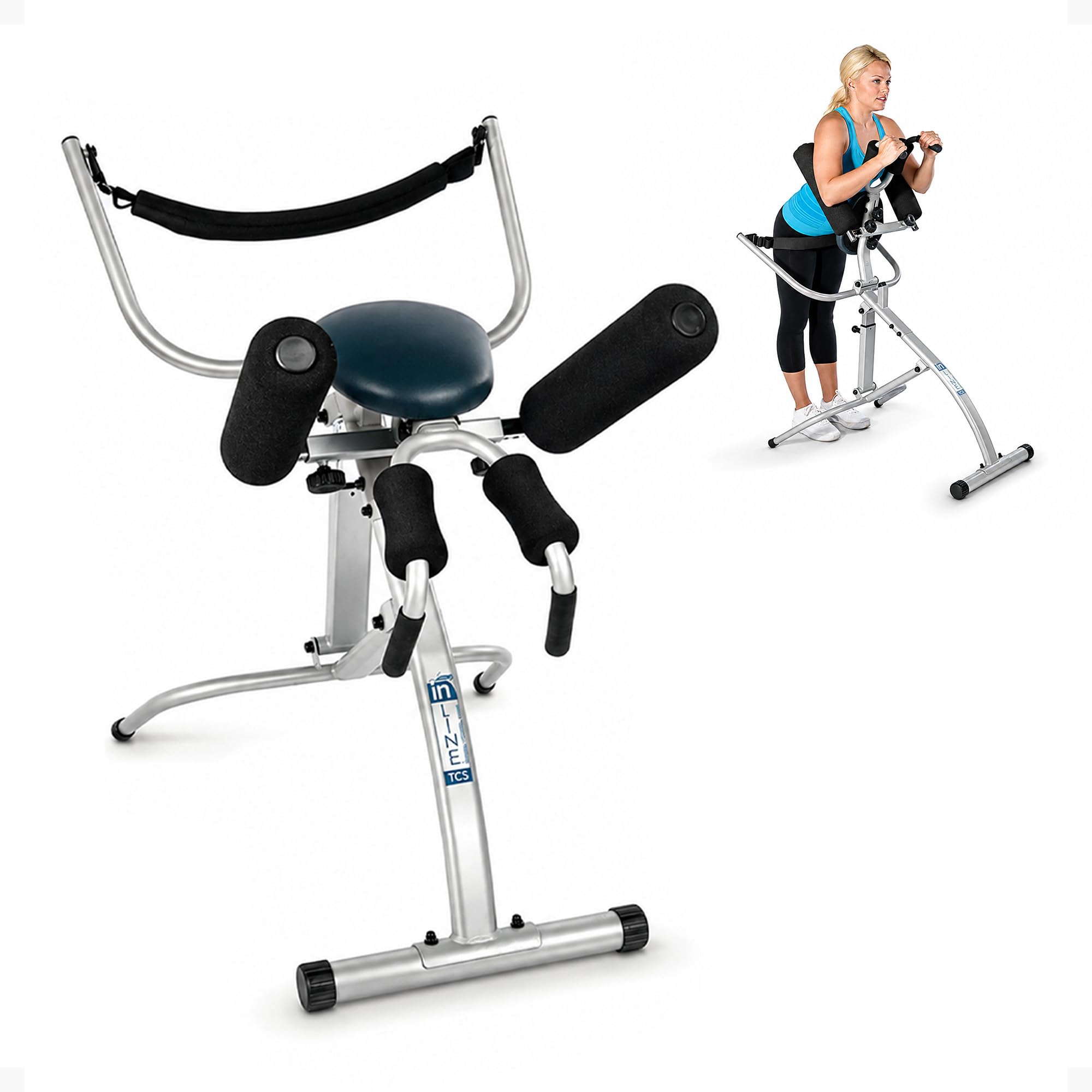
Traction you use standing flat on your feet — no tipping, no hanging backward.
The Stamina InLine takes the opposite approach to an inversion table: you stand, lean into padded supports, hook your arms over rollers, and let your body lengthen with a controlled traction pull through the back and hips. That flat-footed position is the reason owners prefer it — there’s no head-down hang, no blood-rush, and people who can’t invert comfortably can still stretch. It is built on a stainless-steel frame, weighs 29 pounds, and holds up to 250 lbs.
What it delivers is a stretch that reaches the exact spot owners have targeted for years. One owner with back pain since childhood calls it highly effective because it reaches areas an inversion table misses, and another rates its spinal decompression above costly professional sessions, saying it reached a stubborn spot that inversion and chiropractic had not touched. Getting in and out stays easy, which owners say encourages them to actually use it daily. It also stretches hamstrings and hips, not just the spine, and packs into a home gym footprint.
Two caveats come up in owner feedback. The rolling pads under your arms can push into the shoulder joint, so ease in gradually and don’t overdo the first sessions — treat it as a gentle stretch, not a challenge. Some users also initially overshoot the time; two minutes twice daily with slow increases is the pattern that works better than long sessions. And the belt fitting takes trial and error — adjust the lap belt to hip height and set the arm supports’ width before your first real stretch, exactly as the maker describes.
Where it wins
- Standing traction reaches spots an inversion table can miss.
- Easy in-and-out makes daily use feel natural.
- Also stretches hamstrings and hips, not only the back.
- Sturdy stainless-steel frame, 250-lb capacity.
Check before you commit
- Rolling arm pads can press into shoulders — go slow.
- Lap belt and arm width take trial and error to fit.
- Lower load capacity than the inversion tables here.
The best fit for: anyone who has been told to skip inversion or simply dislikes being upside down.
Look at the tables instead if: you want maximum-capacity inversion and don’t mind tipping backward.
Know the Specs
Height Range and Weight Capacity
These two numbers decide whether a table fits and holds you. Height range sets which bodies the frame can accommodate — the Teclor covers 4’3” to 6’8”, while the Teeter’s actual tipping point sometimes lands a setting above your stated height because of how the pivot balances. Weight capacity is the safety gate: 250 lbs on the Stamina, 300 lbs on the Teeter, 350 lbs on the Teclor. A spec like “350 lbs” means the steel frame is rated for that load; it does not mean you should push a lighter table past its rating.
Electrical Stimulation and Airbag Stretching
A TENS unit sends controlled electrical pulses through electrode pads to block the pain signal — the TENS 7000 runs on one 9V battery with adjustable intensity, rhythm, and session timing. An airbag mat works mechanically instead: a pump inflates bags under your neck, waist, and hips to stretch you, with settings like 4 modes, 3 intensities, and 3 heat levels at 115℉, 130℉, and 149℉. Neither one pulls your spine lengthwise the way traction or inversion does, which is why they answer different problems.
Common Questions
Will a TENS unit work for sciatica pain down the leg?
Can I use an inversion table if I have high blood pressure?
How long should I use a traction or inversion machine per session?
Is the Zyllion massager better than a TENS unit for back pain?
Can the full-body massage mat fold small enough to store in a closet?
Do I need to assemble an inversion table?
Why is the Zyllion massager corded instead of battery powered?
Will the full-body massage mat work on a hard floor or a soft mattress?
How much weight can the inversion tables hold safely?
What does an FDA 510(k) registration mean on an inversion table?
The Bottom Line
The right machine depends on how your back hurts, not on which one looks impressive in a photo. For most people the machines for back starting point is the TENS 7000 because it lets you test whether pain-blocking pulses suit you while costing the least and traveling easily. If your knots live in your neck and shoulders during desk days, the Zyllion ZMA-13 gives you a real knead with heat. And if you want to stretch your spine without going upside down, the Stamina InLine is the one built for flat-footed traction.
If you’ve already decided inversion is for you, the choice narrows to the Teclor for a wide backrest at a budget tier or the Teeter EP-560 for a medically registered, heat-treated steel build. Either way, buy the one whose height range and weight capacity fit your body — that is the spec that keeps you using it.
How we choose
We do not accept paid placement. Every pick is matched to a real buyer and a real use-case; we do not hands-on test units.
Sources
Specifications: manufacturer listings and product documentation. Review insights: verified customer reviews, as of October 2026. Pricing: not shown on this page (it changes often); check the current price via the retailer link.
As an Amazon Associate, Aappliancez earns from qualifying purchases. This does not affect which products we feature.