Disclosure: Some links in this post are affiliate links. As an Amazon Associate I earn from qualifying purchases, at no extra cost to you. Learn more
Specs are compiled from manufacturer listings and verified buyer reviews and can change over time — please confirm the key details on the product page before buying.
If your eyes sting by mid-morning and the screen makes you squint, the fix is usually two pigments your body cannot make on its own — lutein and zeaxanthin. These are carotenoids (plant pigments) that collect in the macula, the small patch at the back of your eye that handles sharp, central vision. Your body does not produce them, so they have to come from food or a softgel. The right bottle depends on how much lutein you actually want per day, if you want a one-capsule routine or two, and how long that bottle lasts before you reorder. That is what this shortlist sorts out for you.
This guide is built by comparing the manufacturers’ published specifications and the patterns across verified customer reviews, so you get each pick’s real strengths and trade-offs instead of marketing spin.
Every pick below is judged on dose per softgel, lutein-to-zeaxanthin ratio, how many capsules a day it takes, and how long the bottle runs. Read this and you will know which pick fits your daily routine fastest, because the best lutein and zeaxanthin supplements are the ones you will actually finish.
Top Picks
How To Choose The Best Lutein and Zeaxanthin Supplements
Most people buy an eye supplement the way they buy a multivitamin — grab whatever looks familiar and hope. That works badly here, because the numbers on these labels move a lot. One bottle might hand you 40 mg of lutein per serving, and the next gives you 20 mg. One takes a single softgel a day, another asks for two. Before you pick, get these four things straight, because they are the only ones that change your daily routine.
Dose per serving, not dose per bottle
Lutein and zeaxanthin are measured in milligrams (mg), and a milligram is one thousandth of a gram — tiny, but the difference between 20 mg and 40 mg per serving is a real jump. Read the panel for the amount delivered per serving, then check the serving size. If the serving size says two softgels, the headline number is what you get from both capsules, not one. A “40 mg” bottle that takes two softgels per dose gives you 20 mg from each pill, which is worth knowing before you decide the routine is easy.
How many caps and how many days
Two numbers decide whether a bottle is a good fit for you: capsules per day and total softgels in the bottle. A 300-softgel bottle at two per day covers 150 days of daily use, which is about five months before you reorder. That matters if you hate restocking. It matters even more if you travel — a bottle this size is not a carry-on friendly shape, so a shorter supply in a smaller container is often the better travel pick. Decide which you hate more: reordering or bulky bottles.
Look for third-party testing and allergy statements
Supplements are not held to the same pre-market rules as drugs, so the label claims do the work. Look for a stated third-party lab test, a GMP facility statement (Good Manufacturing Practice — the manufacturing standard an auditor checks), and a plain allergen panel that names what the product is made without. A formula that is non-GMO, third-party lab tested, and made without gluten, dairy, eggs, peanuts, soy, wheat, and yeast gives you fewer unknowns to chase down if you already avoid certain ingredients.
Why the label says take it with a fat-containing meal
Lutein and zeaxanthin are fat-soluble, which means your body absorbs them better alongside fat. A softgel is already an oil-based format, so the pill itself carries some fat — but a full meal with real fat does more work than an empty stomach. This is why a formula built around omega-3 fatty acids (the DHA and EPA types) and phospholipids (fat-like molecules that help with absorption) is worth a second look if a plain pill tends to sit heavily. It is also the single easiest instruction to ignore and the one that quietly decides whether you feel anything.
Side-by-Side Comparison
| Model | Best For | Lutein per serving | Zeaxanthin per serving | Softgels per day | Amazon |
|---|---|---|---|---|---|
| Now Supplements Lutein & Zeaxanthin 25 mg★ Best Overall | One-capsule daily routine | 25 mg | 5 mg | 1 softgel | Amazon |
| Swanson Synergistic Eye HealthBest Value | Single-capsule value | 20 mg | 2 mg | 1 softgel | Amazon |
| Lutein and Zeaxanthin 40 mg, 300 Softgels | Longest supply per bottle | 40 mg | 1,600 mcg | 2 softgels | Amazon |
| AREDS 2 Eye Vitamin & Mineral Supplement | AREDS 2 with zinc and copper | — | — | 2 softgels | Amazon |
| Carlyle Adult Eye Support | Small daily softgels | — | — | — | Amazon |
Detailed Reviews
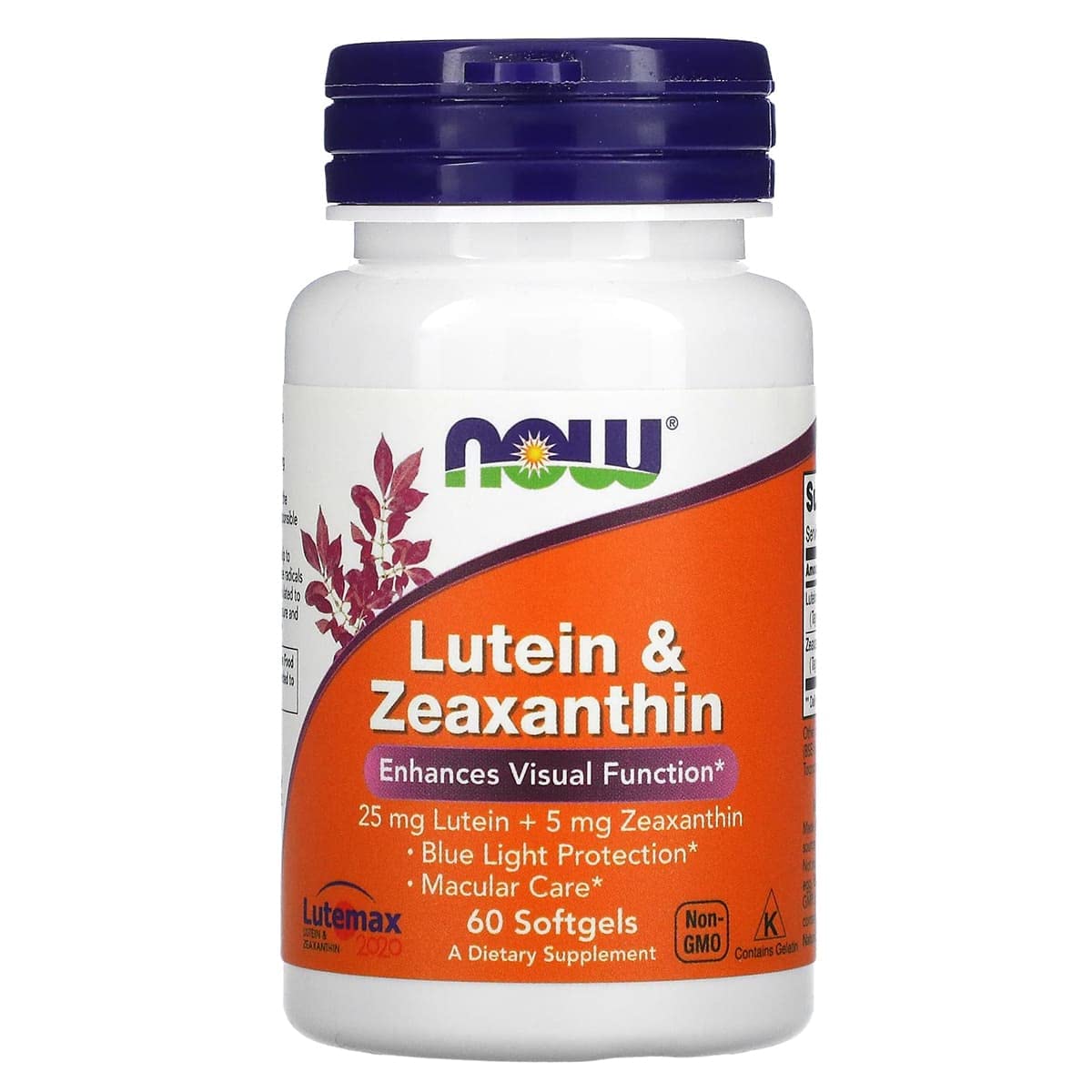
1. Now Supplements Lutein & Zeaxanthin 25 mg, 60 Softgels (2 Pack)
Our pick — over 4.5★ from 950+ verified ratings; the strongest balance of quality and price.
The one-capsule pick that carries the biggest zeaxanthin number in this lineup.
If you want one swallow a day and nothing else to remember, start here. Each softgel hands you 25 mg of lutein and 5 mg of zeaxanthin, and the label asks for a single softgel daily with a fat-containing meal — no second pill, no mid-day reminder. Meanwhile the Swanson pick above drops that zeaxanthin figure to 2 mg on the same one-capsule schedule, so the Now bottle is the stronger zeaxanthin play of the two single-cap options. Swanson Synergistic Eye Health sits at 2 mg against Now’s 5 mg, a 2.5x gap.
The chemistry behind the label is straightforward. Lutein and zeaxanthin are carotenoid pigments that act as filters of high-energy blue light, and both concentrate in the eye’s yellow spot — the patch of retina that handles what you see straight ahead. The brand pairs them with a GMP statement (Good Manufacturing Practice, the manufacturing standard an auditor inspects) plus an NPA A-rated certification covering the lab and testing methods for stability and potency. It has been packaged in the USA by a family owned and operated company since 1968, which is the sort of plain, checkable detail this category usually buries.
What wins people over is daily visual comfort. Buyers with dry, gritty mornings describe the tight, tired feeling loosening. One contact-wearer reports their prescription was too strong at a recent eye exam after years on this brand. A 77-year-old with a family history of macular degeneration reports no issues so far. The recurring gripe is clumping: softgels can arrive stuck together in the bottle. A firm tap on the cap usually breaks them apart, but it is worth knowing before your first shake.
Why it takes the top spot
- 25 mg lutein and 5 mg zeaxanthin in a single daily softgel, so there is no second dose to remember.
- Carotenoids here do the same filtering job as the Swanson pick, but with a bigger zeaxanthin load per capsule.
- NPA A-rated GMP certification covers lab and testing methods for stability and potency.
- Family owned and operated USA packaging since 1968 — a decades-long paper trail you can look up.
Where it asks a little patience
- Softgels can arrive clumped in the bottle; a few taps on the cap separates them.
- Take it with a meal containing fat, or absorption is not what it could be.
- No third-party AREDS 2 mineral blend here — this is a carotenoid formula, not a zinc-and-copper one.
Buy it if: you want one softgel a day and the larger zeaxanthin number of the single-capsule picks.
Think twice if: you were specifically after an AREDS 2 formula with zinc and copper — that is a different bottle entirely.
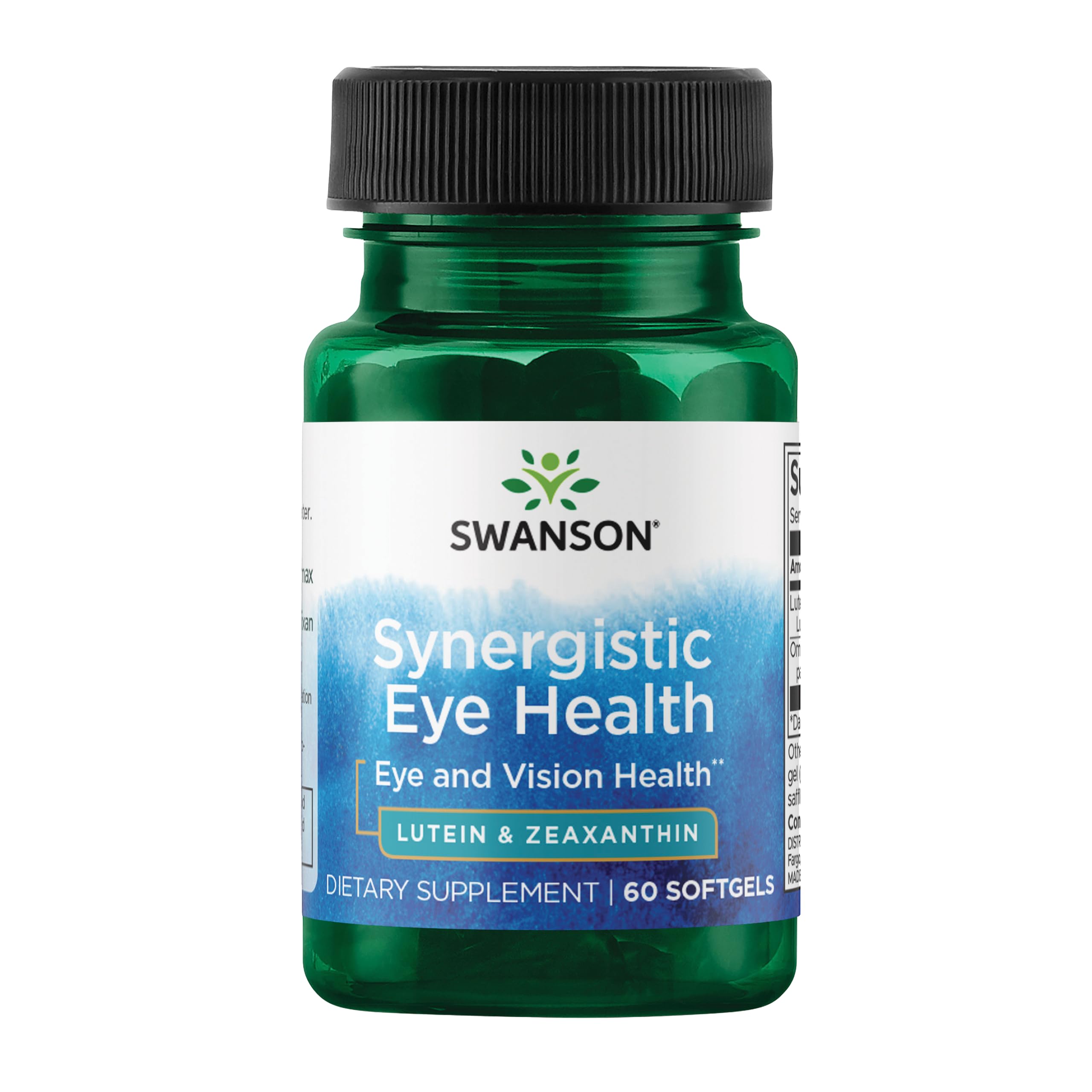
2. Swanson Synergistic Eye Health, Lutein 20 mg Zeaxanthin 2 mg, 60 Softgels
Twenty milligrams of lutein, one capsule a day, and a reviewer who traded a pricier brand for it.
Dry-eye sufferers are the people who notice this bottle fastest. One softgel carries 20 mg of lutein plus 2 mg of OmniXan zeaxanthin, and the suggested routine is a single capsule — which puts it level with the Now pick on daily effort, though 5 mg behind on zeaxanthin. Both those carotenoids are macular pigments your body cannot manufacture, so diet and supplements are the only two doors in. Lutein collects in the yellow spot of the retina, the patch that shields the macula from blue light and oxidative stress — the same reason this bottle is marketed at people who stare at phones, tablets, and laptops all day.
What buyers talk about most is the quality of the thing, which tracks with how Swanson describes its process: pharmacists, scientists, food nutritionists, and quality experts on staff in Fargo, North Dakota, with GMP-certified facilities and purity and potency testing that runs through independent third-party labs. The brand dates to 1969. One buyer switched from a pricier branded eye formula for the higher lutein and one capsule a day instead of two.
Here is the catch, and it is about supply rather than the formula. The bottle runs on the short side, and the brand’s availability gets shaky — repeated discontinuations and backorders mean you may finish a bottle and wait. Time your reorder before you hit the last dozen softgels. If you want the longest possible runway between purchases, the 300-softgel bottle below covers a very different stretch of calendar.
The dry-eye angle: a long-running buyer of this formula once needed drops just to open their eyes in the morning and now rarely reaches for them — the kind of everyday detail that matters more than a marketing badge.
Reach for this if: you want a low-fuss single capsule with tested purity and you are happy to reorder promptly.
Look elsewhere if: backorders would leave you without a pill for weeks — the bigger bottle further down solves that.
3. Lutein and Zeaxanthin Supplements, 40mg Per Serving, 300 Softgels
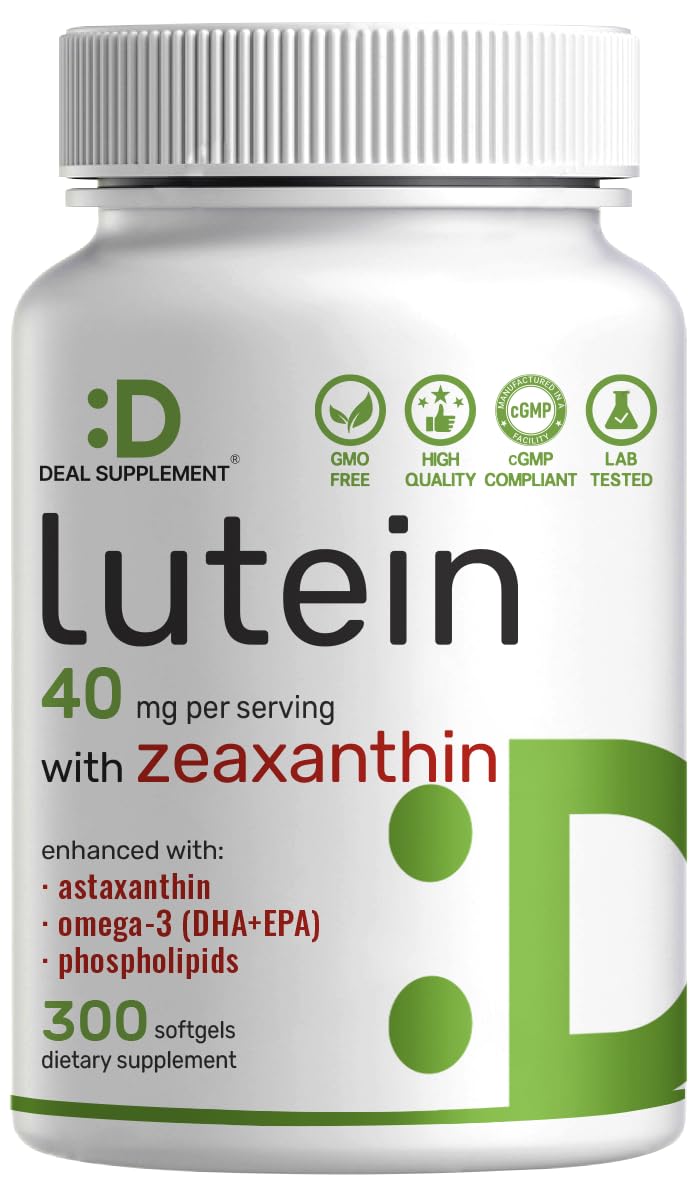
Three hundred softgels, four ingredients in one dose, and a five-month stretch between reorders.
Count the pills and you see why this one sits in a class of its own. Three hundred softgels in the bottle, a two-softgel serving, and a stated supply of up to 150 days — roughly five months of daily use before you buy again. Every other bottle here runs shorter, and the Now 2-pack is dwarfed on count: 300 softgels against 60, a fivefold difference in capsules per purchase. The 40 mg lutein headline is per serving, not per pill, so each of the two softgels carries half of it.
The rest of the dose is where this formula earns its keep. Alongside the 40 mg lutein you get 1,600 mcg zeaxanthin (a microgram is one thousandth of a milligram) from marigold flower extract, plus 20 mcg astaxanthin. Then come 12.5 mg of omega-3s — the DHA and EPA types — and 10 mg phospholipids, fat-like molecules that help a fat-soluble softgel absorb. That matters because lutein and zeaxanthin need fat alongside them to be taken up well. So this one softgel already brings its own fat with it. Ingredients are non-GMO, third-party lab tested, and made without gluten, dairy, eggs, peanuts, soy, wheat, or yeast.
Owners lean on the formula’s completeness more than any single number — lutein, zeaxanthin, astaxanthin, and omega-3s in one dose fits a routine in the way a four-bottle stack never will. The honest trade-offs are physical. Pill size splits people cleanly: some find the softgels comfortable, others find them big. Odor gets mentioned too, and the softgels can arrive stuck together in the bottle. If you are sensitive to smells in supplements, this is the one to open and sniff before you commit to 150 days of it.
Sizing the supply: at two softgels a day this is one of the longest single-bottle runs in the group — and the biggest container here, measuring 5.67 x 3.15 x 3.07 inches, so plan shelf space.
It suits: anyone who wants a wide-spectrum formula and hates reordering — this bottle covers months.
Skip if: you prefer a small capsule or you are put off by a softgel with a noticeable smell.
4. AREDS 2 Eye Vitamin & Mineral Supplement
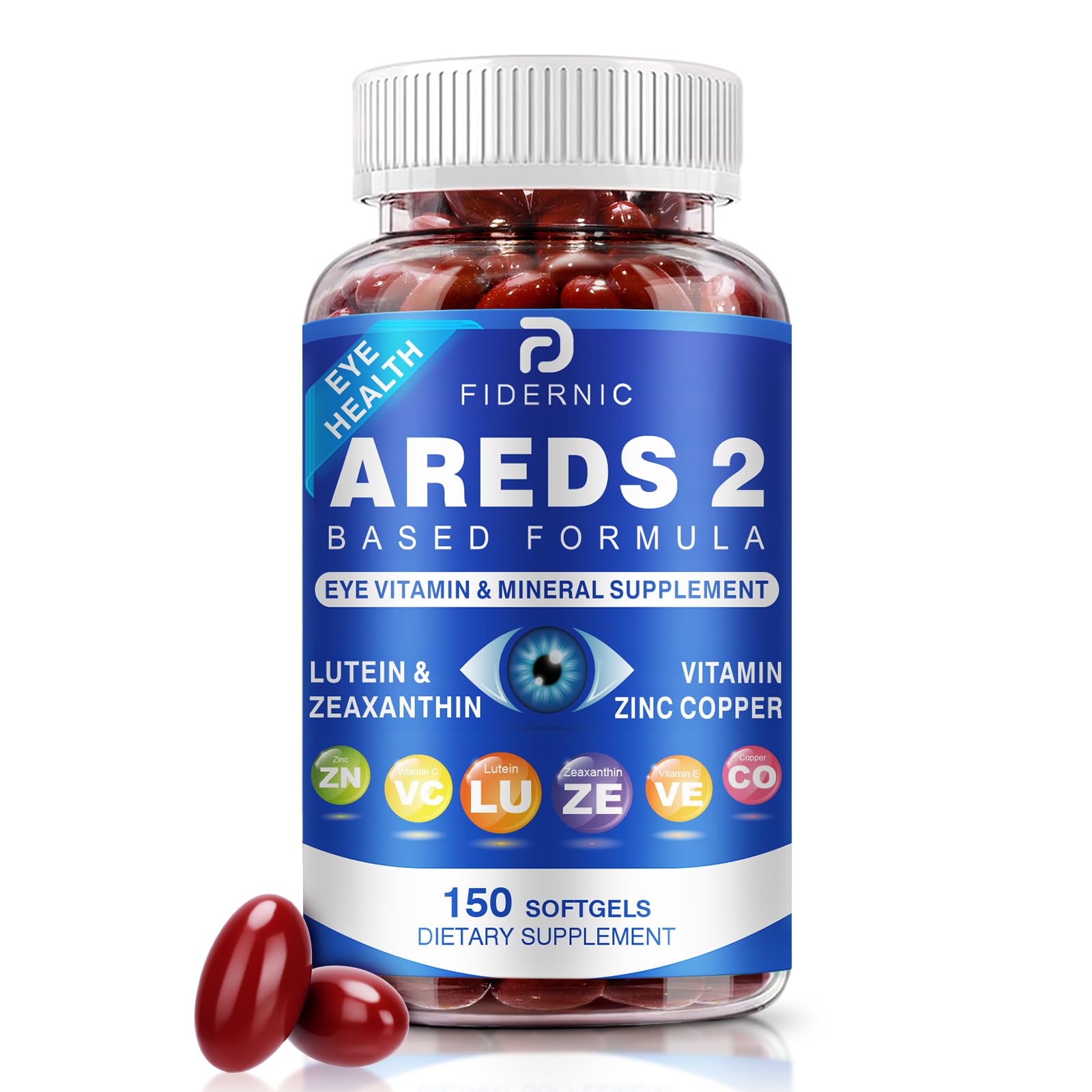
The only bottle here that pairs the two carotenoids with zinc, copper, and vitamins C and E.
For people whose eye concerns are already on a doctor’s radar, this is the format that reads most familiar. Buyers describe steady daily use and no stomach trouble — the formula is easy enough to take with or without food in the experience described. Several long-term buyers report unchanged eye exams over several years and sharper vision since starting. None of that is a promise the label makes, and the label does not make one — it claims nutritional support, nothing more.
Worth flagging honestly: this is the newer arrival of the group, and the brand is a health technology manufacturer rather than a decades-old supplement house. If longevity of the brand matters to you as much as the formula, the ingredients themselves match the standard AREDS 2 checklist, which is the part that actually goes in the bottle.
The compact-pill win: at roughly a half-inch long, these are the easiest two-a-day capsules to get down in this lineup — useful if larger softgels have ever made you quit a supplement early.
Best for: anyone who wants the carotenoids bundled with antioxidant vitamins and the zinc-and-copper minerals of the AREDS 2 format.
Consider something else if: a two-softgel daily routine is one step more than you will realistically keep up.
5. Carlyle Adult Eye Support | 300 Capsules
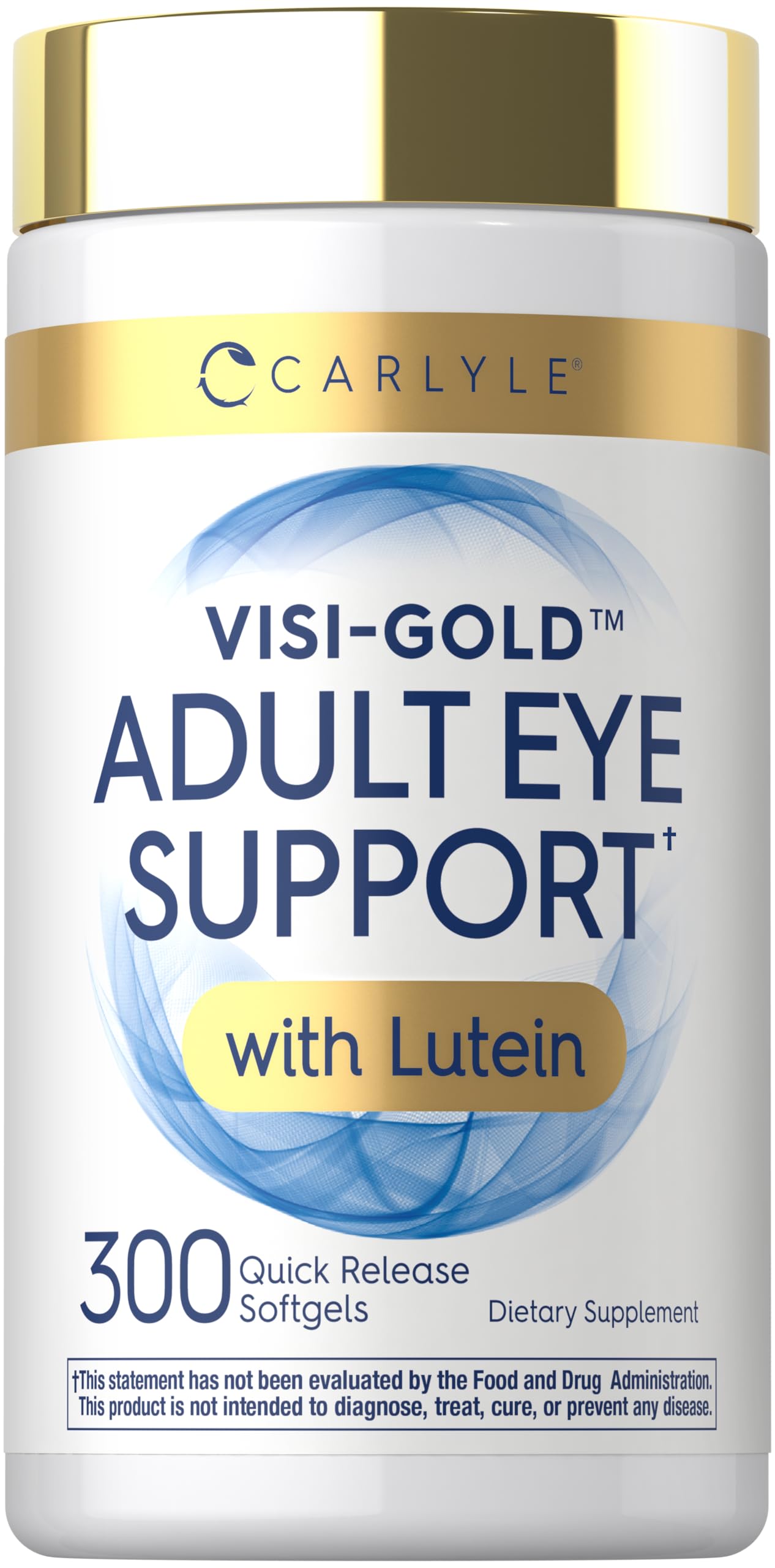
A three-hundred-capsule bottle built around small, easy-to-swallow softgels.
If swallowing a big glossy softgel is the reason your last supplement ended up in a drawer, this is the bottle to try. Carlyle’s Adult Eye Support is a marigold-based formula featuring both lutein and zeaxanthin, plus a Bilberry Support Complex — and the capsules are the small, rounded kind buyers describe as easy to get down. It is also the pick to reach for if you spend your working day in front of a screen, since that is exactly the buyer the formula is pitched at. Three hundred capsules per bottle puts it alongside the longest supply here.
Where this one stands apart from the Now and Swanson picks above is the ingredient list itself. Rather than a straight lutein-and-zeaxanthin softgel, it folds in a bilberry complex, and the label keeps the rest clean: laboratory tested, gluten-free, wheat-free, yeast-free, soy-free, with no artificial flavor or sweetener, and non-GMO. If a specific ingredient is off your list, that plain statement saves you reading four other panels to find out.
Screen strain is the theme in the review pages. A two-year IT user reports less eye fatigue after long screen sessions and reading text without glasses in decent light. Others report clearer low-light vision and easier reading. The softgels can arrive stuck together from shipping, and they separate when you tap the bottle — a small fuss, and not one that stops anyone from reordering. This is a straightforward, clean-label eye formula for people who need a small pill and a long supply.
The daily-workhorse read: smaller softgels and a bottle that lasts make this the easiest of the bunch to keep a habit going with, which is the part most people fail at with any supplement.
Worth it for: anyone who wants the smallest capsules, a clean free-from label, and a long stretch before running out.
Look at the Now pick instead if: you specifically want a stated zeaxanthin figure on the front of the bottle.
Know the Specs
Lutein dose per serving
Lutein is a carotenoid your eye concentrates in the macula, the sharp-vision patch at the back of the retina, and your body does not make it — so the milligram count on the bottle is the whole conversation. A 20 mg dose and a 40 mg dose look similar on a shelf but deliver very different amounts, and the serving size is what decides it. If the serving is two softgels, the 40 mg is split across both pills. Always read the amount per serving, then check how many pills that serving takes — that pair of numbers tells you how much you actually get each morning.
Zeaxanthin and the lutein ratio
Zeaxanthin is the second macular pigment, and it travels with lutein in food and in supplements — both sit in the retina and help filter high-energy blue light coming off screens. Brands list it in milligrams, such as 2 mg or 5 mg, or in micrograms like 1,600 mcg (a microgram is one thousandth of a milligram, so 1,000 mcg is 1 mg). The balance between the two pigments is worth a glance. Nobody here will tell you a magic ratio exists, but if you are comparing two bottles with similar lutein, the higher zeaxanthin number is the one doing extra work.
Common Questions
What dose of lutein and zeaxanthin should I actually look for?
Can I take lutein and zeaxanthin if I already take another eye vitamin?
Do lutein and zeaxanthin need to be taken with food containing fat?
Why do softgels arrive stuck together in the bottle?
Is an AREDS 2 formula better than a plain lutein supplement?
How long does a bottle of lutein and zeaxanthin last?
Can I take lutein and zeaxanthin on an empty stomach?
Are these supplements non-GMO and gluten free?
Will lutein and zeaxanthin help with eye strain from screens?
What is the difference between lutein and zeaxanthin anyway?
The Bottom Line
For most people, the lutein and zeaxanthin supplements to start with is the Now Supplements Lutein & Zeaxanthin 25 mg, because a single daily softgel carrying 25 mg of lutein and 5 mg of zeaxanthin is the easiest routine to keep, and the NPA A-rated GMP certification plus USA packaging since 1968 is the paper trail that makes it simple to trust. If you would rather spend the least per day, the Swanson Synergistic Eye Health gives you 20 mg lutein in one capsule with a strong quality reputation — just reorder early, since the brand’s stock can go quiet. And if you want the widest formula with the smallest capsules and a bottle that lasts months, the DEAL SUPPLEMENT 40 mg, 300 Softgels or the Carlyle Adult Eye Support is the pair to weigh; the AREDS 2 bottle is the one to pick if you want zinc and copper in the same pill. Whichever you choose, take it daily and take it with food — that habit does more than any difference between these labels.
How we choose
We do not accept paid placement. Every pick is matched to a real buyer and a real use-case; we do not hands-on test units.
Sources
Specifications: manufacturer listings and product documentation. Review insights: verified customer reviews, as of October 2026. Pricing: not shown on this page (it changes often); check the current price via the retailer link.
As an Amazon Associate, Aappliancez earns from qualifying purchases. This does not affect which products we feature.