Disclosure: Some links in this post are affiliate links. As an Amazon Associate I earn from qualifying purchases, at no extra cost to you. Learn more
Specs are compiled from manufacturer listings and verified buyer reviews and can change over time — please confirm the key details on the product page before buying.
If you want stronger breathing without gadgets that frustrate you, the short answer is this: a simple resistance trainer used for a few minutes a day is the whole game. The trick is picking one whose resistance actually matches your strength. A device tuned too light does nothing, and one that is too stiff sits in a drawer. This guide walks you through ten real options and shows you which one fits your goal, your ability, and your daily routine.
This guide is built by comparing the manufacturers’ published specifications and the patterns across verified customer reviews, so you get each pick’s real strengths and trade-offs instead of marketing spin.
You will see how resistance levels, mouthpiece material, and cleaning design change what daily use actually feels like. By the end you can match a device to your own breathing strength instead of guessing. My goal is to make choosing the lung exerciser simple, honest, and free of the hype that surrounds this category.
Top Picks


How To Choose The Best Lung Exerciser
Most people buying their first lung exerciser assume the hardest resistance is the best. It is not. The right device is one you can breathe through for a full set at a resistance you can still increase a notch or two as you get stronger. Everything below explains the handful of choices that decide whether a trainer becomes a daily habit or a dusty shelf ornament.
Adjustable resistance beats fixed resistance
Resistance is the whole point of a breathing trainer — it is the force your breathing muscles push against, like a dumbbell for your diaphragm. A device with only one fixed level works until it does not. Once your muscles adapt, you need more. That is why the O2Trainer ships with 16 interchangeable caps and why the Expand-A-Lung uses a single turn knob that scales from very light to challenging. Look for a trainer that lets you move up in small steps, not one big jump.
The mouthpiece material is what you actually feel
You hold this thing in your mouth dozens of times a week, so the material matters. Soft silicone sits comfortably and does not leave a plastic taste. Medical-grade silicone is the top-tier material here — it is the grade used where cleanliness and body contact both matter. Several picks below use it, including the Inhale and the Expand-A-Lung. If you have ever bitten down on a hard plastic bite piece, you already know why this matters.
Cleaning design decides longevity
Every trainer collects saliva and moisture, and residue left in a crevice is where devices go bad. The easy-to-maintain picks come apart simply. The Flutter Valve designs below separate into roughly three pieces with a cap that twists off, and the Inhale’s mouthpiece pulls straight off for a rinse. A trainer you can fully disassemble is a trainer you will keep using.
Side-by-Side Comparison
| Model | Best For | Resistance System | Mouthpiece Material | Weight | Amazon |
|---|---|---|---|---|---|
| O2Trainer Breathing Muscle Training Device★ Best Overall | Athletes and anyone wanting progressive training | 16 interchangeable intake caps | Silicone | — | Amazon |
| TEAWOO 3 PCS Portable Breathing TrainerBudget Starter Set | Budget starter set for beginners | Rotating dial valve | ABS silicone | 5.29 ounces | Amazon |
| Expand-A-Lung Breathing ExerciserThe Proven Original | Balanced endurance training on a single knob | Single adjustment knob | Food-grade silicone | 2.4 ounces | Amazon |
| Inhale Lung Trainer | Inhale-and-exhale training with clean mouthpiece | Bidirectional dial | Medical-grade silicone | — | Amazon |
| Flutter Valve Breathing Exercise Device | Mucus clearance and airway loosening | Three steel balls | Medical-grade PC | 5.29 ounces | Amazon |
| Mucus Relief Device by Virth | OPEP mucus clearance at a daily pace | Positive-pressure oscillation | — | 2.4 ounces | Amazon |
| AliMed Breath Builder | Singers and wind musicians building breath control | Fixed breath-resistance tube | — | 2.4 ounces | Amazon |
| Flutter Valve Device by Vopacare | Frequent mucus clearance at a higher price point | Three steel balls | Medical-grade PC | 5.29 ounces | Amazon |
| THE BREATHER Natural Breathing Exerciser | Guided daily training with an app | Adjustable resistance | — | 1.59 ounces | Amazon |
| AirPhysio Portable Breathing Trainer | Broadest audience wanting a simple daily device | Oscillating pressure valve | — | 4.16 ounces | Amazon |
Detailed Reviews
1. O2Trainer Breathing Muscle Training Device
Our pick — 4.5+★ from 2,000+ verified ratings; the strongest balance of quality and price.
The crowd favorite with sixteen ways to dial in your own resistance.
Sixteen interchangeable intake caps is the number that makes this the top of the list. Each cap restricts airflow a little differently, so you can start easy and step up your resistance as your breathing strength improves — the same way you would add weight to a bar. Just 30 reps a day is the routine the maker describes. That is a two-minute habit, not a workout.
What wins people over is the build. Owners talk about the quality and how well it works the diaphragm more than anything else, and it shows in the durability comments — soft, slightly tacky silicone rubber that feels comfortable and stays taste-neutral. The portability helps too: no batteries, no app, and a case that holds those sixteen caps so it travels cleanly. One 58-year-old skater training 50-60 miles a week reports breathing through the nose for most of a session after three weeks of use.
The honest catch is drool. Saliva collects as you breathe against resistance, and some owners find it unavoidable — the workaround is holding the device loosely and higher on the bite, and wiping it during rests. Comfort is also a split issue: it fits some mouths well and others less so. If you have a small mouth or a strong gag reflex, that is the one thing to weigh before buying.
What earns its keep
- 16 cap options let you fine-tune resistance instead of guessing at one fixed level
- Silicone build stays durable and taste-neutral with regular use
- No batteries or app — grab the case and go
Where it asks for patience
- Saliva build-up is part of every session for many owners
- Mouth fit is comfortable for some and awkward for others
Made for: athletes, singers, and hikers who want a trainer they can keep advancing for years.
Look elsewhere if: you need the absolute lightest pocket trainer — this one carries a whole set of caps.
2. TEAWOO 3 PCS Portable Breathing Trainer
Three trainers in one box, so nobody in the house has to share.
If you are brand new to breathing training and want to try it without committing, three separately packaged trainers for the price of a single one is a genuinely useful place to start. Each unit uses a rotating valve to set resistance, so you turn the dial rather than swapping parts. The design is simple: a 4 by 2.5 by 1.25 inch unit that lives in a pocket, weighs 5.29 ounces, and needs no batteries or app.
The weight is the one place this set stands out as heavier than the competition — at 5.29 ounces versus the Expand-A-Lung at 2.4 ounces, it is the pocket-bulkier option of the two. That said, it earns its spot for a first-time buyer because three units means you can keep one at home, one in a bag, and one at work. Owners consistently call it effective at making their lungs work harder and good value for the money.
Two things to know. The bite piece starts stiff and loosens with use, so expect a firm first week. And the rotating dial takes a firm turn — for anyone with hand or wrist trouble, that adjustment is the part of this device most awkward to use. Start at the lowest resistance and work up slowly rather than forcing the dial hard on day one.
What the three-pack gets right: separate packaging for each unit keeps them hygienic and shareable, and the compact 4-inch body slips into a gym bag without a case.
The trade-off: at 5.29 ounces it is the heaviest pocket option here, and the dial requires a firm grip to turn.
Reach for this if: you are testing whether breathing training sticks as a habit and want backups in every room.
skip it if: you have weak grip or wrist pain, since that rotating valve is the whole interface.
3. Expand-A-Lung Breathing Exerciser Device
One knob, no cards, no caps — twist and breathe.
Where the O2Trainer asks you to swap between sixteen caps, this one hands you a single dial and lets you find your resistance by feel. You place the mouthpiece and turn the knob, going from very light for beginners up to genuinely challenging. That one-piece simplicity is the entire draw. It weighs 2.4 ounces — lighter than the TEAWOO at 5.29 ounces — and at 4 inches long it disappears into a pocket or a gym bag with no case required.
The mouthpiece is food-grade silicone, so it stays soft and rinses clean with water. The daily protocol is short and specific: 2 to 4 sets of 10-15 reps. Users working to lift their VO2Max describe it as a valuable tool, and buyers report the results coming faster when the breathing technique gets the attention it deserves.
The recurring gripe is the build, not the concept. A portion of owners find the grooves where the parts meet prone to pressure leaks and moisture sitting in the creases, and some mention it loosening after a month of steady use. It is a simple two-piece build that rewards gentle handling and a full rinse-and-dry after every session. If you treat it like a precision piece rather than a gym beater, it holds up.
The case for it: single-knob resistance means no loose parts to lose, and the 2.4-ounce body is among the lightest trainers on this list.
Handle with care: the seam between the two pieces is where leaks and trapped moisture show up, so dry it fully after rinsing.
Best fit: endurance athletes and anyone who wants to breathe against resistance on feel rather than by charting levels.
Think twice if: you want a trainer built like a single solid piece — this one is two parts that meet in the middle.
4. Inhale Lung Trainer Breathing Exercise Device

A medical-grade silicone mouthpiece that pulls off for a rinse.
You train both directions here — inhale and exhale — with one dial, which is a rarity in this category. Where the Expand-A-Lung and most of the field focus on the exhale or a single direction, the Inhale’s precision resistance dial controls airflow either way: turn toward the minus mark to restrict airflow for a harder session, or toward the plus mark for an easier start. It is a one-piece construction, which the maker says cuts weight and smooths the airflow compared with older two-piece designs.
The mouthpiece is the standout. It is medical-grade silicone, removable for cleaning — pull it off, rinse under warm water with mild soap, done. Owners praise the cleanliness and hygiene of this design, and report it does not carry the plastic off-gassing smell some cheaper trainers have. One owner reports less breathlessness during workouts after two weeks of use.
The honest limitation is documentation. This is a device where the instructions matter, and a good chunk of owners found the included guidance thin — you are nudged toward a QR card for the training steps. One user’s advice: follow a slow, deep inhale and an exhale held as long as possible, and be patient with technique. If you like clear instructions in the box, plan to watch the video first.
Strongest selling points
- Bidirectional dial trains inhale and exhale on the same device
- Medical-grade silicone mouthpiece pulls off for easy rinsing
- One-piece body and included carrying case keep it hygienic on the go
What to prepare for
- Instructions are sparse — you rely on the video to learn the routine
- The shared dial makes inhale resistance weaker than exhale at the same setting
Pick this when: you want both inhale and exhale training with a mouthpiece you trust against your lips.
Not the one for: someone who wants a printed step-by-step in the box rather than a video.
5. Flutter Valve Breathing Exercise Device
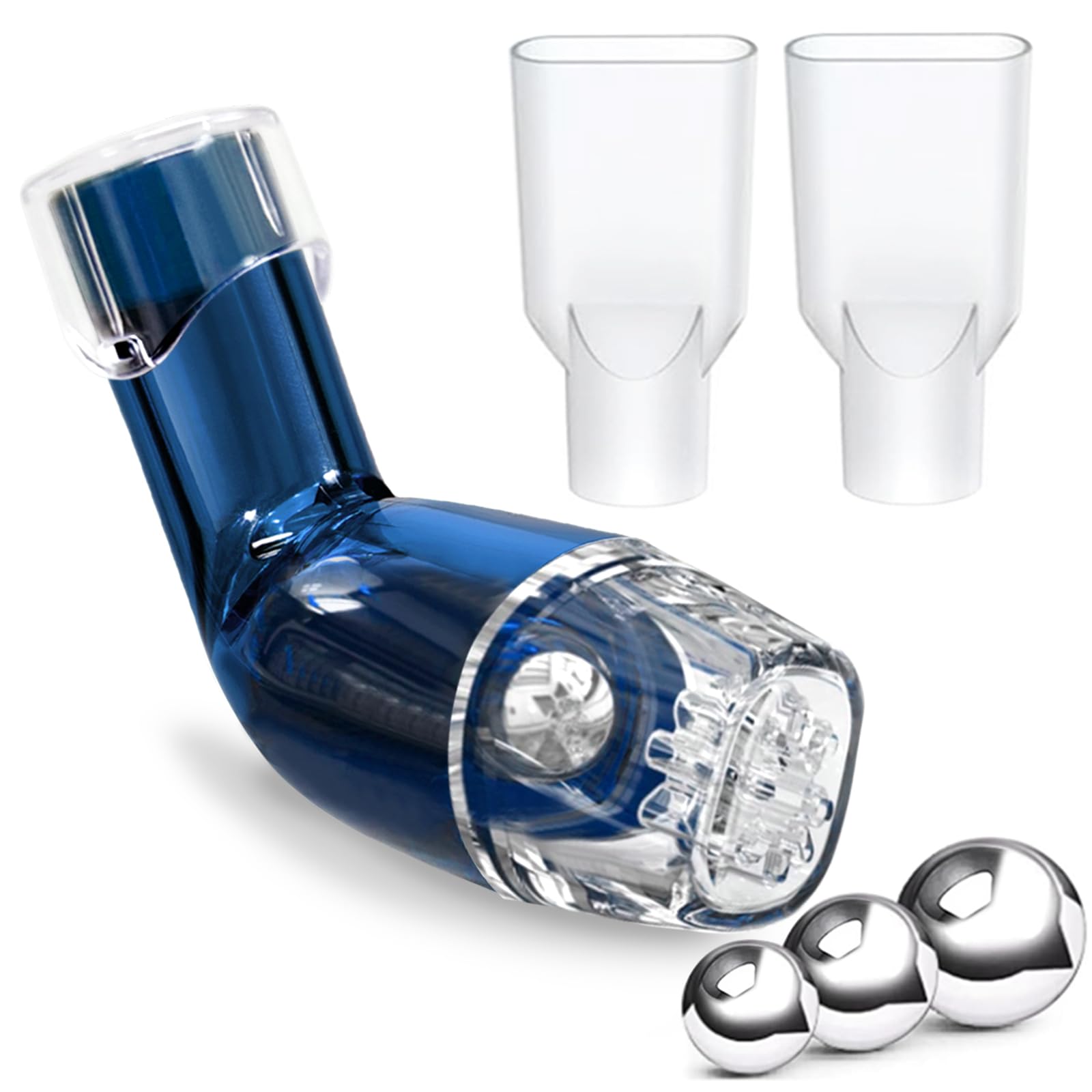
A flutter valve built to shake mucus loose, in a body you can wash.
This one works differently from the muscle trainers above. Instead of just resisting your breath, it uses three different-sized steel balls that create a pressure mechanism and vibration inside your airways, which is what loosens mucus so you can cough it up. Pick the ball that matches your resistance, and swap sizes as you progress. It is a completely different function from the O2Trainer’s cap system and the Inhale’s dial.
Owners keep it around for practical reasons. It is compact, light at 5.29 ounces, and needs no batteries, so it rides in a bag or sits on a nightstand. Detachable parts make it simple to wash — among the most-cited positives. And the transparent body lets you see the progress, which several owners called out as satisfying. The vibration is something you feel in your chest, and long sessions of five to ten minutes are where the clearance tends to happen.
The one real limit is resistance ceiling. A handful of users with severe lung conditions found even the heaviest ball too easy, and one found it too small and light overall to matter. For general airway maintenance and moderate needs it is well matched. For very severe cases where a prescription device was the comparison, this may not deliver the force you expect.
Why it earns a spot: three ball sizes let you dial resistance, and the fully detachable body makes it one of the easiest trainers here to keep clean.
Know before you buy: the resistance tops out lower than flutter valves built for severe needs, so the heaviest ball may feel light if your lungs are already strong.
Suits: anyone who wants daily mucus clearance to breathe easier, from athletes to people managing allergies.
Consider a stronger valve if: a medical professional has told you that prescription-grade resistance is what you need.
6. Mucus Relief Device by Virth

Pressure plus vibration at the mouth, in a tiny two-piece body.
OPEP stands for oscillating positive expiratory pressure — put simply, this device makes you blow out against pressure while vibration travels back up your airway to shake mucus loose. You use it for five to ten minutes once or twice a day, no batteries and no refills. At 2.4 ounces it is the lightest trainer on this list alongside the Expand-A-Lung, and it strips down to about three pieces with a cap that twists off for cleaning.
The results cut two ways here, and that is the honest picture. Owners who feel it working describe the vibrating sensation as odd but effective, and one user recovering from an illness reports breathing stronger after a single session. But the breathing and vibration aspects drew mixed reactions overall, and a portion of buyers simply do not feel the flutter in their lungs at all.
The single biggest variable is technique. Those who extend the exhale as long as possible and experiment with the airway tilt get far more out of it than those who blow through it quickly. If your first session feels like nothing, adjust your technique before deciding it does not work. This is not a trainer where a casual effort shows results.
The technique secret: draw out the exhale and tilt the device to change the vibration — owners mention the difference between an ineffective session and a productive one depends on exactly this.
Where it falls short: fixed pressure with no steel-ball or cap system to push resistance higher as you improve.
Best for: someone recovering from a chest illness who wants a compact, low-fuss device for clearing out congestion at home.
Not for you if: you want adjustable resistance you can crank upward over months of training.
7. AliMed Breath Builder

The breath-control tool singers reach for before a big performance.
This one is not built for workouts — it is built for holding a note. It strengthens the diaphragm and helps you develop breath control for strong speech, which is why it shows up in singing studios and woodwind practice rooms. The exercise is to breathe a full inhale and exhale while holding lung air pressure steady, which trains the control that separates a shaky line from a solid one. It weighs 2.4 ounces and slips into a music bag.
The performer crowd is its most loyal audience. Voice coaches pass it to their students, and a singer who uses it to build capacity reports it helps hold notes longer. Wind musicians use it to warm up the lungs before playing. It is a small, simple, no-battery device — there is no resistance dial to master, just the pressure of your own breath against a fixed opening.
The catch is at the other end of the market: because there is no adjustable resistance, this trainer is not for people who want to work up through a graduated program. It is a fixed challenge. If you want a clear progression from light to hard, look at the cap system on the O2Trainer above rather than this fixed tube.
Where it shines
- Diaphragm-focused design made for breath support and control
- Trusted by working voice coaches and wind musicians
- Light 2.4-ounce tube with no parts to lose or batteries to change
The limitation
- No adjustable resistance — one fixed level of challenge
- Built for breath control rather than athletic endurance training
Made for: singers, actors, and wind players who need steadier breath support and longer notes.
Look past it if: you want graduated resistance you can increase week by week.
8. Flutter Valve Breathing Exercise Device for Lungs
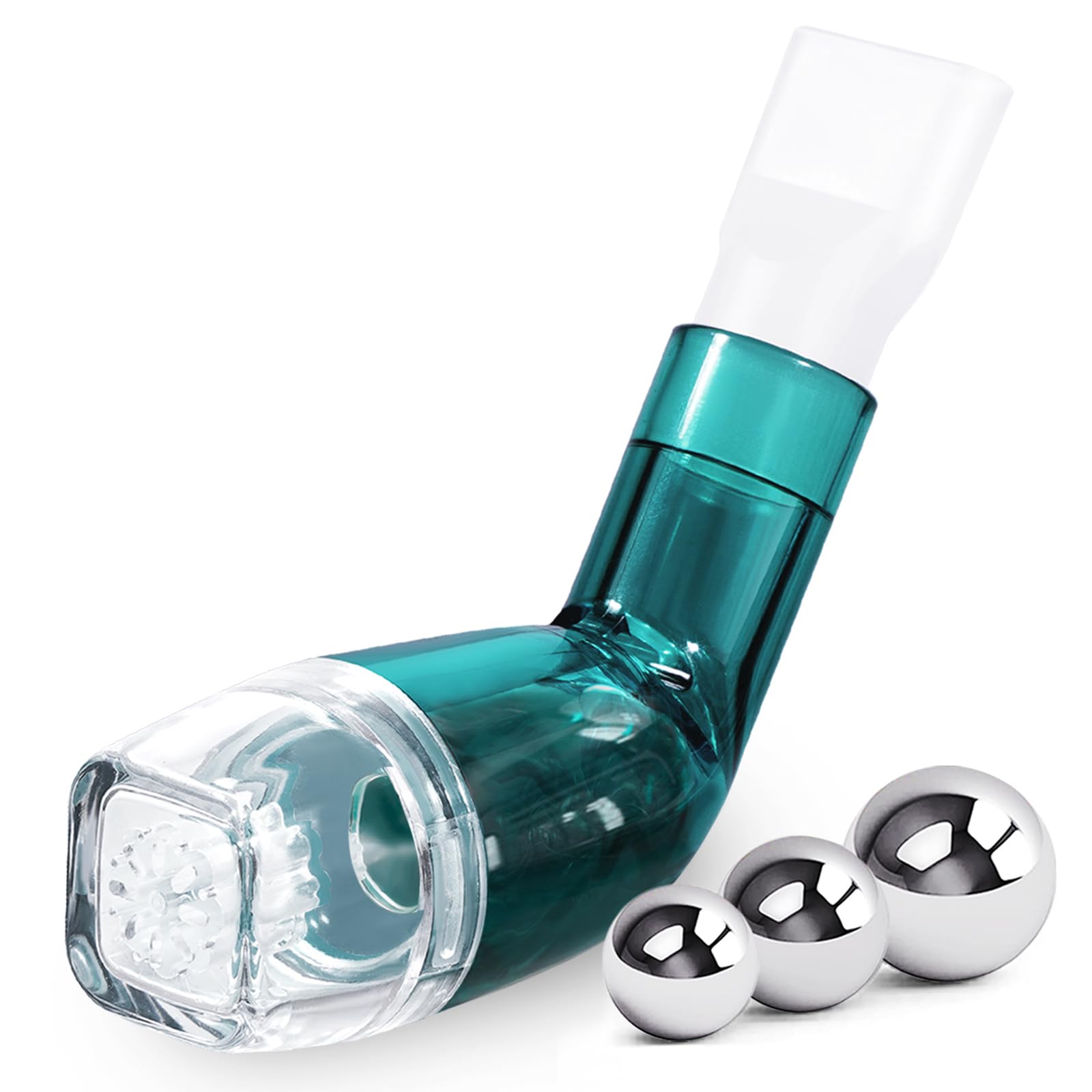
The flutter valve a retired respiratory therapist called the best one tested.
This is a second flutter-valve style device, and it earns its own place on the strength of one detail: a retired Registered Respiratory Therapist who handled these units for a career called it the best flutter valve they had tested. That is a strong signal of what the design does right. It works the same way as the model above — three different-sized steel balls create the resistance and vibration that loosen mucus in the airways, and you swap the balls to change how hard the challenge is.
The build is where this one stands apart from its cheaper cousin. Owners comparing it to devices that cost dramatically more report the quality feels equal, and the fully detachable design makes it quick to wash and share. At 5.29 ounces it is a touch heavier in the pocket, but the trade is a sturdier feel and the option to swap balls in seconds.
The main consideration is that this duplicates the function of the other flutter valve on this list rather than adding a new capability. If you already own a three-ball valve, buying this gains you a sturdier build, not a new kind of training. And anyone with severe lung conditions should note that, like both valves here, the top resistance may fall short of a prescription device.
What makes it stand out: the fully detachable, medical-grade PC build and three swappable balls combine sturdier construction with adjustment that matches it against costlier devices.
Consider before buying: it covers the same ground as the other three-ball valve, so it is a durability upgrade rather than a whole new capability.
Reach for this if: you want a mucus-clearance valve with the sturdier build and easy-clean design that owners keep pointing to.
Already own a valve: skip unless you specifically want a heavier, tougher-feeling replacement.
9. THE BREATHER Natural Breathing Exerciser Trainer

A breathing trainer that walks you through the routine with an app.
This is the pick for someone who needs to be told exactly what to do. It is a diaphragmatic trainer — meaning it teaches belly breathing and strengthens both the inhale and exhale muscles — and it pairs with a guided mobile training app that sets the pace, keeps you on schedule, and tracks your progress. The device itself is tiny at 1.59 ounces, the lightest on this list, and easy to hold.
The app is the reason to choose this one over a bare resistance tool. It enforces correct technique, sends reminders, and turns a vague daily routine into something you can actually follow. Owners credit the guidance as a big part of why they stuck with it, and the daily protocol is short: around five minutes a day.
Two honest notes. The durability reviews are split — some customers note the trainer holding up fine, while others report it breaking after about seven weeks of use, so it is not a throw-it-in-a-gym-bag beater. And there is no storage case in the box despite what many buyers expect; people end up using a plastic bag. Neither is a dealbreaker, but if you want a rugged trainer or a tidy case, this is not that device.
Why the app helps
- Guided app sets pace, sends reminders, and tracks progress for you
- Diaphragmatic focus builds both inhale and exhale strength
- Ultralight 1.59-ounce body is the most portable here
What to weigh
- Durability reviews are mixed, with reports of breakage around seven weeks
- No storage case included despite the impression many buyers get
Suits you if: you want hand-holding and a daily prompt to keep a routine going.
Skip if: you want a rugged trainer with a case and no app required.
10. AirPhysio Portable Breathing Trainer Device
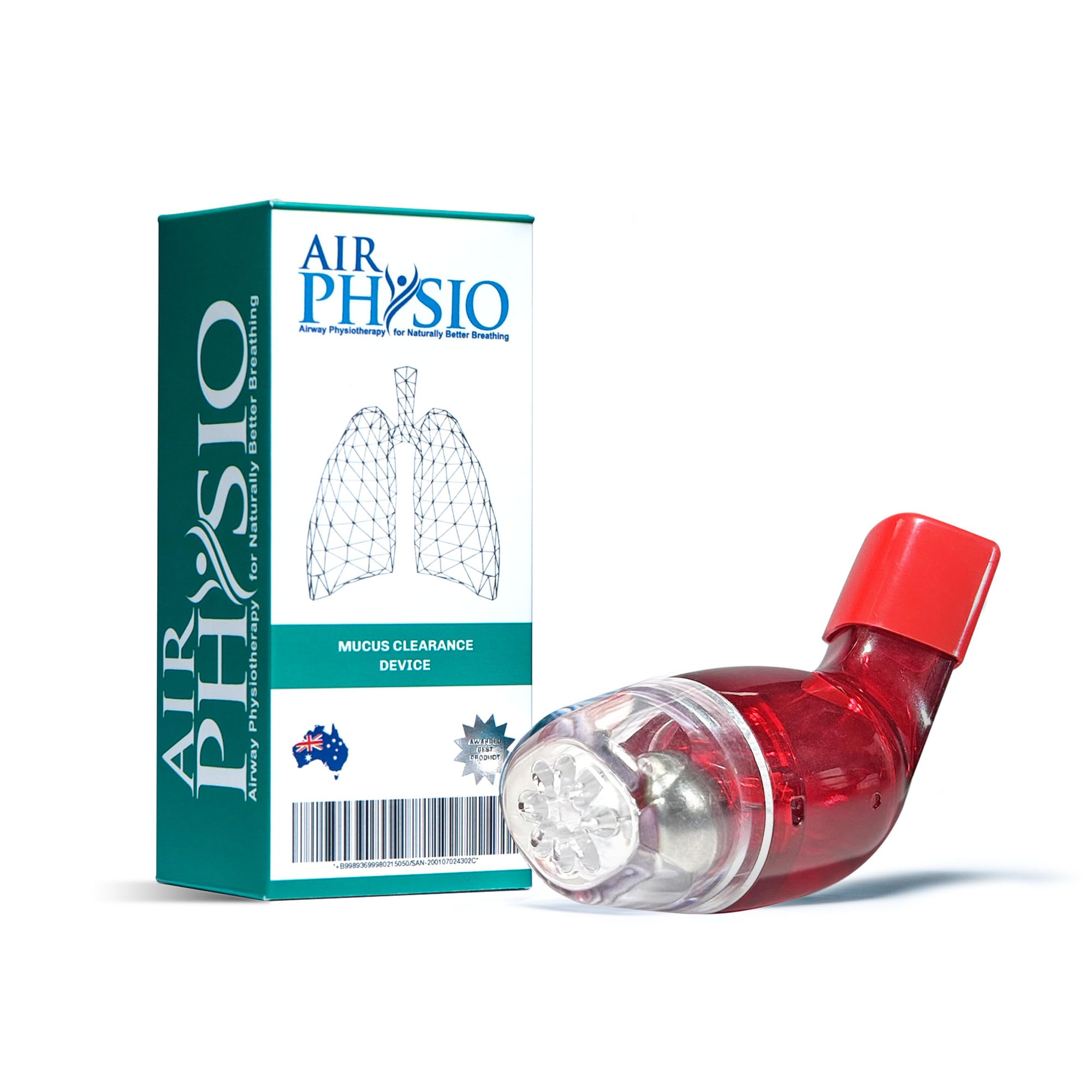
The blow-in-and-vibrate trainer that is designed to do a bit of everything.
AirPhysio blends the two jobs of this category into one device. As you blow in, it creates oscillations — rapid vibrations — that help mobilize mucus, and it also trains lung strength for deeper breathing. You use it for five minutes once or twice a day, no drugs and no batteries. At 4.16 ounces it is middle of the pack for size and it is made in Australia.
The owner feedback splits along two clear lines. Most describe it as effective for clearing the lungs and strengthening them, and one initially skeptical buyer reports being convinced after a single use. Durability and overall functionality, however, draw mixed reactions, so this is not a device where the whole crowd agrees.
The one consistent friction point is technique. Several owners found it too difficult to get the breathing pattern right at first, and it took repeated practice before it clicked. There is also a lighter and smaller ball available directly from the maker for older users, which is worth knowing if the standard resistance feels like too much to start. Give it more than one session before you judge it.
The two-in-one angle: oscillation for mucus mobilization plus lung-strength training in a single 4.16-ounce device, so you do not need to buy both a valve and a resistance trainer.
The learning curve: the correct technique takes several attempts, and a lighter ball is available from the maker for those who need an easier starting point.
Best for: someone who wants one device to both clear mucus and build breathing strength without a complicated setup.
Go easier elsewhere if: you struggle to pick up new breathing patterns — a single-knob trainer like the Expand-A-Lung is less fussy to learn.
Know the Specs
Resistance System
Resistance is the force your breathing muscles push against when you use the device — think of it as the weight on a dumbbell. How many levels you can access decides whether a trainer keeps challenging you or gets abandoned. The O2Trainer offers 16 caps, while a flutter valve like the Flutter Valve device uses three different-sized steel balls, and a knob trainer like the Expand-A-Lung gives one continuous dial. More ways to adjust usually means more months of use before you outgrow it.
Mouthpiece Material
The mouthpiece is the part that touches your lips every session, so it affects both comfort and hygiene. Silicone stays soft and does not carry a plastic taste. Medical-grade silicone, used on the Inhale trainer, is the top option because it is the material chosen where cleanliness and body contact both matter. A mouthpiece that pulls off for rinsing keeps the device cleanable and worth keeping.
Common Questions
How long should I use a lung exerciser each day?
What is the difference between a flutter valve and a resistance trainer?
Can I use a lung exerciser if I have asthma or COPD?
How do I clean a lung exerciser properly?
Why do I get so much saliva in the device?
How long until I notice a difference in my breathing?
Do I need an app or batteries to use these devices?
Is a lighter or heavier resistance better for a beginner?
Are these devices safe for older adults?
How do I know when to increase the resistance level?
The Bottom Line
For most people, the lung exerciser winner is the O2Trainer because its 16 interchangeable caps let you keep stepping up your resistance for years instead of outgrowing a fixed device — and that adjustability is what turns a short-lived purchase into a long-term habit. If your goal is mucus clearance and easier breathing through the day, grab the Flutter Valve Breathing Exercise Device with its three graduated steel balls. And for singers and wind players chasing steadier breath support and longer notes, the AliMed Breath Builder is the one to reach for.
Whichever you choose, the deciding factor is the same: a deviceyou will actually use every day. The O2Trainer holds the top spot for good reason — it holds 4.5+ stars across 2,000+ owners — and its sixteen caps mean it grows with you rather than collecting dust once you get stronger. Pick the resistance system that matches your goal, start lighter than you think you need, and stay consistent for a few weeks before you decide it is working.
How we choose
We do not accept paid placement. Every pick is matched to a real buyer and a real use-case; we do not hands-on test units.
Sources
Specifications: manufacturer listings and product documentation. Review insights: verified customer reviews, as of October 2026. Pricing: not shown on this page (it changes often); check the current price via the retailer link.
As an Amazon Associate, Aappliancez earns from qualifying purchases. This does not affect which products we feature.