Disclosure: Some links in this post are affiliate links. As an Amazon Associate I earn from qualifying purchases, at no extra cost to you. Learn more
Specs are compiled from manufacturer listings and verified buyer reviews and can change over time — please confirm the key details on the product page before buying.
Your trailer decking has one job: hold the boat steady on the ramp and survive everything the weather throws at it. Get it wrong and you are replacing rotted boards every couple of seasons. Get it right and the boat loads and launches without a fight. This guide sorts the carpet rolls, bunk wraps, and pre-covered boards so you can pick the one that fits your trailer frame and your loading style.
This guide is built by comparing the manufacturers’ published specifications and the patterns across verified customer reviews, so you get each pick’s real strengths and trade-offs instead of marketing spin.
Glue-down carpet, plastic bunk wrap, and pre-carpeted boards each save you a different amount of installation work. Which one fits depends on where you launch: a saltwater ramp wears surfaces faster than a garage-kept pontoon. Here is the honest breakdown of the best lumber for trailer decking.
Top Picks


How To Choose The Best Lumber for Trailer Decking
The decking on your trailer is really two things stacked together: the board that carries the weight and the surface that touches your hull. Buyers often fix one and forget the other. A great carpet over a soft pine board still rots from the inside out. A rock-solid board with worn carpet still scratches gel coat on every launch.
Match the surface to your hull and your ramp
Carpet gives you a cushion between the board and the boat, which protects hulls and holds the boat in place on the road. Plastic bunk wrap swaps that cushion for a slippery surface that lets the boat slide on with less winch effort. If you launch solo on a steep ramp, the slide matters more than the cushion. If your hull is painted or gel-coated, check the maker’s guidance on wrap before you commit.
Check pile height and backing before you buy a roll
Pile height is how tall the carpet fibers stand. An 8 millimeter pile gives you real cushioning and hides staple heads, which matters when you are stapling over a hardwood board. Backing type decides how the carpet holds up to glue and moisture. Rubber backing and PVC or polyester backing both appear in this category, and each behaves differently under a glue-down install.
Measure your bunk boards, not your trailer
A 2×4 board is not the same width as a 2×6, and a roll cut for one will not wrap the other cleanly. Measure the actual board you are covering, then check the roll width and length against that number. Trailers vary a lot in frame shape, so a kit built for a C-channel frame may need adaptation for a flat-bottom hull.
Side-by-Side Comparison
| Model | Best For | Material | Coverage | Pile or Thickness | Amazon |
|---|---|---|---|---|---|
| SturdyShape 12in x 100ft Bunk Carpet Kit★ Best Overall | Full bunk rebuilds on larger trailers | Polyester, rubber backing | 12 in x 100 ft | 8 mm pile | Amazon |
| ECOTRIC Boat Trailer Guide-On RailsSolo Launch Helper | Solo loading and centering | Polyester carpet on galvanized rails | 2 ft bunks, two poles | — | Amazon |
| SturdyShape 20in x 20ft Bunk Carpet | Long bunk boards with spare left over | Polyester, PVC/PP/polyester backing | 20 in x 20 ft | 8 mm pile | Amazon |
| Extreme Max Aluminum Trailer Step | Easier bow-to-winch access | Aluminum, diamond plate | 6 in x 20 in step | — | Amazon |
| SMITH Carpeted Bunk Board 6′ 2PK | Jet ski and light trailer swaps | Fiberglass, rubber | Two 6 ft boards | — | Amazon |
| Caliber Bunk Wrap Kit 23056-BK | Replacing carpet with plastic wrap | High-impact plastic | 24 ft roll, 2×6 in | 2×6 in profile | Amazon |
| BoatCarpetSales 6′ Carpeted Bunk Boards 2×4 | Drop-in board replacement | Marine carpet on 2×4 board | Two 6 ft boards | 2×4 profile | Amazon |
Detailed Reviews
1. SturdyShape Boat Trailer Bunk Carpet Kit 12 Inches x 100 Ft
Our pick — 4.5+★ from 300+ verified ratings; the strongest balance of quality and price.
One hundred feet of carpet that wraps four bunks and still leaves you slack.
The number that earns this roll the top spot is the 100-foot length at 12 inches wide. That is a lot of coverage — enough to wrap 4×2 bunks across a full trailer with spare to redo a worn runner later. The 8 millimeter pile (how tall the fibers stand) gives you real cushioning between board and hull. It is thick enough to protect the boat but still workable in your hands during install.
Contractor marine grade construction with a rubber backing is what this carpet is built from, and the maker states it resists tears and UV. That matters on a trailer that sits outside all summer, because UV is what quietly kills cheap carpet. Polyester fibers with a glue-down install type mean you spread adhesive, press the carpet down, and staple the edges. The kit throws in an adhesive spreader and a staple remover, so you are not hunting for tools mid-job.
What wins people over is the quality — it is the thing buyers talk about far more than anything else on this roll. Owners describe it as “good thick and worked perfectly,” and the thickness keeps coming up as the reason it holds up. One tip worth stealing: after stapling, tap each staple with a tack hammer so it sinks into the nap and vanishes. The honest catch is width — a few buyers report it could be wider for larger bunks, so measure your boards first and think creatively about coverage if yours run oversized.
roll length coverage
- 100 ft x 12 in length covers 4×2 bunks with material left over for repairs
- 8 mm pile cushions the hull and hides staple heads
- Rubber backing and marine grade polyester resist tearing and UV
- Adhesive spreader and staple remover included, so install is one trip
measure before cutting
- 12-inch width can fall short on wider bunk boards — measure before ordering
- It is a heavy roll at 6.46 kg, so plan for a two-handed install
- Glue-down work means adhesive, staples, and some drying time
fits most bunks: you are rebuilding bunks on a standard trailer and want one roll to cover the whole job with spare.
wide bunks need more: your bunk boards run past 12 inches wide — this roll will not wrap them cleanly.
2. ECOTRIC Boat Trailer Guide 2 Foot Bunk Board
The guide rails that let one person line up a boat without shouting from the ramp.
This is not decking you staple down — it is the pair of carpeted guide poles that keep the hull centered as you drive on. The 2-foot carpeted bunk boards sit on galvanized rails, and the kit ships with two guide poles, two carpeted bunk guides, U-bolts, and all mounting hardware. The maker states the design fits high beams, box trailers, and C-channel frames — the three frame types most common at a ramp.
Where it shines is the solo launch. The rails hold the boat straight on the trailer so you are not crawling back out of the truck to nudge the hull into place. Installation ranks as the easiest thing about the kit for most people — clear instructions, and one buyer notes fitting it to a 17.5-foot boat. The rails handle alignment, so you skip the back-out-and-retry shuffle on the ramp.
Now the honest part: rust resistance is the weak point in the review picture, and the galvanized finish needs a fresh-water rinse after every saltwater dunk to slow corrosion down. There is also a report of a wood bumper coming loose on the road, so check your screws and hardware after the first few trips. Fit runs mixed too, since trailer frames vary a lot — measure your boat on the trailer before ordering. Treated with care, this is one of the more useful upgrades for a solo launcher.
solo launch centering: two carpeted guide poles and all the U-bolts and hardware in one box make this the piece that turns a two-person launch into a one-person launch.
flat hull limits: galvanized steel and saltwater are not friends — rinse the rails after each dunk and re-check the bumper hardware, because the finish is the part that ages first.
launch alone: the guide poles do the centering so you can drive on and go.
flat-bottom hulls: the V-hull design may need the elbows heated and bent to fit.
3. SturdyShape Boat Trailer Bunk Carpet Kit 20in x 20ft

Twenty inches wide for the big bunks, and still enough roll left to wrap a second set.
Long bunks on a large trailer need width as much as length, and the 20-inch face on this roll is the answer. It runs 20 feet long at 8 millimeter pile, so it wraps 4×2 boards with room to spare. The narrower 12-inch roll in this lineup weighs 6.46 kg; this one comes in at 2.34 kg, so it is the easier roll to carry up the ramp and cut on the bench.
Polyester face with a PVC, PP, or polyester backing, and the maker rates it tear and UV resistant. Glue-down install with the included adhesive spreader gets you a clean finish. Buyers with real-world size confirm the coverage: a 23 foot Sea Ray owner wrapped two 12-foot 4×4 bunks and still had another six or seven feet left over from each roll. If you are covering long boards, that leftover is the margin you want.
The thick heavy duty feel earns comparison praise against other brands buyers have used, and the carpet cuts cleanly for a snug wrap. It fits light boat trailer bunk boards well; some owners pair it with bunk sliders and expect it to hold. Durability over years is the open question here — the install quality is solid, but long-term wear is something only time answers.
long boards: 20-inch width and 20 feet of length wrap big bunks with spare material for a later redo.
wide bunks: if your boards run past 20 inches, this comes up short.
4. Extreme Max 3006.6857 Heavy-Duty Aluminum Boat Trailer Step

The step that turns a bow-to-winch scramble into a plain walk-up.
Your decking is the surface under the boat, but getting on and off the trailer is the other half of the job. This aluminum step mounts on trailer frames up to 3 inches wide by 4 inches tall, and the 6 by 20 inch step surface gives you a real platform to plant a boot. Diamond plate aluminum keeps grip underfoot when the ramp is wet. It is universal fit, so it clamps to most C-channel frames without welding.
Owners describe it as exactly the piece that made stepping off the bow to the nose hook and winch safe and easy. The aluminum construction at 5 pounds stays light, and it installs without a torch. Extreme Max backs the step with a 2-year warranty. For anyone launching from a steep ramp, that lower foothold changes the whole process, and it even found a second life as a step for a classic car build.
The place to be careful: the durability picture is mixed, with reports that the end of the step bends. Treat it as a step, not a lever or a jacking point, and it holds up. Some owners also wish it had an L-shape or drop-down for a lower adjustment. If you need the very lowest entry point, add that to your planning.
aluminum ramp durability
- 6 x 20 inch platform gives a solid footing at the tongue
- Diamond plate aluminum grips when wet
- Mounts to frames up to 3 in wide x 4 in tall, no welding needed
- 5 pounds light and backed by a 2-year warranty
basic job only
- The step end can bend when over-loaded — use it as a step only
- No drop-down adjustment for a lower entry point
ramp regulars: you want a safe, easy step from the bow down to the winch.
heavy hulls: it is a footing, not a load-bearing platform — keep weight centered and it lasts.
5. SMITH Carpeted Bunk Board 6′ 2PK
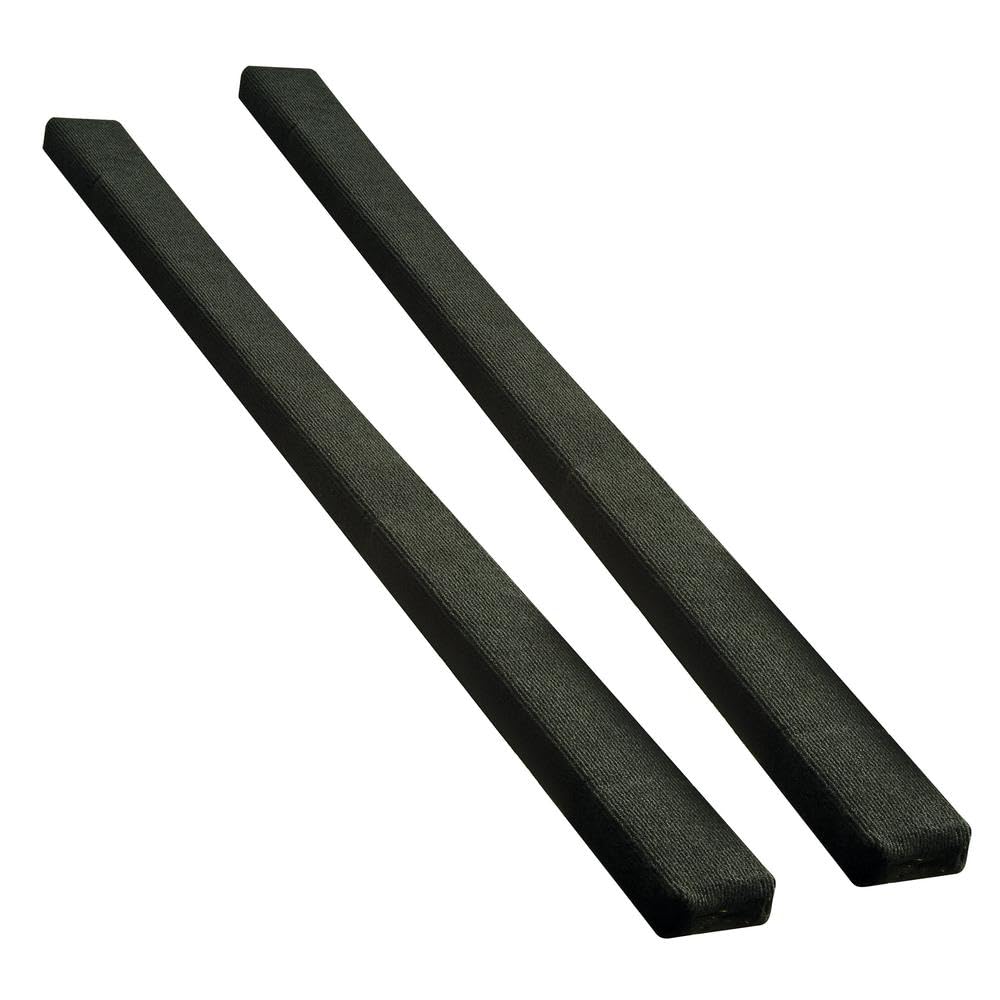
Two boards, already carpeted, ready to bolt on and go.
The appeal here is the shortcut. You get two 6-foot carpeted boards with fiberglass and rubber in the build, so there is no glue, no staple gun, and no measuring carpet against board. Lift the old boards, bolt these on, and the trailer is back in service. For a jet ski trailer or a light boat setup, that is a lot of hassle removed.
Owner feedback centers on the quality of the finish and the fit. A Kawasaki 900 ZXI owner reports the boards worked great on the jet ski trailer, and the carpet is described as covering nicely and being as advertised. The black finish keeps the trailer looking clean, and the pre-covered setup means the boards are already wrapped when they arrive.
The trade-off to know is weight and shipping bulk — two 6-foot boards arrive as one package and come in at 17 pounds, so plan for a proper handoff. These suit a small trailer or a jet ski setup; on a heavy boat trailer you would want more board length and a wider profile.
jet ski value: pre-carpeted 6-foot boards mean a swap, not a build — no adhesive, no staples, no wasted weekend.
small scale: at 6 feet long on a 17-pound package, these are built for jet skis and light trailers, so measure your boat trailer before sizing up.
jet ski fit: a straight board swap on a PWC trailer with the carpet already on.
bigger boats: your boat trailer runs long bunks — 6 feet will not reach.
6. Caliber Bunk Wrap Kit 23056-BK

Plastic wrap that replaces carpet outright and lets the hull slide with far less effort.
If you are tired of re-carpeting every few seasons, this kit is the alternative. It is a 24-foot roll of 2×6-inch bunk wrap in high-impact plastic, with 4 endcaps and all hardware in the box. The maker states it cuts loading force by 300%, so the winch works less and the hull drags less coming up the trailer. According to the maker, the plastic resists wear, cracking, chipping, and fading for life.
Install is the thing most owners praise, and the 24-foot kit with end caps included had 62 screws, letting you space them at 8 inches. Pre-drill the plastic and it goes faster. Two people can do about an hour per 10-foot board. Owners say the boat slides on much easier than carpeted bunks, and a 22-foot tritoon owner described a noticeable difference after one season.
The catch is two-fold. It is not designed or recommended for gel-coat, fiberglass, or painted aluminum hulls — many people use it that way but at their own risk, so know your hull. And the value is debated: some call it the best-value fix, others find it pricey for a long trailer. Unlike carpet, the plastic wrap will not rot.
worn carpet fix: 24 feet of plastic wrap with endcaps and hardware replaces rotting carpet for good, with less loading drag.
odd hull shapes: gel-coat, fiberglass, and painted aluminum are outside the maker’s recommendation here.
7. BoatCarpetSales 6′ Long Marine Carpet Bunk Boards 2×4

A matched pair of carpeted 2×4 boards that drops straight onto a jet ski trailer.
This pair arrives 6 feet long on a 2×4 profile with marine carpet already wrapped and stapled. The package runs 18 pounds and the boards ship as a single unit, so you are replacing decking, not building it. A jet ski owner reports the carpet covers the whole bunk and works wonderfully on the trailer. Another says the finish is high quality and covered nicely.
On the board itself, the honest caveat is real: one buyer says these boards are not treated lumber, describing pine that was dry and produced sawdust when pre-drilled. If your trailer lives outdoors in a wet climate, that is the piece to weigh, because untreated pine will rot sooner than treated stock. The carpet and staples were reported as fine — it is the core board material that draws the caution.
Best use is a boat that goes in and out on a fair-weather trailer or a jet ski that comes off the ramp and straight into storage. For a saltwater trailer that sits out all year, consider a treated board under new carpet instead. For a quick, clean swap on a light trailer, these get you back on the water with no wrap work at all.
dry climate use: pre-wrapped 6-foot 2×4 boards install in minutes for a light boat or jet ski setup.
rotting cores: the lumber comes up untreated, so a trailer stored outdoors in wet weather may want treated stock instead.
Know the Specs
Pile Height and Backing
Pile height is how tall the carpet fibers stand above the backing. An 8 millimeter pile gives you cushioning between the board and the hull and enough depth to hide staple heads. Backing type is the layer that holds the fibers together and takes the glue. Rubber, PVC, PP, and polyester all appear here, and each behaves a little differently under adhesive. A water-resistant backing slows the moisture that rots the board underneath.
Board Material and Profile
The board under the carpet is what carries the boat’s weight and survives the weather. Treated lumber resists rot far longer than untreated pine, which matters on a trailer that lives outside. Profile is the board’s shape and size — a 2×4 is narrower than a 2×6 and needs a different carpet width to wrap cleanly. Match the carpet width to the board, not the other way around. Fiberglass and aluminum also show up in decking hardware and steps.
Common Questions
Will a 12-inch carpet roll wrap a 2×6 bunk board?
Is glue-down bunk carpet better than plastic bunk wrap?
How do I keep galvanized guide rails from rusting?
Can I use bunk wrap on a fiberglass or painted aluminum hull?
How much carpet do I need for four bunk boards?
Are pre-carpeted bunk boards better than wrapping my own?
Will a trailer step fit my C-channel frame?
Why do my bunk boards rot so fast?
How long does bunk carpet last?
Do I need guide rails if I already have good bunk carpet?
The Bottom Line
The strongest all-around pick is the SturdyShape 12-inch x 100-foot bunk carpet kit — 100 feet of 8 millimeter marine grade carpet covers a whole trailer of 4×2 bunks with spare to redo a worn runner later. If you launch alone and want the boat to center itself, the ECOTRIC guide rails do that job. And if you are done re-carpeting for good, the Caliber bunk wrap kit swaps carpet for plastic that will not rot, as long as your hull is not gel-coat, fiberglass, or painted aluminum.
How we choose
We do not accept paid placement. Every pick is matched to a real buyer and a real use-case; we do not hands-on test units.
Sources
Specifications: manufacturer listings and product documentation. Review insights: verified customer reviews, as of October 2026. Pricing: not shown on this page (it changes often); check the current price via the retailer link.
As an Amazon Associate, Aappliancez earns from qualifying purchases. This does not affect which products we feature.