Disclosure: Some links in this post are affiliate links. As an Amazon Associate I earn from qualifying purchases, at no extra cost to you. Learn more
Specs are compiled from manufacturer listings and verified buyer reviews and can change over time — please confirm the key details on the product page before buying.
If your fan has started squealing, grinding, or slowing to a crawl, the fix is usually one of the cheapest repairs you will ever make: a proper lubricant for electric fan motor bearings. The catch is that the wrong product can make things worse. Thin household oils and silicone sprays can dry into a sticky film that gums up the shaft, which is exactly the problem you are trying to solve. This list covers five lubricants that match up with real fan motors, from a dry-film silicone spray for electrical contacts to a synthetic oil that gets a frozen vintage fan turning again.
This guide is built by comparing the manufacturers’ published specifications and the patterns across verified customer reviews, so you get each pick’s real strengths and trade-offs instead of marketing spin.
Getting the bearing type right matters more than brand, since a sleeve bushing and a sealed ball bearing want different things. Below you’ll find honest picks for every fan motor job, so you can pick the right lubricant for electric fan motor the first time.
Top Picks

How To Choose The Best Lubricant for Electric Fan Motor
Most fan motors in a home use one of two bearing types, and the product you buy has to match. Get that wrong and you can spend an evening with a fan that still squeals. Match the oil to the bearing and the squeal is usually gone after one application.
Match the product to the bearing, not the fan brand
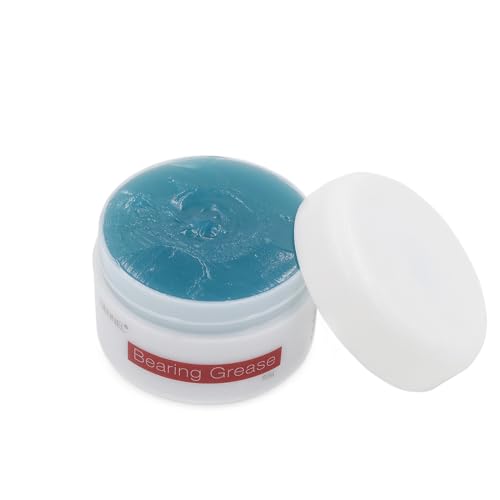
A sleeve bearing (sometimes called a bushing) is a soft metal sleeve the motor shaft spins inside. These want a liquid oil that creeps into the gap and stays wet. A sealed ball bearing is a cartridge filled with grease at the factory, and once it dries out, a paste-type grease is usually the better match. The Bell & Gossett tube and the Liquid Bearings synthetic oil are both liquid oils built for circulating pumps and motors. The GENNEL grease — a polyurea-based paste — is aimed at ball bearing parts and high-speed spindles.
Why the wrong spray causes more harm than good
Many generic aerosol sprays are built to evaporate, leaving a thin dry film behind. That is useful on electrical contacts and it is exactly what the CRC Electrical Silicone Lubricant does. Put that same dry film inside a tight fan bushing, though, and the shaft can start sticking. Look for wording that says the product stays put, or never gums up, and treat an aerosol as a maintenance and protection tool rather than a bearing fix.
Temperature range and where the fan sits
An attic fan, a garage fan, or a fan near a heater lives in a harsher place than a bedroom table fan. The GENNEL grease runs from -40°C to +150°C. If your fan motor sits in a mild room year-round, almost any listed product here will cope. If it runs hot or sits in a shed, the rated range is worth checking before you commit.
Reaching the bearing is half the job
Most fan motors hide their bearing points behind a housing, a blade nut, or a small oil hole. That makes the container design matter as much as the formula. A bottle with a stainless needle puts a single drop exactly where it needs to go. An aerosol with a 360-degree valve lets you spray from an awkward angle. The Bell & Gossett tube has a screw-off cap and a nozzle narrow enough to aim at a small fill hole.
Side-by-Side Comparison
| Model | Best For | Form | Container Size | Temperature Range | Amazon |
|---|---|---|---|---|---|
| CRC Electrical Silicone Lubricant 02094★ Best Overall | Electrical contacts and switches | Aerosol (dry film silicone) | 10 wt. oz. | -40 to 400 °F | Amazon |
| GENNEL 50g Spindle GreaseTop Performer | Ball bearing fans and high-speed motors | Polyurea grease paste | 50 g | -40°C to +150°C | Amazon |
| Liquid Bearings 100%-Synthetic Fan Oil | Ceiling, table and box fans | Synthetic liquid oil | Bottle with stainless needle | — | Amazon |
| Bell & Gossett Oil Tube L25201 | Pumps and furnace motors | Oil | 2.5 fl. oz. | — | Amazon |
| Liquid Bearings Synthetic Oil 2 oz. | Reviving long-stuck fans | Synthetic liquid oil | 2 fl. oz. | — | Amazon |
Detailed Reviews
1. CRC Silicone Lubricant 02094
Our pick — 4.5+★ from 450+ verified ratings; the strongest balance of quality and price.
The spray that fixes the switch, the plug, and the stiff connector the rest of your fan wiring lives on.
Fan problems are not always the bearing. On a lot of fans it is the speed switch that has gone stiff, or a plug and connector that have picked up corrosion. This CRC aerosol is a dry-film silicone — a spray that leaves a thin, non-sticky film rather than a wet puddle of oil. It is formulated to be safe on most plastics used in electrical parts.
A 10 wt. oz. aerosol can with a 360-degree valve means you can spray from any angle, which helps when the fan’s switch sits in an awkward spot behind a housing or under a cowl. It is the pick for the connector and switch side of a fan repair, not the bearing side.
The catch is real and worth saying plainly. A dry film is meant to stay thin, and some buyers find it less slippery than a wet silicone spray. On a tight sleeve bearing where you want oil to creep in and stay wet, this is not the tool. Its own customers praise effectiveness above all, and one body shop owner uses it on power window and door lock switches and revived a stiff lamp switch to like-new after two days of normal use. That is exactly the switch-and-connector work this spray is made for.
Where it earns its place
- 360-degree valve sprays at any angle, so you can reach a switch tucked behind the housing
- Dry-film silicone is formulated to be safe on most plastics in electrical components
- -40 to 400 °F range covers cold sheds and hot motor housings
- 10 wt. oz. can for repeated jobs
What to know before buying
- It is a dry film, not a wet oil, so it is not the pick for a tight bearing that needs liquid to creep in
- The review pages flag the stickiness as mixed — some find it less slippery than a wet silicone spray
Best for: anyone whose fan noise or stiffness traces back to the speed switch, plug, or connector rather than the bearing.
Look elsewhere if: the squeal is coming from inside the motor itself — you want the synthetic fan oil on this list.
2. GENNEL 50g Spindle Lubricating Oil
A paste that clings to spinning parts so it stays where you put it instead of flinging off.
This is the one to reach for when your fan uses a sealed ball bearing and the factory grease has dried up. GENNEL’s grease is a polyurea-based paste — a thick lubricant with a soap-like base that is designed for high shear and oxidation stability. In plain terms, it is meant to survive heat, pressure, and long run time without breaking down. The operational range is -40°C to +150°C, and it is rated as water-resistant, so a fan that sees damp air in a shed or near a window has some protection.
Its adhesion is its selling point. It is a paste that does not drip or evaporate, which matters on a fast motor where a runny oil would fling off the bearing and leave dry metal behind. The maker lists it for PC bearing fans, industrial fans, and mini-to-large electric motors, so the fan motor in your house is well inside its use range.
Now the honest side. This is a grease, and some buyers find it less oily and easier to smear than expected. The tube itself is also on the small side for the price — the review pages carry that complaint along with a mixed read on the greasiness. A 50 g tube goes a long way, but if you are buying it for one small job, it may feel like more outlay than you wanted. Buyers rate its effectiveness and quality highest, and a spindle-fan owner fitted it successfully despite it being labeled for ball bearings.
Weighted view: the right match if you want a paste that stays on the bearing and does not drip, with a wide temperature band. It is a precision-part product, so use a small amount and spread it evenly.
Reach for this if: your fan has a sealed ball bearing and you want a grease designed for high speed and heat.
skip it if: your fan has a plain sleeve bushing that wants a liquid oil to creep in — the Liquid Bearings oil suits that better.
3. Superior 100%-Synthetic Oil for Fans

Synthetic oil that creeps into old sticky deposits and frees a stiff ceiling fan bearing.
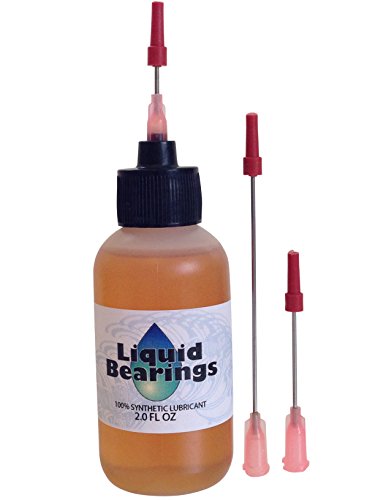
This is the pick built name-for-purpose for fans. It is a 100%-synthetic oil made with molecules uniform in size, shape, and weight — which is the technical reason it does not dry into the gummy residue that ordinary petroleum oils leave behind. For you, that means one application can break up the old sticky film and keep the bearing turning smoothly rather than gumming it up again. The bottle is LDPE with a stainless needle tip so you can put a single controlled drop at each bearing point.
The product is plastic-safe, will not harm painted surfaces, and is essentially odorless, so it does not leave your hands or the room smelling of oil. It is fully compatible with conventional oils, which means you can add it over an older lube without flushing first. It is listed for table, ceiling, box, and portable fans, so it covers the whole spread of a home’s fans. Reviewers single out the quiet: the bearing squeal stops and the fan runs near-silent again.
Two things to know. The first is that the needle, in some cases, requires you to get the fan apart to reach the bearing points, so expect a bit of disassembly on a ceiling fan. The second is the recurring gripe about packaging — the caps on the needle tip are widely felt to have gone downhill, and there is a tipping complaint about value for money. Those are small frictions on an otherwise strong product.
What it really does: the oil performance is the best-loved part, and the quiet-fan result is what most people talk about. The bearing squeal on a brand-new ceiling fan was gone once the oil was worked into both upper and lower bearings, and the fix is the kind of thing you can do in an afternoon.
Pick this if: you have a ceiling or table fan with a dried-out bearing and want a synthetic oil built for exactly that job.
Just know: you may need to take the fan apart to reach the bearing, and the needle cap feel is a small step down from earlier packaging.
4. Bell & Gossett Oil Tube L25201

The old-line tube oil that keeps a circulator pump from grinding to a halt.
Bell & Gossett is a name that lives in basements and utility closets rather than living rooms — this is the oil for pump motors and furnace circulators. If your “fan motor” is really a furnace blower or a pump in the heating system, this tube is the matching lubricant. It comes in a 2.5 fl. oz. tube with a small screw-off cap and a nozzle narrow enough to aim into a small oil hole. The maker calls it small but effective and an industry standard, and the fill-hole fit is exactly what makes it usable for the periodic maintenance a pump needs.
The practical appeal is that the container is shaped for the job. You squeeze it into the fill hole, cap it back up, and the tube stays sealed between services. The narrow nozzle fits a small fill hole, so a pump gets oiled on schedule instead of being skipped. It is listed as lubricant for pumps and motors, and the 2.5 fl. oz. size is enough for several maintenance rounds.
The limitation is scope. This oil is tuned to pump and motor duty and is not pitched as the all-purpose answer for a squeaky bedroom fan. If your actual fan squeal is a small sleeve bearing in a table fan, the Liquid Bearings synthetic oil is the better-targeted match. The functionality here is exactly right for what it is designed for, and the value lands well because the tube arrives fuller and cheaper than the local store equivalent.
Where it wins: the target-specific fill-hole nozzle and a durable tube that seals between services. A few drops through the end oil hole can quiet a grinding boiler circulator and put off a replacement.
Best for: a heating-system circulator or pump motor due for routine oiling.
Not the one for: a small bedroom or ceiling fan — go to the synthetic fan oil for that.
5. Liquid Bearings 100%-Synthetic Oil
The bottle that revives a fan left frozen for a decade in a garage.
This is the same family of 100%-synthetic oil as the fan oil above, in a larger 2 fl. oz. bottle. The formula does not evaporate or become gummy, which is the trick that lets it creep into a rusty old bushing and start loosening it. The standard recovery story is a fan that will not turn at all: a few drops on both sleeve bearings, an overnight wait, then a few more drops and a hand turn. Drops, an overnight wait, then a hand turn is what frees a fan that has sat for years.
It also does more than fans. Buyers use it on outdoor combination padlocks, folding and assisted-opening knives, and small space heaters, and the report is the same each time — smoother and longer-lasting than the spray cans they used before. A tiny amount covers the job, so the bottle is meant to last. On a noisy electric motor the difference between this and ordinary motor oil is what makes it worth keeping in the toolbox.
There is one honest drawback: the bottle is small for the price, and value for money is the one negative theme in the reviews. You will want to use it sparingly and keep the cap on. If you are lubricating a whole house full of fans, the bigger fan-oil bottle may sit better on cost, but for a single stubborn motor this is the version to grab.
Why owners keep it on the shelf
- One drop on both sleeve bearings can smooth out a surging, noisy fan
- Never evaporates or becomes gummy, so a long-stuck motor gets a real chance
- Doubles for locks, knives, and small heaters around the house
The honest trade-off
- The 2 fl. oz. bottle is small for the price, and value for money is the recurring complaint
- A frozen fan needs patience — drops, a wait, then more drops before it frees
If your fan has not turned in years: this synthetic oil is the one to try before you haul the whole unit to the curb.
The one caution: dose it sparingly — a few drops go further than the small bottle suggests.
Know the Specs
Form: Aerosol, Oil, or Grease Paste
An aerosol releases a mist under pressure, which is fast to apply but can leave a dry film. A liquid oil comes in a bottle or tube and creeps into a gap, which is what you want inside a bearing. A grease paste is thick and clings to a part, which suits ball bearings and high-speed motors. The form should match the job — a spray for a switch, an oil for a bushing, a paste for a sealed bearing.
Container Size in Weight or Volume
You will see containers listed in weight (10 wt. oz., 50 g, 2.46 oz.) and in volume (10 fl. oz., 2.5 fl. oz., 2 fl. oz.). Weight measures the actual lubricant, while volume measures the space it occupies. A 50 g grease tube and a 2 fl. oz. oil bottle are both small, single-job sizes, so expect a precision-part amount rather than a bulk supply.
Temperature Range in °F and °C
The temperature rating tells you how cold and how hot the lubricant stays useful. The CRC spray is rated from -40 to 400 °F, and the GENNEL grease from -40°C to +150°C. A wider rated band means the product behaves through cold and heat rather than thinning or hardening, which matters for a garage fan or a hot motor housing.
Application Tip: Valve, Needle, or Nozzle
Where the lubricant goes depends on the tip. A 360-degree aerosol valve sprays from any angle. A stainless needle reaches a precise bearing point with a single drop. A screw-off cap with a narrow nozzle zones into a small fill hole. For a fan you usually need reach and control more than a broad spray, so a needle or a narrow nozzle often wins.
Common Questions
Can I use the CRC electrical silicone spray on my fan bearing?
How do I know if my fan has a sleeve bearing or a ball bearing?
Will synthetic fan oil stop a squealing ceiling fan?
How much oil should I put on a fan motor bearing?
Is the Bell & Gossett oil the same as ordinary fan oil?
Does the GNENNEL grease work on a regular house fan?
Why do some fan oils turn gummy over time?
Can I use a fan lubricant on other motors around the house?
How often should I oil a fan motor?
The Bottom Line
For most fan-squeal fixes, the right starting point is the Liquid Bearings 100%-Synthetic Fan Oil because it is built name-for-purpose for fan bearings and is the product that stops the noise rather than just coating the switch. If the actual problem is a stiff speed switch or a corroded connector, grab the CRC Electrical Silicone Lubricant instead. And if your fan has a sealed ball bearing, or you have a furnace pump motor due for service, the GENNEL Spindle Grease and the Bell & Gossett Oil Tube are the matching picks. A few drops of synthetic oil costs less than a replacement fan and keeps the old one running.
How we choose
We do not accept paid placement. Every pick is matched to a real buyer and a real use-case; we do not hands-on test units.
Sources
Specifications: manufacturer listings and product documentation. Review insights: verified customer reviews, as of October 2026. Pricing: not shown on this page (it changes often); check the current price via the retailer link.
As an Amazon Associate, Aappliancez earns from qualifying purchases. This does not affect which products we feature.