Disclosure: Some links in this post are affiliate links. As an Amazon Associate I earn from qualifying purchases, at no extra cost to you. Learn more
Specs are compiled from manufacturer listings and verified buyer reviews and can change over time — please confirm the key details on the product page before buying.
A squealing front-door hinge announces every guest’s arrival. What you need is a lubricant thick enough to cling to the hinge pin instead of running off it. Spray cans are quick, but a grease that stays where you put it is what keeps a door quiet for months rather than days. This guide walks you through the five options worth your money and tells you exactly which one fits your door, your climate, and your patience for reapplication.
This guide is built by comparing the manufacturers’ published specifications and the patterns across verified customer reviews, so you get each pick’s real strengths and trade-offs instead of marketing spin.
A squeak comes from bare metal grinding on metal where the pin meets the knuckle, not from the hinge plate itself. if you want a silent bedroom door or a heavy exterior hinge that still swings in January, the pick has to match the job. Below you will find the strongest lubricant for door hinges options, matched to how you actually plan to use them.
Top Picks

How To Choose The Best Lubricant for Door Hinges
Grab the nearest can and you will be re-spraying that same hinge every few weeks. Thin sprays evaporate or run off the pin, leaving dry metal behind. Pick a lubricant whose thickness matches your door’s swing frequency and its surroundings. Here is what to weigh before you buy.
Spray, oil, or grease — match the form to the job
A spray is the easiest to apply because it reaches into the hinge knuckle without disassembly. An oil penetrates deeper into rust and frees a stuck pin. A grease stays on the pin longest because it is thick enough not to run. If your door swings daily and you hate maintenance, grease wins. If the hinge is rusted solid, a penetrating oil loosens it first.
Check what surrounds the hinge
Hinges on exterior doors sit near rubber weatherstripping and vinyl seals. Some lubricants degrade rubber and plastic over time, which is why silicone-based sprays exist — they are safe to use on those materials. For interior wood doors with bare metal hinges, a lithium grease gives you the longest quiet stretch.
Think about temperature and moisture
A garage door hinge or an exterior entry hinge faces temperature swings and rain. A water-resistant grease holds up in wet conditions without washing away. A light oil will thin out in heat and wash off in rain, which is why the exterior jobs call for a grease with a high drop point.
Side-by-Side Comparison
| Model | Best For | Form | Container Size | Key Material Spec | Amazon |
|---|---|---|---|---|---|
| WD-40 Specialist Silicone Lubricant★ Best Overall | Rubber and vinyl safe use | Spray | 11 fl oz | 12.8 oz item weight | Amazon |
| WD-40 Multi-Use Product SprayStuck-Hinge Solver | Stuck or rusted hinges | Spray | 8 oz | 6.4 oz item weight | Amazon |
| PlanetSafe SqueaksGone | Fast squeak elimination | Oil | 1 oz | 1 ounce package weight | Amazon |
| CRC SL3660 White Lithium Grease | Long-lasting hinge quiet | Grease | 10 wt oz | NLGI-2 lithium base | Amazon |
| STAR BRITE White Lithium Grease | Outdoor and marine hinges | Grease | 14 fl oz | NLGI-2, plastic compatible | Amazon |
Detailed Reviews
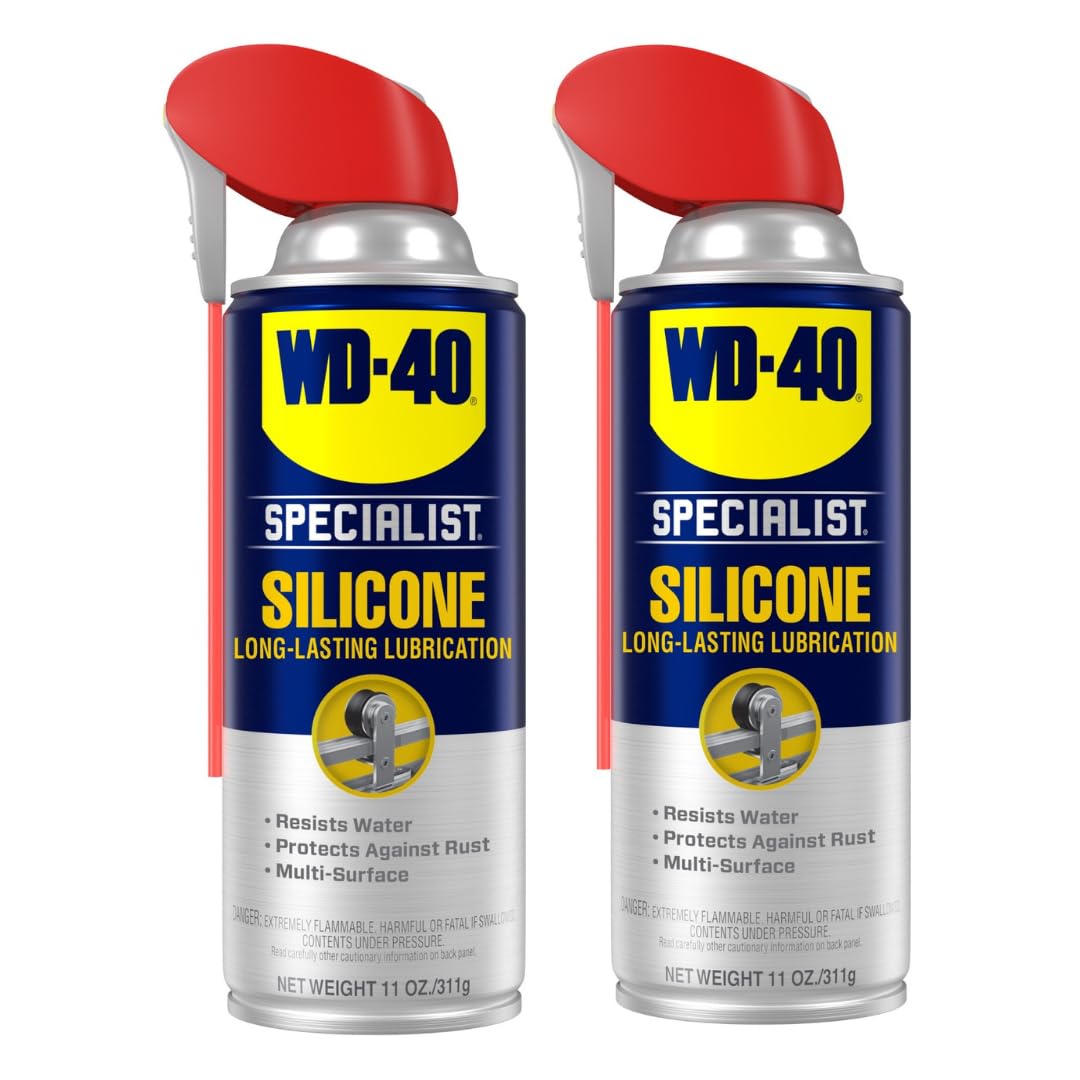
1. WD-40 Specialist Silicone Lubricant with Smart Straw
Our pick — 4.5+★ from 850+ verified ratings; the strongest balance of quality and price.
The twin-pack that keeps a hinge quiet without harming the rubber and vinyl wrapped around it.
If your squeaky door sits behind weatherstripping or a garage gasket, this is the pick that avoids a nasty surprise. The formula is built to be safe on rubber, plastic and vinyl — so when you spray it near a door seal, you are not gambling on whether the seal will survive. That material compatibility sits at the top of what makes it the crowd favorite here, at 4.5+ stars across 800+ ratings.
You get two cans in the box, which is the quiet genius of this set: one for the front door, one for the garage. Each can holds 11 fluid ounces, and the full item weight lands at 12.8 ounces. Compare that to the PlanetSafe oil at 1 ounce, and you are looking at far more applications from a single purchase. The Smart Straw both sprays wide and flips to a thin stream, so you can hit a hinge pin dead-on or coat a wider contact strip without a separate nozzle to lose.
Owners describe it as the reliable default — “Always works well. Best lubricant ever” is the kind of line that repeats across the listing. Garage doors that stuck to their gaskets became smooth again, and car window tracks stopped fighting. The honest catch: silicone is a film, not a heavy grease, so a hinge that swings hard every day will want a fresh pass sooner than a lithium grease would. It is also a spray, so a stray mist on a painted jamb needs a quick wipe.
What earns it top spot
- Safe on rubber, plastic and vinyl — weatherstripping and gaskets survive the job
- Two cans, so interior and garage doors both get covered
- Smart Straw switches from narrow pin stream to wide spray
- Quick-drying with no messy residue to clean up
Where it slightly trails
- Thin film, so heavy-traffic hinges need more frequent reapplication
- Silicone spray can drift onto adjacent paint if you are not careful
Grab it if: your hinges live near rubber seals, gaskets, or car window tracks and you want one can that will not damage them.
Keep looking if: you want a one-and-done application on a hard-swinging daily door — a grease holds longer.
2. WD-40 110057 Multi-Use Product Spray with Smart Straw
The first line of attack when a hinge is rusted solid and has not moved cleanly in years.
Some doors do not creak — they grind and fight you. That is where this can earns its place. The formula frees sticky mechanisms, loosens rust-to-metal bonds, and helps release stuck or frozen parts, so a hinge that has seized up can start moving again before you ever reach for grease. Each can holds 8 ounces with a 6.4-ounce item weight, and you get two in the pack.
It also drives out moisture and leaves a corrosion shield behind, which matters on an exterior steel hinge that is already showing rust. A buyer who fixed a sticking door and several stubborn fittings described it plainly: “It’s WD-40, what else can I say? It’s reliable and the cans arrived undamaged.” The nozzles on these cans seat securely, which is more than you can say for some cheaper cans.
Think of it as the prep step. Use it to break a rusted pin loose and clean the grime out, then follow with a grease for staying power — this spray thins out over time on its own. The other honest limit is its reach around delicate materials: it is meant for metal, and the listing does not promise it on rubber or vinyl, which is exactly the gap the silicone pick fills.
Where it shines: freeing a hinge that has rusted or gunked itself shut, plus driving moisture out of an exterior hinge before you grease it.
The trade-off to accept: a penetrating spray is a short-term fix on its own — it will not stay put on a hard-working hinge as long as a lithium grease, so plan on a follow-up coat.
Reach for this if: the hinge is resisting and you need it moving again today.
Not the last step: once it is freed, a thicker grease is what keeps it quiet long term.
3. PlanetSafe SqueaksGone Hinge & Garage Door Oil

One tiny bottle that silences a squeak the moment it touches the pin.
This is the smallest bottle in the group at 1 ounce, and that is the point. What wins buyers over is how little it takes — a single application quiets a noise almost instantly, and the same few drops go far across hinges, fans, and creaky furniture. A 20-year-old glider rocking chair that had become unusable because of its squeak went silent over two applications. Door hinges freed up to the point that the door closed without the frame rubbing.
It also runs clean. The formula is odorless and leaves no messy residue, which makes it a comfortable choice for indoor doors near bedrooms or a home office. It is designed to penetrate and break down rust rather than just coat the surface, and it is made in the USA without the harsh chemicals common in some sprays.
The recurring gripe is the packaging, not the oil. The cap design has proven fragile in shipping, with bottles arriving with the lid cracked or leaking — the company has stepped in with replacements when it happens. Treat the little bottle gently and store it cap-up. The size is also worth knowing up front: 1 ounce goes a long way on hinges, but it is not a bottle you will want to lose in a junk drawer.
Why it works: a penetrating oil that quiets metal-on-metal at the source, with a low-odor, low-residue formula that suits indoor doors.
Handle with care: the cap is the weak link in shipping — a fair number of buyers have opened a leaky package, so check yours on arrival.
Best for: a single persistent squeak you want gone today, especially on an interior door where odor matters.
Look elsewhere if: you want a bulk supply for a whole house of doors — this bottle is deliberately small.
4. CRC SL3660 Super White Multi-Purpose Lithium Grease
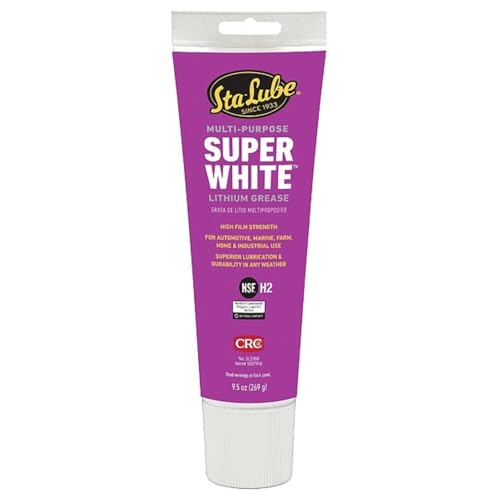
The thick white grease that stays on a hinge pin long after a spray has burned off.
When a door needs to stay quiet for months rather than days, this is the tube to reach for. This is an NLGI-2 lithium grease — NLGI-2 is a consistency grade that means it holds its shape on a pin instead of running off — with a 380F drop point, which is the temperature where the grease would soften and drip. On a hot garage door hinge, that headroom matters. It comes in a 10-weight-ounce tube and carries 4.5+ stars from a deep pool of buyers.
The pattern in the reviews is exactly what you would hope for from a grease: it lasts. Buyers who cleaned rusted hinge pins and packed this in reported quiet doors for 5 months, where a white spray grease had only held for days. A hitch owner found it stuck around over several trips without needing a top-up. The bright white color is a small bonus — you can see exactly where you applied it and where you missed.
The catch is prep. This grease works best when you pull the pin, clean off the old rust and grime, and pack fresh grease in — which is more work than a spray-and-go. It is also a tube, not an aerosol, so you will want a grease gun or a bit of patience to apply it neatly. And not every buyer got the full tube: one noted a slightly short fill against the labeled weight.
Why hinge owners keep buying it
- Stays on the pin far longer than a spray — reports of months of quiet
- 380F drop point handles hot garage and exterior hinges
- Bright white color makes application easy to see
- 10-weight-ounce tube covers plenty of hinges
What to plan around
- Best results need the pin pulled and cleaned first
- Tube form requires a grease gun or careful manual application
Pick this one if: you are willing to do the pin-cleaning job once and want quiet that holds for months.
Think twice if: you want zero disassembly — a spray will be easier, just shorter-lived.
5. STAR BRITE Heavy-Duty White Lithium Grease

Built for the hinges that face rain, salt air, and temperature swings all year.
An exterior gate hinge or a dock-side door is a harsher job than an interior bedroom door, and this grease is aimed squarely at that. It is an NLGI-2 grease in a 14-fluid-ounce cartridge, rated to keep working up to 350°F and formulated to stay effective in wet conditions without washing away. The corrosion and rust barrier is the point here: it puts a durable shield on metal that lives outdoors. It is also compatible with plastic components, and its white color makes a quick visual check easy.
If you already own a grease gun, this slots in and goes to work. Buyers put it on jet boat lower units, small gearboxes, and joints and hinges — the kind of heavy equipment that does not tolerate a light oil. It rates 4.5+ stars from a solid base of owners who use it on machines as often as on doors.
Here is the honest fit note: this is a cartridge, not a spray or a squeeze tube. Without a grease gun, applying it to a door hinge is awkward. It is also more grease than a typical homeowner needs for a handful of interior doors — better suited to someone with an exterior gate, a garage, or a boat to maintain. The 15.68-ounce item weight reflects a substantial cartridge.
The case for it: a water-resistant, high-temperature lithium grease that clings through rain and heat — the right tool for outdoor and marine hardware.
What to know before you buy: it needs a grease gun to apply neatly, and the 14-ounce cartridge is sized for a workshop, not a single squeaky door.
Made for you if: you maintain an exterior gate, garage, or boat and want one grease that fights rust and water.
Overkill if: your only job is one interior door — a tube or spray covers that with less fuss.
Know the Specs
NLGI Grade and Drop Point
The NLGI grade is a consistency rating — a higher number is a firmer grease. NLGI-2 is the common middle grade that stays put on a hinge pin without being stiff. Drop point is the temperature where the grease softens and drips, so a higher drop point is what a hot garage or exterior hinge benefits from. When you see 350°F or 380F on a label, that is the ceiling before the grease gives way.
Form: Spray, Oil, and Grease
Sprays reach into a hinge without disassembly and dry fast, which suits quick touch-ups. Oils penetrate rust and free stuck pins but thin out sooner. Greases are thick and cling for months, which is why they win on a hard-working hinge — at the cost of needing the pin cleaned and packed. Match the form to your door’s swing frequency and you have solved most of it.
Common Questions
Is grease or spray better for a squeaky door hinge?
Will silicone spray damage my door’s rubber weatherstripping?
How long does hinge grease usually last before I have to reapply?
Do I have to remove the hinge pin to lubricate it?
Can I use these lubricants on plastic or nylon door components?
What is the smell like and will it linger in a bedroom?
Is WD-40 good for a door hinge on its own?
Will a hinge lubricant work on a garage door too?
Do I need a grease gun to use the STAR BRITE cartridge?
Can hinge lubricant stain paint or leave a sticky mess?
The Bottom Line
The lubricant for door hinges that fits most homes is the WD-40 Specialist Silicone Lubricant, because it is safe around rubber and vinyl seals and you get two cans to cover every door in the house. If your hinge is rusted and fighting you, free it first with the WD-40 Multi-Use Product Spray. And when you want quiet that holds for months, pack a cleaned pin with the CRC SL3660 White Lithium Grease — the choice that stays put long after a spray has burned off.
How we choose
We do not accept paid placement. Every pick is matched to a real buyer and a real use-case; we do not hands-on test units.
Sources
Specifications: manufacturer listings and product documentation. Review insights: verified customer reviews, as of October 2026. Pricing: not shown on this page (it changes often); check the current price via the retailer link.
As an Amazon Associate, Aappliancez earns from qualifying purchases. This does not affect which products we feature.