Disclosure: Some links in this post are affiliate links. As an Amazon Associate I earn from qualifying purchases, at no extra cost to you. Learn more
Specs are compiled from manufacturer listings and verified buyer reviews and can change over time — please confirm the key details on the product page before buying.
If your AC fan motor has started to whine, hum louder than it used to, or drag when it first kicks on, the fix is usually not a new motor — it is the right oil in the right bearing. Standard household sprays and general-purpose oils often leave a sticky film that thickens under motor heat, which makes the drag worse. What actually helps is a lubricant thin enough to reach a sealed or oiling-port bearing and stable enough to stay put while the shaft spins. Below are five lubricants that owners use on fan motors, circulator pumps, and furnace blowers, ranked so you can pick the one that matches your job.
This guide is built by comparing the manufacturers’ published specifications and the patterns across verified customer reviews, so you get each pick’s real strengths and trade-offs instead of marketing spin.
Some are purpose-made fan oils, others are penetrating lubricants that double as a maintenance oil. The five picks below cover both paths, and the comparison table lines up volume, form, and best use so you can match one to your motor in a minute. Here is what separates a genuinely useful lubricant for ac fan motor from a can that just makes noise.
Top Picks


How To Choose The Best Lubricant for AC Fan Motor
A fan motor fails on a slow curve, not all at once. The bearing dries out, friction rises, the motor draws more current, and the housing gets warmer than it should. Picking the right oil is about matching the formula to that bearing and that heat, not about buying the biggest bottle on the shelf.
Synthetic versus petroleum-based oil
A fully synthetic oil is built from molecules that are uniform in size and shape, which is why it resists thickening and does not leave the sticky residue that conventional oil can leave behind as its lighter fractions evaporate. On a motor that runs hot for hours, that difference matters. A petroleum oil can oxidize and turn gummy inside the bearing, which adds drag instead of removing it. If your motor already has old sticky deposits in it, a synthetic oil can also work through them over time.
Viscosity and the applicator
Viscosity is how thick a liquid is — a low number flows thin and creeps into tight gaps, a high number clings and stays put. One of the picks here lists 8.3 centistokes at 104 °F, which tells you it stays fluid at motor temperatures rather than turning to sludge. Just as important is the applicator. A needle tip or precision nozzle lets you place a drop directly on a bearing or into an oiling port, while a squeeze tube is better for coating a wider surface. Fumbling oil into a blind port wastes product and misses the target.
Match the product to the motor type
Sealed sleeve bearings on a table fan take very little oil and respond to thin synthetic drops. Circulator pumps and furnace blowers often have their own oiling ports and want a product labeled for pumps and motors. A penetrating lubricant earns its place as a maintenance oil when a fitting or shaft is stuck, because it creeps in first and lubricates second. Think about access before you buy: if you can reach the bearing directly, a needle applicator wins; if you are working through a small port, a tube with a narrow nozzle is easier to control.
Side-by-Side Comparison
| Model | Best For | Volume | Form | Formula | Amazon |
|---|---|---|---|---|---|
| Bell & Gossett Oil Tube L25201★ Best Overall | Pumps and motors with oiling ports | 2.5 fluid oz | Oil tube | — | Amazon |
| Made Here Co. Multi-use Penetrant OilBest Versatility | Stuck fittings and general maintenance | 4 fluid ounces | Squeeze tube | Non-toxic | Amazon |
| Planet Safe AIM Extreme Duty Lubricant | Precision drops in tight spots | 1 fluid ounce | Bottle | Non-toxic, odorless | Amazon |
| Superior 100%-Synthetic Fan Oil | Noisy ceiling and box fan bearings | — | Needle applicator | 100% synthetic | Amazon |
| 100%-Synthetic Oil for All Fans (2 oz. w/XL) | Gummed-up or sluggish motors | 2 fluid ounces | Bottle | 100% synthetic | Amazon |
Detailed Reviews
1. Bell & Gossett Oil Tube L25201
Our pick — 4.5+★ from 400+ verified ratings; the strongest balance of quality and price.
The old-guard tube that brings near-dead circulator pumps back to silent running.
Start with what this tube is for: it is oil labeled for pumps and motors, sold in a 2.5 fluid ounce tube, and it has been on the shelf since 2009. That longevity is the reason it leads here — it is a known quantity in heating and cooling maintenance, not a newcomer. The screw-off cap makes it easy to open and apply, and the liquid comes out clear.
The thing that wins people over is that it does the job it was designed for. One buyer oiled a whining circulator pump through its oiling hole and reported it ran “like a new one now.” The recurring theme in the reviews is simple: functionality, first and always. This is the maintenance oil that circulator pumps, furnace blowers, and fan motors were built to take.
Here is the honest read. The tube is small — 2.5 fluid ounces — and it is a maintenance item you will need to reapply periodically, not a one-and-done fix. The cap is a screw-off type, so store it upright and keep the nozzle clean or it will dribble in the drawer. And it is a dedicated motor and pump oil, so it is not the pick for freeing a rusted bolt or spraying down a hinge; that job belongs to a penetrant. For bearings and oiling ports, though, this is the one to reach for first.
What earns it the top spot
- Labeled specifically for pumps and motors — the exact job an AC fan motor needs
- 2.5 fluid ounce tube with a screw-off cap for controlled application
- Long-standing product used for periodic heating and cooling maintenance
- Clear oil that goes straight into an oiling port with no mixing required
Where it asks for your patience
- Small volume means you will buy again as part of routine upkeep
- The screw-off cap needs to be kept clean and stored upright
- Not a penetrant, so stuck hardware is a different product’s job
Reach for this if: you have a circulator pump, furnace blower, or fan motor with an oiling port and you want the industry-standard oil going into it.
Look elsewhere if: your problem is a rusted or frozen fitting rather than a dry bearing.
2. Made Here Co. Lubricating Penetrant Oil 4oz
Four ounces of creeping penetrant that frees the fitting before it ever thinks about lubricating it.
This is the pick for the motor job that starts with a stuck part. The bottle holds 4 fluid ounces — the largest volume here, versus the 1 fluid ounce in the Planet Safe AIM — and it comes as a squeeze tube with a precision applicator so you can aim the flow. The formula is non-toxic, and the maker lists a viscosity of 8.3 centistokes at 104 °F, a thin enough figure that it creeps into tight gaps instead of sitting on top.
Effectiveness is the quality that carries this one in owner feedback, and it shows in the small jobs. One buyer left this oil overnight on a frozen cold-water fitting and found it “easily removed with pliers” the next morning. It also quiets squeaky hinges and cleans gunk out of a sticky caster wheel so the wheel turns freely again. That creeping action is exactly what you want when a fan shaft or mounting bolt is seized and you need it to move before you can service the bearing.
The catch is the smell. Odor is the mixed note in this product’s feedback — several report a strong unpleasant smell, so work in a ventilated space and keep it off your hands where you can. It is also a penetrant first, so on a motor that simply needs a drop of bearing oil, a dedicated fan oil is the cleaner choice. Think of this as the maintenance partner in your kit, not the everyday bearing oil.
Best used for: a fan motor bracket or mount bolt that will not budge, or a general shop lubricant you want on hand for hinges, chains, and fittings.
Worth knowing: the 4 fluid ounce squeeze tube gives you a lot of application for the money, but you trade the pleasant experience for a formula that works hard and smells like it.
Suits you when: the blockage is mechanical — rust, gunk, or a frozen fitting standing between you and the bearing.
Pass on it when: you cannot stand a strong odor in a closed utility room.
3. Planet Safe AIM Extreme Duty Lubricant 1oz

The odorless one-ounce bottle with a tip fine enough to hit an intricate bearing dead-on.
Indoor maintenance in a bedroom or a home gym is where this earns its keep. The formula is non-toxic and odorless, made in the USA, and it comes in a 1 fluid ounce bottle with a precision tip that puts oil exactly where you point it. That small volume is a real trade-off — it is 1 fluid ounce versus the 4 fluid ounces in the Made Here Co. tube — but the controlled delivery means very little goes to waste.
What wins people over is how long the quiet lasts. It also quiets a shower door hinge and reaches intricate bike gears and pedals with the fine tip. For an AC fan motor in a finished room — a bedroom blower or a wall unit — that combination of no smell and precise placement is the whole point.
The honest follow-up is the bottle itself. It can be stiff to open the first time, to the point that one buyer had to use pliers. And at 1 fluid ounce it runs out faster on bigger jobs, so if you are servicing several fans, budget for a refill. Those are small gripes next to a lubricant that disappears into the job without a trace of odor — the recurring theme in the feedback is lubrication that simply holds.
Reasons it stands out
- Odorless and non-toxic, so it works in a bedroom, gym, or other indoor space
- Precision tip delivers oil into tight, hard-to-reach bearing spots
- Stays put after application — buyers report weeks without reapplying
- Made in the USA
What to budget for
- 1 fluid ounce is a small bottle if you have several motors to service
- The cap can be stiff to break loose on the first opening
- Runs thin enough that you will want to store it upright
The right size for: a single indoor unit where you need a clean, precise drop and no lingering smell.
Skip it for: a whole-house maintenance day that will burn through more than an ounce.
4. Superior 100%-Synthetic Oil for Fans
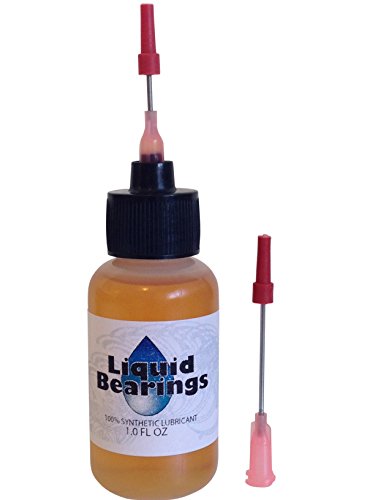
Built for exactly this — a fully synthetic fan oil with a needle tip that reaches the bearing.
This one is designed for fans by name: table, ceiling, box, and portable. The formula is fully synthetic, which means the molecules are made uniform in size and shape so the oil does not evaporate off or turn sticky the way a petroleum oil can as it breaks down under heat. The bottle is LDPE with a stainless needle for precise application, and the maker notes it is plastic-safe and will not harm painted surfaces — useful when you are working near a fan housing or grille.
The thing everyone raves about is quiet. One buyer worked this oil into both the upper and lower bearings of a three-month-old ceiling fan that had started squeaking, and the noise stopped. On a 20-inch high-velocity fan whose bushings had gummed up from broken-down 3-in-1 oil, this synthetic got the rotor turning freely again. That is the difference a synthetic makes over a general-purpose oil on a hot, spinning shaft.
Two honest notes. Some find the oil thinner than expected, so a gentle squeeze is enough. And the packaging has drawn complaints — the small rubber needle caps and a bag that does not reseal make the bottle harder to keep tidy between uses. Neither changes how the oil performs in the bearing, which is where it counts.
The reason to buy: it is a true synthetic oil made for fan bearings, and it reverses the gummed-up drag that general oils leave behind.
The trade-off: thin oil and fiddly storage caps ask for a careful hand and a clean drawer.
Most useful for: a hobbyist or homeowner with a squealing ceiling fan, box fan, or vintage fan that deserves a proper synthetic oil.
Not the pick if: you only need a single drop and would rather not babysit a bottle that refuses to reseal neatly.
5. 100%-Synthetic Oil for All Fans 2 oz.
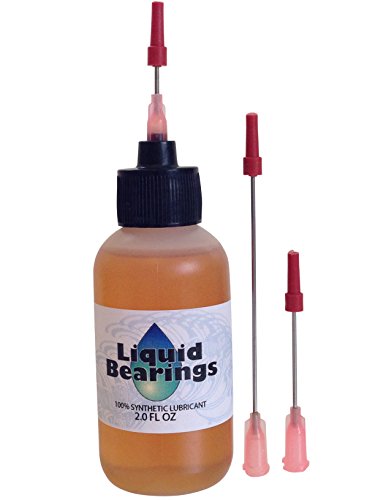
For the fan you almost threw out — a synthetic oil that coaxes a frozen blade back to life.
Here is the scenario: an old fan that sat unused for a decade and will not turn by hand. This 2 fluid ounce bottle of 100% synthetic oil is built for that rescue. It is designed to never evaporate or become gummy, so it clears out the sticky old deposits that seized the shaft and keeps the bearing slick afterward. The bottle is metal and plastic compatible, and the 2-ounce size versus the 1 fluid ounce in the Planet Safe AIM — a real difference when you plan to treat a few fans around the house.
Performance is what carries this one. One buyer revived a vintage fan frozen for over ten years with several drops, an overnight wait, and a few more drops until it turned by hand and ran whisper quiet. One buyer oiled the bushings inside and outside the shaft ends of a small electric motor that was thrashing loudly, and the noise dropped and the motion returned.
The honest note: at 2 fluid ounces the bottle is small, and the price tags that size higher than owners would like — a few say so plainly and plan to use it sparingly. That is the one thing to weigh. Everything else about it is a restoration tool, and on a motor that has already been written off, a few drops are all it takes to find out whether it deserves one more season.
What it gets right: a fully synthetic formula that frees gummed bearings and keeps a sluggish motor running quietly again.
What to expect: a small bottle for the outlay, so measure your drops and reserve it for the motors that matter.
Grab it when: a fan or small motor has stiffened up and you want to try bringing it back before replacing it.
Think twice if: you are topping up several units regularly and would rather have a larger container.
Know the Specs
Synthetic vs. petroleum base
A synthetic oil is assembled from molecules of a uniform size and shape, so it resists the evaporation and oxidation that turn ordinary petroleum oil sticky under motor heat. That sticky residue is what drags on a bearing and makes a motor work harder. Choose a synthetic oil when you want the lubricant to stay fluid and keep a fan shaft spinning freely over time.
Viscosity in centistokes
Viscosity describes how thick a liquid is. A lower figure flows thinner and creeps into tight gaps like a bearing race or an oiling port, while a higher figure clings and coats. The Made Here Co. oil lists 8.3 centistokes at 104 °F, a thin, creeping formula that reaches where a heavier oil cannot. Match the figure to the job — thin for a sealed bearing, thicker for a wide surface.
The applicator and container
A precision needle or a narrow nozzle puts a single drop exactly where you want it, which matters when a bearing sits in a tight spot you can barely reach. A squeeze tube is better for broader coverage and for working penetrant into a fitting. The container also decides how neatly you can store the product between maintenance sessions, so a resealable cap or a scabbard for the needle is worth a look.
Volume and how far it goes
Fan bearings take very little oil per application, so a small bottle can last a long time — but a house full of fans and pumps will draw it down faster. The picks here range from 1 fluid ounce up to 4 fluid ounces. If you plan to service one unit, a small bottle is plenty; if you are doing routine maintenance across several motors, a larger volume saves you a reorder.
Common Questions
Can I use a penetrating oil as lubricant in an AC fan motor bearing?
Is WD-40 or a general spray oil bad for a fan motor?
How much oil do I put in a fan motor bearing?
Do I need to take the fan apart to oil the motor?
Will a synthetic oil work if the motor already has old petroleum oil in it?
How long does fan motor lubricant last between applications?
Can I use fan oil on a circulator pump or furnace blower too?
Which is better for a noisy ceiling fan — synthetic oil or a penetrant?
Is it safe to use these oils around a home with kids and pets?
How do I stop oil from dripping out of an oiling port after I apply it?
The Bottom Line
For most motors with an oiling port, the lubricant for ac fan motor winner is the Bell & Gossett Oil Tube L25201 because it is labeled for pumps and motors and does exactly the maintenance job a circulator pump or fan blower asks for. If your squeal is coming from a ceiling or box fan bearing, grab the Superior 100%-Synthetic Fan Oil, whose needle tip and fully synthetic formula are built for that job. And if a stuck fitting or frozen shaft is what blocks your repair, the Made Here Co. Multi-use Penetrant Oil is the one to reach for first — with the largest bottle here to work through the corrosion before the bearing oil goes in.
How we choose
We do not accept paid placement. Every pick is matched to a real buyer and a real use-case; we do not hands-on test units.
Sources
Specifications: manufacturer listings and product documentation. Review insights: verified customer reviews, as of October 2026. Pricing: not shown on this page (it changes often); check the current price via the retailer link.
As an Amazon Associate, Aappliancez earns from qualifying purchases. This does not affect which products we feature.