Disclosure: Some links in this post are affiliate links. As an Amazon Associate I earn from qualifying purchases, at no extra cost to you. Learn more
Specs are compiled from manufacturer listings and verified buyer reviews and can change over time — please confirm the key details on the product page before buying.
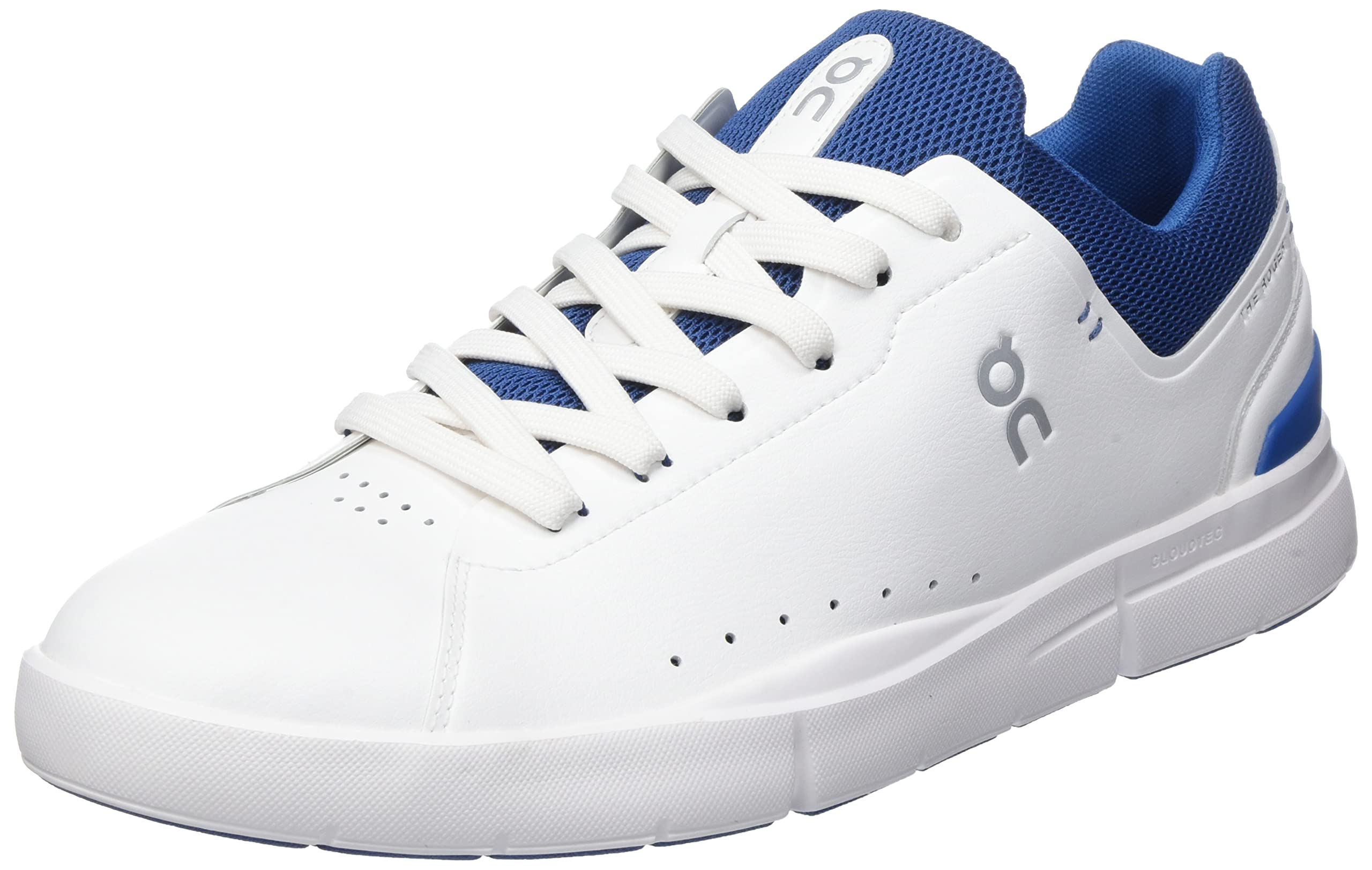
If you want a shoe that keeps you low to the ground and steady on a hard court, the On Men’s The Roger Advantage Sneakers are the pick to beat on overall owner satisfaction — a 4.5+ star crowd favorite backed by 600+ ratings. The tricky part is that “low profile” gets used loosely. Some shoes in this batch are genuine court performers built for lateral cuts (side-to-side movements), and others are lifestyle sneakers that only look the part. This guide separates them so you buy the right one the first time.
This guide is built by comparing the manufacturers’ published specifications and the patterns across verified customer reviews, so you get each pick’s real strengths and trade-offs instead of marketing spin.
A low stack height keeps your ankle closer to the ground, which helps stability on quick direction changes. But the outsole pattern, the toe box width, and the upper material decide whether a shoe actually holds up on court. Below you’ll find the strongest options for low profile tennis shoes.
Top Picks

How To Choose The Best Low Profile Tennis Shoes
A low profile shoe sits close to the ground so your foot feels the court instead of floating on a thick slab of foam. That low center of gravity is what keeps you upright when you plant and push off sideways. But low does not automatically mean playable. You need to check three things before you commit: the outsole pattern, the fit through the toe box, and whether the upper is built to survive dragging on abrasive hard courts.
Outsole Pattern and Court Grip
Look at the bottom of the shoe before anything else. A herringbone tread — that zigzag pattern of raised rubber bars — is the classic court design because it grips in multiple directions at once. The Reebok Nano Court uses a herringbone Griptonite rubber outsole for exactly that reason. Flat, smooth rubber works fine for walking to the store but will slide when you cut hard on a tennis or pickleball court.
Stack Height and Lateral Stability
The lower the sole, the less leverage your ankle has to roll over during a lateral movement. That is why court shoes trend thinner than running shoes, which stack foam high for straight-line cushioning. A low stack height paired with a firm heel counter keeps your foot planted. If you have weak ankles, a low stack height and firm heel counter matter more than any cushioning claim on the box.
Toe Box Width and Upper Material
A wide toe box gives your toes room to spread and push off, which is why the Wilson Rush Pro Lite leans on that design for comfort during long matches. Leather uppers like the Adidas Court 24 feel supportive but break in slowly and breathe poorly. Mesh tongues and perforated leather (leather with small holes for airflow) run cooler. Decide if you want a breathable mesh shoe that plays cool and light or a leather shoe that plays structured and supportive — you rarely get both in one pair.
Side-by-Side Comparison
| Model | Best For | Reported Weight | Listed Size Range or Dimension | Upper Material | Amazon |
|---|---|---|---|---|---|
| On Men’s The Roger Advantage Sneakers★ Best Overall | Everyday wear and travel | 2.25 pounds | 9 x 6 x 0.5 inches | Soft-touch vegan leather | Amazon |
| WILSON Men’s Rush Pro Lite Tennis ShoesBest Court Value | Pickleball and wide feet | — | — | Breathable mesh | Amazon |
| Adidas Mens Court 24 | Casual wear with leather style | 2.43 pounds | 14 x 9 x 5 inches | Full-grain leather | Amazon |
| adidas Women’s Grand Court Lo Sneakers | Style-led everyday wear | 2.13 pounds | Package 11.69 x 7.68 x 4.33 inches | Synthetic leather | Amazon |
| Reebok Mens Nano Court Sport | Multi-court play | 3 pounds (package) | 14 x 9 x 5 inches (package) | Flexweave | Amazon |
| K-Swiss Men’s Hypercourt Supreme 2 | Competitive court play | — | — | Durawrap X | Amazon |
| Cole Haan Men’s Grandpro Rally Laser Cut | Dress-up and dress-down everyday | 2.19 pounds | 10 x 15 x 6 inches | Perforated leather | Amazon |
Detailed Reviews
1. On Men’s The Roger Advantage Sneakers
Our pick — 4.5+★ from 650+ verified ratings; the strongest balance of quality and price.
The sharpest all-day sneaker here — low, clean, and built for pavement rather than the baseline.
The first thing to understand about the Roger Advantage is where it belongs. This is a lifestyle shoe with court-shoe looks, not a match shoe. It runs a low-slung profile on a concealed CloudTec outsole — hidden hollow pods that absorb small steps quietly — so you stay nice and close to the ground. The 2.25-pound listed weight keeps it easy to walk in all day. On the spec sheet it measures 9 x 6 x 0.5 inches, which sits noticeably slimmer than the Adidas Court 24 at 14 x 9 x 5 inches. That is a real gap, but read it as packaging and profile rather than a fit guarantee.
The soft-touch vegan leather upper gives a smooth finish that looks far dressier than a mesh gym shoe. A mesh tongue adds a little air up top. That combo is why these slip easily from tailored slacks to jeans without looking like gym shoes. Comfort holds up through a full workday and a city walk without complaint.
Where these sneakers ask something back is the outsole (the bottom layer that touches the ground). The venting under the sole is the honest catch: wet ground can find its way to your feet. As buyers put it: “The only issue I have is the shoes are vented under the soles, so walking in snow or through puddles may get your feet wet although it’s only happened to me once.” Fans of these shoes are clear about the purpose too — the styling leads and the cushioning is moderate, so this is a wear-to-lunch shoe, not a match shoe.
Roger Federer signature look
- Low, clean profile that dresses up with slacks or down with jeans
- Soft-touch vegan leather upper with a mesh tongue for airflow
- Concealed CloudTec outsole absorbs small steps quietly
- Slimmer overall build than chunky court-leather options
snug break-in period
- Vented under the sole, so snow and puddles can reach your feet
- Not a match shoe — the cushioning is moderate, not performance-grade
- Fit feedback is split, so try before you commit to a size
everyday court style: the buyer who wants one low-profile sneaker that handles the office, the airport, and Saturday errands in the same look.
narrow feet beware: you need real court support — this is fashion-forward, not a shoe for playing tennis in.
2. WILSON Men’s Rush Pro Lite Tennis Shoes
A roomy-toed court shoe that doubles as a pickleball favorite without punishing the wallet.
Wilson built the Rush Pro Lite around a wide toe box, breathable mesh, and a curved sole that walks you from heel-strike to toe-off. That curved rocker is the bit worth knowing about: it nudges your stride forward smoothly rather than slapping flat. Players who split time between tennis and pickleball tend to land here because the shoe is light on the foot and easy on the pocket. The mesh upper runs airy during long sessions.
What holds this shoe back from a higher rung is wear at the front. The material has a reputation for giving out at the toe under heavy play, and a fair share of feedback says the cushioning feels thin compared with leather court shoes. Reading the reviews plainly: “Last 2-3 month playing recreational tennis.” That is honest recreational mileage. Play several times a week on gritty hard courts and you should expect the toe to show wear sooner than a premium pair would.
For a wider forefoot and a player who mainly moves side to side rather than lunging forward, this is a smart place to spend. The arch technology delivers a stable, flexible feel without the stiffness of a heavy leather upper. Think of it as the versatile middle option — lighter than the 2.43-pound Adidas Court 24, and more court-ready than the On Roger Advantage.
quick baseline moves: buy these if you want a light, breathable, wide-fitting shoe for recreational tennis or pickleball and you accept that the toe area is a wear point.
long match comfort: the cushioning runs thin, so bigger players or heavy daily sessions may want more support underfoot.
3. Adidas Mens Court 24
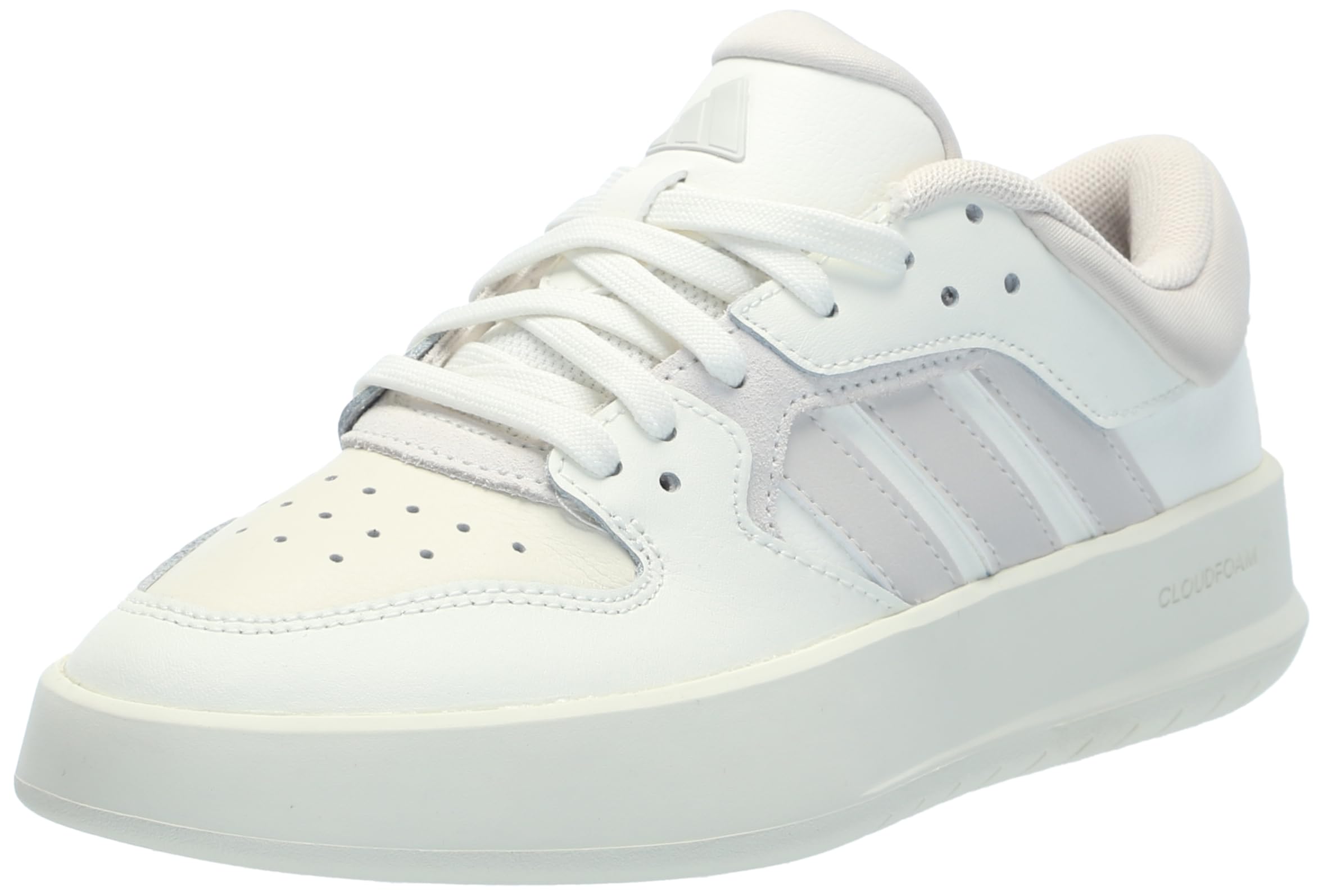
Full-grain leather and a thick sole that dresses up a pair of chinos, with a break-in period to match.
This is the shoe in the batch that looks like money without behaving like a stiff dress shoe. The full-grain leather upper gives a smooth, polished finish, and the Cloudfoam midsole — a soft foam layer under the foot — cushions each step. A sturdy rubber outsole rounds the bottom so you stay planted. Style is the clear strength, and owners say the compliments come often, especially with jeans and chinos.
Here is the trade you make for that leather look: it is the heaviest listed shoe here at 2.43 pounds, and the stiffness is real. The upper takes a while to soften, and the leather does not breathe. The most-documented gripe is the inner lining at the heel entry, which has a habit of tearing early on the wrong fit. Where the shoe suits a casual wearer who wants a leather sneaker, it does not suit anyone expecting an instant slipper-soft feel.
Sizing runs generous, and the silhouette is narrower through the heel than across the toes, so try a half size down if you are between sizes. Against the adidas Grand Court Lo, this is the stouter, heavier build at 2.43 pounds versus 2.13 pounds — more leather, more presence, less give. Wear it for the leather look and you will be happy; just do not expect mesh-shoe breathability or an instant broken-in feel.
leather upper durability: a full-grain upper and thick rubber sole give it a dressier, more substantial feel than the mesh and synthetic options around it.
stiff first wear: stiff at first, heavier than the lighter court shoes, and the lining entry is a known weak spot — treat the heel collar with care.
hard court regulars: you want a leather court-style sneaker that looks sharp with chinos and can handle walking around town.
instant comfort seekers: you want an out-of-the-box comfy, breathable play shoe — the leather needs time and the fit runs roomy.
4. adidas Women’s Grand Court Lo Sneakers
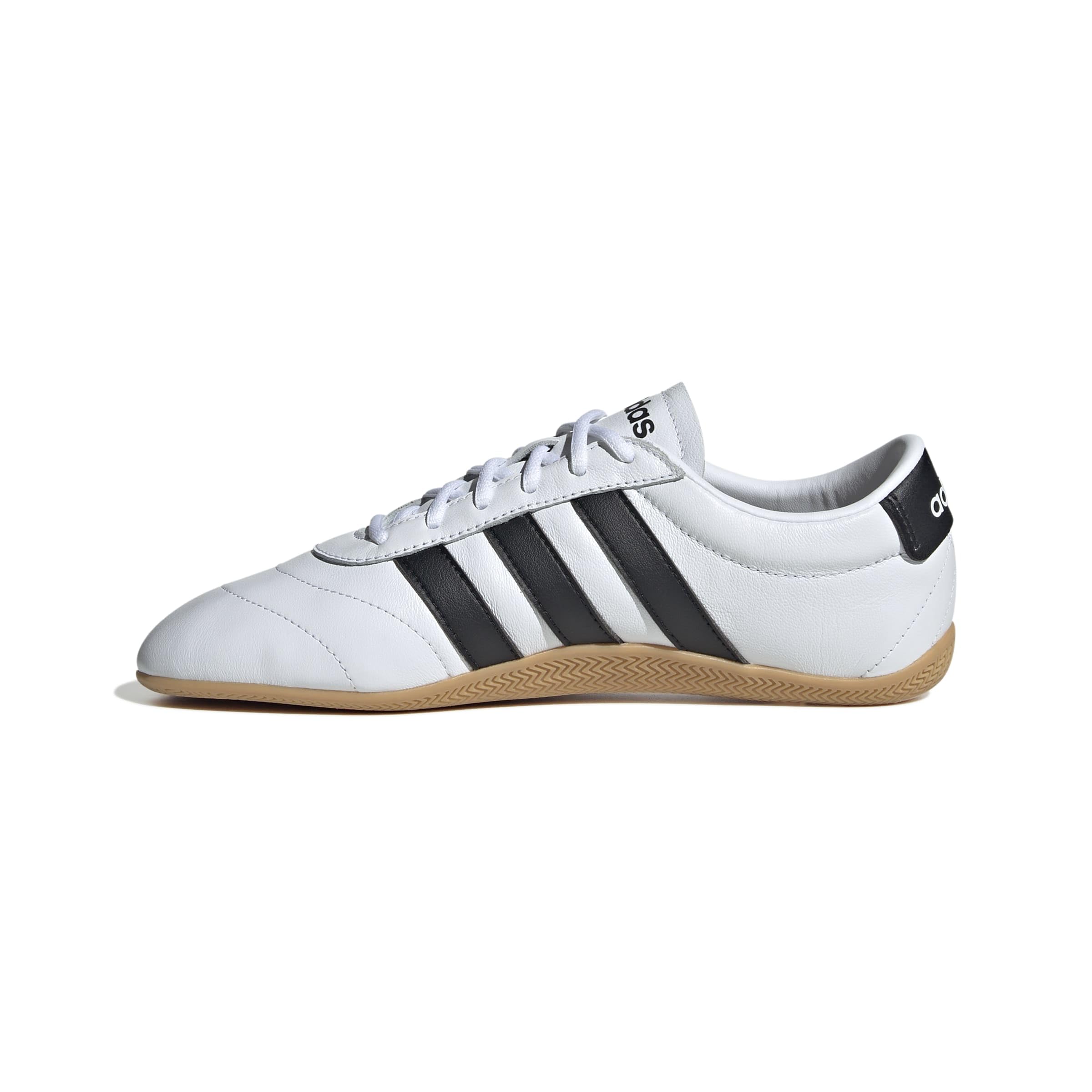
A low, slim court silhouette that pairs with almost anything — once you nail the size.
What wins people over on the Grand Court Lo is the look. It reads low and slim, and the synthetic leather upper means you are not paying leather upkeep for it. The textile lining feels soft against the foot, and the Cloudfoam midsole brings a cushioned step. Listed at 2.13 pounds, it sits lighter than the Adidas Court 24 at 2.43 pounds — a modest but real gap when you are on your feet all day.
The sizing story is the thing to plan for. This shoe draws split feedback on fit, with plenty of women needing to go down. “I usually wear a size 9 had to send back for a size 8 1/2 they fit like a dream,” as one put it, and that pattern swirls around a lot of these reviews. The toe box can run narrow and long, and the non-leather upper does not vent well — long, hot days will leave your feet warm.
Walk the sidewalk rather than the baseline with these. The thin sole and modest tread give you enough grip for errands and school runs but not enough for a hard cut on a court. The upside is a lower, closer-to-ground feel that many wearers prefer to a chunky sole. It is also a looker in the color department, with the red shade in particular catching the eye.
casual tennis days: the woman who wants a low-profile sneaker that flatters jeans, shorts, and skirts alike and does not need match-level grip.
high arch needs: you wear an exact size or have wide feet — the length runs long, so check the sizing chart carefully before ordering.
5. Reebok Mens Nano Court Sport
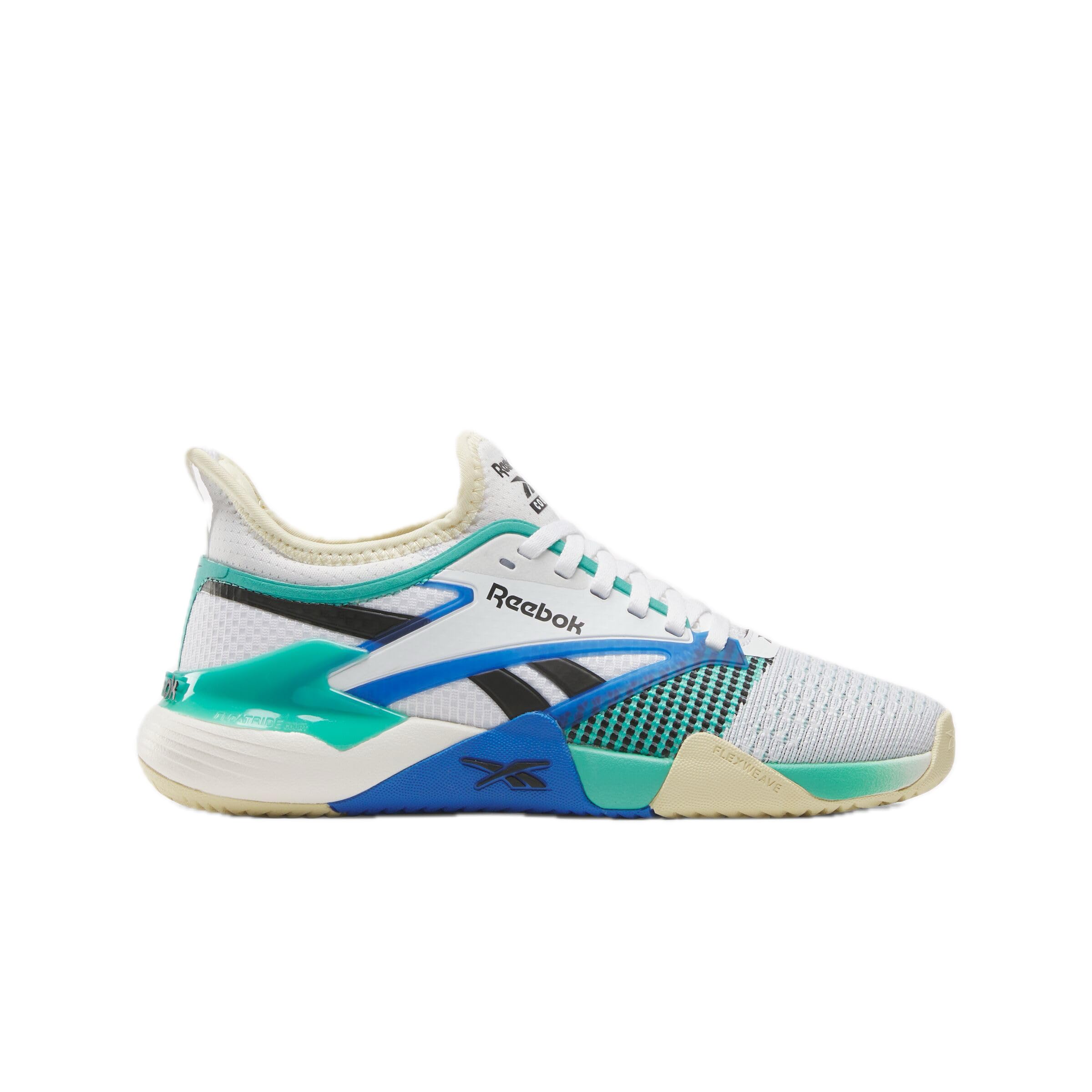
One shoe for tennis, pickleball, padel, and racquetball — with a herringbone tread that really grips.
Reebok aimed this at anyone who plays more than one court sport, and the outsole is the reason it works. The herringbone Griptonite rubber runs in a zigzag pattern to grip in every direction, which is what you want when you cut and stop. The Flexweave upper adds support exactly where your foot needs it. On the visual side, the colorways draw steady compliments — this is a shoe people notice on you.
Comfort divides people neatly. The structured, sock-like fit is snug and stable for some, too tight for others. There is no separate tongue to open up, so entry takes a bit of a tug. If you have wide or swollen feet, the snug build can press at the edges. The bigger caveat is durability at the outer front edge, where hard play and quick lateral moves can wear through the upper faster than you would like.
Where it lands for most players: a strong all-court sneaker with excellent lateral stability and good heel protection, so long matches feel controlled. The package weight comes in at 3 pounds, noticeably heftier than the 2.19-pound Cole Haan if you are comparing raw build. Buy it to play in on tennis, pickleball, padel, or racquetball courts, and to look sharp between points. Just budget for replacing it sooner if you log heavy weekly court time.
versatile court grip: the herringbone tread and Flexweave support make it a legit multi-sport shoe, not a lifestyle sneaker dressed up as one.
runs small sizing: wide-footed players and anyone with a bunion — the sock-like fit runs snug, and the outer front edge is where hard play wears through.
cross-training sessions: you play several racquet sports and want one shoe with real multi-directional grip and standout looks.
wide foot buyers: you have wide feet or log heavy weekly play — the snug fit and outer-edge wear are the honest limits.
6. K-Swiss Men’s Hypercourt Supreme 2 Tennis Shoe
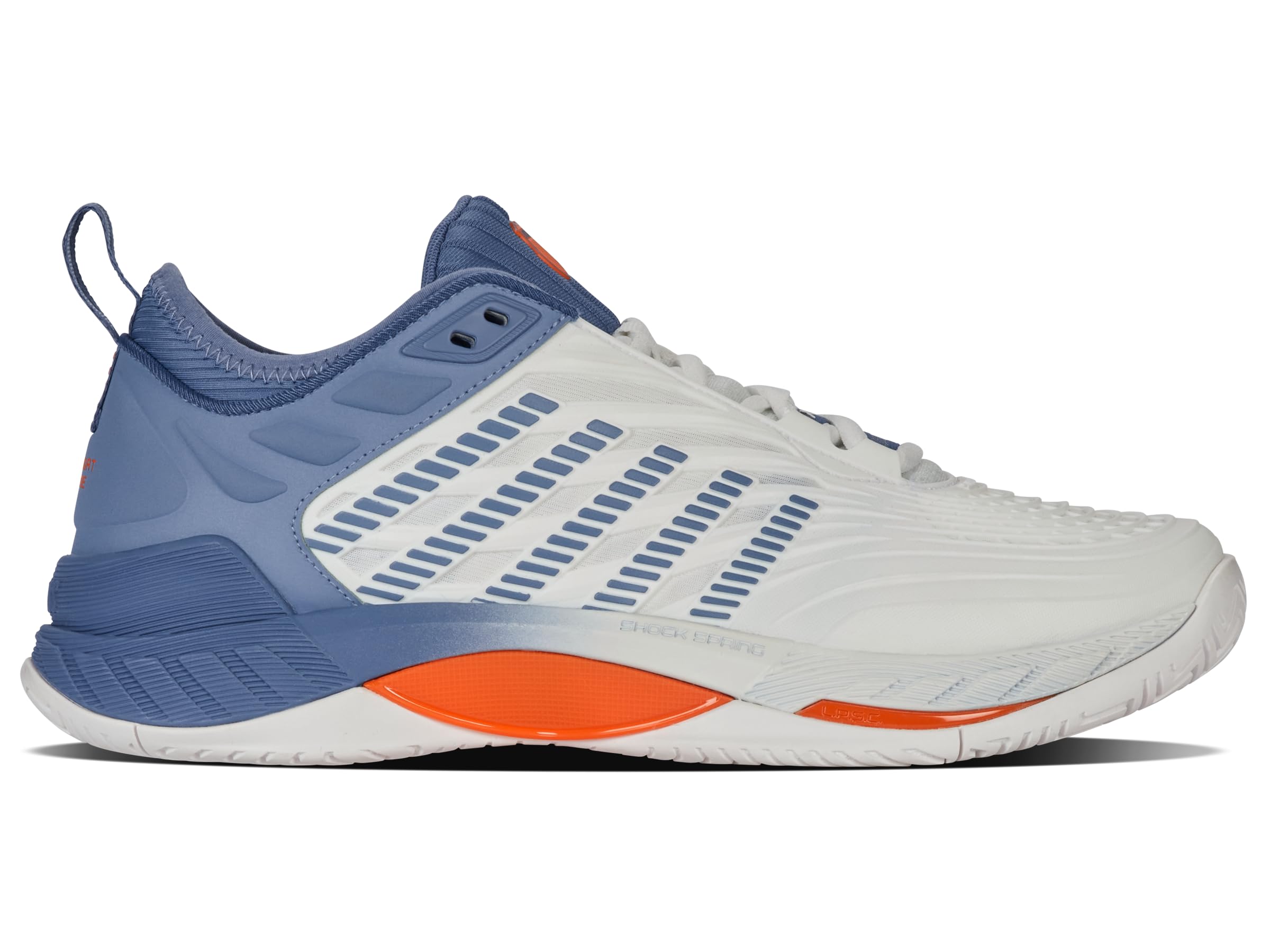
Built for players who slide and sprint, with drag protection where the court grinds hardest.
The Hypercourt Supreme 2 puts its money into the parts that take a beating. A Durawrap X upper shields against drag on the court and stays flexible enough to sprint. The dual-density midsole pairs a lightweight Surgelite outer foam for support with a high-rebound Shock Spring inner foam in the forefoot for a quicker push. Down low, the Dragguard 7.0 outsole uses a herringbone tread for a workable balance between grip and slide on hard courts. A soft bootie collar hugs the ankle for a secure lock.
Players who compete love the snug, glove-like fit from the start. The cushioning feels plush and stable underfoot, and lateral moves feel fast. The build is clearly meant for competitive play, not a Sunday stroll. Where it catches some people out is sizing: the forefoot runs snug and the insole is thin. Going up a half size and wearing thin socks suits most feet — aftermarket insoles are tight to fit.
The one stubborn question is sole life. Hard courts are abrasive, and how long the tread lasts depends heavily on how often you play. Competitive players who play several times a week will see wear, while occasional players report the sole holding up well. Treat it as a true match shoe with match-shoe mileage on abrasive hard courts, not a daily beater.
competitive match play: you play competitively and want drag protection, forefoot response, and a locked-in ankle for fast lateral work.
casual weekend wear: you need room for thick insoles or have wide feet — the snug forefoot sizing is the real constraint.
7. Cole Haan Men’s Grandpro Rally Laser Cut Sneaker
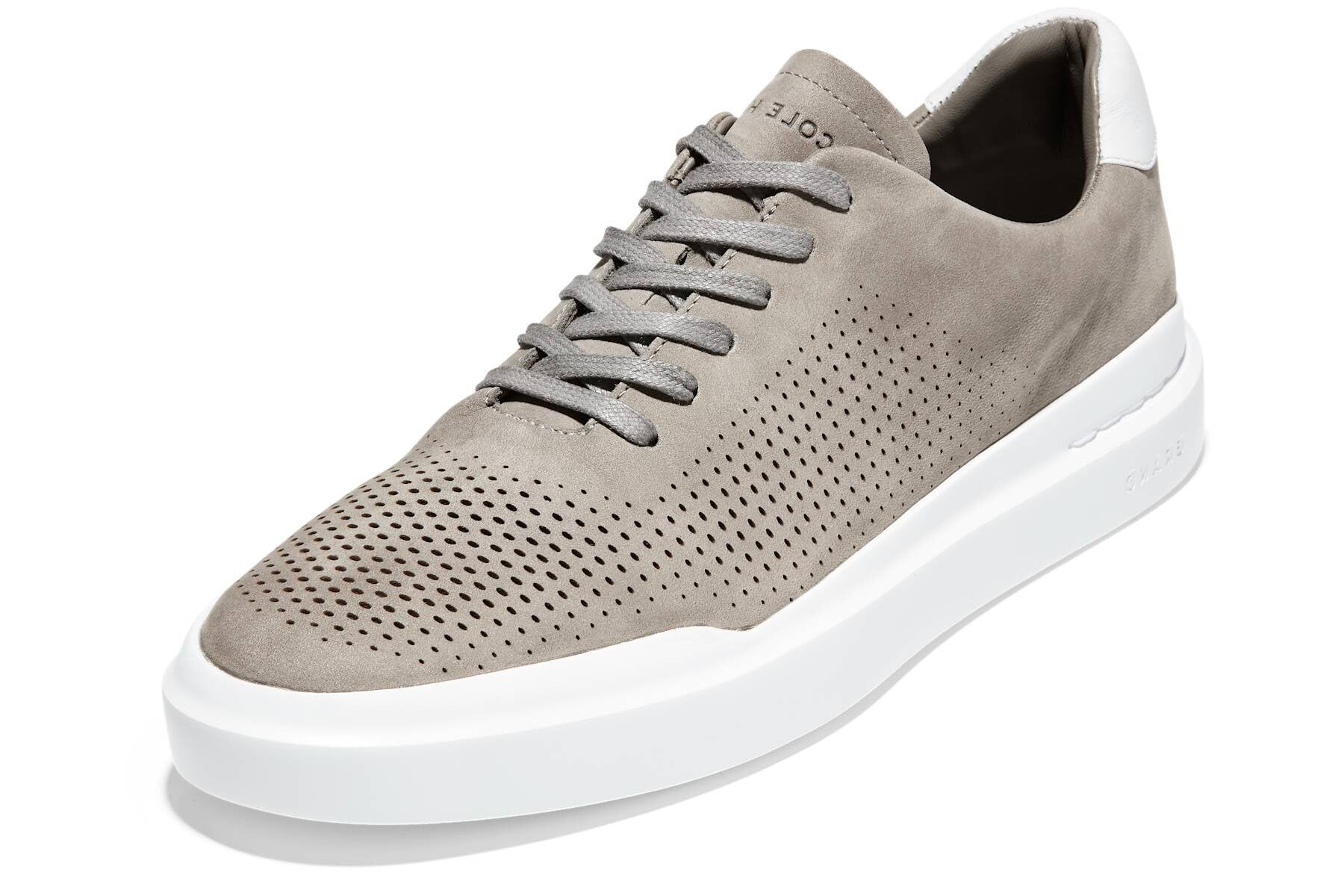
Perforated leather and a cushioned footbed that pass in a business-casual room without breaking a sweat.
The Grandpro Rally pitches one idea well: a sneaker that wears like a soccer casual but looks put together on a workday. Laser-cut perforations punch holes through the leather upper to let air move, and an Ortholite footbed — a cushioned insole built for soft landings — softens every step. At a listed 2.19 pounds, it is the lightest leather build in the group, which is why owners reach for it on days when they are on their feet for hours.
The styling is where it shines. It dresses up with chinos and a button-down and dresses down with jeans, so it earns its place in a rotating weekday wardrobe. Decent arch and heel support keep it comfortable for standing rather than sprinting. This is not a gym shoe and owners say so plainly — it wants pavement and office floors, not a weight room.
Fit has two reliable notes. The width leans narrow across the toes, so wide-footed men should size carefully, and the length runs a touch large. A size-down helps if you sit between sizes. Treat the leather with a little care and it stays looking crisp. It is the neatest-looking pick here, with a premium build to match.
laser cut detailing: perforated leather and a cushioned Ortholite footbed give it a polished, lightweight feel for the office and dinner out.
premium price tag: it narrows through the toes and runs slightly long — order with width in mind, not just length.
dressy sneaker days: the man who wants a lightweight leather sneaker sharp enough for work and soft enough for a long walk home.
budget shoppers: gym days or wide-toed feet — the toe box is narrow and the sole is built for pavement, not workouts.
Know the Specs
Stack Height and Profile
Stack height is simply how much shoe sits between your foot and the ground. A low stack keeps your ankle close to the floor, which makes you more stable when you stop and change direction. A high stack of soft foam feels springy when walking straight but gets top-heavy on a hard cut. That is why a low-profile court shoe often feels more planted than a running shoe of similar weight. Look for a thin, firm sole if you plan to play; go for cushioning only if comfort on your feet matters more than court stability.
Outsole Tread and Rubber Compound
The outsole is the bottom layer that touches the court, and its pattern decides how it grips. A herringbone tread — the zigzag bars — grabs in multiple directions, which matters for lateral stops. A smooth or shallow tread rolls forward nicely but slides on a hard court. Rubber compounds also differ: softer rubber grips more but wears faster on abrasive surfaces, while harder rubber lasts longer with slightly less bite. On the shoes here, herringbone patterns show up on the genuine court models, while lifestyle sneakers favor a flatter sole.
Upper Material and Ventilation
The upper is the part over your foot, and the material changes comfort significantly. Full-grain leather feels supportive and looks sharp but breaks in slowly and traps heat. Synthetic leather lands in the middle — smooth and durable with less give. Mesh and woven uppers breathe best and break in fast but offer less structure. If you play in warm weather or your feet run hot, prioritize a breathable mesh or woven build. If you want a shoe that holds its shape for years of casual wear, leather is the more durable look.
Toe Box Width and Sizing
Toe box width is the room across the front of the shoe. A wider box lets your toes spread and push off, which helps balance and reduces pinching during long play. A narrow box feels snug and locked in but can press on bunions or wide feet. Sizing also varies more than the numbers suggest between brands — the same marked size can fit a half size differently. Always check the brand’s specific fit notes before ordering, and if you sit between sizes on a leather shoe, sizing down usually suits a snug build.
Common Questions
What does low profile mean on a tennis shoe?
Can I wear a low profile tennis shoe for pickleball?
Should tennis shoes fit snug or with room in the toe?
How long do low profile tennis shoes usually last?
Do low profile tennis shoes work for wide feet?
Is a leather or mesh upper better for tennis?
Can I use these sneakers for the gym or running?
Do the laces and tongue matter on a low profile court shoe?
Are these shoes good for standing on your feet all day?
The Bottom Line
The clearest all-around pick for most people is the On Men’s The Roger Advantage — it keeps the low, flat look without the bulk, and it slides between work and weekend without a hiccup. If you actually play tennis or pickleball and want court grip back in your game, go with the WILSON Rush Pro Lite for its wide toe box and light feel. And for the man who needs one shoe that looks sharp in a business-casual setting, the Cole Haan Grandpro Rally is the polished finish. Pick by how you spend your days on your feet, not by what looks best on the shelf — a lifestyle pick for the office and a herringbone court shoe for match days are not interchangeable.
How we choose
We do not accept paid placement. Every pick is matched to a real buyer and a real use-case; we do not hands-on test units.
Sources
Specifications: manufacturer listings and product documentation. Review insights: verified customer reviews, as of October 2026. Pricing: not shown on this page (it changes often); check the current price via the retailer link.
As an Amazon Associate, Aappliancez earns from qualifying purchases. This does not affect which products we feature.