Disclosure: Some links in this post are affiliate links. As an Amazon Associate I earn from qualifying purchases, at no extra cost to you. Learn more
Specs are compiled from manufacturer listings and verified buyer reviews and can change over time — please confirm the key details on the product page before buying.
If you want a big bowl of noodles without the carb load, konjac shirataki is the one that actually delivers — and the 52USA USDA Organic Konjac Shirataki Noodle pack is the pick most buyers land on. These noodles are made from the konjac yam, a plant root whose flour turns into a nearly transparent, springy strand that soaks up whatever sauce you cook it in. The catch everyone hits on day one: they have no flavor of their own, so the sauce is doing all the work. Get that part right and you have a pasta night that costs you almost nothing calorie-wise.
This guide is built by comparing the manufacturers’ published specifications and the patterns across verified customer reviews, so you get each pick’s real strengths and trade-offs instead of marketing spin.
The five packs below split into two clear jobs: some are built for soup and stir-fry, others mimic spaghetti closely enough to fool a meatball. Here is what separates them, so you can pick the right low calorie noodles for the way you actually eat.
Top Picks
How To Choose The Best Low Calorie Noodles
Almost every shirataki noodle on the shelf is made from the same two things — konjac flour and water — so the calorie math barely moves between brands. What changes is everything around it: the shape, the pack count, whether the bag smells clean when you open it, and how springy the strand is once it hits heat. Those four things decide whether you eat the noodles twice a week or shove the box to the back of the pantry.
Shape decides the dish
Angel hair is a thin, delicate strand that behaves like the noodles in a bowl of ramen or pho, so it drinks up broth fast. Spaghetti shape gives you a thicker, longer strand that holds a meat sauce or an alfredo without disappearing into it. Fettuccine is the widest and chewiest, which makes it the best match for heavy cream sauces and stir-fries. If you plan to eat these mostly in soup, angel hair is the smarter buy. If you want a plate that looks like pasta night, go spaghetti or fettuccine.
Rinse first, dry-fry second
The liquid these noodles sit in is what carries most of the bag smell, so a quick rinse under cold water handles the bulk of it. Pat them dry after, then give them a minute or two in a hot pan with no oil — that step drives out the remaining water so your sauce actually clings instead of sliding off. Skipping the dry-fry is the number one reason people say their konjac noodles turned out watery.
Portion size and the fiber reality
Konjac flour is loaded with glucomannan, a water-soluble fiber that swells once it reaches your stomach. That swelling is what makes a small bowl feel filling, and it is also why eating a huge portion in one sitting can leave you uncomfortable. Start with a modest serving the first time. These noodles also expand, so chewing thoroughly matters — a long strand swallowed too fast is genuinely unpleasant.
Count the pouches, not the box
Two boxes that look similar on the shelf can hold very different amounts of actual food. A six-pack of larger pouches gives you more meals than an eight-pack of small ones, so check the total weight and the pouch count together before you decide which one is the better deal for your kitchen.
Side-by-Side Comparison
| Model | Best For | Total Weight | Pack Count | Shapes Included | Amazon |
|---|---|---|---|---|---|
| 52USA USDA Organic Konjac Shirataki Noodle★ Best Overall | Everyday noodle fix | 57 oz | 6 packs | 3 varieties | Amazon |
| Apexy Organic Shirataki Konjac NoodleBest Value | Keto meal prep | 42.24 oz | 8 pouches | Angel hair | Amazon |
| LIVIVA Shirataki Konjac Spaghetti Noodle | Spaghetti night | 110 oz | 6 packs | Spaghetti | Amazon |
| Fusion Select Konjac Noodles | Small-batch testing | 7.05 oz | 4 packs | Angel hair | Amazon |
| Soeos Konjac Noodles | Soup and stir-fry | 57 oz | 6 packs | 3 varieties | Amazon |
Detailed Reviews
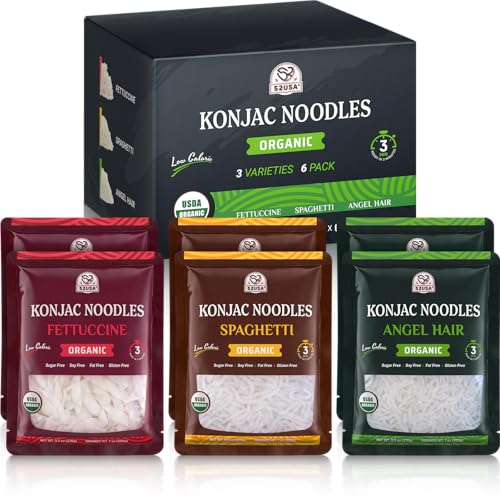
1. 52USA USDA Organic Konjac Shirataki Noodle, 57 Oz, 6 Pack
Our pick — 4.0+★ from 700+ verified ratings; the strongest balance of quality and price.
The three-shape six-pack that covers pasta night and ramen night from one box
Start with this box if you have never cooked konjac before. You get 57 ounces split across six packs in three different shapes, so you can test angel hair in a broth one evening and spaghetti under a meat sauce the next without committing to a single format. The strands are USDA Organic (grown and processed under the U.S. Department of Agriculture’s organic rules), sugar free, soy free and fat free. The whole thing is built around glucomannan, the water-soluble fiber from the konjac root that swells in your stomach so a modest bowl feels filling.
This pack earns its top slot on calories. Buyers report about 15 calories per 8 ounces against 400-plus for the same weight of spaghetti. Taste is what wins people over most: the noodles are flavorless on their own, which sounds like a flaw until you realize it means they take on whatever broth, chili oil or sauce you cook them in. Ramen and soup are the balance, and the strands stay firm rather than turning to mush in hot liquid.
Be honest with yourself about the texture before you buy. Konjac has a springy, rubbery bite that no amount of sauce disguises, and it does not behave like wheat pasta in a heavy Italian dish — one home cook flatly called them “flavorless noodles” after trying to season a plain bowl. The fiber is also real: eating a large portion in one sitting can upset your stomach, so start with about 4 ounces and chew thoroughly. Compared with the Apexy pack below, this box holds 57 ounces against 42.24 — noticeably more food per order.
What earns the top spot
- USDA Organic, sugar free, soy free and fat free — nothing to negotiate on the label
- 57 ounces across 6 packs in 3 shapes lets you test every dish type in one order
- Absorbs broth and sauce completely, so a low-calorie bowl still tastes like something
- Ready in minutes with no cooking required — drain, rinse, and it is done
Where it asks patience
- Springy, rubbery texture that will not pass for wheat pasta in Italian dishes
- High glucomannan fiber means a big first portion can sit heavy — ease in
- Plain noodles need bold seasoning; a bland sauce leaves a bland bowl
- Some find the strands require more chewing than regular pasta
Reach for this if: you want one box that handles soup, stir-fry and pasta-style dishes while keeping the calorie count near zero.
Look elsewhere if: you need a strand that mimics al dente wheat spaghetti, since konjac will always bite back a little springy.
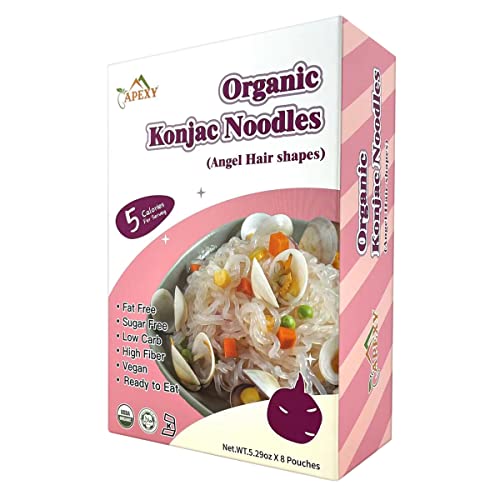
2. Apexy Organic Shirataki Konjac Noodle 8 Pouches
Eight single-serve pouches that make portion control the default instead of a decision
Eight pouches, angel hair only, and each one is sized for a single sitting. That packaging choice is the whole pitch here — you never have to weigh out a portion or guess how much is too much, which matters with a fiber this active. The noodles are 100% USDA Organic, non-GMO, gluten free, and free of soy, added sugars and carbs, so they slot into keto, paleo and vegan eating without a second thought. Total weight is 42.24 ounces at 3.35 pounds for the box.
What owners keep coming back to is the carb math — the reviewed label stories here center on carb-free and keto-friendly eating rather than flavor, because konjac delivers almost nothing on that front by design. Owners mention the noodles are “zero calories/carbs, no offensive odor, tasteless, rubbery texture.” The practical routine that works best is a cold rinse, a dry-fry in a pan with no oil, then dry seasonings stirred through — the noodles pick up the spice blend instead of sitting in a puddle.
Here is the honest part. Taste and texture both draw mixed reactions across the review page, and value gets questioned too — the portion pouches run small for the money compared with the 52USA six-pack. There is also a consistency wrinkle: one repeat buyer described a two-box order where a box arrived with off texture and taste while the other was fine. Most orders land well, but it is worth knowing the batch can drift. Still, for anyone tracking portions or living out of a lunch bag, the single-serve format is genuinely easier than measuring.
The case for the pouches: 42.24 ounces across 8 single-serve packs means no measuring, no waste, and a clean label that fits keto, paleo and vegan diets at once.
What to weigh: this box holds less total food than the 52USA pack, taste and texture land squarely in mixed-opinion territory, and quality has occasionally varied between boxes.
Suits you best when: you eat lunch away from home and want a shelf-stable pouch you can drain and dress on the spot.
Think twice if: you cook for a family or want the most ounces per order — a larger multi-shape box goes further.
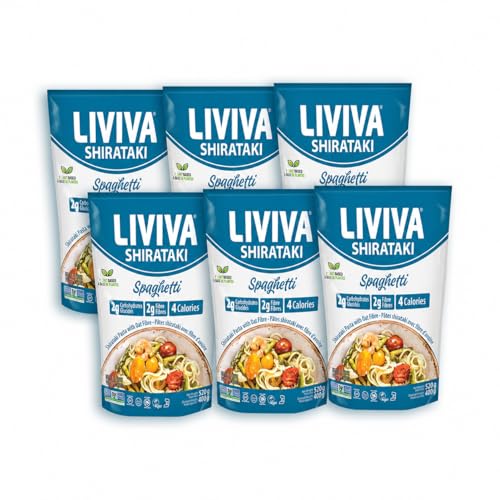
3. LIVIVA Shirataki Konjac Spaghetti Noodle 6 Pk
Spaghetti-shaped and 110 ounces deep — the one you buy when pasta night is non-negotiable
If your problem is not soup but the plate of spaghetti you keep craving, this is the shape to buy. LIVIVA ships spaghetti strands, not angel hair, and each bag holds two pouches totaling 18.34 ounces for portion control, with 110 ounces across the six-pack. The label is certified Non-GMO, Gluten Free, Keto, Vegan, Halal, Kosher, Plant-Based, Paleo and Soy Free — about as broad a diet clearance list as you will find in this category.
The label reads zero carb and 4 calories per serving, ready to serve straight from the pouch. Heat-and-serve is the entire method, which is why this pack works for a weeknight when you have five minutes and no patience. Reviewers who have tried other brands keep landing on the same comparison — one buyer put it plainly: “This is the best tasting spaghetti for shirataki.” Others note other brands are far more rubbery and carry an odd texture, and that these strands add a usable pasta element to meatballs, alfredo, or a simple butter-and-garlic pan.
The trade-offs are real but narrow. The smell out of the bag is not pleasant to everyone until you rinse, and the bite is unmistakably shirataki — a springy interior rather than a true al dente. Cost is the recurring gripe; several reviewers flag it as the one thing they would change, though that buys you 110 ounces and a certified label list nothing else here matches. If you are cooking keto and miss pasta specifically, this is the closest thing in the lineup.
Why it leads on shape: spaghetti strands plus 110 total ounces make this the pasta-night pick, and 4 calories with zero carb per serving keeps the plate honest.
One thing to expect: rinse the bagged liquid off before heating and the odor concern mostly disappears — leave it and the first whiff is off-putting.
The strongest match for: keto and gluten-free households that want a spaghetti shape and a certified Non-GMO, Kosher and Halal label.
skip it if: you want a soup noodle — angel hair packs handle broth better than a thick spaghetti strand.
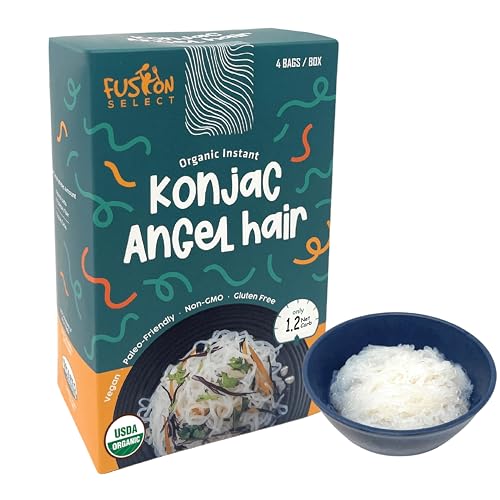
4. Fusion Select Konjac Noodles – Shirataki Angel Hair
The four-pack that lets you find out if konjac is for you before you commit to a case
Consider this the tester box. Four packs of angel hair, 7.05 ounces total, plant-based and rich in fiber, vegan, keto and paleo friendly, zero gluten and low-carb. The whole point is scale: if you have never eaten a konjac noodle and you are not sure the texture will work for you, a small four-pack is a cheaper way to find out than a six-pack you might not finish. Reviewers describe roughly 1 carb and 9 calories per bag.
The noodles themselves do what konjac does well — they taste great in broth, and owners specifically praise the soft, cooked-like texture. One buyer who eats Asian food again without the gluten-and-carb worry called them “the best konjac pasta ever.” They are shelf-stable, so no fridge space required, and they absorb whatever sauce or seasoning you introduce. A rinse of two to three minutes and a good drain is the standard prep, and they work nicely under an eggplant parm or tossed with olive oil and hot sauce.
Be clear-eyed about two things. The strand does not taste like pasta — the texture is different from regular noodles, and that takes adjustment, which even happy buyers name as the sole downside. Value is where the pack draws the most criticism: with only 7.05 ounces in the box, the cost per serving reads high next to the larger multi-shape options above, and the review page reflects that frustration. For a first taste test, the small box is a sensible spend. For a household that eats noodles weekly, the bigger packs beat it on cost per bowl.
Picks up where it should: small-batch buyers who want to confirm they like konjac before buying in bulk.
The limitation to accept: 7.05 ounces across four bags runs the cost per serving high, so this is a tasting pick rather than a pantry staple.
5. Soeos Konjac Noodles, Shirataki Noodle, 9.5oz
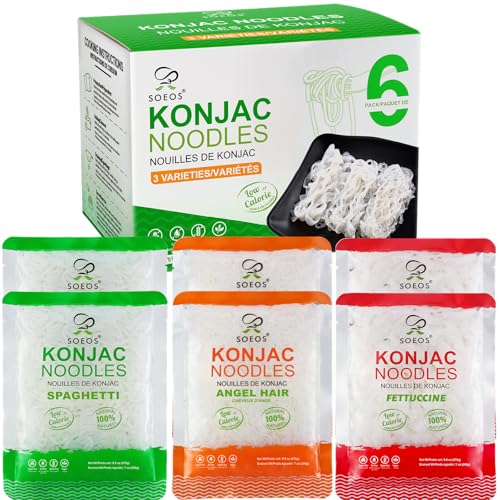
Six packs, three shapes, and a two-ingredient label that won over brand switchers
Soeos builds its case on simplicity: the noodles are made from konjac flour and water, nothing else. Six 9.5-ounce packs land at 57 total ounces across spaghetti, fettuccine and angel hair shapes, so a single order covers ramen, pad thai and lo mein territory. Owners shopping for a low-carb, low-calorie stand-in for pasta say the noodles are easy to prepare and absent the fishy smell that turns people off other brands entirely.
The switching story is the most interesting thing here. One buyer moved over from a competing brand specifically because Soeos lists only konjac flour and water, does not need refrigeration, and arrives without the smell — and says they switched brands completely. The fettuccine is described as chewy in a firm, seafood-like way that some find tolerable and others enjoy. Owners who cook them regularly recommend cutting the long strands into halves or thirds before eating, since a whole strand can be a choking risk if swallowed without chewing.
Where it differs from the 52USA pack is the bite — the strands here run softer and less chewy than some competitors, which blends better into dishes but gives up a little of that snappy quality. An occasional buyer still wishes the cost were lower, and there is no flavor at all in the noodle itself, so a flavorful sauce or broth is mandatory. If you want a minimalist label and three shapes in one box, this is a strong kitchen staple.
What the label buys you: konjac flour and water in the ingredient list, three shapes across 57 ounces, and no refrigeration required before opening.
The honest trade-off: the texture runs softer and less chewy than other konjac brands, so it absorbs sauce well but never delivers a true al dente snap.
Best served to: home cooks who want a clean two-ingredient label and fettuccine, spaghetti and angel hair all in one order.
Look past it if: you want the firmest, chewiest konjac bite available — this one leans soft.
Know the Specs
Glucomannan — the fiber behind the fullness
Glucomannan is a water-soluble fiber taken from the konjac root, and it is what separates these noodles from a plain bowl of wheat pasta. It absorbs water and expands once it reaches your stomach, so a small serving feels more filling than its size suggests. That same property is why you should start with a modest portion and chew thoroughly — a large amount eaten fast can sit uncomfortably. It is the reason konjac noodles are popular with people watching their carbohydrate intake.
Calories per serving — the real comparison
The gap between konjac and wheat pasta is the number buyers care about most. One reviewed buyer noted roughly 15 calories per 8 ounces of konjac against 400-plus for the same weight of spaghetti. LIVIVA labels its spaghetti at zero carb and 4 calories per serving; Fusion Select reviewers report about 9 calories per bag. Read the serving size on the pouch, because calories are per serving, not per box.
Shape and strand width
Angel hair is thin and best in broth, spaghetti is medium and holds a red or cream sauce, fettuccine is the widest and works for heavy stir-fries. The shape does not change the calorie math, but it changes whether the dish feels right — a thick strand in a delicate pho is a mismatch, and a thin one disappears under a heavy meat sauce.
Odor and the rinse step
Any bag smell comes from the liquid the noodles are packed in, and the fix is a cold rinse followed by a quick dry-fry in a hot pan with no oil. Brands that use calcium hydroxide in the water tend to carry more of a fishy note — one reviewed buyer specifically praised a brand for leaving it out. When a label says no odor, the rinse step is what actually delivers on that promise.
Common Questions
How many calories are in a serving of konjac noodles?
Do konjac noodles taste like regular pasta?
Why do shirataki noodles smell fishy when I open the bag?
What is the difference between angel hair, spaghetti and fettuccine konjac noodles?
Do konjac noodles need to be refrigerated?
Can you eat too many konjac noodles in one sitting?
Are konjac noodles keto friendly and gluten free?
How do I make konjac noodles taste better?
Is a six-pack or an eight-pack of konjac noodles the better buy?
Do konjac noodles replace pasta in Italian dishes?
The Bottom Line
The best Low Calorie Noodles pick for most kitchens is the 52USA USDA Organic Konjac Shirataki Noodle six-pack because it hands you 57 ounces across three shapes with a USDA Organic, sugar free, soy free label — and the taste is what keeps people reordering, since the noodles absorb whatever broth or sauce you cook them in. If your craving is specifically a plate of spaghetti, the LIVIVA Shirataki Konjac Spaghetti six-pack is the one to reach for, with zero carb and 4 calories per serving and 110 total ounces. And if you just want to find out whether konjac suits you before stocking up, the small Fusion Select four-pack is the low-commitment way in. Whichever you choose, rinse first and dry-fry before saucing — that single step is what turns a rubbery, flavorless strand into a noodle you will actually want again next week.
How we choose
We do not accept paid placement. Every pick is matched to a real buyer and a real use-case; we do not hands-on test units.
Sources
Specifications: manufacturer listings and product documentation. Review insights: verified customer reviews, as of October 2026. Pricing: not shown on this page (it changes often); check the current price via the retailer link.
As an Amazon Associate, Aappliancez earns from qualifying purchases. This does not affect which products we feature.