Disclosure: Some links in this post are affiliate links. As an Amazon Associate I earn from qualifying purchases, at no extra cost to you. Learn more
Specs are compiled from manufacturer listings and verified buyer reviews and can change over time — please confirm the key details on the product page before buying.
A long reach pruner lets you stand on solid ground and still slice through limbs overhead — no ladder, no wobbling, no risk. The trick is picking the right head for your branches: a compound-action lopper for thick wood, or a slim cut-and-hold head for fruit you don’t want bruised on the way down. This guide covers seven long reach pruners, from a 1.2 lb swivel-head trimmer to a 27-foot pole saw.
This guide is built by comparing the manufacturers’ published specifications and the patterns across verified customer reviews, so you get each pick’s real strengths and trade-offs instead of marketing spin.
Every pick below is ranked on cutting capacity, handle reach, and weight in the hand. A long reach pruner keeps your feet on the ground while the blade does the climbing.
Top Picks

How To Choose The Best Long Reach Pruner
Two numbers decide almost everything about whether a long reach pruner will work for you: cutting capacity (the widest branch the jaw can pass) and handle length (the reach from your hand to the blade). Get those two right and the rest is comfort. Get them wrong and you will be fighting the tool on every branch.
Match cutting capacity to your actual branches, not the biggest branch on the property
Cutting capacity tells you the thickest wood the head can pass in one motion. A 2-inch capacity handles most fruit-tree limbs and woody shrubs. A 1¼-inch capacity suits vines, thin ornamentals, and green stems. If your branches exceed your jaw by a wide margin, you will either need a saw blade or a different head entirely — no amount of leverage fixes an undersized cut.
Understand the difference between compound action and a plain bypass head
Compound action uses a linkage of levers to multiply the force your hands generate, so the same squeeze delivers more cutting power at the jaw. That matters on dry or hardwood branches, which fight back harder than green growth. A plain bypass head works fine on living, green wood but takes noticeably more effort on anything dead.
Weigh extension against control on any telescoping handle
Extending the handle buys you height, but it also moves the cutting head further from your hands. At full extension, extra length adds leverage and reach at the same time it adds swing and shake. Many owners find a mid-length setting is their balance for daily pruning, reserving the full stretch for that one high limb they cannot otherwise reach.
Check the blade material and coating before you buy
High carbon steel and alloy steel both hold an edge well; a low-friction coating reduces drag on wet or sappy wood. If you cut green branches often, a coated blade stays slicker longer. If you cut dry, dead wood, edge hardness matters more than slickness. A serrated or razor-tooth saw blade attached to the head handles anything the jaw cannot.
Side-by-Side Comparison
| Model | Best For | Cutting Capacity | Handle Length | Blade Material | Amazon |
|---|---|---|---|---|---|
| YRTSH Loppers Branch Cutter Heavy Duty★ Best Overall | All-round home pruning | 2 inches | 28 – 41 inches | Alloy Steel | Amazon |
| 6FT Long Reach Pruner and Fruit PickerBest for Fruit | Fruit picking and light limbs | 0.25 inches | 72 inches (6 ft) | High Carbon Steel | Amazon |
| GARTOL Heavy-Duty Extendable Loppers | Thick dry hardwood | 2 inches | 28 – 41 inches | High Carbon Steel | Amazon |
| Kings County Tools Tree Trimmer Loppers | Ratchet-free of fatigue on big limbs | 2 inches | 26 – 40 inches | Alloy Steel | Amazon |
| 7.3-27FT Extendable Long Handle Pole Saw | Very high branches | 1.25 inches (lopper head) | Up to 27 ft (multi-pole) | Alloy Steel (65 Mn saw) | Amazon |
| Corona TP 3206 SwivelCUT Long Reach Pruner | Swivel-control light trimming | 1.25 inches | 62.25 inches (5 ft 2 in) | High Carbon Steel | Amazon |
| Corona TP 6870 MAX RazorTOOTH 14-ft. Tree Pruner | Heavy orchard and tall limbs | 1.25 inches (jaw) | 14 ft (168 inches) | Alloy Steel | Amazon |
Detailed Reviews
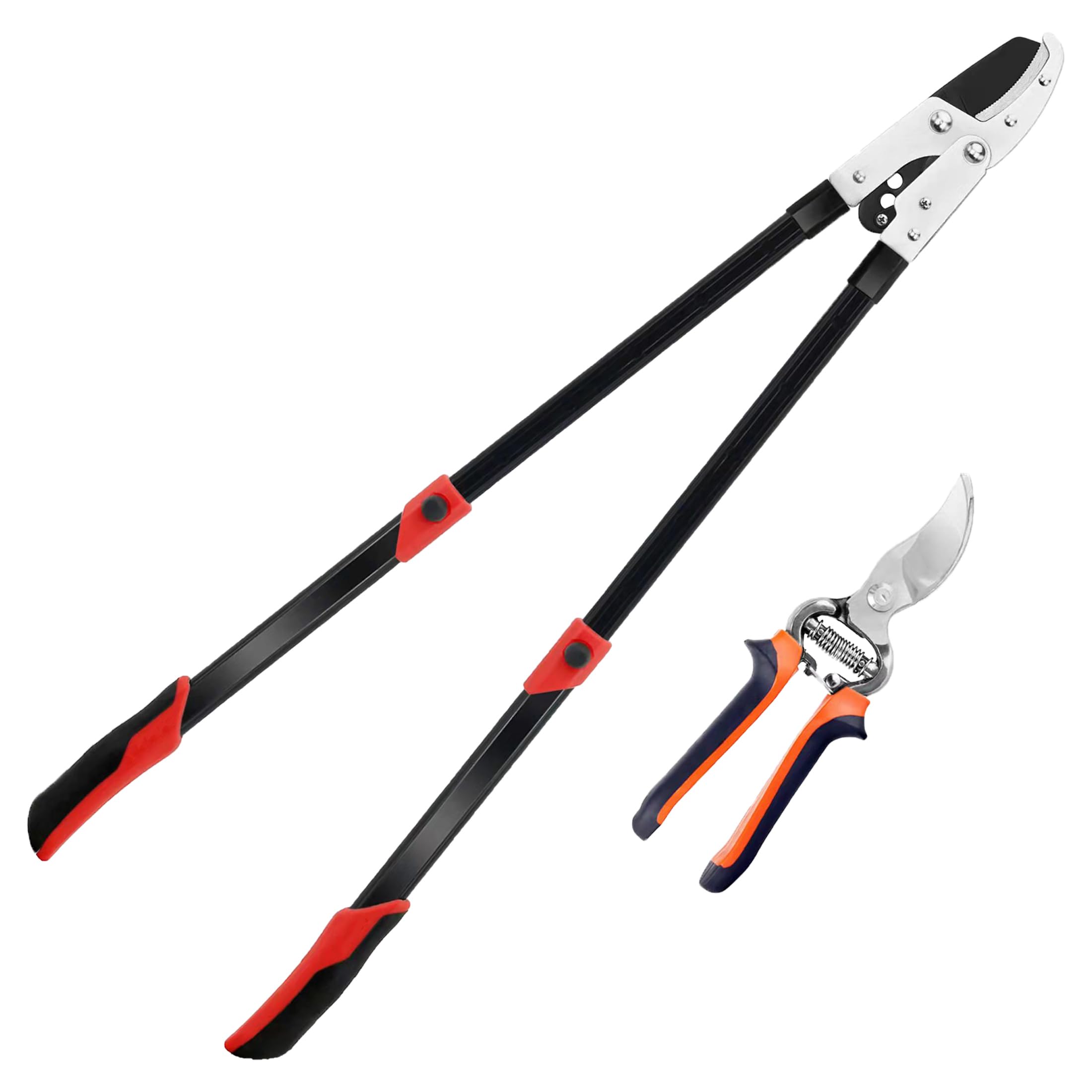
1. YRTSH Loppers Branch Cutter
Our pick — over 4.5★ from 550+ verified ratings; the strongest balance of quality and price.
A 2-inch compound cut that bites through thick wood without wearing your hands out
The compound action mechanism is the reason to start here. It uses a linkage of levers to multiply the force from your hands, so each squeeze delivers more cutting power at the jaw than a plain bypass head. On branches that fight back — dry, dead, or hardwood — that multiplication is the whole game. The blade is alloy steel with a teflon coating plus a low-friction layer, which resists sap buildup and keeps the edge working through repeated green and dry cuts alike.
Reach is handled by an aluminum handle that telescopes through 6 steps, giving you 28 to 41 inches of extension. There is now a mid-length setting for daily work and the full stretch for the one limb you cannot otherwise get to. The grip is soft rubber with a non-slip surface, so your hand stays planted even when you are reaching up and squeezing hard at the same time. Cutting width lands at 2 inches, which covers the bulk of fruit-tree limbs and woody shrubs without asking for a saw.
What wins people over most is quality and ease of use — dozens of owners single out both — with the extendable handles getting repeated praise for adding leverage on stubborn branches. In the review pages, buyers report: “The extended handles make trimming trees and bushes so much quicker without needing a ladder.” A Hawaii grower with half an acre found the jaw handled hibiscus branches the diameter of a ping pong ball without strain and the extension worked well on dry banana leaves. The honest caveat: durability sits mixed in the feedback. A handful of owners found the handles coming off over time, and on the smaller companion tool the metal locking loop can engage after just a few cuts and needs open up. Treat it as a home-use tool, not a commercial-duty daily driver.
Weigh it against the 6FT fruit picker below. That tool cuts 0.25 inches; this one cuts 2 inches. If your branches are anything thicker than a pencil, this is the head to buy.
What owners keep coming back to
- Compound action multiplies hand force for easier cuts on dry, dead wood
- Six-position telescoping handle adjusts between 28 and 41 inches
- Teflon-coated alloy steel blade resists sap and stays sharp
- Soft rubber non-slip grip keeps control at full extension
The honest trade-off
- Durability feedback is mixed — a few owners mention the handles coming loose over time
- Not built for commercial-use daily punishment
Pick this if: you want one reach pruner that handles green and dry wood, with leverage that keeps a full afternoon of pruning comfortable.
Reach for the 6FT picker instead if: your main job is harvesting fruit you don’t want bruised or reaching low cuts without bending over.
2. 6FT Long Reach Pruner
The fruit picker that grips what it cuts so nothing lands bruised on the ground
The defining feature here is cut and hold. After the blade severs a stem, plastic jaws close around it and hold the branch or fruit in place, so you can bring your harvest down safely instead of watching it drop. If you pick persimmons, lemons, or apples, that grip is what protects the skin from bruising on impact. It also means thorny bushes stay at arm’s length — you prune without your hands ever touching the prickles. That alone justifies the pick for anyone with tender fruit on the tree.
At 72 inches long and weighing only 1.43 lbs, the shaft is light enough that you can sweep it through a whole tree’s worth of cuts before your shoulder starts complaining. The head rotates 90 degrees with a simple twist, so you can line up square cuts on dense foliage without contorting your wrist. Cutting capacity sits at 0.25 inches — that is the wide-open gap the jaw will pass. This tool is for thin stems and small limbs, not the thick stuff. If you need thick-wood capacity, the YRTSH’s 2-inch jaw above is the sturdier option.
Functionality is the runaway strength here — well over a hundred buyers flag it, the single most-cited quality in the reviews — and quality trails closely behind. Weight and the grip also get steady positive notes. Customers note reaching about 8 feet and cutting branches over 3/8 of an inch, with the auto-rotating head keeping square cuts easy. One long user found the jaws gripped cut branches for one-move extraction and praised the solid rod construction over a stretch-prone cable. Two real limits deserve mention: the aluminum shaft can bend if you overload it, so store it protected and do not force it through thick wood; and the handle is not padded, which a few heavier users would have preferred.
Compare the length against the GARTOL below. This pick runs 72 inches; the GARTOL tops out at 41 inches. If most of your work is at head height, the extra span here saves a ladder; if your branches are thick and dry, the GARTOL wins.
The defining strength: a cut-and-hold head plus a 90-degree rotating blade, which together give you cleaner fruit and fewer repositioning movements per branch.
Where it stops short: a 0.25-inch cutting gap means anything thicker than a pencil is out of reach for the jaw — the shaft will bend before the blade will bite.
Built for: fruit growers and gardeners who want to reach high and low without an empty-handed drop or a ladder underfoot.
Look elsewhere if: you need to fell thick, dry limbs — you want the heavier lopper jaw, not this slim fruit head.
3. GARTOL Extendable Loppers
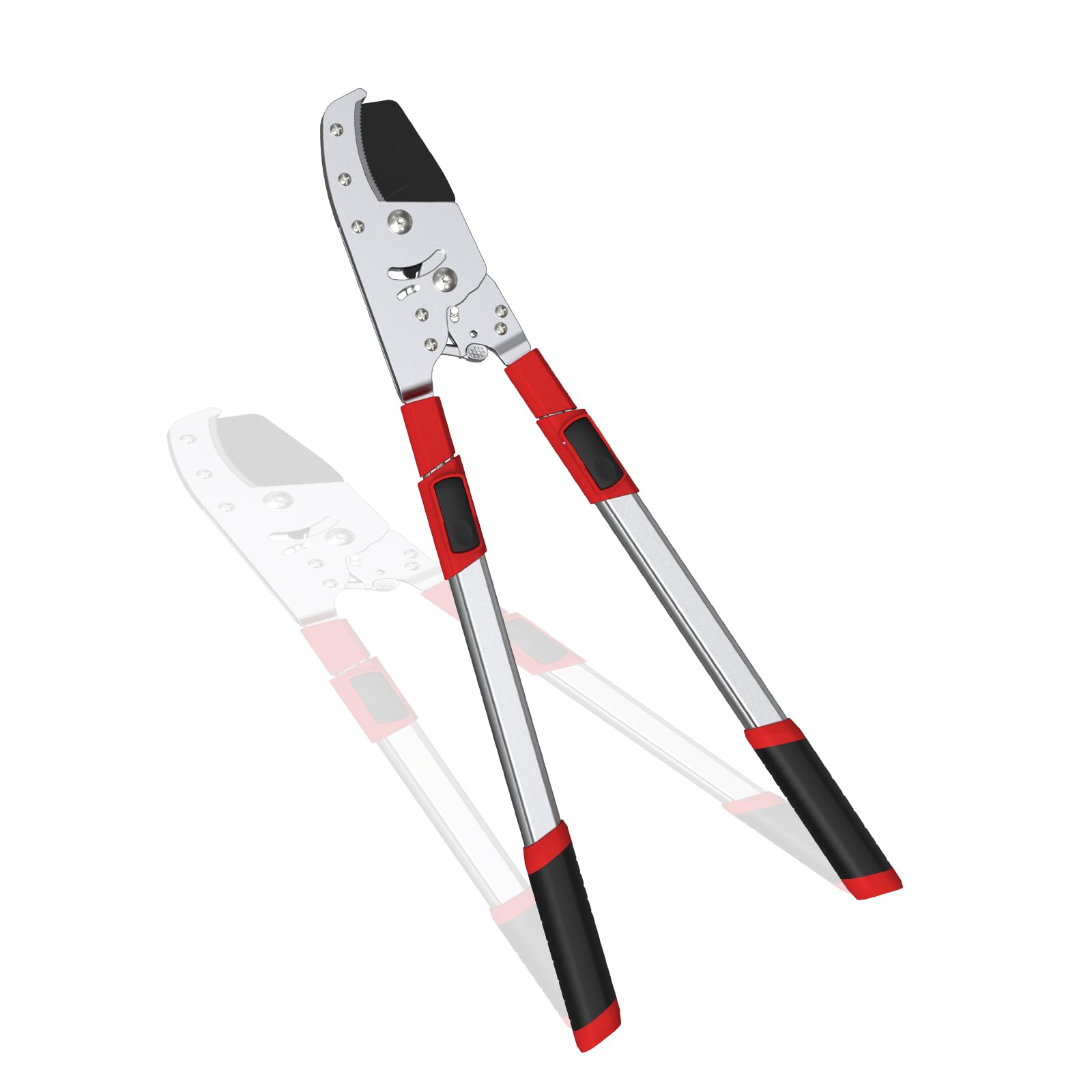
A four-step ratchet that lets you chew through hardwood one squeeze at a time
This is the pick to reach for when the wood is dry, hard, and unwilling. A four-gear ratchet mechanism breaks the cut into stages, so you do not have to close the handles all the way in one motion against a stiff branch. Each squeeze ratchets you one step deeper into the cut until the wood gives. That is the mechanism that makes dry hardwood and dense, dead vegetation manageable without a hand-sapping battle on every limb.
The blade measures 3.14 inches long and is cut from heat-treated high-carbon steel for extra hardness — a full 57% more blade length than the 6FT fruit picker’s 2-inch blade, which means more cutting edge riding in the wood on every stroke. The anvil-style head pairs with the ratchet to deliver clean cuts on hard or dead wood. Cutting capacity is listed as 2 inches, though the maker describes the jaw handling 2 to 2.5 inches on the toughest limbs. Handle length telescopes from 28 to 41 inches, and the aluminum handle with TPR-sleeved grips keeps things steady during prolonged use.
Effectiveness is what drives the recommendation — 142 owners flag it and value for money follows behind at 76, with cutting performance and ease of use close together. Reviewers point out the extension adding real leverage on thick limbs and making the high ones reachable. One home user cleared an overgrown rental property with it. A 90-acre woods-and-fields worker credited it with a real jump in work output. The honest trade-off: durability feedback is mixed, and one user watched the green plastic show stress after two days of heavy use — the tool is a homeowner’s tool, not a commercial one. A fractured blade landed on one buyer’s small branch, but GARTOL’s customer care stepped in with replacement blades, which is worth knowing if something does go wrong.
Compared with the Kings County loppers below, this pick carries the same 2-inch cutting capacity with a longer 3.14-inch blade, and both are comparable in reach. Where this one pulls ahead is the ratchet, which is the difference between comfortably cutting hardwood and working for it.
What the ratchet buys you: a four-stage cut that spreads the effort over several squeezes instead of one hard squeeze, so dry hardwood becomes a steady job rather than a strain.
The context to hold onto: the green plastic components do not hold up to sustained commercial use, and a fractured blade has happened — homeowner duty, not professional daily line work.
Best fit for: anyone with thick, dry hardwood limbs who wants the leverage of a ratchet to keep hand fatigue down through a long pruning session.
Think twice if: your branches are mostly thin green stems — the ratchet is more power than a slim stem ever needs.
4. Kings County Tools Tree Trimmer Loppers
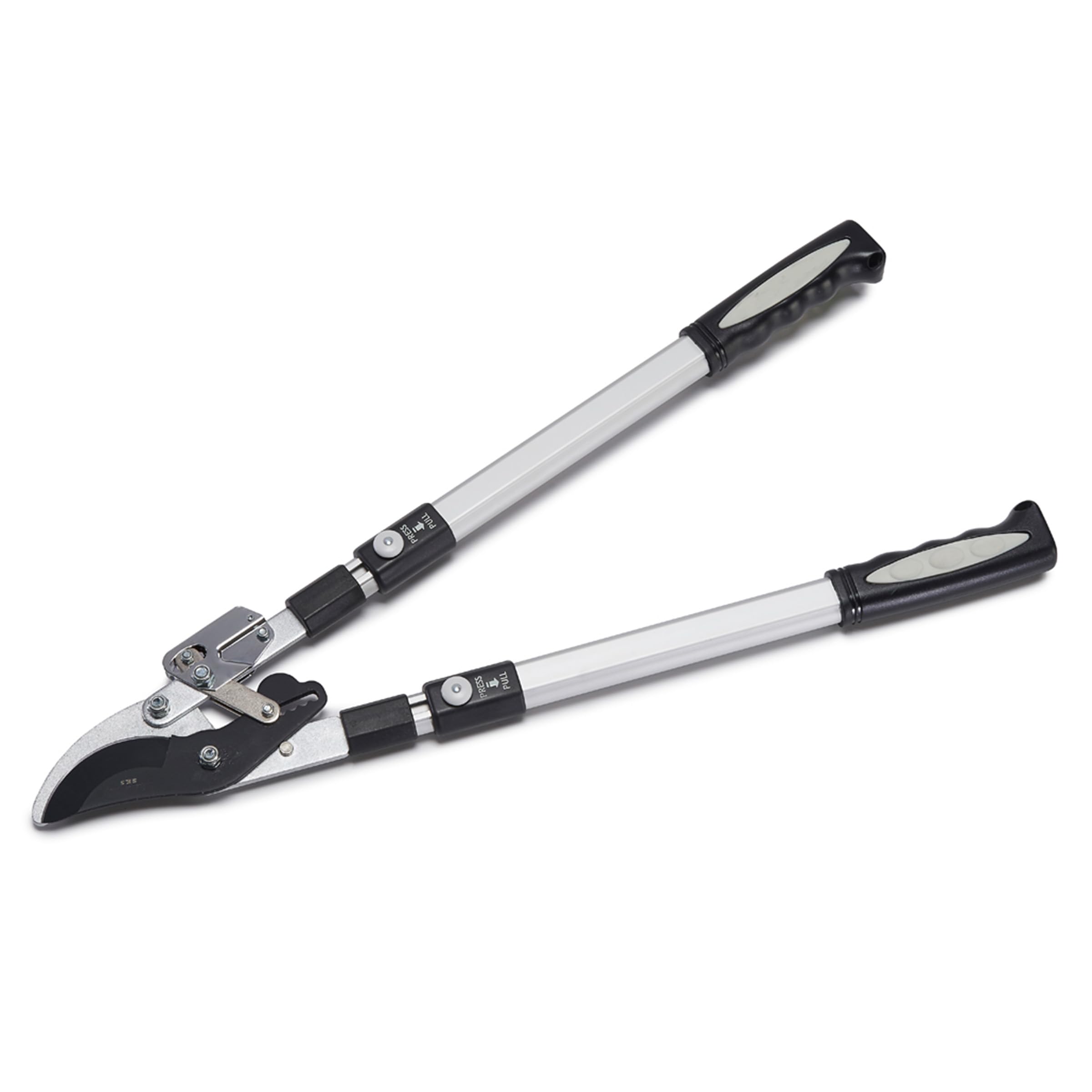
Bypass blades built for living green wood, plus a ratchet that adds power on the thick limbs
Bypass heads are designed for wet, living wood — the kind of cut you make on growing branches rather than deadwood. The blade slices past the jaw instead of pressing against it, which leaves a cleaner face on green limbs and encourages the plant to heal. Cutting capacity is 2 inches, so small branches and tree limbs fall well within range. The double ratcheting mechanism rides on top of that, adding measurable torque so you do not have to force the handles closed on the harder cuts of the day.
The telescoping handle extends from 26 to 40 inches with six pin-locked position stops, which means the length holds where you set it — no slipping mid-cut. Rubber grips lock onto the shaft for cushioning on long sessions. The whole tool comes in at 3.99 lbs, which is on the heavier end for this category; that weight is doing some of the work for you on the thick limbs, but it is something to notice if you plan to work overhead for extended stretches.
What the owners praise most is ease of use, followed by sharpness — the ratcheting action gets repeated credit for adding cutting power without forcing the handles wide open, which makes tight spaces under branches much more workable. One buyer who switched from a Craftsman appreciated that the extensions lock securely and adjust quickly. Both the ratchet and the length deliver clean cuts, and the included replacement blades mean a dull edge is a fix rather than a new purchase. The trade-off is a real one: the heavier blades can throw the balance off when the tool is held overhead, so this tool feels best on lower or forward-facing cuts than fully extended above your head.
Beside the GARTOL above, this pick has the same 2-inch capacity but a shorter 3.14-inch blade comparison is not the story — the real difference is the head type. Where the GARTOL is anvil for dry wood, this is bypass for green wood. If your work is living branches, that matters more than any other spec.
The strength to buy for: bypass blades plus a ratchet put a clean face on living branches without stressing the plant, and the pin-locked handle stops keep the length set where you put it.
The real cost of the design: at nearly four pounds with heavy blades, the balance leans forward when the tool is fully extended overhead — plan the higher cuts for a folded position.
Suits: green-wood pruners who want a bypass head to leave clean cuts on living branches, with ratcheting power for the thicker limbs.
Consider a lighter pick if: you spend most of your pruning time fully extended overhead — the blade weight shifts the balance in that position.
5. Extendable Long Handle Pole Saw

A seven-pole assembly that stretches to twenty-seven feet with a saw and a lopper head
Nothing else on this list comes close on reach. Seven epoxy resin poles join with aluminum alloy couplings to reach roughly 27 feet, so a branch two stories up is a tool job, not a ladder job. The saw blade is alloy steel with 65 Mn and cuts heavier wood than any lopper jaw, while the included branch scissors head handles the smaller work where reach matters more than raw cutting force. Two swappable heads plus an extra saw blade mean one tool covers a wider range of branch sizes than a single-purpose lopper.
The pulley system on the lopper head changes the direction of your pull, which spreads the effort and makes reaching cuts easier on the arms. The saw adds a hook knife on the point and end for snapping twigs cleanly. The whole kit packs into a carry bag when the work is done. Here is the honest limitation, laid out plainly: at the full 27-foot setting, weight reaches the listed 9.5 lb for the seven poles plus a head — everyone using it says the same thing — that it feels heavy and awkward up top and requires genuine strength to control. A 20-foot setting using 6 poles is the recommended working length. A back-support belt is worth considering for long sessions.
Quality and functionality are what owners single out most — well over two hundred flag each, putting both at the top — with value for money following behind. What comes through is that buyers see it as a way to avoid the arborist bill, especially for property owners with many trees. One reported the saw handling a 6-inch dead seasoned oak limb. Another appreciated the extra saw blade being included. A third noted the black main blade cut quickly, and that the epoxy resin is non-conductive — a small thoughtful detail when you are reaching into a canopy near power lines. A few users did find the heads twist slightly loose during use, so tightening them before you start is worth doing as a habit.
Against the 6FT fruit picker above, the difference is scale. That pick tops out at 72 inches; this one reaches 27 feet. If your branches are anywhere near roofline height, only this pick gets you there from the ground.
Where it earns the premium spot
- Reaches roughly 27 feet with seven connected poles
- Two swappable heads — a lopper and a saw — cover more branch sizes
- Epoxy resin poles are non-conductive; safer near power lines than metal
- Packs into an included carry bag; extra saw blade included
What you’re signing up for
- At full extension, the assembly feels heavy and awkward — a 20-foot setting using 6 poles is easier to control
- Back support is recommended for long trimming sessions
- A few users report the head couplings twisting slightly loose during use
Best for: property owners with tall trees who want to cut high branches from the ground without hiring help or climbing.
Skip if: your branches are all within arm’s reach after a short extension — the top-end reach is a lot of tool to manage on tree work a shorter pick handles easily.
6. Corona TP 3206 SwivelCUT Long Reach Pruner

A one-point-two-pound pole with a head that tilts and swivels to hit branches at any angle
This is the lightest pruner on the list at just 1.2 lbs, which completely changes the feel of working overhead. Your arm controls the aim instead of fighting the tool’s weight. Combined with the head that rotates, tilts, and swivels through a 360-degree cutting action, you can line up the jaws on an awkward angle without contorting your body to make the cut — which is what the swivel head is really for. The oval end grip with a rubber over-mold adds a little extra reach while keeping your hand anchored. The Powerglide comfort grip routes the rope so it does not tangle during the pull.
The reach is a fixed 62.25 inches — 5 feet 2 inches — and it does not telescope, so the length is what it is. Cutting capacity is 1.25 inches; the jaw handles most garden stems and small limbs. On the very thick stuff, one buyer found that anything over a half-inch really wants a lopper or saw rather than this head. That is an honest limit worth knowing: this tool is for light trimming, not for felling limbs. The fixed length is also a choice some owners prefer — no mechanism to wear, and the weight stays predictable from the first cut.
Effectiveness and versatility are what buyers come back to — 92 and 48 owners flag each — with reach following close behind. The recurring theme in the reviews is precision: one user found the swivel head meant first-try cuts on branches hidden among foliage, which is the whole reason a swivel head exists. Others found it perfect for safely trimming poison ivy and thorny hedges without getting close to the plant. It handles Oleanders and tall Junipers well. The honest limitation is split feedback on durability, ease of use, and cutting performance. A handful of users found the handle awkward at first, and one noted the pull string makes the longest reaches harder to manage than the sliding handle. The head’s thin blade is smooth on light work but does not reach the 1.25-inch rating on wood any thicker than about a half-inch.
Beside the Corona 14-ft pruner below, this is the compact specialist. That one reaches 14 feet with a 13-inch saw blade; this one is a lightweight 5-foot-2-inch trimmer for precision work at the middle heights. Pick this for aim; pick that for height.
The weight story: at 1.2 lbs, this is the lightest tool here — light enough to aim carefully for as long as your arm can hold a small pole, which is a real difference on long sessions.
Where the capacity ends: in practice, cuts above roughly a half-inch thick are better handled by a lopper or a saw — think of this as a precision trimmer, not a limb cutter.
For you if: you want a light, maneuverable tool for precision cuts on vines, hedges, and thin branches that are awkward to reach around foliage.
Not the pick if: you need to cut branches thicker than about half an inch — this head wants a companion lopper or saw for that job.
7. Corona TP 6870 Tree Pruner
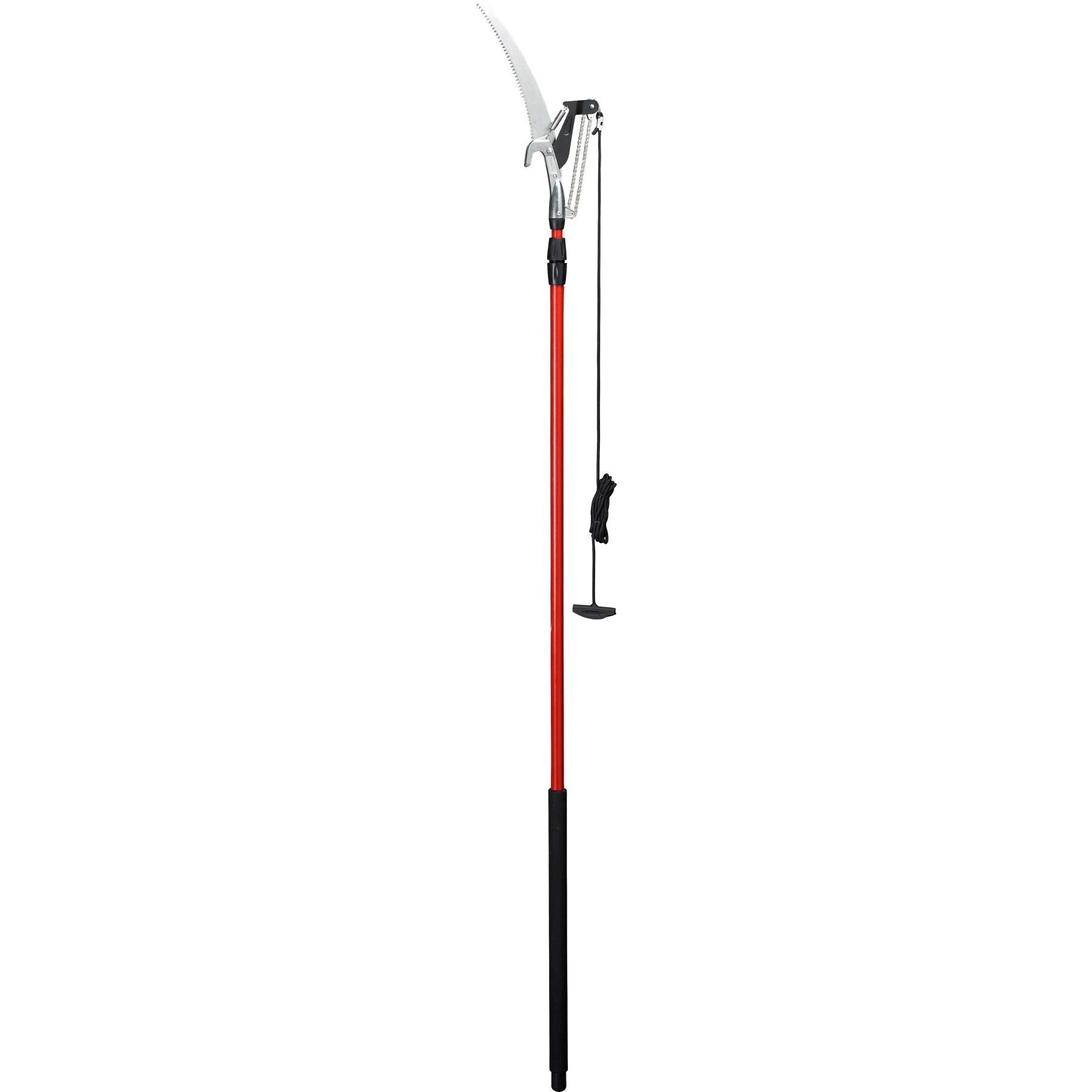
A fourteen-foot compound pruner with a thirteen-inch razor-tooth saw for orchard-scale cutting
This is a heavy-duty orchard tool. A 14-foot fiberglass pole gets your cutting head to the high canopy without a ladder, and the DualCOMPOUND action head multiplies your pull for the cutting power to make it count. The 13-inch curved razor-tooth saw blade handles the large branches the pruner jaw cannot, so one tool covers both the pruning cut and the bigger limb. A 24-inch foam grip cushions the pole where your hands sit through a long session. The whole assembly weighs 6.6 lbs, so the tool has enough mass to feel planted when you are reaching high — a trade-off that brings real cutting authority in exchange for a bit of swing weight.
The Powerglide rope-pull system routes the cord so pulls stay direct, and the compound head responds to a fast, confident stroke rather than a slow haul. On a full 14-foot extension, the pole holds up to the reach without fight, and the compound action lets you cut through tougher limbs with less hand force than a single-lever head would demand. If your cutting is dry, hard orchard wood, this is the tool for the job — the saw handles the big limbs and the head handles the rest, so you never have to switch tools mid-cut.
Quality is the clear winner in the reviews — 165 buyers flag it, with sharpness following close behind at 86. Shoppers say the saw and trimmer blades cutting palm fronds easily over weeks of use, and one reviewer noted it beats both a handsaw from a ladder and a chainsaw from a step ladder for the branches it handles. The phrase that sums up the appeal is simpler than any spec: this replaces the ladder. The honest notes are worth knowing before you buy. The stock cutting spring and rope clip feel undersized, and both have been upgraded by owners who wanted stronger replacements — the manufacturer could reasonably improve both. And jamming shows up as a genuine negative in the feedback at 36 mentions, so the rope-and-pulley system benefits from careful, direct pulls rather than sideways tugs.
Compared with the 27-foot pole saw above, this pick reaches 14 feet — half the height — but with a fiberglass pole and a 13-inch saw blade that together deliver cleaner, more controlled cuts in the mid-heights and lower canopy. Pick this one when 14 feet covers your trees and control matters more than maximum span.
Orchard-scale strengths
- 14-foot fiberglass pole reaches the high canopy without a ladder
- DualCOMPOUND action head multiplies pull power for tougher limbs
- 13-inch curved razor-tooth saw handles large branches the jaw cannot
- Limited lifetime warranty on the tool
Where it asks more of you
- Stock cutting spring and rope clip are undersized; owners upgrade them
- The rope-pulley system can jam if pulls are not kept straight
- At 6.6 lbs with a heavy head, this tool asks for deliberate body positioning
Choose this when: you have a real orchard or a tall tree canopy and want one tool that cuts mid-size limbs and big branches without a ladder.
Weigh something lighter if: your tree work is mostly ornamental and light — a 6.6-pound pole is more reach and heft than small ornamentals need.
Know the Specs
Cutting Capacity
Cutting capacity is the widest branch the jaw can pass in a single cut, and it is the single spec to check before anything else. A 2-inch capacity handles fruit-tree limbs and woody shrubs. A 1¼-inch jaw suits vines, thin ornamentals, and green stems. A 0.25-inch jaw is a fruit-picking head — thin stems only. Always match capacity to your average branch, not the biggest one on the property. If your branches are consistently thicker than the jaw, you need a saw head, not more leverage.
Handle Length and Extension
Handle length tells you where your hands sit relative to the blade, and extension range tells you how much height you can buy back from the ground. Shorter handles — 26 to 41 inches — are for want-height work where maneuverability matters more than raw reach. Longer poles, from 14 feet up to 27 feet, are for the tall canopy. At the longest setting, longer handles add reach and leverage at the cost of control. Most owners find a mid-length setting is their daily balance.
Blade Type and Material
Bypass blades slice past the jaw and leave a clean cut on living, green wood. Anvil blades press against a flat plate and work better on dry, dead, or hardwood branches. High carbon steel and alloy steel both hold their edge well; a low-friction coating reduces drag on wet or sappy cuts. A serrated or razor-tooth saw blade on the head covers the branches the jaw cannot pass.
Weight and Handle Grip
Weight in the hand decides whether a long-reach tool is comfortable or exhausting. A 1.2-pound pruner is light enough to aim carefully overhead; a 6.6-pound pruner with a heavy head asks for deliberate positioning. Rubber and TPR-sleeved grips cushion the hands on long sessions and keep the handle planted when you squeeze hard at full extension. Back support is worth considering for very long pole lengths.
Common Questions
What is the difference between a compound action pruner and a plain bypass pruner?
Can I cut a 2-inch branch with a long reach pruner?
How tall do I need my long reach pruner to be for a 14-foot tree?
What does the cut and hold feature do on a fruit picker pruner?
How long do the blades stay sharp on a long reach pruner?
Is a pole saw or a long reach lopper better for high branches?
Will a long reach pruner work on a ladder?
How much does the weight of a long reach pruner affect daily use?
Do I need a bypass or anvil head for green wood?
Can a long reach pruner cut big branches like an orchard pruner?
The Bottom Line
For most people, the long reach pruner to buy is the YRTSH Loppers Branch Cutter Heavy Duty, because its compound-action head delivers real cutting power on dry and green wood, its 2-inch capacity covers most tree limbs, and its 28-41 inch handle adjustment handles everything from ground-level to shoulder height. Its 2-inch jaw and 28-41 inch telescoping handle cover both green and dry wood, so one tool handles most home pruning.
If your main work is high branches on tall trees, the 7.3-27FT Extendable Long Handle Pole Saw — the only tool here that reaches past 14 feet. And for fruit picking specifically, where you need to bring the harvest down without bruising it, the 6FT Long Reach Pruner and Fruit Picker with its cut-and-hold jaws is the pick that fits the job. Match cutting capacity to your branch diameter and handle length to your tree height, and you can leave the ladder in the shed.
How we choose
We do not accept paid placement. Every pick is matched to a real buyer and a real use-case; we do not hands-on test units.
Sources
Specifications: manufacturer listings and product documentation. Review insights: verified customer reviews, as of October 2026. Pricing: not shown on this page (it changes often); check the current price via the retailer link.
As an Amazon Associate, Aappliancez earns from qualifying purchases. This does not affect which products we feature.