Disclosure: Some links in this post are affiliate links. As an Amazon Associate I earn from qualifying purchases, at no extra cost to you. Learn more
Specs are compiled from manufacturer listings and verified buyer reviews and can change over time — please confirm the key details on the product page before buying.
If your calves ache by mid-afternoon and spider veins are starting to show, the fix is usually not a stronger sock — it is the right pressure rating for your day. This guide lines up five leg compression sleeves for varicose veins and explains, in plain words, which ones hold pressure all day and which ones fight you every time you pull them on. You will see the exact compression level of each pick, what body it fits, and the honest catch before you buy.
This guide is built by comparing the manufacturers’ published specifications and the patterns across verified customer reviews, so you get each pick’s real strengths and trade-offs instead of marketing spin.
You will learn why a 20-30 mmHg rating behaves nothing like a 15-20 mmHg one, and how thigh-high versus full-leg styles change where the squeeze lands. Every pick below is a real product with real buyer feedback, so you can match one to your own legs and routine by the end of this read on the leg compression sleeves for varicose veins.
Top Picks
How To Choose The Best Leg Compression Sleeves for Varicose Veins
The first thing to get right is the pressure rating, written in mmHg (millimetres of mercury — the standard unit for how hard a stocking squeezes your leg). Buy too light and the squeeze does nothing for a heavy, aching leg. Buy too firm and you will fight the fabric every morning. Most people shopping for varicose veins live in the 15-20 mmHg to 20-30 mmHg range, so that is where the real decision sits.
Match the mmHg to your leg, not the label
If you want a light, steady squeeze for tired legs and long travel days, pick a 15-20 mmHg stocking (mmHg is the pressure rating). A 20-30 mmHg sleeve is the firmer medical range, and it feels noticeably tighter the moment you pull it on. Both ratings rely on graduated compression: the fabric is firmest at the ankle and loosens as it climbs up the leg, so blood gets a gentle push back toward the heart instead of pooling in the calf.
Thigh-high, full-leg, or footless
Thigh-high sleeves stop above the knee and cover the thigh, which suits post-procedure wear and larger calves. Full-leg sleeves run thigh to ankle with no foot, so your toes stay free and shoes stay normal. Footless pantyhose styles climb all the way to the waist and hide under jeans. Think about where your swelling sits — calf only, or thigh too — and pick the length to match.
Measure before you order
Almost every fit complaint in this category starts with an unmeasured order. Wrap a soft tape around your ankle, your calf at the widest point, and your thigh, then compare to the brand’s own chart. If you land between sizes, read the reviews for that brand’s habit — some run snug, some run long — because a sleeve that is too long bunches behind the knee and slips.
Side-by-Side Comparison
| Model | Best For | Compression | Style | Foot | Amazon |
|---|---|---|---|---|---|
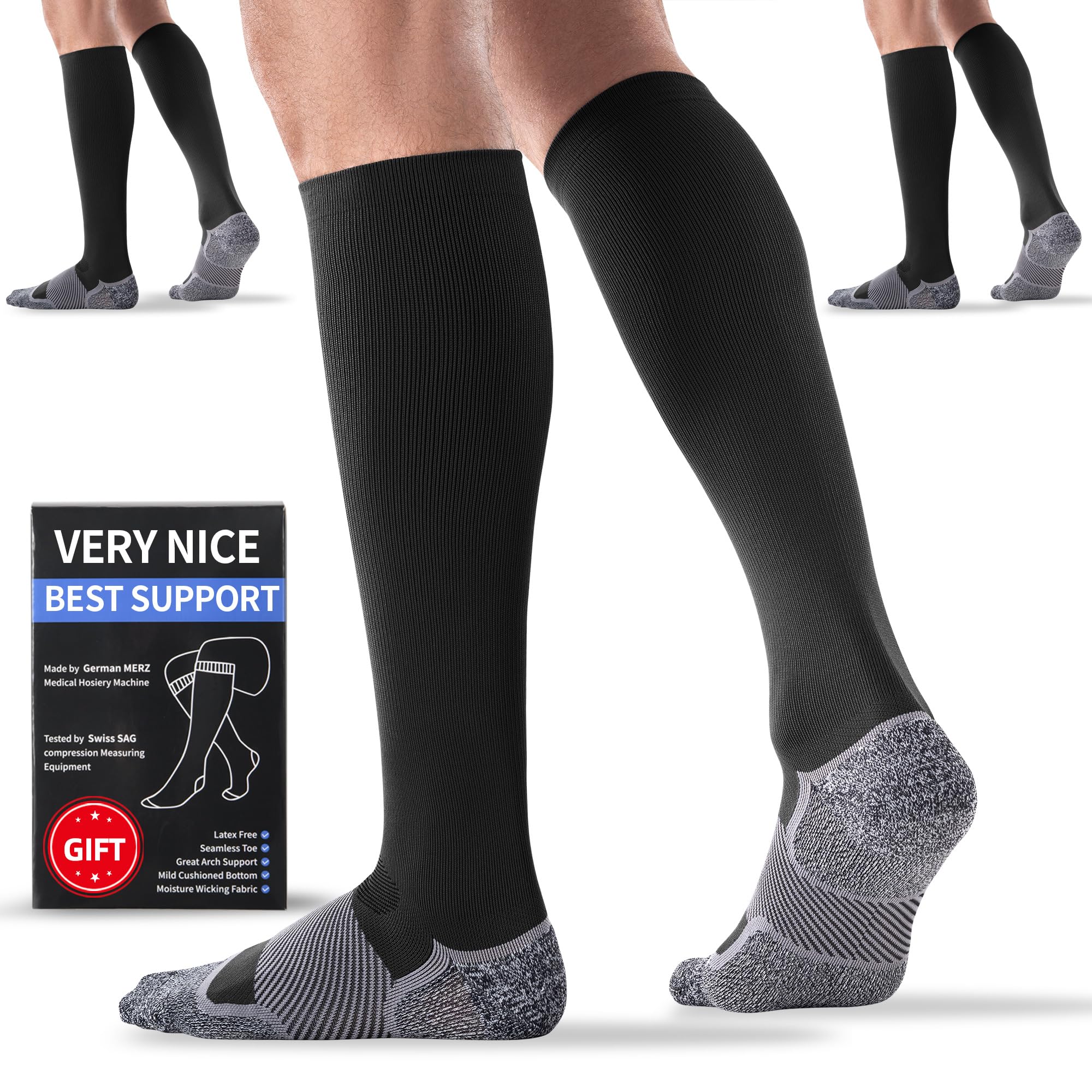
| Medical Compression Socks 20-30 mmHg (3 Pairs)★ Best Overall | All-day wear and long shifts | 20-30 mmHg | Knee-high socks | Closed toe | Amazon |
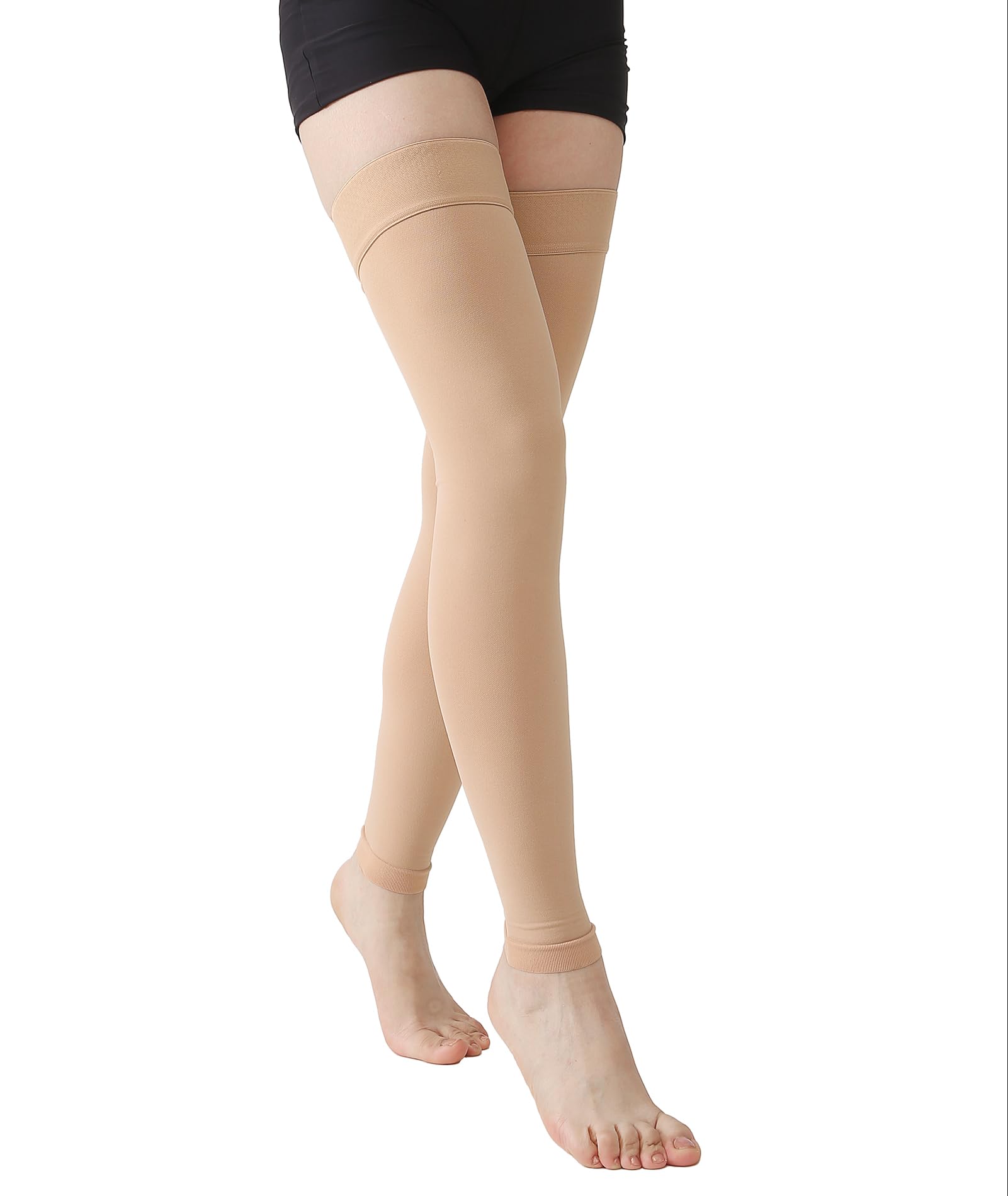
| MGANG 20-30mmHg Thigh High Compression SleevesBest Thigh Coverage | Post-procedure thigh coverage | 20-30 mmHg | Thigh-high sleeve | Footless | Amazon |
| beister 15-20 mmHg Medical Compression Stockings | Lighter daytime support | 15-20 mmHg | Thigh-high stocking | Closed toe | Amazon |
| KEKING Full Leg Compression Sleeves | Sports and full-leg support | 20-30 mmHg | Full-leg sleeve | Footless | Amazon |
| 15-20mmHg Compression Pantyhose (2 Pairs) | Discreet wear under clothes | 15-20 mmHg | Waist-high pantyhose | Footless | Amazon |
Detailed Reviews
1. Medical Compression Socks 20-30 mmHg for Men Women (3 Pairs)
Our pick — 4.5+★ from 950+ verified ratings; the strongest balance of quality and price.
Three pairs of firm 20-30 mmHg socks that owners pull on for eleven-hour shifts and forget about.
Here is the pick that fits most people chasing varicose-vein support through a working day. The 20-30 mmHg pressure gives you the firm medical range, so your calf feels held rather than merely hugged. What wins people over is the build: the fabric and stitching are what get praised most, with the quality of the knit holding its shape and squeeze wash after wash. The padded toe and heel sit comfortably inside regular shoes, and the top band stays put without digging in.
This sleeve earns its keep for all-day wear. The graduated squeeze is firmest at the ankle and eases up the leg, and owners reliably report it does not bunch or slide once it is on — one noted the socks were still in place after more than eleven hours. The sizing chart is accurate when you actually measure; a buyer with a women’s 10.5 shoe and 14.5-inch calves landed the S/M and found it spot on. This is the crowd favorite of the group, sitting at 4.5+ stars across 900+ ratings.
The catch is the very thing that makes it work: firm compression takes patience to pull on. For a frail or elderly wearer the sock can be a real struggle, and one trick owners pass around is to slide a hand inside from the top down to the ankle and loosen the toe first. If getting a sock over your foot is hard on your hands, this is the honest limit — not the squeeze itself.
What buyers keep coming back for
- Firm 20-30 mmHg squeeze in a comfortable, wearable all-day range
- Quality knit keeps its compression and shape through repeated washing
- Three pairs in the pack, so you always have a fresh one ready
- Padded toe and heel sit fine inside normal shoes, with a smooth toe
The honest trade-off
- Tight fit means these take real effort to pull on and peel off
- Frail or elderly wearers often need help getting them on
- Only a handful of colours and patterns to choose from
Go for these if: you want firm, reliable medical-range pressure for standing, sitting, travel, or post-procedure days, and a three-pack keeps you covered.
Think twice if: your hands or shoulders struggle with tight hosiery — the compression is genuine and demands a firm pull.
2. MGANG 20-30mmHg Thigh High Compression Sleeves
Thigh-high coverage with the feet left free — built for legs that need firm pressure above the knee too.
If your swelling or vein issues sit high on the leg, a knee-high sock stops short. The MGANG reaches up the thigh at 20-30 mmHg, and it does so with the feet open, so you keep full toe movement and wear whatever shoes you like. That footless cut is also why it suits recovery: it delivers the firm squeeze right where a varicose-vein procedure leaves you needing it, without squashing your foot. The silicone dot band at the top is designed to hold the sleeve in place.
The compression range here is the same 20-30 mmHg you get on the top pick, but the coverage is broader — it climbs all the way up the thigh rather than stopping at the calf. Compare that to the beister below, which runs at a gentler 15-20 mmHg; the MGANG sits on the firmer side of the pair. The fabric is a 72% nylon, 28% spandex knit with a soft, air-covered yarn, so it feels smooth against the skin instead of itchy.
Now the honest part: thigh-high fit is fussier than a sock, and this is where buyers split. The band can run tight enough that some find it pinches, and the sleeve can slide down the thigh as the day goes on — taller wearers have found it long enough to bunch. One pair arrived with the two legs feeling different, one fitting and the other far too tight. Order by your thigh measurement, size down if you are between sizes, and treat the band as the fit point to watch.
What it does well: delivers firm 20-30 mmHg graduated pressure over the full thigh with the feet left free, and stays smooth and non-itchy on the skin.
Where it needs care: the top band is the make-or-break — sizing by your thigh and expecting a snug hold keeps it from slipping.
Reach for it if: your vein or swelling concerns run above the knee and you want footless thigh-high coverage at medical-grade pressure.
Look elsewhere if: you want a set-and-forget sock — thigh-highs demand the right thigh measurement to stay up.
3. beister 15-20 mmHg Medical Compression Stockings

A gentler 15-20 mmHg thigh-high that eases on easier than firm medical stockings — ideal for a first pair.
Some legs do not want a hard squeeze. The beister sits at 15-20 mmHg, the lighter range, and that lower pressure is exactly why it feels less punishing to put on than the firm picks. The fabric is 80% nylon, 15% spandex, and 5% silicone, with a wide cuff and silicone dot band meant to keep it in place up the thigh. It closes over the toe, adds a little foot support, and the smooth, breathable knit is what earns it praise — the quality of the finish and the comfort of the yarn are the standouts.
Picture someone back on their feet after knee surgery who needs a stocking for a few weeks. The hospital-issue one was short and rough; a thigh-high like this fits snugly and gets on far more easily. The closed toe and graduated squeeze are designed for exactly that stretch of recovery. At 4.0+ stars across 190+ ratings, it is a solid lighter-pressure choice for someone easing into compression.
Be clear about the trade-off, though. The gentler 15-20 mmHg means less squeeze than the 20-30 mmHg picks, so if you want firm medical pressure this is not it. Fit is also the risk: taller wearers can find the thigh length long enough to bunch behind the knee, and the band may slide under trousers over a long shift. Measure your thigh and calf, and if you sit between sizes, think about if you want the lighter hold at all.
Best for: first-time compression wearers and lighter-support days who want an easier-on thigh-high with a closed toe.
skip it if: you need firm 20-30 mmHg pressure — this sits a full range gentler by design.
4. KEKING Full Leg Compression Sleeves, 20-30mmHg Graduated

One continuous sleeve from thigh to ankle — firm pressure that stays on through squats, sprints, and long days.
The KEKING covers the whole leg in a single piece, running from the thigh down to just above the ankle, and it does it at a firm 20-30 mmHg. The 360-degree fit wraps the leg all the way round, and the 3D knitted fabric is light and breathable with silicone dots to hold position. The sweat-wicking knit is built to keep the knee and calf dry, which matters if you are moving rather than sitting.
This one shines for people who treat their legs hard. The firm graduated squeeze — tightest at the ankle, easing upward — is what owners credit for easing swelling and tired legs, and the full-leg length earned its own praise for covering thigh to just above the ankle in one go. The stay-up performance is the split point: plenty find it holds through a full gym session of lunges and squats, while others see it roll down during heavy movement. At 4.0+ stars across 900+ ratings, it is the most-reviewed firm option here.
The trade-off is the fabric’s thinness. It keeps things light and breathable, but a fall or rough contact can tear it, and it wants gentle washing and air drying to last. The fit runs snug by design — that is the point of compression — so work to the size chart rather than guessing. If you want a full-leg sleeve for gym sessions and long active days, this is a strong fit.
Why active wearers like it
- One sleeve covers thigh to just above the ankle at firm 20-30 mmHg
- Light, breathable 3D knit with sweat-wicking fabric
- Silicone dots help it hold position during movement
- Full 360-degree wrap hugs the whole leg
Where it asks more of you
- Thin fabric can tear on falls or rough contact
- Some see the top edge roll down under hard movement
- Snug fit means sizing matters — measure first
Pick it for: sports, gym sessions, and full-leg support where you want firm 20-30 mmHg and free toes.
Bear in mind: the light knit rewards gentle care and may not survive heavy scrapes — treat it kindly.
5. 15-20mmHg Compression Pantyhose Stockings, 2 Pairs

Waist-high compression that hides under jeans and leggings — light 15-20 mmHg support for a full day out.
When you want compression without anyone seeing it, this is the pair. The pantyhose style climbs to the waist with a high-waist design, so the band stays under your clothes and does not bulge through trousers. It runs at 15-20 mmHg, the lighter range, giving a steady squeeze from ankle to calf. The 80% nylon, 20% spandex fabric is thicker than a standard tight, and the footless cut lets you wear any shoe you like.
The people who love these are the ones who need light support through long travel or standing days and want it invisible. Over weeks of travel and washes, they reportedly held up, and the high waist was preferred for staying put without rolling down. Material quality and comfort get noticed too — the thicker knit feels more substantial than typical hosiery. There are two pairs in the pack, so one can be on while the other is washed.
The catch is twofold. That high waist reaches near the belly button and can feel tight when you sit for hours or after a big meal — some wanted the same leg squeeze without the abdominal pressure. And the fabric, while substantial, snags easily, so keep it away from rough surfaces and expect careful handling. If your priority is firm 20-30 mmHg compression or tough durability, this is not the pair for that.
What makes it work: a waist-high, footless design that stays hidden under clothes and holds position without rolling, in a 15-20 mmHg light squeeze.
Where it falls short: the high waist adds abdominal pressure some find too firm when seated, and the knit snags on rough contact.
Choose it if: you want light, discreet compression under everyday clothing and value the hidden waist-high fit.
Not ideal if: you dislike waist pressure or need firm medical-grade squeeze — go for a 20-30 mmHg pick instead.
Know the Specs
mmHg (the pressure rating)
mmHg is the unit that tells you how hard the stocking squeezes. A 15-20 mmHg sleeve gives a gentle, steady hold good for tired legs. A 20-30 mmHg sleeve gives a firmer medical-range squeeze that feels tighter the moment you pull it on. Match the mmHg to your calf measurement and how long you wear it, not the biggest number on the box.
Graduated compression
Good compression is firmest at the ankle and gradually loosens as it climbs toward the heart. That gradient is what helps blood move back up instead of pooling in the calf. Every firm pick in this group uses that design — the squeeze is strongest where you need it and gentler where you do not.
Length and style
Knee-high socks cover the calf. Thigh-high sleeves reach above the knee and cover the thigh. Full-leg sleeves run thigh to ankle. Footless styles leave your toes and shoes free; closed-toe styles add a little support over the foot. Pick the length by where your swelling or vein concerns sit.
Staying in place
Silicone dot bands along the top edge grip the skin so the sleeve does not roll or slide. Size to the band area, because a firm sleeve that slips down becomes uncomfortable fast.
Common Questions
What mmHg is best for varicose veins?
How do I measure my leg for a compression sleeve?
Why does my compression sleeve slide down during the day?
How long should I wear compression socks each day?
Can I wear compression sleeves on a long flight?
What is the difference between footless and closed-toe compression?
How do I wash compression sleeves without ruining them?
Should I wear compression socks if I sit at a desk all day?
Will a thigh-high sleeve be too long if I am short?
The Bottom Line
For most people facing varicose-vein symptoms, the winner is the Medical Compression Socks 20-30 mmHg three-pack. It pairs a firm, genuine 20-30 mmHg squeeze with a quality knit that holds its shape and a three-pack that keeps you covered — the kind of all-day pick that earns its place. If your concerns run above the knee, the MGANG thigh-high gives you firm coverage over the whole thigh. And for active days or full-leg support with free toes, the KEKING full-leg sleeve is the one to reach for. The five picks span firm 20-30 mmHg, thigh-high, light 15-20 mmHg, and discreet waist-high styles, so you can match pressure and length to your own legs.
How we choose
We do not accept paid placement. Every pick is matched to a real buyer and a real use-case; we do not hands-on test units.
Sources
Specifications: manufacturer listings and product documentation. Review insights: verified customer reviews, as of October 2026. Pricing: not shown on this page (it changes often); check the current price via the retailer link.
As an Amazon Associate, Aappliancez earns from qualifying purchases. This does not affect which products we feature.