Disclosure: Some links in this post are affiliate links. As an Amazon Associate I earn from qualifying purchases, at no extra cost to you. Learn more
Specs are compiled from manufacturer listings and verified buyer reviews and can change over time — please confirm the key details on the product page before buying.
If you live in an older home, lead paint is not a hypothetical problem — it is the chipping trim, the dusty window sill, and the worry every time a child puts a hand near a painted rail. Paint that encapsulates lead does not remove the old coating; it seals it behind a tough new film so the lead stays put instead of flaking into the air you breathe. The four picks below are the encapsulants actually certified for the job, each suited to a different surface, budget, and comfort level.
This guide is built by comparing the manufacturers’ published specifications and the patterns across verified customer reviews, so you get each pick’s real strengths and trade-offs instead of marketing spin.
Homeowners and landlords face a maze of abatement rules, but an EPA- and HUD-compliant encapsulant seals lead paint in place without demolition. Whether you are sealing a single windowsill or an entire pre-1970s property, these four picks cover the range of certified encapsulants.
Top Picks

How To Choose The Best Lead Encapsulating Paint
Buying an encapsulant is different from buying wall paint. The label has to prove it forms a barrier that a lead inspector will sign off on — not just cover a stain. Get the certification, the wet film thickness, and the substrate compatibility right, and the job is a weekend of rolling rather than a full abatement.
Certification beats pretty packaging
An encapsulant that complies with EPA and HUD requirements is recognized as a permanent method for abating lead-based paint, which is the standard your inspector will check. A product marketed only as a “primer” or “coating” with no certification language gives an inspector nothing to sign. Look for the certification wording first; the color chart comes last.
Coating thickness is the whole point
Encapsulation works by building a film thick enough that lead cannot migrate through it. Manufacturers specify a wet film thickness in mils — a mil is one-thousandth of an inch — that must be laid down to reach a stated dry film thickness. If you roll it thin to save product, you can end up below the required film and back at a failed swab.
Know your substrate before you buy
Some formulas are rated for wood, brick, metal, steel, fiberglass, stucco and plaster, while others are meant for previously painted surfaces only. Window frames, masonry porches, and metal railings each pull at a coating differently, so match the formula to what is actually in front of you.
Side-by-Side Comparison
| Model | Best For | Volume | Dry Time | Finish | Amazon |
|---|---|---|---|---|---|
| Lead Barrier Compound III★ Best Overall | Certified indoor and outdoor abatement | 1 gallon | 12 hours | High-Gloss | Amazon |
| ChildGuard Retail Lead Encapsulant | Rentals and landlord compliance | 1 gallon | — | Matte | Amazon |
| Lead Seal ‘n Stop Lead Encapsulant Coating | Loose, cracked or peeling old paint | 1/2 gallon | — | Elastomeric | Amazon |
| INSL-X Lead Block | Large interior jobs with a paintable top coat | 1 gallon | 24 hours | Eggshell | Amazon |
Detailed Reviews
1. Lead Barrier Compound III 1 Gallon
Our pick — 4.0+★ from 100+ verified ratings; the strongest balance of quality and price.
The certified workhorse that lets an inspector sign off without a demolition crew.
If you need a product your local code office already recognizes, this is the one that answers the question fastest. It complies with all EPA and HUD requirements for lead-based paint encapsulants and is recognized as a permanent method for abatement — the wording that turns a painting weekend into a compliant remediation. The 12-hour dry time is also the quickest in this group. That is half the wait of the INSL-X Lead Block, which needs 24 hours, so you can recoat and get the room back sooner.
What wins people over is the quality of the film itself. It goes on like an ordinary paint rather than a syrupy specialty product, which matters when you are working overhead on a ceiling or leaning into a stairwell for hours. Coverage is generous enough that one gallon handles a normal room’s trim and walls without constant refills. It is also UL Classified and Class A fire rated, so it can legally be used in all 50 states — useful when a rental property crosses state lines. The included brush gets you started, and application is straightforward with a brush, roller, or airless spray equipment.
Two details separate this from a general-purpose primer. First, 14 wet mils — each mil is a thousandth of an inch — must go down to reach the required minimum dry film thickness of 7 dry mils. Roll it thin and you are below spec. Second, the formula carries a bitter-tasting anti-ingestant (a deliberate sour additive that makes the surface unappealing to put in the mouth), which matters in a house with toddlers. The catch is the price. Many buyers grumble that it costs more than they expected, and one practical note: cans sometimes arrive dented, so check the container before you start a job. The trade-off is worth naming honestly — this is a premium-priced certified encapsulant, not a cheap cover-up.
Where It Wins
- EPA and HUD compliant — recognized as a permanent abatement method
- 12-hour dry time, the fastest of the four picks
- UL Classified and Class A fire rated for use in all 50 states
- Bitter anti-ingestant built into the formula
Where It Costs You
- Premium-priced for a one-gallon can
- Requires 14 wet mils — thin coats fail spec
- Cans have arrived dented in transit
Reach for this if: you need a certified, fire-rated encapsulant for a job that has to pass inspection indoors or out.
Think twice if: you are covering a dark color — reviewers noted it takes several coats to hide it.
2. ChildGuard Retail Lead Encapsulant, 1 Gallon, White

Built for the landlord who has to pass a re-test with the health department watching.
Rental properties are where encapsulants earn their keep, and this one was designed with exactly that scenario in mind. It is a thermoplastic elastomeric blend — a rubbery, flexible coating that bends with the surface instead of cracking — which forms a barrier between lead-based paint and the environment. That flexibility is the difference between a coating that survives seasonal movement in an old building and one that splits and lets lead dust back out.
Application is the part most owners bring up. It goes on like regular interior paint rather than a heavy specialty product, mixes easily, and dries to a smooth matte finish. It sticks to a genuinely wide range of surfaces: concrete, masonry, plaster, gypsum wallboard, ferrous metal, galvanized metal and aluminum. One gallon covers a normal apartment wall without difficulty. Real-world results on re-inspection have gone the right way too — a landlord reported securing approval to encapsulate tested areas in an apartment, then passing the follow-up test after applying it.
The honest caveat concerns the container, not the coating. Several buyers flagged the plastic transit collar that ships over the lid as genuinely difficult to remove, with no printed instructions for getting it off — pliers solve it, but expect a few minutes of frustration before you start. The other rare miss: one reviewer noted that a local inspector still got a lead reading after two generous coats. That is an outlier against a formula that otherwise tests clean, but it is a reminder to let the coating fully cure before you schedule a re-test. Do not dilute or thin this product, and work two coats per application with a brush or roller.
What sets the film apart: the thermoplastic elastomeric chemistry stays flexible over plaster and gypsum wallboard, which is why it holds up in older rentals that move with the seasons.
Prep you should not skip: before applying, confirm the existing paint system is stable and well-adhered — this coating sits on top of what is there, not on top of flaking paint.
Best matched to: landlords and property managers sealing apartments on concrete, masonry, plaster or metal.
Look elsewhere if: you want a no-fuss container — the transit collar on the lid has tested more than a few people’s patience.
3. Lead Seal ‘n Stop Lead Encapsulant Coating, 1/2 Gallon

The thick elastomeric coating for trim and shutters you cannot scrape down to bare wood.
Some lead paint is too far gone to stabilize neatly, and that is where this formula makes its case. It is a water-based polymer that creates a durable elastomeric barrier between lead dust and you, sealing in surfaces that are already cracking and peeling rather than demanding you strip them first. On a brownstone shutter or a windowsill that has been repainted a dozen times, that saves the dirtiest part of the job. It works indoors and out on wood, brick, metal, steel, fiberglass, stucco and plaster, and it dries white so it can double as a primer before you top-coat.
The 1/2-gallon container is the smallest in this group, so plan for trim and touch-up work rather than a whole room. That is not a flaw — it is the right size for the job it does best. One buyer used it on old greenhouse windows that appeared to carry lead paint, scraped and wire brushed them, sealed them, and reported no trouble applying it at all. The same product has turned around stubborn inspections: a window that had failed three times passed after two coats of this with no lead showing.
Be clear-eyed about two things. Along with the base product, it goes on off-white rather than clear, so if you were expecting a transparent sealer, recalibrate. It is also not meant for every surface — skip it on high-friction areas like stair treads and on high-heat surfaces, and apply outdoors or with strong ventilation given the odor warnings. The feedback on texture is mixed, with some describing a rubbery consistency and others finding it rough. Work two coats with a brush, or an airless sprayer if you have one.
The Case For It
- Seals over cracked and peeling paint without scraping
- Elastomeric barrier rated for wood, brick, metal, steel, fiberglass, stucco and plaster
- Indoor and outdoor use from a single half-gallon can
- Dries white and acts as a primer for repainting
Worth Knowing First
- Smaller 1/2-gallon volume than the other picks
- Dries off-white, not clear
- Not for high-friction or high-heat surfaces
Best for: shutters, trim, windows and exterior wood where scraping every surface is not realistic.
Not the one for: floors, stair treads, or anywhere the paint will take constant foot traffic and abrasion.
4. INSL-X Lead Block 1 Gallon
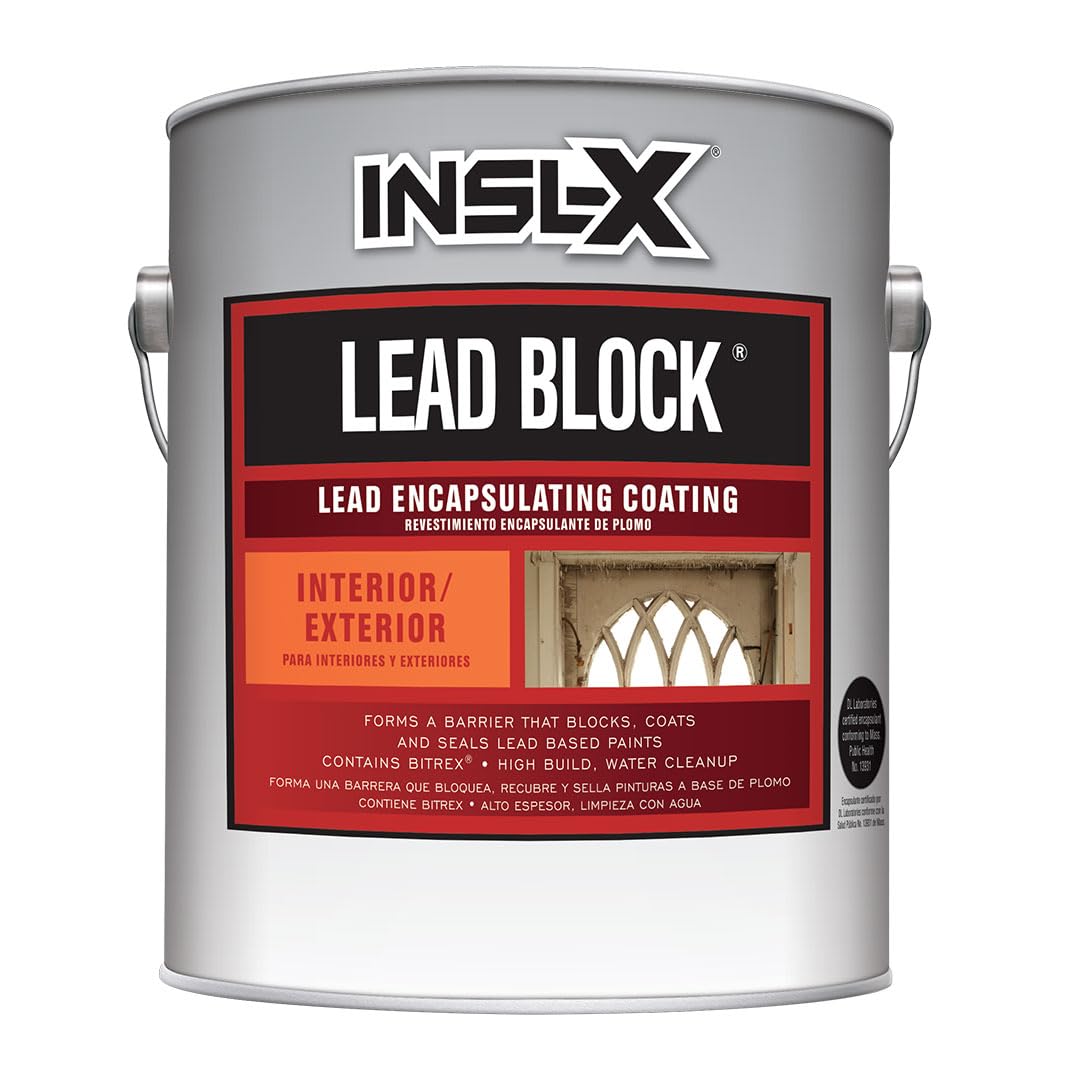
A low-VOC, eggshell encapsulant that doubles as a top coat you can actually leave on the wall.
The reason this one earns a spot is the finish. Encapsulants are often functional-looking white coatings you intend to paint over. This one is a low-VOC formula with an attractive eggshell finish, so you can stop with this coat and live with the result. It seals lead contained in old lead-based paints on previously painted surfaces, works as either an encapsulation primer or a top coat, and can be top-coated later with most water-based architectural coatings. Included in the can are a can opener and a stir stick, so you are not hunting for tools on day one.
Coverage claims are modest and honest at 85 to 100 square feet, which helps you plan quantities accurately for trim, doors and a stairwell rather than a whole house in one pass. The application feedback is where this product quietly wins: it goes on much thicker than standard paint, dries elastic so it can flex rather than crack, and reportedly bonds chemically to the lead underneath. Owners sealing a 1924 house and an old Vermont farmhouse both worked around chipping trim and doors and found it easy to apply, with the white finish reading crisp and fresh rather than flat. The 24-hour dry time is the slowest of this group, which is the honest trade for a coating that cures into a flexible film.
The downside worth naming is that effectiveness has been mixed. Most users report it passing lead testing and doing its job, but a few did not get the result they expected. If your test swab still reads positive after cure, the issue is usually film thickness rather than the formula — this product wants to go on thick, and thinning it defeats the purpose. If you are encapsulating exterior trim on a house that predates 1970, this is the pick to put near the top of your list.
Why it earns its place: the eggshell finish is the rare one in this category you can leave exposed, and the low-VOC formula is easier to live with during a multi-week project.
The trade-off to weigh: a 24-hour dry time and 85 to 100 square feet of coverage per gallon mean big jobs take longer and more cans.
Pick this for: interior trim, doors and stairwells in a pre-1970s home where you want a finished look, not just a barrier coat.
Skip if: you are on a fast timeline — the 24-hour dry time is the longest here, and the INSL-X needs the full window before recoating.
Know the Specs
Mils and Wet Film Thickness
A mil is one-thousandth of an inch, and encapsulant labels specify a wet film thickness you must apply to reach a target dry film thickness. The Lead Barrier Compound III requires 14 wet mils to achieve a minimum dry film of 7 dry mils — in plain terms, you have to lay down a coating about twice as thick wet as the final cured film. If you roll it thin to stretch the can, you land below spec and the lead can migrate through. Buy a wet film gauge, check a test patch, and adjust your roller before doing the whole room.
Dry Time and Cure
Dry time is the window before you can recoat or schedule re-testing, and it is not the same thing as a full cure. Lead Barrier Compound III dries and fully cures in 12 hours; INSL-X Lead Block needs 24 hours. Applying a second coat too early can trap solvent and weaken the barrier. Schedule inspection after the coating has fully cured, not just when it feels dry to the touch — inspectors swab for lead, and an under-cured film can read inconclusive.
Coverage Per Gallon
Square-foot coverage per gallon determines how many cans your project needs, and products differ widely. INSL-X Lead Block is rated for 85 to 100 square feet, so a stairwell with trim on both sides can consume a gallon quickly. Buy the full quantity in one trip — running out mid-coat means waiting on a delivery and matching a fresh batch to a partially rolled surface.
Finish and Top-Coating
Finish affects whether you can stop with the encapsulant or must paint over it. A high-gloss or matte finish typically becomes a base layer, while an eggshell finish is a legitimate final surface. INSL-X Lead Block accepts most water-based architectural coatings as a top coat, so you can color-match the room after the barrier is up. Lead Seal ‘n Stop dries white and works as a primer before repainting. Choose a high-gloss or matte finish if you plan to top-coat, and an eggshell finish if the encapsulant will be the final surface.
Common Questions
What is the difference between lead encapsulating paint and regular paint over lead?
How thick does lead encapsulating paint need to be applied?
Can I use an encapsulant on concrete and masonry as well as wood?
Does the temperature affect when I can apply encapsulating paint?
What is the bitter anti-ingestant in lead encapsulating paint?
Can lead encapsulating paint be used outdoors on exterior trim?
How long does it take for lead encapsulating paint to dry between coats?
Can I top-coat lead encapsulating paint with a color I like?
Is lead encapsulating paint a permanent solution for lead-based paint?
Can I apply lead encapsulating paint over chipped or peeling paint?
The Bottom Line
For most projects, the lead encapsulating paint winner is the Lead Barrier Compound III because it clears the certification bar with EPA and HUD compliance, cures in 12 hours, and carries a UL Classified, Class A fire rating for all 50 states. If your job is an apartment re-test and you want an elastomeric coating that stays flexible, grab the ChildGuard Retail Lead Encapsulant. And for exterior shutters and trim with cracked paint, the Lead Seal ‘n Stop Lead Encapsulant Coating is the one to reach for.
How we choose
We do not accept paid placement. Every pick is matched to a real buyer and a real use-case; we do not hands-on test units.
Sources
Specifications: manufacturer listings and product documentation. Review insights: verified customer reviews, as of October 2026. Pricing: not shown on this page (it changes often); check the current price via the retailer link.
As an Amazon Associate, Aappliancez earns from qualifying purchases. This does not affect which products we feature.