Disclosure: Some links in this post are affiliate links. As an Amazon Associate I earn from qualifying purchases, at no extra cost to you. Learn more
Specs are compiled from manufacturer listings and verified buyer reviews and can change over time — please confirm the key details on the product page before buying.
Gravel is the hardest thing to keep in place in a garden bed, and the edging you pick decides whether it stays there or ends up scattered across your lawn after the first heavy rain. The right strip needs enough exposed height to hold the stone, enough stiffness to survive a rake, and enough flex to follow a curve without kinking. This guide covers the picks worth your money and, just as importantly, the height and stake count you actually need for loose stone.
This guide is built by comparing the manufacturers’ published specifications and the patterns across verified customer reviews, so you get each pick’s real strengths and trade-offs instead of marketing spin.
Once stone is involved, exposed height, material and spike count matter far more than brand name, so each pick below is matched to a specific job. The one thing every gravel border has to get right is holding a heavy, shifting load — and that is exactly how these landscape edging for gravel options were chosen and separated.
Top Picks

How To Choose The Best Landscape Edging for Gravel
Gravel is far heavier than mulch and pushes sideways against the border with every step and downpour. Stones are heavy, they slide, and they push sideways against whatever is holding them every time someone walks the path or a downpour hits. That is why the exposed wall height and the spike count decide whether a gravel border survives a season. Everything below is about matching wall height and anchor strength to the depth of stone in your bed.
Height matters more than anything else with stone
A border sitting 2 inches above the soil line will hold pea gravel on a flat bed but struggles once the stones build up. Go to roughly 3 inches or more and you get a visibly deeper wall of material held back. The tallest picks here reach 4.5 inches above ground, which is the sort of depth that lets you fill a bed generously without stone tumbling over the top. Measure how deep you plan to pour the gravel before you buy, then match the exposed height to it.
Steel versus plastic, in plain terms
Galvanized steel with a powder coat is the stiff option — a powder coat is a baked-on paint layer that fights rust and wear. It hammers in with a mallet and holds a firm, straight line, which is what you want along a driveway or a long path edge. Plastic and polyethylene strips bend easily around curves and cost less, but they flex under heavy rock unless you stake them densely. Both hold gravel; the choice is steel’s straight-line rigidity versus plastic’s easy shaping around curves.
Count the spikes, then count them again
Every kit here includes stakes, and almost every kit ships with fewer than a gravel bed really needs. The general rule is to drive a stake at every hole you can reach on a loaded run, not every second or third hole as the basic instructions suggest. If your ground is hard clay or full of rock, plastic stakes bend and snap, so plan to add longer metal spikes for the worst stretches. A border only holds stone if the stakes keep it from bowing outward under the load.
Don’t forget how it meets the lawn
A gravel bed usually butts up against turf, and that seam is where stone spills into the grass and the trimmer nicks the edge. A strip tall enough to resist a string trimmer saves you from nicking the edge every time you mow. Short 1.5-inch borders mow over easily but offer the least resistance to stone, so if your priority is stone retention, choose the taller wall and accept trimming along it.
Side-by-Side Comparison
| Model | Best For | Height | Total Length | Material | Amazon |
|---|---|---|---|---|---|
| WORTH Garden 33 ft. Metal Landscape Edging★ Best Overall | Straight, crisp edges | 4.5 in | 396 in (33 ft) | Galvanized alloy steel | Amazon |
| GROWNEER 66FT Landscape EdgingEasiest Kit | All-in-one starter kit | 4 in | 792 in (66 ft) | Polyethylene (PE) | Amazon |
| Gardzen 40-Foot Landscape Edging | Flat, budget-friendly beds | 3 in | 480 in (40 ft) | Plastic | Amazon |
| 2 in Tall 66FT Landscape Edging Border | Long runs on a budget | 2 in | 792 in (66 ft) | Polyethylene (PE) | Amazon |
| MIXC 100ft Landscape Edging Kit | Slopes and erosion control | 1.5 in | 1200 in (100 ft) | HDPE | Amazon |
| AGTEK Garden Edging 98FT Kit | Big-yard coverage | 3 in | 98 ft | Plastic | Amazon |
| EasyFlex 2.5″ Tall Wall Kit | Heavier rock and pebble | 2.5 in | 1200 in (100 ft) | Recycled plastic | Amazon |
Detailed Reviews
1. WORTH Garden 33 ft. Metal Landscape Edging
Our pick — 4.5+★ from 400+ verified ratings; the strongest balance of quality and price.
The tallest wall on this list, and the one that stands firmest against a load of stone.
Buy this when your gravel bed needs a hard, straight edge that will not bow. Each section measures 4.5 inches tall with 2 inches meant to sit above ground and 2.5-inch saw teeth driven below, so you get a substantial wall holding the stone plus deep teeth anchoring it. Ten 40-inch strips add up to 33 feet installed, joined by 11 clamps for extra stability. Across 4.5+ stars from 400+ owners, the consistent theme is that it simply does its job without fuss.
Where it wins is the material. Solid galvanized steel with a powder coating is wear-resistant and corrosion-resistant, so rain does not eat into the surface. That rigidity gives you the cleanest line in this group — the kind of crisp border a driveway or a formal path edge needs. It also hammers in with far less effort than you would expect, and it pulls back up and reshapes if you change your layout. Set against the GROWNEER kit, which runs 792 inches over this pick’s 396 inches, you are trading coverage for height and stiffness: this one holds a heavier pile of rock per foot, the GROWNEER covers more ground.
Compare it to the Gardzen’s 3-inch border and the gap is real — this strip stands 4.5 inches, roughly half again the height, so a deep gravel fill stays contained instead of cresting the top. The honest caveat, and it comes up again and again in owner feedback, is the height itself: buyers report “I wish I would have gotten a larger/taller size to fully keep the mulch and rocks separate, but this still does the job.” If you are edging a bed filled right to the brim with chunky river rock, size up or double the strip. The mixed note on rust resistance is worth knowing too — the galvanized finish handles weather, but a scratched coat on a coastal or heavily salted site may show surface change over time.
What earns the top spot
- 4.5-inch height — the deepest wall here, built to hold a real depth of gravel
- Solid galvanized steel with powder coat resists rain, wear and corrosion
- 11 clamps across 10 sections keep long straight runs rigid
- Bends to your layout and hammers back down if you redesign
The fine print
- 33 feet total covers less ground than the 66-foot plastic kits
- Owners of very deep rock beds find they want a taller size still
- Gloves are advised during install — the saw teeth are sharp
Go for it when: you want a firm, straight, long-lasting edge on a driveway, path or formal bed holding stone.
Think again if: your bed is filled to the very top with heavy rock — a taller wall or a doubled strip suits that better.
2. GROWNEER 66FT Landscape Edging
Everything in one box — border, spikes and the hammer — so you can start the same afternoon.
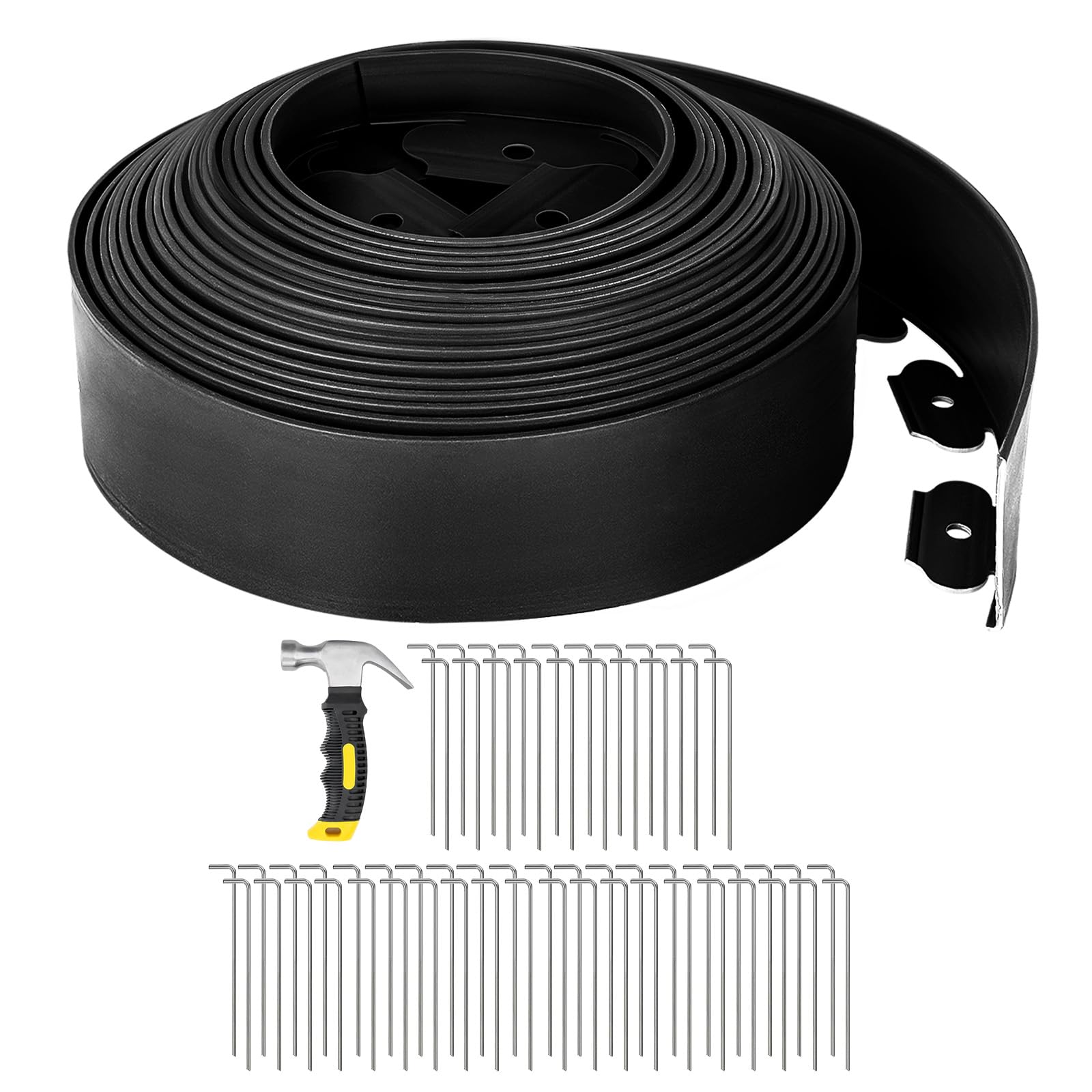
If you have never installed edging before, this is the kit that removes the guesswork. You get 66 feet of flexible border standing 4 inches tall, 60 galvanized steel spikes at 6.3 inches long, and a 6.3-inch hammer to drive them. That is 792 inches of coverage, double the WORTH’s 396 inches, which makes it the pick for a long gravel path or a big curved bed. The PE material cuts and bends into curves, circles or straight lines, and you can link multiple kits to keep going.
The 4-inch height is a sensible middle ground — tall enough to hold a decent layer of gravel or mulch, short enough to stay tidy. Owner experience centers on how fast it goes down and how well it keeps stone where it belongs, with the border working around fire pits and rock beds without the stones migrating into the grass. The UV-resistant, weatherproof build resists cracking, fading and warping, and the galvanized spikes are meant to hold through every season.
One thing to plan for: the spike count gets tight on a long run. The instructions suggest spacing, but a stone-loaded stretch wants a stake closer to every hole, and plenty of installers end up buying extra 8-inch metal spikes for hard clay. Also worth knowing before you unroll it — owners mention “Actual height 3.75″ not 4″.” so measure your gravel depth against a slightly shorter wall than the label says. On very hot days the plastic can ripple above roughly 90°F, which matters less against a bed than along a perfect lawn edge.
Best-matched job: a first-time gravel border where you want the tools thrown in and a 66-foot run to work with.
The trade-off to plan around: budget for a handful of extra long spikes on hard ground, and expect a working height a touch under the stated 4 inches.
Reach for this if: you want the border, the stakes and the hammer in one order and a long run to cover.
Look elsewhere if: your soil is solid clay and you would rather not source extra metal spikes separately.
3. Gardzen 40-Foot Landscape Edging
A lightweight strip that earns its keep on level ground — and tells you when it doesn’t.
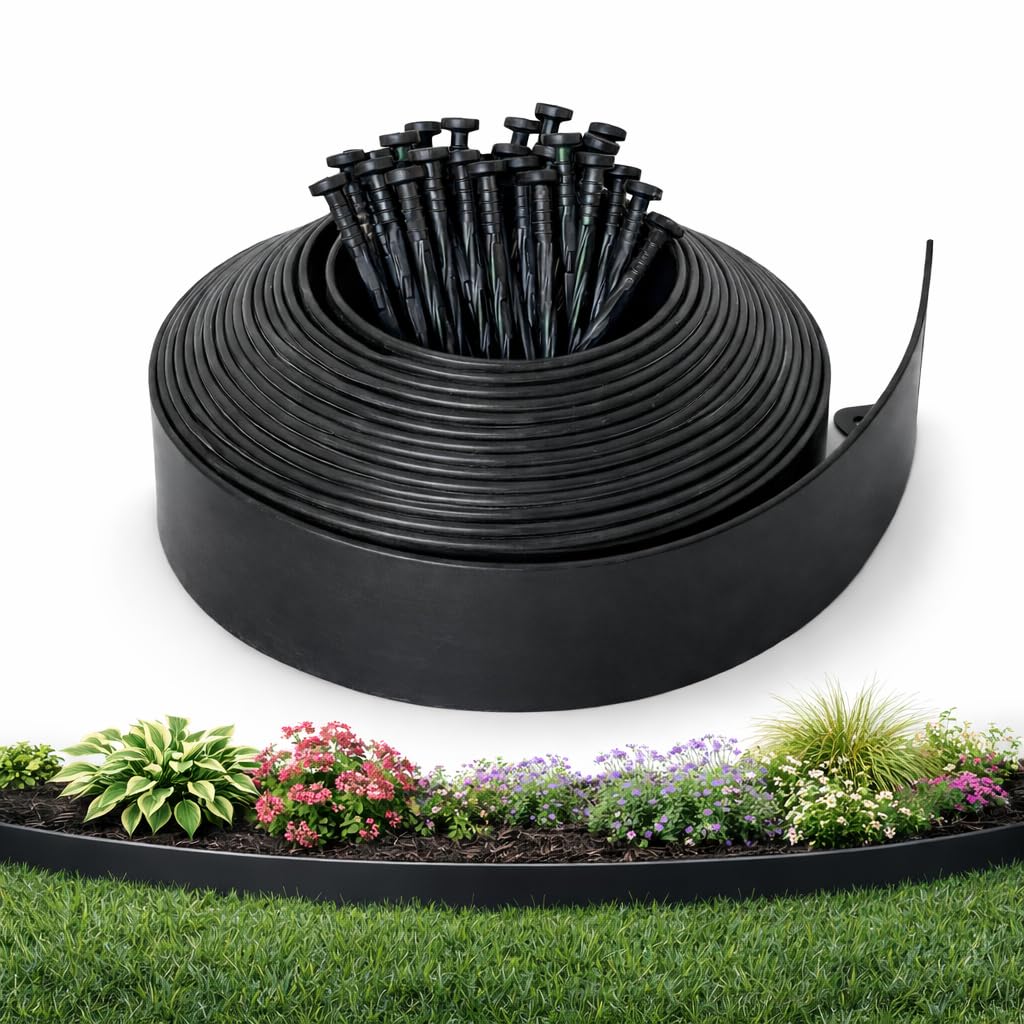
Picture a mulch bed meeting a gravel border on flat lawn: this is the job it was made for. Forty feet of weather-resistant plastic stands 3 inches tall, with 40 spikes to stake it into the soil. There is no digging at all — you press the stakes in every 2 to 3 holes and you are done. The 3-inch height gives a clear boundary between stone and turf without walling off the view, and it trims easily with a blade if your layout changes.
The plastic stays put on level beds and holds pebbles and mulch where they belong. This is the pick for a straight, simple border between a gravel strip and the lawn, or for outlining a tree ring. It will not rust, and it is light enough to move around while you work out the shape you want.
Flat ground is where it belongs. If your gravel sits on an incline or you are banking stone against the edge, look to the taller, firmer picks instead. On a level bed, though, it does its job easily and without fuss.
Where it fits: level beds, low stone strips and quick tree rings where you want a no-dig install and simple trimming.
What to know: treat it as a light-duty strip — heavy rock or a hillside load will push it, and the stakes need a gentle hand on rocky soil.
Pick this for: a flat gravel strip or mulch border where you want it staked in minutes.
Choose a firmer strip if: the bed sits on a slope or you plan to bank heavy rock against the edge.
4. 2 in Tall 66FT Landscape Edging Border with 100 Spikes
Two inches tall but staked to the hilt, with a hundred spikes in the box.
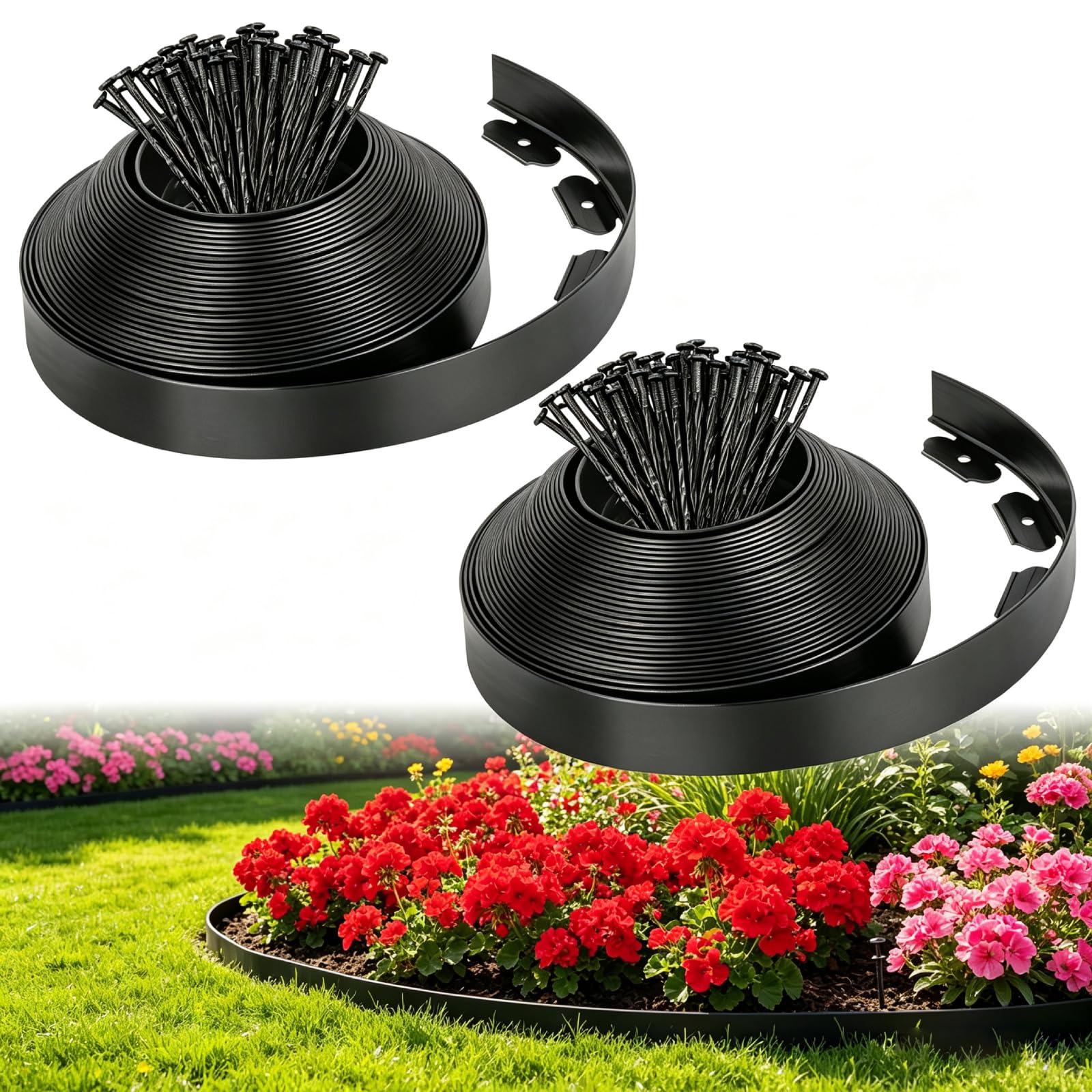
For a long run on soft ground where you want the border locked down tight, this kit stands out on hardware alone. You get 2 packs of 33-foot edging — 66 feet in total — plus 100 stakes, which is 5 spikes per meter against the 3 per meter most kits supply. The PE strip bends into curves without breaking and cuts to length with ease. It is a 2-inch-tall border, so pair it with a shallow gravel strip rather than a deep pour.
The sheer number of stakes is what makes a low border hold. On rubber mulch around a kids’ swing set, or a low stone strip along a path, twenty-odd extra spikes translate into a firm line that does not shift. The material will not rust, and customers note a previous 2-inch strip still looking new after four years of trimming along it. That longevity in the same material is the reassuring part.
Be clear-eyed about the height. The sturdiness note in the feedback is a reminder to keep the load shallow and stake densely. As long as your bed is low and long, the spike count here does the heavy lifting.
Why it holds a long low run
- 100 stakes for 66 feet — more anchors per foot than most kits supply
- PE strip curves easily and cuts to any length without rusting
- Low 2-inch profile mows over without snagging the deck
Keep in mind
- 2-inch height will not contain a deep mound of heavy gravel
- Flexes more than steel under a loaded bed, so keep the load shallow
Best for: a long, low gravel strip or play-area border where sheer stake count wins.
Not the pick for: deep, heavy rock beds that need a tall rigid wall.
5. MIXC 100ft Landscape Edging Kit with 150 Spikes
Built for the beds where rain runs downhill and stone wants to follow it.
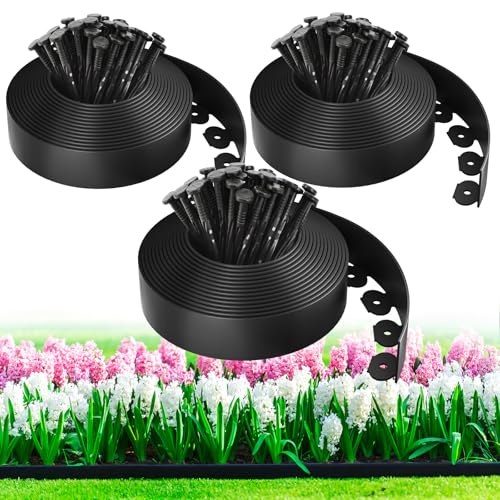
Three 33-foot rolls give you 100 feet of coverage, with 150 spikes and pre-drilled holes so one person can set it alone. The strip stands 1.5 inches tall and is made of high-density polyethylene — the dense, UV-stable grade that resists cracking. The defining feature is the L-shaped dual-layer design, a soil barrier plus a root blocker in one strip that also works to stop soil washing downhill. That makes it the sensible pick for sloped or rainy beds where erosion is the real enemy and a low stone strip is the plan.
Cutting the rolls separately, rather than wrestling one long heavy coil, is what makes a 100-foot layout manageable. Owner feedback points to it staying put through weeks of heavy rain, keeping mulch off the lawn while sitting low enough to mow straight over. Each of the three rolls can go where you need it, so you are not cutting a single length down to fit a corner.
The 1.5-inch height is the thing to weigh. It works beautifully for separating low stone and mulch, or as a mow-over edge, but it will not hold back a deep pile of rock — this is the least tall border here. On hard ground the stakes struggle to bite, so it prefers softer soil. Used within those limits, the 100-foot run and root barrier cover a lot of terrain.
The clever bit: a root-and-soil barrier built into the strip, aimed squarely at slopes and erosion control.
Set your expectations: at 1.5 inches it separates rather than retains — keep it to low stone and mulch, and give it soft soil to spike into.
Choose this when: you want a long 100-foot run on a slope or rainy bed with a built-in root barrier.
Pass it up if: your job is holding back a deep, heavy gravel mound that needs real height.
6. AGTEK Garden Edging 98FT Landscape Edging Kit 3 Inch Height

Ninety-eight feet of flexible 3-inch border for the yard that keeps going.
When a single bed turns into a full perimeter, this kit’s 98-foot length does the work of several smaller rolls. The flexible plastic stands 3 inches tall and bends around curves and corners with the tap of a rubber mallet. It is designed to hold soil, gravel and bark in place and to keep irrigation water off the paths. The best fit is a large yard with a mix of beds — a berry patch along a fence, a patio edge, a tree ring — each needing a flexible, moderately tall border.
Where it shines is coverage per roll. A single kit runs 98 feet against the Gardzen’s 40, so you cover a big yard without piecing rolls together. The 3-inch height is enough to hold a shallow gravel or bark strip, and the material is flexible enough for the irregular shapes most yards actually have. It also does a surprising amount of weed control when tucked against a fence gap.
The trade-off is durability under load and stake count. Some of the feedback describes it as very sturdy and others report sections breaking, so treat it as a moderate-duty strip — fine for gravel and mulch on a level garden, less so for banked heavy rock. The included stakes also fall short on long runs, and owners find the heads snap if they are knocked too hard. Tap gently and buy a spare set of spikes, and a long border like this goes down well.
Where the length pays off
- 98 feet in one kit covers a whole yard perimeter
- 3-inch flexible wall shapes around curves and tight corners
- Holds gravel, bark and soil while keeping water off paths
Handle with care
- Stake heads can snap on hard driving — tap them gently
- 60 stakes is thin for 98 feet; plan on buying extras
- Moderate-duty strip, not for deep or banked rock
Best for: a large yard needing one long 98-foot flexible border around several beds.
Buy extra spikes if: you are driving into firm ground — the included hammer-and-tap approach rewards a light hand.
7. EasyFlex 2.5″ Landscape Edging Kit

The woodgrain wall that stands a touch taller to keep river rock and pebbles out of the grass.
For a patio filled with river rock and a lawn that keeps swallowing the stones, this is the border that steps up. The 2.5-inch woodgrain wall is designed to sit taller than a standard no-dig edge so it can hold heavier material — river rock, mulch, pebbles. You get a full 100-foot coil plus 64 anchoring spikes, and installation is a no-dig job: score the ground, hammer the spikes, done. The recycled plastic shapes into straight runs or tight curves around trees and beds.
The finish is the pleasant surprise. A black woodgrain texture gives a clean, finished separation between lawn and planting, and it shrugs off seasonal ground movement so the line stays neat. One hundred feet plus 64 stakes is generous hardware for the length, which is why it holds up where lighter kits sag.
The honest limit is flexibility in the heat. The one recurring gripe with this border is that in strong summer sun it can curl and warp, and it wants extra stakes — roughly every foot — to stay true. It also flexes slightly along its vertical wall, though it still holds back rocks in real beds. Plant it where it gets some shade or add stakes generously, and the extra height earns its keep.
Why it holds heavier stone: a 2.5-inch woodgrain wall that stands taller than a standard no-dig edge, with 64 stakes over 100 feet.
The catch to plan for: hot sun can make it curl, so stake it densely and site it away from the worst afternoon heat.
Pick this if: your bed holds river rock or pebbles and you want a taller, decorative wall that mows cleanly.
Keep it out of full sun if you can: the plastic curls in high heat, so plan extra stakes along the hottest stretch.
Know the Specs
Height above ground
This is the number that decides how deep a gravel bed you can fill. A strip listed as 2 inches typically sits about 2 inches above the soil line, while a 4.5-inch strip with 2 inches above ground and 2.5-inch teeth below gives you a much deeper wall. Match the exposed height to how thick your stone layer will be — fill it too high and the stones spill over, so pick a wall a little taller than your pour.
Material: steel vs polyethylene
Galvanized steel with a powder coat is rigid and resists rain and wear, which keeps a long straight edge crisp. Polyethylene (PE) and high-density polyethylene (HDPE) are flexible, rust-free plastics that bend around curves and cut easily with a blade. Heavier rock pushes a light plastic strip out of line, so dense stone asks for steel or a thick, well-staked plastic wall.
Spike count and spacing
Stakes are what pin the border against the outward push of stone. Kits range from a modest set for a 40-foot run to 150 spikes over 100 feet. The tighter you space them — ideally every hole on a loaded stretch — the less the wall bows. On hard clay or rock, longer metal spikes hold better than short plastic ones, which can bend or snap under a hammer.
Total length and joining
Coverage adds up fast around a full bed. Lengths here run from 40 feet up to 100 feet, and some kits use multiple shorter rolls instead of one long coil, which is easier to place around corners. Linking kits lets you extend a run, and clamps or overlapping sections keep the joins from opening up under the weight of gravel.
Common Questions
How tall should gravel edging be to actually hold the stones?
Will plastic edging hold gravel or should I buy metal?
How many spikes do I really need for a gravel border?
Can I install landscape edging without digging a trench?
What is the difference between PE and HDPE edging?
Will edging keep gravel from spilling into the lawn?
Does landscape edging go wavy in hot weather?
Can I curve a steel edging strip around a tree?
How long will gravel edging last before I replace it?
Do I need extra spikes and nails beyond the kit?
The Bottom Line
For most gravel beds, the landscape edging for gravel winner is the WORTH Garden 33 ft. Metal Edging — its 4.5-inch galvanized steel wall stands the firmest against heavy stone, and it holds the highest score here with the owner consensus to match. If you want the tools and stakes thrown in for a long first run, the GROWNEER 66FT Kit covers 66 feet from the start. For river rock along a patio, the taller woodgrain wall of the EasyFlex 100-Foot Kit is the one to reach for. Pick the height of your bed first, then let the spike count decide between them, and you will have a gravel border that still looks sharp after the first wet season.
How we choose
We do not accept paid placement. Every pick is matched to a real buyer and a real use-case; we do not hands-on test units.
Sources
Specifications: manufacturer listings and product documentation. Review insights: verified customer reviews, as of October 2026. Pricing: not shown on this page (it changes often); check the current price via the retailer link.
As an Amazon Associate, Aappliancez earns from qualifying purchases. This does not affect which products we feature.