Disclosure: Some links in this post are affiliate links. As an Amazon Associate I earn from qualifying purchases, at no extra cost to you. Learn more
Specs are compiled from manufacturer listings and verified buyer reviews and can change over time — please confirm the key details on the product page before buying.
A tall boot only keeps you dry if the waterproofing runs all the way to the top of the shaft — and stays grippy underfoot. So buy the height you actually wade through, not the tallest one on the shelf. Every pick below is sorted around that one idea, so you can choose once and stop shopping.
This guide is built by comparing the manufacturers’ published specifications and the patterns across verified customer reviews, so you get each pick’s real strengths and trade-offs instead of marketing spin.
Below, pull-on shafts, neoprene uppers, steel shanks and cold ratings are all explained without the jargon. Match the boot to your mud, snow or barnyard, then order the right size the first time. These are the knee high waterproof boots worth pulling on before the weather turns ugly again this season.
Top Picks
How To Choose The Best Knee High Waterproof Boots
Most people buy the tallest boot they can find and assume it keeps them dry. But height only counts when the material above the ankle is sealed too. A 15-inch shaft of waterproof rubber does nothing for you if the top is a thin fabric collar that soaks through in wet grass.
Shaft height and where water actually reaches
Knee-high boots are built for standing water, deep mud and snow that comes up past the ankle. If your worst day is a wet lawn or a shallow puddle, a mid-calf boot is easier to walk in and lighter on your feet. If you ford creeks, work flooded barns or wade through drifts, those extra inches of shaft are what keep the water out.
Neoprene versus plain rubber uppers
Plain rubber keeps water out and rinses clean easily, but it goes stiff when the temperature drops. Neoprene — the same spongy material used in wetsuits — stays flexible and traps warmth against your leg. That is why so many work and winter boots combine a rubber foot with a neoprene shaft.
Soles, shanks and footing on slick ground
A slip-resistant outsole (the bottom tread) is what keeps you upright on wet concrete, mud and ice. A steel shank is a stiff strip built into the sole; it supports your arch and shields the bottom of your foot from sharp rocks and ladder rungs. For farm, ranch or hunting work, both matter more than looks.
Side-by-Side Comparison
| Model | Best For | Shaft Height | Upper Material | Stated Weight | Amazon |
|---|---|---|---|---|---|
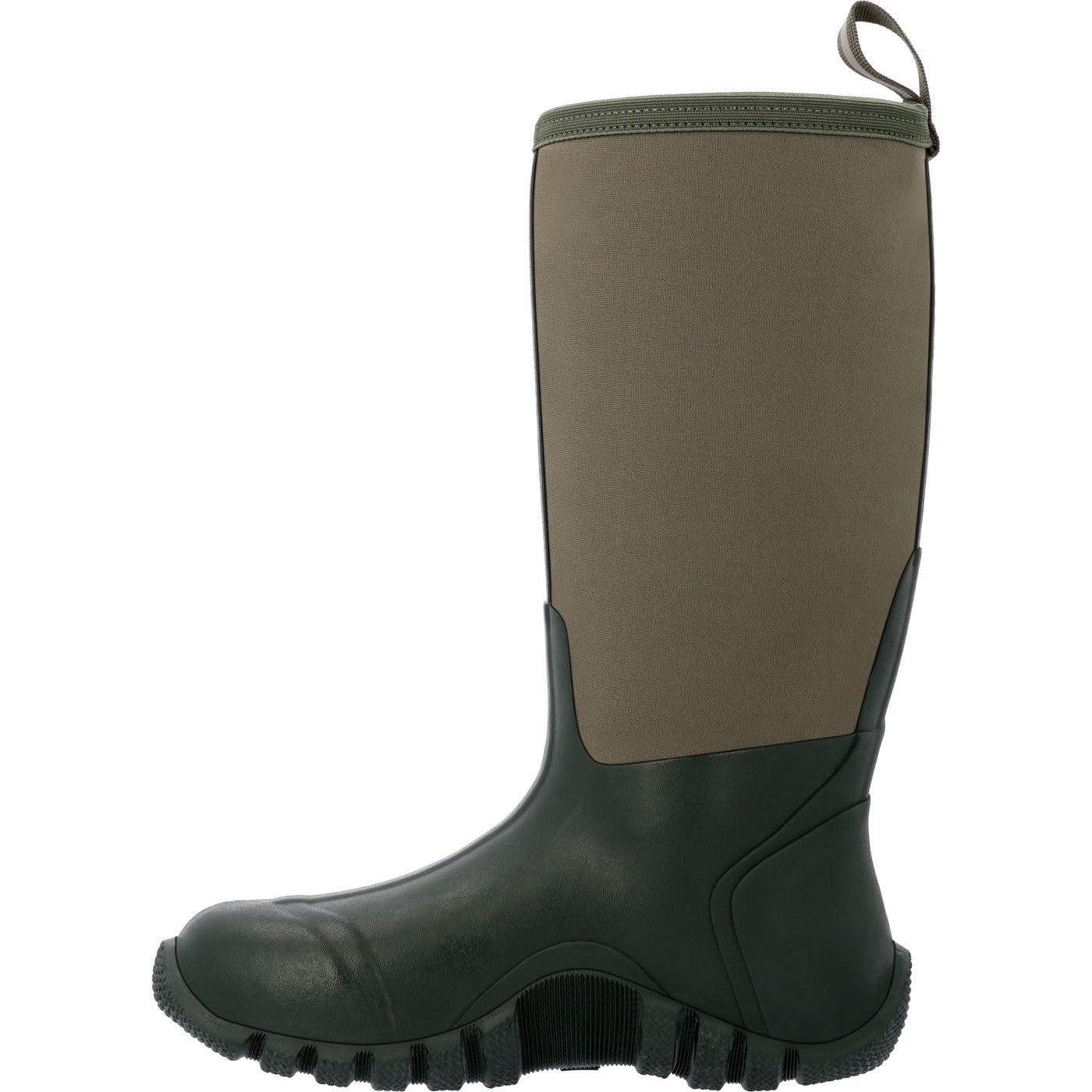
| Edgewater Original Men’s Field Boot★ Best Overall | All-day outdoor work | 15 in | Rubber with flexible shaft and airmesh lining | 4.5 lb | Amazon |
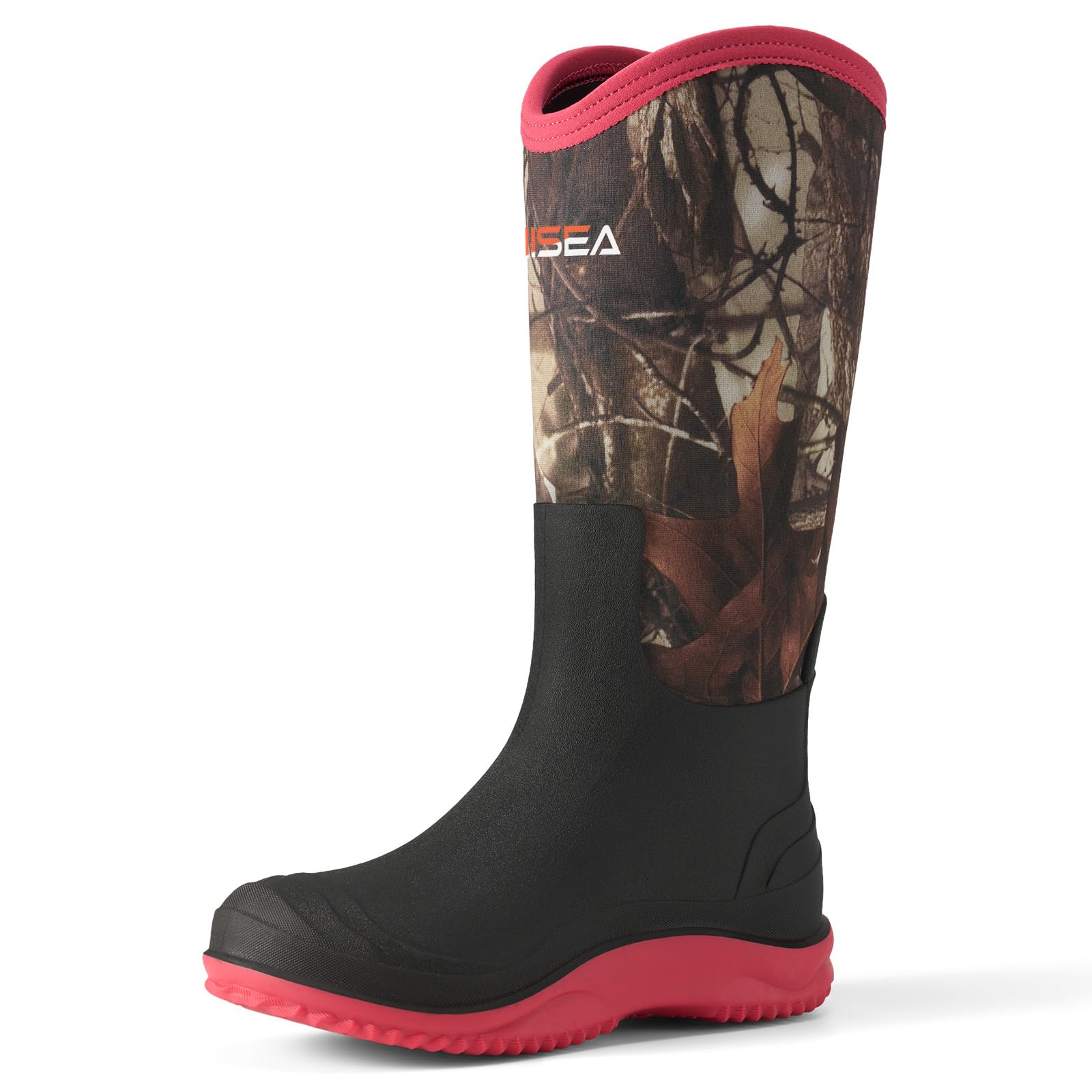
| HISEA Women’s Mud Rain BootsBest Value | Garden and coop chores | Tall (knee-high) | Flex-foam upper, smooth build | 2 lb | Amazon |
| Trudave Rubber Boots with Steel Shank | Hunting and flooded ground | — | 5mm neoprene with reinforced toe | — | Amazon |
| BOGS Men’s Ultra High Boot | Sub-zero winter wear | Ultra high | Waterproof rubber with stretch neoprene top | 2 lb | Amazon |
| SOREL Women’s Tivoli V Tall Boot | Snow and ice with grip | Tall | Waterproof upper with lace front | — | Amazon |
| NRS Boundary Neoprene Water Boots | Kayak launches and portages | Knee-length | Neoprene with cinch top | 2 lb | Amazon |
Detailed Reviews
1. Edgewater Original Men’s 15″ Field Boot
Our pick — 4.5+★ from 900+ verified ratings; the strongest balance of quality and price.
A full 15 inches of sealed shaft you can step into hands-free — built for people who work outside in every kind of weather.
The spec that earns this the top spot is the shaft: a full 15 inches of waterproof shell, with a soft flexible upper that bends at the knee instead of fighting you. Owners back it up too — 4.5+ stars across 900+ reviews — and comfort is what they mention most, ahead of fit and warmth. That matters, because a boot you dread at 5 a.m. stays by the door.
A rubber foot pairs with breathable airmesh lining (a mesh fabric that lets air move), so the inside does not turn into a swamp on a long day. What makes it the go-to pick, though, is how naturally it slips on. There is no lacing and no zipper to fight, and the calf-hugging design seals the top so a high splash does not run down your leg. One buyer who wears a pair several times a week on horse farms in mud, rain, snow, floods and swamp reports they stayed waterproof through it all — even surviving horse stomps with no punctures.
What you give up is insulation, because this is not a heated winter boot. When temperatures head below freezing, wear wool socks; the same build that keeps it breathable in summer means it is not a -40 boot. Weight is the other trade: at 4.5 pounds it is more than double the 2-pound HISEA rain boot, so long hikes are a genuine workout. The rubber sole also flexes less as it gets colder, and it can skate on bare ice without traction studs.
What earns its keep
- A full 15-inch waterproof shaft covers deep mud, snow and flooded ground.
- Slips on and off with no lacing, and the calf-hugging top keeps splashes out.
- Breathable airmesh lining keeps feet from cooking on warm days.
- Rubber outsole is built slip-resistant for work on wet, uneven ground.
Where it asks more of you
- No insulation; cold days call for thick wool socks.
- At 4.5 pounds it is far heavier than the 2-pound HISEA boots for long walks.
- Rubber that has been stored a long time can crack and leak with heavy daily use.
The right call for: anyone who needs a tall, dry shaft for farm, yard or hike duty and wants zero fuss getting it on.
Heads up: size it with the socks you actually wear — colder months push some buyers up a full size.
2. HISEA Women’s Mud Rain Boots, Waterproof Tall Garden Shoes
The two-pound barn-and-garden boot you pull on without hands and rinse clean in one go.
For the coop, the garden bed or a muddy yard loop, this is the smart money. The listed weight is 2 pounds — exactly half of the 4.5-pound Edgewater — so it barely drags on your legs while you shovel feed or pull weeds. The build is a flex-foam upper on a smooth foot, which flexes with the ankle instead of standing stiff like solid rubber, and a pull tab lets you pull it on hands-free.
Comfort leads everything here, with fit right behind it in what people talk about. The interior has a soft, warm lining that makes it welcome in cold weather, and the roomy toe box suits narrow feet and high arches as long as you size right. The smooth foot area is easy to rinse — clay, mud and muck wipe straight off. Just size carefully: it can run a little generous, so between sizes, order down. As one buyer reports, “Runs large (ordered 8 for 7.5).”
The catch is honest: this is a garden and rain boot, not a mountain shell. Standing water above the ankle is handled, and a buyer reports submersion to the ankle with no problems — but a deep creek ford is beyond what the flex-foam upper promises. There is also no steel shank or protective toe, so if you need hard protection for construction or heavy field work, look to the Trudave instead.
The everyday case: a light, roomy, well-made boot for chicken keeping, muddy lawns and quick yard work, with a print that people actively seek out.
Ordering tactic: go down half a size if you sit between two sizes, and skip it for hard-toe construction work.
Reach for this if: you want the lightest, easiest boot in the lineup for wet garden chores.
Look elsewhere if: you need impact protection at the toe or footing help on a ladders and scaffolds.
3. Trudave Rubber Boots for Men

A hard-toe, steel-shank work boot that insulates your feet the way a wetsuit keeps you warm.
A 5mm neoprene build is what puts this one in the work-boot slot. Neoprene is the same spongy, wetsuit-style material, and at 5mm it traps warmth around your foot while a reinforced hard plastic toe shields your toes when something heavy rolls onto them. Wading flooded pasture, launching a boat or clearing a muddy trail — this boot is built for that.
Quality is the thing people talk about most here, and value comes right behind it. Sizing needs care, because the brand skips half sizes and runs roomy. One buyer sums up the fix: “Only complaint is they don’t have half sizes, I am a 11-1/2 and bought a 12 and they fit great.” If you plan to wear thick socks, that roominess is a feature; if you have narrow feet, plan to add an insole.
The honest downside is durability under constant wear. Some reviewers report tearing within a month of hard use, which suggests these hold up best for seasonal or intermittent work rather than daily beatings. The upper also traps heat in warm weather, so summer wear can feel warm. And keep them out of the sun when stored — rubber that bakes in direct heat can deform.
Work-ready build: a hard protective toe, a steel-shank sole and 5mm neoprene warmth make this the pick for jobs with real hazards.
Who should pass: if you want a boot for daily, all-day, every-day wear, expect to replace it sooner than a heavier farm boot.
Best pick if… you hunt, fish, ranch or wade flooded ground and want toe protection plus warmth.
Think twice if… you need a boot that survives daily 12-hour shifts on concrete — this one holds up best for seasonal work.
4. BOGS Mens Ultra High Boot

Insulated to -40 degrees with no laces to freeze — built for the person who clears snow before sunrise.
Snow on the ground and a frozen sky — that is when the -40F comfort rating earns this boot its winter-specialist slot. The maker rates it comfort rated to -40F. It also pulls straight on, with no laces to stiffen in the cold or knot up with ice.
Fit is the strength people call out most, then comfort. The stretch neoprene top accommodates larger feet and calves, with buyers fitting wide feet and 23-inch calves without excessive pressure. The footbed feels soft and light underfoot, and the boot wears like a slipper for quick trips to the mailbox or the barn. One dairy farmer puts it plainly: “Wears stronger and longer than other major brands.”
Here is the fair caveat: with no lacing, a pull-on boot cannot lock your heel down the way a laced winter boot can. On long snow treks you may feel some heel slip and friction. It is a boot for chores, walks and errands, not mountaineering. Some buyers also find it a touch snug at first, and the slick rubber exterior can be awkward to pull off when your hands are cold.
The cold-weather answer: rated to -40F, laces-free, and easy to pull over jeans — a winter boot for farm, driveway and town.
An honest limit: no laces means no heel lock; long snow hikes may feel loose at the heel.
Pick this one when: you need one boot for snow, ice and rain without ever tying a lace.
Not the one for: multi-mile snow treks where a locked-in heel matters.
5. Hunter Women’s Play Tall Rain Boot

A rain boot you will actually want to wear past the school run, with a flatter sole for city walking.
This is the most stylish boot in the group and the one most likely to live by your front door rather than in a barn. Natural rubber keeps it 100% waterproof, and the lining is 100% recycled polyester (polyester spun from reused plastic). The Play design runs at mid-calf height with a flatter platform sole, so it sits comfortably for a day of walking and errands.
What draws people in is the look, then the comfort. The pull tab makes it easy to step in, and the flatter sole translates to less leg fatigue on pavement. Wearers walk all day in rainy cities and report staying dry through puddles and wet floors. The colors get a lot of attention, and the mid-calf cut keeps it wearable with jeans or a skirt.
The trade-off is sizing and calf room. It fits best if you size down for a snug fit, and one reviewer at a size 8 warns the boot mouth hugs a large calf tightly and can be uncomfortable. It will keep feet dry in the rain, but at mid-calf height it will not cover a deep snow drift or a flooded field. If you live in the country, the taller picks above suit that terrain better.
Where it shines: a 100% waterproof natural rubber boot that looks like a fashion piece and walks well on pavement.
Watch the calf: the boot mouth is snug, so larger calves should size up with thick socks.
For the city and the commute: dry feet and a clean look on rainy days.
Step past if: you need full knee coverage for deep snow or deep mud.
6. SOREL Women’s Tivoli V Tall Waterproof Boot
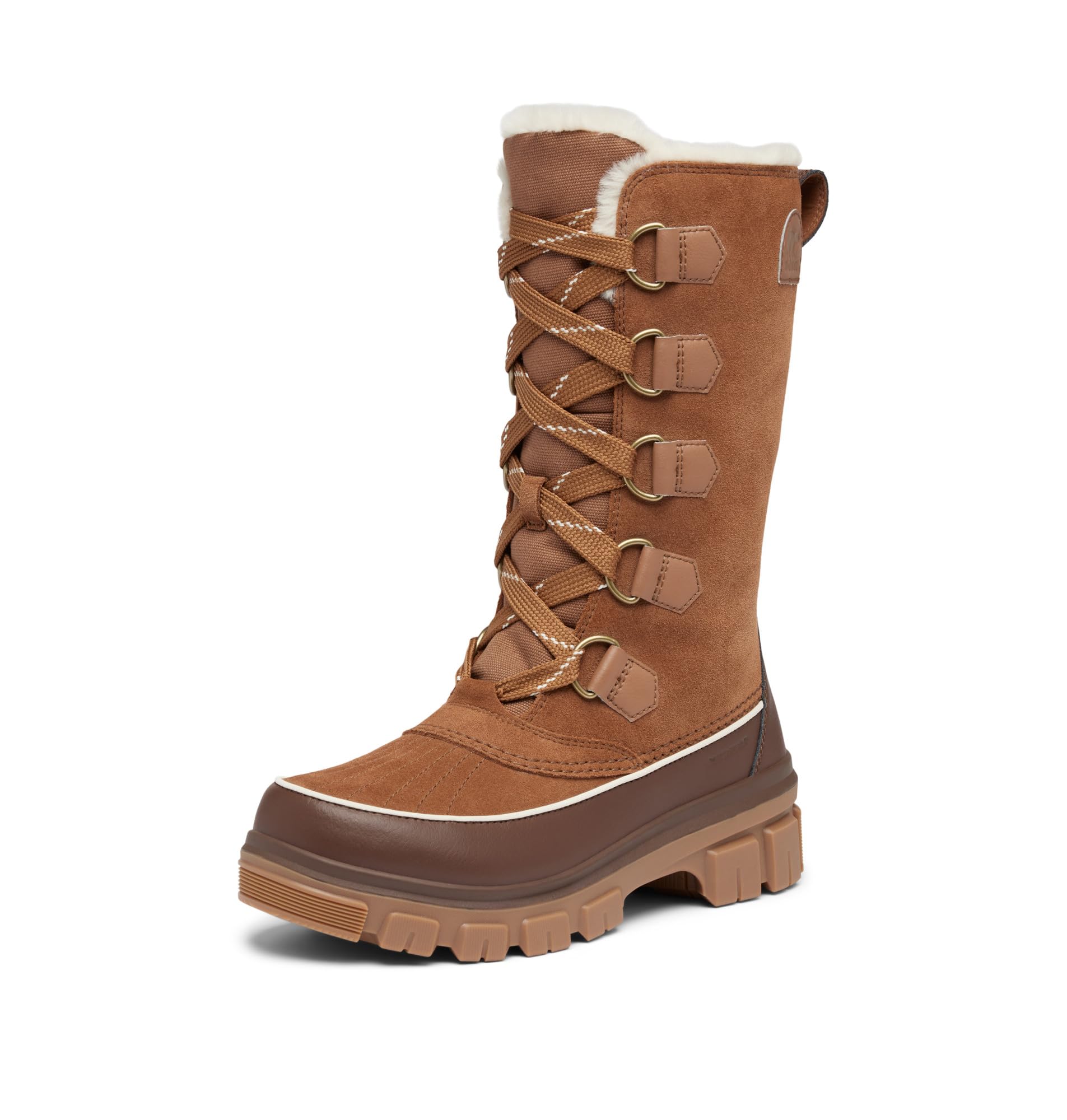
The tall laced boot that walks through snow and ice without letting the cold in at the ankle.
A laced fit is what separates this from the pull-on Hunter below: laces you can tighten lock the boot to your foot, so snow stays out at the ankle. The laces are thick enough that they do not freeze in cold temperatures, and the tall shaft stops snow from finding that gap. Owners keep pulling these out year after year for shoveling, winter commuting and even hunting in snow and mud.
Traction is the other strength: the tread is designed for snow and ice, and buyers report it grips on both without any slip. Quality is what people notice first, with warmth right behind it. The fit tends to run a little narrow and small, so plan accordingly — most find a true-to-size fit works with an average or thick sock, while a few go up for a wider toe box. The eyelets and laces are sturdy and hold up through the season.
The main caution is sizing: some buyers find it tight in the toe box with thick socks and step up a size. That is a snug last (the boot’s molded foot shape), not a flaw in the build.
Why it earns the winter slot: a tall waterproof shaft, insulating warmth and genuinely grippy tread for snow, ice and slush.
Buying note: toe box runs narrow; go up if you wear thick winter socks or have wide feet.
Grab it if: you want one winter boot for shoveling, commuting and snow days.
Go elsewhere if: you need a wide toe box or a rock-scrambling tread.
7. NRS Boundary Neoprene Water Boots

A knee-length neoprene wader boot for muddy launches, wet carry-overs and slippery river rock.
Full neoprene is the reason kayakers and boat anglers love these. That is the stretchy, insulating wetsuit material — and it is waterproof on its own. The knee-length cut keeps water below the top as long as you are not stepping too deep, and the high-grip rubber sole handles wet rock, mud and roots better than a smooth rubber outsole.
Fully flexible ankles mean you can walk uneven ground without pinch points, and the toe box never numbs your feet. Quality is the loudest thing people talk about, then comfort, and both come from that wrap-around neoprene fit. One buyer states it plainly: “The most comfortable water boots in the World!” — and they are used to portaging heavy gear.
The fit is snug and runs large in some sizes, so sizing down is often the right move if you cannot try them on. They stick to your feet in sticky mud where a rubber boot would slide off, but the neoprene does cause some sweat, and the top cinch does not fully seal — step too deep and water comes over the top. There is also an initial chemical smell that fades after a few outings.
The watery-terrain specialist: knee-length neoprene gives warmth, grip and flexibility, and it stays on in soft mud.
One thing to know: neoprene breathes poorly, so feet sweat — plan to fold the boot down after you dry off.
Ordered for the water: kayakers, canoeists and bank anglers who wade in and out of cold water.
Not for everyone: for ice fishing or frozen ground, this is not the boot; neoprene here is for wet, not for sub-zero.
Know the Specs
Neoprene thickness in mm
Neoprene (a spongy wetsuit material) is measured in millimeters, and thickness decides warmth. A 5mm upper is thick enough to trap warmth against your foot and keep cold water from hitting bare skin — that is what keeps your feet warm in a flooded field, not just dry. Thicker neoprene limits how much your ankle flexes, so for hike-heavy days you may prefer a thinner or more flexible build.
Insulation and cold ratings
A comfort rating such as -40F tells you the coldest temperature the boot is built to handle. Treat it as a temperature guide, not a promise that your feet will feel warm at that reading. Socks count too, so most people wear wool socks in the coldest conditions. A boot with no insulation rating is a three-season mud or rain boot, and it will feel cold on a frozen morning.
Steel shanks and toe protection
A steel shank is a stiff strip inside the sole that supports your arch and guards against rocks and ladder rungs. A hard protective toe guards against impact at the front of the foot. Neither is needed for a garden boot, but both matter for hunting, ranching or construction-like work where you step on sharp objects. When a boot lacks these, use it for soft ground rather than hard work.
Shaft height and shaft measurement
Shaft height is the distance from the foot to the top of the boot. It is the spec that decides how deep water you can stand in before it spills over the top. A taller shaft is better for deep mud and snow but heavier on the leg. A mid-calf boot is easier to walk in and suits city rain and shallow puddles, so match the height to your real worst case.
Common Questions
How tall should knee high waterproof boots be for deep mud?
Do knee high waterproof boots keep feet warm in winter?
Are neoprene boots fully waterproof?
How do I size a pull-on boot with no half sizes?
Can I wear a steel-shank boot for hiking?
What is the difference between rubber boots and neoprene boots?
How do I stop water coming over the top of the boot?
Will tall waterproof boots slip on ice?
How long should knee high waterproof boots last?
Can I use knee high waterproof boots for fishing and kayaking?
The Bottom Line
For most people, the winner in this search is the Edgewater Original Men’s Field Boot because a 15-inch sealed shaft, a calf-hugging top and a slip-resistant sole cover farm, yard and hike duty with no laces to fight. If you want a lighter boot for garden and coop chores, the HISEA Women’s Mud Rain Boots do it at half the weight. And for cold, wet work with real hazards, the Trudave adds a steel shank and a hard toe. Whichever you choose, size for the socks you actually wear and keep them out of the sun — that is how you get years of dry feet from any of these boots.
How we choose
We do not accept paid placement. Every pick is matched to a real buyer and a real use-case; we do not hands-on test units.
Sources
Specifications: manufacturer listings and product documentation. Review insights: verified customer reviews, as of October 2026. Pricing: not shown on this page (it changes often); check the current price via the retailer link.
As an Amazon Associate, Aappliancez earns from qualifying purchases. This does not affect which products we feature.