Disclosure: Some links in this post are affiliate links. As an Amazon Associate I earn from qualifying purchases, at no extra cost to you. Learn more
Specs are compiled from manufacturer listings and verified buyer reviews and can change over time — please confirm the key details on the product page before buying.
If your child’s ankles roll inward with every step, the fix is not a stiffer shoe — it is a shoe with a firm heel counter, a supported arch, and a sole that does not let the foot slide. The ASICS GT-1000 13 takes the top spot because it pairs real stability construction with everyday comfort, and it is the one pick here built for running and school alike. Below you get seven picks, sorted by what each one actually does for a pronating foot.
This guide is built by comparing the manufacturers’ published specifications and the patterns across verified customer reviews, so you get each pick’s real strengths and trade-offs instead of marketing spin.
Overpronation means the foot rolls inward and the arch flattens on each step, so the shoe has to hold the heel and support the midfoot. This guide sorts seven stability and orthopedic picks by heel hold, arch support, and how they hold up to daily wear. Here is the shortlist of kid shoes for overpronation that actually earns its place.
Top Picks
How To Choose The Best Kid Shoes for Overpronation
A pronating foot needs two things held in place: the heel and the arch. Get those, and the inward roll gets controlled on every step. Skip them, and you are buying a shoe that looks supportive but lets the ankle drift.
Start with the heel counter, not the cushioning
The heel counter is the stiff cup at the back of the shoe that wraps the heel bone. A raised, stiffened heel counter keeps the ankle from rolling inward, which is exactly what a child with overpronation needs. Several picks here describe a hard and high back for this reason — that stiffness is the point, not a defect.
Check whether the insole comes out
Match closure to your child’s independence
Hook-and-loop straps (the Velcro-style closure most orthopedic sneakers use) let a child put the shoe on alone and let you tighten the fit over a wider foot. The KEEN Chandler CNX uses a lacing system with an easy on-and-off build, and the orthopedic picks here run on adjustable Velcro so you can snug the ankle. Laces give a finer fit but fray; a strap gives speed but can run short on a wide foot.
Side-by-Side Comparison
| Model | Best For | Closure | Support Style | Stated Weight | Amazon |
|---|---|---|---|---|---|
| ASICS Kid’s GT-1000 13★ Best Overall | Everyday running and school | Hook-and-loop over lace-up | Stability trainer with GEL cushioning | 1.27 pounds | Amazon |
| KEEN Unisex-Child Chandler CNXBest for Outdoors | Hiking and outdoor play | Lacing system | Wide toe box, multi-directional traction | — | Amazon |
| Kids Orthopedic Tennis Shoes (Princepard) | Flat feet, school wear | Adjustable Velcro | Orthotic arch support | 8.82 ounces | Amazon |
| Princepard High-Top Orthopedic Sneakers | Firm ankle hold and looks | Adjustable Velcro | High top with 3D printed insole | — | Amazon |
| Orthopop AFO Orthopedic Shoes | Ankle and arch correction | Adjustable Velcro | High back with U-shape orthotic insole | — | Amazon |
| Princepard Flat-Feet Corrective Sneakers | Toddlers needing ankle locking | Adjustable Velcro | Rigid sole and heel cup | — | Amazon |
| Memo Polo Ankle Support Sneaker | Kids who trip and fall | Velcro straps | High-top ankle support, leather upper | — | Amazon |
Detailed Reviews
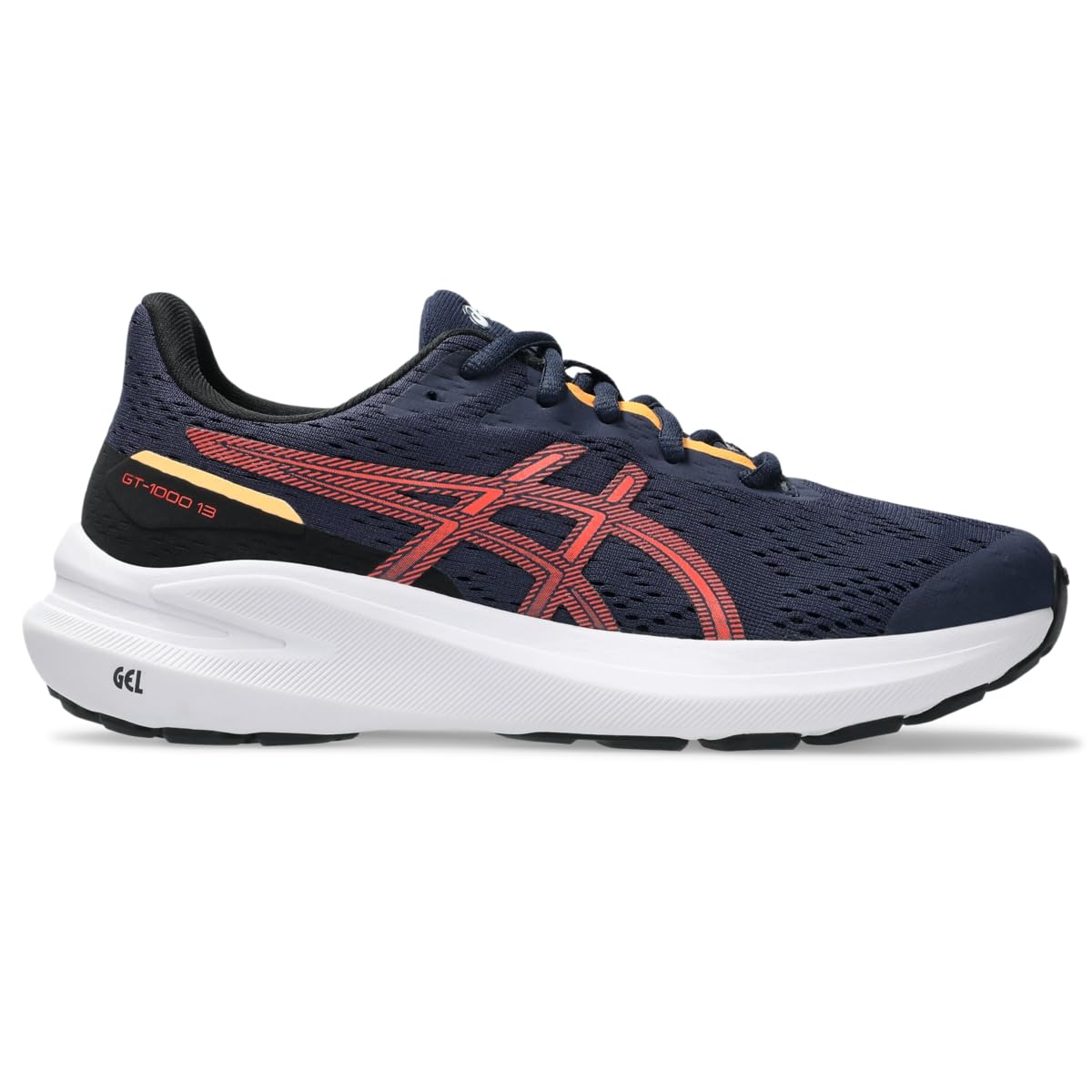
1. ASICS Kid’s GT-1000 13 Grade School Running Shoes
Our pick — 4.5+★ from 300+ verified ratings; the strongest balance of quality and price.
A stability trainer that holds a rolling ankle without feeling like a medical boot.
The GT-1000 13 is a stability trainer, which is the shoe category built to resist inward roll. It gets there with a medial forefoot wrap-up outsole (extra rubber that wraps the inner edge of the forefoot) and a hook-and-loop closure that lets you snug the midfoot down. Its GEL cushioning sits under the foot for comfort through a full school day. Durability is the one point that splits opinion — some owners find them long-lasting, others less so — so pair regular wear with a quick look at the toe rubber stitching now and then.
A child with flat feet does not have to feel like they are in a corrective shoe. Owners describe these as comfortable enough for daily wear, and the shoe earns its biggest praise for overall quality, with comfort close behind. The fit runs true, and the blue colorway has a following among kids who care what their shoes look like. The clever part is the removable sockliner: owners mention lifting it out to add a flexible arch insert, which lets you fine-tune the arch support your child’s foot actually needs.
Tread and stability hold up on stairs and curbs, and the build stays presentable after months of regular use. Here is the honest caveat: the laces fray before the shoe body gives out, so keep a spare pair on hand. The other sizing note is that you should buy true to size — this is not a shoe to size up in. At 1.27 pounds, it is a real running shoe rather than a lightweight slipper, which is what you want when stability is the goal.
What earns it first place
- Stability-trainer build with medial wrap-up outsole to resist inward roll
- Hook-and-loop closure creates a more supportive, adjustable fit
- Removable sockliner so you can add a flexible arch insert
- GEL cushioning keeps it comfortable for all-day wear
The honest trade-offs
- Durability splits opinion — some customers note faster wear than expected
- Laces tend to fray before the shoe body wears out
Go for it if: you want one shoe that handles running, school, and a pronating foot without looking orthopedic.
Think twice if: your child needs a rigid high-top ankle lock — this is a low-top running shoe, not a corrective boot.
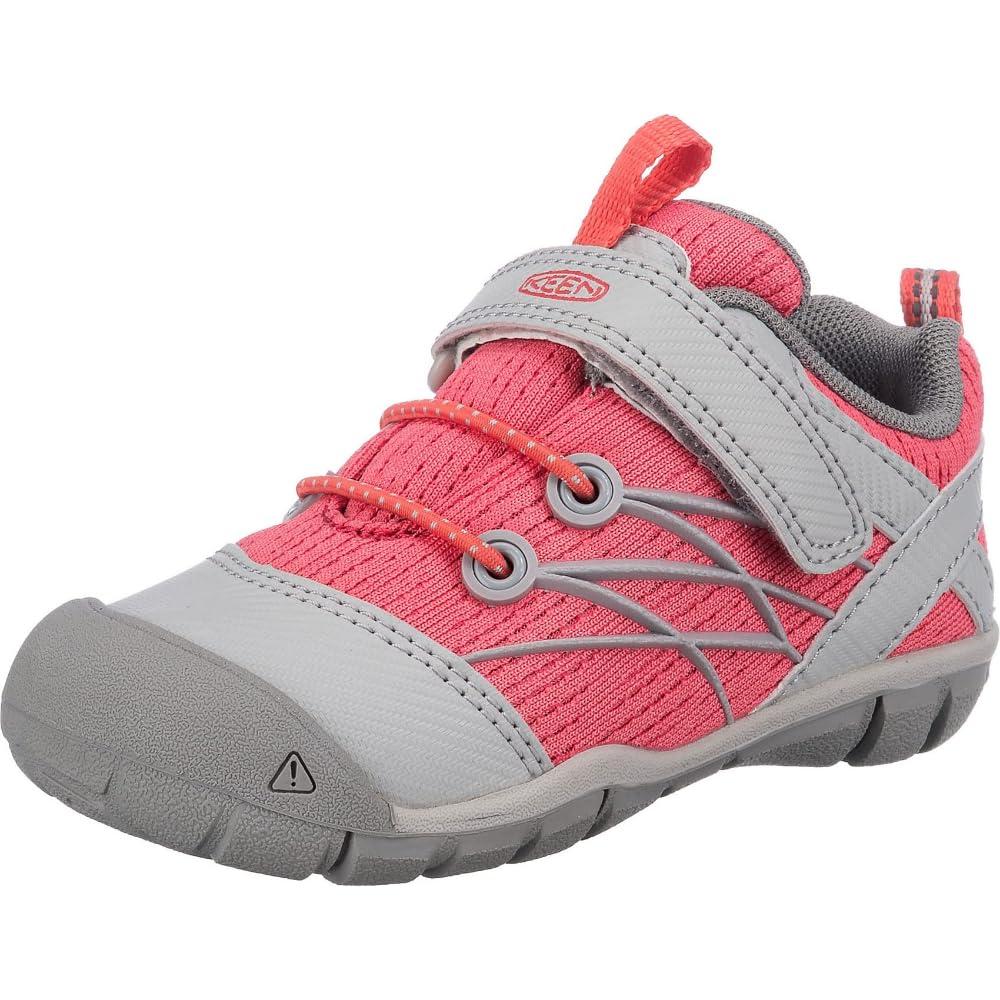
2. KEEN Unisex-Child Chandler CNX Comfortable Sneakers
The trail-ready pick that takes gravel, mud, and a hundred miles without quitting.
Most stability shoes for kids are built for pavement. The Chandler CNX is built for the sandbox and the hiking trail, with a non-marking rubber outsole and multi-directional traction (grip that bites in more than one direction, so it holds on loose ground). Quick-dry mesh keeps it breathable when feet get wet. Its defining trait is the wide toe box — the front of the shoe is roomy enough that toes splay instead of getting pinched, which is the shape many orthopedic-minded parents look for. One thing to know: the raspberry/pink shade runs pinker in person than the listing suggests.
Durability is where this one earns its keep. Reviewers point out no wear after about two months and 100+ miles, with the Velcro holding up well. The reinforced toe guard takes the brunt of scootering and kicking, and owner after owner notes no toe wear even after months of near-daily use. That is a lot of shoe for a child who treats every sidewalk like a racetrack.
The trade-off is arch height. This shoe has a very high arch, which sits comfortably for some kids and too aggressively for others — a 4-year-old in one review found it digging into the foot, and that family moved to the KEEN Knotch Peak for a lower arch and a more flexible sole. If your child is sensitive under the midfoot, check the arch before committing. There is also a thin insole, which some parents swap for an extra one.
Where it wins: A wide toe box, reinforced toe guard, and multi-directional rubber traction make this the go-to for active kids who play outside, hike, and ride bikes all day.
Where it asks for care: The high arch suits some feet and not others, and the included insole is thin enough that some families add their own for a firmer underfoot feel.
Reach for this if: your child’s day involves dirt, trails, and pavement, and you want a roomy toe box with real tread.
Look elsewhere if: a very high arch under the foot has bothered your child before.
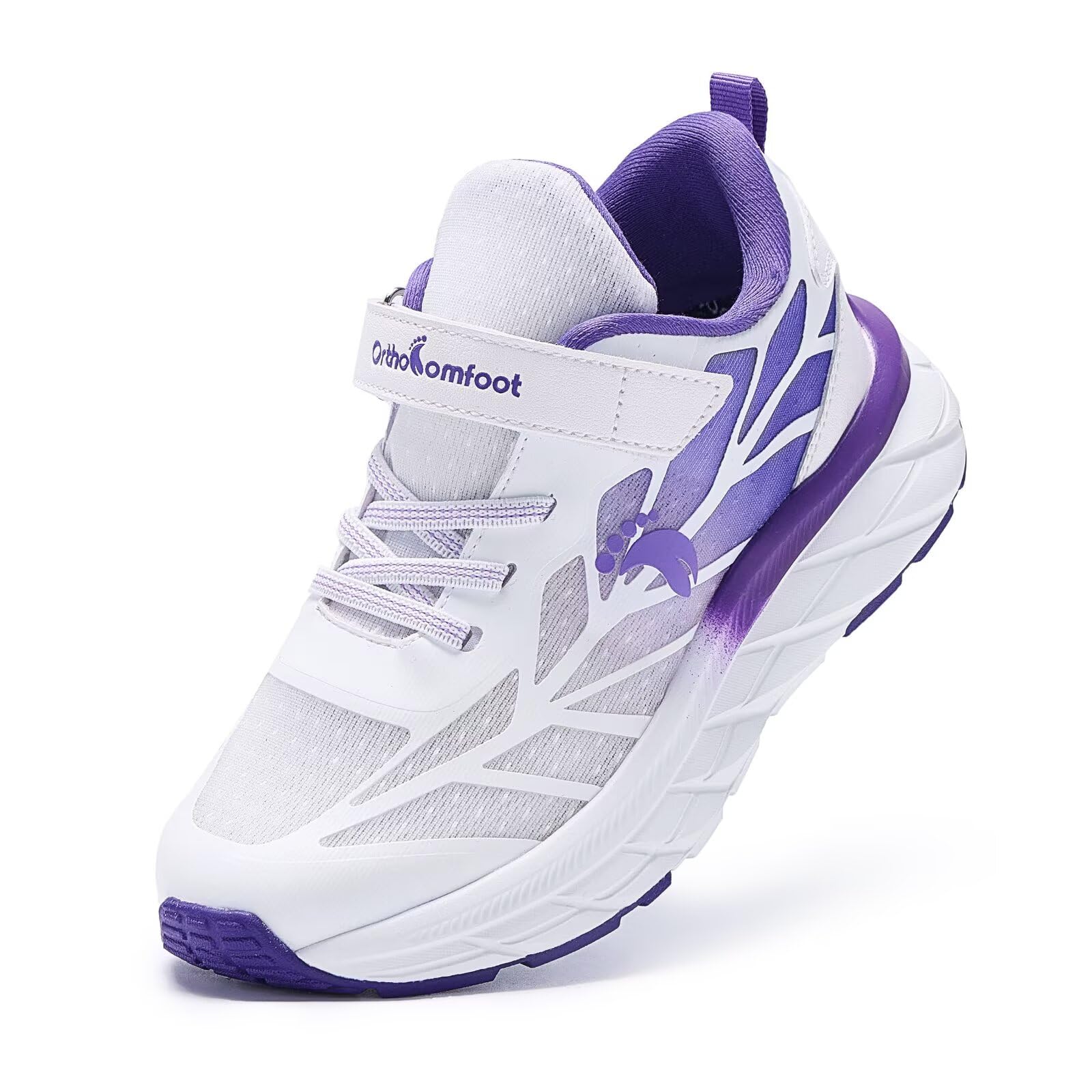
3. Kids Orthopedic Tennis Shoes for Boys and Girls
An orthopedic sneaker that treats flat feet as the main job, not an afterthought.
This is the pick for a child whose flat feet or foot fatigue is the reason you are shopping. The shoe is built around an orthotic arch support and a breathable upper, and it is sized as a school and sports sneaker rather than a medical boot. It is also notably compact — the listing measures it at 5.91 x 4.72 x 0.59 inches, against 12.44 x 7.75 x 4.75 inches for the ASICS GT-1000 13, so check the size chart carefully rather than assuming a matching fit. At 8.82 ounces, it stays light on the foot for a full day of walking.
Comfort leads the feedback, and the arch support is the part families keep returning to — Children with flat feet and heel discomfort describe real relief, and parents of kids needing extra support call it a lifesaver. The shoe is easy to pull on, which matters for a child who wants to dress themselves.
The honest catch is the build. The highest-mentioned issue is build quality, and it cuts both ways: some pairs hold up, while others report problems within weeks. Paint peeling off after a couple of weeks is the recurring version of that complaint, and it is not worth a premium price tag if you expect a flawless finish. Treat this as a shoe you inspect on arrival and rotate with a second pair rather than a sole daily driver.
The draw: Real orthotic arch support under flat feet, in a light 8.82-ounce shoe that looks like a normal sneaker and goes on without a fight.
The fair warning: Finish quality is inconsistent — check the seams and paint on arrival and rotate the shoe with another pair.
Choose it when: arch support is the whole reason for the purchase and your child needs it to look like a regular school shoe.
Pass if: you want a shoe that shrugs off hard daily abuse without a scuff or a peel.
4. Princepard High-Top Corrective Sneakers

The one that actually looks like a sneaker while locking the ankle down.
Most corrective sneakers look like corrective sneakers. This Princepard high-top is the exception — appearance is the single most-praised thing about it, and kids accept it because it reads as a cool sneaker instead of an orthopedic device. Under the looks it is a serious stabilization shoe: a high top with a raised and stiffened heel, a 3D printed orthopedic insole supporting the arch, and a non-slip sole for grip when standing and walking. Adjustable Velcro lets you fit it to different foot widths.
The tip-toe and pronation crowd is where this one gets interesting. One family of a tiptoeing, pronating child reports tiptoeing down substantially and pronation no longer visible with the shoe on within two months, after plastic orthotics caused sweating and skin peeling. Feet that turned inward are the exact problem this shoe is built for.
The trade-off is size and weight. Sizing runs mixed, with some families finding it too small, so measure the foot and follow the chart rather than guessing. The shoe also runs a little heavy, though kids tend to adjust fast. And not every child responds the same way: a few find the toe-walking habit persists even in these. Expect a break-in period of a couple of days as the foot adapts.
Why parents pick it
- Looks like a normal sneaker, so kids actually want to wear it
- High top with stiffened heel for real ankle stability
- 3D printed orthopedic insole supports the arch
- Adjustable Velcro fits different foot widths
Where it asks patience
- Size runs mixed for some families — measure carefully
- A little heavy, with a short break-in period
Best match for: a child who resists orthopedic-looking shoes but needs a locked-in high top.
Consider another pick if: your child is right on a size boundary or has a foot that needs a lighter shoe.
5. Orthopop Kids Orthopedic AFO Shoes

A shoe built to stand in for an ankle brace, one step at a time.
This Orthopop is the most correction-focused pick on the list. It uses a high back with a raised, stiffened heel to wrap the ankle, plus a U-shape orthopedic insole that blocks the foot from sliding inward or outward. The sole is non-slip and wear-resistant for grip on uneven ground. Fit is the strongest point — families describe a true-to-size shoe with solid arch and ankle support that stays put, and the adjustable Velcro lets you tighten it to different foot widths.
The overpronation story here is direct. One heavy pronator wore these for three months with big improvement, outgrew them into a second pair, and the family expects full correction over time. They wore the shoes everywhere except to bed, and the family found them a cheaper route than ankle braces. That is the exact problem this shoe is designed to address.
The catch is scope. These are built for overpronation and ankle instability, not for tip-toe walking — parents whose child tiptoes note the shoe did not fix that habit. Durability is the other realistic watchpoint, with wear showing up after a few months of regular use. Expect a short adaptation period, too: some kids cannot walk in them the first day or two before settling in. Go by the size chart, since fit runs true to size.
Its strength: A stiff, high-backed heel and U-shape insole combine to hold a pronating ankle steady, and buyers describe a shoe that genuinely stays put through daily wear.
The realistic limit: Plan on replacing them after several months of hard use, and do not expect them to solve tip-toe walking.
Worth grabbing for: a child whose overpronation or ankle instability needs firm, brace-like external support.
Not the tool for: correcting a tip-toe gait, or a foot that needs a soft, flexible shoe.
6. Princepard Kids Orthopedic Shoes

For the toddler whose ankle needs a hard cage, not just a soft cushion.
If your child’s ankle rolls inward enough that a regular sneaker lets the foot wander, this is the more serious option. It pairs a rigid sole and heel cup with a stiff, high back that wraps the heel, plus a 3D printed orthopedic insole that supports the arch and locks the heel. The adjustable Velcro snugges around the ankle and adapts to different foot widths. It is the strongest ankle-locking shoe here for a flat-footed toddler.
What it does well is protect the foot. Children who destroy sneakers in a month get a real run out of these — parents describe months of wear from a kid who usually goes through shoes fast, plus real support under the arch. The shoe is also cooler-looking than most orthopedic options, with a silhouette families describe as closer to a trend sneaker than a medical appliance.
The catch is the stiffness. This is a hard shoe, and some kids find it hard to put on at first, though most learn to do it themselves. The Velcro straps also run short for some foot widths. Treat it as a shoe to fit carefully and break in gently, not a slip-on for a rushed morning.
What it delivers: A rigid sole, stiff heel cup, and 3D printed insole that hold a flat, rolling foot in a neutral position through the day.
What it asks: Patience getting it on and a careful fit on wide feet, where the Velcro straps can run short.
Pick this if: a toddler’s flat feet and inward roll need firm ankle support in a shoe that does not look like a brace.
Try the high-top alternative if: your child is very young or has a wide foot and needs an easier on-off.
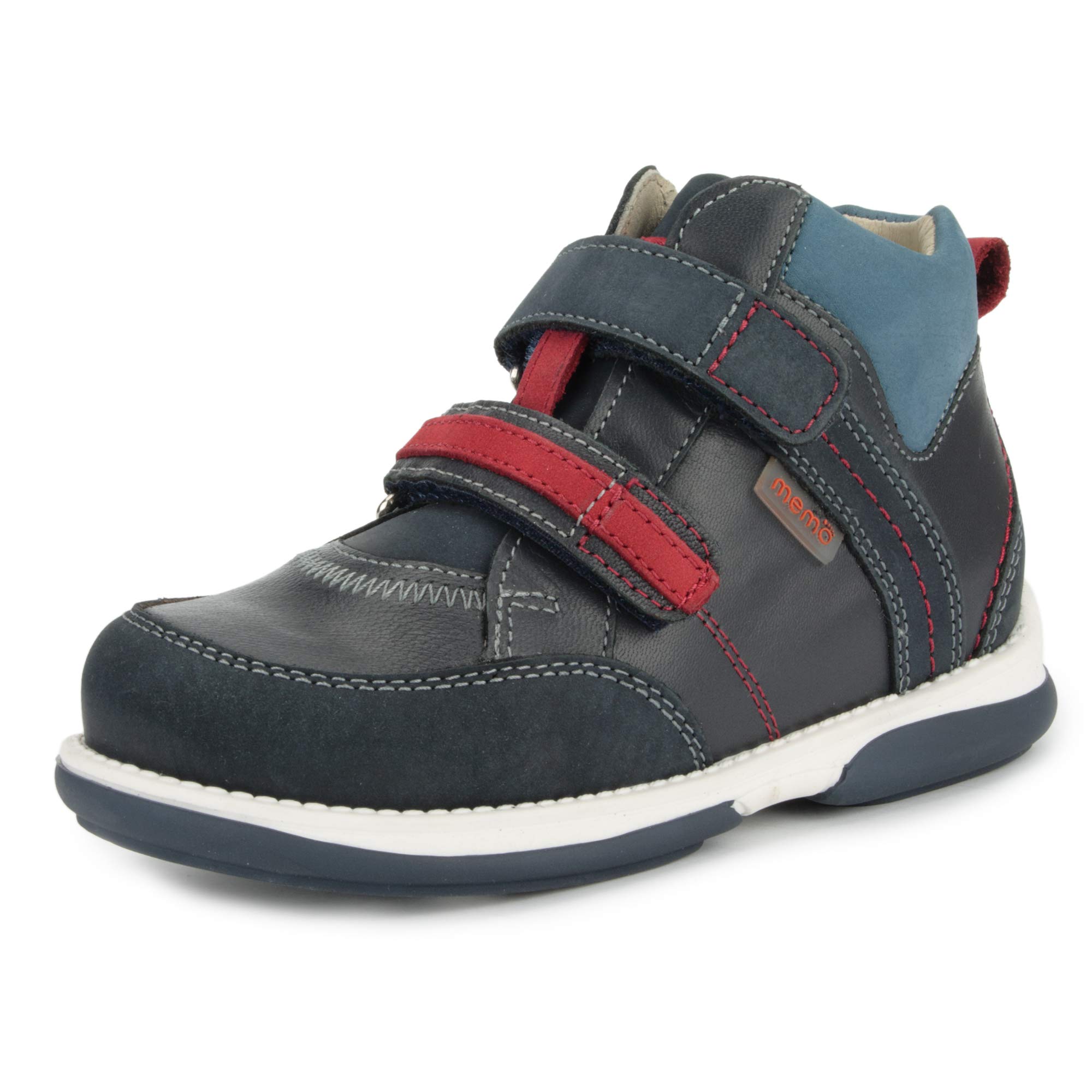
7. Memo Polo Children’s Corrective Orthopedic Sneaker
The leather high-top for a child who trips every few steps.
Some overpronation shows up as falling, not as an awkward gait. This Memo Polo high-top is built for that child — a raised, supportive ankle and a firm sole that gives stable ground to push off from. The leather upper gives it a sturdier structure than a mesh sneaker, and the Velcro straps hold the foot in place. Its standout feature is that it can accommodate custom orthopedic inserts, with families reporting the inserts fit perfectly and stabilize the feet.
The falling-down story is the reason many families find it. One family’s 2.5-year-old, who tripped every few steps in every other brand from inward-turning feet, stopped falling in these. Support is strong but not brutally stiff, which is where the leather build helps — kids with mobility challenges get the ankle hold without the board-like feel of some high tops.
Leather is the trade-off. It wears faster than mesh, so scuffs appear with day-to-day use. The straps also run short on some sizing, so a wide foot can find the Velcro reaching only partway. Look after the leather and the straps and this shoe does its job well.
The main event: A supportive leather high-top that steadies a rolling foot and can hold custom orthopedic inserts in place.
The thing to plan for: Leather scuffs sooner than a synthetic upper, and the straps can run short on wider feet.
Well suited to: a child who trips or falls because of inward-turning feet, especially if custom inserts are part of the plan.
Might not suit: feet wide enough that the Velcro straps struggle to reach across.
Know the Specs
Heel Counter and High-Back Support
The heel counter is the stiff cup at the back of the shoe that grips the heel bone. In a pronating foot, a raised and stiffened heel counter is the single most useful feature you can look for — it stops the ankle from rolling inward before the roll starts. Several orthopedic picks here use a hard, high back for exactly this reason. A soft heel cup lets the foot wander, while a firm one keeps the heel locked so the arch support underneath can do its job.
Arch Support and Removable Insoles
Arch support is the raised section under the midfoot that holds the arch up and resists flattening on each step. A shoe with a built-in orthotic insole gives you that support from day one, while a removable insole lets you add a flexible arch insert or a custom orthotic if your child needs one. Look at whether the insole lifts out, because that decides how much adjustability you have. A shoe with a glued-down insole is fixed — you take whatever arch it ships with.
Closure: Velcro Straps vs Laces
Hook-and-loop straps (Velcro-style) let you snug the shoe around the ankle and midfoot, and they let a child put the shoe on without help. Adjustable Velcro also lets the shoe adapt to different foot widths. Laces offer finer fit but fray and slow down a child in a hurry. For a pronating foot, the strap is doing real work — it holds the foot back against the heel counter, which is where the ankle control comes from.
Weight and Sizing
Weight matters because a heavy shoe can fatigue a young walker, though kids adjust quickly. The listed weights on this list range from 8.82 ounces on one orthopedic sneaker to 1.27 pounds on the ASICS running shoe. Sizing is where most returns come from on corrective sneakers — a few picks here run small, others run mixed, so measure the foot and follow the size chart rather than assuming a match. A half size can change how much room the toes get.
Common Questions
Do kids’ shoes actually help with overpronation?
What is the difference between overpronation and flat feet?
Should I buy the same size as my child’s regular sneakers?
Can I put my child’s custom orthotic inserts into these shoes?
How long do orthopedic kids’ shoes usually last?
Do these shoes work for tip-toe walking?
Is a high-top better than a low-top for a rolling ankle?
Can my child wear orthopedic sneakers to school all day?
Are wide feet a problem with these shoes?
Should my child wear orthopedic shoes if there is no diagnosed problem?
The Bottom Line
For most children with overpronation, the ASICS GT-1000 13 is the one to start with — a stability trainer with a medial wrap-up outsole, a hook-and-loop closure, and a removable sockliner, all in a shoe that looks like a normal school sneaker. It handles running and recess without telegraphing that your child is wearing anything corrective. If the roll is more pronounced and you need a firm ankle lock, the Princepard high-top adds a stiffened heel and a 3D printed insole while still looking like a cool sneaker. And for a child who trips and falls because the feet turn inward, the Memo Polo high-top steadies the ground underfoot and takes custom inserts. One practical nudge: the ASICS is the highest-scoring pick here at 4.5+ stars from 300+ owners, making it the safest all-round first step.
How we choose
We do not accept paid placement. Every pick is matched to a real buyer and a real use-case; we do not hands-on test units.
Sources
Specifications: manufacturer listings and product documentation. Review insights: verified customer reviews, as of October 2026. Pricing: not shown on this page (it changes often); check the current price via the retailer link.
As an Amazon Associate, Aappliancez earns from qualifying purchases. This does not affect which products we feature.