Disclosure: Some links in this post are affiliate links. As an Amazon Associate I earn from qualifying purchases, at no extra cost to you. Learn more
Specs are compiled from manufacturer listings and verified buyer reviews and can change over time — please confirm the key details on the product page before buying.
Buying kefir grains is not like buying a bottle of kefir — you are buying a living culture that has to wake up, eat, and multiply in your kitchen. The picks below are the ones that actually do that reliably. The Fusion Teas grains take the top spot because they arrive fresh, come with a 52-page eBook and unlimited email support, and have a track record of growing fast once you get the milk ratio right. But if you want a larger starting portion or a kit that comes with a straining bag, two other options on this list fit that job better. This guide breaks down what separates a grain that thrives from one that just floats there doing nothing.
This guide is built by comparing the manufacturers’ published specifications and the patterns across verified customer reviews, so you get each pick’s real strengths and trade-offs instead of marketing spin.
Fresh grains beat freeze-dried powders because they start working in days instead of weeks, and the picks here all ship live. The trick is matching the grain quantity to your batch size and using the right milk. This breakdown of the kefir grains covers portion size, revival time, and how fast each culture multiplies.
Top Picks
How To Choose The Best Kefir Grains
You are buying a living thing, not a shelf-stable powder. That changes everything about how you pick one. A grain that arrives healthy can double in volume within days, while a weak one can sit in milk for two weeks and never thicken it. The five picks here all ship fresh and live, but they differ in starting quantity, support materials, and how forgiving they are when you are still learning.
How much grain do you actually need
Grain quantity decides how much milk you can ferment at once and how fast the culture works. A single teaspoon suits a small daily batch, while a heaping tablespoon handles a larger jar without you having to wait extra hours. The Fusion Teas portion is designed to grow and expand with use, and the Active Milk Kefir Grains ship as 1 tsp. Start smaller if you only drink one glass a day — grains multiply, so a small portion becomes a big one within weeks.
Fresh live grains vs. dried cultures
Freeze-dried cultures need a longer wake-up, sometimes stretching into days of milk changes before they produce anything drinkable. Fresh grains arrive already active and often ferment within 24 to 48 hours of their first feeding. The Mr. and Mrs. Kefir grains have never been frozen or dehydrated, which is why they are described as ready for immediate use. All five picks on this list are live cultures, so none of them require the long rehydration a powder does.
Milk type matters more than you think
Ultra-pasteurized milk can stall or kill a culture, and several buyers report exactly that. Whole milk at around 72 to 77°F is the range where grains tend to work best, and raw or low-pasteurized milk often gives faster, creamier results. If your grains float and never thicken the milk, try switching your milk before blaming the culture. Half-and-half plus a little milk powder is another route to a thicker pour.
Side-by-Side Comparison
| Model | Best For | Starting Amount | Weight | Ferment Window | Amazon |
|---|---|---|---|---|---|
| Fusion Teas Milk Kefir Grains★ Best Overall | Beginners who want full support | 2 Tbsp | — | — | Amazon |
| POSEYMOM Milk Kefir GrainsLargest Starter | Family-sized daily brewing | 1 heaping Tbsp | 8 ounces | 24 hrs per 8-12oz | Amazon |
| Active Milk Kefir Grains | Small single batches | 1 tsp | 1.06 ounces | 12-24 hrs | Amazon |
| Mr. and Mrs. Kefir Live Milk Kefir Grains | Never-frozen freshness | 1 tsp | 0.18 ounces | 16-20 hrs | Amazon |
| Lifetime Kefir Milk Kefir Grains | Long-term daily producers | — | 0.18 ounces | 24-48 hrs | Amazon |
Detailed Reviews
1. Fusion Teas 2 TBSP Milk Kefir Grains
Our pick — over 4.5★ from 800+ verified ratings; the strongest balance of quality and price.
The 2-tablespoon head start that turns first-timers into daily brewers
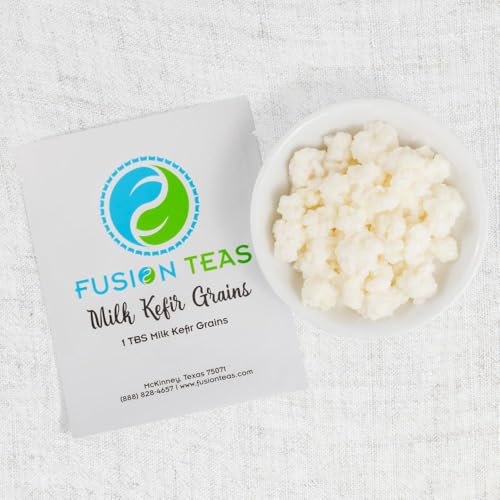
The Fusion Teas grains come as a 2-tablespoon portion, and that size is the whole point. A bigger starting scoop means you skip the weeks of nursing a tiny culture along — you drop it in milk and get something drinkable in two or three days. Grains this size also multiply faster, so within a month you have more than you can use. They are fed and cultivated daily by the supplier, who keeps a diverse community of live cultures going for milk kefir.
Two things push this pick to the front. First, the 2 Tbsp starting portion is twice what the Mr. and Mrs. Kefir grains give you at 1 tsp. Second, you get a 52-page eBook with photos, video tutorials, step-by-step directions, and recipes — plus unlimited email support for as long as you own the grains. Beginners who have never fermented anything before can follow along and get a decent first batch. There is a reason this is the crowd favorite, holding a 4.6 average across 800-plus ratings.
The honest catch: your first one or two batches will not taste like the kefir you are used to. New grains need that 36-hour ferment window to rebalance their yeast and bacteria, and the result is yeasty, sour, and fizzy — closer to a sharp sparkling drink than a smooth yogurt pour. Give it two rounds of milk and the flavor settles. A few batches in, owners mention the grains grow fast enough that a single tablespoon can handle a full quart.
What earns it the top spot
- 2 Tbsp starting portion means faster first kefir and quicker multiplication
- 52-page eBook plus unlimited email support covers total beginners
- Reusable grains that keep producing for the whole family without repurchasing
- Versatile enough for cream cheese and second ferments with fruit
What to expect at first
- Initial batches taste yeasty and sour until yeast and bacteria rebalance
- Grains multiply so aggressively you will eventually have to discard or share extras
Snap it up if: you want the safest first purchase, with hand-holding built in for the first month.
Think twice if: you already know your way around a fermentation jar and just need raw grains without the support package.
2. POSEYMOM Milk Kefir Grains
The bulk-buy option that turns one order into a household kefir habit
If you measure grain by the spoonful, the POSEYMOM starter is a monster. It arrives as 8 ounces by weight — against the Active Milk Kefir Grains at 1.06 ounces, that is the biggest portion gap on this list, roughly seven and a half times heavier. You feed it a heaping tablespoon per batch and get 8 to 12 ounces of drinkable kefir back every 24 hours. For a family that goes through a glass a day each, this ends the routine of nursing a shrinking culture back to health.
The grains are grown by a family operation out of West Texas, hand-picked and shipped, and the supplier keeps personalized email support open for anyone who gets stuck. Instructions are online and print-friendly, so you can follow along from a phone in the kitchen. The quality of the culture itself is what wins people over most — this is the strain owners keep coming back to for a fuller body and a cleaner, less yeasty taste than the other strains they have running.
One real limitation: this grain set can take a while to wake up. Owners describe an initial phase where the kefir is thin and glue-like before it settles into a tangy, creamy groove. Some grains also arrive slightly liquefied from transit, and one owner’s batch never recovered and thickened the milk at all. That is the exception rather than the rule — the overwhelming majority of buyers get a strong culture running within the first two weeks. If you get a dud, the supplier’s satisfaction guarantee is the reason to order directly rather than through a third party.
Why it earns its spot: The 8-ounce portion is the heaviest on this list and it is backed by face-to-face email support. Grain-to-milk ratio is easy to dial in — one heaping tablespoon per small batch, and the grain count rises so fast you can split, freeze, or share extras within weeks.
Where it falls short: Expect a slower wake-up than the Fusion Teas grains. If you are impatient, or expect the first pour to taste like a grocery-store carton, give it two or three rounds of whole milk before you judge the flavor.
Reach for this if: you want a big, generous portion that supports a family-sized rotation and don’t mind a short settling-in period.
Look elsewhere if: you want the fastest possible first-drinkable-batch on a single pour of milk.
3. Active Milk Kefir Grains

A featherweight one-teaspoon culture that punches far above its shipping weight
At 1.06 ounces shipped weight, this is the lightest and most compact starter option in the group. It ships as a single teaspoon of grains from Backyard Preserves, and that tiny scoop is the entire point: it costs the least to get into the hobby, and it grows fast enough that a teaspoon becomes a working culture within a couple of weeks. Customers note the grains quadrupling in volume within weeks, turning a single teaspoon into more culture than most households can use.
The culture itself is quality-first — that facet of the product is what reviewers single out by the widest margin. It produces great kefir, with a 12 to 24 hour ferment window, and the included instructions walk a first-timer through the daily milk changes. Reviewers point out this grain doubling in volume within a day of arrival, with milk that tastes clean rather than sharp. If you want fast growth without paying for a large starter portion, this is the grain set that turns a single teaspoon into a family supply.
Two caveats worth knowing before you order. Some buyers find the grains too small when they arrive and the value for money less impressive than the sprouting suggests — a mixed bag in the review pages, not a universal complaint. A rarer but harsher case involved grains that arrived unprotected in an inflated box during Phoenix heat; the culture grew but never cultured the milk, and the supplier went silent on a refund. The sensible move is to check the tracking and unpack the box quickly — this culture wants to be in milk, and fast.
Value angle: The lowest entry point on this list, and a teaspoon of live grains gets you brewing in days. It ferments a batch in 12 to 24 hours and multiplies fast enough to offset its own cost in store-bought kefir.
One thing to watch: Arrival condition matters more for this grain than any other on the list. The 1.06-ounce packaging and a long trip in the sun are not friends — order in cooler months if you live somewhere hot.
This is your pick if: you want a toothpick-thin startup cost and are happy to grow your own grain volume from a teaspoon.
skip it if: you need a big portion on day one, or you are ordering in midsummer and want maximum resilience in transit.
4. Mr. and Mrs. Kefir Live Milk Kefir Grains

Fresh grains that were never frozen, never dried, and never sat on a shelf
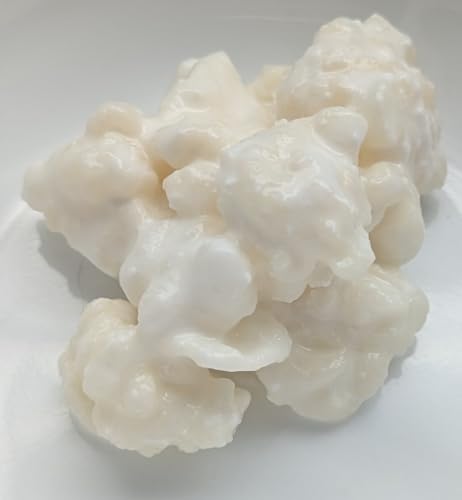
The Mr. and Mrs. Kefir grains come as a 1-teaspoon SCOBY — a symbiotic colony of bacteria and yeast, which is the living engine that turns milk into kefir. The headline claim is freshness: these grains have never been frozen, refrigerated for long-term storage, or dehydrated. Whether you trust that or not, the effect shows up in the milk. Shoppers say ferment times of 16 to 20 hours using raw grass-fed milk, which is on the fast end for a one-teaspoon starter. The grains double in size within a week of first use.
Compared with the Active Milk Kefir Grains above, the portion size is similar, but the emphasis is on the culture’s shipping condition rather than its count. That approach pays off for anyone using raw goat or raw cow milk — the more active the starting culture, the less likely your first batch turns sour and thin. Instructions come in the jar, and the grains are described as vigorous and ready to ferment straight out of the packaging. A single teaspoon is enough to kick off a steady production cycle within days.
The trade-off is scale. A one-teaspoon starter is a slow-burn route to a big grain supply — several buyers report only the doubling effect in the first week, plain and simple. If you want a full family rotation within a month, the POSEYMOM 8-ounce portion or the Fusion Teas 2-tablespoon starter gets you there faster. The Mr. and Mrs. Kefir grains are for the patient brewer who prizes a virgin culture over a big starting scoop — and who is willing to grow the supply over weeks rather than days.
The freshness case: Never frozen, never dehydrated, never long-refrigerated. That matters if you have been burned by a starter that arrived half-dead and took two weeks to wake up. With raw grass-fed milk these grains produce drinkable kefir in 16 to 20 hours.
The pace trade-off: One teaspoon does not become a quart-sized supply overnight. Expect a week or more before you can brew a batch big enough to share. Pair with a smaller fermenting jar for the first month.
Best for: the careful brewer who wants an undamaged, virgin culture and does not mind growing the volume from a single teaspoon.
Not the fastest choice if: your priority is producing enough kefir for a family within the first two weeks.
5. Lifetime Kefir Milk Kefir Grains
The one that ships with the straining bag, so you can brew the day it lands
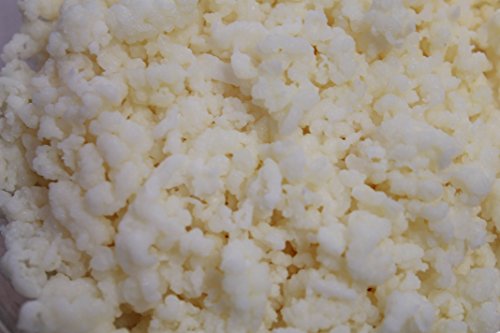
Most kefir grain kits leave you hunting for a mesh bag before you can even start. Lifetime Kefir solves that by including a cotton muslin bag with the grains, along with printed instructions. The grains themselves are the star — they multiply with proper care, and owners mention thick, creamy results within four cycles. Using raw goat milk in a 32-ounce jar, several owners scaled from 2-cup batches to 4-cup batches in about six weeks. The culture ferments for 24 to 48 hours, with the longer window giving a more probiotic-rich pour.
Quality is what this pick is known for, and the muslin bag makes the daily straining routine less fussy than improvising with a coffee filter. The included printed instructions are good enough to get you started, though a few customers note they are lengthy and that a 20-hour ferment target is on the optimistic side — 36 hours in a cooler kitchen is more realistic. Raw goat milk and pasteurized whole milk both work; UHT milk does not, which is the single biggest reason a fresh batch fails.
What to plan for: this grain is not a same-day starter. The one-teaspoon portion arrives small, and it can take weeks to fully activate if your kitchen runs cool. Start with a cup or two of milk, keep the jar covered with a breathable cloth, and be patient. Once the grains catch, they produce consistently for months. Reviewers point out grains surviving months unfed in the fridge and resuming production on the next feeding.
What makes it stand out
- Includes a cotton muslin bag and printed instructions — no extra equipment to buy
- Reliable, rich culture that produces thick, creamy, effervescent kefir once active
- Grains survive months unfed in the fridge and resume production on demand
- Works with raw goat milk and pasteurized whole milk alike
What buyers should plan for
- Slow to activate in a cool kitchen — sometimes several weeks
- Small starting portion means the first batch will be modest
- Instructions are long and the suggested ferment window may be too short for your kitchen
Pick this if: you want everything in one box — grains, bag, and instructions — and you can be patient with the activation phase.
Choose the Fusion Teas grains instead if: you want a larger starting portion and don’t need the bag.
Know the Specs
Starting Portion (Tbsp vs. Tsp)
Portion size tells you how much milk one order can handle and how quickly the culture takes off. A 2-tablespoon starter covers a quart from day one; a single teaspoon means beginning with 1-2 cups and scaling up as the grains multiply. Larger starting portions cost more but skip the slow-growth phase.
Grain Weight
Shipping weight reflects actual culture mass, not packaging. An 8-ounce portion contains roughly seven times the live grain of a 1.06-ounce starter. Heavier portions multiply faster and are more forgiving of beginner mistakes. Lighter portions demand careful milk ratio management in the first weeks.
Ferment Window
This is the time your grains need in milk before the kefir is ready. Shorter windows (12-24 hours) suit warm kitchens and smaller batches; longer windows (36-48 hours) give a more probiotic-rich, creamier pour. Readiness is easy to spot — the kefir thickens and forms small whey pockets.
Milk Compatibility
Your grains need the right fuel. Whole milk at roughly 72-77°F works best; raw milk and low-pasteurized milk ferment fastest; UHT or ultra-pasteurized milk stalls growth because its proteins have been altered. Switching milk types is the first fix to try when a culture seems stuck.
Common Questions
How long do kefir grains last?
Do kefir grains work with almond or oat milk?
Why are my kefir grains not thickening the milk?
How much kefir can I make from one teaspoon of grains?
Do I need to rinse my kefir grains between batches?
How do I know when my kefir is ready?
What happens if I don’t feed kefir grains every day?
Is raw milk better than pasteurized milk for growing kefir grains?
Can I share or sell the extra kefir grains my culture produces?
How long do grains take to revive after shipping?
The Bottom Line
If you want the safest first order, the Fusion Teas 2 TBSP Milk Kefir Grains gives you the largest beginner portion plus a 52-page eBook and unlimited email support to get through the yeast-and-bacteria balancing phase. If you want a big portion for the whole household, the POSEYMOM 8-ounce starter keeps the daily brewing lines running. And if you want a kit in one box — grains, muslin bag, and instructions — the Lifetime Kefir grains are the one to reach for. Whichever you pick, start with whole milk, keep the jar around 72-77°F, and be patient with the first two batches — that is where every new kefir grain earns its keep.
How we choose
We do not accept paid placement. Every pick is matched to a real buyer and a real use-case; we do not hands-on test units.
Sources
Specifications: manufacturer listings and product documentation. Review insights: verified customer reviews, as of October 2026. Pricing: not shown on this page (it changes often); check the current price via the retailer link.
As an Amazon Associate, Aappliancez earns from qualifying purchases. This does not affect which products we feature.