Disclosure: Some links in this post are affiliate links. As an Amazon Associate I earn from qualifying purchases, at no extra cost to you. Learn more
Specs are compiled from manufacturer listings and verified buyer reviews and can change over time — please confirm the key details on the product page before buying.
Buying a juniper online is a bet on a plant you cannot see, smell, or squeeze — and the honest answer is that the pot size on the listing tells you more about your first year than the height claim does. A juniper shipped as a rooted cutting in a starter cell will sulk in the ground for a season while it builds roots. A taller, older start skips that stall. Below you will find the picks worth your money split by what you actually want the plant to do: become a windswept bonsai on a patio table, throw up a narrow privacy column in a small yard, or carpet a hot slope in blue-green.
This guide is built by comparing the manufacturers’ published specifications and the patterns across verified customer reviews, so you get each pick’s real strengths and trade-offs instead of marketing spin.
Every juniper here is an outdoor plant that wants sun and drainage, so your soil and your planting month matter as much as the listing. Here is how each of these picks actually behaves once it leaves the box, so you can choose the right juniper evergreen trees for your ground instead of guessing.
Top Picks

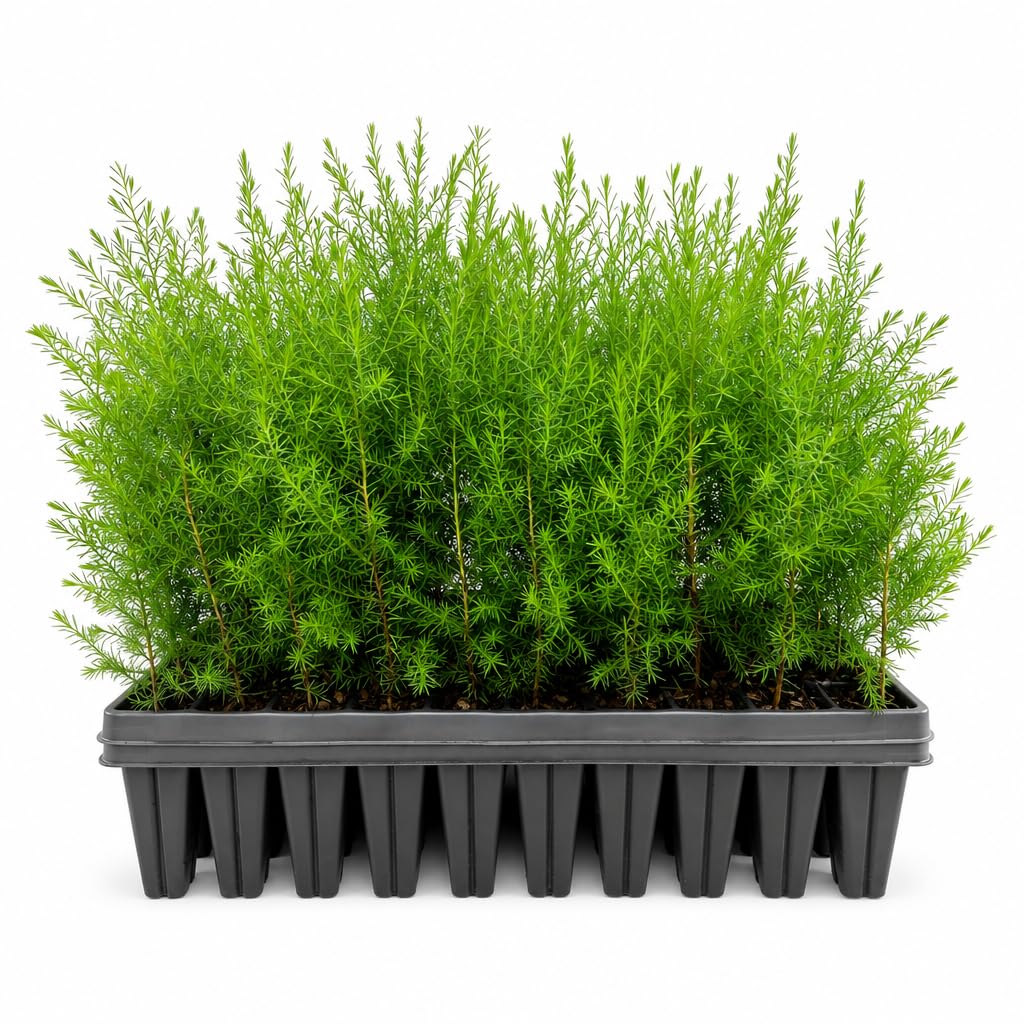
How To Choose The Best Juniper Evergreen Trees
Start with the shape you need, not the name on the tag. Junipers come in two working forms: tall and narrow, which makes a screen or a focal point, and low and spreading, which covers ground and holds a slope. Buy a spreading juniper for a privacy screen, or a columnar one for a bank, and you spend three years pruning against its natural habit.
Match the growth habit to the job
A columnar juniper grows upright and tight, so it works as a privacy screen along a fence line or as a vertical accent in a small bed. A spreading juniper hugs the ground and radiates outward, which is what you want on a bank, a rock garden, or a strip where grass will not grow. Some junipers sit in the middle — low enough to mound, structured enough to train.
Understand what size plant actually ships
Most of these listings ship young starts, and the pot size is the honest number. A 4-inch plastic pot holds a small tree. A 2-inch starter cell holds something you will baby for a season. Height claims on the page describe the plant you receive, not the mature size, so read both. A juniper that arrives 5 to 8 inches tall is normal for this market and will size up once its roots take hold.
Plan your planting window and your soil
Junipers want full sun and drainage. Sandy or well-drained soil suits them; heavy clay holds water against the roots and that is where most failures start. Planting in a cooler month gives roots time before heat arrives. Water through the first summer even on a drought-tolerant variety, because “drought tolerant once established” means exactly that — established, not newly planted.
Side-by-Side Comparison
| Model | Best For | Growth Habit | Plants Per Set | Sun / Soil | Amazon |
|---|---|---|---|---|---|
| Windswept Juniper Bonsai Trees★ Best Overall | Bonsai training on a patio | Windswept pre-bonsai | 3 | Full sun / sandy | Amazon |
| Southern Red CedarBest For Screens | Native screen and windbreak | Upright, symmetrical | 3 | Full sun / well-drained | Amazon |
| Juniper Procumbens Nana | Ground cover and bonsai stock | Dwarf, spreading mound | 3 | Full sun / sandy | Amazon |
| Blue Arrow Juniper | Narrow privacy column | Narrow columnar | 3 | Full sun / clay | Amazon |
| Skyrocket Juniper | Vertical accent rows | Columnar | 3 | Full sun / — | Amazon |
| Blue Pacific Shore Juniper | Coastal slopes and erosion | Low spreading carpet | 10 | Full sun / sandy | Amazon |
| Prince of Wales Juniper | Bulk groundcover planting | Low sprawling groundcover | 20 | Full sun / sandy | Amazon |
Detailed Reviews
1. Windswept Juniper Bonsai Trees – 3 Tree Set
Our pick — 4.5+★ from 100+ verified ratings; the strongest balance of quality and price.
Three already-shaped junipers in 4-inch pots, so you start training on day one instead of year three.
If you want a bonsai you can actually work on this season, this set is the one. Each tree arrives between 5 and 8 inches tall measured from the table, sits in a 4-inch plastic pot, and spreads 6 to 10 inches across. Compare that to the Prince of Wales starts further down, which land only a few inches high and about 2 inches wide — this is a plant with a trunk to bend, not a seedling you wait on.
The reason these work for a beginner is the wiring response. The branches are flexible enough to reshape, and each of the three trees arrives with a different form, so you get three separate projects out of one order. They also want to be outdoors year round, with low-intensity morning sunlight where it can be had and the direct afternoon sun kept off. That is the opposite of most houseplants people buy for a windowsill.
What wins people over is the condition on arrival — the packing keeps soil moist, and the trunks come thicker than expected on young stock. Buyers report: “All 3 of my junipers arrived in great condition even though temps were high all week.” The honest catch is the pot itself: a 4-inch pot dries fast on a hot day, so plan to check moisture more often than you would with a larger container. Size is also a live question on the listing, with some finding the trees smaller than the photos suggest. Keep that in mind if you were picturing a display-ready specimen.
What makes it the pick
- Arrives pre-shaped at 5 to 8 inches tall with a thicker trunk than typical young stock
- Three different forms per set, so you get three training projects
- Branches take wiring and reshaping, which is the whole point of a pre-bonsai
- Strictly an outdoor tree, suited to year-round patio or garden placement
What to plan for
- A 4-inch plastic pot dries quickly in summer heat — check water daily in a heat wave
- Some buyers find the trees smaller than the photos imply
- Not sold in California
- Needs morning sun and shelter from harsh afternoon glare
Reach for this if: you want to actually wire and shape a juniper this season, and you have an outdoor spot with morning light.
Think twice if: you are picturing a finished show bonsai in a ceramic tray — these are small pre-bonsai stock in nursery pots.
2. Southern Red Cedar 3 Live Plants
A native cedar that tops out at 40 feet and shrugs off dry southern ground once it settles in.
Nothing else on this list gives you a screen this big. The Southern Red Cedar is listed with an expected plant height of 40 feet, which turns a bare property line into a working windbreak. It holds a naturally symmetrical form with dense foliage, so the privacy kicks in before the tree finishes growing. Set it along a fence or across a windward edge and it does the job a row of shrubs cannot.
The care profile is what sells it to a low-effort gardener. It wants full sun and handles sandy or well-drained ground, and once established it is drought tolerant with minimal maintenance. It also resists cedar apple rust, which is a real headache for cedars planted near apple trees. It can go in the ground year-round, and once established it needs little beyond full sun and well-drained ground.
What surprises buyers most is the size of what lands on the doorstep — the starts run taller than the listing photo implies, with one shipment arriving about 10 to 11 inches tall and bright green. Owners mention: “9 of the 10 were solid, 1 was pretty small, a fraction the size of the others.” A few arrive dormant and looking half-dead, then green up after a few weeks of planting and water. Expect a slow start, not a slow death.
Where it shines: a 40-foot native screen that tolerates dry, sandy ground and holds symmetry without clipping.
Where it grumbles: the starts are uneven in a set, so one puny plug per order is normal, and dormant arrivals need patience before they show life.
Picture a fence line that becomes a privacy wall over time — that is this cedar’s job.
But if you need a finished hedge by next summer, a 40-foot tree’s slow first years will test you.
3. Juniper Procumbens Nana – 3 Live Plants
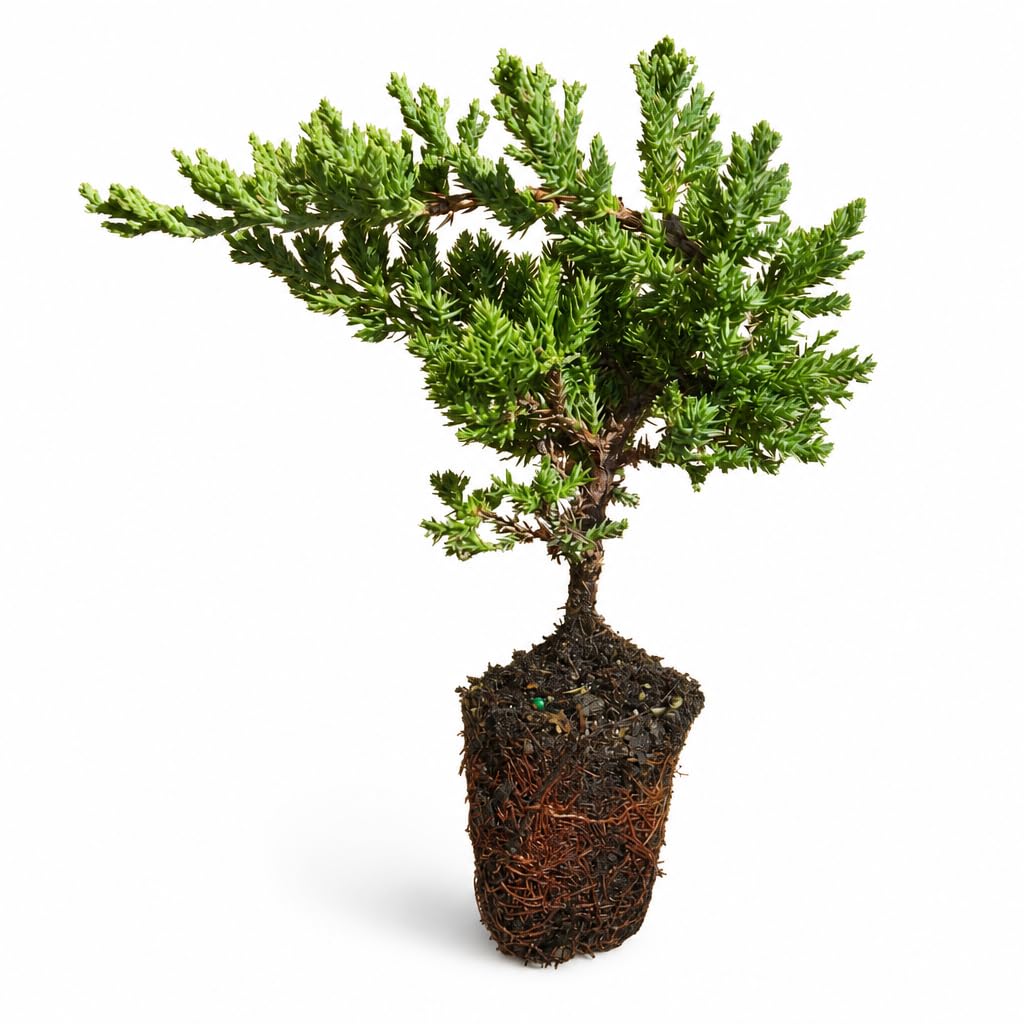
Eight to twelve inches tall and six feet wide — a spreading blue-green carpet that takes punishing heat.
A juniper that grows 8 to 12 inches tall and spreads to 6 feet wide over time is a ground cover, not a hedge. That low, radiating form is what makes Procumbens Nana the honest choice for a slope, a rock garden, or the strip between a foundation and a sidewalk. New growth is bright green and matures to bluish green, and winter brings a purple tint, so the color changes through the year instead of sitting flat.
The blue-green needles run to about a third of an inch long, and the plant adapts to a wide range of soils but prefers dryish, sandy ground. It tolerates hot, dry growing conditions, somewhat poor soils, and many city air pollutants. For someone with a baked slope and no irrigation, that list is the whole argument. Even better, the same plant makes excellent bonsai stock, so the spare plants in a set do double duty.
The thing to brace for is the start. These arrive root-bound in tiny starter packs, which pushes the plant into dwarf mode and slows its first year. One grower’s report puts it plainly: “145 of 180 planted survived over a year; arrived root-bound in tiny starter packs, causing bonsai/dwarf mode and slow first-year growth.” After warm weather arrived, most of that planting pushed to 2 feet of spread in two months, and the stand rode out a severe freeze that killed neighborhood palms. Pot these on out of the starter packs early and they reach the vigorous spreading stage sooner.
Why growers keep buying sets
- Mature size of 8 to 12 inches tall with a 6-foot spread covers ground fast once rooted
- Handles 105°F-plus heat and survives hard freezes
- Adapts to poor soils and city air on top of hot, dry sites
- Works as both a garden spreader and a bonsai subject
The slow start nobody warns you about
- Arrives root-bound in tiny starter packs, which stalls first-year growth
- Size runs smaller than the photos lead you to expect
- Newly planted stock needs regular water before it earns the drought-tolerant label
- An occasional plant in a set does not survive the first month
Best for a hot slope or a foundation strip where you want the ground covered, not a wall built.
Look elsewhere if you need instant coverage this season — pot these on and let the roots break free first.
4. Blue Arrow Juniper | 3 Live Plants | Juniperus Scopulorum
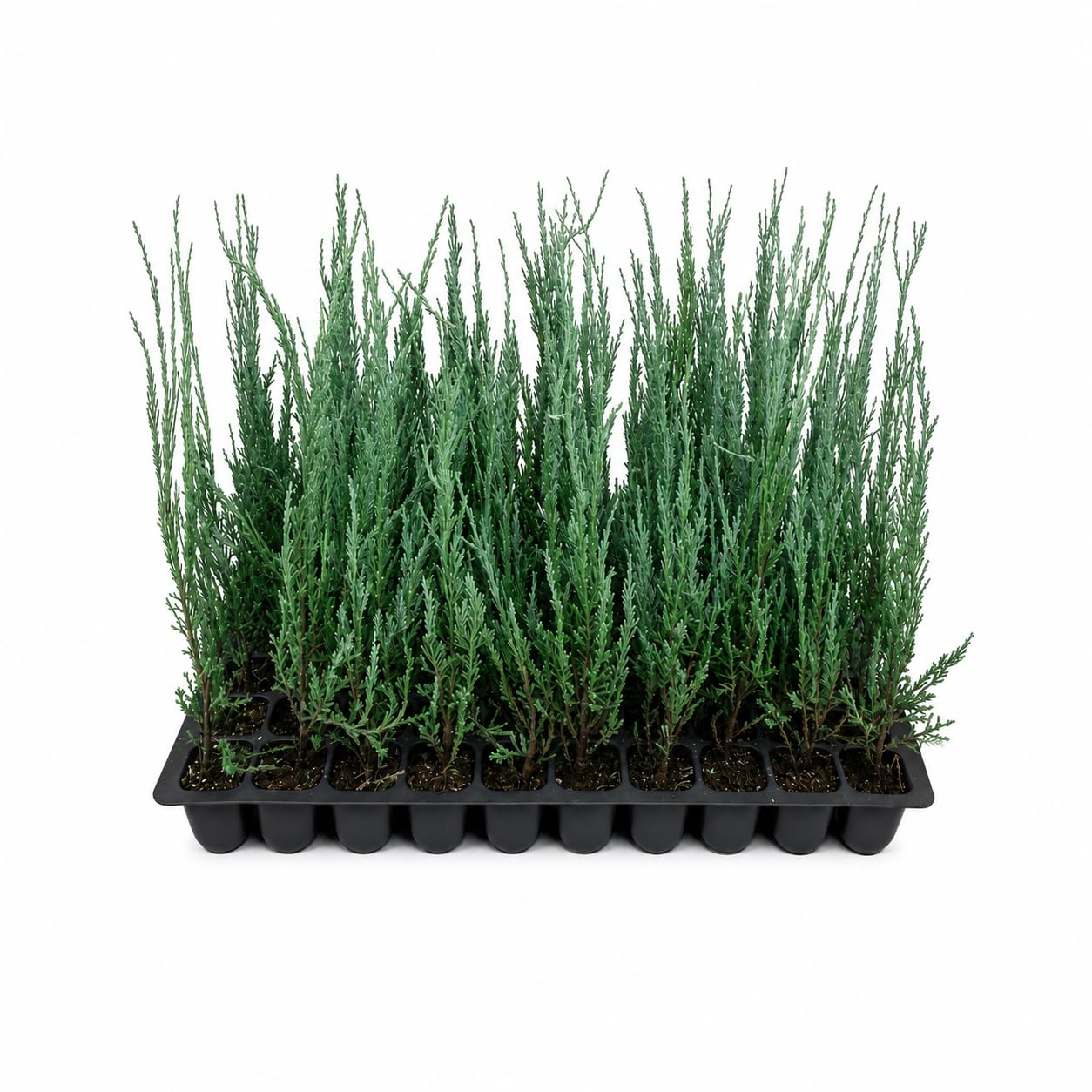
A tight blue column that fits a narrow bed where a wide shrub would swallow the walkway.
Blue Arrow is built for the awkward gap. Its narrow columnar shape adds vertical interest without the spread of a conventional shrub, which is why it suits small spaces, tight property lines, and landscape focal points. The dense blue-green foliage holds its color across all four seasons, so the column stays blue in January instead of going bare like a deciduous hedge would. It also takes clay soil, which is a rarer tolerance than most junipers offer.
Care is light once it settles. It wants full sun and regular watering while it establishes, then hands control back to you — low maintenance and drought tolerant after that. Use it as a privacy screen, a narrow hedge, or a windbreak in a space where a wider tree simply will not fit.
Be ready for the size honest. These arrive as small trees around a foot tall, sometimes scraggly, and several customers note the plants are smaller than the listing suggests — the “1-gallon” label does not mean a full gallon of root in the pot. Health is the strong suit here: what lands tends to be green, well-rooted, and packed so soil does not spill. Six-inch and one-foot starts that look thin in week one go hearty once planted in the ground and given regular water through the first summer.
The case for the column: a narrow blue form that takes clay soil and holds color year round, ideal for a tight screen or a small-bed accent.
The honest limit: expect a small, sometimes scraggly start rather than a finished specimen, so the first season is about roots, not height.
Pick it when the space is narrow and you want a blue vertical, not a bushy hedge.
Hold off if clay-heavy soil has drowned shrubs on you before — even a clay-tolerant juniper wants that ground broken up and drained.
5. Skyrocket Juniper | 3 Live Plants | Juniperus Scopulorum
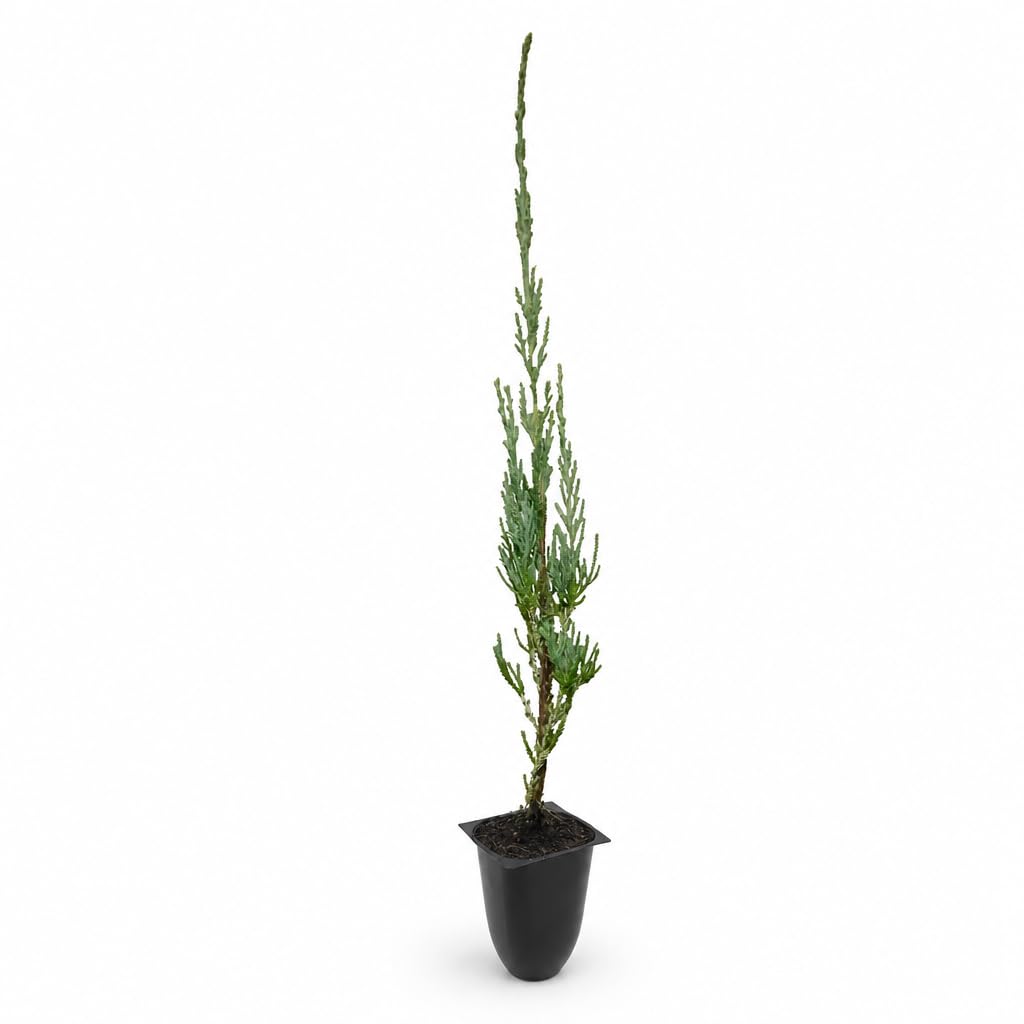
A sharp vertical accent that holds its blue-green color through winter without a single trim.
Skyrocket is the plant you choose for structure. The striking columnar form throws a straight vertical line into a bed, and the dense blue-green foliage keeps that shape and color through every season. It wants full sun, takes well to a variety of garden settings, and needs minimal pruning — good news for anyone who would rather look at a garden than clip one. Pair it in rows for a screen, or dot it as a single accent against lower plantings.
On drought, the promise holds after establishment: it weathers dry spells with less watering, which conserves water in a hot summer. Combine that with the low pruning demand and you have a plant that mostly looks after itself once it takes hold.
The growth rate is the part to weigh carefully. That is where the mixed reports land — some plants are reported still alive four months on, others where only half a set survived the first week. Size is a second honest point, with several noting the plants are smaller than expected. This is not a defect so much as a young plant with a tough first month: water it consistently through establishment, put it in real sun, and give the roots a reason to take. Water it consistently through establishment in full sun, or the first week will decide the plant’s fate.
What it brings to a bed
- Sharp columnar form that reads as structure even in a small garden
- Blue-green color holds through winter, so no bare season
- Minimal pruning once established
- Drought tolerant after it settles in
The first-month reality
- Growth reports are mixed — a set’s survival can be uneven in the first week
- Plants arrive smaller than several buyers expect
- Needs steady water through establishment before it earns its drought-tolerant reputation
- Full sun is a hard requirement, not a preference
Choose it for the vertical line — an ornamental column in a bed or a row.
Not for a hands-off planting where you will not water the first month; this one rewards the babysitting.
6. Blue Pacific Shore Juniper | 10 Live Plants
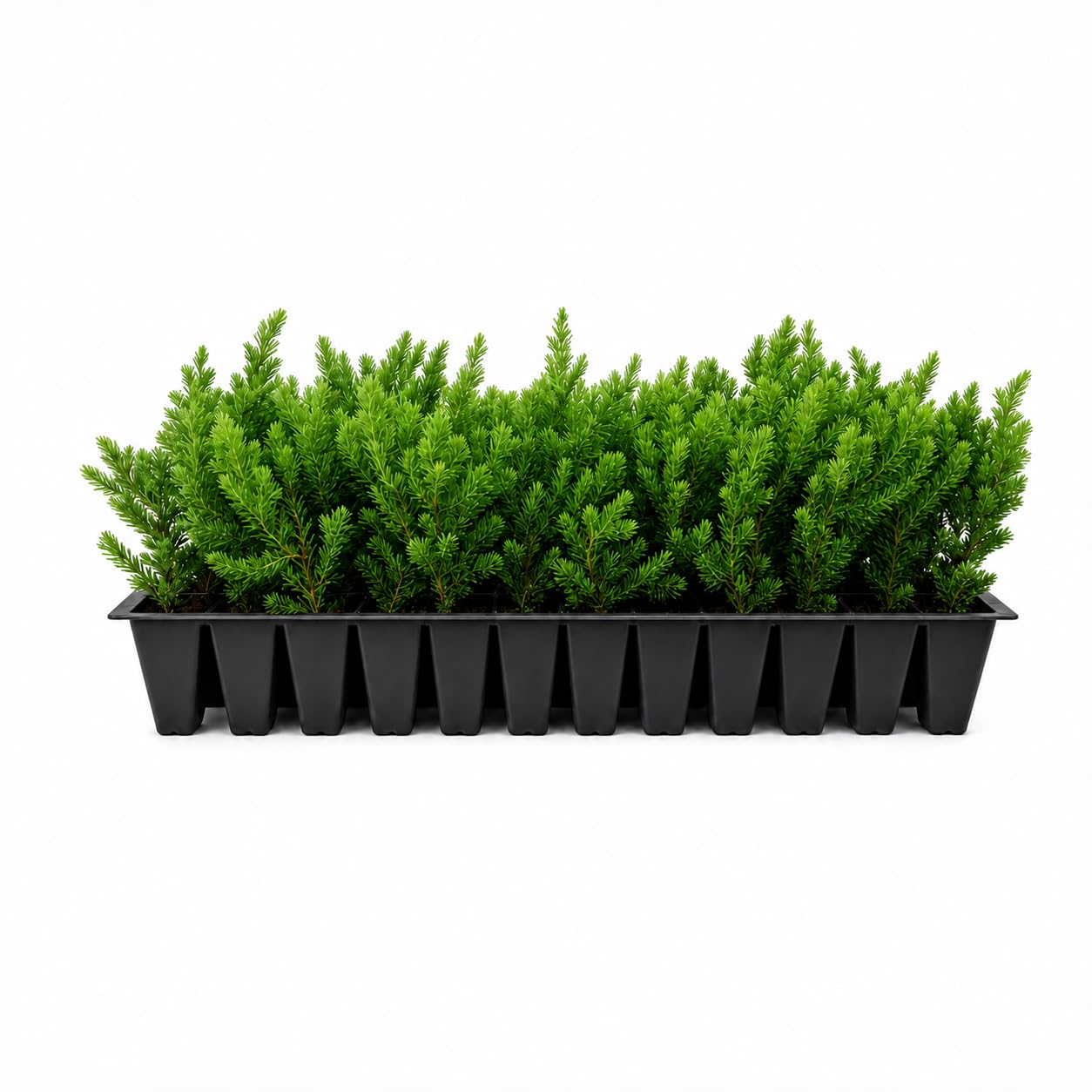
Ten low junipers built for a windy, salty bank where the soil slides and other plants quit.
Shore juniper earns its name on hostile ground. The extensive root system stabilizes soil on slopes and hillsides, which makes it the practical pick for erosion control on a bank you cannot mow. It also carries salt tolerance, so a coastal garden or a roadside with winter de-icing gets a plant that does not flinch. The low-growing habit lays down an evergreen carpet rather than a hedge, and it manages that with minimal maintenance through the year.
Ten plants in one order changes the math on a big slope. Where the three-plant sets leave gaps between shrubs, ten carpet starts let you crowd-plant and force the merge early. It adapts to a variety of soils and thrives in well-drained spots with plenty of sun, so aim for sandy or freely draining ground.
Sizing is the recurring trade-off. These ship in 2-inch starter pots and arrive genuinely small — a few inches of foliage you will wait on. Some sets land a third the size of a previous order, which is frustrating when you expected consistency. The trade is that small starts ship fast and pack well across country; the roots come in decent shape and most fill in over a season or two. Pot or plant these 2-inch plugs immediately and water them through the first summer, and the roots knit the slope over a season or two.
Why it earns a spot: ten plants, a salt-tolerant low habit, and a root system that holds a slope, all in one order.
What you must accept: tiny starter pots mean the first year is about roots spreading, not green coverage, and plant size across sets varies.
Fit for the bare, windswept bank and rocky slope where erosion is the enemy.
Pass on it if you want a full carpet in one season — these need time and crowding to knit together.
7. Prince of Wales Juniper | 20 Live Plants

Twenty spreading junipers for a slope or border, cheap per plant and patient enough to take a bad winter.
Twenty plants is a bulk order, and this is the one for a long border or a bank where individual shrubs would blow your planting budget. The Prince of Wales juniper spreads low and wide with dense, feathery foliage that runs green in summer and takes on purplish tones in winter. It works in full sun to partial shade, handles rock gardens, slopes, and borders, and needs minimal maintenance once established. For a native-ish groundcover planting across a big area, this pack does a lot of ground.
The other reason to keep it on the list is the winter hardiness. These plants are reported to have survived New England winters, and that is not a small claim for a bulk order. Root-wash the starts out of the foam flats, pot them individually, mulch in a trench, and bank straw bales against the cold so they push growth in spring.
Two honest notes. First, the starts are tiny — a few inches high and about 2 inches wide when they land — and they ship packed tight in non-draining foam flats, so pot them on immediately or the roots sit in wet foam. Second, this is a slow plant to settle: the growth starts when the sun and water come, not on your schedule. Plant these 2-inch starts close together in full sun, water regularly, and expect the cover to fill in over the first year.
The value play: twenty spreading junipers in one order, hard enough to survive New England winters once properly potted.
The work it adds: tiny starts in non-draining flats demand immediate potting and steady water before the cover fills in.
Worth it for a big slope or border where quantity matters more than instant size.
Think twice if you want a finished carpet — plant close, water well, and expect the first year to be a build, not a cover.
Know the Specs
Growth Habit
This is the plant’s natural shape, and it decides what job it can do. A columnar juniper grows tall and narrow, so it makes a screen or a focal point in a tight space. A spreading juniper stays low and radiates outward, so it covers ground and holds a slope. Match habit to the spot before anything else — a spreading plant will not screen a neighbor, and a column will not carpet a bank.
Plant Height On Arrival
Most of these ship as young starts, and the listing’s height number describes the plant you receive, not the mature size. A plant arriving 5 to 8 inches tall in a 4-inch pot is a workable start; one arriving only a few inches high in a 2-inch starter cell means a slow first season. Read the pot size alongside the height so you know what is landing on your step.
Drought Tolerance Once Established
“Drought tolerant once established” is a promise with a condition attached. Newly planted stock still needs regular water through its first summer while roots spread into the soil. After that first year, sandy well-drained ground and full sun let a juniper weather dry spells with less watering. Skip the establishment watering and even a drought-tolerant juniper can fail.
Sun And Soil
Junipers want full sun and drainage, and those two needs drive most of their success. Sandy or well-drained soil suits them; heavy clay holds water against the roots, so break it up and improve drainage first. Morning sun is kinder than harsh afternoon glare on young plants. Plant in a cooler month where you can, and give roots time before heat arrives.
Common Questions
Can a juniper evergreen tree grow indoors in a pot?
How tall will the plants be when they arrive?
What does “drought tolerant once established” actually mean?
Which juniper is best for a privacy screen?
Can I plant a spreading juniper on a slope for erosion control?
Why did my juniper arrive looking root-bound in a tiny starter pack?
Is the Southern Red Cedar different from a juniper?
When should I plant juniper evergreen trees?
Do these junipers survive cold winters?
Are any of these junipers not available everywhere?
The Bottom Line
The pick that earns the top spot for most people is the Windswept Juniper Bonsai Trees, because it arrives pre-shaped at 5 to 8 inches tall with branches that take wiring — so you are training a juniper this season, not waiting on a seedling. If a big privacy screen is the goal, the Southern Red Cedar brings a 40-foot expected height for a property line. And for ground coverage on a hot or coastal slope, reach for the spreading sets — the Juniper Procumbens Nana for a blue-green mound, or the Blue Pacific Shore Juniper ten-pack when erosion is the enemy. Whichever you pick, the first season is about roots: full sun, steady water, and room to spread before you judge the top growth.
How we choose
We do not accept paid placement. Every pick is matched to a real buyer and a real use-case; we do not hands-on test units.
Sources
Specifications: manufacturer listings and product documentation. Review insights: verified customer reviews, as of October 2026. Pricing: not shown on this page (it changes often); check the current price via the retailer link.
As an Amazon Associate, Aappliancez earns from qualifying purchases. This does not affect which products we feature.