Disclosure: Some links in this post are affiliate links. As an Amazon Associate I earn from qualifying purchases, at no extra cost to you. Learn more
Specs are compiled from manufacturer listings and verified buyer reviews and can change over time — please confirm the key details on the product page before buying.
If deer keep chewing your landscape down to nubs, the fix is not a spray or a fence — it is planting junipers they tend to leave alone. The plants below are all junipers sold as live plants, and each one is a groundcover or columnar form that handles dry soil, hot sun and browsing pressure far better than tender shrubs. The catch you need to know up front: every one of these ships small, often palm-sized or a few inches tall, so you are buying patience as much as plants.
This guide is built by comparing the manufacturers’ published specifications and the patterns across verified customer reviews, so you get each pick’s real strengths and trade-offs instead of marketing spin.
Junipers resist deer browsing, so the real job is matching a spreading or columnar form to the slope, border or screen you are trying to save. Below, each juniper shows how far it spreads, how tall it eventually reaches, and which soil and sun it wants. That lets you pick the right juniper deer resistant form for your slope, border or privacy line — not just the biggest pot in the listing.
Top Picks
How To Choose The Best Juniper Deer Resistant Plant
Deer do not read labels — they browse by habit, and a juniper deters them through needle texture and aroma, not a guarantee printed on a tag. They browse by habit, and a juniper works as a deterrent because of its texture and aroma, not because of any guarantee printed on a tag. What you can control is picking the right growth habit for where you are planting, and buying plants that arrive healthy enough to survive their first season.
Match the growth habit to the job
A spreading juniper crawls outward and knits into a carpet — good for slopes, banks, rock gardens and holding soil. A columnar juniper grows upward in a narrow tower instead, which is what you want for a privacy screen or a vertical accent in a tight bed. Buying a spreader for a hedge line, or a column for a slope, is the most common mismatch in this category.
Expect small plants and plan for it
Live junipers shipped by mail usually arrive as young starts, frequently in the range of a palm-sized clump or a few inches tall. That is normal for the category, not a defect. Small plants transplant into rocky or root-filled ground more easily and cost less than mature nursery stock, but they need regular water through their first growing season while roots establish.
Check sun, soil and water needs honestly
Most junipers want full sun and well-drained ground. A plant listed for sandy soil will sulk in heavy clay, and one that wants regular watering during establishment will not forgive a dry first summer. Read the moisture line on each listing before you dig the hole.
Side-by-Side Comparison
| Model | Best For | Growth Habit | Plant Count | Mature Height | Amazon |
|---|---|---|---|---|---|
| Juniper Procumbens Nana★ Best Overall | Slopes, bonsai and rock gardens | Low spreading groundcover | 3 plants | 12 inches | Amazon |
| Gold Lace JuniperBoldest Color | Color contrast in beds and banks | Spreading semi-dwarf | 3 plants | 3-4 feet | Amazon |
| Blue Arrow Juniper | Narrow privacy screens in small yards | Columnar upright | 1 plant | — | Amazon |
| Skyrocket Juniper | Fast vertical screens and border trees | Columnar upright | 3 plants | — | Amazon |
| Blue Rug Juniper | Erosion control on tough ground | Trailing groundcover | 10 plants | 60 centimeters | Amazon |
Detailed Reviews
1. Juniper Procumbens Nana 3 Live Plants
Our pick — 4.0+★ from 100+ verified ratings; the strongest balance of quality and price.
A blue-green carpet that stays under a foot tall and shrugs off heat, bad soil and browsing.
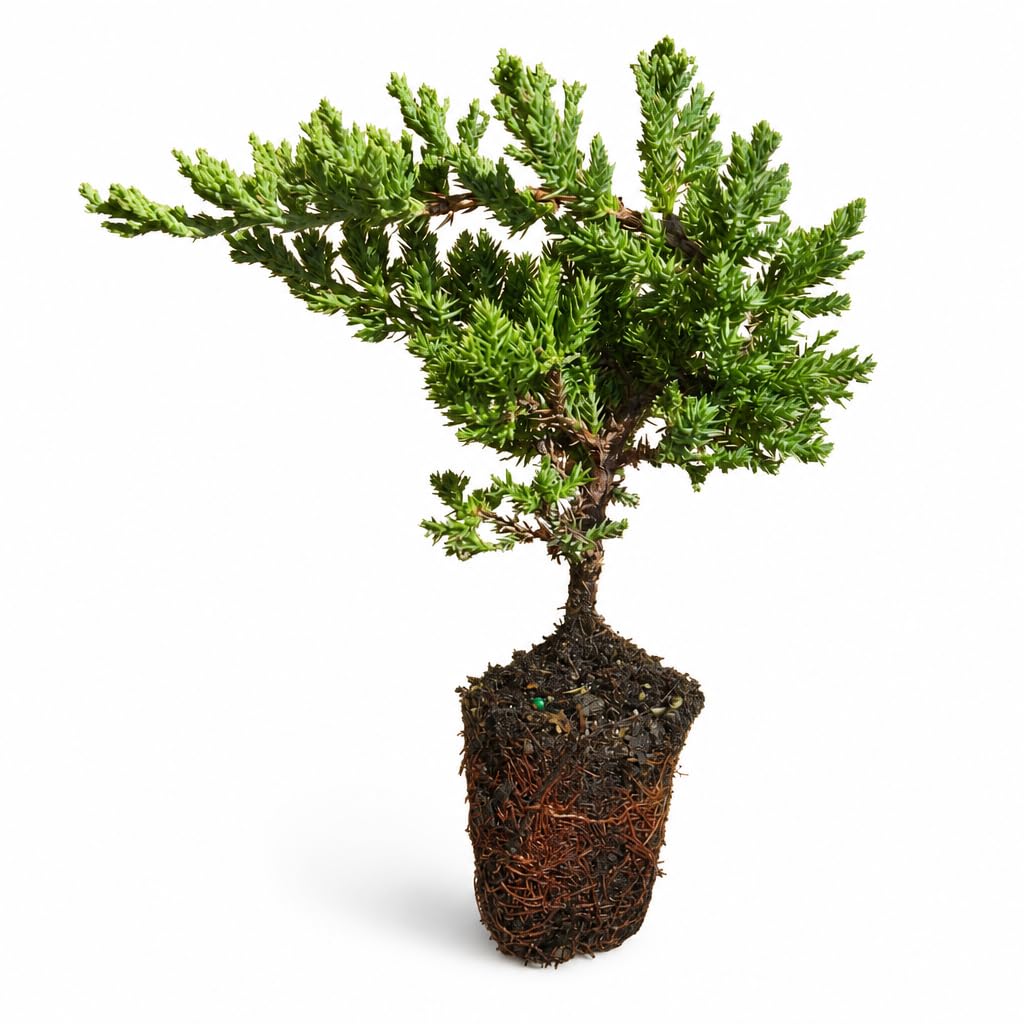
This is the pick that behaves like a groundcover should. It grows a dense mound of branches radiating from the center, and it stays low — the listing puts its expected height at 12 inches, with foliage spreading to 6 feet wide over time. New growth comes in bright green and matures to bluish green, and winter pushes a purple tint into the needles. For a slope, a retaining wall cascade or a foundation bed you want covered rather than fenced, that low, wide habit does the work.
Where it earns its place is toughness. The listing calls for average, medium-moisture, well-drained soil in full sun, and says it adapts to a wide range of soils while preferring a dryish, sandy mix. It also tolerates hot, dry conditions and somewhat poor soil, which is exactly the ground most people give up on. The needles are spiny-pointed and short, reaching about 1/3 inch, and that texture plus the juniper aroma is why deer tend to move on to softer plants.
Buyers talk most about how the plants arrive: healthy, shapely starts that are ready for a little pruning. It is a genuine bonsai candidate, and plenty of buyers grab a set specifically for that. The honest caveat is size and speed. These are small starts that can sulk for a season before they push, and not every plant in a shipment thrives. Expect to water through establishment and to lose the occasional plant — that is the deal with mail-order liners, not a reason to skip this one.
What you get in the box
- Three live plants at a 12-inch expected height, spreading to 6 feet wide
- Tolerates hot, dry sites, poor soil and city air pollutants
- Dense blue-green needles that turn purplish in winter
- Small enough to shape — a real bonsai starter
Where it asks patience
- Arrives as a small start, not a filled-out nursery plant
- Can sit in slow growth for the first season after transplanting
- Wants well-drained, preferably sandy soil — heavy clay is a problem
Plant it if: you need low, wide coverage on a sunny slope, bank or wall and you are fine watering a young start through its first summer.
Think twice if: you want instant fill — the spread to 6 feet happens over time, not in one season.
2. Gold Lace Juniper 3 Live Plants
The one juniper here that brings yellow to the bed instead of another shade of blue-green.
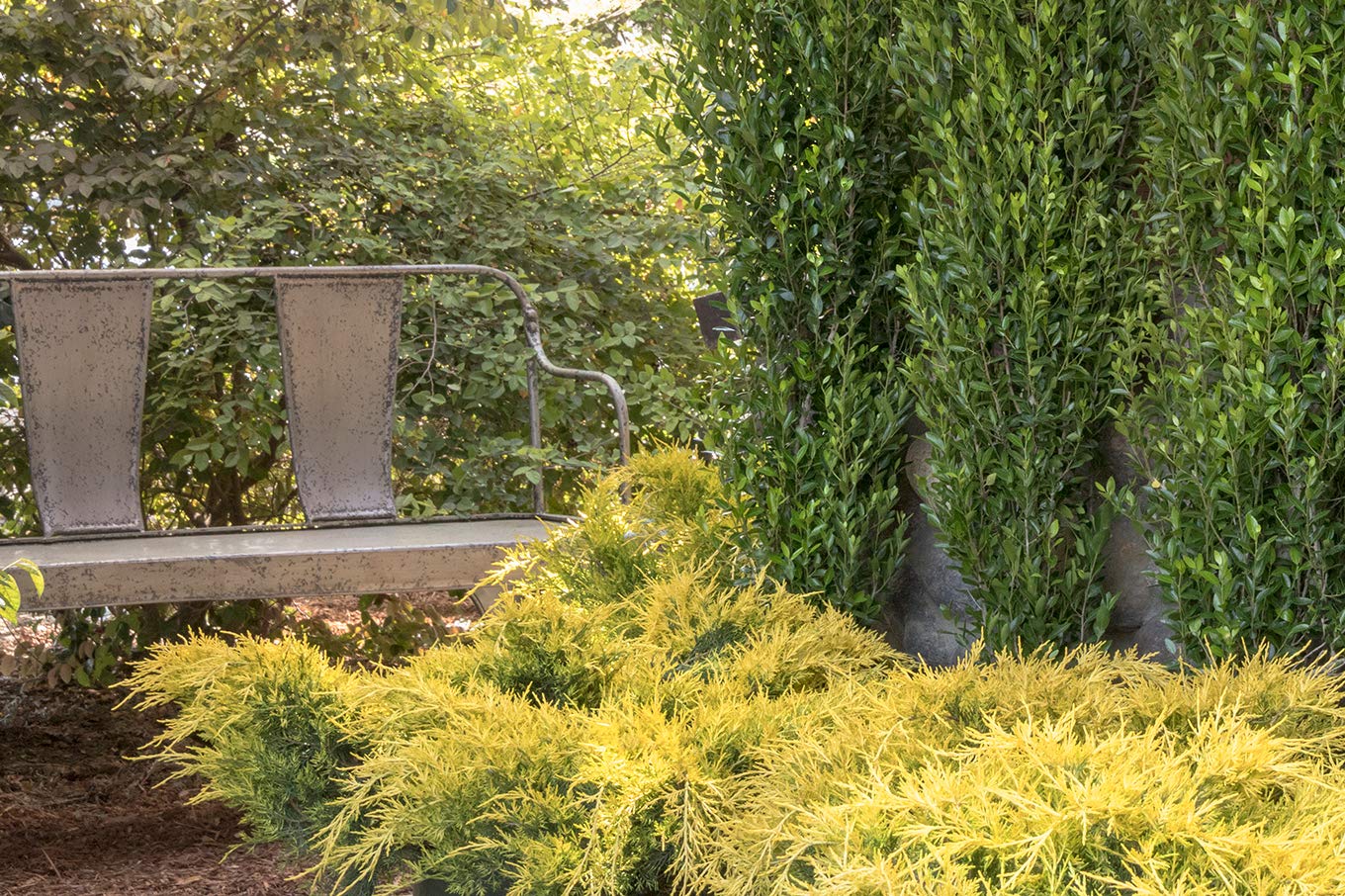
Gold Lace is a semi-dwarf spreader that reaches 3-4 feet tall, and its selling point is foliage that goes brightest gold in summer with green underneath. Set it against a green juniper and you get real contrast instead of a wall of same. The listing places it for groundcover, medium shrub and foundation planting, and notes it adapts well to banks and slopes — so it can do erosion duty too.
Care is straightforward if you respect the water line. This one is listed under regular watering, not the dryish-sand tolerance of the Nana, and the listing is clear that a regular schedule through the first growing season is what builds a mature root system. After that, watering drops to occasional except during drought. Pruning is not required, and it wants full sun.
Here is the trade-off you have to weigh honestly: these arrive very small. The plants are healthy — that is the consistent note — but they read as palm-of-your-hand starts, and a fair number of buyers feel the size does not match the expectation the photos set. Some arrive as clippings, some arrive strong, and the outcome depends on how quickly you get them in the ground and watered. Buy this for the gold color and the slope coverage, and treat the first season as a nursery project rather than an instant landscape.
Best reason to pick it: nothing else in this group gives you summer gold. If your bed is all green and blue, this is the contrast plant, and at 3-4 feet tall it fills the middle layer between groundcover and a screen.
The reality check: it needs more water than the drought-tolerant picks here, and the starts are genuinely tiny. Plant them, water them, and give them a full season before you judge the purchase.
Worth it for: gardeners who want a color break in a sunny foundation bed or bank and will baby small starts through establishment.
Pass if: you expect a plant that fills its space the week it arrives.
3. Blue Arrow Juniper 4 Inch Pot
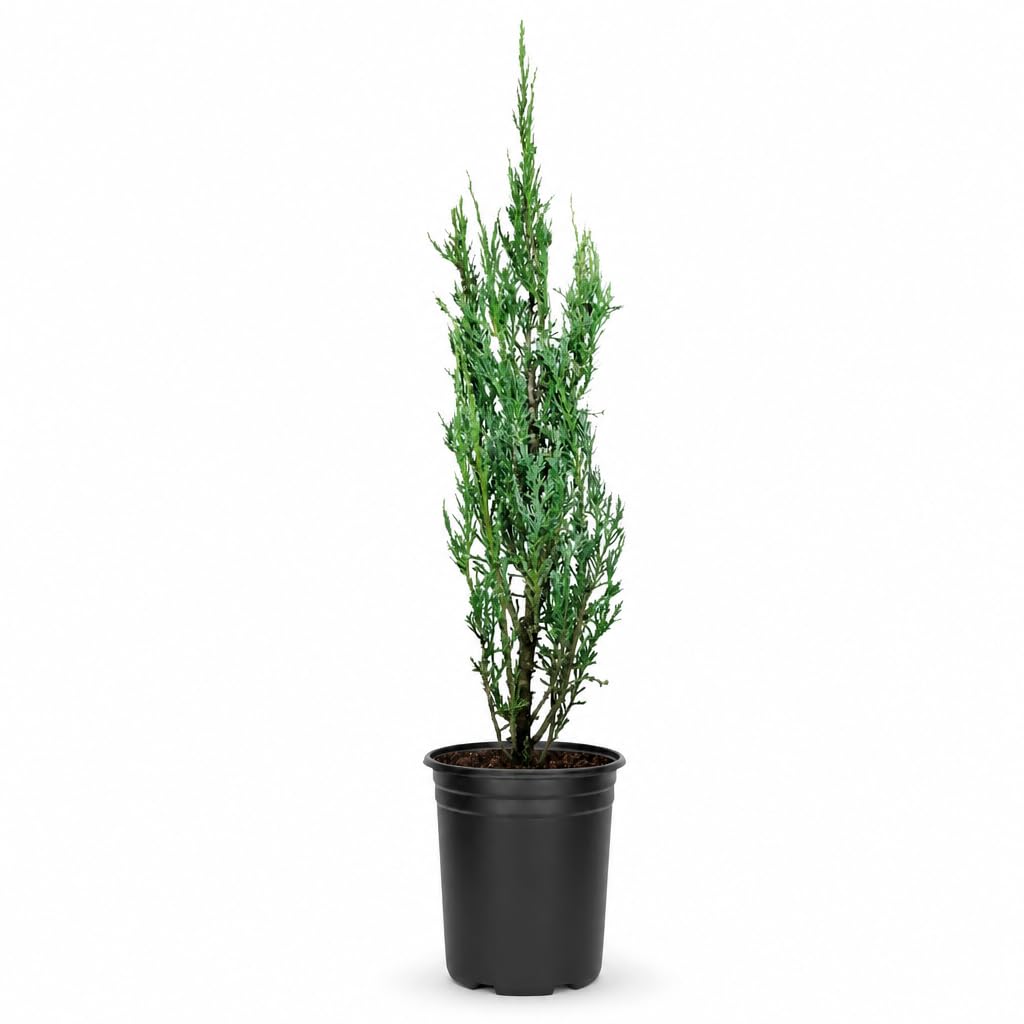
A narrow blue tower for the strip of yard where a wide hedge simply will not fit.
Blue Arrow grows in a tight column instead of a mound, and the listing pitches it for exactly that: vertical interest, small spaces, focal points, and a natural privacy screen or windbreak. The dense blue-green foliage holds color through all four seasons. It wants full sun and adapts across soil types — the listing names clay, which is a useful contrast to the sandy-soil preference of the Nana above. Drought tolerance and low maintenance are spelled out as its special features, so this is a plant for a busy gardener who wants structure without a pruning calendar.
Health is what this one is known for, and the pattern in the reviews backs it: strong roots, green foliage, and plants that hit the ground running. One buyer’s experience is worth repeating in substance — skeptical at first, plants arrived around a foot tall and scraggly, and after a few months in the ground they were thriving and had ridden out extreme heat. That tells you the root system ships ready even when the top looks modest.
One plant per order is the difference here — the other picks bundle three, this is a single larger 4-inch pot. If you are lining a property edge, plan on buying several. Size is also the recurring gripe: plants show up smaller than the photos suggest, sometimes around six inches of top growth, and the pot does not hold anything close to a gallon of soil. None of that changes the plant’s health, but it changes your timeline.
Why it earns the narrow-space slot
- Columnar habit gives you height without width
- Blue-green foliage holds color year-round
- Drought tolerant and low maintenance once set
- Adapts to clay soil and full sun
- Arrives with a strong root system
Before you order
- One plant per order — a screen needs multiples
- Top growth arrives smaller than the listing photos imply
- Wants regular watering while it establishes
Reach for this if: you have a narrow bed, a fence line or a patio edge and need a vertical blue accent rather than a spread.
Look elsewhere if: you were hoping a single order would hedge a whole property line.
4. Skyrocket Juniper | 3 Live Plants | Juniperus Scopulorum
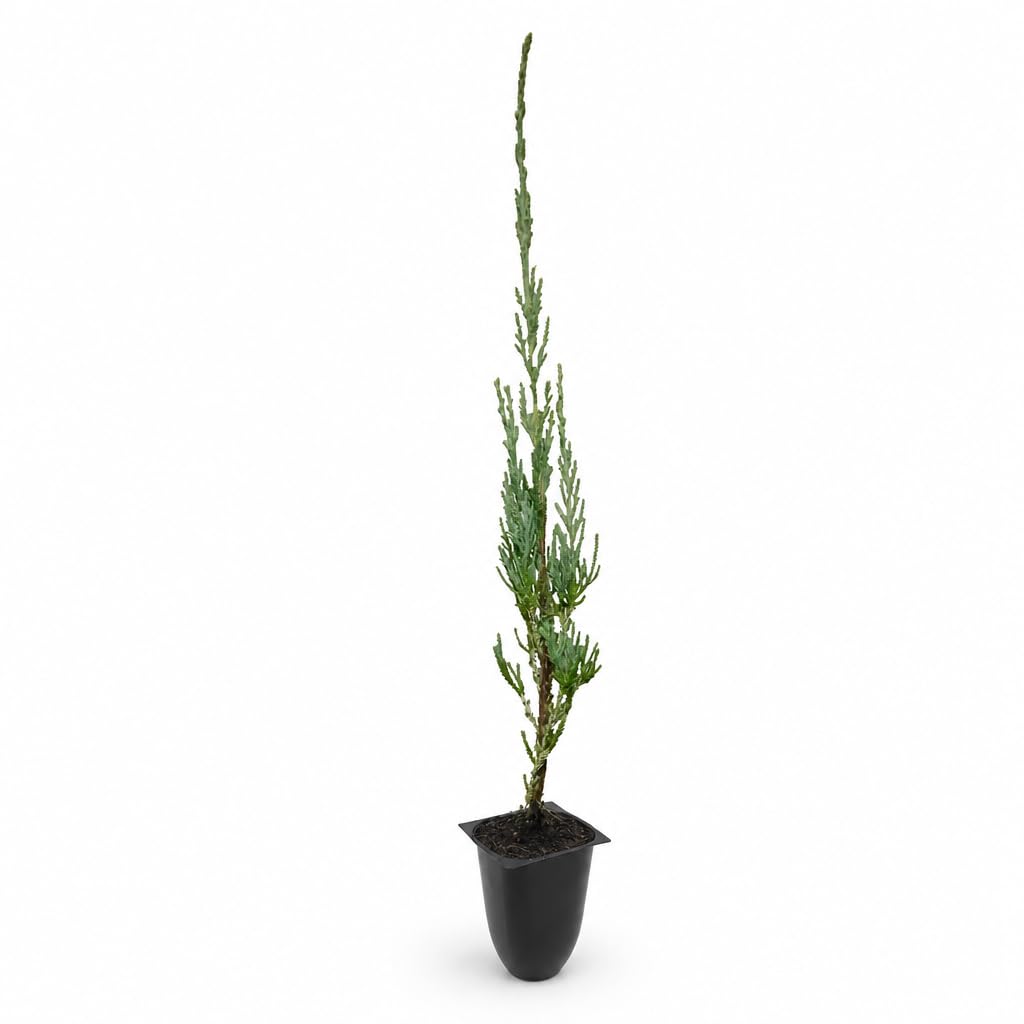
Three columnar junipers in one order — enough to actually start a screen.
Skyrocket is the three-plant version of the columnar idea. It builds a striking narrow shape meant to add vertical interest, and it wants full sun with minimal pruning. The listing frames the whole thing around low-effort gardening: dense blue-green foliage, color through every season, drought tolerance that cuts down on watering. For a busy household trying to wall off a view or a property line, the three-pack matters — the count is the practical difference between this and the single-pot Blue Arrow.
The foliage read is consistent and the plants are described as healthy and useful as border trees. Growth is the part to size up honestly. Some of these settle in and hold four months later; some shipments lose plants in the first week. That mix is the reality of bare young starters moving through the mail, and it is why the category rewards you for planting promptly and watering steadily.
Smaller-than-expected size comes up too, and it is the same story as the rest of this group — you are buying a start, not a screen. What you are paying for is the bundle and the columnar genetics, and the good news is the plants that take hold give you the shape you wanted. Give them a season before you decide the purchase was a miss.
The count is the pitch: three columnar plants means one order can define a border or begin a privacy run, where the single-pot pick needs repeat buying to get there.
Set expectations on size: these are young starts, so plan for regular establishment watering and accept that not every plant in a shipment pulls through. Split the three across slightly different spots so a loss does not leave a hole.
Pick this when: you want to begin a tall screen now and would rather buy three columnar plants in one go than three separate orders.
Not for you if: you want guaranteed plant-for-plant success — young mail-order junipers always carry some risk.
5. Blue Rug Juniper | 10 Live Plants | Juniperus Horizontalis

Ten trailing plants that knit into a silver-blue carpet on ground nothing else wants.
Blue Rug does the job groundcovers exist for: it creates a dense silver-blue carpet, tolerates sun and partial shade, and suppresses weeds while holding soil. The listing puts its expected height at 60 centimeters, so it hugs the ground rather than rising. It wants full sun and sandy soil, and it reads as the erosion-control answer for slopes, rock gardens and borders.
Roots arrive developed enough to survive transplanting, so the plants go in ready to grow. There is a real case for going small on rough terrain — one buyer describes planting on a hill so full of rocks and roots that digging big holes was impossible, and the small root balls went in easily. Ten plants in one order also means you can cover a meaningful stretch of bank.
What you must accept is that these arrive tiny, often around 1.75 inches in the pack, and the first stretch is nursing care. The plants are hardy but delicate at that stage, and dry spells mean daily watering until they anchor. Ongoing maintenance is real on a slope: regular water, and patience while a carpet knits together. That is the honest cost of a ten-plant groundcover bundle on a difficult site.
What makes it work on hard ground
- Ten plants per order covers real square footage
- Silver-blue carpet that holds color year-round
- Drought tolerant once established
- Suits sandy soil, sun and partial shade
- Small root balls transplant into rocky, root-filled ground
The honest cost
- Arrives as very small plants needing careful first-season care
- Needs daily watering during dry spells while establishing
- Coverage takes seasons, not weeks
Go for the ten-pack if: you are tackling a bank, rock garden or verge and want volume plus erosion control in one order.
Weigh the alternative if: you want a finished look fast — this bundle is a planting project with a watering commitment.
Know the Specs
Growth habit: spreader or column
Growth habit tells you what shape the juniper will take and therefore what job it can do. A spreading form stays low and creeps outward — the Procumbens Nana lists an expected height of 12 inches and a spread of 6 feet, which makes it a groundcover for slopes and banks. A columnar form like Blue Arrow or Skyrocket grows upward in a narrow tower, which is what a privacy screen or vertical accent needs. Buying the wrong habit for your spot is the most common mistake in this category.
Water needs and soil type
Listings spell out moisture needs because junipers vary here. The Procumbens Nana and Blue Rug list sandy soil and moderate or drought-tolerant habits, while Gold Lace and Blue Arrow list regular watering. Treat that as your first-season rule: regular watering gets a root system built, and reduced watering comes after it establishes. Plant a dry-soil juniper in heavy clay and it will struggle no matter how deer resistant it is.
Plant count and shipped size
The count per order decides how much ground you can cover — one large 4-inch pot for Blue Arrow, three plants for the Procumbens Nana, Gold Lace and Skyrocket, and ten for Blue Rug. Shipped size is separate: mail-order junipers usually arrive as young starts, often measuring in inches of top growth. Small plants are less expensive and easier to plant into difficult ground, but they need time and water to reach the coverage the listing describes.
Deer resistance in practice
Junipers are sold as deer resistant because of their needle texture and aroma, not because browsing is impossible. Deer pressure varies by region, season and what else is available to eat. What you can do is plant junipers as the backbone of a bed and place them where their toughness matters — full sun, decent drainage — so they establish quickly and hold their ground.
Common Questions
Are junipers actually deer resistant, or will deer eat them anyway?
Why do these junipers arrive so small compared with the listing photos?
Should I pick a spreading juniper or a columnar one for a privacy screen?
How often do I water a newly planted juniper?
Can I plant Blue Rug Juniper on a rocky slope?
What kind of soil do these junipers need?
How long until a small juniper start actually covers ground?
Do these junipers need pruning?
Is the Procumbens Nana really suitable for bonsai?
What happens if a plant in my order arrives damaged or dead?
The Bottom Line
For most yards fighting deer and dry soil, the winner is the Juniper Procumbens Nana. It stays low at an expected 12 inches, spreads to 6 feet, and tolerates hot, poor, sandy ground that other shrubs give up on. If you need height instead of coverage, buy the Blue Arrow Juniper for its narrow column in a small space. Want three columnar plants in one order? Choose the Skyrocket Juniper. And for a bank or rocky slope where you need volume, the Blue Rug Juniper ten-pack is the one to reach for. Whichever you pick, plant it promptly and water it through that first season — the juniper does the deer-proofing, but you do the establishment.
How we choose
We do not accept paid placement. Every pick is matched to a real buyer and a real use-case; we do not hands-on test units.
Sources
Specifications: manufacturer listings and product documentation. Review insights: verified customer reviews, as of October 2026. Pricing: not shown on this page (it changes often); check the current price via the retailer link.
As an Amazon Associate, Aappliancez earns from qualifying purchases. This does not affect which products we feature.