Disclosure: Some links in this post are affiliate links. As an Amazon Associate I earn from qualifying purchases, at no extra cost to you. Learn more
Specs are compiled from manufacturer listings and verified buyer reviews and can change over time — please confirm the key details on the product page before buying.
Most reflection journals get abandoned within a month, and the blank page is usually why. It is the blank page. A book with no structure asks you to invent a deep question about your life every single evening, and after four days that gets exhausting. The five journals here all solve that problem in different ways — one gives you a structured morning-and-night check-in, one hands you a fixed question for each day of a full year, and one simply gives you beautiful paper worth returning to. If you want the fastest answer: the JOHSBYD Green Journal carries the highest owner satisfaction of the group with 4.5+ stars across 300+ ratings, and it earns that mostly on build quality and how good it feels to pick up.
This guide is built by comparing the manufacturers’ published specifications and the patterns across verified customer reviews, so you get each pick’s real strengths and trade-offs instead of marketing spin.
Below you will find the format that fits each kind of journaler, from a 90-day guided program to a full year of daily questions, so the right journals for self reflection ends up on your nightstand rather than in a drawer.
Top Picks

How To Choose The Best Journals for Self Reflection
A reflection journal only works if you actually open it every day. That daily-use test should drive every choice here, ahead of cover style or brand name. Three things decide whether a book survives past week two: how much it asks of you each day, whether the pages are dated, and whether the paper makes writing feel good or annoying.
Guided prompts versus open blank pages
A guided journal prints a question or a checklist for you to answer, which removes the “what do I even write about” stall. An open notebook gives you lined pages and nothing else, which suits people who already know what they want to say. If you have never kept a journal past a few days, start guided — the printed prompt does the thinking on nights you are too tired to invent one.
Dated versus undated pages
Dated pages build a chain you do not want to break, and that chain is genuinely motivating for some people. Undated pages forgive you. Miss a week with an undated journal and you simply pick up on the next blank page with no gap staring back at you. Anyone with a busy or irregular schedule tends to do better with undated.
Paper weight and bleed-through
Paper is measured in gsm — grams per square metre, which is basically how thick and dense the sheet is. Thin paper lets wet ink soak through to the other side, so your words show faintly on the reverse. If you write with a fountain pen or a wet gel pen, look for a stated paper weight like 100gsm or a page note that says bleed-resistant. If you use a standard ballpoint, most journals will handle it fine.
Binding and how the book sits
A journal that snaps shut while you write gets abandoned fast. Lay-flat binding lets the book open to 180 degrees so it sits flat on a desk or your knees, leaving both hands free. A stitched spine that lays flat does the same job. Either way, check that the book opens wide before you commit to a daily habit with it.
Side-by-Side Comparison
Three columns do the real work here: the format (how the journal is structured), the page count, and how long the program runs. Scan those side by side and you already know which one fits your routine.
| Model | Best For | Format | Pages | Program Length | Amazon |
|---|---|---|---|---|---|
| JOHSBYD Green Journal★ Best Overall | Gifting and everyday notes | Lined notebook with quotes | 200 pages | Open-ended | Amazon |
| The Self Exploration JournalBest for a Reset | Focused 90-day reset | Daily questions plus quotes | 117 pages | 90 days | Amazon |
| Mindfulness: A Day and Night Journal | Morning and evening check-ins | Guided forms and checklists | 184 pages | Not dated | Amazon |
| And Per Se Wellness Journal | Tracking habits and health | Undated daily layout with trackers | 91 days of pages | 91 days | Amazon |
| 365 Questions, One Page Per Day | A full year of daily questions | One question per page | 376 pages | 365 days | Amazon |
Detailed Reviews
1. JOHSBYD Green Journal for Women – Lined Hardcover Notebook
Our pick — 4.5+★ from 350+ verified ratings; the strongest balance of quality and price.
The one people buy for themselves after they have already given two away.
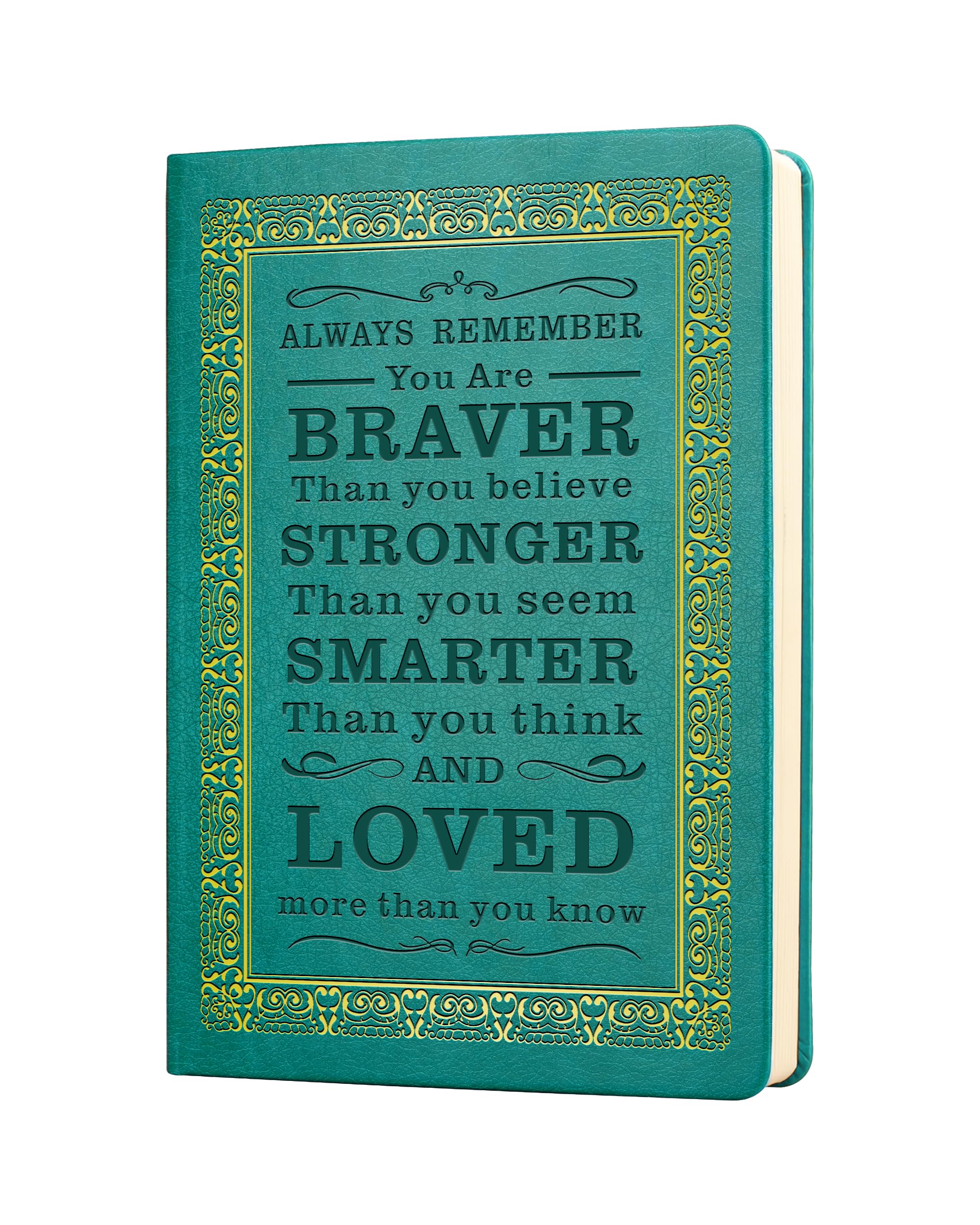
What makes this green hardcover the pick for most people is not a prompt system — it is the physical object itself. It runs 200 pages in an A5 size (roughly the size of a paperback, so it slips into a tote or sits on a nightstand without taking over the surface). The cover is hardback and the paper is described by the maker as thick and bleed-resistant, which in plain terms means wet gel ink should not show through onto the back of the page. A ribbon bookmark keeps your place, so nothing gets lost.
Build quality is the thing buyers notice first and talk about most, and it is the reason this book out-scores every other pick here. Owners describe a soft, distressed-feeling cover with a vintage look, solid stitching, and a spine that lays flat while you write. That flat-lay detail sounds small until you try to write in a book that keeps snapping shut — this one does not. As owners put it about the paper itself, it handles fountain and gel pens without bleed-through or ghosting.
The honest catch is that this is a notebook, not a guided program. You get motivational quotes and a thoughtful layout, but nobody hands you a daily question — the reflection is on you to start. It is also lighter on pages than it first appears; a couple of people expected more sheets than the 200 it delivers. Neither is a flaw, exactly, but if you need structure handed to you, one of the prompted journals below will serve you better. For a beautiful, sturdy, everyday place to write, this is the one.
What holds up in daily use
- Hardcover with solid stitching that lies flat for writing
- Thick paper that resists bleed-through with wet ink
- 200 pages in a portable A5 size with a ribbon bookmark
- Consistently praised as a gift people actually keep
Where it asks more of you
- No daily prompt system — you supply the reflection
- No pen holder built into the design
Best fit: Anyone who wants a well-made book to write in freely, and anyone shopping for a gift that looks more expensive than it is.
Think twice if: You need prompts handed to you every day — an open notebook leaves that work to you.
2. The Self Exploration Journal
Ninety days of someone else asking the hard question so you do not have to.
If you have ever sat down to journal and closed the book five minutes later with nothing written, this is the format that fixes it. Each day hands you one question or challenge plus an inspirational quote, for 90 days total. The prompts are deliberately unusual — things like what your seven-year-old self would think of you now, or the way you most like to please other people — so you are not writing “today was fine” for the fourteenth time. It comes in at 117 pages, compact enough to carry.
The content is what carries this book, and it is why the guided-question approach does the heavy lifting. The quotes are drawn from real writers and thinkers — Whitman, Faulkner, Aristotle, Socrates, Coelho — and they are paired with prompts that push past the surface. One reviewer’s observation lands the appeal best: the book covers the past experiences holding you back, money, accomplishments, gratitude, and fears, which is a much wider net than a plain gratitude diary. People who had dropped out of journaling before report getting pulled back in by the 90-day structure.
Set against the Mindfulness journal above, this one is the shorter, tighter sprint: 117 pages versus 184, aimed at a defined three-month stretch rather than an ongoing routine. That is the trade-off worth naming. A daily prompt every single day can feel like a lot on a bad week, and with only around three-quarters of a page of writing room per day, long answers get cramped. It rewards people who show up; it does not forgive a month of silence gracefully.
The case for the prompts: A fixed daily question removes the blank-page stall entirely, and the 90-day container gives the practice a clear beginning and end — good for anyone doing a focused reset rather than an open-ended habit.
Worth knowing before you buy: Dated daily structure and limited writing space suit short, directed answers. If you tend to write long, the And Per Se or the 365 Questions journal gives you more room per sitting.
Reach for this if: You want a three-month guided program with questions that actually make you think, and you like a defined finish line.
Look elsewhere if: You write in long paragraphs — the daily space here is snug.
3. Mindfulness: A Day and Night Reflection Journal

Two short check-ins a day, built into forms and checklists instead of blank lines.
This is a journal for anyone whose mind is loudest at night. Instead of handing you empty lined pages, it gives you guided prompts, forms, and checklists to work through each morning and each evening — set your intention at the start of the day, then come back and reflect on how it went. The “day and night” split is the whole idea, and it turns journaling into two five-minute bookends rather than one long sit-down you keep postponing. It runs 184 pages, so there is real substance here.
Page count is where this book separates itself from the 90-day option: 184 pages against 117 for The Self Exploration Journal, which is 57% more to write in. It is also the physically larger book at 5.75 x 0.7 x 8.25 inches versus 5.5 x 0.3 x 8.5 inches, and that extra half-inch of thickness is what the additional pages feel like in your hand. The cover is soft and durable, and the daily mindful-awareness rating built into the format gives you something concrete to track over time rather than just free writing.
The one honest friction point is time. Doing both the morning and the evening side properly takes a real slot in your day, and the book does not shrink that for you. The recurring note from people who stick with it is to consciously set aside time rather than squeeze it in — and the ones who do describe tracking their progress through a mindfulness practice they can actually look back on. A rare unit can arrive with a scuff on the spine from shipping, worth a quick look when yours lands.
Why the format sticks
- Morning-plus-evening structure with prompts, forms, and checklists
- 184 pages — the most writing room of the guided options here
- Daily mindful-awareness rating to track over time
- Soft, durable cover that feels good in hand
The honest friction
- Needs a deliberate daily time block — it will not fit into gaps
- An odd unit can turn up with a scuffed spine after shipping
Pick this one if: You want a structured morning intention and an evening reflection, and you are willing to give it a fixed slot in your day.
Not for you if: You want one quick daily entry — the two-part format asks for two sessions.
4. And Per Se Wellness Journal
One page that tracks your sleep, water, meals, and mood — no separate apps.
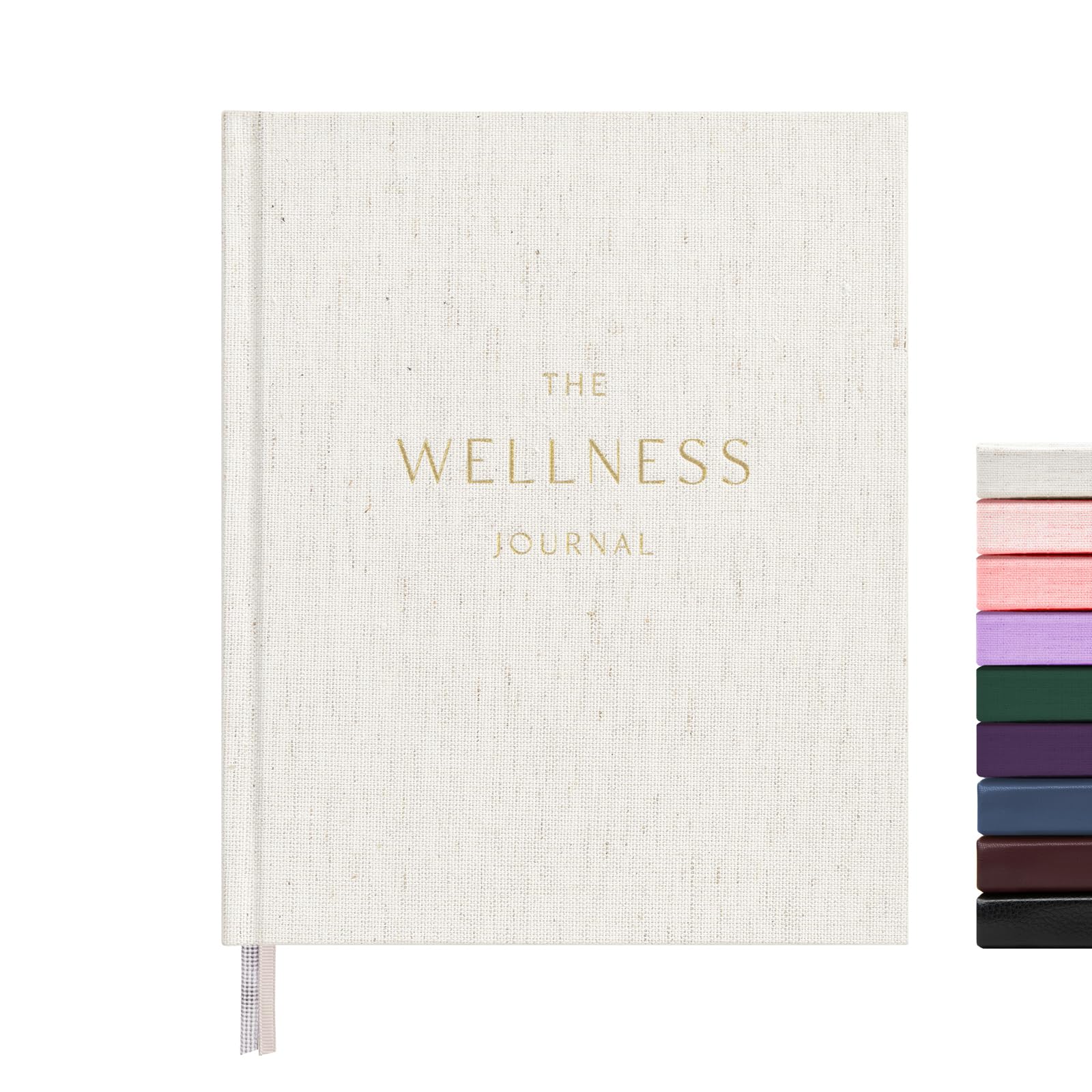
The problem this book solves is scattered tracking. Instead of juggling a sleep app, a water reminder, and a mood log, every page has room to note sleep, meals, water intake, exercise, emotional patterns, and gratitude in one layout. It is undated, so you can start on a random Wednesday and skip a chaotic week without a blank gap shaming you. It covers 91 days of pages, which is a full quarter of habit-building, and it lays flat at 180 degrees so it stays open on a counter or desk while you fill it in.
The materials are where the everyday experience lives. The paper is 100gsm — noticeably heavier stock than a cheap notebook, which is why the maker can claim it resists ink bleed — and owner feedback backs that up, describing thick pages that do not let writing soak through. The hardcover has gold foil stamping and a linen finish that reads as real leather at a glance. There are marker strips built in, so you can find your place, plus extra note pages at the back for everything that does not fit the daily grid.
For depth of daily reflection this is not the deepest option here. The Self Exploration Journal pushes harder with its provocative questions, while this one keeps things simple, structured, and quick. If you want to be challenged philosophically, look there. If you want to actually log your day and see your patterns add up, this does it without feeling overwhelming. The cover is a touch flexible rather than rock-solid, which is the trade-off for how light it carries.
Where the value sits: 100gsm paper, a lay-flat 180-degree spine, and a single-page layout that folds habit tracking and reflection together — that combination is what makes it easy to keep using past the honeymoon week.
One thing to weigh: The hardcover is flexible rather than rigid, so if you throw your journal loose into a bag, expect it to pick up some wear.
Suits you if: You want to track your health habits and your thoughts in one undated book that forgives a skipped week.
Probably not if: You are after deep, challenging prompts — this one favours quick structure over hard questions.
5. 365 Questions, One Page Per Day

A different question every day for a year, one page each, no repeating yourself.
This is the biggest book on the list at 376 pages, and the premise is as simple as a journal gets: one question per page, one page per day, 365 days total. That volume is more than three times the 117 pages of The Self Exploration Journal, and the daily format is what people cite as the reason they stick with it — a single page forces focused thinking instead of rambling. The questions are described as non-typical and interesting, the kind that prompt genuine reflection rather than a quick checklist tick.
For anyone who has tried to free-write their way into self-reflection and stalled, the supplied question does the heavy lifting. You do not have to invent the topic on a tired Tuesday night; it is already printed at the top of the page. That structure is what turns reflection from a vague intention into a repeatable daily act, and it works for people who never thought of themselves as journalers.
Now the honest part. The one-page format is intentionally brief, and if you write long, a single page can feel tight — you may find yourself wanting the next day’s space to finish a thought. There are also some typos and a few questions that restate earlier ones, and a fair number of the prompts simply will not apply to every reader, so skipping some is normal. That mild repetition is the cost of stretching a single idea over an entire year. If that trade-off sounds reasonable, this book rewards the discipline.
Choose it if: You want a full year of one-question-a-day prompts and a clear daily ritual that does the thinking for you.
Pass if: You write long entries and hate stopping mid-thought — the one-page limit will frustrate you.
Know the Specs
Most specs on a journal listing do not change how it feels to write in. A few of them genuinely change whether you enjoy writing in it, and those are the ones worth learning before you buy.
Page count and writing space
Page count tells you how long a book lasts and how much room a single entry gets. A 376-page book with one question per page gives you a full year of short entries. A 117-page book spreads its space across a shorter run. Match the page count to how much you actually write per sitting — long writers need more pages per entry, not just more pages overall.
Paper weight in gsm
The gsm rating — grams per square metre — is how dense and thick the paper is. A higher number means less chance your ink soaks through to the back of the page. A journal marked 100gsm is built to keep wet gel and fountain ink from bleeding. If you use a dry ballpoint, this matters far less.
Dated versus undated
Dated pages turn your journal into a daily streak you can see laid out. Undated pages let you miss a day or a month and resume with no gap. Choose dated if a visible streak keeps you going, undated if you need forgiveness for skipped weeks. Pick against your real schedule — the one with late nights and missed weeks — not your ideal one.
Binding that lies flat
A 180-degree lay-flat binding means the book opens fully and stays open on a flat surface, freeing both hands to write. Stitched spines that lie flat do the same job. Without it, you are pressing the book open with one hand while writing with the other — a small annoyance that quietly makes you less likely to use the book.
Common Questions
How long does a reflection journal actually last?
Will a fountain pen bleed through these journals?
Is a guided journal better than a blank notebook for self reflection?
What does undated mean on a journal?
How much writing space do I get per day?
Can I start these journals mid-year or mid-week?
Are these journals suitable as gifts?
Do these journals lie flat while I write?
Which reflection journal is best for someone who has never journaled before?
The Bottom Line
For most people, the best of these journals for self reflection is the JOHSBYD Green Journal — it holds the highest owner satisfaction in the group and the sturdiest build, which is exactly what keeps a journal on your nightstand instead of in a drawer. If you want a defined 90-day reset with questions that push you, reach for The Self Exploration Journal. And if you would rather track your health habits and your thoughts together, the undated And Per Se Wellness Journal is the one to grab.
How we choose
We do not accept paid placement. Every pick is matched to a real buyer and a real use-case; we do not hands-on test units.
Sources
Specifications: manufacturer listings and product documentation. Review insights: verified customer reviews, as of October 2026. Pricing: not shown on this page (it changes often); check the current price via the retailer link.
As an Amazon Associate, Aappliancez earns from qualifying purchases. This does not affect which products we feature.